Affordable Volcanic for Saguaro
Using affordable volcanic for saguaro care is one of the best ways to replicate the fast-draining, mineral-rich soil these iconic cacti need. This guide covers everything from choosing the right volcanic materials to mixing custom soil blends that won’t break the bank.
Key Takeaways
- Volcanic materials mimic native soil: Pumice, lava rock, and scoria recreate the rocky, well-draining conditions saguaros love in the wild.
- Affordable options exist everywhere: Local landscape yards, building supply stores, and online bulk sellers offer volcanic rock at a fraction of garden center prices.
- Drainage is non-negotiable: Saguaro roots rot quickly in wet soil; volcanic amendments create the air pockets and rapid drainage essential for survival.
- DIY soil mixes save money: Blending your own affordable volcanic for saguaro substrate gives you control over texture and costs far less than pre-bagged cactus mixes.
- Particle size matters: Aim for 1/4 to 3/8 inch particles; too fine compacts, too large leaves gaps that dry out too fast for young roots.
- Top dressing protects and feeds: A layer of volcanic rock on the soil surface reduces evaporation, deters pests, and slowly releases trace minerals.
- Repotting is easier with volcanic mixes: The loose structure means less root damage during transplants, critical for slow-growing saguaros.
Quick Answers to Common Questions
What is the best volcanic rock for saguaro cactus?
Pumice is widely considered the best single volcanic amendment for saguaros due to its high internal porosity, neutral pH, and slow breakdown rate. Scoria or lava rock are excellent cheaper alternatives that provide similar drainage.
Can I use lava rock from a gas grill for my saguaro?
Yes, but only if it is natural, uncolored, and untreated. Rinse thoroughly and screen to remove fines. Avoid any lava rock labeled as “flavored” or with additives.
How often should I water a saguaro in a volcanic mix?
Water deeply only when the pot feels light and the top two inches of mix are completely dry. This ranges from every 5-7 days in hot summer to once a month or less in winter.
Do I need to add fertilizer to a volcanic soil mix?
Volcanic rock slowly releases trace minerals, but a light application of low-nitrogen cactus fertilizer at quarter strength in spring and early summer supports optimal growth.
Can I plant a saguaro in pure pumice with no organic matter?
Yes, mature saguaros thrive in nearly 100% mineral substrates. Pure screened pumice or a pumice-lava blend provides ideal drainage and aeration without the rot risk of organic matter.
📑 Table of Contents
- Why Volcanic Materials Are a Game Changer for Saguaro Health
- Understanding the Saguaro Root System and Soil Needs
- Types of Volcanic Material and What to Buy
- Sourcing Volcanic Rock Without Breaking the Bank
- DIY Soil Mix Recipes for Every Stage
- Potting, Watering, and Long-Term Care
- Common Mistakes and How to Avoid Them
- Advanced Tips for Thriving Specimens
- Conclusion
Why Volcanic Materials Are a Game Changer for Saguaro Health
If you have ever tried to grow a saguaro cactus, you know the struggle. These majestic giants of the Sonoran Desert demand perfect drainage. They hate wet feet. Standard potting soil holds too much water. Even many commercial cactus mixes stay damp too long. That is where affordable volcanic for saguaro solutions come in. Volcanic rock like pumice, scoria, and lava rock creates the ideal root environment. It mimics the rocky bajadas and foothills where saguaros grow naturally. The porous structure holds just enough moisture while letting excess water escape instantly. Air reaches the roots. Minerals slowly leach out. It is the closest thing to native habitat you can buy.
But here is the catch. Garden centers know this. They charge a premium for small bags labeled “cactus mix” or “volcanic soil amendment.” You can easily spend twenty dollars on a few quarts. For a large specimen or multiple plants, the cost adds up fast. The good news? You do not need fancy packaging. The same volcanic materials sell for a fraction of the price at landscape supply yards, construction outlets, and even some feed stores. You just need to know what to look for, how to screen it, and how to blend it. This guide walks you through every step. We will cover sourcing, sizing, mixing ratios, potting techniques, and long-term care. By the end, you will have a pro-level substrate without the pro-level price tag.
Understanding the Saguaro Root System and Soil Needs
Shallow but expansive roots
Saguaros do not grow deep taproots. Instead, they send out a massive network of shallow roots. These roots spread radially, often extending as far as the plant is tall. They stay in the top twelve to eighteen inches of soil. Their job is to capture brief desert rains instantly. In nature, the soil is coarse, gravelly, and low in organic matter. Water infiltrates fast. It does not linger. The roots take up water quickly, then the soil dries. This wet-dry cycle is critical. Constant moisture suffocates roots and invites fungal pathogens. That is why affordable volcanic for saguaro blends focus on macro-porosity. Large pore spaces let water drain in seconds. Air refills the gaps. Roots breathe. They stay healthy.
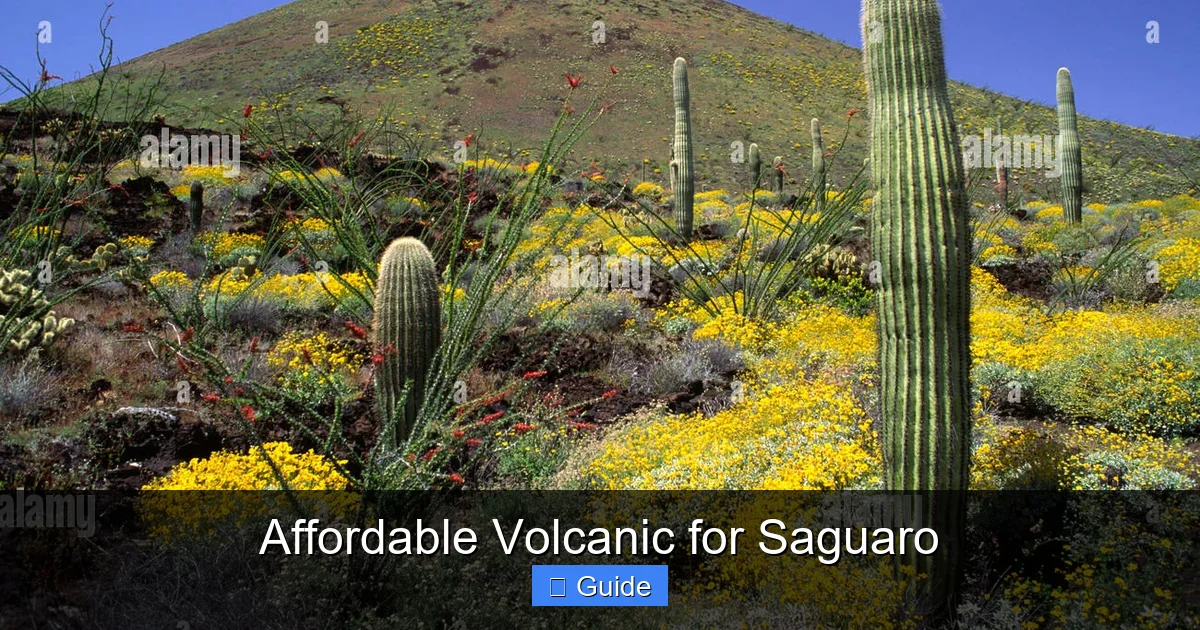
Visual guide about Affordable Volcanic for Saguaro
Image source: c8.alamy.com
Mineral nutrition from rock weathering
Volcanic rock is not just structural. It is nutritional. As pumice and lava rock slowly break down, they release trace elements. Calcium, magnesium, potassium, and iron become available. Saguaros evolved in volcanic-derived soils. They are adapted to this slow-release mineral diet. Organic-heavy soils, by contrast, can create nutrient imbalances. Too much nitrogen forces weak, elongated growth. The cactus becomes top-heavy and prone to splitting. A mineral-based substrate supports steady, strong growth. It also buffers pH. Most volcanic rock is neutral to slightly alkaline. That matches the caliche-rich desert soils saguaros prefer. You avoid the acidity drift common in peat-based mixes.
The danger of organic matter overload
Many beginners add compost, peat moss, or coconut coir to “improve” the soil. For saguaros, this backfires. Organic matter holds water. It decomposes into fine particles that clog pore spaces. Over time, the mix collapses. Drainage slows. The root zone stays wet. Rot sets in. A small amount of organic material, maybe five to ten percent by volume, can help young seedlings. But mature saguaros thrive in nearly pure mineral substrates. When you source affordable volcanic for saguaro projects, prioritize inorganic components. Your wallet and your cactus will thank you.
Types of Volcanic Material and What to Buy
Pumice: the gold standard
Pumice is a lightweight, frothy volcanic glass. It forms when superheated, pressurized rock erupts and depressurizes instantly. Gas bubbles expand. The rock solidifies into a sponge-like matrix. It is incredibly porous. Each particle holds water inside its cells while the surface stays dry. This creates a reservoir roots can tap without waterlogging. Pumice is pH neutral. It does not break down quickly. It lasts for years in the pot. For affordable volcanic for saguaro use, pumice is often the best single ingredient. Look for horticultural grades labeled 1/4 inch or 3/8 inch. Avoid “pumice sand” or fines. Those compact too easily.
Scoria and lava rock: heavier but effective
Scoria is similar to pumice but denser. It has fewer, larger vesicles. It sinks in water. Lava rock is a broader term for solidified lava flow. Both are darker, often reddish or black. They drain well but hold less internal moisture than pumice. They are cheaper, sometimes sold as “lava rock” for gas grills or landscaping. That is a great source for affordable volcanic for saguaro projects. Just rinse off any dust or manufacturing residues. Screen out fines. The angular shape creates excellent macro-porosity. Mix with pumice for a balanced blend.
Perlite: not volcanic but often confused
Perlite is expanded volcanic glass, but it is manufactured. Obsidian is heated until it pops like popcorn. It is very light, white, and floats. It works for drainage but crushes easily. Over time, it turns to powder. It also has zero mineral value. It is fine as a minor component, maybe ten percent, but should not be the backbone of your mix. If you see “volcanic perlite” marketed at high prices, skip it. True pumice or scoria is better and often cheaper in bulk.
Zeolite and other specialty volcanics
Zeolite is a microporous volcanic mineral with high cation exchange capacity. It holds nutrients and releases them slowly. Some growers add five to ten percent zeolite to their mix. It can be pricey. For most hobbyists, standard pumice or scoria performs just as well. If you find affordable clinoptilolite zeolite at a farm supply store, it is a nice bonus. But do not stress over it. The core of your affordable volcanic for saguaro strategy should be simple, coarse, clean volcanic rock.
Sourcing Volcanic Rock Without Breaking the Bank
Landscape supply yards: your best friend
Skip the garden center. Drive to a landscape materials yard. These places sell by the cubic yard or half-yard. You can often buy a “super sack” (about one cubic yard) of 3/8 inch pumice or lava rock for thirty to sixty dollars. That is hundreds of quarts. Compare that to fifteen dollars for two quarts at a nursery. Bring a truck or trailer. Or ask about delivery. Many yards deliver a yard for a reasonable fee. Split an order with fellow cactus growers. Call ahead. Ask for “horticultural pumice,” “lava rock 3/8 minus,” or “scoria.” Some yards know the term “cactus mix aggregate.” If they look confused, describe it: “lightweight volcanic rock, quarter to three-eighths inch, no fines.”
Building supply and feed stores
Big box home improvement stores sometimes carry lava rock in the grill section. Check the label. You want natural, uncolored, untreated rock. Bags are usually 0.5 cubic feet (about 15 quarts) for five to eight dollars. That is still cheaper than nursery prices. Farm and feed stores often stock “stall dry” or “dry stall” products. These are crushed volcanic rock or diatomaceous earth used for horse stalls. Some are nearly pure pumice. Read the SDS or ask for the spec sheet. Avoid anything with added clay, lime, or odor control chemicals. Pure volcanic aggregate is what you need for affordable volcanic for saguaro success.
Online bulk suppliers
If local options are thin, search for “bulk pumice” or “horticultural lava rock bulk.” Several Western U.S. companies ship pallets of super sacks nationwide. Shipping is the main cost. It pays off if you need several yards or can organize a group buy. Some sellers offer “sample boxes” for twenty to thirty dollars shipped. That lets you test particle size and quality before committing. Always verify the sieve specification. You want ninety percent of particles between 1/8 and 3/8 inch. Fines under 1/8 inch should be under five percent. Dust creates compaction.
Screening and cleaning your haul
Bulk volcanic rock often comes with dust, fines, and occasional debris. You must screen it. Build a simple frame with 1/4 inch hardware cloth stapled to a wooden rectangle. Set it over a wheelbarrow or large tote. Shovel rock onto the screen. Shake. The perfect particles stay on top. Fines fall through. Save the fines for other plants or discard. Rinse the screened rock with a hose if it is dusty. Let it dry in the sun. This step is non-negotiable. Fines turn your expensive mix into concrete over time. Clean, screened aggregate is the foundation of every affordable volcanic for saguaro blend.
DIY Soil Mix Recipes for Every Stage
Seedling mix: gentle start
Baby saguaros need a bit more moisture retention. They have tiny roots that dry out fast. Mix two parts screened pumice (1/8 to 1/4 inch), one part fine coconut coir (rinsed and buffered), and one part coarse sand (not play sand). The coir holds a whisper of moisture. The sand adds weight so lightweight seedlings do not tip over. Sterilize the coir by pouring boiling water over it, then draining. This mix stays airy but forgiving. Transplant to the adult mix after one year.
Juvenile mix: building strength
From year one to about five years, saguaros establish their root architecture. Use three parts pumice (1/4 to 3/8 inch), one part scoria or lava rock (same size), and one part decomposed granite or coarse sand. The granite adds mineral diversity and stability. No organic matter. This blend drains in seconds. Water runs through. Roots chase moisture, branching aggressively. That is exactly what you want. This is the workhorse affordable volcanic for saguaro mix for most growers.
Mature specimen mix: maximum drainage
Large saguaros in pots need the fastest drainage possible. Their root mass is huge. Water must exit instantly. Go with four parts pumice, two parts lava rock, one part coarse decomposed granite. Top dress with one inch of clean 3/8 inch lava rock. This mulch layer reduces surface evaporation, prevents perlite or pumice from floating out, and looks natural. Repot every three to five years. The mix barely breaks down. You mostly refresh the top few inches and check root health.
Adjusting for your climate
Humid climates need more drainage. Increase lava rock to fifty percent. Arid climates can tolerate slightly more pumice for its water-holding cells. If you get summer monsoons, add ten percent more coarse material. Watch your plants. Wrinkling between waterings means increase pumice. Rot or mushiness means increase lava rock and decrease organics to zero. The beauty of DIY affordable volcanic for saguaro blends is total customization. You are the chef. The cactus is the critic.
Potting, Watering, and Long-Term Care
Choosing the right container
Pot material matters. Terracotta breathes. It wicks moisture from the sides. That pairs perfectly with volcanic mixes. Plastic retains water longer. If you use plastic, add extra drainage holes. Drill four to six quarter-inch holes in the bottom. Add a layer of large lava rock (half inch to one inch) at the base. This prevents the screen from clogging. Fabric pots are excellent. They air-prune roots. They dry evenly. But they degrade in UV after a few years. For permanent specimens, heavy glazed ceramic or stone with massive drainage works. Just ensure the volcanic mix fills the pot to the rim. No “drainage layer” of different material. That creates a perched water table. Uniform mix from bottom to top.
Planting technique for minimal root disturbance
Saguaro roots are brittle. Handle the root ball gently. If the plant is bare-root, spread roots over a mound of mix in the pot center. Backfill with your affordable volcanic for saguaro blend. Tap the pot sides to settle. Do not tamp hard. You want macro-pores intact. Water thoroughly until it runs clear out the bottom. This settles the mix around roots. Top off with more mix if it sinks. Apply the lava rock top dressing. Wait one week before watering again. This lets any broken root tips callous.
Watering schedule: the soak and dry method
Volcanic mixes make overwatering hard, but not impossible. Water deeply. Soak the entire root ball. Then wait. Wait until the pot feels light. The top two inches are bone dry. In summer heat, that might be every five to seven days. In winter, maybe once a month or less. Use a moisture meter or wooden skewer. Insert it to the bottom. If it comes out clean and dry, water. If damp, wait. Fertilize sparingly. Use a low-nitrogen cactus fertilizer at quarter strength, twice a year: early spring and early summer. The volcanic rock provides most minerals. Excess fertilizer causes weak growth.
Repotting and root inspection
Repot juveniles every two years. Mature plants every four to five. Spring is best. Gently slide the plant out. If roots circle the bottom, loosen them. Trim any black, mushy roots with sterile shears. Dust cuts with sulfur or cinnamon. Replant in fresh affordable volcanic for saguaro mix. This refreshes mineral content and removes any accumulated salts. It also lets you check for pests like root mealybugs. They look like white cottony patches on roots. A systemic insecticide drench may be needed if found.
Common Mistakes and How to Avoid Them
Using unscreened bulk rock
This is the number one error. You save money on rock but lose the plant. Fines migrate downward. They form a dense layer at the bottom. Water perches there. Roots rot. Always screen. Every batch. No exceptions. A five-minute screening session saves years of heartache. Make it a habit. Keep a screen frame by your potting bench.
Adding too much organic matter
It feels wrong to plant in “just rocks.” Gardeners want to nurture. They add compost, worm castings, peat. The mix turns into a sponge. The saguaro rots. Trust the desert. These plants evolved in mineral soil. Lean is mean. If you must add organics, keep it under five percent. Use only well-decomposed, fine material. Better yet, top dress with a thin layer of compost once a year. Water it in. It feeds slowly from the top down. The core mix stays pure volcanic.
Ignoring particle size distribution
All one size is bad. All fines is bad. You need a gradient. The ideal mix has particles from 1/8 to 3/8 inch, with a peak at 1/4 inch. This creates a range of pore sizes. Large pores for drainage and air. Small pores for water retention. Screening gives you this. If your bulk rock is mostly 3/8 inch, mix in some 1/4 inch. If it is dusty, screen hard and supplement with coarser material. Consistency is key. Your affordable volcanic for saguaro mix should look and feel the same every time you make it.
Watering on a calendar, not by need
“Water every Sunday” kills saguaros. Weather changes. Humidity changes. Pot size changes. Plant size changes. Learn to read the pot weight. Learn to read the plant. A plump, firm saguaro is happy. A wrinkled, soft one is thirsty. A yellowing, mushy one is drowning. The volcanic mix gives you a huge safety margin. But it is not infinite. Stay engaged. Check weekly. Adjust seasonally.
Cheaping out on container drainage
One hole in a plastic pot is not enough. Drill more. Elevate pots on feet or bricks. Never let pots sit in saucers full of water. That defeats the entire purpose of a volcanic mix. The bottom of the pot must breathe. Air entry at the base pulls water down and out. It is physics. Respect it.
Advanced Tips for Thriving Specimens
Mycorrhizal inoculation
Desert soils teem with beneficial fungi. Arbuscular mycorrhizae colonize cactus roots. They extend the root reach hundredfold. They unlock phosphorus and micronutrients. You can buy granular mycorrhizal inoculant. Sprinkle it on the roots at planting. Or water it in. It is cheap insurance. One jar treats dozens of plants. It works synergistically with volcanic minerals. The fungi access the rock surface. They weather it biologically. Your affordable volcanic for saguaro mix becomes a living ecosystem.
Seasonal top dressing
Each spring, scrape off the top half inch of mix. Replace with fresh lava rock or a blend of lava rock and a pinch of rock dust (azomite or glacial rock dust). This replenishes trace elements. It refreshes the mulch layer. It removes any salt crust. It is a five-minute task with outsized benefits. Think of it as an annual vitamin shot for your cactus.
Winter protection for potted saguaros
Volcanic mixes freeze fast. They also thaw fast. That is good. But roots in pots are exposed to colder temps than in ground. If you get hard freezes, move pots against a south wall. Wrap the pot (not the plant) in frost cloth or bubble wrap. Keep the mix dry going into winter. Wet frozen mix expands and can crack pots. It also damages roots. Dry volcanic mix is an insulator. Dry roots survive cold better.
Growing from seed in volcanic grit
For the ultimate control, sow saguaro seeds directly into pure screened pumice (1/16 to 1/8 inch). Cover with a clear dome. Bottom heat at eighty degrees. Light. Mist daily. Germination in seven to fourteen days. Seedlings stay in pure pumice for six months. Then transplant to juvenile mix. No damping off. No algae. Clean, fast, successful. This is how nurseries do it. You can too.
Conclusion
Growing a saguaro is a long game. These cacti outlive us. They deserve the best foundation we can give. That foundation is not expensive. It is not mysterious. It is volcanic rock. Screened, sized, and blended with intention. Affordable volcanic for saguaro care means sourcing smart, screening religiously, mixing simply, and watering wisely. It means trusting mineral soil over organic marketing. It means observing your plant and responding to its cues, not a calendar.
Start small. Buy a half-yard of pumice. Screen it. Mix a batch. Pot one cactus. Watch what happens. You will see faster drainage, firmer flesh, steadier growth. You will spend less than a fancy bagged mix. And you will know exactly what your saguaro is rooted in. That confidence is priceless. Your saguaro will stand taller, live longer, and maybe one day bloom under your care. All because you chose the right rocks. Happy growing.
Frequently Asked Questions
Where can I buy affordable volcanic rock for saguaro cactus?
Landscape supply yards, building material suppliers, and farm/feed stores sell bulk pumice, scoria, and lava rock at a fraction of garden center prices. Search for “horticultural pumice” or “3/8 inch lava rock” and ask for a sieve specification.
What particle size of volcanic rock is best for saguaro soil?
Particles between 1/4 inch and 3/8 inch are ideal. This size creates large pore spaces for rapid drainage and air exchange while retaining enough moisture in pumice vesicles for root uptake.
How do I screen volcanic rock for cactus mix?
Build a frame with 1/4 inch hardware cloth. Shovel rock onto the screen over a wheelbarrow and shake. Keep the material that stays on top; discard or repurpose the fines that fall through.
Is perlite a good substitute for pumice in saguaro mixes?
Perlite works for drainage but crushes easily into powder over time, reducing aeration. It also holds no mineral nutrients. Pumice or scoria are far superior for long-term saguaro health.
Should I put a layer of gravel at the bottom of the pot for drainage?
No. A distinct layer of different-sized material creates a perched water table that hinders drainage. Use a uniform volcanic mix from bottom to top for best results.
How do I prevent my volcanic soil mix from compacting over time?
Screen out all fines before mixing, avoid organic matter that decomposes into fine particles, and do not tamp the soil hard when potting. Top dress annually with fresh coarse lava rock to maintain structure.