Best Beginner Plant Care Community
Finding the best beginner plant care community can transform your plant journey from frustrating to rewarding. These supportive spaces offer expert advice, troubleshooting help, and encouragement from fellow plant parents who understand your struggles.
Starting a plant collection feels exciting. You bring home a pothos. Maybe a snake plant. A cute succulent catches your eye. Then reality hits. Yellow leaves appear. Brown tips spread. A mysterious pest shows up. You search online. You find conflicting advice. You feel alone. This is where the best beginner plant care community changes everything.
Plant care is not a solo journey. Every experienced plant parent started exactly where you are now. They killed plants. They overwatered. They underestimated light needs. The difference? They found people who helped them learn. A good community turns mistakes into lessons. It turns confusion into confidence. It turns a hobby into a passion.
Key Takeaways
- Community support matters: The best beginner plant care community provides emotional support and practical advice when plants struggle
- Look for active moderation: Quality communities have engaged moderators who maintain helpful, respectful discussions
- Platform choice depends on learning style: Reddit, Discord, Facebook, and forums each offer unique benefits for different preferences
- Specialized groups beat general ones: Niche communities for specific plant types provide more targeted guidance
- Contribution builds knowledge: Asking questions and sharing experiences accelerates your learning curve
- Local groups add hands-on help: In-person meetups and plant swaps complement online support beautifully
- Consistency beats intensity: Regular community engagement yields better results than occasional deep dives
Quick Answers to Common Questions
What is the best beginner plant care community for absolute beginners?
Reddit’s r/houseplants and r/plantclinic are excellent starting points due to their searchable archives, active moderation, and beginner-friendly culture with dedicated weekly question threads.
How do I ask a good question in a plant community?
Include clear photos (overall, close-ups, leaf undersides), your care routine, environment details, recent changes, and how long the problem has existed for the most accurate help.
Should I join multiple plant communities or focus on one?
Choose one primary community for deep engagement and relationship building, then add 2-3 specialized groups for specific plants, methods, or local connections.
What are red flags in a plant care community?
Avoid communities with gatekeeping, commercial agendas, toxic positivity, inactive moderation, or rigid one-size-fits-all rules that ignore individual growing conditions.
How can I contribute to a plant community as a beginner?
Share your journey threads, celebrate others’ successes, document your experiments, answer questions you’ve recently learned, and build genuine relationships beyond transactional exchanges.
📑 Table of Contents
Why You Need a Plant Care Community
Learning from Shared Mistakes
Books give you theory. Communities give you reality. When someone posts a photo of their crispy calathea, you see the problem. You read the diagnosis. You learn the fix. This pattern recognition builds faster than any guide. The best beginner plant care community archives thousands of these real cases. You search. You find. You solve.
Think about the last plant problem you faced. Maybe fungus gnats appeared. You panicked. You googled. You found twenty different solutions. In a community, you ask. Someone replies with what worked for them. Another confirms. A third adds a prevention tip. Suddenly you have a plan. Not confusion.
Emotional Support During Plant Grief
Plant death hurts. Non-plant people do not understand. They say “it’s just a plant.” Community members get it. They have mourned their own losses. They offer comfort. They share their own funeral stories. They remind you that every death teaches something. This emotional safety net keeps you in the hobby. Many beginners quit after their first major loss. Community members stay.
Real-Time Troubleshooting
Your monstera develops weird spots at 11 PM. You cannot wait for a blog reply. You post in your community. Someone in a different time zone sees it. They identify thrips. They tell you exactly what to buy. They explain the treatment schedule. By morning, you have a plan. This speed saves plants. The best beginner plant care community operates 24/7 because members span the globe.
Top Platforms for Plant Communities
Reddit: Depth and Searchability
Reddit hosts several excellent plant subreddits. r/houseplants leads with millions of members. r/plantclinic focuses purely on diagnostics. r/IndoorGarden covers advanced setups. The upvote system surfaces best answers. The search function finds years of archived solutions. You type “yellow leaves pothos.” You get fifty relevant threads. Each has multiple perspectives.
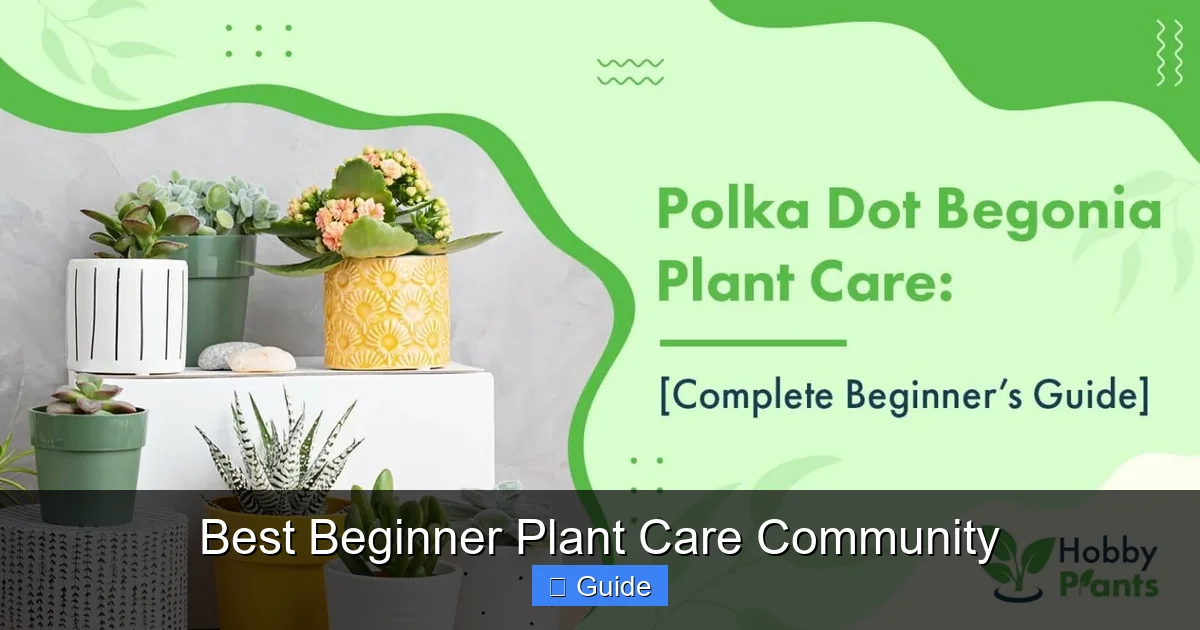
Visual guide about Best Beginner Plant Care Community
Image source: hobbyplants.com
Reddit rewards detailed posts. Include photos. Share your care routine. List your conditions. Members respond with specific advice. The format encourages thoroughness. Anonymity helps beginners ask “dumb” questions without embarrassment. No question is too basic. The community culture celebrates curiosity.
Discord: Real-Time Chat and Voice
Discord servers offer instant conversation. You join a voice channel. You show your plant on camera. Experts walk you through repotting live. Text channels organize by topic. #help-me, #show-off, #propagation, #pests. Bots provide care reminders. Some servers host weekly Q&A sessions with horticulturists.
The best beginner plant care community on Discord feels like a friend group. You recognize regulars. You celebrate their new leaves. They celebrate yours. This social bond increases engagement. You check in daily. You learn passively through conversation. Knowledge absorbs naturally.
Facebook Groups: Local Connections and Swaps
Facebook groups excel at local connection. Search “plant swap [your city].” You find neighbors trading cuttings. You meet for coffee and plant talk. You acquire rare plants for the cost of gas. Local groups know your climate. They know which stores get good stock. They organize nursery trips.
Group size varies. Small groups feel intimate. Large groups offer more answers. Many areas have both. Join several. Observe culture. Some groups allow selling. Others ban commerce. Read rules before posting. The best beginner plant care community on Facebook often bridges online and offline worlds.
Traditional Forums: Deep Knowledge Archives
Forums like GardenWeb (now Houzz), Planta, and specialized boards hold decades of threads. The structure encourages long-form discussion. Threads stay active for years. Experts build reputations through consistent quality. You find master growers documenting entire plant lifecycles.
Forums require more effort to navigate. Search tools vary. Mobile experience sometimes lags. But the depth rewards patience. The best beginner plant care community on forums often includes professional growers. Their detailed write-ups become reference material you return to repeatedly.
Instagram and TikTok: Visual Inspiration
Social media prioritizes beauty over depth. But comments sections hide gold. Follow educators like @houseplantjournal, @theplantkween, @planterina. Turn on post notifications. Read every comment. Ask questions. Many creators reply personally. Their followers form micro-communities in threads.
Use hashtags strategically. #planthelp #plantclinic #plantparenthood. Search before posting. Save educational posts to collections. Create a “reference” folder. The best beginner plant care community on social media spreads across accounts. You curate your own feed of trusted voices.
What Makes a Community “The Best”
Active and Responsive Moderation
Good moderation feels invisible. Bad moderation feels restrictive. The best beginner plant care community has moderators who guide without gatekeeping. They remove dangerous advice (like putting cinnamon on roots). They merge duplicate threads. They welcome newcomers. They enforce kindness. They know the difference between debate and argument.
Check moderation history. Look at removed posts. Read pinned announcements. Do mods explain decisions? Do they admit mistakes? Transparency builds trust. A community where moderators participate as members, not just police, signals health.
Beginner-Friendly Culture
Some communities tolerate beginners. The best ones celebrate them. Look for “no stupid questions” policies. Weekly beginner threads. Mentorship programs. Glossaries of common terms. Pinned guides for absolute basics. The best beginner plant care community remembers that everyone started knowing nothing.
Watch how veterans respond to basic questions. Do they link resources? Do they explain simply? Or do they say “search the sub”? Kind patience indicates a sustainable community. Condescension drives beginners away.
Diverse Expertise Levels
A healthy community spans total novices to professional horticulturists. You need peers at your level. You need mentors ahead of you. You eventually become a mentor yourself. This cycle sustains the community. The best beginner plant care community makes progression visible and valued.
Look for member flairs or roles indicating experience. “Beginner,” “Intermediate,” “Expert,” “Professional.” These help you weight advice. A watering tip from a pro carries different weight than from a week-old beginner. Both perspectives matter.
Organized Information Architecture
Can you find things? Good communities invest in organization. Wikis. Pinned posts. Flairs. Tags. Searchable archives. FAQ sections. The best beginner plant care community treats information as a shared asset. They curate it. They update it. They make it accessible.
Test search before joining. Try finding “spider mite treatment.” Try “best soil for alocasia.” If results are messy, the community may frustrate you later. Organization scales. Chaos compounds.
Positive Conflict Resolution
Plant care has debates. Organic vs synthetic. Terracotta vs plastic. Bottom watering vs top. The best beginner plant care community hosts these discussions productively. Members share reasoning. They cite sources. They acknowledge nuance. They disagree without attacking.
Read a few controversial threads. How do disagreements end? With learning? With locked threads? With personal insults? The pattern reveals community health. You want a place where conflict produces clarity.
Specialized Communities Worth Joining
Genus-Specific Groups
General communities cover breadth. Genus-specific groups cover depth. Join r/hoya for hoya obsession. Join “Monstera Lovers” on Facebook for split-leaf expertise. Join “African Violet Society” for flowering mastery. The best beginner plant care community for your favorite plants lives in these niches.
Specialized groups catch problems general groups miss. Hoya people know hoya-specific pests. They know which species want drought. Which want humidity. They share bloom triggers. They trade rare cuttings. Your general knowledge grows. Your specific success rate soars.
Method-Based Communities
Some groups form around growing methods. Semi-hydroponics. LECA. Pon. Kratky. Self-watering spikes. Terrariums. Vivariums. The best beginner plant care community for your chosen method provides focused troubleshooting. Transitioning to LECA? Join a LECA group. You avoid months of trial and error.
Method communities often have strong opinions. That’s good. Strong opinions mean tested systems. Follow their protocols. Adjust later. The structure accelerates competence.
Climate and Region Groups
Your zone dictates everything. Outdoor growers need zone-specific advice. Indoor growers need humidity and light reality checks. The best beginner plant care community for your location understands your constraints. They know your winter light. Your summer heat. Your tap water.
Search “[your state] plant group” or “[your country] houseplants.” Join. Lurk. Learn the local rhythm. When to bring plants in. When to acclimate out. Which nurseries get good stock when. This local intelligence saves money and heartbreak.
Problem-Focused Communities
Pest groups. Disease groups. Rescue groups. Rehabilitation groups. These communities form around challenges. The best beginner plant care community for crisis management specializes in triage. You bring your dying plant. They give you a protocol. They check on progress. They celebrate recovery.
Join these before you need them. Read their resources. Know their protocols. When crisis hits, you act fast. Preparation distinguishes plant savers from plant mourners.
How to Engage Effectively
Ask Better Questions
Quality questions get quality answers. The best beginner plant care community responds best to complete information. Always include: clear photos (overall, close-up, underside of leaves), plant ID if known, care routine (water frequency, light, soil, fertilizer), environment (humidity, temperature, draft exposure), recent changes (repotting, moving, new fertilizer), and duration of problem.
Bad question: “Help my plant is dying.” Good question: “My 2-year-old monstera deliciosa developed yellow edges on lower leaves over 3 weeks. Water weekly when top 2 inches dry. East window, 2 feet back. Standard potting mix with perlite. No fertilizer last 2 months. Humidity 45%. Repotted 6 weeks ago. Photos attached.” The second gets specific help. The first gets generic guesses.
Give Back As You Learn
Communities thrive on reciprocity. Answer questions you now know. Share your successes. Document your experiments. Post progress photos. The best beginner plant care community grows when members contribute. Your beginner perspective helps other beginners. You explain things differently than experts. That translation has value.
Start a “journey thread” for a challenging plant. Update weekly. Note what you try. Note results. Others follow. They learn vicariously. You create accountability. The thread becomes a resource. This single habit accelerates your growth enormously.
Build Relationships Beyond Questions
Comment on others’ posts. Celebrate their new leaves. Sympathize with their losses. Offer encouragement. The best beginner plant care community runs on social capital. You build it through genuine engagement. Not networking. Not transaction. Just human connection around shared interest.
Direct message people whose growing style you admire. Ask for a virtual tour. Propose a cutting trade. Many lasting friendships start this way. Plant people tend to be generous. Match that energy.
Curate Your Personal Knowledge Base
Save useful posts. Bookmark threads. Screenshot protocols. Create a digital notebook. Organize by plant, problem, or method. The best beginner plant care community generates too much info to remember. Your curated collection becomes your personal reference library.
Tools: Notion, Obsidian, OneNote, even a private Pinterest board. Whatever you’ll actually use. Review monthly. Delete outdated info. Add new insights. This habit compounds. In a year, you hold a customized plant care manual.
Red Flags: Communities to Avoid
Gatekeeping and Elitism
“Real plant parents don’t use moisture meters.” “If you buy from big box stores, you don’t deserve rare plants.” “You’re not ready for that species.” Run. The best beginner plant care community welcomes every entry point. Moisture meters teach. Big box plants teach. Ambitious purchases teach. Elitism only teaches shame.
Commercial Agendas Disguised as Community
Some “communities” are marketing funnels. Moderators sell products. Advice steers toward purchases. Dissenting opinions disappear. The best beginner plant care community prioritizes plant health over profit. They discuss cheap alternatives. They critique sponsored products honestly. They disclose affiliations.
Toxic Positivity
“Good vibes only!” “No negativity!” “Your plant will be fine!” This sounds nice. It kills plants. The best beginner plant care community faces reality. Sometimes the answer is “throw it out.” Sometimes it’s “you overwatered.” Sometimes it’s “this species hates your conditions.” Kind honesty beats toxic positivity every time.
Stagnation and Abandonment
Last post was three months ago. Moderators inactive. Questions unanswered. Spam unremoved. The best beginner plant care community shows daily life. Even quiet days have recent activity. Check timestamps before investing time. A dead community cannot help living plants.
One-Size-Fits-All Dogma
“Water every Sunday.” “Mist daily.” “Never use tap water.” Rigid rules ignore variables. The best beginner plant care community teaches principles, not rules. They say “water when dry” not “water weekly.” They explain why. They adapt to your conditions. Dogma creates dependency. Principles create independence.
Building Your Community Ecosystem
Primary Home Base
Choose one platform as your main community. Where you post questions. Where you build relationships. Where you contribute regularly. The best beginner plant care community for you fits your communication style. Love long discussions? Forums. Prefer quick chat? Discord. Want local meetups? Facebook. Need searchable archives? Reddit.
Commit for three months. Engage daily. Build reputation. Learn the culture. Become a known member. Depth beats breadth. Five shallow memberships yield less than one deep one.
Supplementary Sources
Add 2-3 supplementary communities for specific needs. A genus group for your obsession. A method group for your technique. A local group for swaps. The best beginner plant care community ecosystem combines breadth and depth. Each serves a purpose. You navigate between them fluently.
Expert Follows
Identify 5-10 individual experts across platforms. Follow their content. Study their reasoning. The best beginner plant care community includes standout individuals. Their posts often teach more than threads. They synthesize. They experiment. They document. Learn from their patterns.
Offline Connections
Nothing replaces in-person plant talk. Attend swaps. Visit botanical gardens. Take workshops. Join garden clubs. The best beginner plant care community extends beyond screens. Physical plants change hands. Physical spaces inspire. Physical friends support.
Start small. Invite a plant friend for coffee. Bring a cutting. Trade. Talk. Repeat monthly. This rhythm builds your local network organically.
Measuring Community Impact on Your Growth
Track Your Plant Health Metrics
Before community: survival rate, problem resolution time, confidence level. After six months: compare. The best beginner plant care community should move these numbers. Higher survival. Faster fixes. More confidence. If not, reassess your engagement or community choice.
Keep a simple log. Plant acquired. Problems faced. Community help received. Outcome. Review quarterly. Patterns emerge. You see which communities helped which problems. You optimize.
Assess Knowledge Transfer
Can you now answer questions you once asked? Do you explain concepts to friends? Does your vocabulary expand? The best beginner plant care community transforms you from consumer to contributor. This shift marks true integration. Measure it by your output, not just input.
Evaluate Relationship Quality
Do you have plant friends you’d text at midnight about thrips? Who celebrate your first bloom? Who remember your plants’ names? The best beginner plant care community creates bonds. These relationships sustain the hobby through inevitable slumps. Count them. Nurture them.
Monitor Joy Levels
Plant care should bring joy. Community should amplify it. If community adds stress, comparison, or inadequacy, something’s wrong. The best beginner plant care community increases net happiness. Check in with yourself. Adjust participation if needed. Protect your joy.
Conclusion
Finding the best beginner plant care community changes your plant parenthood trajectory. It turns isolated struggle into shared adventure. It converts confusing symptoms into recognizable patterns. It transforms plant death from failure into curriculum. The right community does not just save plants. It saves plant parents.
Start today. Pick one platform. Join one community. Introduce yourself. Ask one question. Answer one question. Save one helpful post. This single step begins a cascade. Six months from now, you will not recognize your former confused self. You will be the one spotting thrips in a blurry photo. You will be the one explaining bottom watering. You will be the one welcoming the next beginner.
Your plants are waiting. Your people are waiting. The best beginner plant care community for you exists right now. Go find it. Your green future starts with a single click.
Frequently Asked Questions
How long does it take to become knowledgeable in a plant community?
Most beginners see significant improvement within 3-6 months of active daily engagement. Consistent participation accelerates learning faster than passive reading alone.
Are paid plant communities worth it for beginners?
Free communities offer exceptional value for beginners. Paid groups may provide structured courses or expert access, but the best beginner plant care community is often free and community-driven.
What if my local area has no plant community?
Start one! Create a Facebook group or Discord server for your region. Post in local gardening forums. Visit nurseries and ask about bulletin boards. Small beginnings grow into thriving local networks.
How do I handle conflicting advice from community members?
Look for consensus among experienced members, check for cited sources, consider your specific conditions, and when in doubt, test conservatively. Principles outweigh rigid rules.
Can I trust plant care advice from social media influencers?
Verify influencers have consistent long-term success, explain reasoning not just aesthetics, disclose sponsorships, and engage with follower questions. Cross-reference with community consensus.
What should I do if a community becomes toxic or unhelpful?
Leave quietly. Your energy belongs in supportive spaces. The best beginner plant care community uplifts you. If it drains you, it’s not the right community regardless of size or reputation.