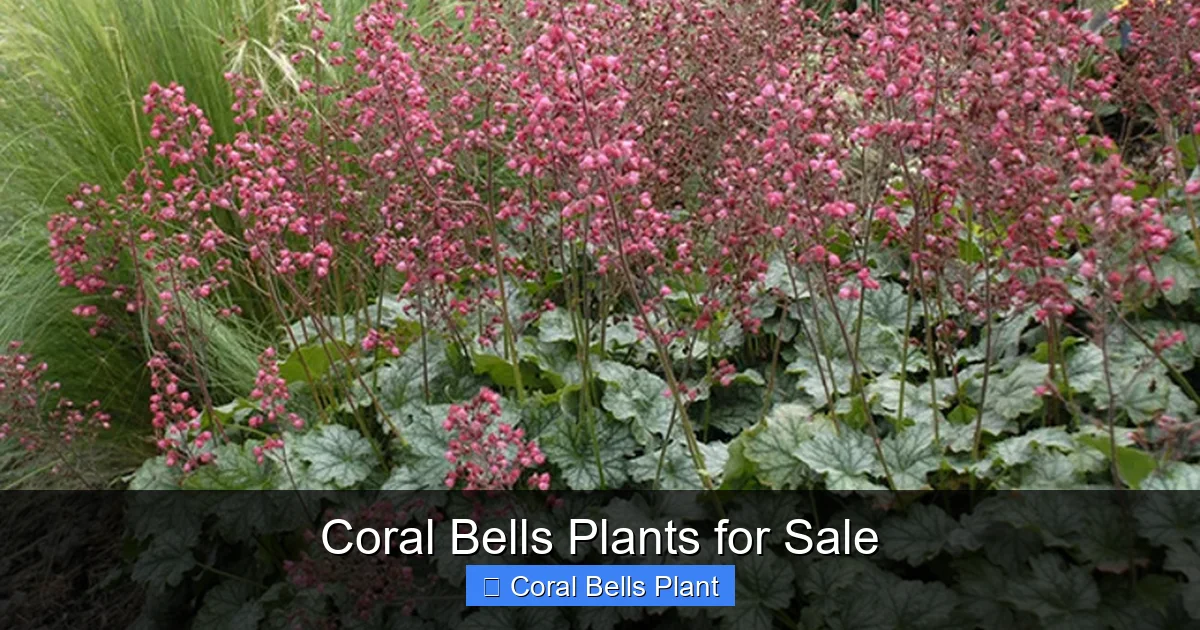
Coral Bells Plants for Sale
Coral bells plants for sale offer vibrant foliage, easy care, and year‑round interest for any garden. Choose from dozens of Heuchera cultivars to match your color palette and site conditions.
Welcome to the ultimate guide on coral bells plants for sale. If you love bright leaves and easy‑care perennials, you are in the right place. This article walks you through varieties, buying tips, planting steps, and design ideas.
We’ll start with why gardeners choose these plants. Then we’ll explore the most popular cultivars. Next, we’ll show where to buy healthy stock. After that, we’ll cover planting and ongoing care. We’ll also discuss common pests and how to solve problems. Finally, we’ll share design inspiration for every garden style.
Key Takeaways
- Versatile foliage: Coral bells provide color from spring through fall.
- Low maintenance: Once established, they need minimal watering and feeding.
- Shade tolerant: Most varieties thrive in part‑shade to full shade.
- Great for containers: Compact growth makes them perfect for pots.
- Deer resistant: Their bitter leaves deter browsing animals.
- Easy to propagate: Division every few years yields new plants.
- Wide availability: You can find coral bells plants for sale at nurseries and online.
Quick Answers to Common Questions
What are coral bells plants for sale?
Coral bells plants for sale are Heuchera perennials offered by nurseries and online retailers, known for colorful foliage and shade tolerance.
When is the best time to plant coral bells?
Early spring or early fall provides cool temperatures and adequate moisture for root establishment.
How often should I divide coral bells?
Divide clumps every three to four years in early spring to maintain vigor and prevent overcrowding.
Do coral bells attract pollinators?
Yes, the small bell‑shaped flowers draw bees and hummingbirds during early summer.
Can coral bells grow in full sun?
Most varieties prefer part shade; a few newer cultivars tolerate more sun if kept well‑watered.
📑 Table of Contents
Why Choose Coral Bells for Your Garden
Colorful Foliage All Season
Coral bells deliver bold leaf color from early spring to late autumn. The leaves come in shades of purple, caramel, lime, silver, and near‑black. Unlike many flowers, the foliage stays attractive even when blooms fade. This makes coral bells plants for sale a smart pick for continuous garden interest.
New growth emerges in fresh tones each spring. Summer heat deepens the pigment. Autumn adds a subtle metallic sheen. Winter reveals the plant’s architectural crown.
Low Maintenance Perennial
Once established, these perennials need little attention. They tolerate drought better than many shade plants. A yearly mulch and occasional division keep them vigorous. Busy gardeners appreciate the low‑work nature of coral bells plants for sale.
Water deeply during the first season. After that, rainfall often supplies enough moisture. Fertilize once in early spring with a balanced formula.
Versatile Landscape Uses
Use them as ground cover, border edging, or focal points in containers. Their mounded habit fits small spaces and large beds alike. Pair them with hostas, ferns, or ornamental grasses for texture contrast. The versatility of coral bells plants for sale makes them a designer favorite.
Plant in drifts for a natural look. Mix cultivars for a tapestry of color. Edge pathways with a single row for a tidy line.
Seasonal Interest Beyond Leaves
Delicate bell‑shaped flowers appear in early summer. They attract bees and hummingbirds. The flower spikes add vertical interest without overwhelming the foliage. After bloom, the seed heads provide winter texture.
Popular Coral Bells Varieties to Look For
Heuchera ‘Palace Purple’
This classic cultivar shows deep burgundy leaves with a metallic sheen. It holds color well in full shade. Gardeners love its reliable performance and strong clump formation.
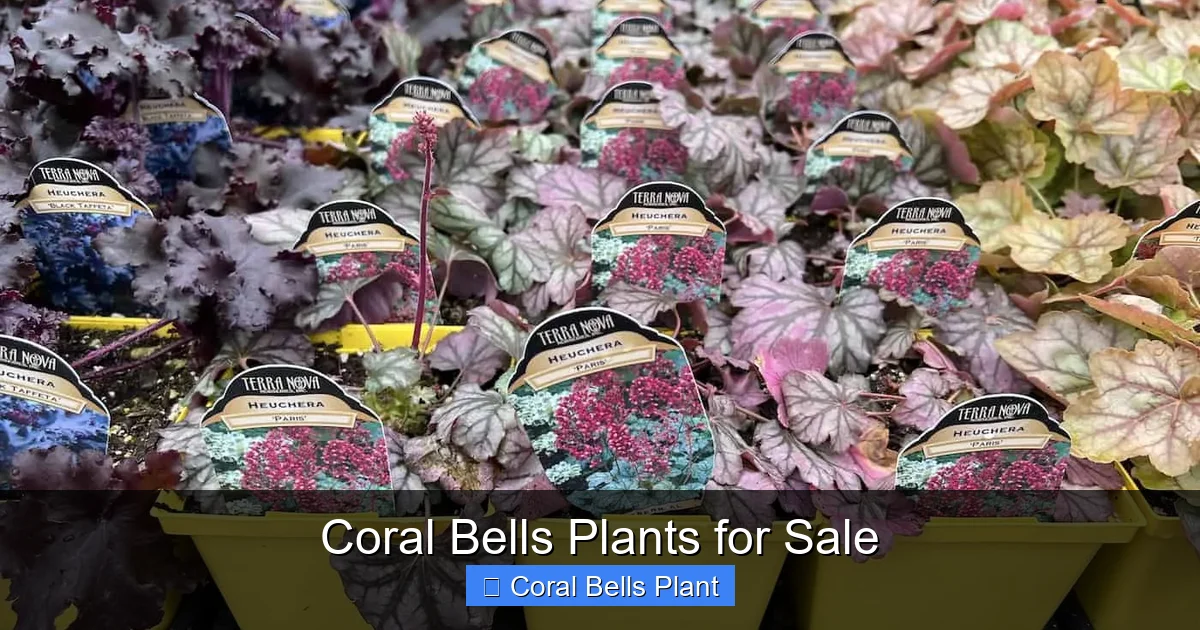
Visual guide about Coral Bells Plants for Sale
Image source: homefortheharvest.com
It reaches about 12 inches tall and 18 inches wide. The foliage stays glossy through summer heat.
Heuchera ‘Caramel’
Warm amber‑gold foliage brightens shady corners. The leaves develop a subtle pink blush in cool weather. It pairs beautifully with blue‑green hostas.
This variety tolerates a bit more sun than darker types. It stays compact at 10 inches high.
Heuchera ‘Lime Rickey’
Bright chartreuse leaves add a pop of neon color. This variety tolerates more sun than darker types. It works well in mixed containers.
Leaf color intensifies with morning light. It grows to 12 inches tall and spreads 16 inches.
Heuchera ‘Obsidian’
Near‑black leaves create dramatic contrast. The glossy surface reflects light, adding depth to shade gardens. It is a top seller among coral bells plants for sale.
Obsidian reaches 14 inches high and 20 inches wide. It holds its dark hue even in hot summers.
New Introductions Each Year
Breeders release new Heuchera each year. Look for series like “Forever” and “Dolce” for improved heat tolerance and disease resistance. Checking catalogs each season keeps your collection fresh.
Many new cultivars feature ruffled edges or variegated patterns. They expand design possibilities for shade gardens.
Where to Find Coral Bells Plants for Sale
Local Nurseries and Garden Centers
Visiting a nearby nursery lets you inspect root health and leaf quality. Staff can recommend varieties suited to your microclimate. Many centers carry a rotating selection of coral bells plants for sale throughout spring.
Ask about the source of the plants. Locally grown stock often adapts faster to your garden conditions.
Online Retailers and Specialty Sites
Reputable online shops ship bare‑root or potted plants nationwide. Read reviews and check guarantee policies before ordering. Specialty sites often offer rare cultivars not found locally.
Look for sellers that provide detailed photos of the actual plant you will receive. A good return policy protects your investment.
Plant Swaps and Community Sales
Garden clubs and neighborhood swaps are great sources for divisions. You can trade extra clumps for new colors. These events also build local gardening networks.
Bring a few healthy divisions to share. You may discover unique sports not sold commercially.
Tips for Evaluating Plant Health
- Check roots: White, firm roots indicate vigor.
- Inspect leaves: Avoid plants with yellowing, spots, or wilting.
- Ask about source: Locally grown stock adapts faster.
- Verify labeling: Correct cultivar name ensures you get the color you want.
Seasonal Availability
Spring is the peak season for coral bells plants for sale. Fall offers a second window for planting before winter. Summer sales often feature discounted stock but may require extra watering.
How to Plant and Care for Coral Bells
Site Selection and Soil Prep
Choose a spot with morning sun and afternoon shade. Well‑draining soil rich in organic matter works best. Amend heavy clay with compost or leaf mold before planting.
Test soil pH; aim for 6.0 to 7.0. Add lime if soil is too acidic. Incorporate a slow‑release fertilizer into the planting hole.
Planting Depth and Spacing
Set the crown at soil level, not deeper. Space plants 12 to 18 inches apart to allow air flow. Proper spacing reduces disease risk and showcases each clump.
Dig a hole twice as wide as the root ball. Backfill with amended soil and firm gently.
Watering and Mulching
Water deeply after planting, then keep soil evenly moist for the first month. Apply a two‑inch layer of shredded bark mulch. Mulch conserves moisture and suppresses weeds.
Check soil moisture weekly. Reduce watering once plants are established.
Fertilizing Schedule
Feed with a balanced slow‑release fertilizer in early spring. A light top‑dressing of compost in midsummer boosts foliage color. Avoid high‑nitrogen formulas that promote weak growth.
Liquid seaweed extract can be applied monthly during active growth for extra vigor.
Pruning and Division
Remove spent flower stalks to tidy the plant. Every three to four years, lift clumps in early spring and divide with a sharp spade. Replant divisions promptly for quick establishment.
Discard any woody, dead centers. Each division should have at least three healthy shoots.
Winter Protection
In cold zones, apply a thick mulch layer after the ground freezes. This insulates crowns from freeze‑thaw cycles. Remove excess mulch in early spring to prevent rot.
Common Pests, Diseases, and Troubleshooting
Aphids and Spider Mites
Inspect undersides of leaves weekly. A strong spray of water dislodges light infestations. Insecticidal soap works for heavier outbreaks.
Encourage beneficial insects like lady beetles by planting nearby nectar sources.
Crown Rot and Powdery Mildew
Good drainage and air circulation prevent most fungal issues. Remove affected foliage immediately. Apply a copper‑based fungicide if mildew persists.
Avoid overhead watering late in the day. Water at the base of the plant instead.
Deer and Rabbit Resistance
Heuchera’s bitter taste usually deters browsing. In high‑pressure areas, use repellent sprays or physical barriers.
Fencing at least 3 feet high keeps most deer out. Row covers protect young plants.
Environmental Stress
Leaf scorch appears when plants receive too much afternoon sun. Relocate or provide shade cloth during heat waves. Consistent watering reduces stress symptoms.
Yellowing leaves may indicate nutrient deficiency. A soil test guides corrective fertilization.
Root Knot Nematodes
These microscopic worms cause swollen roots and stunted growth. Rotate planting areas each year. Solarize soil in summer to reduce populations.
Designing with Coral Bells: Companion Plants and Layout Ideas
Shade Garden Pairings
Combine coral bells with hostas, astilbes, and ferns for layered texture. The contrasting leaf shapes create visual rhythm. Repeat a single cultivar in drifts for a cohesive look.
Add spring bulbs like snowdrops for early color before Heuchera emerges.
Container Arrangements
Use a tall thriller like ornamental grass, a filler of coral bells, and a trailing spiller such as creeping jenny. Choose a pot with drainage holes and quality potting mix.
Group three containers of varying heights for a dynamic patio display.
Border and Edging Designs
Plant a single row along pathways for a neat edge. Alternate colors for a subtle stripe effect. Low height keeps sight lines open.
Mix in low‑growing sedums for drought‑tolerant contrast.
Seasonal Interest
In spring, fresh foliage emerges bright. Summer brings delicate flower spikes that attract pollinators. Autumn deepens leaf tones, and winter reveals attractive crown structure.
Leave seed heads standing for winter wildlife food.
Mass Planting for Impact
Plant 20 or more of the same cultivar in a large bed. The mass creates a bold color block visible from a distance. This technique works well in public gardens and large residential landscapes.
Space plants 12 inches apart for quick fill‑in.
Coral bells plants for sale give gardeners a palette of color, texture, and easy care. By selecting the right varieties, buying healthy stock, and following simple planting steps, you can enjoy vibrant foliage for years. Whether you fill a shady border, brighten a container, or create a woodland drift, these perennials deliver reliable beauty. Happy planting!
Frequently Asked Questions
What soil type is best for coral bells?
Well‑draining, humus‑rich soil with a slightly acidic to neutral pH supports healthy growth.
How much water do coral bells need?
Keep soil consistently moist but not soggy; water deeply once a week during dry spells.
Are coral bells deer resistant?
Yes, their bitter foliage usually deters deer and rabbits.
Can I grow coral bells in containers year‑round?
In mild climates they thrive in pots all year; in cold zones move containers to a protected spot for winter.
What fertilizer works best for coral bells?
A balanced slow‑release fertilizer applied in early spring promotes strong foliage color.
How do I prevent crown rot in coral bells?
Plant at the correct depth, ensure good drainage, and avoid overhead watering that keeps the crown wet.