Wild Ginger Plant Locations
Wild ginger (Asarum canadense) thrives in moist, shady woodlands across eastern North America from Canada to the Gulf Coast. This low-growing native perennial prefers rich, well-drained soil under deciduous trees and spreads slowly by rhizomes to form dense colonies. Knowing its preferred habitat helps you locate it responsibly while protecting wild populations.
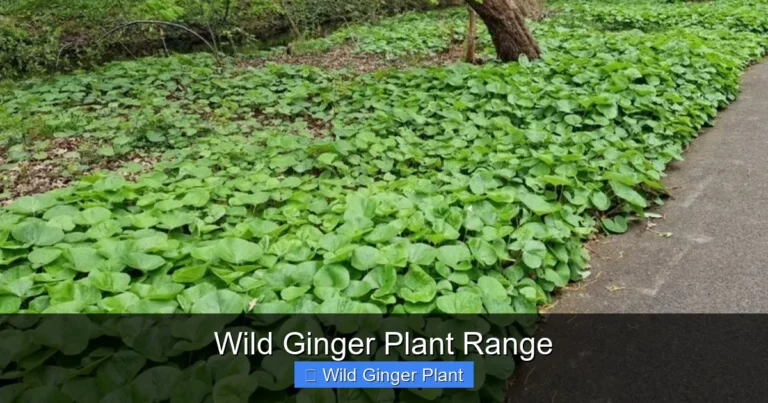
If you’ve ever wandered through a damp, shady woodland in eastern North America and noticed a carpet of deep green, heart-shaped leaves hugging the forest floor, you’ve likely stumbled upon wild ginger. This unassuming native perennial doesn’t announce itself with showy flowers or towering height. Instead, it quietly carpets the understory, spreading by creeping rhizomes to form colonies that can persist for decades. For foragers, herbalists, native plant enthusiasts, and curious hikers, understanding wild ginger plant locations opens a window into the ecology of our eastern forests.
But finding wild ginger isn’t just about knowing which states it grows in. It’s about reading the landscape, recognizing the subtle clues that signal its presence, and understanding the specific conditions this plant requires to thrive. Whether you’re hoping to observe it in its natural habitat, add it to your shade garden, or learn about its traditional uses, this guide will walk you through everything you need to know about where wild ginger grows, how to identify it, and how to interact with it responsibly.
Key Takeaways
- Native range spans eastern North America: Wild ginger grows from Manitoba and Quebec south to Georgia and west to Missouri and Oklahoma.
- Prefers specific woodland conditions: Look for it in moist, shady deciduous forests with rich, humus-rich soil and good drainage.
- Spring is the best time to spot it: Heart-shaped leaves emerge in early spring before tree canopy closure, making identification easiest.
- Multiple species exist across regions: While Asarum canadense dominates the east, western species like Asarum caudatum occupy Pacific Northwest forests.
- Ethical harvesting matters: Never dig entire plants; take only a small portion of rhizome from large colonies and always leave roots intact.
- Watch for toxic look-alikes: Some similar plants like European wild ginger (Asarum europaeum) and certain violet species can cause confusion.
- Consider cultivation over wild harvest: Wild ginger establishes well in shade gardens, providing a sustainable alternative to foraging.
Quick Answers to Common Questions
Where does wild ginger grow in the United States?
Wild ginger (Asarum canadense) grows across eastern North America from Minnesota and Iowa east to New England, south through the Appalachians to Georgia and Alabama, and west to Missouri, Arkansas, and eastern Oklahoma. Western species like Asarum caudatum grow in the Pacific Northwest.
What habitat does wild ginger prefer?
Wild ginger thrives in moist, shady deciduous forests with rich, well-drained, humus-rich soil. It favors north- and east-facing slopes, stream terraces, coves, and ravines under mature canopy trees like sugar maple, basswood, and beech.
When is the best time to find wild ginger?
Early to mid-spring (April-May in most regions) is ideal. Leaves emerge before canopy closure, flowers appear at ground level, and competing vegetation is minimal. The plant remains visible all summer but is harder to spot among dense growth.
Can I harvest wild ginger from the wild?
Harvest is regulated in many states and prohibited on public lands without permits. If allowed, take only from large colonies, remove no more than 10% of rhizomes from colony edges, and leave the parent plant rooted. Cultivation is a sustainable alternative.
How do I identify wild ginger versus look-alikes?
Look for pairs of heart-shaped, softly hairy leaves on long petioles emerging from a creeping rhizome with a ginger scent. The hidden, three-lobed reddish flower at ground level in spring is distinctive. European wild ginger is evergreen with glossy leaves; violets have alternate stem leaves and different flowers.
📑 Table of Contents
- Understanding Wild Ginger: Not the Culinary Ginger You Know
- Geographic Distribution: Where Wild Ginger Grows Naturally
- Habitat Requirements: Reading the Landscape for Wild Ginger
- Seasonal Timing: When to Look for Wild Ginger
- Practical Field Tips for Locating Wild Ginger
- Conservation Status and Ethical Considerations
- Growing Wild Ginger: A Sustainable Alternative
- Traditional Uses and Modern Applications
- Look-Alikes and Identification Pitfalls
- Citizen Science and Contributing to Knowledge
- Conclusion: A Plant Worth Knowing, A Habitat Worth Protecting
Understanding Wild Ginger: Not the Culinary Ginger You Know
Before we dive into locations, let’s clear up a common point of confusion. Despite its name, wild ginger (Asarum canadense) is not related to the tropical ginger (Zingiber officinale) you buy at the grocery store. They belong to completely different plant families. Wild ginger is a member of the birthwort family (Aristolochiaceae), while culinary ginger is in the Zingiberaceae family. The name “wild ginger” comes from the spicy, ginger-like aroma of its rhizomes, which Indigenous peoples and early settlers used as a flavoring and medicine.
Basic Identification Features
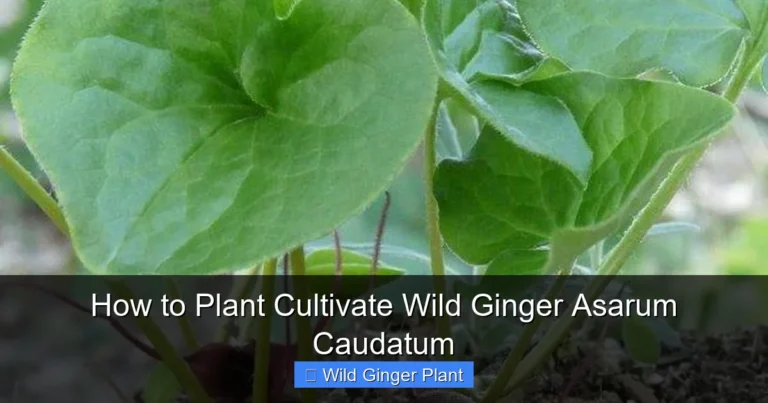
Wild ginger is a low-growing perennial, typically reaching only 6 to 12 inches in height. Each plant produces a pair of large, heart-shaped (cordate) leaves that emerge on long petioles from the rhizome. The leaves are deep green, softly hairy, and can span 4 to 8 inches across. In spring, usually April through May depending on latitude, a single unusual flower appears at ground level, nestled between the two leaf stems. This flower is bell-shaped, reddish-brown to purplish, with three pointed lobes. It’s often hidden beneath leaf litter, pollinated by early-emerging flies and beetles attracted to its faint carrion-like scent.
The rhizome itself is the namesake feature. It creeps horizontally just below the soil surface, about the thickness of a pencil, with a strong ginger-camphor fragrance when crushed. Roots emerge from nodes along the rhizome. Colonies expand slowly, often just a few inches per year, which is why large patches indicate long-established, undisturbed habitat.
Species Overview: More Than One Wild Ginger
While Asarum canadense is the most widespread and commonly referenced species, the genus Asarum includes several North American natives. Asarum caudatum (long-tailed wild ginger) dominates the Pacific Northwest, from British Columbia to California and east to Montana. It has larger, more triangular leaves and distinctive long-tailed flowers. Asarum virginicum (Virginia wild ginger) occurs in the central Appalachians. Asarum hartwegii (Hartweg’s wild ginger) is found in California and Oregon. Asarum lemmonii (Lemmon’s wild ginger) grows in the Sierra Nevada. Each species has slightly different habitat preferences, but all share the basic wild ginger morphology and affinity for shady, moist woodlands.
Geographic Distribution: Where Wild Ginger Grows Naturally
Eastern North America: The Core Range
Asarum canadense claims the largest range of any North American wild ginger. Its distribution forms a broad swath across the eastern deciduous forest biome. In Canada, it extends from southern Manitoba eastward through Ontario, Quebec, New Brunswick, and Nova Scotia. In the United States, the range covers the entire Northeast, all of New England, south through the Appalachian Mountains to northern Georgia and Alabama, and west across the Great Lakes states into Minnesota, Iowa, Missouri, eastern Kansas, Oklahoma, and Arkansas. The southern boundary roughly follows the transition from deciduous to more subtropical forests, while the western edge corresponds to the prairie-forest ecotone where rainfall becomes insufficient for its preferred mesic conditions.
Regional Strongholds and Gaps
Within this broad range, wild ginger isn’t evenly distributed. It’s most abundant in the rich, mesic forests of the Appalachian Mountains, the Great Lakes region, and the Ohio River Valley. The Driftless Area of Wisconsin, Minnesota, Iowa, and Illinois harbors extensive populations in its deeply dissected, never-glaciated topography. The Cumberland Plateau and Allegheny Mountains provide vast contiguous habitat. Conversely, it’s largely absent from the coastal plain of the Southeast, the pine barrens of New Jersey, the drier oak-hickory forests on poor soils, and areas where agriculture or development has eliminated the forest understory. In the western Great Plains, it persists only in sheltered ravines and north-facing slopes where microclimates mimic its eastern strongholds.
Western Species: Pacific Northwest and California
If you’re west of the Rockies, you’re looking for different species. Asarum caudatum thrives in the coastal rainforests and moist inland forests from southern Alaska through British Columbia, Washington, Oregon, northern California, Idaho, and western Montana. It’s a hallmark of the Pacific Northwest’s temperate rainforest understory, often growing alongside sword fern, oxalis, and vanilla leaf. Asarum hartwegii and Asarum lemmonii occupy more specialized niches in the Klamath-Siskiyou region and Sierra Nevada respectively, often at higher elevations in mixed conifer forests. These western species tend to be evergreen or semi-evergreen, unlike the fully deciduous eastern species.
Habitat Requirements: Reading the Landscape for Wild Ginger
Light Conditions: Deep Shade Specialist
Wild ginger is an obligate shade plant. You’ll almost never find it in full sun, forest edges with direct afternoon light, or recently cleared areas. It requires the consistent, dappled to deep shade provided by a mature deciduous canopy. The ideal light environment is what foresters call “high shade” – enough filtered light for photosynthesis but protection from direct solar radiation, especially in summer. This is why it’s most abundant under maple, beech, basswood, and oak canopies that cast dense shade. Coniferous shade is generally too dark and acidic, though western species tolerate it better. In spring, before canopy leaf-out, wild ginger receives a brief window of higher light, which fuels its rapid leaf expansion and flowering.
Soil Preferences: Rich, Moist, Well-Drained
Soil conditions are perhaps the most reliable predictor of wild ginger presence. It demands soils high in organic matter – the kind built by centuries of leaf litter decomposition in undisturbed forests. The ideal substrate is a deep, loamy, humus-rich soil with a slightly acidic to neutral pH (5.5 to 7.0). It needs consistent moisture but cannot tolerate standing water or saturated anaerobic conditions. This means you’ll find it on lower slopes, terraces above floodplains, in coves and ravines, and on north- and east-facing aspects where evaporation is minimized. It avoids sandy soils that drain too quickly, heavy clays that waterlog, and thin soils over bedrock. The presence of indicator species like sugar maple, white ash, basswood, blue cohosh, bloodroot, and spring beauty often signals the right soil conditions.
Topography and Microclimate
Topography creates the microclimates wild ginger needs. In hilly terrain, it concentrates on north- and east-facing slopes, in deep coves, and along stream terraces where cold air drainage and shade maintain cooler, moister conditions. In flatter landscapes, it seeks out slight depressions, vernal pool margins, and areas with high water tables but good drainage. The Driftless Area’s complex topography creates endless microhabitats, explaining its abundance there. In the mountains, it’s most lush between 500 and 3,500 feet elevation, though it occurs higher in the southern Appalachians. It’s generally absent from ridgetops, south-facing slopes, and exposed ridges where soils dry out.
Forest Community Associations
Wild ginger is a characteristic species of several forest types. In the north, it’s a hallmark of sugar maple-basswood forests (the “northern hardwood” type). In the central and southern Appalachians, it defines rich cove forests and mixed mesophytic forests – among the most biologically diverse temperate forests on Earth. These communities feature a dense spring ephemeral layer (trilliums, trout lilies, Dutchman’s breeches) with wild ginger as a persistent summer groundcover. Associate trees include sugar maple, American beech, basswood, white ash, bitternut hickory, northern red oak, tulip poplar, and black cherry. The shrub layer is typically sparse (spicebush, pawpaw, bladdernut), allowing light to reach the herbaceous layer. Where deer overbrowsing has eliminated the shrub layer, wild ginger often persists because its foliage is unpalatable to deer.
Seasonal Timing: When to Look for Wild Ginger
Spring Emergence: The Prime Window
Early to mid-spring is hands-down the best time to locate wild ginger. In the southern part of its range (Georgia, Alabama, Arkansas), leaves may emerge as early as late March. In the Great Lakes and New England, emergence typically begins in mid-April to early May. The leaves unfurl rapidly, reaching full size within two to three weeks. This coincides with the flowering period. The flowers, hidden at ground level, are easiest to find by gently pulling back leaf litter at the base of leaf pairs. Spring also offers the advantage of minimal competing vegetation – the forest floor is still largely bare, making the distinctive heart-shaped leaves stand out.
Summer Persistence
Unlike true spring ephemerals (which die back by early summer), wild ginger keeps its leaves all season. Through summer, the foliage deepens in color and may show some insect damage but remains recognizable. This makes summer surveys possible, though the dense herbaceous layer of ferns, jack-in-the-pulpit, and other plants can obscure it. In drought years, leaves may wilt or develop brown margins, but the rhizomes survive underground.
Fall and Winter Dormancy
In autumn, the leaves yellow and collapse after the first hard frosts. By late October in the north, November in the south, aboveground parts have largely disappeared. Winter identification is impossible without digging, which disturbs the plant. However, if you’ve marked a location during the growing season, you can return in early spring to monitor emergence. The rhizomes remain alive and viable underground, waiting for soil temperatures to rise.
Practical Field Tips for Locating Wild Ginger
Use Indicator Species as Your Guide
Experienced botanists rarely search for a single species in isolation. They read the plant community. When you’re in potential habitat, scan for these reliable companions: sugar maple and basswood dominance in the canopy; spicebush and pawpaw in the understory; and on the forest floor, bloodroot, blue cohosh, Dutchman’s breeches, squirrel corn, trilliums (especially large-flowered and nodding), spring beauty, toothwort, and wild leeks (ramps). If you see a rich spring ephemeral display under maple-basswood on a north-facing slope with deep, dark soil, wild ginger is almost certainly there, even if not yet visible.
Search Strategies by Terrain
In mountainous terrain, focus on coves, hollows, and north-facing benches mid-slope. Avoid steep, rocky slopes and ridge tops. Follow contour lines rather than climbing straight up – wild ginger populations often form bands along consistent moisture contours. In rolling glaciated terrain (Great Lakes, New England), check the lower slopes of drumlins, the margins of kettle wetlands (but not in the wetland itself), and the rich soils of morainal depressions. In flat landscapes, look for subtle rises with better drainage surrounded by wetter ground, or the natural levees of small streams. Always prioritize areas with minimal disturbance history – old woodlots, protected ravines, steep slopes never plowed.
Tools and Techniques
A few simple tools enhance your search. A hand lens (10x) helps confirm the fine hairs on leaf petioles and examine the unusual flower structure. A small trowel or hori-hori knife allows careful rhizome examination if absolutely necessary (though visual ID is usually sufficient). A GPS unit or smartphone app lets you mark locations for future reference or citizen science reporting (iNaturalist, state heritage programs). Wear long pants and sleeves – the best habitats often harbor poison ivy, stinging nettle, and ticks. Bring a field guide specific to your region; the Peterson or Newcomb’s guides are excellent for eastern wildflowers.
Conservation Status and Ethical Considerations
Legal Protections and Status
Wild ginger’s conservation status varies by jurisdiction. Globally, Asarum canadense is ranked G5 (secure) by NatureServe. However, at state and provincial levels, the picture is more nuanced. It’s listed as endangered in Maine, threatened in Rhode Island, and of special concern in several states at its range margins. Many states prohibit harvest on public lands without a permit. Some classify it as a “vulnerable” species due to habitat loss and overcollection. Always check your state’s natural heritage program or department of natural resources for current regulations before collecting any plant material, even on private land with permission.
Threats to Wild Populations
The primary threats to wild ginger are habitat loss and degradation. Conversion of rich mesic forests to agriculture, residential development, and pine plantations has eliminated vast acreage. Invasive species like garlic mustard, Japanese stiltgrass, and earthworms (which destroy the duff layer wild ginger needs) degrade remaining habitat. Overbrowsing by white-tailed deer, while not directly targeting wild ginger, alters forest structure and facilitates invasive spread. Climate change poses a long-term threat, as the cool, moist microclimates wild ginger requires may shift or disappear. Commercial wildcrafting for the herbal market has impacted some populations, though cultivation now supplies most commercial demand.
Ethical Foraging Guidelines
If you choose to harvest wild ginger, follow these principles: Never harvest from small populations (fewer than 20 plants) or isolated patches. Take only from large, vigorous colonies where removal won’t be noticeable. Harvest no more than 10% of a colony’s rhizomes, and only from the expanding edges, never the center. Use a sharp knife to cut a segment, leaving the parent plant rooted and intact. Refill the hole with soil and leaf litter. Never dig whole plants for transplanting – this kills the donor plant and transplants rarely survive. Consider that the rhizome you harvest represents years of growth. For culinary or medicinal use, a small piece goes a long way. Better yet, grow your own.
Growing Wild Ginger: A Sustainable Alternative
Site Selection in the Garden
Wild ginger makes an outstanding native groundcover for shade gardens. Replicate its wild preferences: a shady spot under deciduous trees, ideally north or east of a structure or canopy. Soil should be rich in organic matter – amend with compost, leaf mold, or aged hardwood mulch. Ensure good drainage; raised beds or berms help in heavy clay. It thrives in the same conditions as hostas, ferns, and native woodland phlox. Once established, it forms a dense, weed-suppressing mat that requires zero mowing, fertilizing, or watering beyond establishment.
Propagation Methods
The easiest propagation is division. In early spring or fall, dig a small section of rhizome with roots and at least one leaf bud from an established patch (yours or a friend’s, with permission). Plant horizontally just below the surface, water well, and mulch. Divisions establish quickly. Seed propagation is possible but slow – seeds require cold stratification (90-120 days) and may take two years to germinate, then several more to reach maturity. Nurseries specializing in native plants increasingly offer container-grown wild ginger, which is the most reliable option for gardeners.
Cultivars and Related Garden Species
Several selections enhance garden performance. ‘Eco Medallion’ has particularly glossy, dark leaves. ‘Silver Spreader’ shows subtle silver mottling. European wild ginger (Asarum europaeum) is evergreen, more compact, and tolerates slightly drier conditions, making it popular in formal shade gardens. Asarum caudatum and Asarum splendens (Chinese wild ginger) offer larger, evergreen foliage for milder climates (zones 6-9). All share the same basic cultural needs and make excellent companions for native spring ephemerals, extending the season of interest after the ephemerals go dormant.
Traditional Uses and Modern Applications
Indigenous Knowledge and Ethnobotany
Dozens of Indigenous nations across wild ginger’s range used it extensively. The Cherokee, Iroquois, Ojibwe, Menominee, Meskwaki, and many others employed the rhizome as a seasoning for meats and vegetables, a digestive aid, a treatment for colds and fevers, a contraceptive, and a poultice for wounds and headaches. The Menominee steeped it as a tea for “female complaints.” The Potawatomi used it to flavor maple sugar. These uses reflect deep ecological knowledge – the rhizome contains aristolochic acid, which has antimicrobial properties but is also nephrotoxic and carcinogenic in large doses. Traditional preparation methods (roasting, boiling, combining with other herbs) likely mitigated risks. Modern herbalists generally recommend against internal use due to safety concerns.
Contemporary Herbal and Culinary Use
Today, wild ginger appears primarily in topical preparations – salves, oils, and liniments for muscle pain, inflammation, and fungal infections. The essential oil, rich in asarones and other compounds, shows antifungal and antibacterial activity in lab studies. Culinary use is niche but growing among foragers and chefs exploring native flavors. The rhizome can be candied, made into syrup, or dried and ground as a spice. The flavor is more camphoraceous and less sweet than tropical ginger. Because of aristolochic acid concerns, most experts advise limiting consumption to occasional, small amounts and avoiding it entirely during pregnancy or with kidney conditions.
Ecological Value
Beyond human uses, wild ginger plays vital ecological roles. Its dense mats stabilize soil on slopes, reduce erosion, and retain moisture. The flowers provide early-season nectar and pollen for specialized pollinators – small flies (especially fungus gnats and phorid flies) and beetles that are attracted to the flower’s ground-level position and faint odor. Ants disperse the seeds (myrmecochory), attracted to the fleshy elaiosome attached to each seed. The foliage hosts larvae of the pipevine swallowtail butterfly (Battus philenor) in the southern part of its range, though this butterfly more commonly uses its close relative, Virginia snakeroot (Aristolochia serpentaria). Deer avoid it, making it a rare “deer-proof” native groundcover.
Look-Alikes and Identification Pitfalls
European Wild Ginger (Asarum europaeum)
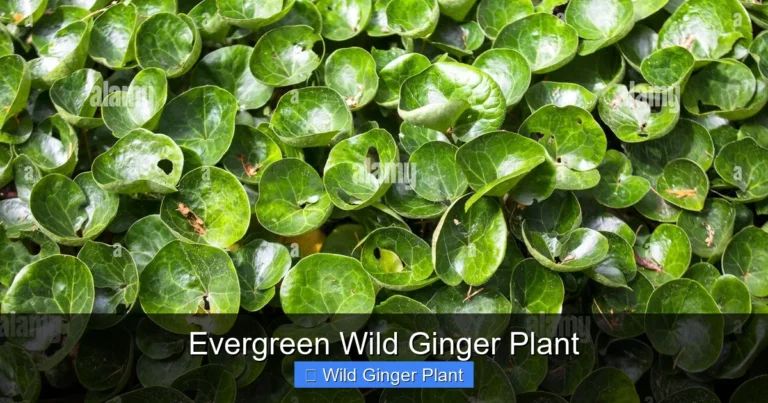
This introduced species has escaped cultivation in parts of the Northeast and Great Lakes. It’s evergreen, with smaller, glossier, more kidney-shaped leaves that persist through winter. Flowers are similar but smaller. It forms tighter, denser mats. While not aggressively invasive, it can compete with native wild ginger in disturbed urban woodlands. The key distinction: leaf texture (glossy vs. matte), evergreen vs. deciduous habit, and leaf shape (kidney vs. heart).
Violets (Viola spp.)
Several violet species have heart-shaped leaves that could confuse beginners. Canada violet (Viola canadensis) and yellow violet (Viola pubescens) grow in similar habitats. Differences: violets have alternate leaves on aerial stems (not basal pairs from a rhizome), stipules at leaf bases, and distinctly different flowers (bilaterally symmetric with a spur). Violet leaves are also typically thinner and less hairy.
Golden Ragwort (Packera aurea)
In early spring, the basal rosettes of golden ragwort resemble wild ginger colonies. Both have heart-shaped leaves on long petioles. However, ragwort leaves are thinner, brighter green, often purple-tinged underneath, and lack the fine hairs of wild ginger. By flowering time (May), the tall yellow flower stalks of ragwort make identification obvious.
Coltsfoot (Tussilago farfara)
This invasive Eurasian species has large, heart-shaped, angularly lobed leaves that appear after its yellow dandelion-like flowers. It favors disturbed, often damp roadsides and streambanks – not the deep forest interior. Leaves are thicker, more leathery, and white-woolly underneath.
Citizen Science and Contributing to Knowledge
Reporting Observations
Your wild ginger sightings contribute valuable data. Platforms like iNaturalist, NatureServe’s Biotics, and state natural heritage programs rely on citizen observations to track species distributions, phenology, and population health. When you find wild ginger, photograph the whole plant, the leaf pair, the flower (if present), and the habitat. Note the date, location (GPS coordinates), approximate population size, and any threats observed (invasives, erosion, trampling). This data informs conservation planning, climate change research, and land management decisions.
Monitoring Phenology
Phenology – the timing of seasonal events – is a sensitive indicator of climate change. Wild ginger’s emergence, flowering, and senescence dates are shifting. The USA National Phenology Network’s Nature’s Notebook program provides protocols for tracking these events. Regular monitoring of a marked patch throughout the year yields high-value data. Even informal notes on first leaf, first flower, and leaf drop dates, repeated annually, create a powerful long-term record.
Seed Collection for Restoration
If you manage land with wild ginger, consider collecting seed for restoration projects. Seeds mature in late summer (July-August), contained in a fleshy capsule that splits open. They must be collected just before dispersal and sown immediately or kept moist and cold. Many native plant nurseries and restoration organizations welcome wild-collected seed from known-local populations, as it preserves local genetic adaptation. Always follow ethical collection guidelines: take no more than 20% of seed from any population, collect from many individuals, and obtain landowner permission.
Conclusion: A Plant Worth Knowing, A Habitat Worth Protecting
Finding wild ginger is about more than checking a species off a life list. It’s an invitation to slow down, look closely, and read the story written in the forest floor. The presence of wild ginger tells you this patch of woods has been here a long time, that the soil is alive with fungi and invertebrates, that the canopy above has cast its protective shade for generations. It connects you to the Indigenous peoples who knew this plant as medicine and food, to the early settlers who substituted it for an imported spice, and to the countless flies and beetles that still pollinate its hidden flowers each spring.
Whether you encounter it on a steep Appalachian cove, a Lake Superior coastal forest, a Driftless Area ravine, or a shaded corner of your own garden, wild ginger rewards attention. Its subtle beauty – the velvet heart of its leaves, the secret flower at ground level, the spicy scent of its rhizome – reminds us that the most meaningful encounters in nature often come not from the showy or spectacular, but from the quiet, persistent, deeply rooted inhabitants of the wild places we love. By learning where it grows, how to identify it, and how to honor it through ethical interaction or cultivation, you become part of the long relationship between people and this remarkable native plant.
The next time you’re in a rich, shady woodland in spring, pause on a north-facing slope. Pull back the leaf litter at the base of a maple. You might just find that pair of heart-shaped leaves, and with them, a deeper connection to the forest beneath your feet.
Frequently Asked Questions
Is wild ginger related to the ginger root sold in grocery stores?
No, wild ginger (Asarum canadense) is not related to culinary ginger (Zingiber officinale). They belong to different plant families. The name comes from the similar spicy aroma of the rhizome, which was used as a ginger substitute by Indigenous peoples and early settlers.
Can wild ginger grow in full sun?
Wild ginger cannot tolerate full sun. It requires deep to dappled shade from a mature deciduous canopy. In sun, the leaves scorch, the plant dehydrates, and it will eventually die. It is an obligate shade species adapted to forest understory conditions.
Is wild ginger endangered?
Globally, wild ginger is considered secure (G5). However, it is listed as endangered in Maine, threatened in Rhode Island, and of special concern in several other states at its range margins. Habitat loss, invasive species, and overcollection threaten local populations.
How fast does wild ginger spread?
Wild ginger spreads slowly by creeping rhizomes, typically expanding just a few inches per year. Large colonies indicate decades or centuries of undisturbed growth. This slow spread makes it a well-behaved garden plant but also means wild populations recover slowly from disturbance.
Can I grow wild ginger in my garden?
Yes, wild ginger makes an excellent native groundcover for shade gardens. It needs rich, moist, well-drained soil with plenty of organic matter and protection from direct sun. Once established, it forms a dense, low-maintenance mat that suppresses weeds and supports native pollinators.
Are there any safety concerns with using wild ginger?
Wild ginger contains aristolochic acid, which is nephrotoxic and carcinogenic in significant amounts. Traditional preparations involved careful processing, but modern herbalists generally recommend against internal use, especially during pregnancy or with kidney conditions. Topical use in salves is considered safer. Culinary use should be minimal and occasional.