Wild Ginger Plant Leaf Identification
Wild ginger plant leaf identification is easy once you know the key traits: heart-shaped, velvety leaves with distinct parallel veins and a spicy aroma when crushed. This guide helps you confidently identify wild ginger and distinguish it from dangerous lookalikes like coltsfoot and wild violet.
Have you ever knelt on the damp forest floor, brushed aside fallen leaves, and wondered if that patch of heart-shaped greenery is the real deal? You’re not alone. Wild ginger plant leaf identification trips up even seasoned foragers because several woodland plants wear similar disguises. But here’s the good news: once you learn a handful of clear field marks, you’ll spot wild ginger with confidence every time.
I remember my first solo forage in the Appalachian foothills. I was certain I’d found a goldmine of wild ginger — until an old-timer at the farmers market gently corrected me. “That’s coltsfoot, son. Smell it.” No ginger zing. Just earth. That moment taught me the single most important rule: your nose knows. In this guide, we’ll walk through every visual and sensory clue so you never second-guess again.
Key Takeaways
- Heart-shaped leaves: Wild ginger leaves are distinctly cordate (heart-shaped) with a deep notch at the base where the stem attaches.
- Velvety texture: Both leaf surfaces feel soft and fuzzy, covered in fine hairs that give a matte appearance rather than glossy shine.
- Parallel vein pattern: Veins run in a palmate pattern from the base, curving gracefully toward the leaf margins without crossing.
- Spicy ginger scent: Crushing a leaf releases a strong ginger-like aroma, the most reliable field identification clue.
- Low-growing habit: Plants form dense colonies 4-8 inches tall, spreading by rhizomes in shady, moist woodland floors.
- Spring bloomers: Unique jug-shaped flowers appear at ground level in early spring, often hidden beneath leaf litter.
- Know the dangers: Coltsfoot and wild violet resemble wild ginger but lack the ginger scent and have different vein patterns.
Quick Answers to Common Questions
What is the most reliable way to identify wild ginger in the field?
Crush a leaf and smell it — the strong, unmistakable ginger aroma is the single most reliable field marker for wild ginger identification.
Can wild ginger be confused with coltsfoot?
Yes, coltsfoot leaves look similar but have woolly white undersides, toothed margins, pinnate venation, and no ginger scent when crushed.
When is the best time of year to identify wild ginger by its leaves?
Late spring (May-June) when leaves are fully expanded, velvety, and showing peak venation pattern before insect damage or drought stress.
Is wild ginger related to culinary ginger from the grocery store?
No, they are unrelated botanically — wild ginger (Asarum canadense) is in the birthwort family while culinary ginger (Zingiber officinale) is a tropical monocot.
Are wild ginger leaves safe to eat?
Leaves can be used sparingly for tea but contain aristolochic acid; rhizomes have higher concentrations — occasional culinary use is traditional but daily consumption is not recommended.
📑 Table of Contents
- Getting to Know Wild Ginger Basics
- The Leaf: Your Primary Identification Tool
- The Nose Knows: Scent as Confirmation
- Beyond the Leaf: Supporting Identification Features
- Common Lookalikes: Side-by-Side Comparison
- Seasonal Identification Guide
- Practical Field Tips for Confident Identification
- Culinary and Traditional Uses: A Brief Note
- Conclusion: Your Path to Confident Identification
Getting to Know Wild Ginger Basics
What Exactly Is Wild Ginger?
First things first: wild ginger (Asarum canadense) isn’t related to the grocery store ginger (Zingiber officinale) you grate into stir-fries. They share a name because their rhizomes smell and taste remarkably similar — warm, spicy, sweet — but they belong to completely different plant families. Wild ginger sits in the birthwort family (Aristolochiaceae), while culinary ginger is a tropical monocot in the Zingiberaceae clan.
This native North American perennial carpets deciduous forest floors from Manitoba to Georgia, west to the Dakotas and Oklahoma. It thrives in rich, mesic woods with dappled shade and consistent moisture. You’ll often find it growing alongside bloodroot, trillium, and mayapple — all spring ephemerals that share its love for undisturbed woodland soils.
Why Proper Identification Matters
Beyond the satisfaction of knowing your plants, correct wild ginger plant leaf identification keeps you safe. The rhizomes contain aristolochic acid, a compound linked to kidney damage and cancer with long-term or high-dose use. While traditional Indigenous uses involved careful preparation and moderation, modern herbalists generally recommend enjoying wild ginger as an occasional flavoring rather than a daily tonic.
More immediately dangerous are the lookalikes. Coltsfoot (Tussilago farfara) contains pyrrolizidine alkaloids that can cause liver damage. Wild violet (Viola sororia) is edible but lacks medicinal potency. And European ginger (Asarum europaeum), an escaped ornamental, has higher toxin concentrations. Knowing the difference isn’t academic — it’s essential.
The Leaf: Your Primary Identification Tool
Shape and Size: The Heart of the Matter
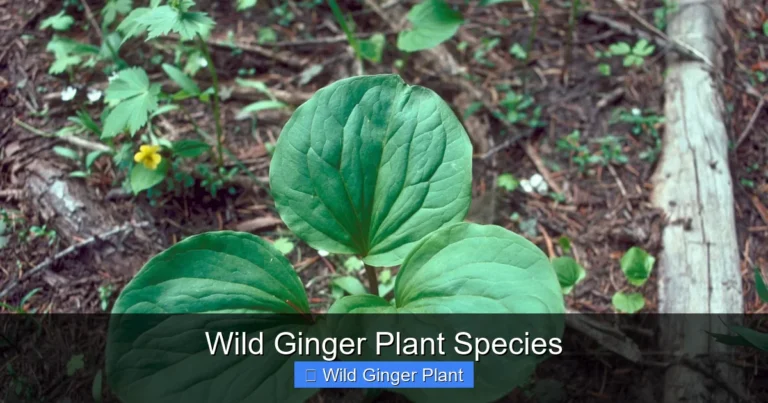
Wild ginger leaves are the textbook definition of cordate — heart-shaped with a deep, narrow sinus (notch) at the base where the petiole (leaf stem) attaches. Each leaf measures 3-6 inches wide and nearly as long, though shade-grown specimens often run larger. The apex (tip) comes to a gentle point, not a sharp one.
Here’s a pro tip: look at the leaf pair arrangement. Wild ginger produces two leaves per flowering stem, emerging opposite each other on short petioles (1-3 inches long). Non-flowering plants may have just a single leaf. Either way, the leaves stand nearly horizontal, forming a low canopy over the forest duff.
Texture and Surface: Velvet Touch
Run your fingertips across a wild ginger leaf. Both upper and lower surfaces feel softly pubescent — covered in fine, short hairs that create a velvety, matte finish. This is a key differentiator. Coltsfoot leaves feel thicker, almost rubbery, with woolly white undersides. Wild violet leaves are smoother, sometimes sparsely hairy but never velvety.
The hairs serve a purpose. In the dim understory, they trap a thin boundary layer of air, reducing water loss and deterring small herbivores. They also catch morning dew, channeling moisture toward the root zone. Next time you’re out at dawn, notice how wild ginger leaves glisten while neighbors stay dry.
Venation Pattern: Nature’s Roadmap
Hold a leaf up to the light. You’ll see 7-9 primary veins radiating from the base like fingers from a palm, curving gracefully toward the margins without branching or crossing. This palmate netted venation is distinctive. Secondary veins form a fine net between the majors, but the overall impression is orderly, almost geometric.
Compare this to coltsfoot: its veins are more pinnate (feather-like), with a strong midrib and side veins at intervals. Wild violet shows a similar palmate pattern but with more branching and a crinkled leaf surface. The clean, sweeping arcs of wild ginger veins are unmistakable once you’ve seen them side by side.
Color Clues Through the Seasons
Spring leaves emerge bright, yellowish-green, sometimes with a bronzy blush along the veins. By summer they deepen to a rich, matte medium green. In autumn, they don’t turn brilliant colors — just fade to pale yellow-brown before collapsing into the duff. Evergreen in mild winters? Rarely. Most populations die back completely.
One subtle marker: the leaf margins (edges) are entire (smooth), not toothed or lobed. They may appear slightly wavy, especially on larger leaves, but run your fingernail along the edge — no serrations. This smooth margin holds true across all growth stages.
The Nose Knows: Scent as Confirmation
The Ginger Snap Test
If you take one thing from this article, make it this: crush a leaf and smell it. Wild ginger releases an immediate, unmistakable ginger aroma — warm, spicy, slightly sweet, with a peppery top note. It’s the same volatile oils (bornyl acetate, camphor, and others) found in the rhizome, just more accessible.
Do this test every single time. Even if the leaf looks perfect. Even if you’re 99% sure. Coltsfoot smells faintly medicinal, like old cough syrup. Wild violet smells green, grassy, faintly floral. European ginger smells similar but harsher, more camphoraceous. Your nose processes these differences faster than your eyes ever could.
When Scent Might Mislead
There are caveats. Very young emerging leaves may not have developed full oil content. Drought-stressed plants produce less scent. And if you’ve just handled something pungent — garlic mustard, spicebush, even hand sanitizer — your olfactory fatigue could give a false negative.
Best practice: crush the leaf between thumb and forefinger, wait three seconds, then inhale deeply. Reset your nose between tests by smelling your own clean forearm. And always, always confirm with visual markers too. Scent is your primary key, but never your only key.
Beyond the Leaf: Supporting Identification Features
The Hidden Flower: Nature’s Easter Egg
Wild ginger flowers are the botanical equivalent of a secret menu item — they exist, but you’ll rarely see them unless you know where to look. Each flowering stem produces a single bloom at ground level, nestled in the leaf axil, often buried under last year’s leaves.
The flower is a marvel: no petals, just three fleshy, triangular calyx lobes fused into a jug-shaped tube (hence the genus name Asarum, from Greek for “cup”). Color ranges from purplish-brown to greenish-yellow, mottled and cryptic. It emits a faint carrion scent to attract early spring flies and beetles for pollination.
Bloom time: April to May, before the canopy closes. If you find a patch in flower, you’ve hit the identification jackpot. No lookalike produces anything remotely similar. But don’t rely on flowers — by the time most foragers are out, blooms are long gone.
Rhizome Revelations
The rhizome (underground stem) is where wild ginger stores its namesake flavor. It creeps horizontally just below the soil surface, 1/4 to 1/2 inch thick, segmented with nodes every inch or so. Each node bears a leaf scar and adventitious roots. The interior is creamy white, fibrous, and intensely aromatic.
You don’t need to dig to identify — please don’t, unless you’re sustainably harvesting with permission. But if you accidentally expose a rhizome while planting or weeding, note the distinctive ginger scent and jointed structure. Coltsfoot rhizomes are thicker, white, and smell earthy. Violet rhizomes are slender, branched, and odorless.
Growth Habit and Colony Formation
Wild ginger spreads vegetatively, forming dense,clonal colonies that can cover dozens of square feet. Individual plants connect via rhizomes, sharing resources across the network. This colonial habit means where you find one, you’ll find many — a helpful context clue.
Coltsfoot also forms colonies but in sunnier, disturbed sites — roadsides, gravel pits, streambanks. Wild violet prefers lawn edges, meadows, and open woods. Habitat overlap happens, but wild ginger’s stronghold is deep shade on north-facing slopes with rich, humusy soil. Let the plant community guide your expectations.
Common Lookalikes: Side-by-Side Comparison
Coltsfoot (Tussilago farfara)
This is the big one. Coltsfoot leaves emerge after its yellow dandelion-like flowers fade in early spring — a trait that earned it the nickname “son before father.” By the time you’re foraging ginger, coltsfoot leaves are full-sized and confusingly similar.
Key differences: Coltsfoot leaves are larger (up to 8 inches), more angular than heart-shaped, with a shallower basal sinus. Undersides are densely white-woolly, not velvety green. Veins are pinnate off a prominent midrib. Leaf margins have shallow, irregular teeth. And crucially — no ginger scent when crushed.
Habitat clue: coltsfoot loves sun and disturbance. You’ll find it on clay banks, ditches, and logging roads — not deep in intact forest. But forest edges and canopy gaps can host both. Always check multiple features.
Wild Violet (Viola sororia and relatives)
Violets share the heart-shaped leaf and low woodland habit. Their leaves are typically smaller (2-4 inches), more rounded at the apex, and the basal sinus is often wider and shallower. The leaf surface is smooth to sparsely hairy, never velvety.
Venation is palmate but more branched, giving a crinkled texture. Margins are crenate (rounded teeth) — run your fingernail along the edge and you’ll feel tiny scallops. No ginger scent; crushed leaves smell grassy. Flowers (when present) are the classic violet shape — five petals, often purple, on separate stalks.
Good news: violets are edible and harmless. But they won’t flavor your broth like ginger. If you’re after the rhizome, this distinction matters.
European Ginger (Asarum europaeum)
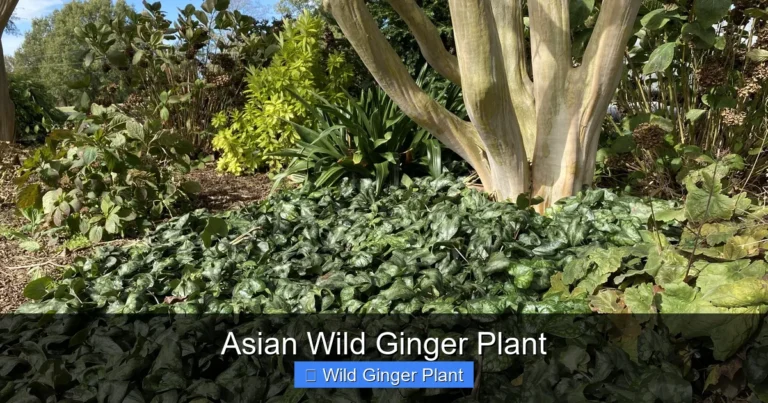
An escaped ornamental from Europe, now naturalized in parts of the Northeast and Great Lakes. Leaves are evergreen, leathery, and glossy — not velvety. They’re more kidney-shaped than heart-shaped, with a very shallow sinus. Venation is less prominent.
The scent is ginger-like but harsher, dominated by camphor. More critically, European ginger contains significantly higher aristolochic acid levels. Avoid consuming it entirely. If you find glossy, evergreen “wild ginger” in a park or old homestead, it’s likely this species.
Hexastylis Species (Little Brown Jugs)
In the Southeast, several Hexastylis species (formerly Asarum) resemble wild ginger. They have evergreen, leathery leaves with striking silver mottling — completely different from our matte, green, deciduous northern species. Flowers are similar but often more colorful.
These are not interchangeable. Some Hexastylis have different toxin profiles. If you’re south of the Ohio River, get a regional field guide and learn your local species. The principles remain: leaf texture, venation, scent, and habitat.
Seasonal Identification Guide
Early Spring (March-April): Emergence
This is prime time for wild ginger plant leaf identification because the leaves are fresh, fully formed, and the forest floor is still open. Look for paired leaves unfurling from the rhizome tips, often still folded along the midrib. The color is pale, luminous green — they glow in the understory.
Flowers may be present. Gently lift leaf litter at the base of leaf pairs. The jug-shaped blooms sit flush with the soil, easy to miss. This is also when coltsfoot flowers (yellow, on scaly stalks) make that species obvious. If you see yellow flowers, it’s not wild ginger.
Late Spring (May-June): Full Canopy
Leaves reach maximum size. Colonies form continuous mats. The forest canopy closes, light dims, and wild ginger’s velvety leaves efficiently capture every photon. This is the easiest time for pure leaf ID — all features are fully expressed.
Watch for seed pods developing where flowers were. They’re fleshy, oval capsules that split open to reveal seeds with elaiosomes (oily appendages) that ants disperse. Ants carry seeds to their nests, eat the elaiosome, and discard the seed — planting the next generation.
Summer (July-August): Maintenance Mode
Leaves may show insect damage — leaf miners, slug holes, occasional fungal spots. This is normal. The colony persists but doesn’t expand much. Rhizomes store energy. If you’re harvesting leaves for tea (light use only), this is the sustainable window — take one leaf per plant, never more than 10% of a colony.
Drought may cause leaf edges to brown. In severe dry spells, plants may go dormant early. But the rhizomes survive underground, waiting for autumn rains.
Autumn (September-October): Senescence
Leaves yellow unevenly, starting at the margins. They don’t turn red or orange — just fade. By first hard frost, they collapse into the duff. This is the hardest time for ID. You’re left with rhizome tips barely visible at the soil surface, marked by old leaf scars.
If you must ID in fall, gently clear duff to find the rhizome. Scratch and sniff. The scent persists in the rhizome year-round. But honestly? Mark the spot and return in spring. It’s easier and kinder to the plant.
Winter (November-March): Dormancy
Aboveground, nothing. No evergreen leaves, no persistent stems. The colony exists entirely underground. This is why wild ginger indicates undisturbed woods — it can’t tolerate plowing, heavy grazing, or soil compaction that severs rhizomes.
If you’re doing winter botany, look for the distinctive rhizome just below the leaf litter. But again, spring is your season. Winter ID is for ecologists, not foragers.
Practical Field Tips for Confident Identification
Build a Mental Search Image
Before you head out, study photos. Not just perfect textbook shots — look for images of wild ginger in messy reality: chewed leaves, dappled light, mixed with other plants. Your brain needs a “search image” — a pattern template that triggers recognition subconsciously.
Print a few reference photos. Keep them in your field pack. Compare live plants to photos, not memory. Memory drifts. Photos don’t. Over time, you’ll internalize the gestalt — the overall “vibe” that makes identification instant.
Use the “Three-Check Rule”
Never rely on a single feature. Every ID gets three independent confirmations:
- Visual: leaf shape, venation, texture, margins
- Olfactory: crushed leaf scent
- Contextual: habitat, growth habit, associated species
If any check fails, pause. Re-examine. Consult your guide. The cost of a mistake isn’t worth the time saved.
Carry Minimal Gear
You need: a 10x hand lens (for vein detail and hair structure), a small notebook, a pen, and a camera/phone. Optional: a regional field guide (Newcomb’s, Peterson’s, or a state-specific flora). That’s it. No digging tools unless you have explicit permission and a sustainable harvest plan.
Practice Ethical Foraging
Wild ginger is slow-growing and sensitive. Many populations are fragmented by habitat loss. If you harvest:
- Take only leaves, not rhizomes (unless you own the land and have a management plan)
- Never more than 1 leaf per plant, 5% per colony
- Only from large, healthy colonies (50+ plants)
- Never in parks, preserves, or without landowner permission
- Leave the youngest and oldest plants
Better yet: grow your own. Wild ginger transplants well in shady, moist garden beds. Nurseries sell nursery-propagated plants. A backyard patch gives you unlimited leaves without pressure on wild populations.
Document Your Finds
Take photos: whole plant, leaf close-up (top and bottom), vein detail, habitat context. Note date, location (GPS if possible), soil type, canopy composition, and associated species. Over years, you build a personal atlas that sharpens your eye and contributes to citizen science (iNaturalist, state heritage programs).
Culinary and Traditional Uses: A Brief Note
Flavor Profile and Kitchen Applications
The rhizome tastes like a milder, earthier version of tropical ginger — less lemony, more woodsy. Indigenous peoples used it as a seasoning for meats, stews, and teas. Early European settlers adopted it as a ginger substitute when imports were scarce.
Modern foragers use fresh rhizome grated into marinades, pickled like sushi ginger, or steeped into simple syrup for cocktails. Leaves make a delicate tea — pour boiling water over a few crushed leaves, steep 5 minutes. The flavor is subtle, aromatic, warming.
Traditional Medicinal Context
Numerous tribes used wild ginger root tea for colds, fevers, digestive upset, and as a contraceptive. The Menominee used it as a seasoning and medicine. The Cherokee made a root poultice for headaches. These uses reflect deep empirical knowledge — but also careful preparation, specific dosages, and cultural context.
Modern science confirms antimicrobial, anti-inflammatory, and antitumor compounds — but also validates toxicity concerns. Aristolochic acid is nephrotoxic and carcinogenic. The FDA warns against internal use of aristolochia-containing plants. This isn’t fearmongering; it’s pharmacology.
Current Best Practice
Enjoy wild ginger as an occasional culinary accent — a few leaves in tea, a grating of rhizome in a once-a-year feast. Not as a daily supplement. Not in concentrated extracts. And absolutely not during pregnancy or with kidney conditions. Respect the plant’s power.
Conclusion: Your Path to Confident Identification
You now hold the complete toolkit for wild ginger plant leaf identification. Heart-shaped, velvety leaves with palmate veins. That unmistakable ginger scent when crushed. Low colonies in rich, shady woods. Hidden jug-flowers in spring. And the critical ability to separate it from coltsfoot, violet, and European ginger.
But knowledge isn’t mastery. Mastery comes from dirt time. Get out there. Find a patch. Sit with it. Touch, smell, sketch, photograph. Return through seasons. Watch it emerge, flower, fruit, fade. The plant will teach you things no guide can — the way light filters through its canopy, the ants tending its seeds, the slug’s precise hole-punch in a leaf.
And when you finally kneel beside a colony, crush a leaf, and that warm spice rises — you’ll know. Not because a book told you. Because the plant told you. That’s the moment identification becomes relationship. And that’s what foraging is really about.
Happy trails. Tread lightly. Listen closely. The forest speaks in leaves.
Frequently Asked Questions
How do I distinguish wild ginger from wild violet?
Wild violet leaves are smaller, smoother (not velvety), have crenate (scalloped) margins, more branched venation, and smell grassy when crushed — not gingery.
Does wild ginger grow in full sun?
No, wild ginger requires deep to dappled shade in rich, moist woodland soils; full sun causes leaf scorch and plant decline.
Can I grow wild ginger in my garden?
Yes, wild ginger thrives in shady, humus-rich garden beds with consistent moisture; purchase nursery-propagated plants to avoid wild collection.
What does wild ginger flower look like?
A single, jug-shaped, purplish-brown flower with three fused sepals sits at ground level hidden under leaf litter in April-May.
Is European wild ginger the same as North American wild ginger?
No, Asarum europaeum is evergreen with glossy, leathery leaves, higher toxin levels, and a harsher camphor-ginger scent — avoid consumption.
How does wild ginger spread?
Primarily by creeping rhizomes forming clonal colonies; ants disperse seeds via elaiosomes, but vegetative spread dominates in established patches.