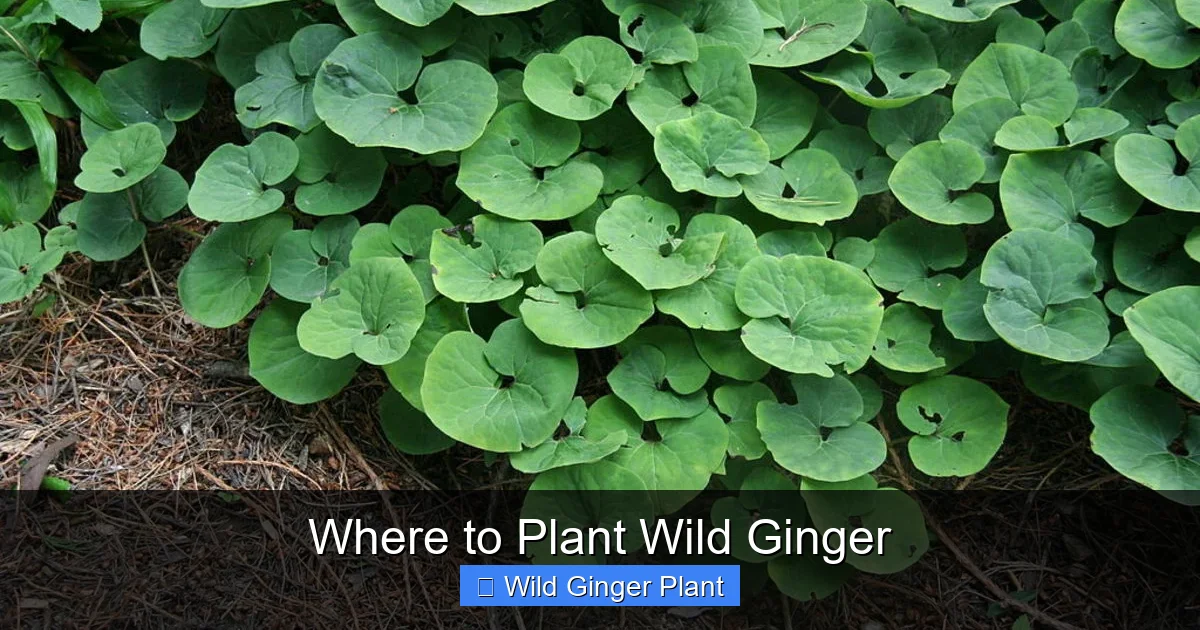
Where to Plant Wild Ginger
Wild ginger thrives in full to partial shade with rich, moist, well-draining soil. Plant it under deciduous trees or along north-facing walls where it receives dappled light. This low-maintenance native groundcover spreads slowly to form dense, weed-suppressing mats perfect for woodland gardens.
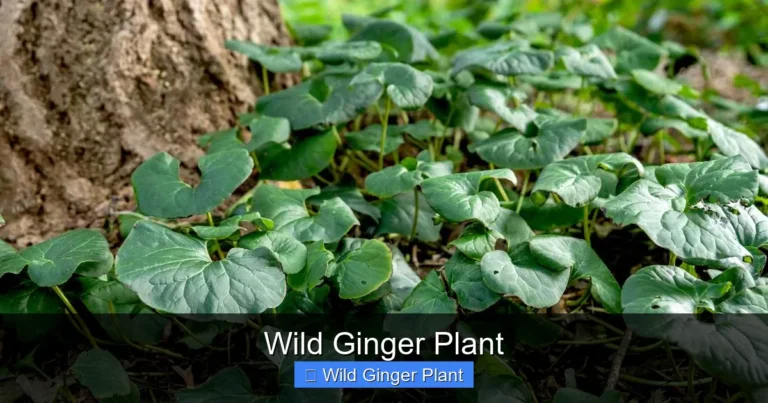
If you’ve ever wandered through a mature deciduous forest in early spring, you’ve likely spotted wild ginger hugging the ground beneath towering oaks and maples. Those heart-shaped leaves, often hiding curious jug-shaped flowers at soil level, create a living carpet that defines the woodland floor. But bringing that same magic into your garden means understanding exactly where to plant wild ginger so it doesn’t just survive—it thrives.
I’ve spent years watching this native groundcover in both wild settings and cultivated gardens. The difference between a struggling patch and a lush, weed-suppressing mat almost always comes down to site selection. Wild ginger (Asarum canadense in eastern North America, Asarum caudatum in the West) evolved under very specific conditions. Recreate those conditions, and you’ll be rewarded with one of the most dependable, low-maintenance groundcovers for shade. Get it wrong, and you’ll watch plants yellow, crisp, or simply disappear.
Key Takeaways
- Shade is essential: Wild ginger requires full to partial shade and cannot tolerate direct afternoon sun.
- Soil matters most: Rich, humus-rich, slightly acidic soil with consistent moisture produces the healthiest plants.
- Mimic woodland conditions: Recreate the forest floor environment with leaf mulch and organic matter for best results.
- Plant in spring or fall: Cool, moist seasons give roots time to establish before temperature extremes arrive.
- Space for spreading: Allow 12-18 inches between plants; they’ll slowly colonize to form a living mulch.
- Companion plant wisely: Pair with ferns, hostas, and other shade-loving natives for a cohesive woodland design.
- Protect young plants: New divisions need extra moisture and protection from foot traffic during their first year.
Quick Answers to Common Questions
Can wild ginger tolerate any direct sunlight?
No. Wild ginger cannot tolerate direct afternoon sun. It may handle 1-2 hours of very early morning sun if soil stays consistently moist, but dappled or full shade is strongly preferred for healthy growth.
How far apart should I space wild ginger plants?
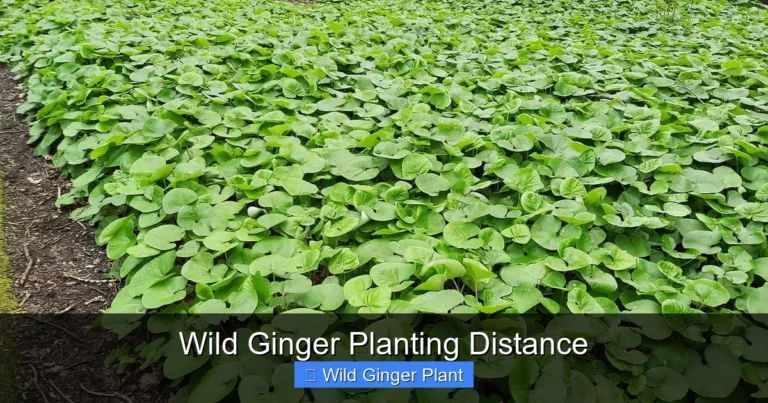
Space plants 12-18 inches apart on center. Closer spacing (12 inches) creates a solid groundcover faster. Wider spacing (18 inches) saves money but takes 3-4 years to fill in completely.
Will wild ginger grow under pine trees?
Yes, but with caveats. Pine shade is often too dense and dry. Amend soil heavily with compost, irrigate regularly, and use shredded leaf mulch—not pine needles—to prevent excessive acidity buildup.
Is wild ginger invasive?
No. Native wild ginger spreads slowly by shallow rhizomes and is easily controlled. It forms well-behaved colonies, not aggressive takeovers. It’s a desirable native groundcover, not an invasive species.
When is the best time to divide wild ginger?
Early spring (as growth emerges) or early fall (September) are ideal. Divisions need cool, moist conditions to re-establish. Water well after dividing and mulch heavily.
📑 Table of Contents
- Understanding Wild Ginger’s Native Habitat
- Light Requirements: The Non-Negotiable Factor
- Soil Conditions: Building the Perfect Foundation
- Moisture Management: Consistent, Not Constant
- Best Planting Locations in Your Landscape
- When and How to Plant
- Companion Planting: Building a Woodland Community
- Common Mistakes and How to Avoid Them
- Long-Term Care: Keeping Your Patch Thriving
- Design Ideas: Making Wild Ginger Shine
- Regional Considerations
- Troubleshooting: When Wild Ginger Struggles
- Conclusion
Understanding Wild Ginger’s Native Habitat
Before we talk about where to plant wild ginger in your garden, let’s look at where it grows in nature. This context matters because every garden condition you create should mimic what nature perfected over millennia.
The Forest Floor Blueprint
Wild ginger is an understory specialist. In its native range—stretching from Manitoba to Georgia in the east, and from British Columbia to California in the west—it carpets the floor of deciduous and mixed forests. The canopy above filters sunlight into dappled patterns. The soil is built from centuries of fallen leaves, creating a spongy, humus-rich layer that holds moisture like a sponge but never stays waterlogged.
Temperature swings are moderated by the tree canopy. Summer heat never bakes the ground. Winter cold is buffered by snow cover and leaf litter. The air stays humid. Decomposing organic matter feeds a constant, slow release of nutrients. This is the template. Your job is to copy it as closely as possible.
Two Main Species, Similar Needs
Eastern wild ginger (Asarum canadense) and western wild ginger (Asarum caudatum) share the same fundamental requirements. Eastern species has broader, more kidney-shaped leaves and smaller flowers. Western species—sometimes called long-tailed wild ginger—boasts dramatic, elongated flower tips. Both form colonies through shallow rhizomes that creep just below the soil surface.
There are also evergreen Asian species like Asarum europaeum (European wild ginger) and Asarum splendens (Chinese wild ginger). These tolerate slightly more sun and drier conditions but still prefer the same woodland conditions. If you’re planting a non-native species, check its specific hardiness zone and moisture tolerance.
Light Requirements: The Non-Negotiable Factor
If you remember only one thing about where to plant wild ginger, make it this: full to partial shade is mandatory. This plant has zero tolerance for direct afternoon sun. None. Zero. Zip.
What “Full Shade” Actually Means
Garden labels throw around “full shade” loosely. For wild ginger, full shade means less than two hours of direct sun per day, and those hours should be gentle morning light only. The north side of a building. Under mature deciduous trees. Beneath a dense evergreen canopy. In the shadow of a solid fence or wall.
Partial shade—two to four hours of morning sun or dappled light all day—works too, if soil moisture stays consistent. But the moment you cross into “part sun” territory (four to six hours, including afternoon rays), you’re asking for trouble. Leaves will scorch. Rhizomes will bake. The plant will retreat or die.
Seasonal Light Changes Matter
Here’s where many gardeners go wrong. A spot that’s perfect in April under bare oak branches becomes a sun trap in July when the canopy fills in—wait, that’s backwards. Let me rephrase. A spot that’s shady in summer under full leaf cover might get blasted by early spring sun before trees leaf out. Wild ginger emerges early. It needs protection during its active growth period, which coincides with spring before full canopy closure.
Conversely, a spot under deciduous trees offers perfect spring light (dappled through bare branches) and summer shade (dense canopy). This is the gold standard. The falling leaves in autumn provide free mulch and slow-release fertilizer. It’s the complete package.
Reading Your Garden’s Light
Spend a day observing potential planting spots. Note when sun hits each area and for how long. Take photos every two hours from 8 AM to 6 PM. You’ll be surprised how different reality is from assumption. That “shady corner” might catch three hours of brutal 2 PM sun. The spot you dismissed might stay in gentle shadow all day.
Phone apps like Sun Seeker or Sun Surveyor can map sun paths for your exact location and date. But nothing beats boots-on-the-ground observation across seasons.
Soil Conditions: Building the Perfect Foundation
Light gets the headlines, but soil determines long-term success. Wild ginger has shallow, fibrous roots that live in the top few inches of soil. They need constant access to moisture and oxygen—two things that exist in balance only in well-structured, organic-rich soil.
The Ideal Soil Profile
Think forest floor. The perfect wild ginger soil is:
- Rich in organic matter (5-10% or higher)
- Slightly acidic (pH 5.5-6.5)
- Moisture-retentive but well-draining
- Loose and friable—easy to push a finger into
- Teeming with microbial life
Heavy clay? It holds water but excludes oxygen. Roots suffocate. Pure sand? Oxygen galore, but water drains before roots can drink. Both need amendment. Lots of it.
Amending Your Soil
If you’re starting with average garden soil, plan to incorporate 3-4 inches of organic matter into the top 8-10 inches before planting. Good options include:
- Leaf mold (the gold standard—partially decomposed leaves)
- Well-rotted compost
- Aged pine bark fines
- Peat moss (use sparingly; sustainability concerns)
- Shredded leaves (run them over with a mower first)
Don’t just dump amendments on top. Mix them in thoroughly. Wild ginger rhizomes spread horizontally. They’ll explore the amended zone but stall at sharp boundaries between improved and native soil.
Testing and Adjusting pH
A simple soil test (your county extension office often offers these cheap or free) tells you where you stand. If pH reads above 6.8, incorporate elemental sulfur or pine needles to lower it gradually. If it’s below 5.0, a light dusting of garden lime helps. But honestly, if you’re adding generous organic matter, pH usually self-corrects into the sweet spot.
The Drainage Test
Dig a hole 12 inches wide and 12 inches deep. Fill with water. Let it drain. Fill again. If the second fill takes more than 4 hours to drain, you have a drainage problem. Wild ginger likes moist, not soggy. In poorly drained areas, consider raised beds or mounded planting areas to get roots above the wet zone.
Moisture Management: Consistent, Not Constant
Here’s the paradox: wild ginger needs consistently moist soil but rots in standing water. The solution is soil structure, not watering schedule.
What “Consistently Moist” Feels Like
Stick your finger 2 inches into the soil. It should feel cool and slightly damp—like a wrung-out sponge. Not wet. Not dry. If it’s dry at 2 inches, you’re underwatering. If water squeezes out when you press a handful, you’re overwatering or drainage is poor.
Irrigation Strategies
In an ideal woodland site with good soil and mulch, established wild ginger rarely needs supplemental water except during drought. But during establishment (first full growing season), regular moisture is critical.
Drip irrigation or soaker hoses are ideal. They deliver water directly to soil without wetting foliage, which reduces slug damage and fungal issues. Overhead sprinklers work but waste water and encourage leaf problems. Hand-watering is fine for small patches but gets tedious.
Water deeply but infrequently to encourage deeper root exploration. A thorough soaking once or twice a week beats daily light sprinkles. Adjust for rainfall, temperature, and wind.
Mulch: Your Moisture Insurance
Two to three inches of organic mulch is non-negotiable. Shredded leaves, pine straw, or fine bark chips mimic the natural leaf litter layer. Mulch suppresses weeds, moderates soil temperature, reduces evaporation, and slowly feeds the soil as it breaks down.
Keep mulch pulled back slightly from plant crowns to prevent rot. Replenish annually as it decomposes. In autumn, let fallen leaves stay where they land—they’re free, perfect mulch.
Best Planting Locations in Your Landscape
Now that we’ve covered the “what,” let’s talk specific “where.” These are the sweet spots in most residential landscapes.
Under Deciduous Trees: The Classic Choice
This is hands-down the best place to plant wild ginger. Mature oaks, maples, hickories, beeches—any deciduous tree with a spreading canopy creates the perfect environment. Spring sun filters through bare branches. Summer brings deep shade. Autumn delivers free mulch and fertilizer.
Plant in a ring around the trunk, starting at the drip line and working inward, but keep plants 2-3 feet from the trunk to avoid root competition and allow for trunk flare. Don’t pile soil or mulch against the tree trunk—that kills trees.
Be careful digging under trees. Severing large roots stresses the tree. Use a hand trowel, not a shovel. Work between roots. If you hit a root thicker than your thumb, move over. Plant small divisions or plugs rather than large containers to minimize disturbance.
North and East Building Foundations
The north side of your house, garage, or shed gets zero direct sun. The east side gets only gentle morning light. Both can work beautifully for wild ginger if the soil is decent and roof runoff doesn’t create a flood zone.
Watch for dry shadows—areas under wide eaves where rain never reaches. You’ll need to irrigate these spots. Also check for reflected heat from light-colored siding or windows, which can cook plants even without direct sun.
Woodland Garden Beds
If you’re creating a dedicated shade garden, wild ginger belongs at the front edge or weaving between larger perennials. It’s a groundcover, not a specimen plant. Let it fill gaps around ferns, hostas, foamflower (Tiarella), wild geranium (Geranium maculatum), and Solomon’s seal (Polygonatum).
Design in drifts of 5-7 plants minimum. Single plants look lonely and don’t suppress weeds effectively. Space them 12-18 inches apart on center. They’ll knit together in 2-3 years.
Shaded Slopes and Banks
Wild ginger’s shallow, mat-forming rhizomes excel at holding soil on gentle slopes. On a shaded bank where grass won’t grow and erosion threatens, a colony of wild ginger stabilizes the soil while looking gorgeous. Plant in staggered rows perpendicular to the slope. Use erosion control fabric on steep grades until plants establish.
Rain Garden Edges
The outer edges of a rain garden—where soil stays moist but not inundated—suit wild ginger perfectly. Avoid the bottom basin where water pools after storms. Plant on the upper slopes where moisture wicks up but drainage is good.
Containers in Deep Shade
Yes, you can grow wild ginger in pots. Use a wide, shallow container (rhizomes spread horizontally). Fill with high-quality potting mix amended with compost and fine bark. Keep in full shade. Water frequently—containers dry faster than ground soil. Overwinter in place if you’re in zone 5 or warmer; in colder zones, sink the pot in the ground or move to an unheated garage.
When and How to Plant
Site selection is only half the battle. Timing and technique seal the deal.
Optimal Planting Windows
Spring (April-May): As soon as soil is workable and frost risk passes. Plants get a full growing season to establish before winter. Watch for late frosts—new growth is tender.
Fall (September-October): Often better than spring. Soil is warm, encouraging root growth. Cooler air reduces transplant stress. Autumn rains help. Plants establish roots before ground freezes, then explode in spring. Finish at least 6 weeks before hard freeze.
Avoid summer planting unless you’re religious about watering. Avoid winter planting in frozen ground.
Planting Step-by-Step
- Prepare the bed: Remove weeds, grass, and debris. Loosen soil 8-10 inches deep. Incorporate 3-4 inches organic matter.
- Water plants thoroughly in their pots an hour before planting. Hydrated roots handle disturbance better.
- Dig holes twice as wide as the root ball, same depth. Space 12-18 inches apart.
- Remove plant gently. If roots circle the pot, tease them apart with fingers.
- Position plant so the crown (where stems meet roots) sits at soil level. Not deeper. Not shallower.
- Backfill with amended soil. Firm gently—don’t compact.
- Water deeply to settle soil and eliminate air pockets.
- Mulch 2-3 inches, keeping it off crowns.
- Label if planting multiple varieties or mixing with other shade plants.
Starting from Rhizome Divisions
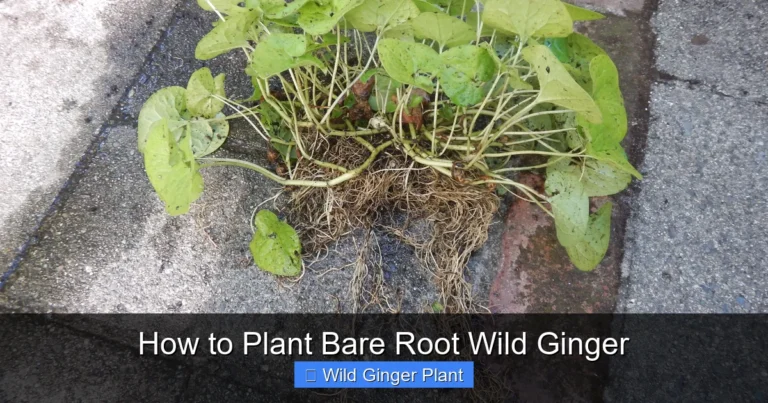
Wild ginger spreads by shallow rhizomes. If a friend has an established patch, you can divide it. Early spring or fall, dig a section with a sharp spade, ensuring each piece has several leaves and healthy rhizome segments. Replant immediately at same depth. Water well. Divisions may sulk for a few weeks but usually recover.
Growing from Seed: The Patient Path
Wild ginger seeds require double dormancy breaking—warm moist period followed by cold moist period. Sow fresh seeds in summer, keep warm and moist 60 days, then refrigerate 60-90 days, then move to warmth for germination. It takes 2-3 years to reach transplant size. Most gardeners buy plants or divide existing patches. But growing from seed preserves genetic diversity and is deeply satisfying.
Companion Planting: Building a Woodland Community
Wild ginger plays well with others. Choosing companions that share its cultural needs creates a resilient, low-maintenance planting that looks like it evolved there.
Ferns: Texture Contrast
Ferns and wild ginger are classic partners. The ginger’s bold, glossy, heart-shaped leaves contrast beautifully with ferny textures. Try:
- Christmas fern (Polystichum acrostichoides)—evergreen, upright
- Maidenhair fern (Adiantum pedatum)—delicate, fan-shaped fronds
- Lady fern (Athyrium filix-femina)—lacy, deciduous
- Ostrich fern (Matteuccia struthiopteris)—tall, dramatic (give it room)
Spring Ephemerals: Seasonal Partners
Wild ginger emerges early and stays attractive all season. Pair it with spring ephemerals that bloom and fade before summer:
- Virginia bluebells (Mertensia virginica)
- Trout lily (Erythronium americanum)
- Bloodroot (Sanguinaria canadensis)
- Trillium species
- Dutchman’s breeches (Dicentra cucullaria)
The ginger’s expanding leaves cover the fading foliage of ephemerals—nature’s mulch.
Shade Perennials for Structure
Taller perennials provide vertical interest above the ginger carpet:
- Solomon’s seal (Polygonatum biflorum)—arching stems, bell flowers
- Wild geranium (Geranium maculatum)—pink flowers, mounded habit
- Foamflower (Tiarella cordifolia)—foamy spikes, semi-evergreen
- Woodland phlox (Phlox divaricata)—fragrant spring blooms
- Jack-in-the-pulpit (Arisaema triphyllum)—unique flower, red berries
What NOT to Plant With Wild Ginger
Avoid aggressive spreaders that will smother it: English ivy, periwinkle (Vinca minor), goutweed (Aegopodium podagraria), Japanese pachysandra. These thugs outcompete everything. Also avoid plants needing dry shade (like some epimediums) or full sun. And never plant near black walnut—juglone toxicity kills wild ginger.
Common Mistakes and How to Avoid Them
I’ve made all of these. Learn from my failures.
Mistake 1: Planting in “Bright Shade” That’s Actually Part Sun
That spot under the crabapple? It gets 3 hours of 2 PM sun in July. The leaves will crisp by August. Solution: Observe for a full growing season before committing. Or plant a test patch first.
Mistake 2: Skipping Soil Prep
Planting into unimproved clay or sand guarantees slow growth and constant stress. Solution: Invest the effort upfront. Amend generously. Your future self will thank you.
Mistake 3: Mulching With Wood Chips Only
Fresh wood chips tie up nitrogen as they decompose. Solution: Use aged chips, leaf mold, or shredded leaves. Or top-dress wood chips with compost.
Mistake 4: Planting Too Deep
Burying the crown causes rot. Solution: Keep crown at soil level. When in doubt, plant slightly high—it’ll settle.
Mistake 5: Expecting Instant Groundcover
Wild ginger is slow. First year: sleep. Second year: creep. Third year: leap. Solution: Plant closer (12 inches) for faster fill, or interplant with annual shade flowers (impatiens, begonias) while waiting.
Mistake 6: Letting Weeds Win Early On
Weeds establish faster than wild ginger. Solution: Weed religiously the first two years. Once the ginger forms a dense mat, it suppresses most weeds itself.
Mistake 7: Foot Traffic
Wild ginger does not tolerate being stepped on. Solution: Place stepping stones or paths through large plantings. Keep beds narrow enough to reach across.
Long-Term Care: Keeping Your Patch Thriving
Once established, wild ginger is remarkably self-sufficient. But a little attention pays dividends.
Annual Maintenance Calendar
Early Spring: Remove any winter-killed leaves. Check for heaved plants—gently press back into soil. Apply a thin layer of compost or leaf mold around plants.
Late Spring: After flowering, remove any spent flower stalks if they look untidy (they’re usually hidden anyway). Watch for slugs—hand-pick or use iron phosphate bait if needed.
Summer: Water during drought. Monitor for leaf scorch—if it appears, the site may be too sunny. Consider adding a shade cloth temporarily or transplanting in fall.
Fall: Let leaves lie. They’re free mulch and fertilizer. If trees drop heavy leaves (oak, sycamore), shred them first with a mower so they don’t mat and smother plants.
Winter: In zones 3-4, ensure good snow cover or apply evergreen boughs for insulation. In warmer zones, no special care needed.
Dividing and Propagating
Every 4-5 years, the center of a clump may thin out. In early spring or fall, dig the clump, pull apart healthy outer sections with roots and leaves, and replant. Discard the woody center. This rejuvenates the planting and gives you free plants.
Pest and Disease Issues
Wild ginger is remarkably pest-free. Slugs and snails occasionally nibble leaves, especially in wet springs. Diatomaceous earth, copper tape, or beer traps help. Fungal leaf spots appear in overly wet, crowded conditions—improve air circulation and avoid overhead watering. Root rot only happens in poorly drained soil. Deer and rabbits generally ignore it (the leaves contain aromatic compounds they dislike).
Design Ideas: Making Wild Ginger Shine
Beyond “where to plant wild ginger,” consider how to plant it for maximum impact.
The Living Mulch Approach
Use wild ginger as a green mulch under shrubs and small trees. Plant serviceberry (Amelanchier), redbud (Cercis canadensis), or dogwood (Cornus florida), then carpet the ground beneath with wild ginger. No more mulch runs. No more weed whacking around trunks. The ginger protects tree roots from mower damage and moderates soil temperature.
Pathway Edging
Line a shaded garden path with a single row of wild ginger. The glossy leaves create a clean, formal edge that softens hardscape. Keep the row narrow (one plant wide) and maintain a crisp boundary with occasional edging.
Drift Planting
In a woodland garden, plant in teardrop-shaped drifts of 7-15 plants, flowing between trees and larger perennials. Repeat the same drift shape elsewhere for rhythm. This mimics natural colonization patterns and looks intentional, not random.
Container Groupings
Cluster three wide, shallow pots of wild ginger at varying heights on a shaded patio. Underplant with spring bulbs (snowdrops, scilla) for early color. The ginger provides all-season foliage interest.
Regional Considerations
Where you garden shifts the specifics of where to plant wild ginger.
Northeast and Midwest (Zones 3-6)
Eastern wild ginger (A. canadense) is native here. It handles cold winters beautifully with snow cover. Spring planting works well. Fall planting needs 6+ weeks before ground freeze. Watch for heaving in freeze-thaw cycles—mulch heavily after ground freezes.
Pacific Northwest (Zones 7-9)
Western wild ginger (A. caudatum) thrives in the mild, wet climate. It’s evergreen here. Plant fall through spring. Summer drought is the main challenge—irrigate deeply. Slugs are a bigger issue; be proactive.
Southeast (Zones 7-9)
Eastern wild ginger grows native in mountains but struggles in hot, humid coastal plains. Plant in deepest shade with consistent moisture. Consider Asarum arifolium (arrowleaf ginger) or Asarum shuttleworthii (mottled wild ginger)—southeastern natives with beautiful silver-marked evergreen leaves that handle heat better.
Mountain West and High Plains
Dry air and intense sun make wild ginger challenging. Choose north-facing slopes, irrigate reliably, amend soil heavily, and mulch deeply. Asarum caudatum occurs in Montana and Idaho mountains—source local ecotypes if possible.
Troubleshooting: When Wild Ginger Struggles
Even with perfect placement, issues arise. Here’s a diagnostic guide.
Yellowing Leaves
- Too much sun → transplant to shadier spot
- Nutrient deficiency → top-dress with compost
- Overwatering/poor drainage → improve drainage, reduce watering
- Root competition from trees → add more organic matter, water more
Brown, Crispy Leaf Edges
- Sun scorch → immediate shade needed
- Drought stress → water deeply, mulch more
- Salt damage (near roads/sidewalks) → flush soil with water, add gypsum
- Fertilizer burn → stop fertilizing, flush soil
Sparse, Leggy Growth
- Too much shade (yes, possible) → thin canopy slightly
- Nutrient-poor soil → compost top-dress
- Overcrowding → divide and replant
- Young planting → patience, it thickens with age
Plants Disappearing
- Vole/root damage → hardware cloth barriers
- Crown rot → improve drainage, don’t overmulch crowns
- Accidental removal → mark plants, educate helpers
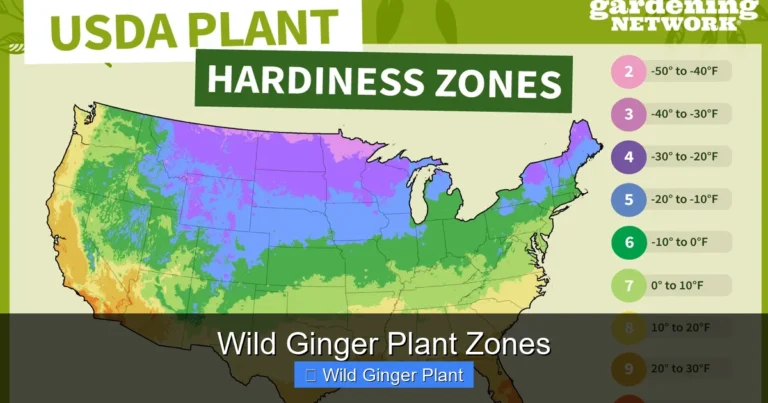
- Wrong zone → check hardiness, consider container culture
Conclusion
Finding where to plant wild ginger isn’t about checking boxes on a list—it’s about reading your landscape like a forest ecologist. The perfect spot offers deep shade, rich soil, steady moisture, and protection from foot traffic. It’s under the old oak. Along the north foundation. Beside the ferns and foamflowers. In the places where sunlight filters green and the air smells of humus and rain.
When you get it right, wild ginger asks for almost nothing and gives almost everything: weed suppression, erosion control, year-round texture, hidden flowers that delight the observant, and that deep satisfaction of growing a plant exactly where it belongs. It connects your garden to the ancient woodlands that once covered this continent. It makes your shade garden feel not planted, but revealed.
Start with one perfect spot. Prepare the soil like you mean it. Plant in drifts, not dots. Mulch generously. Water faithfully the first year. Then step back and wait. The creep becomes a leap. The patch becomes a carpet. And someday, you’ll walk through your garden in April, push aside a heart-shaped leaf, and find a strange little jug flower resting on the soil—nature’s secret, shared with you.
That’s the magic of knowing where to plant wild ginger. Not just coordinates on a map. But a relationship with a place. And that’s the best gardening there is.
Frequently Asked Questions
What type of soil does wild ginger prefer?
Wild ginger thrives in rich, humus-heavy soil that’s slightly acidic (pH 5.5-6.5) and well-draining yet moisture-retentive. Amend planting areas with 3-4 inches of leaf mold, compost, or aged pine bark to recreate forest floor conditions.
Can I grow wild ginger in a container?
Yes, wild ginger grows well in wide, shallow containers filled with high-quality potting mix amended with compost. Keep pots in full shade, water frequently, and protect from freezing in zones colder than 5 by sinking pots in ground or moving to an unheated garage.
Does wild ginger flower, and are the flowers showy?
Wild ginger produces unique jug-shaped flowers in early spring, but they’re hidden at ground level beneath the foliage. Flowers are burgundy-brown and pollinated by beetles and flies. They’re fascinating up close but not showy from a distance.
How long does it take wild ginger to form a solid groundcover?
Wild ginger follows the “sleep, creep, leap” pattern. Expect minimal spread year one, slow expansion year two, and significant colonization by year three. Planting 12 inches apart accelerates coverage compared to 18-inch spacing.
What are the best companion plants for wild ginger?
Excellent companions include ferns (Christmas, maidenhair, lady), spring ephemerals (Virginia bluebells, trillium, bloodroot), and shade perennials (Solomon’s seal, foamflower, wild geranium, woodland phlox). All share similar cultural needs.
Why is my wild ginger turning yellow and dying back?
Yellowing usually indicates too much sun, poor drainage, nutrient deficiency, or root competition from nearby trees. Check light exposure first—move to deeper shade if needed. Top-dress with compost and ensure consistent moisture without waterlogging.