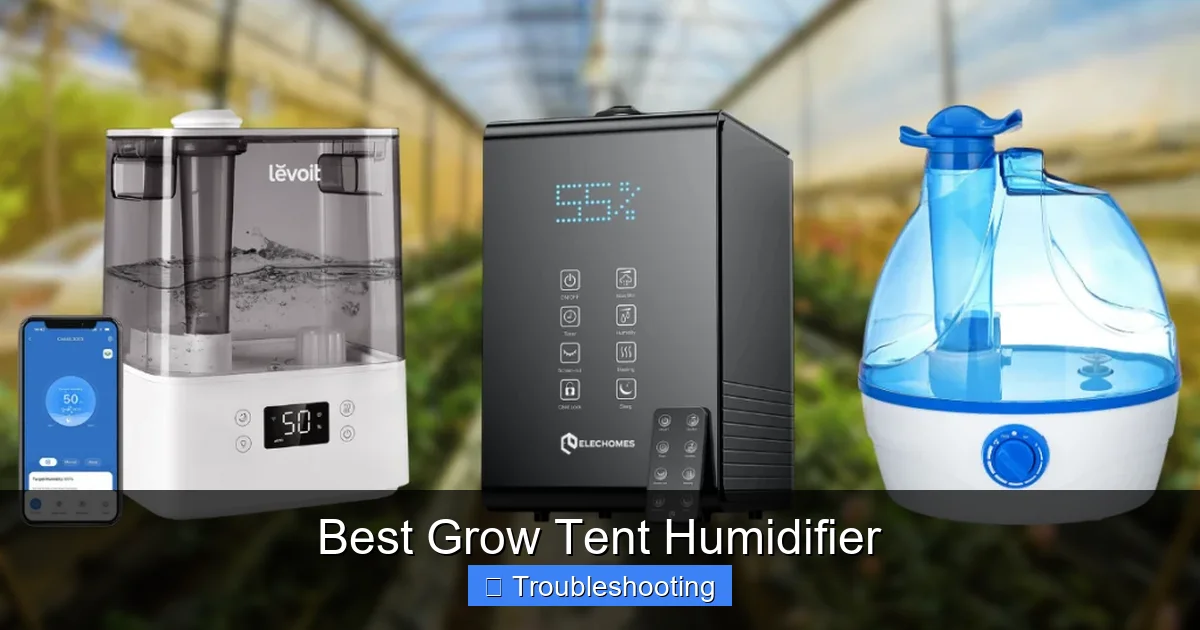
Best Grow Tent Humidifier
The best grow tent humidifier keeps your plants at the perfect moisture level, preventing mold and stress. Choose a model with adjustable output, a built‑in hygrometer, and quiet operation for the best results.
Choosing the best grow tent humidifier is the first step to a healthy indoor garden. A stable humidity level stops leaves from drying out. It also stops mold from forming on buds.
The best grow tent humidifier adds moisture evenly across the canopy. It runs quietly so you can sleep. It lets you set the exact humidity you need for each growth stage.
In this guide we cover why humidity matters, the main types of humidifiers, key features to watch, top picks, installation tips, and common troubleshooting steps. By the end you will know how to pick and maintain the right unit for your space.
Key Takeaways
- Proper humidity prevents leaf curl and mold: The right moisture level keeps plants healthy.
- Ultrasonic units are quiet and fine‑mist: Good for small tents.
- Evaporative models self‑regulate: They stop when humidity is high.
- Look for a built‑in hygrometer and auto shut‑off: These features add safety.
- Regular cleaning stops mineral buildup: Clean the tank weekly.
- Place the humidifier near the intake fan: This spreads moisture evenly.
Quick Answers to Common Questions
What size humidifier do I need for a 4×4 foot tent?
A 2 to 4 liter ultrasonic unit usually covers a 4×4 foot space.
Can I use tap water in an ultrasonic humidifier?
Tap water leaves white dust on leaves; distilled water is recommended.
How often should I clean the humidifier?
Clean the tank and nozzle at least once a week.
Does an evaporative humidifier need a filter?
Yes, the wick or filter must be replaced every few months.
What humidity level is best for flowering cannabis?
Keep relative humidity between 40 and 50 percent during flowering.
📑 Table of Contents
- Why Humidity Matters for the Best Grow Tent Humidifier
- Types of Humidifiers for the Best Grow Tent Humidifier
- Key Features of the Best Grow Tent Humidifier
- Top Picks for the Best Grow Tent Humidifier
- Installation Tips for the Best Grow Tent Humidifier
- Troubleshooting the Best Grow Tent Humidifier
- Final Thoughts on the Best Grow Tent Humidifier
Why Humidity Matters for the Best Grow Tent Humidifier
Ideal Range for Common Plants
Most vegetables like a relative humidity between 40 and 60 percent. Seedlings need a bit more, around 65 percent. Flowering plants prefer 40 to 50 percent. Staying in these ranges helps nutrient uptake. The best grow tent humidifier helps you hit that range every day.
Signs of Low Humidity
Leaves curl at the edges. Tips turn brown. Growth slows down. The best grow tent humidifier can raise the level quickly. A quick boost restores turgor pressure in cells.
Signs of High Humidity
Condensation forms on walls. White powdery mildew appears. Buds become soggy. Reducing moisture or increasing airflow solves this. The best grow tent humidifier with auto shut‑off prevents overshoot.
Impact on Nutrient Uptake
When humidity is too low, stomata close. This limits CO2 intake. When humidity is too high, transpiration drops. Both extremes reduce nutrient flow. A well‑tuned best grow tent humidifier keeps the balance.
Effect on Pest Pressure
Dry air encourages spider mites. Wet air encourages fungus gnats. Maintaining the sweet spot reduces both. The best grow tent humidifier is a tool for integrated pest management.
Types of Humidifiers for the Best Grow Tent Humidifier
Ultrasonic Models
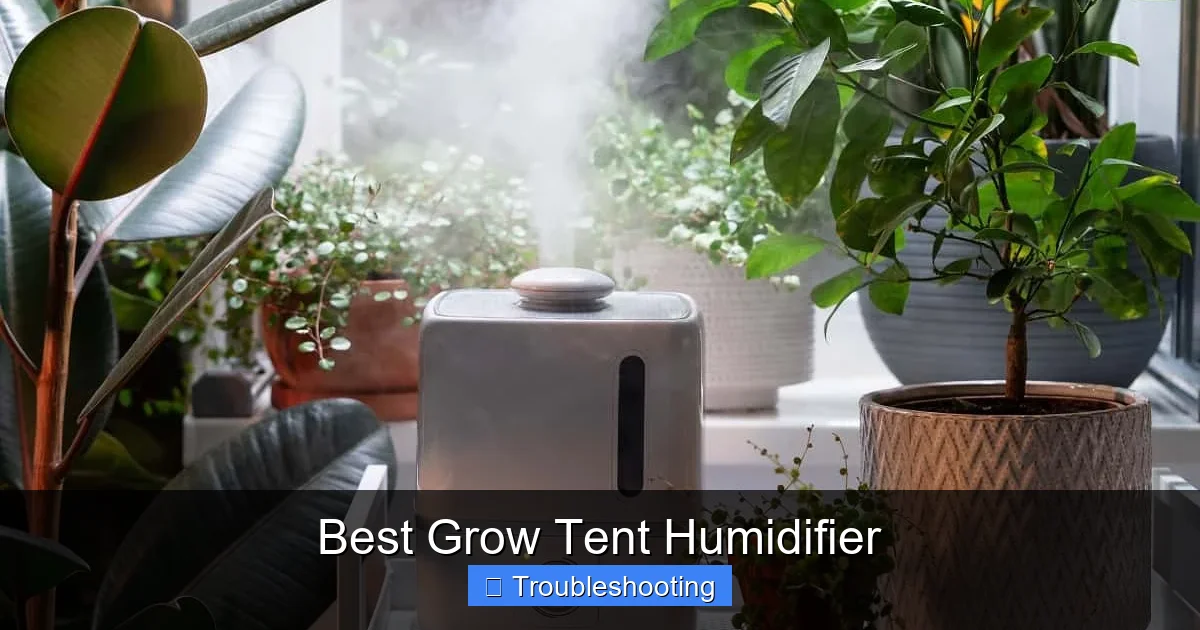
Ultrasonic units use a vibrating diaphragm to create a fine mist. They are very quiet. They work well in small to medium tents. The mist can leave white dust if you use hard water. The best grow tent humidifier of this type often includes a demineralization cartridge.
Visual guide about Best Grow Tent Humidifier
Image source: eadn-wc01-2912785.nxedge.io
Evaporative Models
Evaporative units blow air through a wet wick. They self‑regulate because evaporation slows when humidity rises. They are larger but need filter changes. The best grow tent humidifier in this class often has a washable filter.
Mist Makers
Mist makers are simple discs that vibrate in a water bowl. They are cheap but can over‑humidify a small space. Use a timer to control run time. The best grow tent humidifier for beginners may start with a mist maker.
Hybrid Units
Hybrid units combine ultrasonic mist with a fan. They give fast humidity rise and even distribution. They cost more but reduce hot spots. The best grow tent humidifier for large tents often uses hybrid tech.
Pros and Cons
- Ultrasonic: quiet, fine mist, possible mineral dust.
- Evaporative: self‑regulating, larger, filter maintenance.
- Mist maker: low cost, simple, risk of excess moisture.
- Hybrid: fast, even, higher price.
Key Features of the Best Grow Tent Humidifier
Adjustable Output
A dial or digital control lets you set the exact mist rate. This matches the needs of each growth stage. The best grow tent humidifier lets you fine‑tune from 10 to 300 ml per hour.
Built‑in Hygrometer
An integrated sensor shows real‑time humidity. Some units auto‑adjust to keep the target level. The best grow tent humidifier displays both current and set points.
Tank Size
A larger tank means fewer refills. For a 4‑by‑4 foot tent a 4‑liter tank lasts 24 hours on low. The best grow tent humidifier for busy growers often has a 5‑liter reservoir.
Noise Level
Look for a rating below 35 decibels. Quiet operation keeps the grow room peaceful. The best grow tent humidifier runs at 28 decibels on low.
Auto Shut‑off
When the tank runs dry the unit turns off. This protects the motor and prevents fire risk. The best grow tent humidifier includes a low‑water indicator light.
Easy Cleaning Design
Removable tank and wide opening make weekly cleaning fast. The best grow tent humidifier has dishwasher‑safe parts.
Smart Connectivity
Wi‑Fi or Bluetooth lets you monitor from a phone. Alerts warn you when humidity drifts. The best grow tent humidifier with app support stores 30 days of data.
Top Picks for the Best Grow Tent Humidifier
Model A – Compact Ultrasonic
This unit holds 2 liters, runs at 30 decibels, and has a digital hygrometer. It covers up to 5‑by‑5 feet. Ideal for hobby growers. The best grow tent humidifier in this class costs under $60.
Model B – Large Evaporative
With a 6‑liter tank and washable filter, it serves 8‑by‑8 foot tents. It self‑regulates and uses little electricity. The best grow tent humidifier for commercial setups often uses this design.
Model C – Smart Wi‑Fi Unit
Connects to a phone app. You can set schedules, view humidity history, and get alerts. Tank holds 4 liters. The best grow tent humidifier for tech‑savvy growers includes voice control.
Model D – Hybrid High‑Output
Combines ultrasonic mist with a 120 mm fan. Delivers 500 ml per hour. Covers 10‑by‑10 foot tents. The best grow tent humidifier for large rooms includes a remote.
Comparison Overview
- Model A: best for small tents, quiet, low price.
- Model B: best for large tents, self‑regulating, moderate price.
- Model C: best for tech‑savvy growers, remote control, higher price.
- Model D: best for maximum coverage, fast humidity rise, premium price.
Installation Tips for the Best Grow Tent Humidifier
Placement Inside the Tent
Put the unit near the intake fan. This pulls fresh air through the mist. Avoid placing it directly on the canopy. The best grow tent humidifier works best when airflow carries the mist.
Level the Unit
Keep the humidifier on a flat surface. A tilted tank can leak. The best grow tent humidifier includes rubber feet for stability.
Use Distilled Water
Distilled water reduces mineral dust on leaves. It also extends the life of ultrasonic diaphragms. The best grow tent humidifier manual recommends distilled only.
Set a Timer
Run the humidifier in 15‑minute cycles. This prevents over‑humidification and saves water. The best grow tent humidifier with built‑in timer makes this automatic.
Add a Small Circulation Fan
A low‑speed clip fan spreads mist evenly. It also prevents stagnant pockets. The best grow tent humidifier paired with a fan gives uniform humidity.
Seal Tent Gaps
Check zippers and vent flaps for leaks. Tape small gaps with duct tape. The best grow tent humidifier performs better in a sealed environment.
Troubleshooting the Best Grow Tent Humidifier
Humidity Too Low
Check the tank level. Clean the mist nozzle. Increase the output setting. Verify the hygrometer reads correctly. The best grow tent humidifier may need a filter change.
Humidity Too High
Lower the output. Add an exhaust fan. Open a vent flap. Empty excess water from the tray. The best grow tent humidifier with auto shut‑off will stop at the set point.
Unit Not Misting
Make sure the power cord is seated. Clean the ultrasonic disc. Replace the wick if evaporative. The best grow tent humidifier often has a reset button.
Strange Noises
Gurgling means low water. Rattling can be a loose fan. Tighten screws and refill the tank. The best grow tent humidifier runs silently when clean.
White Dust on Leaves
Switch to distilled water. Install a demineralization cartridge. The best grow tent humidifier with a cartridge eliminates dust.
Frequent Refills
Upgrade to a larger tank. Reduce output setting. The best grow tent humidifier with a 5‑liter tank cuts refill frequency in half.
Final Thoughts on the Best Grow Tent Humidifier
The best grow tent humidifier gives you control over moisture. Pick a type that fits your tent size. Look for adjustable output, a built‑in hygrometer, and auto shut‑off. Clean the unit weekly. Monitor humidity daily. With the right device your plants will thrive and yield more.
Frequently Asked Questions
How do I know if my grow tent humidity is too high?
Look for condensation on walls, wet leaves, or powdery mildew. A hygrometer reading above 60 percent usually signals excess moisture.
Can a humidifier raise temperature in the tent?
Most humidifiers add negligible heat. Only large evaporative units may warm the air slightly.
Is a smart humidifier worth the extra cost?
If you want remote monitoring and scheduling, a Wi‑Fi model saves time and gives peace of mind.
What is the best way to distribute mist evenly?
Place the humidifier near the intake fan and use a small oscillating fan to spread the mist.
How long does a typical humidifier tank last?
A 4‑liter tank on low setting runs about 24 hours; higher output reduces run time.
Do I need a separate hygrometer if the humidifier has one built in?
A backup hygrometer is cheap and verifies the built‑in sensor accuracy.