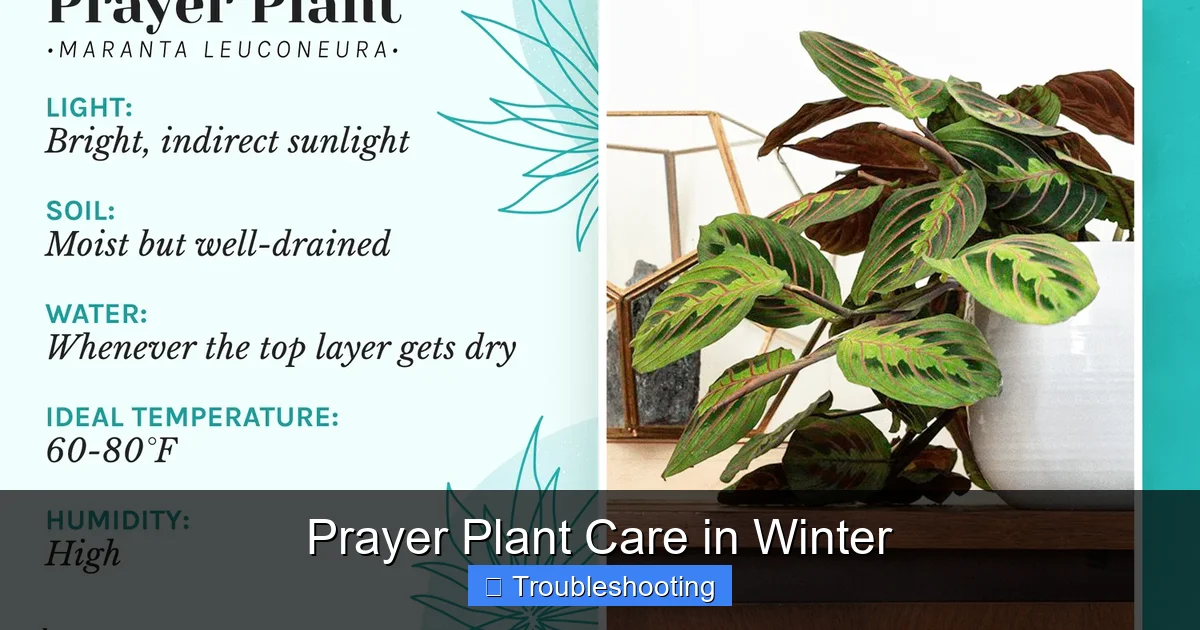
Prayer Plant Care in Winter
Prayer plant care in winter requires adjusting your routine to match the plant’s slower growth and sensitivity to dry air. Focus on maintaining high humidity, reducing watering frequency, providing bright indirect light, and keeping temperatures stable above 60°F to prevent leaf curl, brown edges, and dormancy issues.
Key Takeaways
- Boost humidity to 50-60%: Use a humidifier, pebble tray, or group plants together to combat dry winter air that causes crispy leaf edges.
- Water less frequently: Allow the top inch of soil to dry between waterings since prayer plants grow slower in winter and need less moisture.
- Maintain temperatures above 60°F: Keep plants away from cold drafts, heating vents, and frosty windows to prevent shock and leaf damage.
- Provide bright, indirect light: Shorter days mean less light; move your plant closer to a window but avoid direct sun that can scorch leaves.
- Pause fertilizing: Stop feeding during winter dormancy; resume in spring when new growth appears to avoid salt buildup in soil.
- Watch for pests: Spider mites thrive in dry indoor air; inspect leaves weekly and treat early with neem oil or insecticidal soap.
- Expect some leaf changes: Older leaves may yellow and drop naturally; this is normal as the plant conserves energy for spring growth.
Quick Answers to Common Questions
How often should I water my prayer plant in winter?
Water thoroughly when the top 1-2 inches of soil feel dry, typically every 10-14 days depending on your home’s humidity and temperature. Always check with a chopstick or moisture meter before watering.
Why are my prayer plant leaves curling during the day in winter?
Daytime leaf curling usually signals low humidity, underwatering, or cold drafts. Check humidity first (aim for 50-60%), then soil moisture, and ensure the plant isn’t near a drafty window or vent.
Should I fertilize my prayer plant in winter?
No. Stop fertilizing completely from late fall through early spring. The plant isn’t actively growing and cannot use nutrients, which leads to salt buildup and root burn.
Can prayer plants survive in a north-facing window in winter?
Usually not. North windows provide too little light in winter for prayer plants to thrive. Move to an east or south-facing window, or supplement with a full-spectrum grow light for 10-12 hours daily.
What’s the best way to increase humidity for my prayer plant in winter?
A cool-mist ultrasonic humidifier is the most effective method. Run it during the day to maintain 50-60% humidity. Grouping plants together and using pebble trays provide supplemental help.
📑 Table of Contents
- Why Winter Changes Everything for Your Prayer Plant
- Understanding Winter Dormancy in Prayer Plants
- Humidity: The Single Most Critical Factor
- Watering Adjustments for Cold Months
- Light Management During Short Days
- Temperature Stability: Avoiding the Silent Killer
- Fertilizing: When to Stop and When to Start
- Pest Prevention and Winter Infestations
- Common Winter Problems and Quick Fixes
- Repotting: To Do or Not to Do?
- Creating a Winter Care Routine That Works
- Special Considerations for Different Prayer Plant Varieties
- Troubleshooting FAQ: Real Questions from Real Growers
- Conclusion: Your Prayer Plant Will Thank You in Spring
Why Winter Changes Everything for Your Prayer Plant
If you have ever owned a prayer plant, you know the joy of watching those gorgeous leaves fold up at night like tiny hands in prayer. It is one of the most satisfying daily rituals in the plant world. But when winter rolls around, that same plant can start looking sad, crispy, or just plain stubborn. The leaves stop moving. Brown edges appear. You might even see yellowing or drooping that makes you panic.
Here is the good news. Your prayer plant is not dying. It is just reacting to a season that feels completely foreign to its tropical roots. Prayer plants, or Marantas, come from the rainforest floors of Brazil. They are used to steady warmth, high humidity, and dappled light year round. Winter in most homes brings the opposite. Dry air from heating systems. Shorter days. Cold drafts near windows. Temperature swings that stress the plant out. Understanding these changes is the first step to mastering prayer plant care in winter.
In this guide, we will walk through every adjustment you need to make. From humidity hacks to watering schedules, light positioning to pest prevention, you will learn how to keep your Maranta happy until spring returns. Think of this as your winter survival manual for one of the most beautiful and dramatic houseplants you can grow.
Understanding Winter Dormancy in Prayer Plants
What Dormancy Looks Like
First, let us clear up a common misconception. Prayer plants do not go fully dormant like a bulb or a deciduous tree. They do not drop all their leaves and sleep until April. Instead, they enter a period of slowed growth. You might not see a single new leaf for two or three months. The famous nyctinastic movement, that beautiful nightly folding, might become less dramatic or stop entirely. The plant is conserving energy.
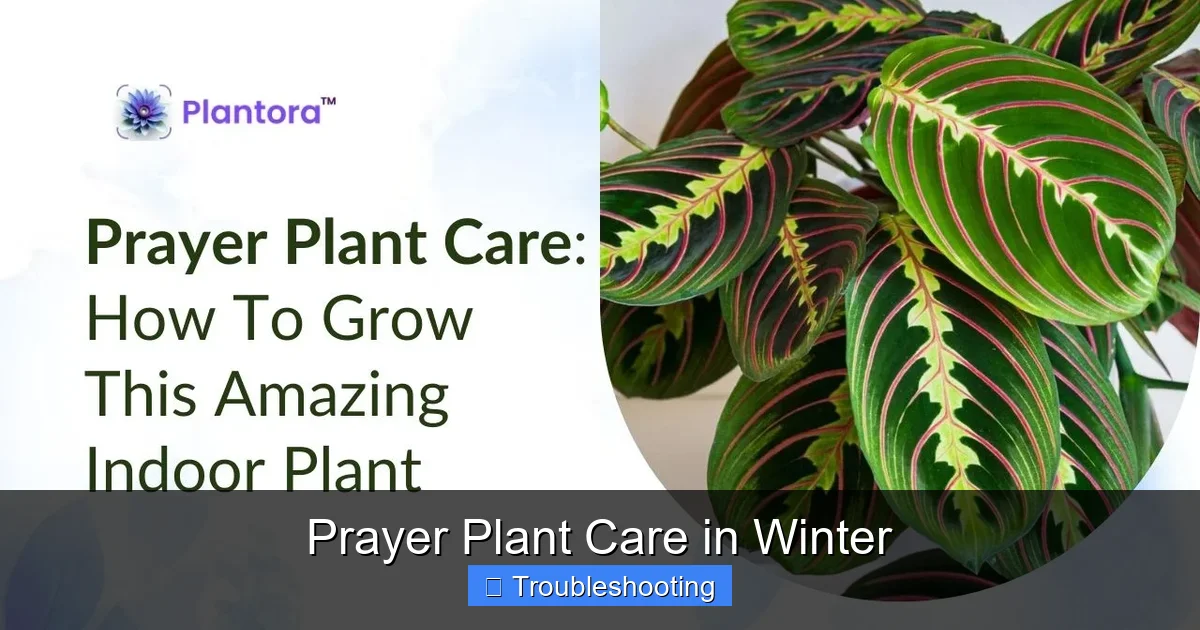
Visual guide about Prayer Plant Care in Winter
Image source: plantora.app
This slowdown is triggered by three main factors. Reduced light intensity and duration. Cooler temperatures. Lower humidity. Your plant senses these changes and shifts into maintenance mode. It focuses on keeping existing leaves alive rather than producing new ones. This is completely normal and healthy. Fighting it by overwatering or overfertilizing will only cause problems.
Signs of Normal Winter Behavior vs. Trouble
Knowing the difference between normal winter behavior and actual distress will save you a lot of worry. Normal signs include slower growth, less frequent leaf folding, maybe one or two older leaves yellowing and dropping, and soil staying wet longer between waterings. These are all expected.
Trouble signs look different. Rapid yellowing of multiple leaves at once. Crispy brown edges spreading quickly. Leaves curling tightly during the day, not just at night. Mushy stems or a foul smell from the soil. Tiny webs or specks on leaf undersides. These indicate a care issue that needs fixing. We will cover solutions for each in the sections ahead.
Why Your Plant Might Stop “Praying”
The nightly leaf movement is driven by changes in water pressure at the base of each leaf, controlled by a specialized joint called the pulvinus. This mechanism needs two things to work well. Adequate hydration in the plant tissues. And a clear difference between day and light light levels. In winter, both can be compromised. Dry air pulls moisture from leaves faster than roots can replace it. Grow lights or dim indoor lighting blur the day night contrast. The result? Leaves stay flat. It is not a death sentence. It is just the plant saying conditions are not ideal for the movement. Fix the environment and the prayer returns.
Humidity: The Single Most Critical Factor
Why Winter Air Is a Crisis for Marantas
If you only change one thing for prayer plant care in winter, make it humidity. This is non negotiable. Most heated homes drop to 20-30% relative humidity in winter. Prayer plants want 50-60% minimum. Ideally 60-70%. That gap is massive. When air is this dry, the plant loses water through its leaves faster than its roots can absorb it. The leaf edges crisp up first. Then the tips. Then whole leaves curl and brown. Spider mites move in because they love dry conditions. It is a cascade of trouble that starts with dry air.
Effective Ways to Raise Humidity
A humidifier is the gold standard. Get a cool mist ultrasonic model with a large tank so you do not refill it constantly. Place it near your plants but not blowing directly on them. Run it during the day when heat is running. Aim for 50-60% on a hygrometer. This single device solves 80% of winter prayer plant problems.
Pebble trays help but have limits. Fill a tray with pebbles, add water to just below the top of the pebbles, and set your pot on top. As water evaporates, it creates a microclimate. Grouping plants together amplifies this effect. Each plant transpires moisture, creating a humid bubble. Put your prayer plant with other tropicals like calatheas, ferns, and philodendrons.
Misting is controversial. It feels good but the effect lasts minutes. If you mist, do it in the morning so leaves dry before night. Wet leaves overnight invite fungal issues. Misting alone cannot maintain 50% humidity. Use it as a supplement, not a solution.
Bathrooms and kitchens are naturally more humid. If you have a bright bathroom window, your prayer plant will love winter there. Just ensure the light is sufficient.
Measuring Humidity Accurately
Do not guess. Buy a digital hygrometer. They cost ten dollars. Place it at plant level, not on a high shelf. Check it morning and evening. You will be shocked how low it drops when the furnace kicks on. This data helps you adjust your humidifier runtime or know when to group plants tighter.
Watering Adjustments for Cold Months
The Golden Rule: Water Less, Not Lightly
This is where most people go wrong. They hear “water less in winter” and give the plant a tiny sip every few days. That is the worst approach. Light frequent watering keeps the top soil wet while the bottom stays dry. Roots rot at the bottom while the plant shows drought stress at the top. Instead, water thoroughly but less often. Let the top inch or even two inches of soil dry out completely. Then water until it flows from drainage holes. Empty the saucer. Wait until the top soil is dry again. In winter, this might mean watering every 10-14 days instead of every 5-7.
How to Check Soil Moisture Properly
Forget the finger test if you are unsure. Use a wooden chopstick or a moisture meter. Push it deep into the soil, near the edge of the pot. Pull it out. If the stick comes out clean and dry, water. If it has dark soil clinging to the bottom half, wait. A moisture meter reading of 2-3 (on a 1-10 scale) at root level means it is time. This removes guesswork and prevents both over and under watering.
Water Quality Matters More in Winter
Prayer plants are sensitive to chemicals in tap water. Chlorine, fluoride, and salts build up in soil faster when you water less frequently because there is less flushing action. In winter, this sensitivity shows up as brown tips even if humidity is good. Use filtered water, rainwater, or distilled water if possible. If you must use tap water, let it sit out overnight to off gas chlorine. Better yet, run it through a simple carbon filter pitcher. Your plant will thank you with cleaner leaf edges.
Temperature of Water
Never use cold water straight from the tap in winter. It shocks the roots. Room temperature or slightly lukewarm water is best. Fill your watering can the night before and let it sit in the same room as the plant. This simple habit prevents root stress that can look like leaf damage days later.
Light Management During Short Days
How Much Light Is Enough?
Prayer plants are often labeled “low light” but that is misleading. They tolerate lower light than succulents, but they thrive in bright indirect light. In winter, the sun is lower, days are shorter, and light intensity drops by 50% or more. A spot that was perfect in August might be too dim in January. Your plant will tell you. Leggy growth with long gaps between leaves. Leaves losing their vibrant pattern, turning solid green. New leaves smaller than old ones. No nightly folding. These are all low light symptoms.
Best Window Placement
East facing windows are ideal year round. Gentle morning sun, bright indirect the rest of the day. In winter, a south facing window works too because the sun is less intense. Just pull the plant back a few feet or use a sheer curtain. North windows are usually too dim in winter unless you are in a southern latitude. West windows can work with a sheer curtain to filter harsh afternoon rays.
Rotate your plant a quarter turn each week. This prevents leaning and ensures even light exposure on all sides. It also helps the plant grow symmetrically, which looks better and reduces stress.
Supplementing with Grow Lights
If your windows just cannot deliver, a grow light is a game changer. A full spectrum LED panel or bulb (4000K-6500K) placed 12-18 inches above the plant for 10-12 hours a day mimics spring conditions. Use a timer for consistency. This keeps growth steady, maintains leaf patterns, and encourages the prayer movement. It is one of the best investments for prayer plant care in winter if you have dark rooms.
Avoiding Light Shock
If you move your plant to a brighter spot, do it gradually. Sudden exposure to much brighter light can bleach or burn leaves. Move it a foot closer to the window every three days over a week or two. Watch for signs of stress like faded patches or crispy spots. Slow transitions prevent damage.
Temperature Stability: Avoiding the Silent Killer
The Danger Zone
Prayer plants hate temperature swings. They want steady 65-75°F (18-24°C). Winter brings two threats. Cold drafts from doors, leaky windows, and AC vents. Hot blasts from heating vents, radiators, and fireplaces. Both cause rapid moisture loss from leaves and root stress. A plant sitting in a 70°F room but getting hit by a 55°F draft every time the door opens will decline fast. Same for a plant above a vent blowing 90°F air.
Strategic Placement
Walk around your home with a thermometer. Check spots near windows, doors, and vents at different times of day. You will find microclimates varying by 10-15 degrees. Place your prayer plant in the most stable spot that still gets good light. Often this means pulling it back from the window glass (which radiates cold at night) and keeping it several feet from heat sources. An interior wall near a bright window is often better than the windowsill itself.
Nighttime Temperature Drops
Many homes drop to 60-62°F at night in winter to save heating costs. Prayer plants can handle this if it is gradual and humidity is high. But if humidity is low and temps drop, you get a double whammy. Consider a small space heater with a thermostat in the plant room if nights get very cold. Or move plants to the warmest room overnight. Just avoid placing them right next to the heater.
Cold Water and Cold Pots
We covered water temperature. Pot temperature matters too. A ceramic or terracotta pot on a cold windowsill or stone floor can chill the root zone significantly. Roots stop absorbing water in cold soil. This looks like underwatering but the soil is wet. Use pot feet or a cork mat to insulate the pot from cold surfaces. Or switch to plastic or glazed ceramic which insulates better than terracotta.
Fertilizing: When to Stop and When to Start
Why Winter Feeding Backfires
Fertilizer is not plant food. It is a nutrient supplement for active growth. When your prayer plant is not growing, it cannot use those nutrients. They sit in the soil as salts. Each watering concentrates them. Roots burn. Leaf edges brown. The plant declines. This is why you must stop fertilizing completely in winter. No half strength. No occasional feeding. Zero. From late fall through early spring, put the fertilizer away.
Flushing the Soil
If you fertilized late into fall, do a thorough flush before winter settles in. Water the plant heavily three times in a row, letting it drain fully each time. This pushes excess salts out the bottom. Do this once in early winter. It resets the soil and prevents tip burn that looks like humidity damage but is actually fertilizer burn.
Spring Restart Signals
How do you know when to start again? Watch for new growth. A tiny rolled up leaf emerging. A new stem pushing up. That is your green light. Start with quarter strength fertilizer once a month. Increase to half strength as growth accelerates. By late spring, you can go to full strength every two weeks if the plant is growing vigorously. Always err on the side of less. Prayer plants are light feeders.
Choosing the Right Fertilizer
When you do restart, use a balanced water soluble fertilizer like 10-10-10 or 20-20-20. Or a formula slightly higher in nitrogen for foliage plants. Avoid bloom boosters (high phosphorus). They do nothing for prayer plants. Organic options like fish emulsion or seaweed extract work well too but smell strong indoors. Synthetic is fine if diluted properly.
Pest Prevention and Winter Infestations
Why Pests Explode in Winter
Spider mites are the number one winter pest for prayer plants. They are microscopic, thrive in dry warm air, and reproduce explosively. A single female lays hundreds of eggs in weeks. You often do not see them until damage appears. Tiny yellow stippling on leaves. Fine webbing at leaf joints. Leaves looking dusty or dull. By then, the population is huge.
Mealybugs and scale also appear in winter. They hide in leaf axils and along stems. They look like cottony white blobs (mealybugs) or brown bumps (scale). Both suck sap and weaken the plant. Fungus gnats breed in soil that stays too wet from overwatering. They are more annoying than damaging but indicate a watering issue.
Weekly Inspection Routine
Make this a habit. Every Sunday, take two minutes. Flip leaves over. Check stems. Look at soil surface. Use a flashlight. Spider mites show up as tiny moving dots on a white paper if you tap a leaf over it. Early detection means easy control. Late detection means a battle.
Treatment Options
For spider mites, humidity is your first weapon. They hate moisture. Raise humidity to 60%+ and you slow them down. Then spray. Neem oil works well. Mix per label, spray top and bottom of leaves, stems, and soil surface. Repeat every 5-7 days for three weeks to catch hatchlings. Insecticidal soap is gentler and also effective. Horticultural oil smothers them. Rotate products to prevent resistance.
For mealybugs and scale, dab with a cotton swab dipped in 70% isopropyl alcohol. It dissolves their coating and kills on contact. Follow with neem oil spray. Check weekly for a month.
For fungus gnats, let soil dry more between waterings. Use yellow sticky traps for adults. Mosquito bits (BTi) in the water kills larvae. Done.
Quarantine New Plants
Never bring a new plant near your prayer plant in winter without a two week quarantine. Pests ride in on new purchases. Keep new plants in a separate room. Inspect daily. Treat preventively with neem oil. This one habit saves entire collections.
Common Winter Problems and Quick Fixes
Brown Leaf Edges and Tips
This is the number one complaint. Usually low humidity. Sometimes fertilizer salts. Occasionally underwatering. Fix: raise humidity first. Flush soil if you fertilized recently. Check watering schedule. Trim brown tips with clean scissors at an angle to mimic natural leaf shape. Do not cut into green tissue.
Curling Leaves During the Day
Leaves should open flat by mid morning. If they stay curled, the plant is thirsty or too cold. Check soil moisture. Check for drafts. Check if the pot is on a cold surface. Fix the root cause and leaves uncurl in hours.
Yellowing Lower Leaves
One or two oldest leaves yellowing and dropping is normal. The plant sheds what it cannot support. But if multiple leaves yellow fast, check for overwatering, cold damage, or root rot. Unpot and inspect roots. Healthy roots are white or tan and firm. Rotten roots are brown, black, mushy, smelly. Trim rot, repot in fresh mix, adjust care.
Loss of Leaf Pattern
New leaves coming in solid green or faded? Low light. Move to brighter spot or add grow light. Pattern returns on new growth. Old leaves will not regain pattern.
No New Growth for Months
This is normal in winter. Do not panic. Do not fertilize to force it. Wait for spring. If no growth by mid spring with good care, then investigate.
Repotting: To Do or Not to Do?
Winter Repotting Risks
Generally, avoid repotting in winter. The plant is not growing roots actively. Disturbing them adds stress. Cold soil in a new pot shocks roots. The plant sits in wet soil too long because it is not drinking fast. Root rot risk skyrockets. Only repot in winter if it is an emergency. Root rot. Pot broken. Severe pest infestation in soil. Otherwise, wait until spring.
Spring Repotting Prep
Use winter to plan. Check if roots are circling the pot bottom or emerging from drainage holes. That means it is time in spring. Buy a pot only 1-2 inches larger. Get your soil mix ready. A good prayer plant mix is 2 parts peat or coco coir, 1 part perlite, 1 part orchid bark or coarse sand. This holds moisture but drains fast and stays airy. Have it ready so when you see that first spring growth, you can repot immediately.
Creating a Winter Care Routine That Works
Daily Habits
Check hygrometer. Adjust humidifier if needed. Rotate plant if you remember. Quick visual scan for pests or changes. Takes 30 seconds.
Weekly Habits
Deep pest inspection. Check soil moisture with chopstick or meter. Water if needed (thoroughly). Wipe leaves with damp cloth to remove dust and allow better photosynthesis. Dust blocks light significantly. Clean leaves also discourage spider mites.
Monthly Habits
Flush soil if you see white crust on surface (salt buildup). Check pot drainage holes for root emergence. Review light levels as sun angle shifts. Adjust position if needed.
Seasonal Mindset
Accept that your prayer plant will look less perfect in winter. It might lose a few leaves. It might stop praying. It might not grow. This is not failure. It is survival. Your job is to minimize stress, not maximize growth. Come spring, a plant that was kept alive and healthy will explode with new leaves. That is the reward.
Special Considerations for Different Prayer Plant Varieties
Maranta leuconeura ‘Erythroneura’ (Red Vein)
The classic red veined variety. Slightly more cold sensitive than others. Keep strictly above 65°F. Shows humidity stress fast with crispy edges. Responds dramatically well to humidifiers.
Maranta leuconeura ‘Kerchoveana’ (Rabbit Tracks)
Green with brown blotches. A bit tougher. Handles slightly lower light. Still needs humidity. Great for beginners.
Maranta leuconeura ‘Lemon Lime’
Bright green with lime veins. Very showy. Pattern fades fast in low light. Needs bright indirect or grow light to maintain color. Same humidity needs.
Maranta ‘Beauty Kim’ (Variegated)
Cream and green variegation. The white parts have no chlorophyll. They burn easily in direct sun. They brown easily in low humidity. Most demanding variety. Worth it for the look.
Calathea vs. Maranta
People confuse these. They are cousins (both Marantaceae). Care is nearly identical. Calatheas are often fussier about water quality and humidity. If you can keep a calathea happy in winter, a prayer plant is easy. If you struggle with calatheas, prayer plants are a more forgiving entry point.
Troubleshooting FAQ: Real Questions from Real Growers
My prayer plant leaves are folding during the day now. Is it dying?
No. Daytime folding usually means the plant is conserving moisture. Check humidity first. Then soil moisture. Then temperature. Fix the lowest factor and leaves open up.
Can I put my prayer plant in the bathroom for winter?
Yes, if the bathroom gets bright indirect light. A north facing bathroom window is often too dim. East or south with a sheer curtain works great. The humidity from showers is a huge bonus.
Should I mist my prayer plant every day in winter?
Misting helps briefly but does not replace a humidifier. If you mist, do it in the morning. Better to invest in a humidifier for consistent results.
My plant has not grown a new leaf in three months. Should I fertilize?
Absolutely not. No growth means no nutrient uptake. Fertilizing now burns roots. Wait for spring growth to resume feeding.
The tips of my leaves are brown and crispy but humidity is 55%. What gives?
Could be water quality (fluoride, chlorine), fertilizer salts, or inconsistent watering. Switch to filtered water. Flush soil. Water on a consistent schedule when top inch is dry.
Is it normal for prayer plant leaves to get dusty in winter?
Yes, indoor air has more dust with windows closed. Wipe leaves weekly with a damp microfiber cloth. It helps the plant breathe and photosynthesize.
Can I use a pebble tray instead of a humidifier?
Pebble trays raise humidity 5-10% locally. Humidifiers raise whole room humidity 20-30%. For prayer plants, a humidifier is far more effective. Use both if you want.
My prayer plant is flowering in winter. Is that weird?
Small white or purple flowers on thin spikes can appear anytime but are more common in spring. They are a sign of a happy plant. You can leave them or snip them to redirect energy to leaves.
Conclusion: Your Prayer Plant Will Thank You in Spring
Winter care for prayer plants is not about perfection. It is about understanding what this tropical beauty needs when your home becomes a desert. You now have the complete toolkit. Humidifier running. Watering adjusted. Light optimized. Temperature stabilized. Fertilizer paused. Pests monitored. Routine established.
There will be days when a leaf curls or a tip browns. Do not panic. Check your list. Adjust one thing. Watch the response. These plants are resilient when you speak their language. They want consistency. They want humidity. They want you to slow down and observe.
Come March, when the days lengthen and the air softens, you will see the payoff. New leaves unfurling in perfect pattern. The nightly prayer returning with vigor. Fresh growth pushing up from the center. That moment makes every winter adjustment worth it.
Your prayer plant is not just decor. It is a living rhythm in your home. Caring for it through winter connects you to seasons and cycles bigger than any one plant. Keep going. You are doing better than you know.
Frequently Asked Questions
What temperature is too cold for a prayer plant in winter?
Prayer plants suffer damage below 60°F (15°C). Keep them above 65°F for best health. Avoid placing them near drafty windows, exterior doors, or cold floors that can chill the root zone.
Why does my prayer plant have brown crispy edges in winter?
Brown edges are almost always caused by low humidity. Winter heating drops indoor humidity to 20-30%, but prayer plants need 50-60%. Use a humidifier, group plants, or move to a naturally humid room like a bathroom.
Is it normal for prayer plants to stop moving their leaves in winter?
Yes, reduced or stopped nyctinastic movement (nightly folding) is common in winter due to lower light levels, dry air, and slower growth. It typically returns in spring when conditions improve.
Can I repot my prayer plant in winter if it’s rootbound?
Avoid winter repotting unless it’s an emergency (root rot, broken pot). The plant isn’t growing roots actively and recovers poorly. Wait until spring when new growth appears, then repot into a pot 1-2 inches larger.
What kind of water should I use for my prayer plant in winter?
Use filtered, distilled, or rainwater. Tap water often contains fluoride and chlorine that accumulate in soil and cause brown tips, especially when watering less frequently in winter. Let tap water sit overnight if no filter is available.
How do I know if my prayer plant has spider mites in winter?
Look for tiny yellow stippling on leaves, fine webbing at leaf joints, and a dusty appearance. Tap a leaf over white paper; moving specks confirm mites. Treat with neem oil or insecticidal soap weekly for three weeks, and raise humidity to 60%+.