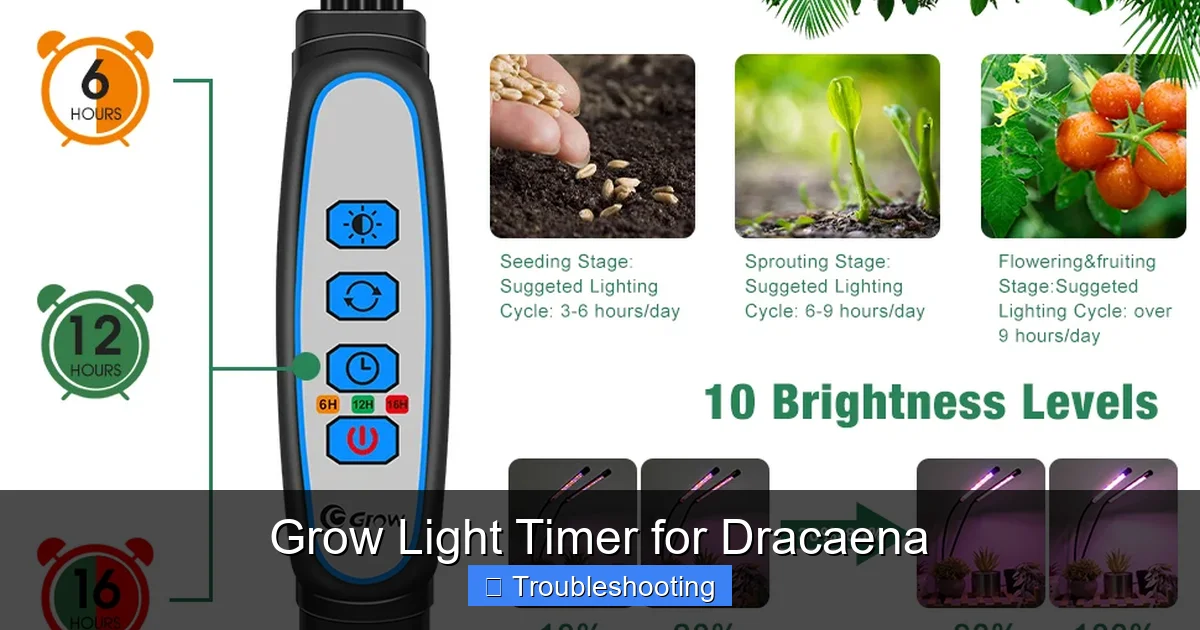
Grow Light Timer for Dracaena
A grow light timer for dracaena ensures your plant gets consistent light cycles without manual effort. Proper timing prevents leaf burn, promotes growth, and mimics natural daylight patterns for a thriving tropical plant.
You love your dracaena. It sits in the corner, tall and proud, adding life to your space. But lately, the leaves look dull. The tips turn brown. Growth slows down. You wonder what went wrong. Light might be the culprit. Dracaena plants come from tropical regions. They expect long days and short nights. Indoor light rarely matches that rhythm. A grow light timer for dracaena solves this problem. It gives your plant the steady schedule it craves. No more guessing. No more forgetting. Just reliable light, day after day.
This guide walks you through everything you need to know. We cover why timing matters. We explain how to pick the right timer. We show you how to set it up. We share pro tips for seasonal adjustments. And we help you fix common issues fast. By the end, your dracaena will get the perfect light cycle. It will reward you with lush, green growth. Let us dive in.
Key Takeaways
- Consistent light cycles matter: Dracaena needs 12 to 14 hours of light daily for optimal growth.
- Timers prevent human error: Automated schedules eliminate forgotten on/off cycles that stress plants.
- Digital timers offer precision: Programmable models allow custom schedules for different seasons.
- Distance and intensity go hand in hand: Timer settings must match light placement to avoid leaf scorch.
- Monitor plant response: Adjust duration based on leaf color, growth rate, and seasonal changes.
- Backup power matters: Battery backup keeps schedules running during outages.
- Troubleshoot early: Flickering lights or wrong cycles signal timer or bulb issues.
Quick Answers to Common Questions
How many hours of light does a dracaena need daily?
Dracaena needs 12 to 14 hours of light daily for optimal growth. Start with 12 hours and adjust based on plant response.
Can I leave a grow light on 24 hours for dracaena?
No, never leave grow lights on 24 hours. Plants need dark periods for respiration and energy storage. Continuous light causes stress and damage.
What type of timer is best for a beginner?
A mechanical outlet timer is best for beginners. It is affordable, simple to program with pins, and reliable for basic on/off schedules.
Why does my dracaena have brown tips even with a timer?
Brown tips usually mean too much light intensity, low humidity, or inconsistent watering. Check light distance, raise humidity, and water when top soil is dry.
Do I need to change the timer schedule in winter?
Yes, reduce light to 10 to 11 hours in winter to mimic natural shorter days. This prevents weak, leggy growth and supports seasonal rhythms.
📑 Table of Contents
Why Your Dracaena Needs a Light Timer
Plants run on internal clocks. Just like us, they follow circadian rhythms. Light tells them when to grow. When to rest. When to store energy. Dracaena evolved under consistent tropical days. Twelve to fourteen hours of light. Ten to twelve hours of dark. Indoor life breaks this pattern. You turn lights on at random times. You forget to turn them off. The plant gets confused. Stress builds up. Leaves yellow. Tips crisp. Growth stalls.
The Science of Photoperiodism
Photoperiodism is how plants measure day length. It triggers flowering, dormancy, and growth spurts. Dracaena does not flower often indoors. But it still uses day length to pace its metabolism. Long days signal active growth. Short days signal rest. A grow light timer for dracaena mimics nature. It keeps the signal clear. The plant knows what to do. Energy goes to new leaves. Roots strengthen. Color deepens.
What Happens Without a Timer
Manual control seems fine at first. You turn the light on in the morning. Off at night. But life gets busy. You stay late at work. You sleep in on weekends. The plant gets eleven hours one day. Fifteen the next. Eight on Sunday. This chaos confuses the plant. It cannot settle into a rhythm. Photosynthesis becomes inefficient. Stress hormones rise. The plant becomes vulnerable to pests. Disease takes hold easier. A timer removes this risk entirely.
Choosing the Right Grow Light Timer for Dracaena
Not all timers work the same. Some are simple. Some are smart. Your choice depends on your setup. Your budget. Your tech comfort. Let us break down the main types.
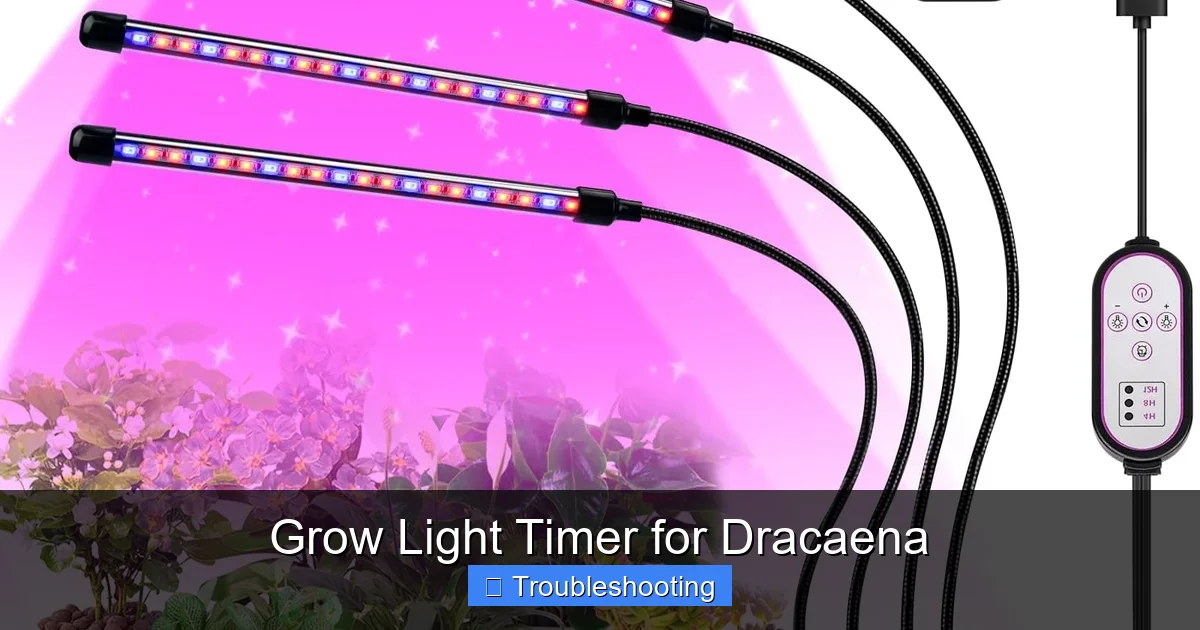
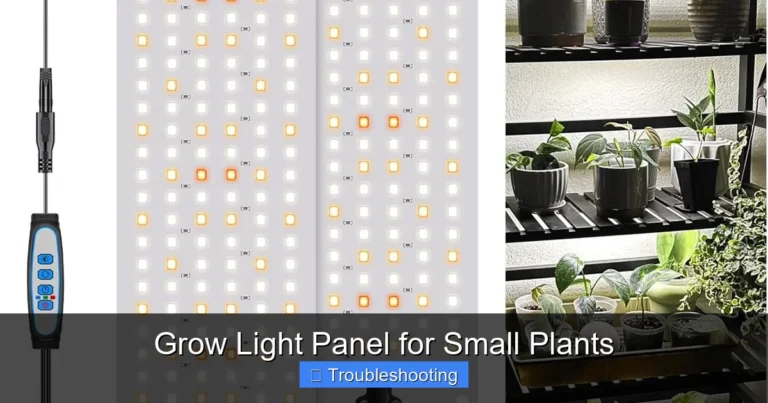
Visual guide about Grow Light Timer for Dracaena
Image source: m.media-amazon.com
Mechanical Outlet Timers
These plug into the wall. They have a dial with pins. You push pins down for on hours. Up for off hours. They are cheap. Reliable. No batteries needed. But they lack precision. Minimum interval is usually thirty minutes. You cannot set different schedules for weekdays and weekends. They can be stiff to program. Good for basic setups. One light. One schedule. Set it and forget it.
Digital Programmable Timers
These have LCD screens. Buttons for programming. You set exact on/off times. Down to the minute. Many allow multiple programs. Weekday schedule. Weekend schedule. Some have random mode for security. Battery backup keeps time during outages. They cost more. But precision pays off. Your dracaena gets exact hours every day. No drift. No guesswork.
Smart WiFi Timers
These connect to your phone. You control them via app. Set schedules from anywhere. Adjust on vacation. Get notifications if power fails. Some integrate with Alexa or Google Home. Voice control your lights. They cost the most. But convenience is unmatched. Great if you travel. Or want to tweak schedules often. Just ensure your WiFi reaches the plant area.
Key Features to Look For
- Battery backup: Keeps schedule during power cuts.
- Multiple outlets: Run lights and fans on one timer.
- Amp rating: Must handle your light wattage. Check specs.
- Easy programming: Clear display. Intuitive buttons.
- Durability: Quality relays. Surge protection.
- Warranty: At least one year. Good support.
Setting Up Your Grow Light Timer for Dracaena
You have the timer. Now let us set it up right. Placement matters. Wiring matters. Programming matters. Follow these steps for success.
Step 1: Pick the Right Location
Place the timer near an outlet. Keep it dry. Away from water splashes. Humidity is fine. Direct spray is not. Mount it on the wall if possible. Use the keyhole slots. Keeps cords tidy. Reduces trip hazards. Make sure you can reach the buttons. Or see the screen. You will adjust it sometimes.
Step 2: Check Your Light Specs
Read the light label. Find watts. Find amps. Most LED grow lights use 20 to 100 watts. That is 0.2 to 0.8 amps at 120V. Your timer must handle more. A 15 amp timer is standard. Plenty for one or two lights. If you run multiple high watt lights, add up the amps. Stay under 80 percent of timer rating. Safety first.
Step 3: Program the Schedule
Start with twelve hours on. Twelve hours off. Example: 7 AM on. 7 PM off. This mimics equatorial day length. Dracaena loves this. Use the timer manual. Digital timers: press PROG. Set ON time. Set OFF time. Assign days. Save. Mechanical: push pins for 7 AM to 7 PM. Double check AM/PM. Many errors happen here.
Step 4: Test the Cycle
Plug in the light. Turn timer to AUTO. Watch one full cycle. Does it turn on at 7? Off at 7? Light stays steady? No flicker? Good. If not, recheck programming. Mechanical timers: ensure pins are fully pushed. Digital: verify day groups. Smart: check app sync. Fix now. Avoid surprises later.
Step 5: Position the Light Correctly
Timer works. Now place the light. Dracaena likes bright indirect light. LED grow light 12 to 18 inches above canopy. Too close burns leaves. Too far stretches stems. Use a ruler. Adjust as plant grows. Rotate plant weekly. Even light on all sides. Prevents leaning.
Optimizing Light Duration for Dracaena Health
Twelve hours is a starting point. Not a fixed rule. Your plant talks. Listen to it. Adjust based on feedback. Seasons change. Growth phases change. Your schedule should too.
Signs Your Dracaena Needs More Light
- Pale new leaves.
- Long gaps between leaves (leggy growth).
- Leaning hard toward light source.
- Slow or no new growth in spring/summer.
- Lower leaves yellowing and dropping excessively.
If you see these, add one hour. Watch two weeks. Better? Add another. Max fourteen hours. Plants need dark too. Respiration happens at night. Energy gets stored. Roots grow. Never run twenty four hours. That harms the plant.
Signs Your Dracaena Gets Too Much Light
- Brown crispy tips on multiple leaves.
- Bleached or white patches on leaves.
- Leaves curling inward or cupping.
- Soil drying extremely fast.
- Stunted new growth.
Cut back by one hour. Raise light two inches. Increase humidity. Mist leaves. Check recovery in ten days. Balance is key. A grow light timer for dracaena makes fine tuning easy. Change one setting. Done.
Seasonal Adjustments
Nature changes day length. Your timer should too. Spring: twelve hours. Summer: fourteen hours. Fall: twelve hours. Winter: ten to eleven hours. This mimics natural cycles. Triggers proper growth patterns. Prevents winter weakness. Spring strength. Adjust monthly. Mark calendar. Or use smart timer with seasonal presets.
Troubleshooting Common Timer and Light Issues
Things go wrong. Timers fail. Bulbs die. Settings drift. Here is how to fix the most common problems fast.
Timer Does Not Turn On
Check outlet. Plug in a lamp. Works? Outlet good. Timer bad? Check fuse or breaker. Mechanical timer: motor may have died. Listen for hum. No hum? Replace. Digital: screen blank? Battery dead. Replace CR2032. Screen on but no power? Relay stuck. Tap gently. Sometimes frees it. Still dead? Replace unit.
Light Flickers or Strobes
Flicker stresses plants. Causes: loose bulb. Bad driver. Timer relay chatter. Incompatible dimmer. Fix: tighten bulb. Try light in another outlet. No flicker? Timer relay dirty or worn. Clean contacts with electronic cleaner. Or replace timer. Use timer rated for inductive loads. LED drivers are inductive. Cheap timers fail fast.
Schedule Drifts Over Time
Mechanical timers lose minutes monthly. Digital timers with battery backup stay accurate. Smart timers sync to internet time. Best accuracy. If drift bothers you, upgrade. Or reset monthly. Put reminder on phone. Takes thirty seconds.
Light Turns On But Plant Still Struggles
Timer works. Light works. Plant unhappy. Check: light spectrum. Dracaena needs full spectrum. Red and blue peaks. White light 4000K to 6500K. Check intensity. Use PAR meter if serious. Or phone app approximation. Distance correct? Twelve to eighteen inches. Duration correct? Twelve to fourteen hours. Humidity? Forty to sixty percent. Water? When top inch dry. Fertilizer? Monthly in growing season. Isolate variables. Fix one at a time.
Power Outage Resets Timer
No battery backup? Schedule lost. Mechanical timers keep time mechanically. But stop during outage. Restart at wrong time when power returns. Digital without battery: resets to factory. Smart timers: reconnect and resync. Best fix: buy timer with battery backup. Costs five dollars more. Saves hours of reprogramming. Peace of mind.
Advanced Tips for Dracaena Light Management
You mastered basics. Now level up. These pro moves maximize growth. Minimize effort. Impress your plant friends.
Use Two Timers for Dawn and Dusk Simulation
Nature does not flip a switch. Light fades in. Fades out. Two timers. One for main lights. One for low watt warm LEDs. Timer A: main lights 8 AM to 6 PM. Timer B: warm LEDs 6 AM to 8 AM and 6 PM to 8 PM. Gradual transition. Reduces shock. Mimics sunrise sunset. Plants love it. Growth improves. Stress drops.
Pair Timer with Smart Plug for Monitoring
Smart plug tracks energy use. Shows actual runtime. Confirms timer accuracy. Alerts if light fails. Data helps optimize. See patterns. Adjust with evidence. Not guesswork. Many smart plugs cost under twenty dollars. Worth it for peace of mind.
Group Plants by Light Needs
Dracaena with other medium light plants. Snake plant. ZZ plant. Pothos. Same timer. Same schedule. One outlet strip. One timer. Efficient. But check each plant. Adjust distance per species. Dracaena higher. Pothos lower. All happy. One schedule to manage.
Log Changes in a Plant Journal
Notebook or app. Date. Timer setting. Light height. Plant observation. Photos. Monthly review. Spot trends. Learn what works. Share with community. Data beats memory. Especially with multiple plants.
Automate Humidity with Timer Too
Dracaena likes humidity. Run humidifier on timer. Same on/off as lights. Daytime humidity boost. Night dry period prevents fungus. One more timer. Or smart plug. Set and forget. Consistent environment. Happy plant.
Conclusion
A grow light timer for dracaena is a small tool. But it makes a big difference. It gives your plant the rhythm it evolved for. Steady light. Reliable dark. No missed days. No accidental all nighters. You set it once. Adjust occasionally. The plant handles the rest. It grows taller. Greener. Stronger. You enjoy a thriving tropical beauty. All from a simple box on the wall.
Start simple. Mechanical timer. Twelve on. Twelve off. Watch your plant. Learn its language. Upgrade when you need more control. Digital. Smart. Two timers. Dawn dusk simulation. Each step adds precision. Each step rewards you. Your dracaena does not ask for much. Just consistency. Give it that. And it will give you years of quiet green joy.
Now go plug in that timer. Set the time. Walk away. Your plant just got a promotion. From surviving to thriving. You did good.
Frequently Asked Questions
What is the best grow light timer for dracaena plants?
A digital programmable timer with battery backup is ideal for dracaena. It offers precise minute-level control, multiple schedules, and maintains settings during power outages.
How far should a grow light be from my dracaena?
Position LED grow lights 12 to 18 inches above the dracaena canopy. Adjust height as the plant grows to maintain this distance and prevent leaf burn.
Can I use a regular lamp timer for grow lights?
Yes, but ensure the timer’s amp rating exceeds your light’s draw. Most LED grow lights work fine with standard 15-amp timers, but check wattage to be safe.
Why is my dracaena leaning toward the grow light?
Leaning indicates insufficient light intensity or duration. Increase daily light by 1 hour, lower the light slightly, and rotate the plant weekly for even growth.
Should I run a humidifier on the same timer as my grow light?
Running a humidifier on the same daytime schedule as lights boosts humidity when the plant transpires most. Turn both off at night to prevent fungal issues.
How do I know if my grow light timer is working correctly?
Observe one full on/off cycle after setup. Confirm the light turns on and off at programmed times. Use a smart plug with energy monitoring for ongoing verification.