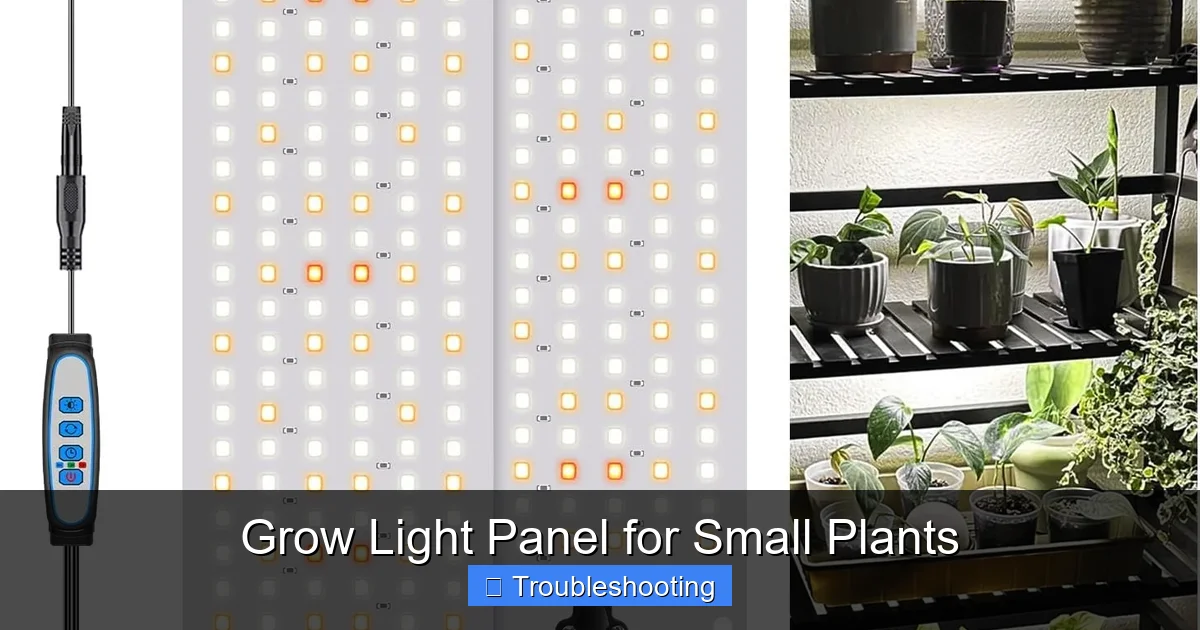
Grow Light Panel for Small Plants
A grow light panel for small plants delivers the right intensity and spectrum for seedlings, herbs, and succulents. Proper placement and timing prevent leggy growth and burnout. Follow our guide to choose, set up, and maintain the perfect panel for your indoor garden.
Starting an indoor garden feels exciting, but the first hurdle is often light. A grow light panel for small plants solves that problem by giving seedlings, herbs, and succulents the exact wavelengths they crave. Unlike a single bulb, a panel spreads light evenly across a tray, so every leaf gets a fair share. In this guide we walk through selection, setup, common issues, and long‑term care so your tiny garden thrives year‑round.
Many beginners assume any bright LED will work. The truth is that intensity, spectrum, and timing all interact. Too much blue makes plants compact but can stall flowering. Too much red without enough blue leads to weak stems. A well‑designed grow light panel for small plants balances these bands and lets you tweak the ratio as crops move from seedling to harvest.
Key Takeaways
- Match spectrum to plant type: Blue light fuels vegetative growth, while red light encourages flowering.
- Watch distance and duration: Keep the panel 6‑12 inches above foliage and run 12‑16 hours daily for most small plants.
- Heat management matters: Even low‑watt panels can warm leaves; use a small fan or raise the panel if leaves curl.
- Use a timer for consistency: Automated cycles mimic natural day/night rhythms and reduce human error.
- Clean the lens regularly: Dust cuts output by up to 20 %; a quick wipe restores full intensity.
- Monitor plant response: Stretching, bleaching, or slow growth signal a need to adjust height or spectrum.
- Upgrade when yields plateau: Higher PPFD panels or full‑spectrum models boost production for dense herb trays.
Quick Answers to Common Questions
What PPFD range suits most herbs and microgreens?
Aim for 150‑300 µmol·m⁻²·s⁻¹ at canopy level for healthy vegetative growth.
How far should the panel hang above seedlings?
Start at 8 inches and adjust up or down based on leaf response and PPFD readings.
Can I run the light 24 hours a day?
No. Most small plants need a dark period; a 14‑hour on / 10‑hour off cycle works best.
Why are my seedlings stretching even with the light on?
Stretching usually means insufficient blue light or the panel is too high; lower the panel or increase blue intensity.
How often should I clean the panel lens?
Wipe the lens monthly with a microfiber cloth and a little isopropyl alcohol to maintain full output.
📑 Table of Contents
Choosing the Right Grow Light Panel
Understand PPFD and Wattage
Photosynthetic photon flux density (PPFD) tells you how many useful photons hit each square centimeter per second. For most herbs and leafy greens, aim for 150‑300 µmol·m⁻²·s⁻¹ at canopy level. A 20‑watt panel covering a 12‑inch square often hits that range. Check the manufacturer’s PPFD chart at the recommended hanging height before you buy.
Spectrum Options
Full‑spectrum panels mimic sunlight and work for every growth stage. Targeted panels let you swap a blue‑heavy board for a red‑heavy one when you switch from veg to bloom. If you only grow basil, mint, or microgreens, a fixed blue‑rich panel keeps things simple and inexpensive.
Size and Coverage
Measure your growing area. A 12 × 12 inch panel covers a standard seed‑starting tray. For a 24 × 24 inch shelf, you’ll need either a larger panel or two smaller units spaced evenly. Overlap zones prevent dark spots that cause uneven growth.
Understanding Light Spectrum for Small Plants
Blue Light (400‑500 nm)
Blue photons drive chlorophyll production and keep internodes short. Seedlings under strong blue stay stocky, which is ideal for transplanting. However, exclusive blue can delay flowering in fruiting herbs like peppers.
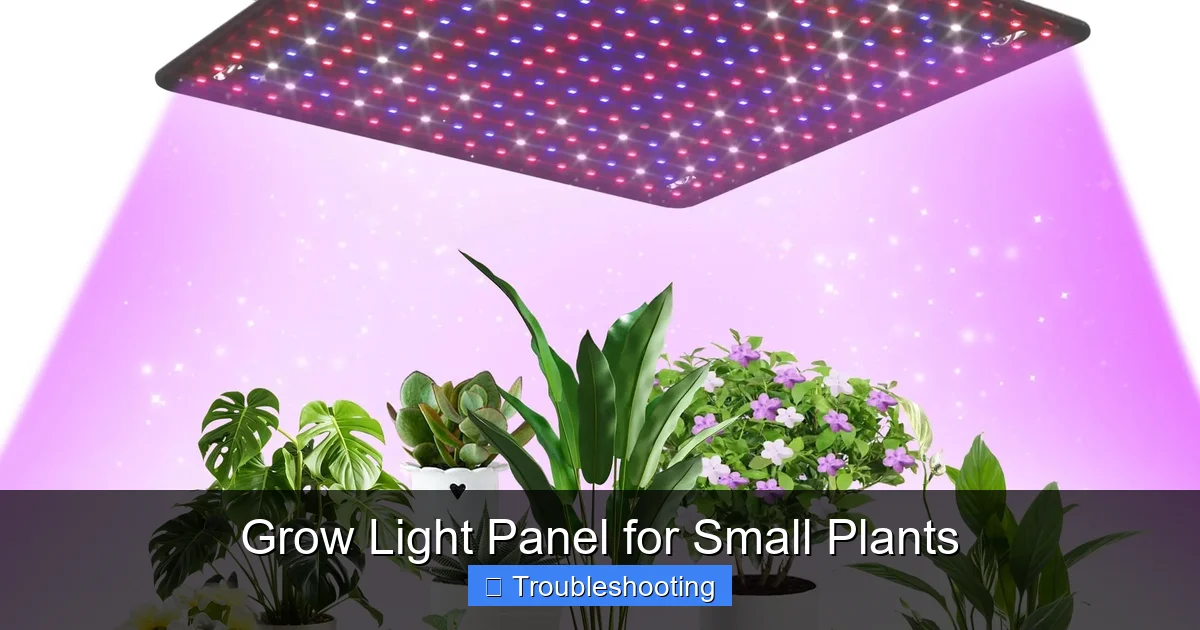
Visual guide about Grow Light Panel for Small Plants
Image source: m.media-amazon.com
Red Light (600‑700 nm)
Red photons promote stem elongation and trigger bloom hormones. Adding a red boost during the last two weeks of a basil cycle can increase leaf size, but too much red early on creates leggy, weak plants.
Far‑Red and UV
Some advanced panels include far‑red (700‑750 nm) to accelerate flowering or UV‑B to boost essential oil content. These are optional for most hobbyists but worth noting if you chase premium flavor or rapid turnover.
Setting Up Your Grow Light Panel for Small Plants
Mounting Height
Start with the panel 8 inches above the canopy. Use a ruler or a smartphone app that measures PPFD to verify you’re in the target range. If leaves show tip burn, raise the panel an inch; if they stretch, lower it an inch.
Photoperiod Programming
Most small plants thrive on a 14‑hour day / 10‑hour night cycle. Plug the panel into a digital timer so the schedule never drifts. Consistency trains the plant’s internal clock and reduces stress.
Airflow and Heat
Even low‑heat LEDs warm the air directly under the panel. A quiet 40 mm clip‑fan positioned to blow across the canopy keeps temperature stable and strengthens stems. Aim for 70‑75 °F (21‑24 °C) at leaf level.
Common Problems and Fixes
Leggy Seedlings
Stretching usually means insufficient blue light or the panel is too high. Lower the panel, increase the blue ratio, or add a supplemental blue strip. Within a week you should see tighter node spacing.
Leaf Bleaching or Burn
White or brown patches indicate excess intensity. Raise the panel, shorten the photoperiod, or dim the driver if your model supports it. A quick test: place a hand under the panel for 30 seconds; if it feels hot, the plants feel it too.
Uneven Growth Across Tray
Dark corners mean the panel’s beam angle doesn’t cover the full width. Add a second panel offset by half the tray width, or use reflective Mylar on the sides to bounce light back into the shadows.
Power Flicker or Driver Failure
Cheap drivers can cause strobing that stresses plants. Invest in a panel with a reputable constant‑current driver (Mean Well, Inventronics). If flicker appears, replace the driver before it damages the LEDs.
Maintenance Tips for Longevity
Clean the Optics Monthly
Dust and water spots act like a neutral density filter. Turn off the panel, let it cool, then wipe the lens with a microfiber cloth and a drop of isopropyl alcohol. Avoid paper towels; they can scratch the coating.
Check Connections Quarterly
Loose plugs or corroded terminals increase resistance and heat. Unplug, inspect the barrel jack or screw terminals, and reseat firmly. A drop of dielectric grease on outdoor‑rated connectors prevents future oxidation.
Monitor Output Degradation
LEDs lose roughly 5‑10 % output per 10,000 hours. Keep a log of purchase date and daily run hours. When PPFD drops below your target, plan a replacement rather than guessing.
Firmware Updates (Smart Panels)
Some Wi‑Fi enabled panels receive spectrum‑tuning updates. Check the manufacturer’s app quarterly. New profiles can improve efficiency for specific crops without hardware changes.
When to Upgrade Your Grow Light Panel
Yield Plateau
If herb harvest weight stops increasing despite optimal nutrients and watering, the light ceiling may be the limit. Upgrading to a higher PPFD panel (e.g., 40 watt full‑spectrum) often restores growth momentum.
Expanded Growing Area
Adding a second shelf or a wider tray demands more coverage. Instead of daisy‑chaining many small panels, a single larger panel simplifies wiring and improves uniformity.
New Crop Requirements
Switching from leafy greens to flowering peppers or strawberries calls for more red and far‑red photons. A panel with adjustable spectrum knobs or interchangeable boards saves you from buying a whole new system.
Energy Efficiency Gains
Newer diodes (e.g., Samsung LM301H) deliver more µmol per watt. If your electricity bill is a concern, swapping an older 30‑watt panel for a 20‑watt high‑efficacy model can cut power use by a third while maintaining PPFD.
By now you should feel confident selecting, installing, and maintaining a grow light panel for small plants. Remember the core loop: measure PPFD, watch plant cues, adjust height or spectrum, and keep the hardware clean. Small tweaks compound into big harvests. Happy growing!
Frequently Asked Questions
What is a grow light panel for small plants?
A grow light panel for small plants is a flat LED fixture designed to deliver a balanced spectrum and even coverage for seedlings, herbs, and compact houseplants.
Do I need a full‑spectrum panel for herbs only?
Full‑spectrum works well, but a blue‑rich fixed panel is cheaper and sufficient for leafy herbs that never flower.
How do I know if my panel is too hot for the plants?
Place your hand under the panel for 30 seconds; if it feels warm, raise the panel or add a small fan to improve airflow.
Can I use a timer with any grow light panel?
Yes, most panels plug into a standard outlet, so any digital timer will automate the photoperiod reliably.
What maintenance extends panel life?
Monthly lens cleaning, quarterly connection checks, and tracking run hours to anticipate LED degradation all prolong performance.
When should I consider upgrading to a higher wattage panel?
Upgrade when yields plateau, you expand the growing area, or you switch to crops that demand more red and far‑red light.