Kale Care Mistakes to Avoid
Growing kale is rewarding but easy to mess up. This guide covers the most common kale care mistakes to avoid, from overcrowding and improper watering to ignoring pests and harvesting too late. Follow these tips for a thriving, delicious kale harvest all season long.
Growing kale feels like a superpower. You plant a tiny seed, wait a few weeks, and suddenly you have armloads of nutrient-packed greens for smoothies, salads, and sautés. But here is the thing. Even experienced gardeners make kale care mistakes that stunt growth, invite pests, or ruin flavor. I have made plenty of them myself. Let me save you the frustration.
This guide walks through the most common kale care mistakes to avoid. You will learn how to space, water, feed, protect, and harvest kale like a pro. Whether you are growing in raised beds, containers, or a backyard patch, these tips apply. Let us dig in.
Key Takeaways
- Space plants properly: Crowded kale leads to poor airflow, disease, and smaller leaves. Give each plant 12 to 18 inches of room.
- Water consistently: Kale needs steady moisture. Inconsistent watering causes bitter leaves and bolting.
- Watch for pests early: Cabbage worms, aphids, and flea beetles love kale. Check leaves daily and act fast.
- Feed the soil: Kale is a heavy feeder. Amend with compost and use nitrogen-rich fertilizer for lush growth.
- Harvest at the right time: Pick outer leaves first. Don’t wait until leaves get tough and bitter.
- Rotate crops yearly: Planting kale in the same spot invites soil-borne diseases and nutrient depletion.
- Choose the right variety: Match kale type to your climate and season for best results.
Quick Answers to Common Questions
How much space does kale need between plants?
Kale needs 12 to 18 inches between plants for full-size growth. For baby kale, you can space 6 to 8 inches apart.
Why are my kale leaves turning yellow?
Yellow leaves usually mean overwatering, nitrogen deficiency, or natural aging of lower leaves. Check soil moisture and fertilize if needed.
When is the best time to harvest kale?
Harvest in the morning when leaves are crisp. Start when leaves are hand-sized for mature kale, or 3 to 4 inches for baby kale.
How do I stop cabbage worms from eating my kale?
Use floating row covers from planting day, hand-pick worms daily, and spray Bt (Bacillus thuringiensis) for heavy infestations.
Can I grow kale in containers?
Yes. Use at least a 12-inch pot per plant, quality potting mix, consistent water, and regular fertilizer. Dwarf varieties work best.
📑 Table of Contents
- Mistake 1: Crowding Your Kale Plants
- Mistake 2: Inconsistent Watering Habits
- Mistake 3: Skipping Soil Prep and Fertility
- Mistake 4: Ignoring Pests Until It Is Too Late
- Mistake 5: Harvesting Wrong or Waiting Too Long
- Mistake 6: Planting at the Wrong Time
- Mistake 7: Not Rotating Crops
- Mistake 8: Choosing the Wrong Variety
- Mistake 9: Neglecting Disease Prevention
- Mistake 10: Forgetting About Bolting
- Putting It All Together: A Season-Long Kale Care Calendar
- Conclusion
Mistake 1: Crowding Your Kale Plants
It is tempting to pack kale seedlings close together. They look so small at planting time. But kale grows fast and wide. Crowding is one of the most common kale care mistakes to avoid, and it causes a cascade of problems.
Why Spacing Matters
Kale needs air circulation. When plants touch, moisture gets trapped between leaves. That creates a perfect home for fungal diseases like downy mildew and alternaria leaf spot. Crowded plants also compete for nutrients and light. The result? Smaller leaves, weaker stems, and lower yields.
Proper Spacing Guidelines
Give each kale plant 12 to 18 inches of space in all directions. For baby kale or cut-and-come-again harvests, you can go as tight as 6 to 8 inches. But for full-size plants, especially curly and lacinato types, err on the side of more room. Rows should be 18 to 24 inches apart.
If you started seeds in trays, thin ruthlessly. Keep the strongest seedling per cell. If direct-sowing, plant seeds ½ inch deep and 3 inches apart, then thin to final spacing when seedlings have two true leaves. Yes, it feels wasteful. But those thinned seedlings make a great microgreen snack.
Container Spacing
Growing in pots? Use at least a 12-inch diameter container for one kale plant. A 5-gallon bucket works well. For multiple plants, use a long trough or raised bed. Do not cram three plants into a 10-inch pot. They will struggle.
Mistake 2: Inconsistent Watering Habits
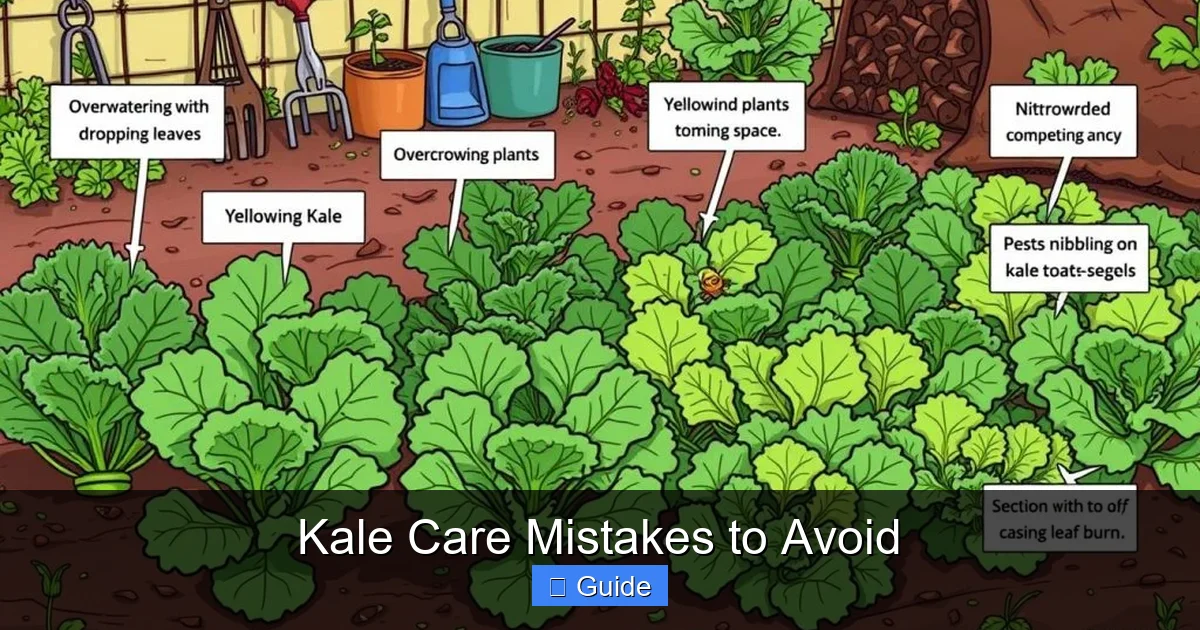
Kale is 85 to 90 percent water. It drinks a lot. Inconsistent watering is another top kale care mistake to avoid. It leads to bitter leaves, tough texture, and premature bolting.
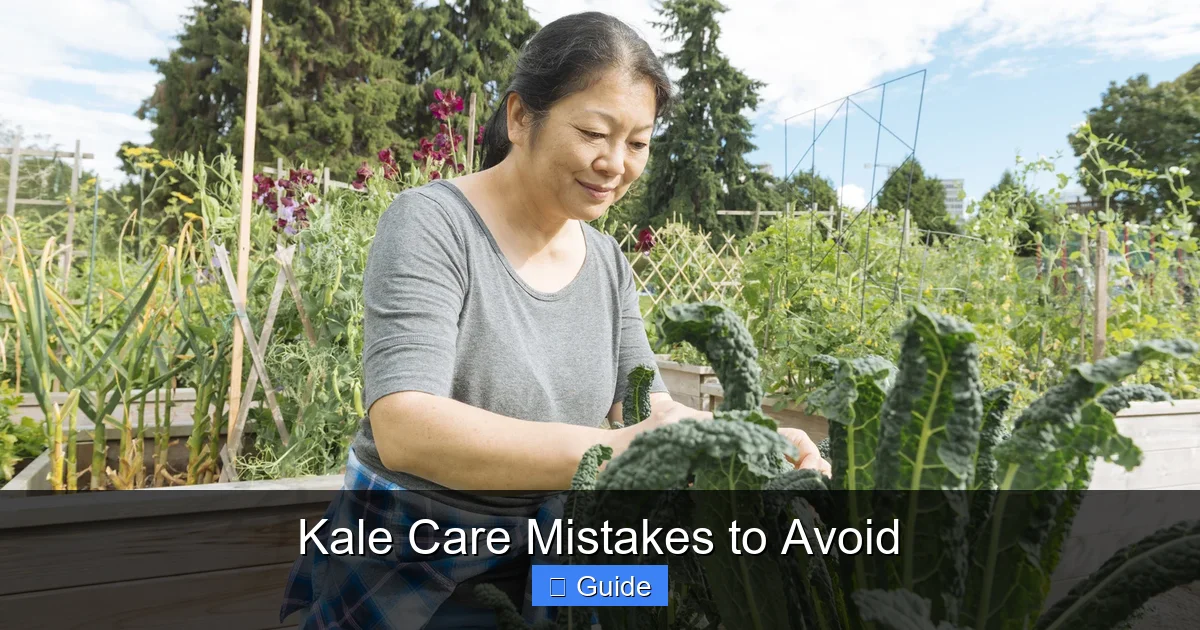
Visual guide about Kale Care Mistakes to Avoid
Image source: housedigest.com
The Goldilocks Zone
Kale wants soil that is consistently moist but not soggy. Think of a wrung-out sponge. If the top inch of soil feels dry, it is time to water. In hot weather, that might mean daily watering. In cool spring or fall, every two to three days may suffice.
Signs of Water Stress
- Underwatering: Leaves wilt, curl, turn dull gray-green, and taste bitter.
- Overwatering: Yellowing lower leaves, mushy stems, fungus gnats, root rot.
Mulch is your best friend here. Apply 2 to 3 inches of straw, shredded leaves, or grass clippings around plants. Mulch retains moisture, suppresses weeds, and keeps soil temperature stable. Keep mulch an inch away from stems to prevent rot.
Watering Methods
Drip irrigation or soaker hoses are ideal. They deliver water to the root zone without wetting foliage. Wet leaves invite disease. If you hand-water, aim at the base of the plant. Water early in the day so any splashed moisture dries quickly.
Mistake 3: Skipping Soil Prep and Fertility
Kale is a heavy feeder. It pulls lots of nitrogen, potassium, and calcium from the soil. Planting in poor soil without amendments is a kale care mistake to avoid if you want big, tender leaves.
Build the Soil Before Planting
Work 2 to 4 inches of compost into the top 6 to 8 inches of soil before transplanting or sowing. Aged manure works too. This improves drainage, moisture retention, and microbial life. A soil test is ideal. Kale prefers pH 6.0 to 7.5. If your soil is acidic, add lime. If alkaline, add sulfur or peat moss.
Ongoing Feeding Schedule
Side-dress with nitrogen-rich fertilizer every 3 to 4 weeks. Good options include:
- Blood meal (12-0-0)
- Fish emulsion (5-1-1)
- Cottonseed meal (6-2-1)
- Composted chicken manure
Apply according to package rates. Scratch into soil around the drip line, then water in. Avoid high-phosphorus fertilizers unless a soil test shows a deficiency. Too much phosphorus blocks micronutrient uptake.
Micronutrient Needs
Kale needs calcium for cell structure and boron for growing points. Calcium deficiency shows as tip burn on young leaves. Boron deficiency causes cracked stems and hollow hearts. A balanced organic fertilizer or kelp meal covers these. Foliar sprays of calcium chloride or borax (tiny amounts!) can correct deficiencies fast.
Mistake 4: Ignoring Pests Until It Is Too Late
Kale is a magnet for pests. Cabbage worms, aphids, flea beetles, harlequin bugs, and slugs all think kale is delicious. Waiting to act is a kale care mistake to avoid. Early detection saves your crop.
Know Your Enemies
Cabbage Worms and Loopers
Green caterpillars that chew large holes in leaves. They blend in perfectly. Look for dark green frass (poop) on leaves. Hand-pick daily. Use Bacillus thuringiensis (Bt) spray for heavy infestations. It is organic and targets only caterpillars.
Aphids
Tiny soft-bodied insects clustering on undersides of leaves and new growth. They suck sap and transmit viruses. Blast with a strong jet of water. Spray insecticidal soap or neem oil weekly. Ladybugs and lacewings eat them. Plant alyssum or dill nearby to attract beneficials.
Flea Beetles
Tiny black beetles that jump like fleas. They chew countless tiny holes, making leaves look like lace. Young plants are most vulnerable. Use floating row covers from day one. Dust with diatomaceous earth. Trap crops like radish or mustard can lure them away.
Harlequin Bugs
Shield-shaped bugs with bright red and black patterns. They suck sap and cause wilting. Hand-pick into soapy water. Crush egg masses (black and white barrels) on leaf undersides. Row covers work if applied before bugs arrive.
Slugs and Snails
Night feeders that leave slime trails and ragged holes. Beer traps, copper tape, diatomaceous earth, and iron phosphate baits all help. Remove hiding spots like boards and thick mulch at night.
Prevention First
- Rotate crops. Do not plant kale or other brassicas in the same spot two years running.
- Use row covers immediately after planting. Secure edges with soil or pins.
- Interplant with onions, garlic, thyme, or mint to confuse pests.
- Inspect leaves top and bottom every morning. Coffee in hand, flashlight ready.
Mistake 5: Harvesting Wrong or Waiting Too Long
Harvesting seems simple. But doing it wrong reduces yield and shortens plant life. This is a subtle kale care mistake to avoid that many beginners miss.
Cut-and-Come-Again Method
Kale is a cut-and-come-again crop. Harvest outer leaves first, leaving the center growing point (the terminal bud) intact. The plant keeps producing new leaves from the center. This extends harvest for months.
Use clean scissors or a sharp knife. Cut leaves at the base of the stem, about an inch above soil. Do not tear. Tearing damages the stem and invites disease. Harvest in the morning when leaves are crisp and sweet.
When to Start Harvesting
Baby kale: 25 to 30 days after sowing, when leaves are 3 to 4 inches long.
Mature leaves: 55 to 75 days, when leaves are hand-sized or larger. Pick before leaves get tough, yellow, or insect-damaged.
Common Harvest Mistakes
- Taking the center bud: This kills the plant. Always leave the top 2 to 3 inches of growth.
- Waiting too long: Old leaves get fibrous and bitter. Compost them and let the plant push new growth.
- Harvesting wet leaves: Wet leaves rot in storage. Wait for dew to dry.
- Stripping the plant bare: Leave at least 4 to 5 leaves so the plant can photosynthesize.
Storing Your Harvest
Do not wash until ready to use. Wrap dry leaves in a paper towel, place in a perforated bag, and refrigerate. They keep 1 to 2 weeks. For longer storage, blanch 2 minutes, shock in ice water, drain, and freeze. Frozen kale is perfect for smoothies and soups.
Mistake 6: Planting at the Wrong Time
Kale loves cool weather. Heat makes it bitter and triggers bolting (flowering). Planting at the wrong time is a kale care mistake to avoid for flavor and longevity.
Spring Planting
Start seeds indoors 4 to 6 weeks before last frost. Transplant 2 to 4 weeks before last frost. Kale tolerates light frost (down to 20°F / -6°C) and actually tastes sweeter after a chill. For direct sow, plant as soon as soil is workable (40°F / 4°C minimum).
Fall Planting (Often Better)
Fall kale is sweeter, pest pressure is lower, and harvest extends into winter. Sow seeds 10 to 12 weeks before first fall frost. In zone 6, that means mid-July. In zone 8, early August. Transplant seedlings 6 to 8 weeks before frost.
Winter Growing
In zones 7 and warmer, kale overwinters with minimal protection. In colder zones, use cold frames, low tunnels, or heavy row covers. Varieties like Winterbor, White Russian, and Siberian are bred for cold hardiness.
Summer Struggles
If you must grow in summer, choose heat-tolerant varieties like Lacinato (dinosaur kale) or Ethiopian kale. Provide afternoon shade. Mulch heavily. Water constantly. Expect smaller, stronger-flavored leaves.
Mistake 7: Not Rotating Crops
Planting kale in the same bed year after year is a kale care mistake to avoid that builds up problems silently. Brassicas share pests and diseases. Clubroot, black rot, and cabbage root maggots all persist in soil.
Rotation Basics
Follow a 3 to 4 year rotation. Do not plant any brassica (broccoli, cauliflower, cabbage, Brussels sprouts, kohlrabi, radish, turnip, mustard) in the same spot more than once every three years.
Good Rotation Partners
After kale, plant:
- Legumes (beans, peas) to fix nitrogen
- Nightshades (tomatoes, peppers, eggplant)
- Alliums (onions, garlic, leeks)
- Cucurbits (squash, cucumbers, melons)
Before kale, grow a cover crop like winter rye or hairy vetch. Cut and drop as green manure. This builds organic matter and suppresses weeds.
Mistake 8: Choosing the Wrong Variety
Not all kale is created equal. Picking a variety unsuited to your climate or cooking style leads to disappointment. This kale care mistake to avoid is easy to fix with a little research.
Main Kale Types
Curly Kale (Scots Kale)
Tightly ruffled leaves, bright green to blue-green. Hardy, productive, great for chips and massaged salads. Varieties: Winterbor, Darkibor, Redbor (purple), Vates.
Lacinato (Dinosaur, Tuscan, Cavolo Nero)
Long, narrow, dark blue-green leaves with bumpy texture. Sweeter, more tender, less bitter. Excellent for soups, pasta, raw salads. Less cold-hardy than curly types. Varieties: Nero di Toscana, Black Magic, Dinosaur.
Russian/Siberian Kale
Flat, fringed leaves with red or oak-leaf shape. Very cold-hardy, tender, sweet. Red Russian has purple stems. White Russian is green. Great for winter harvest.
Portuguese Kale (Tronchuda, Couve)
Large, flat, paddle-shaped leaves with thick white midribs. Heat-tolerant. Used in caldo verde soup. Less common but worth trying.
Ornamental Kale
Bred for looks, not flavor. Edible but tough and bitter. Skip for eating.
Match Variety to Need
- Cold climate, winter harvest: Winterbor, Red Russian, White Russian, Siberian
- Heat tolerance: Lacinato, Ethiopian, Tronchuda
- Container growing: Dwarf Blue Curled, Baby Leaf mixes
- Raw salads: Lacinato, Red Russian, baby leaf mixes
- Kale chips: Curly types (Winterbor, Vates)
- Soups and stews: Lacinato, Portuguese
Mistake 9: Neglecting Disease Prevention
Fungal and bacterial diseases spread fast in wet, crowded conditions. Prevention is far easier than cure. This kale care mistake to avoid saves heartbreak.
Common Kale Diseases
Downy Mildew
Yellow patches on top of leaves, gray-purple fuzz underneath. Thrives in cool, wet weather. Space plants, water at base, remove infected leaves.
Alternaria Leaf Spot
Dark concentric rings on leaves with yellow halos. Warm, wet conditions. Rotate crops. Destroy crop residue.
Black Rot
V-shaped yellow lesions at leaf edges, black veins. Bacterial. Spreads by water splash and tools. No cure. Remove and destroy plants. Rotate 3+ years.
Clubroot
Swollen, distorted roots. Plants wilt by day, recover at night. Soil-borne fungus. Persists 10+ years. Raise pH to 7.2+ with lime. Rotate. Use resistant varieties.
Damping Off
Seedlings collapse at soil line. Fungal. Use sterile seed-starting mix. Avoid overwatering. Provide airflow.
Disease Prevention Checklist
- Rotate crops every 3 to 4 years
- Space for airflow
- Water at soil level, not overhead
- Mulch to prevent soil splash
- Remove yellow or spotted leaves immediately
- Sanitize tools between beds (10% bleach or alcohol)
- Plant disease-resistant varieties when available
- Avoid working in wet garden
Mistake 10: Forgetting About Bolting
Bolting is when kale sends up a flower stalk. Leaves turn bitter and tough. The plant puts energy into seeds, not leaves. Understanding bolting triggers helps you delay it.
What Triggers Bolting
- Lengthening days (spring)
- Heat waves (temps above 75°F / 24°C)
- Water stress
- Root disturbance
- Over-maturity
Delaying Bolting
- Plant bolt-resistant varieties (Winterbor, Lacinato)
- Harvest regularly to keep plant vegetative
- Mulch to keep roots cool
- Provide afternoon shade in warm weather
- Water consistently
- Use row covers in early spring to buffer temperature swings
When Bolting Happens
You can still eat the flower buds (like broccolini) and young seed pods. They are sweet and tender. Let a few plants go to seed if you want to save seeds. But pull most bolted plants and replant for fall.
Putting It All Together: A Season-Long Kale Care Calendar
Here is a quick reference to keep your kale on track.
Late Winter / Early Spring
- Start seeds indoors 4 to 6 weeks before last frost
- Prepare beds with compost
- Set up row covers and drip irrigation
Spring (Transplant Time)
- Harden off seedlings 7 to 10 days
- Transplant at proper spacing
- Apply mulch immediately
- Install row covers for pest exclusion
- Begin weekly pest scouting
Early Summer
- Side-dress with nitrogen fertilizer
- Harvest outer leaves regularly
- Watch for heat stress, provide shade if needed
- Remove any bolted plants
Mid to Late Summer
- Start fall crop seeds (10 to 12 weeks before frost)
- Keep spring crop watered and harvested
- Heavy mulch for moisture retention
Fall (Prime Kale Season)
- Transplant fall seedlings
- Fertilize at planting
- Row covers for early frost protection
- Harvest after first frost for sweetest leaves
Winter
- In mild zones, harvest all winter
- In cold zones, use cold frames or tunnels
- Brush snow off covers
- Plan next year’s rotation
Conclusion
Kale is one of the most rewarding crops you can grow. It is nutritious, versatile, and surprisingly tough once you know what it needs. The kale care mistakes to avoid we covered here are all fixable with attention and good habits.
Space your plants. Water consistently. Feed the soil. Scout for pests daily. Harvest the right way. Plant at the right time. Rotate your beds. Pick the right variety. Prevent disease. Manage bolting. Do these things, and you will eat homegrown kale for months on end.
Gardening is a practice. You will still make mistakes. I still do. But each season teaches something new. Take notes. Take photos. Share extra harvest with neighbors. And enjoy every bite of that deep green goodness. Your body and your taste buds will thank you.
Now get out there and grow some kale.
Frequently Asked Questions
What is the most common kale care mistake beginners make?
The most common mistake is crowding plants too close together. This reduces airflow, encourages disease, and leads to smaller harvests. Always space kale 12 to 18 inches apart.
How often should I water kale?
Water kale whenever the top inch of soil feels dry. This usually means every 1 to 3 days depending on weather. Consistent moisture prevents bitter leaves and bolting.
Why does my kale taste bitter?
Bitterness comes from heat stress, inconsistent watering, old leaves, or bolting. Harvest younger leaves, water steadily, mulch to cool roots, and plant in cool seasons for sweeter kale.
Do I need to fertilize kale during the growing season?
Yes. Kale is a heavy feeder. Side-dress with nitrogen-rich fertilizer like fish emulsion or blood meal every 3 to 4 weeks for continuous leaf production.
Can kale survive frost and freezing temperatures?
Most kale varieties survive light frosts down to 20°F (-6°C) and taste sweeter after cold exposure. For hard freezes, use row covers, cold frames, or tunnels.
Should I remove yellow leaves from my kale plants?
Yes. Remove yellow, damaged, or diseased leaves promptly. This improves airflow, reduces disease spread, and directs energy to healthy new growth.