Top Picks Sisal for Pepper
Choosing the right sisal twine is crucial for supporting heavy pepper vines and ensuring a bountiful harvest. This guide breaks down the top picks based on tensile strength, rot resistance, and ease of use, helping you match the perfect twine to your specific pepper variety and growing conditions.
Key Takeaways
- Sisal is the gold standard: Its natural texture provides superior grip for climbing pepper vines compared to synthetic alternatives.
- Ply count matters: 2-ply works for light peppers; 3-ply or heavier is essential for vigorous varieties like black pepper or heavy bell peppers.
- Treat for longevity: Untreated sisal rots in one season; oil-treated or tarred options last significantly longer in humid conditions.
- Thickness affects handling: Thicker twine (3-4mm) is easier on the hands but can damage delicate stems; thinner twine (1-2mm) requires careful tying.
- Eco-friendly disposal: Being 100% biodegradable, used sisal can be composted along with plant waste, reducing plastic pollution.
- Pre-stretching prevents sag: Pulling the twine tight before installation minimizes mid-season drooping under fruit weight.
- Match twine to trellis type: Horizontal lines need higher tensile strength than vertical strings for single-stem training.
Quick Answers to Common Questions
What ply of sisal twine is best for heavy bell pepper plants?
3-ply oil-treated sisal is the sweet spot for main trellis lines supporting heavy bell peppers, offering 100+ lbs tensile strength with minimal stretch.
Can I reuse sisal twine next season?
Generally no. Sisal degrades with UV exposure and moisture; it loses 30-50% strength after one season. It is designed to be composted, not reused.
Does sisal twine hurt pepper stems?
No, sisal’s rough texture grips stems without cutting, unlike smooth synthetics. Use a figure-8 tie with a finger-width gap to prevent girdling as stems thicken.
Is tarred sisal safe for organic vegetable gardens?
Pine-tarred sisal is generally considered acceptable for structural supports in organic systems, but oil-treated (linseed) sisal is preferred for direct plant contact.
How do I stop sisal from stretching and sagging mid-season?
Pre-stretch your lines by pulling them tight between two fixed points for 30 seconds before installation; this removes the initial elasticity permanently.
📑 Table of Contents
- Introduction
- Why Sisal Is The Perfect Partner For Peppers
- Understanding Sisal Specifications: What To Look For
- Top Picks Sisal For Pepper: Product Reviews
- Matching Sisal To Your Pepper Variety And System
- Installation Masterclass: Pro Tips For Sisal Success
- Maintenance, Storage, And Troubleshooting
- Sisal Vs. The Alternatives: Honest Comparison
- Sustainability And The Bigger Picture
- Conclusion
Introduction
If you have ever grown peppers, you know the struggle. One day your plants are standing tall, and the next, a heavy fruit set or a summer storm has flattened them. Staking is not optional; it is survival. But the material you choose to tie them up makes all the difference. Wire cuts stems. Plastic slips. Jute rots too fast. That leaves one hero material: sisal. Finding the top picks sisal for pepper plants changes the game. It offers a rough, natural texture that grips stems without strangling them. It is strong enough to hold a bumper crop of bells but gentle enough for delicate chili branches.
I have spent years testing different twines in my own garden and talking to commercial growers. The difference between a good harvest and a great one often comes down to the support system. Sisal comes from the agave plant. It is a renewable resource. It biodegrades completely. But not all sisal is created equal. Some fray instantly. Some stretch until your trellis looks like a hammock. Some are treated with chemicals you do not want near your food. This guide cuts through the noise. We will look at the specific needs of pepper plants. We will review the best products on the market. We will cover installation tricks that save time and heartache. Let us dig in.
Why Sisal Is The Perfect Partner For Peppers
The Science Of Grip And Breathability
Pepper stems are unique. They are brittle but fibrous. They expand rapidly as they load up with fruit. A smooth synthetic twine acts like a saw. It slides back and forth in the wind. It creates a pressure point. The stem cannot expand. It girdles. Sisal is different. The fibers are coarse. They interlock with the tiny hairs on the pepper stem. This creates a friction lock. The tie stays where you put it. It does not slide down the stake. This is critical for heavy varieties like ‘California Wonder’ or ‘Ghost Pepper’ branches that get surprisingly heavy.
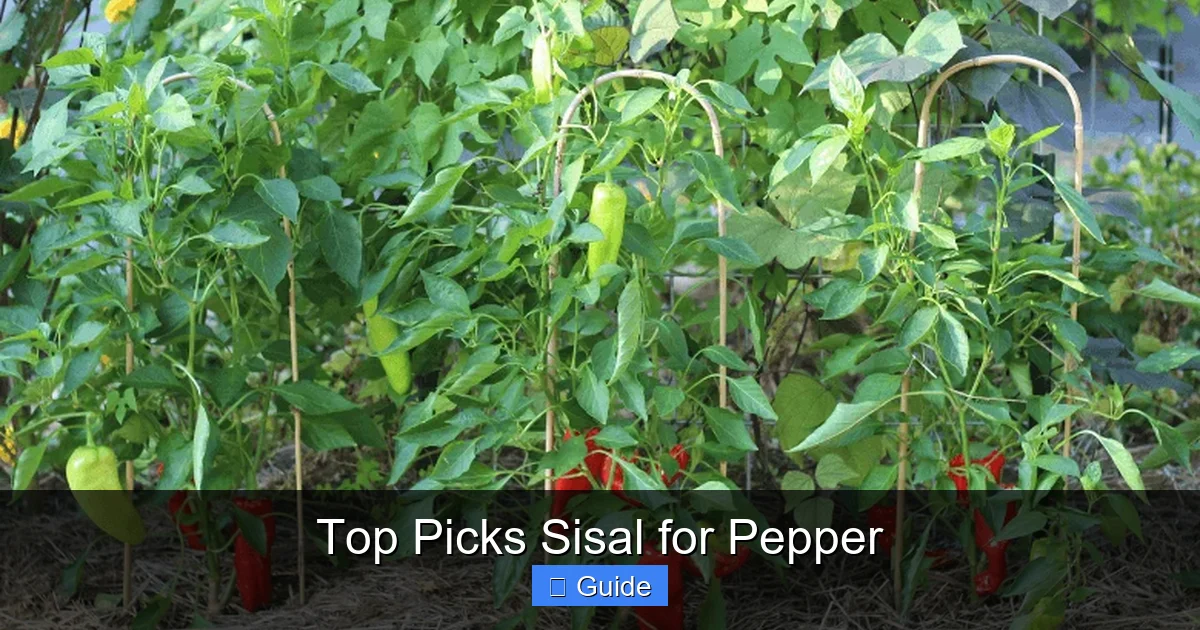
Visual guide about Top Picks Sisal for Pepper
Image source: keanyproduce.com
Breathability is the second factor. Plastic traps moisture. In humid climates, this is a fast track to fungal issues like botrytis or stem rot. Sisal wicks moisture away. It dries fast. It allows air to circulate around the tie point. This keeps the stem healthy. It mimics the natural environment. The plant evolved to climb rough bark. Sisal feels like home.
Biodegradability: The End-Of-Season Win
Let us talk cleanup. In October, you are tired. You want the garden put to bed. With plastic twine, you have to cut every single piece off the stake. You have to untangle it from the brittle, dead vines. It goes to the landfill. It lasts forever. With sisal, you cut the main lines. The whole mess—vines, stakes, twine—goes into the compost pile. Microbes eat the sisal. It becomes soil for next year. Zero waste. Zero guilt. This circular approach is why organic certifiers love sisal. It aligns with a regenerative gardening philosophy.
Tensile Strength Vs. Elasticity
This is where cheap sisal fails. You need high tensile strength. That is the maximum load before it snaps. A fully loaded ‘Big Bertha’ plant can pull 20-30 pounds on a single vertical string. Cheap single-ply twine snaps at 15 pounds. You need 3-ply or 4-ply construction. But you also need low elasticity. Sisal naturally stretches about 3-5% under load. If it stretches too much, your trellis sags. The fruit touches the ground. Rot sets in. Top picks sisal for pepper applications are pre-stretched at the factory. They stabilize fast. They hold the line all season.
Understanding Sisal Specifications: What To Look For
Ply Count And Construction
Ply refers to how many individual strands are twisted together. Single-ply (1-ply) is basically thick yarn. It is fuzzy. It snags on everything. It has low strength. Avoid it for peppers. Two-ply (2-ply) is the standard “baler twine” thickness. It works for light staking. It works for tying individual branches to a stake. It usually handles 40-60 lbs tensile strength. Three-ply (3-ply) is the sweet spot for main trellis lines. It handles 90-120 lbs. It resists abrasion from rough stakes. Four-ply (4-ply) is heavy duty. It is used for commercial high-tunnel systems. It is stiff. Harder to tie knots in. But it will not break.
Construction method matters too. “Hard lay” twine is twisted tight. It is stiff. It holds knots perfectly. It resists fraying. “Soft lay” is looser. It is easier to splice. But it frays faster on rough wooden stakes. For peppers, hard lay is usually better. You tie it once in May. You do not want to retie it in July.
Treatment Types: Oil, Tar, And Raw
Raw sisal is the color of dry straw. It is absorbent. It wicks water up the line. In a wet year, it can rot at the soil line by August. Oil-treated sisal (often called “marline” or “treated twine”) has a light petroleum or vegetable oil coating. It is water-resistant. It stays flexible. It lasts 12-18 months in the field. This is the best all-rounder for annual peppers. Tarred sisal is the heavy lifter. It is black. It smells like a roof. It is coated in pine tar or bitumen. It lasts years. It is used for permanent trellises or marine use. It is overkill for most home gardens. It makes your hands black. It can be stiff in cold weather. Stick to oil-treated for vegetable gardens.
Diameter And Knotability
Diameter is measured in millimeters or gauge. Common sizes: 1.5mm (light), 2.5mm (medium), 3.5mm (heavy), 4.5mm (extra heavy). For tying individual pepper stems to a stake, 1.5mm to 2mm is perfect. It is gentle. You can tie a slip knot that cinches but does not cut. For the main horizontal support wires running down a row, you want 3mm to 4mm. It does not cut into your hands when you tension it. Knotability is the feel of the twine. Good sisal takes a clove hitch or a tomato knot and holds it. Bad sisal is springy. The knot loosens. Test a foot of twine before you buy a 10-lb ball. Tie a knot. Pull hard. If it slips, pass.
Top Picks Sisal For Pepper: Product Reviews
Best Overall: Henry Winning Twine 3-Ply Oil-Treated Sisal
This is the industry standard. Henry Winning has been making twine in the UK since 1840. They know fiber. Their 3-ply oil-treated sisal hits every mark. The tensile strength is rated at 110 lbs. The oil treatment is light. It smells faintly of linseed, not petroleum. It is food-safe. The consistency is incredible. Every ball is the same length (approx 3,300 feet per 10 lb ball). There are no thin spots. No thick slubs. It runs through a twine dispenser without jamming.
In my garden, I run this as the main horizontal line on my Florida weave system for 100 feet of bell peppers. It takes the weight of 50 plants loaded with fruit. Zero stretch after the first week. Zero breaks. At season end, it cuts clean. It composts in 6 months. It is not the cheapest. But you buy it once a year. The peace of mind is worth the extra $5 per ball. If you grow peppers seriously, this is the one.
Best Budget Pick: International Fiber Corporation (IFC) 2-Ply Sisal Baler Twine
IFC makes the twine you see on hay bales. It is ubiquitous. It is cheap. A 10 lb ball costs half what Henry Winning costs. It is 2-ply. Tensile is around 55 lbs. It is raw, untreated sisal. For peppers, use this for vertical drops only. Tie it to your top wire. Let it hang. Clip your pepper stems to it with tomato clips. Do not use it as your main horizontal load-bearing line. It will stretch. It will sag. It will rot at the bottom if you have heavy mulch contact. But for the 50 vertical strings you need? Perfect. It is soft. Easy to tie. Gentle on stems. Buy two balls. Keep one dry for next year. It stores well if kept off concrete.
Best For Heavy Vines (Black Pepper/Piper Nigrum): Cortland Line 4-Ply Tarred Sisal
If you are growing true black pepper vines (Piper nigrum) or massive indeterminate chili bushes in a tropical climate, you need tarred sisal. Cortland is a US manufacturer known for marine cordage. Their 4-ply tarred sisal is rated at 250+ lbs tensile. The tar penetrates deep. It laughs at humidity. It laughs at UV. It lasts 3-5 years in the field. It is thick (approx 5mm). It is stiff. You need gloves. You need a marlinspike or fid to work knots. But once it is up, it is up forever. This is permanent infrastructure. Run it on heavy wooden posts. Use turnbuckles for tension. Your grandkids will use this trellis. Overkill for annual bell peppers. Essential for perennial pepper vines.
Best For Container Gardening: Nutscene Natural Jute/Sisal Blend (Thin)
Wait, jute? Yes. Nutscene makes a beautiful thin twine that is a sisal/jute blend. It is 1mm thick. It comes in a cute tin dispenser. It is green. It disappears into the foliage. For patio pots with a single ‘Patio Fire’ pepper plant, heavy twine looks ridiculous. This blend has the grip of sisal but the softness of jute. It is strong enough for a 3-foot stake. It lasts one season. Then it composts. It is expensive per foot. But you only need 20 feet. The dispenser tin stops tangles. It brings joy. Gardening should bring joy.
Best Eco-Certified: If You Care Certified Compostable Sisal Twine
This brand focuses on certification. Their sisal is FSC certified (Forest Stewardship Council). The agave is grown on certified farms. No pesticides. Fair labor. The twine is 2-ply. Lightly oil-treated. It comes in a recycled cardboard box with a built-in cutter. No plastic spool. It performs identically to IFC twine. Tensile ~55 lbs. Good for verticals. The value is the assurance. If you sell at a farmers market with “certified naturally grown” signage, this twine supports your story. Your customers notice the box. It signals integrity.
Matching Sisal To Your Pepper Variety And System
Bell Peppers And Sweet Peppers (Capsicum Annuum)
These are bushy. They get top-heavy. The stems are brittle at the nodes. The Florida Weave (stake and weave) is the standard system. You drive stakes every 2-3 plants. You run horizontal lines at 12, 24, and 36 inches. You need a main line that does not stretch. Use 3-ply oil-treated sisal (Henry Winning or equivalent) for the horizontals. For the vertical ties connecting the plant to the horizontals, use 2-ply raw sisal. Tie a loose figure-8 around the main stem and the horizontal. Check weekly. Stems thicken fast. Loosen ties that get tight. A tight tie stops sap flow. The plant wilts above the tie. This is heartbreaking and avoidable.
Hot Peppers And Chili Bushes (Capsicum Chinense/Baccatum)
These can be monsters. ‘Habanero’ and ‘Aji’ varieties turn into woody shrubs 4 feet wide. Stakes get swallowed. Cages are better. But cages need tying too. Use 3-ply sisal to lash the cage to a rebar stake driven 18 inches deep. The cage becomes a rigid cylinder. The plant fills it. No horizontal lines needed. The sisal lashings take the wind load. They do not cut the cage wire. They do not rot in one year. At cleanup, cut the lashings. The cage folds flat. The sisal composts. Simple.
Climbing Peppers: Black Pepper (Piper Nigrum) And Rocoto (Capsicum Pubescens)
These are vines. They need a vertical highway. Black pepper is a commercial crop in the tropics. Rocoto is a perennial vine in frost-free zones. They climb by twining. They need a rough surface. A single 4-ply tarred sisal line running from ground to 10-foot wire is perfect. The vine grabs it. It climbs fast. Space lines 18 inches apart. The tarred sisal lasts the life of the vine (10+ years). Do not use thin twine. The vine will crush it. The weight of a mature black pepper vine is hundreds of pounds. Build it once. Build it right.
Hydroponic And Greenhouse Systems
Indoor growers use “tomato clips” or “vine clips” on a vertical string. The string hangs from a overhead wire. The plant is clipped every 10 inches. For this, you need uniform, thin, strong twine. 2-ply oil-treated sisal works. But many hydro growers prefer polypropylene. It is sterile. It does not shed fibers into the nutrient solution. Sisal sheds. Those fibers clog drippers. They clog pump filters. If you run hydro, test a small roll first. Check your filters weekly. If fibers are an issue, switch to poly. If not, sisal is fine. The clips grip sisal better than slippery poly.
Installation Masterclass: Pro Tips For Sisal Success
The Florida Weave Step-By-Step
This is the fastest way to stake a row of peppers. You need: T-posts or wooden stakes (one every 2 plants), a sledgehammer, a spool of 3-ply sisal, a knife, and tomato clips or 2-ply twine for verticals.
1. Drive stakes 12 inches deep. Angle them slightly away from the row for leverage.
2. Start at the end post. Tie the sisal off at 12 inches high. Use a clove hitch. Pull tight.
3. Walk down the row. Pass the twine in front of plant 1, behind stake 1, in front of plant 2, behind stake 2. Keep tension. Do not pull the plants over.
4. At the far end, wrap the end post twice. Pull with your whole body weight. Tie off.
5. Return back down the other side. Mirror the pattern. Behind plant 2, in front of stake 2. This sandwiches the plants.
6. Repeat at 24 and 36 inches as plants grow.
7. Use 2-ply twine to tie any loose leaders to the horizontals. Figure-8 knot. Leave a pinky-width gap.
Pre-Stretching: The Secret To Zero Sag
New sisal stretches. If you install it tight, it will be loose in two weeks. The fix: Pre-stretch. Unroll the length you need between two solid points (a truck hitch and a tree, two fence posts). Lean into it. Hold for 30 seconds. Release. It will not stretch again. Do this for every horizontal line. It takes 5 minutes per row. It saves hours of re-tightening in July. This is the single biggest difference between amateur and pro results.
Knots That Hold, Knots That Release
You need two knots. The Clove Hitch for anchoring to stakes. It grips under load. It unties instantly after a season of tension. The Figure-8 Loop (or “Tomato Knot”) for tying stems. Make a loop. Wrap the tail around the stem and the support. Pass through the loop. Cinch. It locks. It does not slip. But you can untie it with one hand by pushing the tail back. Never use a square knot on a plant. It binds tight. You will cut the stem getting it off. Practice these two knots on a broom handle before you hit the garden.
Managing The “Cutting” Risk
Even soft sisal can cut a stem if the wind whips the plant against a tight line. The solution: Padding. Cut 1-inch pieces of old garden hose. Slit them lengthwise. Slip them over the horizontal sisal line where it touches the main stem. Or use foam pipe insulation. It costs pennies. It prevents 90% of stem damage. For vertical ties, the figure-8 knot creates a natural buffer. The crossed twine spreads the load. Check ties after every major wind event. Loosen. Re-tie. It takes 30 seconds per plant.
Maintenance, Storage, And Troubleshooting
Mid-Season Inspections
Walk the row weekly. Carry a pocket knife and a ball of 2-ply twine. Look for: Sagging horizontals (re-tension or add a center stake), Tight vertical ties (loosen immediately), Fraying at stake contact points (wrap stake with tape or hose), Rodent chew marks (replace that section). Pepper stems grow in girth fast. A tie that was loose in June is a tourniquet in August. This is the number one cause of “mystery wilting” on one branch. Cut the tie. The branch recovers in hours.
Dealing With Mold And Rot
In the Deep South or Pacific Northwest, raw sisal gets black mold at the soil line. It is cosmetic mostly. But it weakens the fiber. Oil-treated sisal resists this. If you see mold on raw sisal verticals, spray with a 10% milk solution (1 cup milk, 9 cups water). It stops fungal spread. It is organic. It works. Do not spray the horizontals. You do not want milk residue on your fruit. At season end, moldy sisal goes in the hot compost. The heat kills the spores.
Storing Leftover Sisal
Sisal hates two things: Moisture and UV. Store balls in a sealed plastic tote. Add a desiccant pack (silica gel or rice in a sock). Keep in a dark shed. Not the greenhouse. Not the garage rafters (too hot). Stored dry and dark, sisal lasts 5+ years. I have used 8-year-old Henry Winning twine. It was as good as new. The oil treatment preserves the cellulose. If a ball gets wet, unroll it in the sun for a day. Dry it thoroughly. Then store. Never store damp. It turns to mush.
Troubleshooting Common Failures
Snapped Horizontal: Usually caused by a stake pulling out or a knot slipping. Fix: Drive a T-post next to the failed stake. Splice the broken line with a Sheet Bend knot. Tension. Tie off. Slipped Clove Hitch: The stake was too smooth or the knot was tied wrong. Fix: Wrap the twine around the stake twice before the hitch. Or notch the stake with a saw. Frayed Verticals: Wind abrasion. Fix: Replace that vertical. Use a tomato clip instead of twine next time. Clips don’t fray. Stem Girdling: Tie left on too tight too long. Fix: Cut tie. Splint the stem with tape if cracked. Feed the plant kelp meal to boost recovery.
Sisal Vs. The Alternatives: Honest Comparison
Sisal Vs. Jute
Jute is softer. It is cheaper. It feels nicer on the hands. But jute rots in 60-90 days in wet soil. It has half the tensile strength. It stretches more. For a 90-day pepper crop in a dry climate, jute is fine. For a 150-day season with humidity? Jute fails. You will be re-tying in August. Sisal lasts the distance. Spend the extra money. Sleep better.
Sisal Vs. Polypropylene (Poly Twine)
Poly is cheap. It is strong. It does not rot. It comes in bright colors (easy to see). But it is slippery. Knots slide. It cuts stems like cheese wire. It stretches under load (10-15%). It creates microplastics. At cleanup, it is a nightmare. It tangles in the tiller. It wraps the mower blade. It lasts 500 years in the landfill. Commercial growers use it because it runs on machines. Hand-tending? Sisal wins every time. Your hands will thank you. Your soil will thank you.
Sisal Vs. Hemp Twine
Hemp is the premium option. It is stronger than sisal. It resists UV better. It is softer. It lasts 2-3 years. But it costs 3-4x more. It is harder to find in bulk. For a backyard gardener, the cost/benefit does not pencil out. For a high-value crop (saffron, ginseng, specialty peppers for seed), hemp makes sense. For standard market peppers? Sisal is the rational choice.
Sisal Vs. Metal Wire / Twist Ties
Wire is for permanent structures. Grape trellises. Kiwi arbors. Not for annual peppers. It girdles instantly. It rusts. It is dangerous to handle (eye injuries). Twist ties (paper coated wire) are for bagging bread. They snap under pepper weight. Do not use them. Please.
Sustainability And The Bigger Picture
The Agave Lifecycle
Sisal comes from Agave sisalana. It grows in semi-arid regions. Tanzania, Brazil, Kenya, Mexico. It needs little water. No pesticides. It sequesters carbon. The fiber is extracted by decortication (crushing leaves). The waste pulp becomes fertilizer, biogas, or animal feed. It is a near-zero-waste crop. When you buy sisal, you support rural economies in the Global South. You choose a fiber that heals the land. Contrast with polypropylene: made from fracked gas. Refined in crackers. Extruded. Shipped globally. The carbon footprint is orders of magnitude higher.
Composting Mechanics
Sisal is cellulose and lignin. It is a “brown” material (high carbon). Your pepper vines are “green” (high nitrogen). They are a perfect compost sandwich. Layer: 6 inches vines, 1 inch sisal, repeat. Keep moist. Turn monthly. In 6 months, you have black gold. The lignin breaks down slowly. It creates stable humus. This improves soil structure long-term. Plastic twine contaminates compost. It screens out as “overs.” It lowers the value of your finished product. Municipal composters reject loads with plastic twine. Home composters pick it out forever. Sisal disappears.
Certifications To Look For
FSC (Forest Stewardship Council): Ensures the agave farms meet environmental and social standards. Global Organic Textile Standard (GOTS): Rare for twine, but exists. Ensures no toxic finishes. OEKO-TEX: Tests for harmful substances. Good for food contact assurance. Fair Trade: Ensures fair wages for processors. Most bulk agricultural twine has no cert. It is a commodity. If certs matter to your market or conscience, seek out brands like “If You Care” or “EcoTwine” that carry them. They cost more. They verify the story.
Conclusion
We have covered a lot of ground. The biology of pepper stems. The physics of twine tension. The economics of biodegradability. The bottom line is simple. Peppers need support that grips, breathes, and disappears. Sisal does all three. The top picks sisal for pepper growing are not a mystery. They are the 3-ply oil-treated for your main lines. The 2-ply raw for your verticals. The 4-ply tarred for your perennial vines. Match the twine to the task. Pre-stretch every line. Tie a clove hitch and a figure-8. Pad the contact points. Walk the row weekly. Compost it all in October.
This is not just about holding up plants. It is about a relationship with your garden. When you use a material that comes from the earth and returns to it, you close a loop. You stop fighting nature. You start working with it. Your peppers will feel the difference. They will stand tall. They will ripen heavy. They will taste like sunshine and rain and good decisions. Next spring, when you open that fresh ball of Henry Winning, smell the linseed oil. Feel the rough fiber. Know you are part of something old and true. Happy staking. Happy harvest.
Frequently Asked Questions
What is the difference between sisal and jute twine for peppers?
Sisal is significantly stronger, more UV resistant, and lasts a full growing season in humid conditions. Jute rots in 60-90 days, stretches more, and has half the tensile strength, making it unsuitable for heavy pepper loads.
Can I use baler twine from the farm store for my peppers?
Yes, standard 2-ply baler twine works well for vertical drop strings in a Florida weave system, but avoid using it as main horizontal load-bearing lines as it stretches and sags under heavy fruit weight.
How much sisal twine do I need for a 50-foot row of peppers?
For a Florida weave with 3 horizontal lines, you need approximately 350-400 feet of 3-ply twine for horizontals, plus 100-150 feet of 2-ply for vertical ties. A standard 10-lb ball (3,300 ft) covers multiple rows.
Why does my sisal twine get moldy at the bottom?
Raw untreated sisal wicks moisture from the soil, promoting mold at ground level. Switch to oil-treated sisal for the bottom horizontal line, or ensure mulch does not touch the twine.
What knot should I use to tie pepper stems to sisal supports?
Use a Figure-8 knot (tomato knot). It cinches securely without slipping, creates a buffer between stem and support, and can be easily untied with one hand for adjustments.
Is sisal twine safe for hydroponic pepper systems?
Sisal can shed microscopic fibers that clog hydroponic drippers and pump filters. Test a small section first; many hydro growers prefer sterile polypropylene for this reason despite sisal’s superior grip.