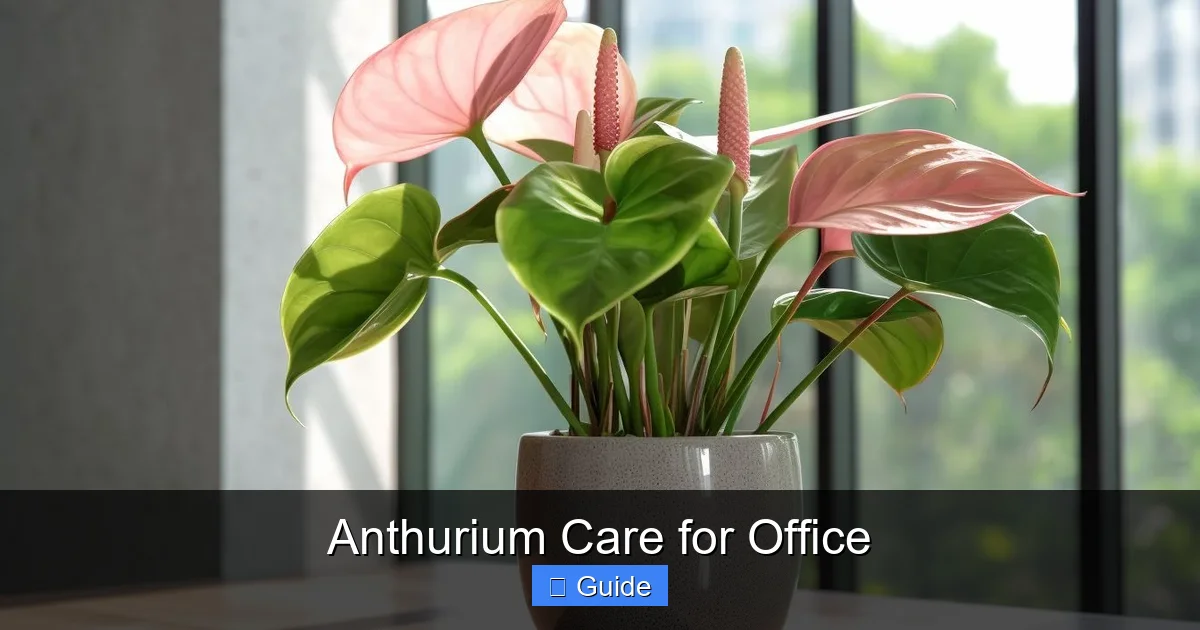
Anthurium Care for Office
Anthuriums thrive in offices with bright indirect light, consistent moisture, and moderate humidity. These low-maintenance tropical plants purify air and add vibrant color year-round with proper care.
Key Takeaways
- Light Requirements: Anthuriums need bright, indirect light for 6-8 hours daily; avoid direct sun which scorches leaves and low light which reduces blooming.
- Watering Schedule: Water when the top inch of soil feels dry; typically every 7-10 days in office environments, less in winter.
- Humidity Needs: Maintain 60-80% humidity using pebble trays, humidifiers, or regular misting since office air is often dry.
- Temperature Range: Keep temperatures between 65-80°F (18-27°C); avoid drafts from AC vents, heaters, and cold windows.
- Soil Mix: Use well-draining, chunky aroid mix with orchid bark, perlite, and peat moss to prevent root rot.
- Fertilizing Routine: Feed monthly with balanced liquid fertilizer at half strength during growing season; pause in winter.
- Common Issues: Yellow leaves mean overwatering; brown tips indicate low humidity; no flowers suggest insufficient light.
Quick Answers to Common Questions
How often should I water my office anthurium?
Water when the top inch of soil feels dry, typically every 7-10 days in office conditions. Always check with your finger first rather than following a fixed schedule.
Can anthuriums survive in windowless offices?
Yes, with 12-14 hours of bright fluorescent or LED light daily. A desk grow light positioned 12-18 inches above the plant works perfectly for windowless spaces.
Why are my anthurium’s leaf tips turning brown?
Brown tips usually indicate low humidity. Increase humidity with a pebble tray, humidifier, or by grouping with other plants. Trim brown tips at an angle with clean scissors.
How do I get my anthurium to bloom again?
Ensure bright indirect light for 6-8 hours daily, fertilize monthly at half strength during growing season, maintain 60-80% humidity, and keep temperatures 65-80°F. Blooms typically return within 2-3 months.
Is anthurium toxic to pets in the office?
Yes, anthuriums contain calcium oxalate crystals that cause oral irritation if chewed. Keep plants out of reach of office pets or choose pet-safe alternatives like spider plants.
📑 Table of Contents
- Why Anthuriums Make Perfect Office Plants
- Understanding Your Anthurium’s Natural Habitat
- Light Requirements: Finding the Sweet Spot
- Watering Wisdom: The Goldilocks Approach
- Humidity: The Hidden Key to Lush Growth
- Temperature and Air Circulation
- Soil and Repotting: Foundation for Success
- Fertilizing for Continuous Blooms
- Troubleshooting Common Office Anthurium Problems
- Styling and Displaying Your Office Anthurium
- Advanced Care: Propagation and Rejuvenation
- Anthurium Varieties for Office Environments
- Creating an Office Plant Care Routine
- Anthuriums and Office Wellness
- Conclusion: Your Thriving Office Anthurium Awaits
Why Anthuriums Make Perfect Office Plants
Walk into any modern office and you’ll likely spot an anthurium brightening up a desk or reception area. These stunning tropical plants, often called flamingo flowers or laceleaf, have become workplace favorites for good reason. Their glossy heart-shaped leaves and waxy, long-lasting blooms in shades of red, pink, white, and purple add instant sophistication to any professional space.
But anthuriums offer more than just good looks. NASA’s Clean Air Study confirmed these plants actively filter indoor air pollutants like formaldehyde, ammonia, and xylene, common in office environments from carpets, furniture, and cleaning products. They’re also remarkably adaptable to indoor conditions when you understand their basic needs. Unlike finicky orchids or light-hungry succulents, anthuriums tolerate the stable temperatures and moderate light typical of office settings.
This comprehensive guide covers everything you need to know about anthurium care for office environments. Whether you’re a facilities manager selecting plants for a corporate lobby or an employee wanting to green your cubicle, you’ll learn the exact conditions these tropical beauties need to thrive, not just survive, in your workplace.
Understanding Your Anthurium’s Natural Habitat
Where Anthuriums Come From
To care for any plant well, it helps to understand where it evolved. Anthuriums originate from the tropical rainforests of Central and South America, particularly Colombia and Ecuador. There, they grow as epiphytes on tree trunks and branches, or as terrestrial plants on the forest floor. This natural habitat tells us everything about their care requirements.
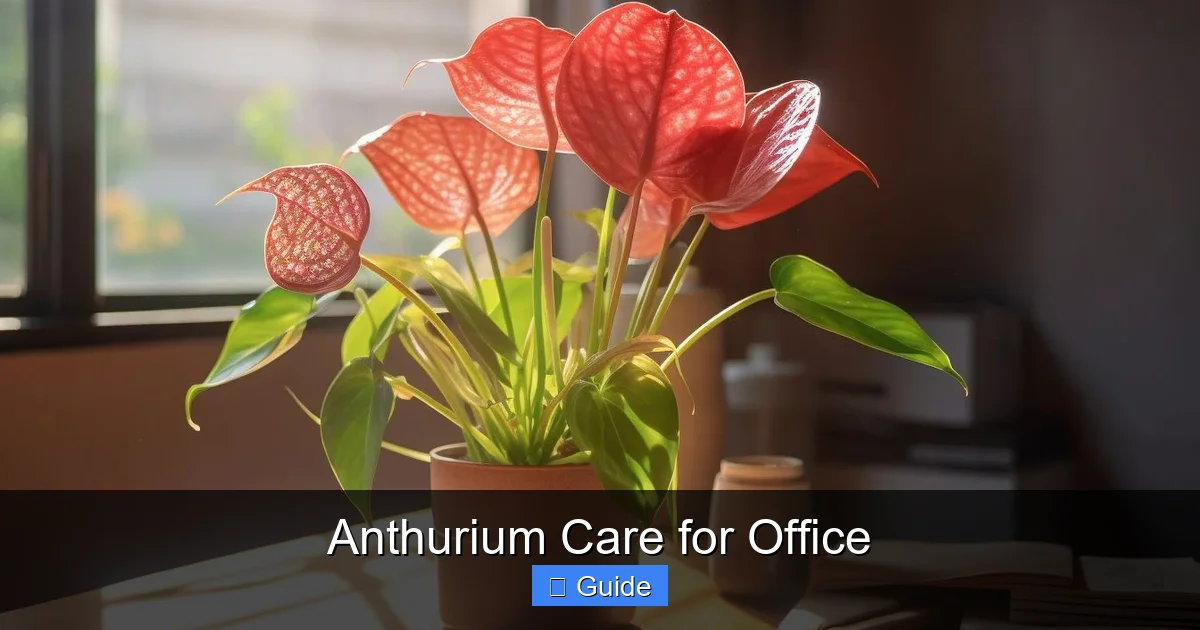
Visual guide about Anthurium Care for Office
Image source: foliagefriend.com
In the rainforest canopy, anthuriums receive bright but filtered sunlight through the tree canopy. They experience consistent warmth, high humidity (often 80% or higher), and frequent rainfall that drains quickly from their root zones. The air moves gently through the forest, preventing fungal issues. Their roots cling to bark or grow in loose, decomposing organic matter, never sitting in standing water.
Translating Rainforest Conditions to Office Life
Your office probably doesn’t resemble a Colombian rainforest, and that’s okay. Anthuriums are surprisingly adaptable. The key is replicating the core elements of their natural environment: bright indirect light, consistent moisture without sogginess, good air circulation, warm temperatures, and elevated humidity. When you nail these fundamentals, your anthurium will reward you with nearly continuous blooms and lush foliage.
Most office anthuriums are hybrids of Anthurium andraeanum, bred specifically for compact growth, prolific flowering, and tolerance of lower light and humidity than their wild ancestors. These cultivars, often sold under names like ‘Red Champion,’ ‘White Winner,’ or ‘Pink Champion,’ are the varieties you’ll typically find at garden centers and office plant suppliers.
Light Requirements: Finding the Sweet Spot
Why Light Matters Most
Light is the single most important factor for anthurium success in offices. These plants need bright, indirect light to photosynthesize effectively and produce those signature colorful spathes (the modified leaves we call flowers). Too little light means lush green leaves but few or no blooms. Too much direct sun scorches the foliage, leaving unsightly brown patches.
Ideal Office Placement
Place your anthurium near an east-facing window where it receives gentle morning sun, or a few feet back from a south or west window with sheer curtains filtering the light. North-facing windows work in brighter climates but may be too dim in northern latitudes during winter. If you’re in a cubicle away from windows, don’t despair. Anthuriums adapt well to bright fluorescent or LED office lighting, provided they get 12-14 hours of it daily.
Watch your plant for signals. Leaves stretching toward the light source (etiolation) mean it needs more brightness. Bleached or scorched patches mean too much direct exposure. The sweet spot produces compact growth with rich green leaves and regular flowering.
Artificial Lighting Solutions
Many offices lack adequate natural light, especially interior cubicles. Full-spectrum LED grow lights solve this beautifully. Position a 20-30 watt LED panel 12-18 inches above the plant, running on a timer for 12-14 hours daily. Modern grow lights are energy-efficient, cool-running, and visually unobtrusive. Some even clip onto desk edges or shelves. Your anthurium will thrive under quality artificial light, often blooming more consistently than under variable natural light.
Seasonal Light Adjustments
Remember that light intensity and duration change with seasons. In winter, you may need to move plants closer to windows or increase artificial light hours. In summer, watch for intense afternoon sun that can burn leaves through glass. Rotate your plant weekly for even growth. This simple habit prevents lopsided development and ensures all leaves receive adequate light for photosynthesis.
Watering Wisdom: The Goldilocks Approach
Understanding Anthurium Root Systems
Anthurium roots are thick, fleshy, and designed to cling to surfaces in nature. They need oxygen as much as water. In pots, this means they’re highly susceptible to root rot from overwatering. The number one killer of office anthuriums isn’t neglect, it’s kindness in the form of too-frequent watering. Understanding this root structure changes how you approach watering entirely.
The Finger Test Method
Forget calendar-based watering schedules. Office conditions vary too much. Instead, use the finger test: insert your index finger into the soil up to the second knuckle. If the soil feels dry at your fingertip, water thoroughly. If it feels moist, wait and check again in a day or two. This simple method accounts for seasonal changes, humidity fluctuations, and your specific potting mix.
In typical office conditions with moderate humidity and stable temperatures, you’ll likely water every 7-10 days during active growth (spring through fall) and every 10-14 days in winter. But always let the soil guide you, not the calendar.
How to Water Properly
When watering, do it thoroughly. Take the plant to a sink or use a watering can with a narrow spout. Pour water evenly over the soil surface until it flows freely from the drainage holes. This ensures the entire root ball is moistened and flushes accumulated salts from fertilizer. Let the pot drain completely before returning it to its decorative cache pot or saucer. Never let an anthurium sit in standing water.
Use room-temperature water. Cold water shocks tropical roots. If your office water is heavily chlorinated, let it sit overnight before use, or use filtered water. Rainwater or distilled water is ideal but not essential.
Signs of Watering Problems
Overwatering shows as yellowing lower leaves, mushy stems, a sour smell from the soil, and fungus gnats. Underwatering appears as crispy brown leaf edges, drooping leaves that don’t perk up after watering, and soil pulling away from pot edges. Both conditions stress the plant and reduce flowering. The finger test prevents both extremes.
Humidity: The Hidden Key to Lush Growth
Why Office Air Is Too Dry
Most offices maintain 30-40% relative humidity for human comfort and equipment protection. Anthuriums prefer 60-80%. This mismatch causes brown leaf tips, crispy edges, reduced flowering, and increased susceptibility to spider mites. The good news? You can create a microclimate of higher humidity around your plant without affecting the whole office.
Pebble Tray Method
The classic pebble tray remains one of the most effective, low-maintenance solutions. Fill a shallow tray larger than your pot’s diameter with pebbles, gravel, or LECA (lightweight expanded clay aggregate). Add water to just below the top of the pebbles. Set your pot on top, ensuring the bottom doesn’t touch the water. As water evaporates, it creates a humid zone around the plant. Refill weekly or as needed.
Desktop Humidifiers
Small USB-powered humidifiers work wonderfully for individual plants. Look for ultrasonic models with adjustable output. Run it for a few hours daily, preferably morning to midday, so foliage dries before evening. This prevents fungal issues. Some compact models fit neatly behind a monitor or on a shelf. They’re quiet, inexpensive, and dramatically improve anthurium health.
Grouping Plants Together
Plants naturally humidify each other through transpiration. Group your anthurium with other tropical office plants like pothos, peace lilies, or philodendrons. The collective moisture release creates a beneficial microclimate. Just ensure adequate spacing for air circulation to prevent disease spread.
Misting: Helpful or Harmful?
Daily misting provides only temporary humidity relief and can promote fungal leaf spots if water sits on leaves too long. If you mist, do it in the morning so leaves dry quickly. Focus on the air around the plant, not the foliage itself. Misting is a supplement, not a substitute for the methods above.
Temperature and Air Circulation
The Comfort Zone
Anthuriums thrive in the same temperature range humans prefer: 65-80°F (18-27°C). Most offices maintain this range during business hours. Problems arise overnight and on weekends when HVAC systems may shut down or switch to energy-saving modes. Temperatures below 60°F (15°C) slow growth and can cause cold damage. Above 85°F (29°C) increases water needs and stress.
Avoiding Drafts
Cold drafts from AC vents, exterior doors, and single-pane windows cause leaf yellowing and bud drop. Hot, dry air from heating vents scorches foliage and accelerates moisture loss. Position your anthurium away from direct airflow. If you must place it near a vent, use a deflector or create a barrier with a decorative screen.
Air Circulation Benefits
Gentle air movement strengthens stems, prevents fungal diseases, and helps regulate leaf temperature. A small desk fan on low, oscillating across (not directly on) the plant for a few hours daily mimics natural forest breezes. This is especially valuable in stagnant office air. Just ensure the airflow isn’t strong enough to dehydrate the plant.
Weekend and Holiday Care
For extended absences, water thoroughly before leaving. Move the plant to a slightly cooler, lower-light spot to reduce water consumption. A pebble tray helps maintain humidity. For trips longer than two weeks, consider a self-watering spike or ask a colleague to check the soil moisture. Most anthuriums survive two weeks without attention if prepped properly.
Soil and Repotting: Foundation for Success
The Perfect Potting Mix
Standard potting soil is too dense for anthuriums. It retains too much water and compacts over time, suffocating roots. You need a chunky, well-draining aroid mix. Make your own by combining equal parts orchid bark, coarse perlite, and peat moss or coconut coir. Add a handful of horticultural charcoal for freshness. This mix mimics the loose, aerated conditions of their natural habitat.
Commercial aroid mixes work well too. Look for products labeled for orchids, aroids, or epiphytes. Avoid mixes with moisture-retaining crystals or heavy peat content. When in doubt, add extra perlite or bark to improve drainage.
Choosing the Right Pot
Anthuriums prefer being slightly root-bound. Choose a pot only 1-2 inches larger than the root ball. Terra cotta pots are excellent because they wick excess moisture and allow root-zone air exchange. Plastic pots work fine if you’re diligent about not overwatering. Ensure any pot has ample drainage holes. Cache pots (decorative outer pots without holes) are fine as long as you remove the inner pot for watering and draining.
When and How to Repot
Repot every 2-3 years in spring, or when roots circle the pot bottom, grow from drainage holes, or the plant dries out unusually fast. Gently remove the plant, shake off loose old mix, and trim any mushy or dead roots. Place in fresh mix at the same depth as before. Water lightly after repotting and avoid fertilizer for 4-6 weeks while roots establish.
Don’t repot a newly purchased anthurium immediately. Let it acclimate to your office for 4-6 weeks first. Nursery pots often have suitable mix, and the stress of repotting plus environment change can shock the plant.
Fertilizing for Continuous Blooms
Understanding Nutritional Needs
Anthuriums are moderate feeders. In nature, they receive constant dilute nutrition from decomposing organic matter and rainwater. In pots, nutrients deplete within months. Regular, dilute fertilizing supports the energy-intensive process of producing those long-lasting spathes.
Choosing the Right Fertilizer
Use a balanced liquid fertilizer (20-20-20 or similar) at half the label’s recommended strength. Alternatively, choose a fertilizer formulated for flowering houseplants with slightly higher phosphorus (the middle number) to encourage blooms. Organic options like fish emulsion or seaweed extract work well but have stronger odors, which may not suit shared office spaces.
Feeding Schedule
Fertilize monthly during active growth (March through October). Skip November through February when growth naturally slows. Always apply fertilizer to moist soil to prevent root burn. If you use a pebble tray, occasionally flush the pot with plain water to prevent salt buildup.
Signs of Over- and Under-Fertilizing
Over-fertilizing causes brown leaf tips and edges, white crust on soil surface, and stunted growth. Under-fertilizing shows as pale green leaves, small new growth, and reduced flowering. The solution. Adjust accordingly. When in doubt, under-fertilize. It’s easier to add nutrients than remove excess.
Troubleshooting Common Office Anthurium Problems
Yellowing Leaves
Yellow leaves usually indicate overwatering, but can also signal underwatering, nutrient deficiency, cold damage, or natural aging of lower leaves. Check soil moisture first. If wet, reduce watering frequency. If dry, increase it. Ensure the pot drains well. Remove fully yellow leaves at the base with clean scissors. They won’t recover and removing them redirects energy to healthy growth.
Brown Leaf Tips and Edges
This classic sign of low humidity can also result from fertilizer salt buildup, inconsistent watering, or fluoride/chlorine in tap water. Increase humidity with pebble tray or humidifier. Flush soil monthly with distilled water. Trim brown tips at an angle with sterilized scissors, following the leaf’s natural shape.
No Flowers
An anthurium with healthy leaves but no blooms needs more light. Move to a brighter location or add a grow light. Ensure it’s not in a drafty spot. Check that you’re fertilizing during growing season. Some varieties have natural rest periods. Patience and proper light usually restore flowering within 2-3 months.
Pests: Spider Mites, Mealybugs, Scale
Dry office air invites spider mites. Look for fine webbing and stippled leaves. Increase humidity and wipe leaves with a damp cloth. For mealybugs (white cottony clusters) or scale (brown bumps on stems), dab with alcohol-soaked cotton swab, then treat with insecticidal soap or neem oil. Isolate affected plants. Inspect weekly during watering.
Root Rot
Mushy, dark roots with a foul smell mean root rot from overwatering. Remove the plant, trim all affected roots, and repot in fresh, dry aroid mix. Water sparingly until new growth appears. Prevention through proper watering and drainage is far easier than treatment.
Styling and Displaying Your Office Anthurium
Choosing Decorative Containers
The right cache pot elevates your anthurium from plant to design element. Ceramic, concrete, and matte-finish pots in neutral tones (white, charcoal, terracotta) complement the glossy foliage and vibrant spathes. Metallic finishes (brass, copper) add warmth. Ensure the decorative pot is large enough for the nursery pot to sit inside with a saucer or pebbles at the bottom for drainage.
Desk and Shelf Placement
On desks, position anthuriums where they won’t be knocked over, away from monitor edges and high-traffic areas. A corner spot with good light works well. On shelves, ensure the plant receives light from above or the side. Rotate regularly for even growth. Consider a small plant stand to elevate the pot for better light exposure and visual impact.
Grouping for Impact
Three anthuriums in coordinating pots create a stunning focal point in reception areas or conference rooms. Mix bloom colors (red, white, pink) or keep them uniform for a modern look. Vary heights using stands or books. Add a trailing plant like pothos at the base for layered interest.
Seasonal Decor Integration
Anthuriums adapt beautifully to seasonal office decor. Red varieties shine during winter holidays. White blooms suit spring and summer. Pair with seasonal accents (pinecones, decorative branches, small ornaments) placed in the cache pot, not the soil. Remove decor before watering.
Advanced Care: Propagation and Rejuvenation
Division Method
Mature anthuriums develop multiple crowns that can be separated during repotting. Gently pull apart root balls, ensuring each division has roots and at least 2-3 leaves. Pot each in fresh mix. Keep humidity high and light moderate for 4-6 weeks while divisions establish. This is the fastest way to get blooming-size plants.
Stem Cuttings
For leggy plants with bare lower stems, take a top cutting with 2-3 nodes and aerial roots. Plant in moist sphagnum moss or aroid mix. Cover with a clear plastic bag to create a humidity dome. Place in bright indirect light. Roots form in 3-6 weeks. This rejuvenates the mother plant, which often sprouts new growth from the base.
Seed Propagation (For the Patient)
Anthurium seeds from pollinated flowers germinate in 2-4 weeks on moist sphagnum moss under high humidity. Seedlings take 2-3 years to bloom. This is a fun project but not practical for most office settings. Division and cuttings are far more reliable.
Anthurium Varieties for Office Environments
Classic Andraeanum Hybrids
These are the standard office anthuriums with large, heart-shaped spathes in red (‘Red Champion’), pink (‘Pink Champion’), white (‘White Winner’), and bicolor varieties. They’re bred for compact growth (12-18 inches tall), prolific flowering, and tolerance of lower humidity. Perfect for desks and tabletops.
Compact and Miniature Varieties
‘Mini Red,’ ‘Mini Pink,’ and ‘Mini White’ stay under 12 inches, ideal for tight cubicle spaces. They bloom just as heavily as larger varieties. ‘Joli’ series offers unique spathe shapes and colors. These smaller plants need the same care but use less space.
Foliage-Focused Species
Anthurium clarinervium and Anthurium crystallinum are grown for spectacular veined foliage rather than flowers. They need higher humidity and brighter light than hybrids. Stunning in well-lit, humid offices or under grow lights. Their dramatic leaves make conversation-starting statement plants.
Choosing Healthy Plants
When selecting anthuriums, look for: firm, glossy leaves without spots or tears; multiple flower buds (not just open blooms); roots visible at drainage holes but not circling excessively; no pests on leaf undersides; stable in the pot (not loose). Avoid plants with yellowing lower leaves or brown tips.
Creating an Office Plant Care Routine
Daily Quick Check (30 Seconds)
Glance at your anthurium during your morning coffee. Are leaves perky? Any new pests? Does the top soil look dry? This habit catches issues early.
Weekly Care (5-10 Minutes)
Finger-test soil moisture. Water if needed. Rotate plant 90 degrees. Wipe leaves with a damp microfiber cloth to remove dust (dust blocks light). Check pebble tray water level. Run humidifier if using one.
Monthly Deep Care (15-20 Minutes)
Fertilize (in season). Flush soil with plain water. Inspect roots through drainage holes. Prune any dead leaves. Clean cache pot. Check for pests thoroughly. Assess if repotting is needed.
Seasonal Adjustments
Spring: Resume fertilizing. Increase watering as growth accelerates. Repot if needed. Summer: Monitor for increased water needs. Protect from intense sun. Fall: Reduce fertilizing. Prepare for lower winter light. Winter: Minimize watering. Stop fertilizing. Maximize light. Watch for cold drafts.
Anthuriums and Office Wellness
Air Purification Benefits
Beyond NASA’s findings, studies show anthuriums reduce airborne microbes and increase humidity locally, which can reduce respiratory irritation in dry office air. One plant per 100 square feet makes a measurable difference. Group several for greater impact.
Psychological Benefits
Research consistently shows office plants reduce stress, increase productivity, and improve job satisfaction. The vibrant colors of anthurium blooms provide visual breaks from screens. Caring for a living thing adds purpose and routine. Many employees report their desk anthurium becomes a cherished “colleague.”
Biophilic Design Integration
Anthuriums fit perfectly into biophilic design principles, connecting office occupants with nature. Their organic shapes contrast beautifully with angular office architecture. Use them in living walls, planter dividers, or as desktop accents to soften the built environment.
Conclusion: Your Thriving Office Anthurium Awaits
Caring for anthuriums in office environments isn’t complicated, it just requires understanding what these tropical beauties need and providing it consistently. Bright indirect light, thoughtful watering, elevated humidity, stable temperatures, and occasional feeding create the foundation for success. When you meet these needs, your anthurium responds with glossy foliage and those iconic, long-lasting blooms that can persist for months at a time.
Remember that every office is different. The light in your corner cubicle differs from the reception area. Your building’s HVAC creates unique humidity patterns. Treat this guide as a framework, then observe your specific plant in your specific location. Adjust based on what you see. The finger test, weekly rotation, and monthly deep care routine will serve you well anywhere.
Start with one healthy plant from a reputable source. Give it the right pot, the right mix, and the right spot. Build your care routine gradually. Before long, you’ll be the colleague everyone asks for plant advice, and your workspace will feel more alive, more welcoming, and more uniquely yours. That vibrant anthurium isn’t just decor, it’s a living partnership that rewards attention with beauty, cleaner air, and a daily dose of nature in the heart of your workday.
Your office anthurium journey begins today. Pick up a plant this week, find it a good home near a window or under a grow light, and start the simple habits that lead to years of tropical elegance at your desk. The flamingo flower is ready to transform your workspace, one glossy leaf and brilliant bloom at a time.
Frequently Asked Questions
What type of light is best for anthuriums in an office?
Bright, indirect light for 6-8 hours daily is ideal. East-facing windows or a few feet back from south/west windows with sheer curtains work well. In windowless offices, use full-spectrum LED grow lights for 12-14 hours daily.
How do I increase humidity for my office anthurium?
Use a pebble tray filled with water beneath the pot, run a small desktop humidifier for a few hours daily, or group your anthurium with other tropical plants. Aim for 60-80% humidity around the plant.
What soil mix should I use for office anthuriums?
Use a chunky, well-draining aroid mix: equal parts orchid bark, coarse perlite, and peat moss or coconut coir. Avoid standard potting soil which retains too much moisture and suffocates roots.
Why is my anthurium not flowering?
Insufficient light is the most common cause. Move to a brighter spot or add a grow light. Also ensure proper fertilizing during growing season, adequate humidity, and stable temperatures 65-80°F.
How often should I fertilize my office anthurium?
Fertilize monthly at half strength with balanced liquid fertilizer during active growth (March-October). Stop fertilizing November-February when growth naturally slows.
When should I repot my anthurium?
Repot every 2-3 years in spring, or when roots circle the pot bottom, grow from drainage holes, or the plant dries out unusually fast. Use a pot only 1-2 inches larger than the current root ball.