Wild Ginger Plant Uk
Wild ginger (Asarum europaeum) is a shade-loving perennial native to Europe that has naturalized in parts of the UK. This low-growing groundcover features heart-shaped leaves and unusual bell-shaped flowers hidden beneath foliage. While not true ginger, its roots have a similar aromatic quality and historical culinary use.
If you’ve ever wandered through an ancient British woodland in early spring and noticed a carpet of glossy, heart-shaped leaves hugging the forest floor, you’ve likely encountered wild ginger plant UK populations thriving in the dappled shade. This unassuming perennial doesn’t shout for attention like showy orchids or bluebells, but it has a quiet charm that woodland gardeners and plant enthusiasts have appreciated for centuries. The leaves stay green through winter in mild areas, offering year-round structure when most herbaceous plants have disappeared underground.
Despite its common name, wild ginger plant UK specimens have no botanical relationship to the ginger root you buy at the supermarket. That kitchen staple comes from Zingiber officinale, a tropical member of the Zingiberaceae family. Our native wild ginger belongs to the Aristolochiaceae family and goes by the scientific name Asarum europaeum. The name “ginger” comes purely from the spicy, ginger-like aroma released when the rhizomes are crushed, a characteristic that led to its historical use as a spice substitute in medieval European kitchens. Understanding this distinction matters, especially if you’re considering culinary or medicinal applications.
Key Takeaways
- Not true ginger: Wild ginger belongs to the Aristolochiaceae family, completely unrelated to culinary ginger (Zingiber officinale) despite similar aromatic roots.
- Shade specialist: Thrives in deep woodland shade where few other plants survive, making it perfect for difficult north-facing borders.
- Slow spreader: Forms dense mats via rhizomes but takes several years to establish, requiring patience from gardeners.
- Hidden flowers: Unique purplish-brown bell-shaped flowers bloom at ground level in spring, often concealed by leaves.
- Legal considerations: Not a protected species in the UK, but collecting from wild populations requires landowner permission under the Wildlife and Countryside Act.
- Toxicity concerns: Contains aristolochic acid which can cause kidney damage and is carcinogenic; modern herbalists avoid internal use.
- Wildlife value: Provides excellent ground cover for amphibians and invertebrates, while flowers are pollinated by slugs and flies.
Quick Answers to Common Questions
Is wild ginger plant UK the same as culinary ginger?
No, wild ginger (Asarum europaeum) belongs to the Aristolochiaceae family and is completely unrelated to culinary ginger (Zingiber officinale) from the Zingiberaceae family. The name comes from the similar aroma of the rhizomes when crushed.
Can I eat wild ginger plant UK safely?
Modern science advises against consuming wild ginger plant UK due to aristolochic acid content, which is nephrotoxic and carcinogenic. Historical culinary use is now considered unsafe by regulatory bodies including the UK MHRA.
Where does wild ginger plant UK grow naturally?
Wild ginger plant UK populations concentrate in southern and central England on calcareous soils in ancient woodlands, particularly the Chilterns, Cotswolds, and North and South Downs. It’s rare in northern England and largely absent from Scotland.
How fast does wild ginger plant UK spread?
Very slowly. Wild ginger plant UK spreads via thin rhizomes at roughly 5-10 centimeters per year, forming dense mats over many years. It never becomes invasive and is easily contained.
When is the best time to plant wild ginger plant UK?
Autumn (September-November) is ideal for planting wild ginger plant UK divisions, allowing root establishment before winter. Spring planting (March-April) works but requires more diligent watering through the first summer.
📑 Table of Contents
- Identifying Wild Ginger in British Woodlands
- Natural Distribution and Habitat Preferences
- Growing Wild Ginger in Your Garden
- Historical Uses and Cultural Significance
- Wild Ginger and UK Wildlife
- Legal Status and Conservation
- Culinary Considerations and Modern Uses
- Propagation Methods for Gardeners
- Companion Planting and Design Ideas
- Troubleshooting Common Problems
- Seasonal Care Calendar
- Conclusion
Identifying Wild Ginger in British Woodlands
Leaf Characteristics and Growth Habit
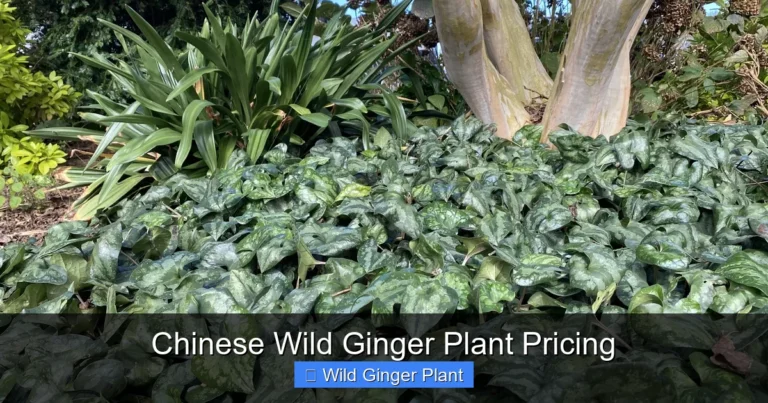
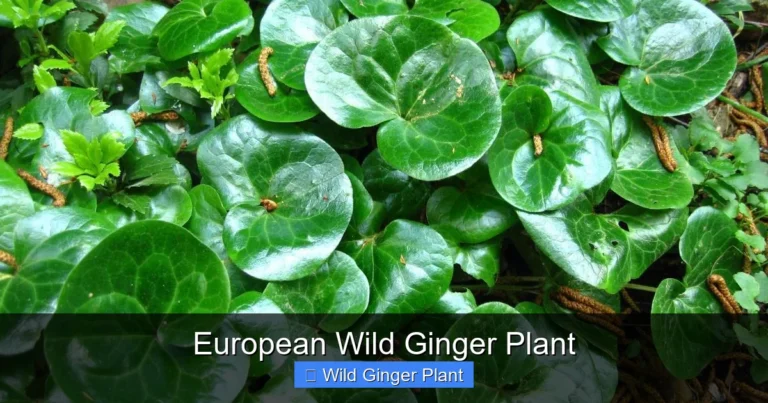
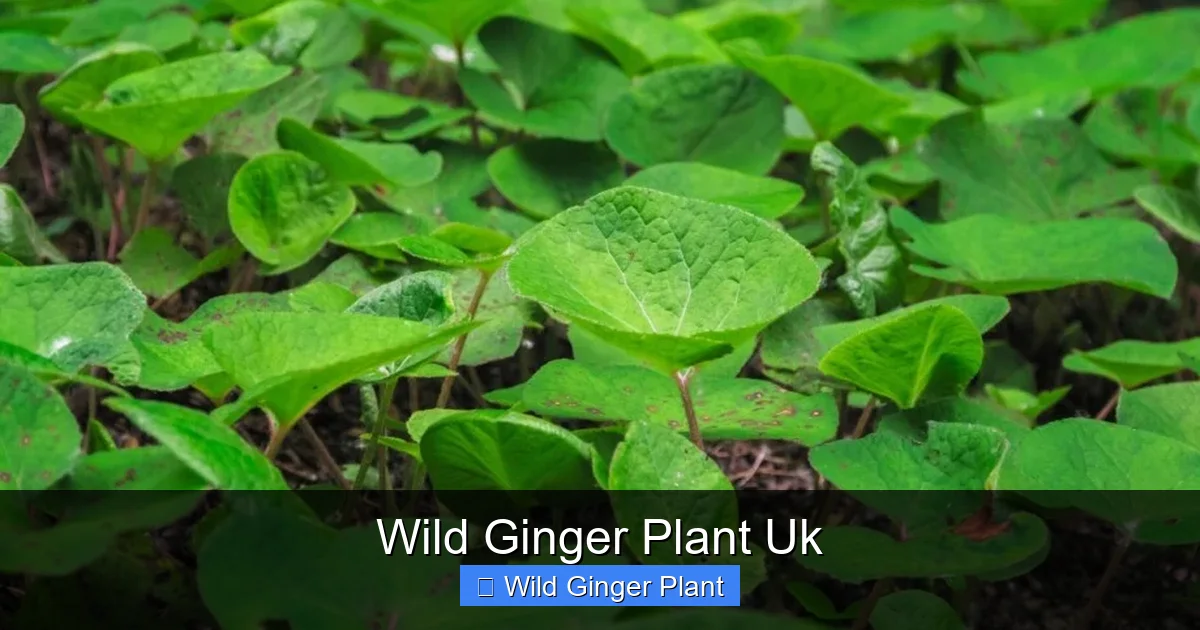
The most recognizable feature of wild ginger plant UK colonies is the foliage. Each leaf emerges on a long petiole directly from the creeping rhizome, forming a kidney or heart shape with a distinct notch at the base where the stem attaches. The leaves measure 5-10 centimeters across, with a leathery texture and glossy upper surface that catches low woodland light beautifully. The undersides are paler, often with a slight bluish bloom. In deep shade, the leaves grow larger and thinner; in more open conditions, they become smaller, thicker, and darker green.
Plants form spreading mats through thin, branching rhizomes that run just below the soil surface. A single plant can eventually cover a meter or more, but this takes many years. The growth rate is frustratingly slow for gardeners wanting quick ground cover, but this same trait means it never becomes invasive. You won’t find wild ginger plant UK specimens smothering neighboring plants or escaping into unwanted areas. The rhizomes are pale brown, about the thickness of a pencil lead, and emit that characteristic ginger scent when broken.
The Curious Flowers
Most people never see the flowers of wild ginger plant UK populations because they’re deliberately hidden. Blooming from March through May, the solitary flowers sit at ground level on very short stalks, often partially buried in leaf litter or tucked beneath the foliage canopy. Each flower resembles a small, fleshy bell about 1-2 centimeters long, colored an unusual purplish-brown or greenish-purple. The three triangular lobes curve inward, creating a tubular structure with no petals in the traditional sense.
This bizarre flower architecture serves a specific purpose. Wild ginger plant UK flowers are pollinated primarily by small flies and fungus gnats attracted to the faint, musty odor reminiscent of decaying matter. Some research suggests slugs and springtails also contribute to pollination. The flowers generate slight warmth through metabolic activity, helping disperse scent in cool spring air. After pollination, the flower develops into a fleshy capsule containing numerous seeds, each with an elaiosome, a fatty appendage that attracts ants for dispersal.
Distinguishing from Look-Alikes
Several plants could be confused with wild ginger plant UK specimens by the uninitiated. Ivy seedlings (Hedera helix) have similar leaf shapes but climb rather than creep, and their leaves are typically more lobed. Wood sorrel (Oxalis acetosella) has trefoil leaves, not heart-shaped. The most dangerous confusion might be with young lords-and-ladies (Arum maculatum), which shares the same habitat but has arrow-shaped leaves with distinctive purple spotting. Always check for the rhizome scent and growth habit before making any identification for use.
Natural Distribution and Habitat Preferences
Where to Find Wild Ginger in the UK
Wild ginger plant UK distribution centers on southern and central England, particularly on calcareous soils over chalk and limestone. Strong populations exist in the Chilterns, the Cotswolds, the North and South Downs, and parts of East Anglia. It becomes rarer further north, with scattered records in Yorkshire and Lancashire, and is largely absent from Scotland except as a garden escape. Wales has localized populations mainly in the south and east. The species reaches its northwestern European range limit in Britain.
Ancient woodland indicator lists often include wild ginger plant UK populations as a sign of long-term ecological continuity. If you find it growing in a woodland, there’s a good chance that wood has existed continuously since at least 1600 AD. The plant spreads so slowly that it rarely colonizes new woodlands, even when conditions seem perfect. This makes existing populations valuable conservation assets. Many sites are protected within Sites of Special Scientific Interest (SSSIs) or nature reserves managed by Wildlife Trusts.
Soil and Light Requirements
In the wild, wild ginger plant UK colonies almost exclusively occupy deep shade on heavy, moist but well-drained calcareous soils. The ideal pH ranges from neutral to alkaline (7.0-8.0), though it tolerates slightly acidic conditions if the soil is rich in organic matter. Summer drought is the enemy; the thin rhizomes dry out quickly in free-draining sandy soils. Conversely, waterlogged conditions cause rot. The sweet spot is clay-loam over chalk that retains moisture without becoming anaerobic.
Light levels matter enormously. Wild ginger plant UK specimens thrive in the deepest shade where photosynthetically active radiation may be less than 5% of full sunlight. They’ll tolerate dappled shade under deciduous canopies, especially if spring light before leaf-out allows a photosynthetic burst. Full sun scorches the leaves, causing yellowing and dieback. This extreme shade tolerance makes the plant invaluable for those impossible north-facing borders, under dense evergreen hedges, or beneath mature trees where grass refuses to grow.
Associated Plant Communities
Where wild ginger plant UK grows naturally, you’ll typically find it alongside other calcicole (lime-loving) woodland specialists. Common companions include dog’s mercury (Mercurialis perennis), herb paris (Paris quadrifolia), wood anemone (Anemone nemorosa), early purple orchid (Orchis mascula), and various ferns like hart’s-tongue (Asplenium scolopendrium) and soft shield fern (Polystichum setiferum). The canopy above usually comprises beech (Fagus sylvatica), ash (Fraxinus excelsior), or wych elm (Ulmus glabra), with hazel (Corylus avellana) and dogwood (Cornus sanguinea) in the shrub layer.
Growing Wild Ginger in Your Garden
Site Selection and Preparation
Success with wild ginger plant UK cultivation hinges entirely on replicating its native woodland floor conditions. Choose the shadiest spot available, ideally receiving no direct sun between 10 AM and 4 PM during summer. North-facing walls, the dark side of garden sheds, beneath dense conifer hedges, or under mature deciduous trees all work well. If you have a spot where hostas thrive but look a bit bleached, that’s probably too much light for wild ginger.
Soil preparation pays dividends. Wild ginger plant UK rhizomes struggle to penetrate compacted soil, so double-dig the area incorporating generous amounts of leaf mould, well-rotted compost, or composted bark. Aim for a humus-rich, moisture-retentive but freely draining medium. On heavy clay, add coarse grit alongside organic matter. On thin chalk soils, build up the planting area with 15-20 centimeters of improved soil. A mulch of leaf mould 5 centimeters deep after planting mimics the natural woodland litter layer and suppresses weeds while the plants establish.
Planting Techniques and Timing
Autumn planting (September-November) gives wild ginger plant UK divisions the best start, allowing root development before winter dormancy. Spring planting (March-April) works too but requires more diligent watering through the first summer. Space plants 30-45 centimeters apart for eventual ground cover, closer (20 centimeters) if you want faster fill-in. Plant at the same depth they were growing, with the rhizome just below the surface and the leaf buds pointing upward. Water thoroughly after planting and maintain consistent moisture for the first growing season.
Container growing is possible but challenging. Use deep pots (at least 30 centimeters) with a mix of 50% loam-based compost (John Innes No. 2), 25% leaf mould, and 25% coarse grit. Keep permanently in deep shade and never allow the compost to dry out. Feed sparingly with a weak organic liquid feed in spring. Repot every 3-4 years as the rhizomes fill the container. Many gardeners find wild ginger plant UK specimens sulk in pots compared to open ground.
Establishment and Early Care
Patience is the primary virtue required. Wild ginger plant UK plants spend their first year or two developing root systems with minimal top growth. You might see only a few new leaves each spring. Resist the urge to fertilize heavily; a light scattering of bone meal or blood, fish, and bone in early spring is sufficient. Excess nitrogen produces lush, soft growth prone to slug damage and fungal issues. Keep the area weed-free by hand-weeding carefully to avoid damaging the shallow rhizomes.
Slugs and snails are the main pest concern, particularly in spring when new leaves emerge. The thick, leathery mature foliage is less palatable, but tender young growth gets hammered. Use wildlife-friendly controls: wool pellets, copper tape around beds, beer traps, or nocturnal picking. Avoid metaldehyde pellets which harm hedgehogs and birds. Vine weevil larvae occasionally attack rhizomes in containers; biological control nematodes (Steinernema kraussei) applied in autumn provide effective control.
Long-Term Maintenance
Once established, wild ginger plant UK colonies are remarkably self-sufficient. The dense foliage suppresses most weeds naturally. Annual maintenance consists of a spring mulch of leaf mould (2-3 centimeters) and removing any dead or damaged leaves in late winter before new growth starts. Division is rarely needed but can be done in autumn if you want to propagate or rejuvenate an old clump. Simply lift a section of rhizome with a spade, ensuring each piece has several leaf buds, and replant immediately.
Watering during prolonged summer droughts prevents premature dormancy. Wild ginger plant UK plants will survive summer drought by dying back early, but this weakens them long-term. A deep soak every two weeks during dry spells keeps them in active growth. In autumn, let fallen leaves accumulate naturally; they provide winter protection and break down into the perfect mulch. Avoid heavy foot traffic through colonies, the rhizomes are easily crushed.
Historical Uses and Cultural Significance
Medieval and Renaissance Applications
Throughout medieval Europe, wild ginger plant UK roots served as a ginger substitute when the tropical spice was unavailable or prohibitively expensive. Monastic gardens cultivated it for the infirmary, where it flavored medicines and made them more palatable. The 16th-century herbalist John Gerard noted its use “in stead of Ginger” and recommended it for “the stomacke” and “windinesse.” Nicholas Culpeper later classified it under Venus and recommended it for “cold griefs of the stomach” and to “provoke urine and women’s courses.”
The rhizomes were harvested in autumn, dried, and powdered. They also featured in snuff blends and as a flavoring for beer and liqueurs before hops became universal. In parts of Eastern Europe, wild ginger plant UK relatives (Asarum europaeum subspecies) were used to flavor vodka and herbal liqueurs well into the 19th century. The leaves sometimes lined baking tins for gingerbread, imparting subtle flavor to the dough. These culinary uses declined as true ginger became affordable through expanding trade routes.
Traditional Medicinal Claims
Historical herbals attribute numerous medicinal properties to wild ginger plant UK preparations. Decoctions of the root treated respiratory conditions, digestive complaints, and menstrual disorders. The fresh leaves were applied as poultices to wounds and skin eruptions. A syrup made from the rhizome addressed coughs and bronchial congestion. Some sources claim it was used as an emetic (to induce vomiting) in cases of poisoning, though this seems counterintuitive given its own toxicity concerns.
Native American tribes used related Asarum species (Asarum canadense) for similar purposes, suggesting independent discovery of comparable properties. The Menominee used it for colds and fevers; the Cherokee for coughs and as a general tonic. European settlers adopted these uses for the American species, which they called “wild ginger” or “coltsfoot” (not to be confused with Tussilago farfara). The convergence of uses across continents hints at genuine physiological effects, though modern analysis reveals the mechanism.
Modern Safety Understanding
Here’s where historical use clashes with modern science. Wild ginger plant UK contains aristolochic acid, a compound now known to be nephrotoxic (kidney-damaging) and carcinogenic. This alkaloid is present throughout the Aristolochiaceae family. Long-term or high-dose exposure causes aristolochic acid nephropathy, a progressive kidney disease linked to urothelial cancer. Several countries have banned herbal products containing Aristolochia species, and by extension, Asarum species fall under similar scrutiny.
The concentration of aristolochic acid varies by species, plant part, season, and growing conditions. Wild ginger plant UK roots contain the highest levels; leaves have less but still significant amounts. Traditional preparations involving boiling may reduce but not eliminate the compound. Modern herbalists and regulatory bodies (including the UK’s MHRA and the EU’s HMPC) advise against internal use of any Asarum species. External use as a poultice carries lower but unquantified risk. The historical medicinal uses are now considered unsafe by evidence-based standards.
Wild Ginger and UK Wildlife
Pollination Ecology
The peculiar flowers of wild ginger plant UK have evolved a fascinating pollination strategy. The dark, fleshy blooms emit a faint odor resembling fermenting fruit or decaying fungi, attracting tiny flies (particularly fungus gnats in the families Sciaridae and Mycetophilidae) and small beetles. These insects crawl into the floral tube seeking oviposition sites or food, becoming dusted with pollen. The inward-curving lobes make exit difficult, increasing contact time with the receptive stigma.
Recent research suggests slugs and springtails (Collembola) may be more significant pollinators than previously thought, especially in wet springs when flying insects are scarce. The flowers produce minimal nectar but offer shelter and possibly fungal spores as food. This “deceptive pollination” strategy is energy-efficient for the plant but results in relatively low seed set. Many wild ginger plant UK populations spread primarily vegetatively, with sexual reproduction playing a minor role in colonization.
Invertebrate Associations
Beyond pollinators, wild ginger plant UK supports a modest but specialized invertebrate community. The larvae of several moth species feed on the leaves, including the beautiful golden plusia (Polychrysia moneta) and the scarce silver Y (Autographa pulchrina) in southern England. Aphids (particularly Aulacorthum circumflexum) colonize the leaf undersides in spring, attracting ladybirds and hoverfly larvae. The dense, evergreen foliage provides winter refuge for spiders, harvestmen, woodlice, and centipedes.
Ants play a crucial role in seed dispersal through myrmecochory. The seeds of wild ginger plant UK bear an elaiosome, a nutrient-rich appendage that attracts ants. Workers carry seeds back to their nests, consume the elaiosome, and discard the intact seed in midden heaps or nest peripheries, effectively planting them in nutrient-rich, protected microsites. This mutualism explains the plant’s slow but steady spread in ancient woodlands where ant communities are diverse and stable.
Value for Vertebrates
While not a major food source for larger animals, wild ginger plant UK colonies create valuable microhabitat. The dense, low canopy maintains higher humidity and more stable temperatures than bare soil, benefiting amphibians. Common frogs (Rana temporaria), common toads (Bufo bufo), and newts (Lissotriton and Triturus species) shelter beneath the leaves during daytime, especially in summer. The rhizome network stabilizes soil on woodland slopes, preventing erosion that would degrade habitat for ground-nesting birds like woodcock (Scolopax rusticola) and chiffchaff (Phylloscopus collybita).
Deer and rabbits occasionally browse the leaves, particularly in harsh winters when preferred forage is scarce. The leathery texture and aromatic compounds make it a last-resort food. In garden settings, wild ginger plant UK is often marketed as “deer-resistant,” though hungry deer will eat almost anything. Badgers may dig up rhizomes while foraging for earthworms and grubs, but this disturbance can actually aid vegetative propagation by fragmenting and dispersing rhizome pieces.
Legal Status and Conservation
Protection Under UK Law
Wild ginger plant UK is not listed on Schedule 8 of the Wildlife and Countryside Act 1981, meaning it doesn’t receive special legal protection against picking, uprooting, or sale. However, the Act’s Section 13(1)(b) makes it an offense to uproot any wild plant without the landowner’s permission. This applies to wild ginger plant UK populations on private land, nature reserves, SSSIs, and public land managed by local authorities or conservation bodies. Always seek permission before collecting any material.
On designated sites (SSSIs, SACs, NNRs), additional bylaws or management agreements may restrict plant collection entirely. Many Wildlife Trust reserves have blanket prohibitions on removing any plant material. The Theft Act 1968 also applies; taking plants from land where you have no right to be constitutes theft. Commercial collection for the nursery trade requires specific licenses from Natural England (or Natural Resources Wales, NatureScot, NIEA) and landowner agreements. Most reputable nurseries propagate their stock from cultivated mother plants rather than wild collection.
Conservation Status and Threats
The UK conservation status for wild ginger plant UK is “Least Concern” on the Vascular Plant Red List for England, reflecting its relatively stable distribution in core areas. However, local declines have occurred due to ancient woodland loss, replanting with non-native conifers (which cast too dense shade and acidify soils), overgrazing by deer preventing flowering and seed set, and climate change altering spring moisture patterns. The species’ poor dispersal ability makes it vulnerable to habitat fragmentation; it cannot easily recolonize isolated woods.
Conservation action focuses on protecting existing ancient woodland sites, restoring plantations on ancient woodland sites (PAWS) by gradual canopy thinning and native understory restoration, and managing deer populations to sustainable levels. Some Wildlife Trusts and the Woodland Trust run translocation projects for threatened populations, though success rates are low due to the plant’s specific mycorrhizal and soil requirements. Ex-situ conservation through seed banking at Kew’s Millennium Seed Bank and cultivation in botanic gardens provides insurance against catastrophic loss.
Responsible Gardening Practices
If you want wild ginger plant UK for your garden, buy from reputable nurseries that propagate their own stock. Look for nurseries specializing in native woodland plants or shade perennials. Avoid “dug from the wild” bargains at car boot sales or online marketplaces; these deplete natural populations and often fail to establish. Named cultivars like ‘Album’ (white-flowered) or ‘Variegatum’ (variegated leaves) are garden selections, not wild variants, and purchasing them supports horticultural diversity without impacting wild stocks.
Consider joining a local Wildlife Trust or Plantlife group; many organize seed-gathering events with proper permissions where you can learn sustainable collection techniques. If you have wild ginger plant UK on your own land, you can divide and share clumps with neighbors, expanding the plant’s presence in cultivation while reducing pressure on wild populations. Recording your garden plants on iRecord or the BSBI database helps track cultivated distribution, which has conservation value for understanding climate adaptation.
Culinary Considerations and Modern Uses
Why Modern Chefs Avoid It
Despite its historical use as a ginger substitute, wild ginger plant UK has virtually disappeared from modern cuisine, and for good reason. The aristolochic acid content makes regular consumption hazardous. While a single small taste likely poses minimal acute risk, the compound’s effects are cumulative and insidious. Kidney damage may not manifest for years, by which point it’s irreversible. No safe dosage threshold has been established for culinary use. Professional foragers and chefs in the UK generally avoid it, focusing instead on safer aromatic woodland plants like sweet cicely (Myrrhis odorata), wood avens (Geum urbanum), or wild angelica (Angelica sylvestris).
The flavor profile, while ginger-like, is more complex and less clean than true ginger. Notes of pepper, camphor, and bitter earthiness accompany the initial warmth. The rhizomes are fibrous and require extensive processing (peeling, long simmering) to become palatable. The yield per plant is tiny; harvesting enough for a single dish would destroy multiple plants. For all these reasons, wild ginger plant UK remains a historical curiosity rather than a practical ingredient.
Safe Alternatives for Woodland Flavors
If you’re exploring wild flavors from British woodlands, several safer options exist. Sweet cicely (Myrrhis odorata) offers aniseed-scented leaves, stems, and seeds useful in desserts and with tart fruits. Wood sorrel (Oxalis acetosella) provides a clean, lemony acidity perfect for salads and sauces. Wild garlic (Allium ursinum) leaves deliver intense garlic flavor in spring. Ground elder (Aegopodium podagraria) young shoots taste like parsley and celery. All these are abundant, easily identified, and safe in normal culinary quantities.
For a genuine ginger note, consider growing true ginger (Zingiber officinale) in a pot indoors or in a heated greenhouse. It’s surprisingly easy: plant a fresh rhizome section with visible buds in rich compost, keep warm (20-25°C) and moist, and harvest baby ginger in 4-6 months. Galangal (Alpinia galangal) and turmeric (Curcuma longa) grow similarly. These tropical gingers provide authentic flavor without health risks. Many UK garden centers sell ginger rhizomes for planting in spring.
Ornamental and Ecological Value
The real value of wild ginger plant UK in modern gardens lies in its ornamental and ecological contributions. As a groundcover for deep shade, it has few equals. The evergreen foliage provides year-round structure, the hidden flowers reward close observation, and the slow, polite spread makes it a perfect companion for other shade lovers like ferns, hellebores, epimediums, and trilliums. It excels in woodland garden designs, stumperies, and shaded rock gardens where its preference for humus-rich, well-drained conditions matches the habitat.
Ecologically, introducing wild ginger plant UK to suitable garden sites creates habitat continuity for the invertebrates and amphibians that depend on it. In urban and suburban areas where ancient woodland fragments are isolated, garden populations can serve as stepping stones for less mobile species. The dense cover reduces soil erosion on slopes, sequesters carbon in the rhizome network and accumulated leaf litter, and requires zero fertilizer, pesticide, or mowing inputs once established. It’s a plant that gives back far more than it asks.
Propagation Methods for Gardeners
Division: The Reliable Method
Division is by far the most successful way to propagate wild ginger plant UK plants. In early autumn (September-October) or early spring (March-April), lift an established clump with a garden fork, taking care to get as much of the rhizome network as possible. Gently tease apart the rhizomes into sections, each with at least 3-5 leaf buds and a good root system. Trim any damaged or excessively long roots. Replant divisions immediately at the same depth, water well, and mulch with leaf mould. Keep moist until established.
Larger divisions (10+ buds) may flower the following spring; smaller ones take 2-3 years. Division also rejuvenates old clumps where the center has become woody and less productive. Aim to divide every 5-7 years for maximum vigor. Wild ginger plant UK divisions establish faster than seed-grown plants and are genetic clones of the parent, preserving any desirable traits like particularly glossy foliage or abundant flowering.
Seed Propagation: For the Patient
Growing wild ginger plant UK from seed is a test of patience but rewarding for species enthusiasts. Collect seeds in summer (June-July) when the capsules split open. They must be sown fresh; dried seeds enter deep dormancy and may take years to germinate. Sow in pots of gritty, humus-rich compost, cover with 5 millimeters of fine grit, and place in a cold frame or shaded outdoor spot. Germination occurs the following spring after a winter stratification period, but some seeds may wait a second year.
Seedlings are tiny, producing a single cotyledon-like leaf in their first year. They develop true leaves in year two and reach flowering size in 4-6 years. The advantage of seed propagation is genetic diversity; each plant is unique, potentially offering variations in leaf shape, flower color, or vigor. This matters for conservation plantings where genetic resilience is desired. For gardeners wanting quick results, division or purchased plants are far more practical.
Rhizome Cuttings: An Alternative
Rhizome cuttings offer a middle ground. In autumn, cut healthy rhizome sections 3-5 centimeters long, each with at least one visible bud. Lay horizontally in trays of 50:50 peat-free compost and coarse grit, cover with 1 centimeter of compost, water, and place in a cold frame. Roots and shoots develop over winter and spring. Pot up individual plants once they have several leaves. This method produces more plants than division but with higher failure rates than seed. It’s useful for bulking up a rare cultivar.
Companion Planting and Design Ideas
Woodland Garden Combinations
Wild ginger plant UK shines in layered woodland plantings. Use it as the ground layer beneath small trees like rowan (Sorbus aucuparia), crab apple (Malus sylvestris), or hazel (Corylus avellana). Pair with spring ephemerals that complete their cycle before wild ginger’s leaves fully expand: wood anemone (Anemone nemorosa), native bluebell (Hyacinthoides non-scripta), winter aconite (Eranthis hyemalis), and snowdrops (Galanthus nivalis). The ginger’s emerging foliage hides the dying leaves of these early bloomers.
For summer interest, interplant with shade-tolerant perennials that occupy different vertical strata. Ferns are classic companions: hart’s-tongue fern (Asplenium scolopendrium) for upright structure, lady fern (Athyrium filix-femina) for airy texture, and hard shield fern (Polystichum aculeatum) for evergreen presence. Hellebores (Helleborus x hybridus) provide winter and early spring flowers above the ginger carpet. Epimediums (especially Epimedium x perralchicum) offer delicate spring flowers and semi-evergreen foliage that complements the ginger’s bold leaves.
Stumpery and Shade Rock Garden Uses
Victorian stumperies, those atmospheric arrangements of upturned tree stumps and logs planted with ferns and woodlanders, are ideal for wild ginger plant UK. The decaying wood mimics natural nurse logs, holding moisture and hosting mycorrhizal fungi. Plant rhizomes into pockets of humus between logs, where they’ll creep over and between the wood. Combine with mosses, liverworts, and small ferns like polypody (Polypodium vulgare) for a primeval feel.
In shaded rock gardens or alpine troughs, wild ginger plant UK serves as a “carpet” plant around larger features. It thrives in the cool, moist root runs between rocks. Choose dwarf companions: Cyclamen coum and C. hederifolium for autumn and winter flowers, dwarf hostas like ‘Blue Mouse Ears’ for textural contrast, and small species geraniums like Geranium phaeum ‘Album’ for white flowers above the foliage. Ensure the planting medium is deep enough (15+ centimeters) for the rhizomes to run.
Container Displays for Small Spaces
While challenging long-term, wild ginger plant UK can feature in seasonal container displays. Use a wide, shallow pot (30+ centimeters diameter, 20 centimeters deep) with excellent drainage. Plant in autumn with spring bulbs: snowdrops, winter aconites, and species crocus planted deep, wild ginger rhizomes shallow. The bulbs flower early; as they fade, the ginger’s foliage expands to cover the dying bulb leaves. Top-dress with moss and add a few interesting pieces of bark or stone.
For a permanent container, choose a frost-proof ceramic or stone pot at least 40 centimeters deep. Use the soil mix described earlier. Underplant with Cyclamen hederifolium for autumn flowers. Mulch with composted bark. Place in permanent deep shade. Water regularly, feed once in spring with slow-release organic fertilizer. Repot every 3-4 years in autumn. This approach lets balcony and courtyard gardeners enjoy this woodland gem without a woodland garden.
Troubleshooting Common Problems
Leaf Scorch and Yellowing
The most common issue with wild ginger plant UK in gardens is leaf scorch from excessive light. Symptoms include yellowing between veins, brown crispy edges, and premature leaf drop in summer. The plant is signaling it’s receiving too much direct sun or reflected heat. Solutions: move to a shadier spot (autumn transplanting), erect temporary shade cloth, or plant taller companions to cast more shade. Once leaves are scorched, they won’t recover; remove them to prevent fungal entry and wait for fresh growth.
Yellowing can also indicate nutrient deficiency, usually nitrogen or magnesium in very poor soils. A light feed with liquid seaweed or a balanced organic fertilizer in spring corrects this. However, over-fertilizing causes soft, dark green growth that attracts slugs and is frost-tender. Wild ginger plant UK evolved in nutrient-poor woodland soils; it needs less feeding than most garden perennials. If in doubt, mulch with leaf mould rather than fertilize.
Rhizome Rot and Fungal Issues
Waterlogged conditions cause rhizome rot, particularly in heavy clay soils or containers with inadequate drainage. Symptoms include wilting despite wet soil, blackened mushy rhizomes, and a foul smell. Prevention is far easier than cure: ensure excellent drainage at planting, avoid low spots where water collects, and don’t overwater. If rot is caught early, lift the plant, cut away all affected rhizome tissue back to healthy white material, dust cuts with cinnamon (natural fungicide), and replant in improved drainage.
Fungal leaf spots (Ramularia, Phyllosticta species) occasionally appear in humid, stagnant conditions. They cause brown or black spots with yellow halos on leaves. Improve air circulation by thinning surrounding vegetation. Remove and destroy affected leaves (don’t compost). A spray of diluted bicarbonate of soda (5 grams per liter with a drop of soap) can suppress spread. Wild ginger plant UK generally resists serious disease when grown in appropriate conditions.
Pest Damage Beyond Slugs
Vine weevil adults notch leaf edges in summer; larvae eat rhizomes in autumn/winter. Biological control nematodes (Heterorhabditis bacteriophora for adults, Steinernema kraussei for larvae) applied at correct soil temperatures (above 5°C for Steinernema, 12°C for Heterorhabditis) provide effective control without harming beneficial insects. Check pots and soil around plants regularly for the characteristic C-shaped white larvae.
Root aphids (Pemphigus species) sometimes colonize rhizomes, visible as white waxy clusters. They weaken plants but rarely kill. Encourage natural predators (ladybirds, lacewings, parasitic wasps) by avoiding broad-spectrum insecticides. A strong jet of water can dislodge light infestations. In severe cases, lift and wash rhizomes in autumn, removing all aphids, and replant in fresh soil.
Seasonal Care Calendar
Spring (March-May)
Spring is the busiest season for wild ginger plant UK care. As new leaves emerge, apply a 2-3 centimeter mulch of leaf mould or composted bark around plants, keeping it clear of the crowns. This retains moisture, suppresses weeds, and feeds the soil slowly. Hand-weed carefully; the shallow rhizomes are easily damaged by hoes. Watch for slug damage on tender new growth and deploy controls early. If dividing established clumps, early spring before full leaf expansion works well.
Flowering occurs March-May depending on location and season. Take time to search for the hidden blooms, gently lifting leaves to reveal the curious flowers. This is also the best time to assess plant health: look for even leaf color, good leaf size, and absence of pest damage. Mark any particularly vigorous or attractive plants for future division. Photograph flowering times for your records; this helps track phenological changes over years.
Summer (June-August)
Summer care focuses on moisture management. Wild ginger plant UK has no drought tolerance; the thin rhizomes dry out fast. Water deeply during dry spells, aiming to moisten the top 15 centimeters of soil. A weekly deep soak beats daily light sprinkling. Mulch reduces evaporation significantly. In containers, check daily in hot weather; the limited soil volume dries rapidly. Consider a drip irrigation system on a timer for valuable collections.
Monitor for vine weevil adults feeding at night (torch inspection reveals them). Apply nematodes in late summer if larvae are suspected. Remove any flowering stems after seed set if you don’t want self-sown seedlings (though they’re rarely problematic). Summer is also a good time to prepare new planting areas for autumn, incorporating organic matter and letting it settle.
Autumn (September-November)
Autumn is the prime planting and division season for wild ginger plant UK. Soil temperatures are still warm enough for root growth before winter, and autumn rains reduce watering needs. Plant new divisions or nursery-bought plants by early November at latest. Apply a generous mulch of leaf mould (5 centimeters) after planting. Collect seeds from your own plants if you want to try seed propagation; sow fresh immediately.
Clear fallen leaves from evergreen plants that might smother the ginger, but leave a light layer of deciduous leaves as natural mulch. Cut back any herbaceous companions that have collapsed onto the ginger. This is also the time to apply vine weevil nematodes if spring monitoring showed adult activity. Order leaf mould or make your own by bagging autumn leaves with air holes for a year.
Winter (December-February)
Winter requires minimal intervention. Wild ginger plant UK is fully hardy across the UK (RHS H7, hardy below -20°C). The evergreen leaves persist through winter in all but the harshest conditions, providing photosynthetic capacity on mild days. Avoid walking on frozen plants; the brittle leaves and rhizomes snap easily. If heavy snow falls, gently brush it off to prevent leaf damage from weight.
Use winter downtime to plan next year’s additions, order plants from specialist nurseries (many sell bare-root divisions for autumn delivery), and maintain tools. Check mulch levels after winter storms; top up if wind has blown it away. In late winter (February), remove any tattered or diseased leaves before new growth starts, reducing disease carryover. This is also a good time to assess whether neighboring plants are casting too much or too little shade.
Conclusion
Wild ginger plant UK offers a unique combination of historical intrigue, ecological value, and garden utility that few shade plants can match. From its ancient woodland strongholds in the Chilterns and Cotswolds to its quiet role in modern woodland gardens, Asarum europaeum connects us to centuries of British botanical heritage. The very slowness that frustrates impatient gardeners is the trait that makes it a reliable indicator of ancient woodland continuity and a polite, non-invasive garden companion.
Understanding the distinction between this plant and true culinary ginger prevents dangerous confusion, while appreciating its specific habitat needs unlocks its potential as the ultimate groundcover for deep shade. Whether you’re a conservationist monitoring ancient woodland indicators, a gardener struggling with a north-facing border, or a plant enthusiast fascinated by curious pollination strategies, wild ginger plant UK rewards close attention. Its hidden flowers, aromatic rhizomes, and evergreen carpets tell a story of adaptation to the forest floor that spans millennia.
If you decide to grow it, source plants responsibly from propagated stock, give it the deep shade and humus-rich soil it craves, and then practice the gardener’s hardest virtue: patience. In return, you’ll gain a living link to Britain’s ancient woodlands, a haven for woodland wildlife, and a plant that asks little but gives year-round beauty. The next time you’re in an ancient beechwood in April, crouch down, lift a glossy leaf, and seek the strange little purple bell beneath. You’ll be participating in a botanical treasure hunt that connects medieval monastic gardens to modern ecological understanding, all centered on one unassuming but remarkable plant.
Frequently Asked Questions
Is wild ginger plant UK protected by law?
Wild ginger plant UK is not specially protected under Schedule 8 of the Wildlife and Countryside Act 1981. However, uprooting any wild plant without landowner permission is illegal under Section 13(1)(b), and additional restrictions apply on designated sites like SSSIs and nature reserves.
What soil conditions does wild ginger plant UK need?
Wild ginger plant UK thrives in humus-rich, moisture-retentive but well-drained soil with neutral to alkaline pH (7.0-8.0). It prefers heavy clay-loam over chalk or limestone. Summer drought and waterlogging are equally damaging to the shallow rhizomes.
Can wild ginger plant UK grow in full sun?
No, wild ginger plant UK cannot tolerate full sun. It requires deep shade (less than 5% full sunlight) or at most dappled shade under deciduous trees. Direct sun causes leaf scorch, yellowing, and eventual plant death.
How do I propagate wild ginger plant UK?
Division in autumn or early spring is the most reliable method. Lift established clumps, separate rhizome sections with 3-5 leaf buds each, and replant immediately. Seed propagation is possible but very slow (4-6 years to flowering size) and requires fresh seed sown immediately after collection.
What pests affect wild ginger plant UK?
Slugs and snails are the primary pests, damaging tender spring growth. Vine weevil larvae occasionally attack rhizomes, especially in containers. Root aphids may colonize rhizomes but rarely cause serious harm. Wildlife-friendly controls are recommended.
Does wild ginger plant UK have wildlife value?
Yes, wild ginger plant UK provides excellent ground cover for amphibians (frogs, toads, newts) and invertebrates. Its flowers are pollinated by fungus gnats, flies, and possibly slugs. Seeds are dispersed by ants via elaiosomes. The dense foliage stabilizes soil and creates humid microhabitat.