Wild Ginger Plant Texas
Wild ginger plant Texas refers to the native Asarum canadense, a low-growing woodland perennial with heart-shaped leaves and unique bell-shaped flowers. This shade-loving groundcover thrives in moist, rich soils across East Texas forests and makes an excellent addition to native shade gardens.
If you have ever wandered through a damp East Texas woodland in early spring, you might have noticed a low carpet of deep green, heart-shaped leaves hugging the forest floor. That quiet groundcover is likely wild ginger plant Texas, a native perennial that goes by the botanical name Asarum canadense. Despite its common name, this plant is not related to the tropical ginger root you buy at the grocery store. Instead, it belongs to the birthwort family, Aristolochiaceae, and has a long history of use by Indigenous peoples and early settlers across eastern North America.
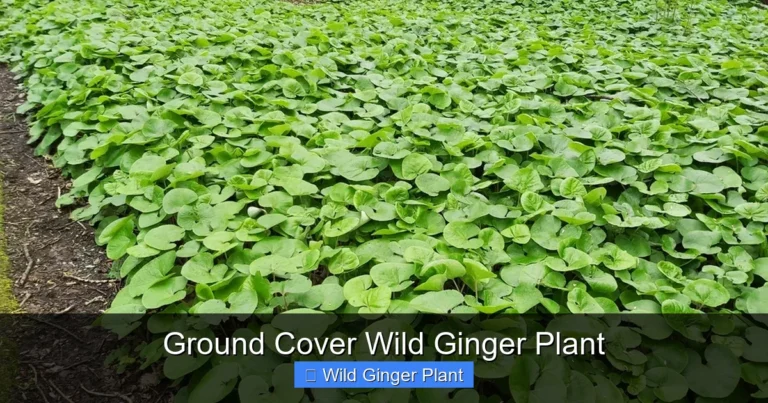
Many gardeners and nature lovers in the Lone Star State are discovering the charm of wild ginger plant Texas for shaded landscapes. It forms a dense, weed-suppressing mat that looks beautiful under trees, along shaded paths, or in woodland garden beds. The flowers are curious little things, shaped like tiny jugs and hidden beneath the foliage at ground level. They bloom in early spring, often before the leaves fully expand, and are pollinated by small flies and beetles that crawl inside. Once you learn to spot this plant, you will see it in many moist, shady spots across the eastern third of the state.
Key Takeaways
- Native identity: Wild ginger plant Texas is Asarum canadense, a native perennial unrelated to culinary ginger but with similar aromatic roots.
- Preferred habitat: This plant thrives in deep shade with moist, well-drained soil rich in organic matter, commonly found in East Texas woodlands.
- Distinctive features: Look for paired heart-shaped leaves and unusual jug-shaped flowers that bloom at ground level in early spring.
- Garden value: Wild ginger plant Texas forms dense colonies that suppress weeds and provide excellent groundcover for shaded areas.
- Historical uses: Indigenous peoples and early settlers used the rhizomes as a ginger substitute and for medicinal purposes.
- Propagation methods: Divide established clumps in early spring or fall, or grow from fresh seed with cold stratification.
- Conservation note: Never harvest from the wild; purchase from native plant nurseries to protect natural populations.
Quick Answers to Common Questions
Is wild ginger plant Texas edible?
The rhizomes have a ginger-like flavor but contain aristolochic acid, which can be toxic to kidneys with regular use. Historical use exists, but modern consumption is not recommended.
Where does wild ginger plant Texas grow naturally?
Wild ginger plant Texas grows in moist, shaded woodlands of East Texas, primarily in the Pineywoods and Post Oak Savannah ecoregions, along streams and in ravines with rich, acidic soil.
How do I propagate wild ginger plant Texas?
Divide established clumps in early spring or fall, ensuring each division has a growing bud and roots. Fresh seeds can be sown but require warm then cold stratification and take years to mature.
Can wild ginger plant Texas tolerate sun?
No. Wild ginger plant Texas requires deep to full shade. Afternoon sun will scorch the leaves. Morning sun is tolerated in cooler climates but not in Texas heat.
Is wild ginger plant Texas endangered?
It is not currently listed as threatened or endangered in Texas, but habitat loss, invasive species, and over-harvesting pose risks to wild populations.
📑 Table of Contents
- What Is Wild Ginger Plant Texas?
- Where to Find Wild Ginger Plant Texas in the Wild
- Identifying Wild Ginger Plant Texas: Key Features
- Growing Wild Ginger Plant Texas in Your Garden
- Uses and Benefits of Wild Ginger Plant Texas
- Conservation and Ethical Harvesting of Wild Ginger Plant Texas
- Frequently Asked Questions About Wild Ginger Plant Texas
What Is Wild Ginger Plant Texas?
Botanical Background and Classification
Wild ginger plant Texas is the common name for Asarum canadense, a herbaceous perennial native to eastern North America. The genus Asarum contains roughly 60 to 70 species, most of which are found in temperate forests of the Northern Hemisphere. Asarum canadense is the only species native to Texas, though its range extends far north into Canada and east to the Atlantic coast. The plant is sometimes called Canadian wild ginger, broad-leaved wild ginger, or simply wild ginger.
The family Aristolochiaceae includes pipevines and birthworts, many of which have unusual flower structures adapted for specific pollinators. Wild ginger plant Texas fits this pattern with its ground-level, jug-shaped flowers that trap small insects temporarily to ensure pollination. The species name canadense reflects its northern range, but the plant is perfectly at home in the piney woods and bottomland forests of East Texas.
Why the Name Ginger?
Early European settlers gave wild ginger plant Texas its common name because the rhizomes, or underground stems, smell and taste remarkably like culinary ginger, Zingiber officinale. The two plants are not related at all. Culinary ginger is a tropical monocot in the Zingiberaceae family, while wild ginger is a temperate dicot in the Aristolochiaceae family. However, the rhizomes of Asarum canadense contain aromatic compounds, including bornyl acetate and other terpenes, that create a ginger-like fragrance when crushed.
Indigenous peoples across the plant’s range used the rhizomes as a flavoring and as medicine. The Cherokee, Iroquois, and many other nations valued wild ginger plant Texas for treating colds, fevers, digestive complaints, and as a general tonic. Early settlers adopted these uses and also candied the rhizomes as a sweet treat. Modern herbalists sometimes use the root, but caution is advised because the plant contains aristolochic acid, a compound that can be toxic to kidneys in large doses.
Growth Habit and Life Cycle
Wild ginger plant Texas is a low-growing, colony-forming perennial. It spreads slowly by shallow, branching rhizomes that creep just below the soil surface. Each rhizome segment produces a pair of leaves each year. The leaves are kidney-shaped to heart-shaped, dark green, and softly hairy, reaching up to six inches wide. They emerge in early spring, often before the canopy trees leaf out, capturing sunlight on the forest floor.
The plant is deciduous, dying back to the ground after the first hard frost. In mild Texas winters, the leaves may persist longer, but they eventually wither. New growth appears reliably in late winter or early spring, often in February or March in East Texas. The flowers bloom shortly after leaf emergence, typically March through April. They are borne singly on short stalks at the base of the leaf pair, hidden beneath the foliage. Each flower is about an inch long, purplish-brown to greenish, with three flared, pointed sepals that form the jug shape. There are no true petals.
Where to Find Wild Ginger Plant Texas in the Wild
Natural Range in Texas
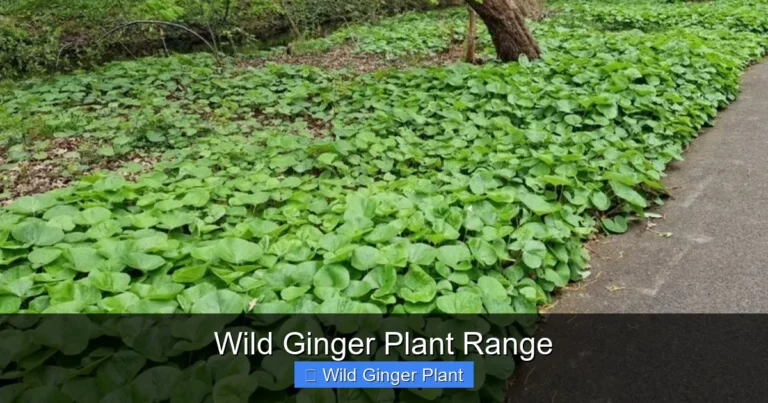
Wild ginger plant Texas is primarily an East Texas species. Its range in the state corresponds closely with the Pineywoods and Post Oak Savannah ecoregions. You will find it in the deep, sandy, acidic soils of the Pineywoods, especially in moist, shaded ravines, along spring-fed streams, and in bottomland hardwood forests. It also occurs in the richer, calcareous soils of the Post Oak Savannah where moisture and shade are adequate.
The plant becomes rare or absent as you move west into the Cross Timbers, Blackland Prairie, and Edwards Plateau. The climate becomes too dry and the soils too alkaline for wild ginger plant Texas to thrive. In far East Texas, near the Louisiana border, it can be locally abundant in suitable habitat. Good places to look include the Big Thicket National Preserve, Davy Crockett National Forest, Angelina National Forest, and numerous state parks and wildlife management areas in the region.
Preferred Habitat Conditions
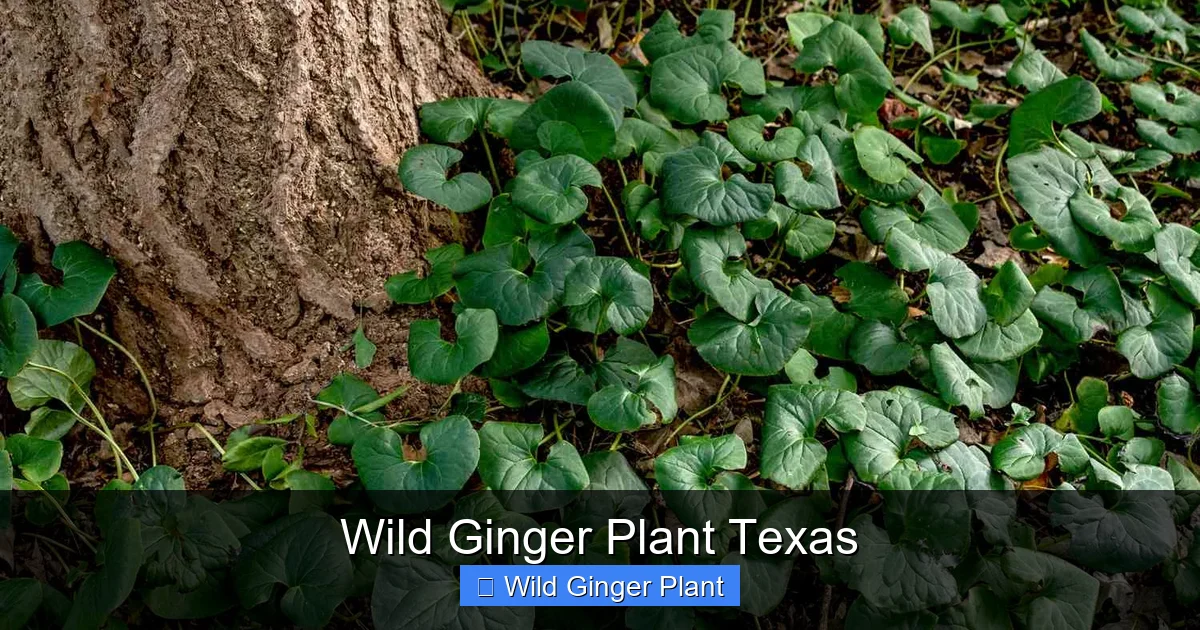
To find wild ginger plant Texas in nature, look for these specific conditions. The plant requires deep shade or dappled light. It grows under a closed canopy of deciduous trees such as oaks, hickories, sweetgum, and beech, or under mixed pine-hardwood stands. Direct afternoon sun will scorch the leaves and cause the plant to decline.
Soil moisture is critical. Wild ginger plant Texas needs consistently moist but well-drained soil. It thrives on north-facing slopes, in ravines, along stream banks, and in seepage areas where groundwater keeps the soil damp. The soil should be rich in organic matter, with a thick layer of decomposing leaves. The ideal pH is slightly acidic, between 5.5 and 6.5, though it can tolerate neutral soils if moisture and organic content are high.
You will often see wild ginger plant Texas growing alongside other shade-loving natives. Common companions include Christmas fern (Polystichum acrostichoides), southern lady fern (Athyrium asplenioides), wild columbine (Aquilegia canadensis), bloodroot (Sanguinaria canadensis), and various trillium species. These plants share the same requirement for moist, humus-rich, shaded conditions.
Seasonal Timing for Observation
The best time to spot wild ginger plant Texas in the wild is early spring, from late February through April. The flowers bloom early, often before the leaves are fully expanded. Because the flowers are at ground level and hidden by leaf litter, you need to look closely. Gently pull back the leaves to find the strange, jug-shaped blooms.
By late spring, the leaves reach full size and form a solid green carpet. This is the easiest time to identify the plant by its foliage alone. In summer, the plant persists in deep shade but may go dormant early if the soil dries out. In fall, the leaves yellow and die back. Winter reveals only the shallow rhizomes just below the surface, marked by the scars of previous years’ leaf stems.
Identifying Wild Ginger Plant Texas: Key Features
Leaf Characteristics
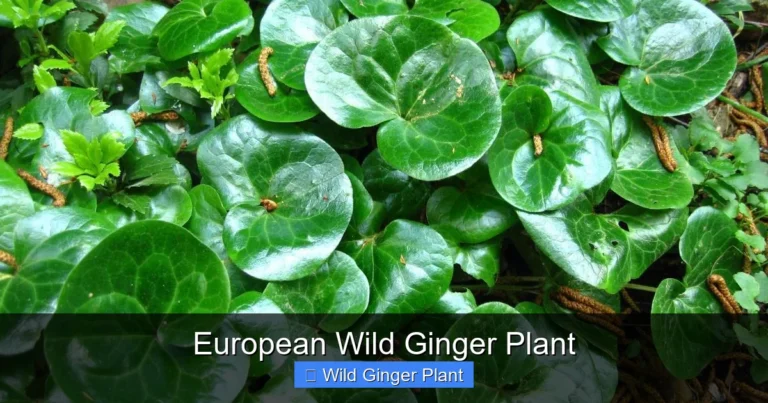
The leaves are the most obvious feature of wild ginger plant Texas. Each year, the rhizome produces a single pair of leaves at its tip. The leaves are basal, meaning they arise directly from the rhizome rather than from an above-ground stem. They are broadly heart-shaped to kidney-shaped, with a deep sinus at the base where the leaf stalk attaches. The leaf margins are entire, meaning smooth, not toothed or lobed.
Mature leaves are typically four to six inches wide and long, though they can reach eight inches in ideal conditions. The upper surface is dark green, often with a slight sheen, and covered in fine, soft hairs. The underside is paler and more densely hairy. The leaf stalks, or petioles, are also hairy and can be six to twelve inches long, holding the leaf blades well above the ground. When crushed, the leaves emit a faint ginger scent, though the rhizome is much more aromatic.
Flower Structure and Pollination
The flowers of wild ginger plant Texas are unique and fascinating. They are solitary, borne on a short, curved stalk at the base of the leaf pair, right at ground level. The flower has no petals. Instead, it has three sepals that are fused at the base into a cup or jug shape, then flare outward into three long, pointed, triangular tips. The color is usually purplish-brown to reddish-brown, sometimes greenish-brown.
The interior of the flower is often lighter, with a waxy texture. There are twelve stamens and six styles. The flower emits a faint, musty odor that attracts small flies, gnats, and beetles. These insects crawl inside the jug, where they are temporarily trapped by the waxy, downward-pointing hairs lining the interior. As they struggle, they pick up or deposit pollen. Eventually, the hairs wither, and the insects escape, carrying pollen to the next flower. This is a classic example of trap pollination.
Rhizome and Root System
The rhizome of wild ginger plant Texas is the source of its common name and historical uses. It is a shallow, horizontally creeping stem, typically half an inch to an inch thick. The rhizome is branched, forming a network just below the soil surface, often under a layer of leaf litter. It is covered in fine, adventitious roots that absorb water and nutrients.
When fresh, the rhizome is white to pale tan inside, with a brownish outer skin. It snaps cleanly, revealing a fibrous interior. The scent is strongly ginger-like, spicy and sweet. The flavor is similar but more pungent and slightly bitter. The rhizome contains volatile oils, resins, starch, and aristolochic acid. Because of the aristolochic acid content, internal use should be limited and guided by a knowledgeable practitioner.
Distinguishing from Look-Alikes
Several plants might be confused with wild ginger plant Texas by beginners. Violet species (Viola spp.) have heart-shaped leaves but are usually smaller, have toothed margins, and produce showy flowers on separate stalks in spring. They also lack the ginger scent. Hexastylis species, sometimes called little brown jugs or heartleaf, are close relatives in the same family. They have similar leaves but are evergreen, leathery, and often mottled with silver. Their flowers are smaller and more urn-shaped.
Mayapple (Podophyllum peltatum) has large, deeply lobed umbrella-like leaves, not heart-shaped. Bloodroot (Sanguinaria canadensis) has lobed, kidney-shaped leaves but the leaf margins are deeply scalloped, and the flower is showy, white, with many petals. Neither smells like ginger. The best confirmation for wild ginger plant Texas is the combination of paired heart-shaped leaves, hidden jug-shaped flowers, and the strong ginger aroma of the rhizome.
Growing Wild Ginger Plant Texas in Your Garden
Site Selection and Preparation
Success with wild ginger plant Texas in cultivation depends entirely on mimicking its natural habitat. Choose a site in full to deep shade. Morning sun is tolerated, especially in the northern part of its range, but afternoon sun will burn the foliage. Under mature deciduous trees is ideal. The north or east side of a building or fence also works if shade is consistent.
Soil preparation is crucial. Wild ginger plant Texas needs soil that is rich in organic matter, moisture-retentive, but well-drained. If your soil is heavy clay, amend it generously with compost, leaf mold, or well-rotted pine bark. If it is sandy, add organic matter to improve water holding capacity. Aim for a slightly acidic pH. A soil test is worthwhile. If the pH is above 7.0, incorporate elemental sulfur or pine needle mulch to lower it gradually.
Before planting, remove all weeds and grass. Wild ginger plant Texas spreads slowly and cannot compete with aggressive weeds. Loosen the soil to a depth of eight to ten inches. Incorporate a two to three inch layer of compost. Rake smooth and water deeply. Let the bed settle for a few days before planting.
Planting Methods and Spacing
You can establish wild ginger plant Texas from container-grown plants, divisions, or seed. Container plants are the easiest and fastest. Spring and fall are the best planting times. In Texas, fall planting (October through November) is excellent because the roots can establish during the cool, moist winter. Spring planting (February through March) also works well.
Space plants twelve to eighteen inches apart. They will slowly fill in to form a continuous groundcover. Dig a hole slightly larger than the root ball. Set the plant so the rhizome is just below the soil surface, about half an inch deep. The leaf buds should be at or slightly above soil level. Backfill, firm gently, and water thoroughly. Apply a two inch layer of shredded leaves, pine needles, or fine bark mulch. Keep the mulch pulled back slightly from the crowns.
Dividing Established Clumps
Division is the most reliable way to propagate wild ginger plant Texas and rejuvenate older clumps. The best time is early spring, just as new growth begins, or early fall, after the heat breaks. Water the clump well the day before. Dig up the entire clump with a garden fork, taking care to get as much of the rhizome network as possible.
Gently tease or cut the rhizomes apart. Each division should have at least one growing point (a plump bud) and a section of rhizome with roots attached. Trim any damaged roots. Replant divisions immediately at the same depth they were growing. Water well and mulch. Keep the soil consistently moist until new growth shows. Divisions may sulk for a few weeks but usually recover quickly.
Growing from Seed
Growing wild ginger plant Texas from seed requires patience. The seeds have a double dormancy. They need a warm, moist period followed by a cold, moist period to germinate. In nature, seeds ripen in early summer, fall to the ground, experience summer warmth, then winter cold, and germinate the following spring.
To simulate this, collect fresh seeds in June or July when the capsules split open. Sow immediately in pots or a prepared seedbed. Cover lightly with soil. Keep moist through summer. Then expose to winter cold outdoors. Alternatively, mix seeds with moist sand or peat in a plastic bag. Keep at room temperature (70-75°F) for 60-90 days, then refrigerate (35-40°F) for 60-90 days. Sow in pots and keep at 60-65°F. Germination can be erratic, taking weeks to months. Seedlings grow slowly and may take three to four years to reach flowering size.
Ongoing Care and Maintenance
Once established, wild ginger plant Texas is low maintenance. The key is consistent moisture. Water deeply during dry spells, especially in the first two years. A soaker hose or drip irrigation under the mulch works well. Do not let the soil dry out completely. In the heat of a Texas summer, even established plants may need weekly watering if rainfall is lacking.
Fertilizer is rarely needed if the soil was well-prepared and you maintain a layer of organic mulch. The decomposing mulch feeds the soil. If growth seems weak, a light application of balanced organic fertilizer in early spring is fine. Avoid high-nitrogen fertilizers, which promote lush foliage at the expense of root development.
Remove any weeds that appear, pulling carefully to avoid disturbing the shallow rhizomes. In late winter, before new growth emerges, you can gently rake off excess leaf litter if it is matted and thick. Leave a light layer as natural mulch. The old leaves of wild ginger plant Texas will decompose in place. No pruning is required.
Pests, Diseases, and Problems
Wild ginger plant Texas is remarkably trouble-free. Slugs and snails occasionally nibble the leaves, especially in very wet springs. Hand-pick or use iron phosphate bait if damage is significant. Deer and rabbits generally avoid the plant due to its aromatic compounds, though they may browse in severe drought.
Root rot can occur in poorly drained soil, especially in winter. Ensure good drainage. Fungal leaf spots may appear in very humid conditions with poor air circulation. Thin surrounding vegetation if needed. The plant is not known to have serious insect pests. The main problem is planting in the wrong spot: too much sun, too dry, or too alkaline. Correct the site conditions, and the plant will thrive.
Uses and Benefits of Wild Ginger Plant Texas
Ecological Value in the Landscape
Wild ginger plant Texas provides significant ecological benefits in a shade garden or woodland restoration. As a dense groundcover, it stabilizes soil on slopes and prevents erosion. The thick mat of rhizomes and leaves slows runoff, allowing water to infiltrate. This is especially valuable in the ravines and stream corridors where the plant naturally occurs.
The flowers, though small and hidden, provide early-season nectar and pollen for small native flies, gnats, and beetles. These insects are important pollinators for other spring ephemerals. The foliage provides cover for small amphibians, reptiles, and invertebrates. Salamanders and toads often shelter under the leaves. The seeds have an elaiosome, a fleshy appendage that attracts ants. Ants carry the seeds to their nests, eat the elaiosome, and discard the seed, effectively planting it. This is myrmecochory, a common seed dispersal strategy in forest herbs.
By planting wild ginger plant Texas, you support these ecological interactions. You also reduce the need for mulch, herbicides, and mowing in shaded areas. The plant forms a living mulch that suppresses weeds naturally. Over time, a colony can expand to cover a large area, creating a self-sustaining plant community.
Historical and Cultural Uses
The human history of wild ginger plant Texas is rich. Indigenous peoples across eastern North America used the rhizomes extensively. The Cherokee used a root decoction for coughs, colds, and fevers. The Iroquois used it for digestive issues and as a general tonic. The Meskwaki used it to induce sweating in fevers. Many tribes used the rhizome as a flavoring for meats and stews, a practice adopted by European settlers.
Early settlers candied the rhizomes by boiling them in sugar syrup, creating a sweet, spicy treat. They also made a tea from the roots for stomach aches and menstrual cramps. The plant was listed in the United States Pharmacopeia from 1820 to 1882 as a stimulant and carminative. However, modern research has identified aristolochic acid in Asarum species. This compound is nephrotoxic and carcinogenic in high doses. The FDA warns against consuming products containing aristolochic acid.
Today, wild ginger plant Texas is primarily valued as an ornamental and ecological plant. Some herbalists still use it in very small doses, but this should only be done under expert guidance. The historical uses are fascinating but not recommended for casual experimentation. Enjoy the plant for its beauty, its scent, and its role in the ecosystem.
Culinary Curiosity (With Caution)
If you are curious about the ginger flavor, you can experience it without risk. Dig up a small piece of rhizome from your own garden plant (never from the wild). Wash it thoroughly. Scratch the surface with your fingernail and smell. The aroma is unmistakably ginger-like, sweet and spicy. You can nibble a tiny piece raw. The flavor is intense, more pungent than culinary ginger, with a slight bitterness.
Some adventurous cooks use wild ginger plant Texas rhizomes to make a simple syrup for cocktails or desserts. Simmer a few ounces of chopped rhizome in equal parts water and sugar for twenty minutes. Strain. The syrup has a unique, spicy-floral note. Use sparingly. Remember, the aristolochic acid is water-soluble, so even tea or syrup extracts it. The occasional tiny taste is unlikely to cause harm, but regular consumption is not advised. Pregnant women should avoid it entirely.
Companion Planting and Design Ideas
Wild ginger plant Texas shines in a woodland garden design. Use it as a groundcover under native trees like dogwood (Cornus florida), redbud (Cercis canadensis), or serviceberry (Amelanchier arborea). Pair it with spring ephemerals that bloom before the ginger leaves reach full size. Virginia bluebells (Mertensia virginica), trout lily (Erythronium albidum), and spring beauty (Claytonia virginica) are excellent companions.
Ferns are classic partners. Christmas fern, southern lady fern, and marginal wood fern (Dryopteris marginalis) provide texture contrast. For summer interest, add shade-tolerant perennials like wild geranium (Geranium maculatum), foamflower (Tiarella cordifolia), and Heuchera species. The ginger’s solid green foliage is a perfect foil for variegated or colorful leaves.
In a formal shade garden, wild ginger plant Texas can edge a path or define a bed. Its uniform height and texture create a clean line. Plant in drifts of odd numbers (3, 5, 7) for a natural look. Combine with hardscape elements like mossy rocks, logs, or a stone bench. The plant’s preference for moist, rich soil makes it ideal for rain garden edges or low spots that collect runoff.
Conservation and Ethical Harvesting of Wild Ginger Plant Texas
Threats to Wild Populations
While wild ginger plant Texas is not currently listed as threatened or endangered in Texas, its populations face several pressures. Habitat loss is the primary threat. The Pineywoods and Post Oak Savannah have been heavily logged, converted to pine plantations, developed for housing, and fragmented by roads. Bottomland hardwood forests have been cleared for agriculture or flooded by reservoirs.
Invasive species pose a growing threat. Japanese honeysuckle (Lonicera japonica), Chinese privet (Ligustrum sinense), and Japanese climbing fern (Lygodium japonicum) can smother the forest understory, outcompeting native herbs like wild ginger plant Texas. Feral hogs root through the soil, destroying rhizomes and disturbing the seed bank. Climate change may alter rainfall patterns and increase temperatures, making East Texas less suitable for this moisture-loving species over time.
Over-harvesting for the herbal trade or by well-meaning foragers can deplete local populations. Because wild ginger plant Texas spreads slowly, a colony takes many years to recover from digging. The plant’s popularity in native plant gardening has also led to unscrupulous wild collection for the nursery trade. Always verify that plants are nursery-propagated, not wild-dug.
Ethical Foraging Guidelines
If you encounter wild ginger plant Texas in the wild, enjoy it in place. Take photos. Admire the flowers. Smell a leaf. But do not dig. The general rule for foraging native perennials is: never take more than 10% of a population, and only if the population is large and healthy. For slow-spreading plants like wild ginger, even 10% is too much. Leave the rhizomes in the ground.
If you want to propagate the plant, collect a few seeds in early summer. Take no more than 5% of the seeds from a large population. Sow them on site or in your garden. Better yet, purchase plants or seeds from a reputable native plant nursery. Many Texas nurseries specialize in ethically propagated natives. The Native Plant Society of Texas maintains a list of sources.
If you are a landowner with wild ginger plant Texas on your property, consider yourself fortunate. Protect the habitat. Avoid logging or heavy equipment in the area. Control invasive species. Leave fallen leaves and logs to decompose. You can gently divide a clump to expand it on your own land, but do not share divisions with others unless you are sure they came from your cultivated stock, not the wild population.
Supporting Conservation Efforts
You can help conserve wild ginger plant Texas and its habitat in several ways. Join the Native Plant Society of Texas. Participate in their field trips, plant sales, and advocacy. Support land trusts that protect East Texas forests, such as the Texas Land Conservancy, The Nature Conservancy in Texas, and local land trusts.
Volunteer for invasive species removal workdays in local parks and preserves. Report sightings of wild ginger plant Texas to iNaturalist or the Texas Natural Diversity Database. These records help biologists track species distributions. Advocate for sustainable forestry practices on public and private lands. Encourage your city or county to protect riparian corridors and steep slopes where this plant thrives.
In your own garden, create a sanctuary for wild ginger plant Texas and its companions. A network of native shade gardens across the developed landscape can provide habitat connectivity. Every square foot of restored understory helps. Share divisions of your garden-grown plants with neighbors and friends, spreading the plant and the conservation ethic.
Frequently Asked Questions About Wild Ginger Plant Texas
Is wild ginger plant Texas the same as the ginger I buy at the store?
No. Wild ginger plant Texas (Asarum canadense) is a completely different plant from culinary ginger (Zingiber officinale). They are not related. Culinary ginger is a tropical plant in the Zingiberaceae family. Wild ginger is a temperate woodland perennial in the Aristolochiaceae family. The rhizomes smell similar due to shared aromatic compounds, but they are botanically distinct.
Can I eat wild ginger plant Texas?
The rhizomes have a ginger-like flavor and were used historically as a substitute. However, the plant contains aristolochic acid, which can damage kidneys and cause cancer with prolonged or high-dose use. The FDA advises against consuming products containing aristolochic acid. An occasional tiny taste is unlikely to cause harm, but regular culinary or medicinal use is not recommended. Pregnant women should avoid it entirely.
Where can I buy wild ginger plant Texas for my garden?
Look for native plant nurseries in Texas that sell nursery-propagated plants. The Native Plant Society of Texas website has a list of native plant sources. Some reputable online native plant nurseries ship to Texas. Never buy plants that may have been dug from the wild. Ask the seller about their propagation methods.
How fast does wild ginger plant Texas spread?
Wild ginger plant Texas spreads slowly. The rhizomes extend a few inches per year. A single plant may form a clump one to two feet wide in five to ten years. It is not aggressive. You can speed up coverage by planting divisions closer together, twelve inches apart. It makes a well-behaved, long-lived groundcover.
Will wild ginger plant Texas grow in Central or West Texas?
It is very difficult to grow wild ginger plant Texas outside its native East Texas range. The plant requires consistent moisture, high humidity, acidic soil, and deep shade. Central and West Texas are generally too dry, too alkaline, and too hot. You might succeed in a very sheltered, irrigated, shaded courtyard with heavily amended soil, but it will be a constant struggle. Choose more xeric natives for those regions.
Does wild ginger plant Texas have any medicinal uses?
Historically, Indigenous peoples and early settlers used wild ginger plant Texas for colds, fevers, digestive issues, and as a general tonic. It was in the US Pharmacopeia in the 19th century. Modern research has identified aristolochic acid, a toxic compound. Some herbalists still use it in very small doses under strict guidelines, but self-medication is not advised. Consult a qualified clinical herbalist or naturopathic physician before using any wild plant medicinally.
How do I identify wild ginger plant Texas in the woods?
Look for paired, heart-shaped, softly hairy leaves on long stalks, growing in deep shade on moist, rich soil. In early spring (March-April), gently pull back the leaves at the base to find a single, jug-shaped, purplish-brown flower at ground level. The flower has three flared, pointed tips and no petals. Crush a leaf or scratch a rhizome to smell the strong ginger aroma. That confirms it.
Can I grow wild ginger plant Texas in a container?
Yes, but it requires attention. Use a wide, shallow pot at least twelve inches across. Fill with a rich, moisture-retentive potting mix high in organic matter (peat, compost, fine bark). Keep in full shade. Water frequently to maintain constant moisture. Mulch the surface. Fertilize lightly in spring. Repot or divide every few years as the rhizomes fill the pot. Protect from freezing solid in winter by moving to a garage or burying the pot.
What are the best companion plants for wild ginger plant Texas?
Native ferns (Christmas fern, lady fern, wood fern), spring ephemerals (Virginia bluebells, trout lily, spring beauty, bloodroot), foamflower, wild geranium, Heuchera, Trillium species, and shade-tolerant sedges (Carex spp.). Shrubs like native azaleas (Rhododendron canescens), sweetshrub (Calycanthus floridus), and spicebush (Lindera benzoin) provide the canopy shade wild ginger needs.
Is wild ginger plant Texas deer resistant?
Yes, generally. The aromatic compounds in the leaves and rhizomes deter browsing. Deer and rabbits usually avoid it. However, in times of extreme drought or overpopulation, they may nibble it. No plant is completely deer-proof. If deer pressure is high, use repellents or fencing until the colony is well established.
Frequently Asked Questions
What is the scientific name of wild ginger plant Texas?
The scientific name is Asarum canadense. It is the only species of wild ginger native to Texas, though several Hexastylis species (little brown jugs) also occur in the state.
When does wild ginger plant Texas bloom?
Wild ginger plant Texas blooms in early spring, typically March through April in East Texas. The flowers are hidden at ground level beneath the leaves.
How do I care for wild ginger plant Texas in my garden?
Plant in deep shade with moist, rich, well-drained, slightly acidic soil. Water consistently, mulch with leaves or pine needles, and remove weeds carefully. No fertilizer needed if soil is rich.
Can I grow wild ginger plant Texas from seed?
Yes, but seeds have double dormancy requiring warm then cold stratification. Germination is slow and erratic. Plants take three to four years to reach flowering size from seed.
What animals eat wild ginger plant Texas?
Deer and rabbits generally avoid it due to aromatic compounds. Small flies and beetles pollinate the flowers. Ants disperse the seeds. Salamanders and insects shelter under the foliage.
How is wild ginger plant Texas different from culinary ginger?
They are unrelated plants. Culinary ginger (Zingiber officinale) is a tropical monocot. Wild ginger plant Texas (Asarum canadense) is a temperate dicot. Only the rhizome scent is similar.