When to Plant Catmint Zone 8
Plant catmint in zone 8 during early spring (March to April) or early fall (September to October) for the best results. These windows give roots time to establish before extreme summer heat or winter cold arrives.
If you’re wondering when to plant catmint zone 8, you’ve come to the right place. This aromatic perennial herb has become a garden favorite across the southern United States. Its lavender-blue flowers attract pollinators all season long. The silvery-green foliage adds texture to borders and beds. But timing makes all the difference between thriving plants and struggling ones.
Zone 8 presents unique challenges and opportunities for gardeners. The long growing season means more bloom time. Mild winters allow many perennials to survive year-round. Yet summer heat can be brutal on new transplants. Winter cold snaps occasionally damage tender growth. Understanding these patterns helps you choose the perfect planting window.
In this guide, I’ll walk you through everything you need to know about when to plant catmint zone 8. We’ll cover spring and fall options in detail. You’ll learn soil preparation techniques that work. I’ll share watering strategies for establishment. And we’ll troubleshoot common problems before they start.
Key Takeaways
- Spring planting window: March through April offers ideal soil temperatures and moisture for root establishment before summer heat.
- Fall planting window: September through October allows roots to develop during cool weather before winter dormancy.
- Soil temperature matters: Wait until soil reaches at least 50°F (10°C) for optimal root growth and plant establishment.
- Avoid summer planting: Zone 8 summer heat stresses new transplants and requires constant watering to prevent failure.
- Choose the right variety: Nepeta faassenii and Nepeta racemosa cultivars perform exceptionally well in zone 8 conditions.
- Prepare soil properly: Well-draining soil with full sun exposure prevents root rot and encourages abundant blooming.
- Water wisely after planting: Deep, infrequent watering promotes deep root systems that handle zone 8 climate extremes better.
Quick Answers to Common Questions
What is the absolute best month to plant catmint in zone 8?
April and September are the two best months. April gives spring establishment before summer heat. September gives fall root growth before winter dormancy.
Can I plant catmint in zone 8 during summer?
Summer planting is possible but risky. Extreme heat stresses new transplants. If you must plant in summer, provide shade, water daily, and expect higher failure rates.
How long does catmint take to establish in zone 8?
Catmint establishes in 4-6 weeks during optimal planting windows. Spring-planted catmint blooms first year. Fall-planted catmint blooms vigorously the following spring.
Does catmint come back every year in zone 8?
Yes, catmint is a reliable perennial in zone 8. It dies back in winter but returns from the crown each spring. Most varieties live 5+ years with proper care.
Should I cut back catmint before winter in zone 8?
Leave dead foliage until late winter (February). It protects crowns from temperature fluctuations. Cut back to 2 inches before new growth emerges in spring.
📑 Table of Contents
- Understanding Zone 8 Climate for Catmint Success
- Best Spring Planting Times for Catmint in Zone 8
- Fall Planting: A Viable Alternative for Zone 8 Gardeners
- Preparing Your Garden Bed for Catmint Success
- Caring for Newly Planted Catmint Through the Seasons
- Common Mistakes to Avoid When Planting Catmint in Zone 8
- Selecting the Best Catmint Varieties for Zone 8
- Troubleshooting Catmint Problems in Zone 8
- Companion Planting with Catmint in Zone 8 Gardens
- Conclusion
Understanding Zone 8 Climate for Catmint Success
What Zone 8 Means for Your Garden
USDA Hardiness Zone 8 spans a wide geographic area. It includes parts of the Pacific Northwest, the South, and the Gulf Coast. Average minimum winter temperatures range from 10°F to 20°F (-12°C to -7°C). This relatively mild winter allows catmint to survive as a true perennial. The plant dies back but returns from the crown each spring.
Zone 8 also means a long frost-free period. Most areas see the last frost in March. The first frost typically arrives in November. That’s eight to nine months of growing time. Catmint takes full advantage of this extended season. It blooms from late spring through fall with proper care.
Regional Variations Within Zone 8
Not all zone 8 gardens are created equal. Zone 8a experiences colder winters than zone 8b. Coastal areas enjoy moderated temperatures. Inland locations see greater extremes. The Pacific Northwest has wet winters and dry summers. The Southeast faces humidity and intense summer heat. Texas and the Gulf Coast deal with drought periods.
These microclimates affect when to plant catmint zone 8. Coastal gardeners can plant earlier in spring. Inland gardeners should wait for soil to warm. Southern zone 8 gardeners benefit more from fall planting. Northwestern gardeners often prefer spring planting. Know your specific conditions for best results.
Why Catmint Thrives in Zone 8
Catmint (Nepeta species) originates from temperate regions of Europe and Asia. It evolved in climates similar to zone 8. The plant handles heat well once established. It tolerates drought better than many perennials. Deer and rabbits typically avoid it. Pollinators flock to the nectar-rich flowers.
Zone 8’s long season allows multiple bloom cycles. Deadheading encourages repeat flowering. The plant stays attractive for months. Winter dieback is natural and expected. Fresh growth emerges vigorously in spring. This cycle repeats reliably for years.
Best Spring Planting Times for Catmint in Zone 8
Early Spring: The Prime Window
March through April represents the gold standard for when to plant catmint zone 8 in spring. Soil temperatures have risen above 50°F. Daytime air temperatures reach the 60s and 70s°F. Nights remain cool but rarely freeze. These conditions promote rapid root development.
Early spring planting gives catmint maximum establishment time. Roots grow deeply before summer heat arrives. The plant builds energy reserves for blooming. By June, you’ll see the first flower spikes. This timing aligns perfectly with pollinator activity peaks.
Watch your local forecast for the last frost date. Plant two to three weeks after this date for safety. In zone 8a, this often means late March to early April. In zone 8b, you can plant as early as early March. Coastal areas may plant in late February during mild years.
Mid-Spring: Still a Good Option
Late April through May works well for when to plant catmint zone 8 if you missed the early window. Garden centers have the best selection now. Plants are larger and more established. You’ll see flowers sooner after planting.
The trade-off is less root establishment time. Summer heat arrives sooner relative to planting. You’ll need more attentive watering. Mulch becomes critical for moisture retention. Afternoon shade helps in the hottest zone 8 regions.
Container-grown catmint handles mid-spring planting better than bare-root. The intact root ball reduces transplant shock. Water thoroughly at planting time. Check soil moisture daily for the first two weeks.
Late Spring: Proceed with Caution
June planting is possible but not ideal for when to plant catmint zone 8. Summer heat stress becomes a real concern. New transplants struggle to absorb enough water. Afternoon wilting becomes common even with adequate soil moisture.
If you must plant in June, choose a cloudy day or plant in late afternoon. Provide temporary shade cloth for the first week. Water deeply every morning. Apply three inches of organic mulch. Monitor for stress signs daily.
Expect reduced first-year blooming from late spring planting. The plant focuses energy on survival. Full floral display waits until year two. Patience pays off with proper care.
Fall Planting: A Viable Alternative for Zone 8 Gardeners
Why Fall Planting Works Well
Many experienced gardeners prefer fall for when to plant catmint zone 8. Soil retains summer warmth well into autumn. Cooler air temperatures reduce transplant stress. Rainfall often increases naturally. Roots grow actively while top growth slows.
Fall-planted catmint develops strong root systems over winter. The plant emerges vigorously in early spring. You gain a month or more of growth compared to spring planting. First-year blooming is often more impressive.
Fall planting also spreads garden work across seasons. Spring gets busy with vegetables and annuals. Autumn offers pleasant working conditions. Nurseries discount perennials in fall. You save money while helping plants.
Optimal Fall Planting Window
September through October is the sweet spot for when to plant catmint zone 8 in fall. Target six to eight weeks before your average first frost. In zone 8a, aim for early to mid-September. Zone 8b gardeners can plant through October. Coastal areas may plant into early November.
September planting allows maximum root growth. October planting still works well in milder subzones. November planting risks insufficient establishment. The plant needs time to anchor before winter dormancy.
Monitor soil temperature with a probe thermometer. Ideal range is 55°F to 75°F for root growth. Fall soils often stay in this range longer than spring soils. This hidden advantage makes fall planting surprisingly effective.
Fall Planting Considerations
Choose healthy, well-rooted plants for fall planting. Avoid end-of-season clearance plants with circling roots. Look for white, firm roots at the container edges. Reject plants with yellowing lower leaves or pest damage.
Water thoroughly at planting even if rain is forecast. Apply mulch after the first hard freeze. This prevents frost heaving of shallow roots. Don’t fertilize in fall. Nitrogen encourages tender growth vulnerable to cold.
Cut back foliage after it dies back naturally. Leave crowns exposed for winter. Remove dead material in late winter. New growth emerges from the base in early spring.
Preparing Your Garden Bed for Catmint Success
Site Selection: Sun and Drainage Are Key
Catmint demands full sun for best performance. Six to eight hours of direct sunlight minimum. Afternoon sun is especially valuable in zone 8. Morning shade with afternoon sun works well. Full shade produces leggy, floppy plants with few flowers.
Excellent drainage is non-negotiable. Catmint rots in wet soil, especially during zone 8 winters. Raised beds solve drainage issues beautifully. Sloped sites work naturally. Amend heavy clay extensively with grit and compost.
Test drainage by digging a twelve-inch hole. Fill with water. It should drain within an hour. If water stands longer, improve drainage or choose another site. Winter wet kills more catmint than winter cold.
Soil Preparation Steps
Start preparation two to three weeks before when to plant catmint zone 8. Remove all weeds and grass completely. Catmint doesn’t compete well with aggressive weeds. Loosen soil to twelve inches depth. A broadfork works better than a tiller for soil structure.
Incorporate two to three inches of compost. This improves both drainage and moisture retention. Add coarse sand or fine gravel to heavy soils. Aim for a gritty, crumbly texture. Avoid rich, nitrogen-heavy amendments. Catmint prefers lean soil.
Test soil pH if unsure. Catmint tolerates 6.0 to 8.0 pH. Most zone 8 soils fall in this range. Lime acidic soils. Sulfur alkaline soils. But catmint adapts well without perfect pH.
Spacing and Layout Planning
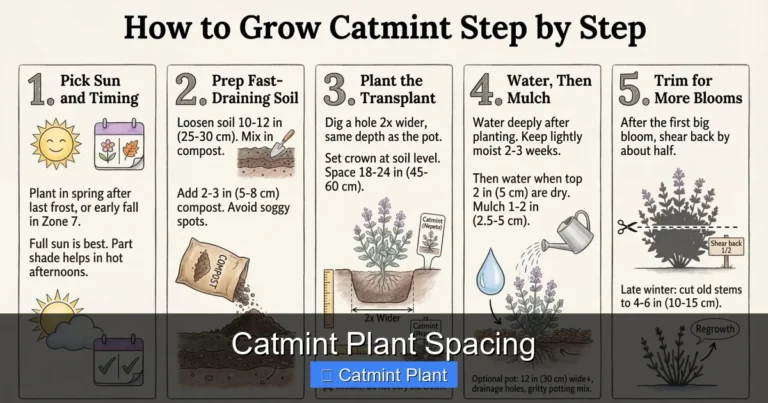
Space plants eighteen to twenty-four inches apart. Mature width reaches two to three feet. Proper spacing ensures air circulation. Good airflow prevents fungal issues in humid zone 8 summers.
Plant in drifts of three, five, or seven for naturalistic effect. Odd numbers look more organic. Stagger rows for fuller appearance. Consider mature height of twelve to eighteen inches. Place taller varieties behind shorter ones.
Edge pathways with catmint for fragrance release. Plant near vegetables to attract beneficial insects. Use as a transition between formal and wild areas. The soft texture blends beautifully with structural plants.
Caring for Newly Planted Catmint Through the Seasons
First Two Weeks: Critical Establishment Period
The days immediately after when to plant catmint zone 8 determine long-term success. Water deeply at planting until soil is saturated. Check moisture daily by finger test. Water when top inch feels dry. Don’t let the root ball dry out completely.
Provide temporary shade during heat waves. A piece of shade cloth on stakes works perfectly. Remove shade once plants show new growth. This indicates roots are functioning. Usually takes seven to ten days in spring. Ten to fourteen days in fall.
Mulch after planting but keep away from crowns. Two inches of pine straw, shredded leaves, or bark mulch. Mulch conserves moisture and suppresses weeds. It also moderates soil temperature extremes.
First Growing Season: Building Strong Plants
Water deeply once weekly during the first summer. Increase to twice weekly during heat waves. Deep watering encourages deep roots. Frequent shallow watering creates vulnerable surface roots.
Deadhead spent flower spikes to encourage rebloom. Shear plants back by one-third after first flush. This promotes bushy growth and second bloom. Fertilize lightly with balanced organic fertilizer in early summer. Avoid high nitrogen.
Watch for spider mites during hot, dry periods. Spray undersides of leaves with water weekly. This disrupts mite colonies naturally. Neem oil works for persistent infestations. Healthy plants resist pests better.
Winter Care in Zone 8
Zone 8 winters are generally mild for catmint. Plants die back to ground level naturally. Leave dead foliage until late winter. It protects crowns from temperature swings. Remove in February before new growth emerges.
Apply winter mulch after ground freezes. In zone 8, this may not happen every year. Use pine straw or leaves. Two to three inches over crowns. Remove gradually in early spring. Don’t smother emerging shoots.
Container-grown catmint needs extra protection. Move pots to sheltered location. Group together for insulation. Wrap pots with burlap or bubble wrap. Water monthly if no rain. Prevent freeze-thaw cycles in containers.
Year Two and Beyond: Maintenance Routine
Established catmint becomes remarkably low-maintenance. Spring cleanup is the main task. Cut back dead stems to two inches. Divide clumps every three to four years. Spring division works best in zone 8.
Water only during extended drought. Catmint’s deep roots find moisture. Fertilize once annually in spring. Compost top-dressing is perfect. Deadhead for continuous bloom. Shear mid-summer for fall flush.
Monitor center die-out in older clumps. This signals division time. Dig entire plant in early spring. Separate into fist-sized sections. Replant healthiest pieces. Share or compost the rest.
Common Mistakes to Avoid When Planting Catmint in Zone 8
Planting Too Early in Cold, Wet Soil
Eager gardeners often jump the gun on when to plant catmint zone 8. Cold, wet spring soil causes root rot. Catmint roots need oxygen as much as water. Saturated soil excludes oxygen. Wait for workable, crumbly soil.
Test soil readiness by squeezing a handful. It should crumble, not form a ball. If it sticks together, wait a few days. Raised beds warm and drain faster. Consider them for earlier planting.
Choosing the Wrong Location
Shade is the enemy of catmint. Even partial shade reduces flowering dramatically. Plants stretch toward light, becoming weak. Powdery mildew thrives in shade and humidity. Zone 8 summers are humid enough without shade.
Low spots collect cold air and water. Frost pockets damage early growth. Standing water rots crowns in winter. Choose elevated, well-drained sites. South-facing slopes are ideal.
Overwatering Established Plants
Zone 8 gardeners often love their plants to death. Catmint prefers dry conditions once established. Overwatering causes root rot and fungal diseases. It also reduces essential oil production. Less fragrance, fewer pollinators.
Water deeply but infrequently. Let soil dry between waterings. Established plants need water only in drought. Wilting in afternoon heat is normal. Morning recovery means roots are fine.
Neglecting to Deadhead and Shear
Unpruned catmint becomes woody and sparse. Flowers only at stem tips. Center opens up unattractively. Regular shearing maintains dense, floriferous plants. It’s not optional for best appearance.
Shear after first bloom flush. Cut back by one-third to one-half. New growth emerges quickly. Second bloom follows in weeks. Repeat for third flush in long zone 8 seasons.
Planting Invasive Varieties
Some Nepeta species spread aggressively. Nepeta cataria (true catnip) self-sows prolifically. Nepeta × faassenii cultivars are sterile hybrids. They won’t become weeds. Choose named cultivars like ‘Walker’s Low’ or ‘Cat’s Meow’.
Research before buying. Avoid straight species unless you want spread. Check local invasive plant lists. Some regions restrict certain Nepeta. Responsible gardening protects native ecosystems.
Selecting the Best Catmint Varieties for Zone 8
Top Performing Cultivars
‘Walker’s Low’ remains the gold standard for zone 8. Perennial Plant of the Year 2007. Thirty inches tall and wide. Lavender-blue flowers from May to September. Sterile, so no unwanted seedlings. Upright habit resists flopping.
‘Cat’s Meow’ offers improved density and bloom. Twenty inches tall, thirty inches wide. Intense blue flowers. Very heat tolerant. Excellent for southern zone 8. Compact habit needs less shearing.
‘Junior Walker’ is a dwarf ‘Walker’s Low’. Fifteen to eighteen inches tall. Perfect for front of border. Same long bloom season. Ideal for smaller zone 8 gardens. Container friendly too.
Specialty Varieties for Specific Needs
‘Six Hills Giant’ reaches thirty-six inches. Great for back of border. Large, showy flower spikes. May need staking in rich soil. Classic variety since 1960s.
‘Blue Wonder’ stays compact at twelve inches. Intense violet-blue flowers. Excellent edging plant. Heat and humidity tolerant. Good for Gulf Coast zone 8.
‘Pink Cat’ offers rare pink flowers. Fifteen inches tall. Blooms earlier than blue varieties. Adds color diversity to catmint collection. Same tough constitution.
Species Worth Considering
Nepeta racemosa ‘Little Titch’ forms tight mounds. Eight to ten inches tall. Perfect rock garden plant. Flowers profusely in spring. Reblooms lightly through summer.
Nepeta subsessilis tolerates more moisture. Japanese catmint handles damp sites. Larger leaves, stouter stems. Blue flowers in summer. Good for problematic wet spots.
Nepeta sibirica ‘Souvenir d’Andre Chaudron’ has large flowers. Thirty inches tall. Blooms early summer. May self-sow moderately. Vigorous and tough.
Troubleshooting Catmint Problems in Zone 8
Floppy, Leggy Growth
Insufficient sun is the usual culprit. Catmint needs full sun to stay compact. Even three hours of shade causes stretching. Relocate to sunnier spot in fall or spring. Shear hard after moving to encourage bushiness.
Over-fertilization also causes floppiness. Rich soil produces weak stems. Stop fertilizing. Shear back by half. New growth will be stronger. Lean conditions build character.
Yellowing Leaves
Overwatering leads to yellow leaves. Check soil moisture before watering. Improve drainage if soil stays wet. Root rot shows as yellowing from bottom up. Dig and inspect roots if suspected.
Nitrogen deficiency causes overall yellowing. Rare in compost-amended soil. Apply balanced organic fertilizer if needed. But catmint rarely needs feeding.
Powdery Mildew
Humid zone 8 summers invite powdery mildew. White coating on leaves. Improve air circulation through spacing. Water at soil level, not overhead. Remove affected leaves promptly.
Serenade or neem oil controls spread. Resistant varieties help. ‘Walker’s Low’ shows good resistance. Proper siting prevents most issues.
Center Die-Out
Older clumps develop dead centers. This is natural aging. Division rejuvenates the plant. Dig in early spring. Discard woody center. Replant vigorous outer sections.
Winter Kill
Zone 8 winters occasionally damage catmint. Extreme cold snaps below 10°F. Wet soil followed by hard freeze. Poor drainage is usually the factor. Improve drainage for future plantings.
Mulch after ground freezes. Don’t mulch too early. Rodents nest in early mulch. Wait for consistent cold. Remove mulch gradually in spring.
Companion Planting with Catmint in Zone 8 Gardens
Pollinator Garden Partners
Catmint anchors pollinator gardens beautifully. Pair with salvias for continuous bloom. Salvia ‘Black and Blue’ complements catmint’s blue. Salvia greggii adds red tones. Both thrive in zone 8 conditions.
Coneflowers (Echinacea) share similar needs. Purple coneflower blooms alongside catmint. Goldfinches love the seed heads. Leave some spent flowers for birds.
Bee balm (Monarda) attracts hummingbirds. Red, pink, or purple flowers. Needs more moisture than catmint. Plant in slightly lower, moister area.
Herb Garden Companions
Catmint fits perfectly in herb gardens. Rosemary shares drainage needs. Both hate wet feet. Lavender loves the same conditions. Trio creates Mediterranean feel.
Thyme and oregano creep between catmint plants. Living mulch suppresses weeds. Harvest herbs while catmint blooms above. Efficient use of space.
Sage varieties complement catmint’s texture. Purple sage adds foliage contrast. Pineapple sage blooms late for fall interest. All deter deer and rabbits.
Rose Garden Underplanting
Catmint hides rose’s bare legs beautifully. Soft mounds cover thorny canes. Blue flowers contrast with rose colors. Both want full sun and good drainage.
Catmint may reduce rose pests. Aromatic foliage confuses insects. Attracts beneficial predators. Ladybugs and lacewings patrol both plants.
Choose shorter catmint for rose fronts. ‘Junior Walker’ or ‘Blue Wonder’. Taller varieties for shrub rose backs. ‘Walker’s Low’ or ‘Six Hills Giant’.
Ornamental Grass Pairings
Fine-textured grasses contrast catmint’s mounds. Mexican feather grass (Stipa) moves in breeze. Blue fescue echoes catmint’s foliage color. Both drought tolerant.
Switchgrass (Panicum) provides vertical accent. ‘Northwind’ stays upright. ‘Shenandoah’ turns red in fall. Grasses extend seasonal interest.
Plant catmint in front of grass clumps. Softens grass bases. Creates layered effect. Winter grass structure complements dormant catmint.
Conclusion
Knowing when to plant catmint zone 8 transforms your gardening success. Spring planting in March through April gives reliable results. Fall planting in September through October often works even better. Both windows avoid summer heat stress and winter cold damage.
Remember the fundamentals regardless of timing. Full sun, excellent drainage, and proper spacing create the foundation. Water deeply but infrequently once established. Shear after blooming for continuous flowers. Divide every few years to maintain vigor.
Choose proven varieties like ‘Walker’s Low’ or ‘Cat’s Meow’. Avoid aggressive species that become problems. Pair catmint with compatible companions for garden harmony. Roses, salvias, grasses, and herbs all make excellent partners.
Zone 8’s long season rewards catmint growers with months of blooms. Pollinators will thank you. Your garden will smell wonderful. And you’ll enjoy one of the toughest, most beautiful perennials available. Plant at the right time, care for it properly, and catmint will thrive for years.
Now you have all the knowledge needed for catmint success in zone 8. Grab your trowel. Check your calendar. Pick your perfect planting window. Your future self will thank you when those lavender-blue spikes sway in the breeze.
Frequently Asked Questions
When to plant catmint zone 8 for first-year blooms?
Plant in early spring (March-April) for first-year blooms. Spring-planted catmint typically flowers by June. Fall-planted catmint focuses on root growth and blooms heavily the following spring.
Can catmint survive zone 8 winter in containers?
Container-grown catmint needs winter protection in zone 8. Move pots to a sheltered location, group them together, wrap with insulation, and water monthly during dry periods to prevent freeze damage.
What spacing do I need when planting catmint in zone 8?
Space catmint plants 18-24 inches apart in zone 8 gardens. Mature plants reach 2-3 feet wide. Proper spacing ensures good air circulation, which prevents fungal diseases in humid zone 8 summers.
Why is my zone 8 catmint flopping over?
Flopping usually indicates insufficient sunlight or over-fertilization. Catmint needs 6-8 hours of direct sun. Rich soil and excess nitrogen cause weak, leggy growth. Shear back hard and relocate to full sun if needed.
How often should I water newly planted catmint in zone 8?
Water daily for the first two weeks after planting. Then water deeply twice weekly for the first month. After establishment, water only during extended drought. Catmint prefers dry conditions once rooted.
Which catmint variety is best for hot, humid zone 8 areas?
‘Cat’s Meow’ and ‘Blue Wonder’ excel in hot, humid zone 8 regions like the Gulf Coast. They resist powdery mildew better than older varieties and maintain compact habits without excessive flopping in humidity.