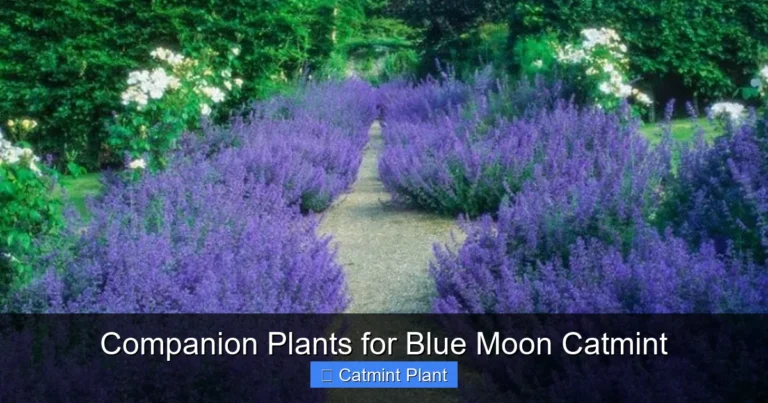
What to Plant with Walker’s Low Catmint
Walker’s Low catmint is a versatile perennial that thrives alongside roses, salvias, coneflowers, and ornamental grasses. These companions share similar sun and water needs while creating beautiful color contrasts and extending seasonal interest in your garden beds.
If you grow Walker’s Low catmint, you already know why gardeners love it. This perennial pumps out lavender-blue flowers from late spring through fall. It asks for little. It gives a lot. But here is the thing. It looks even better with friends. The right companions turn a nice plant into a garden scene. They cover bare legs. They echo colors. They stretch the show. Today we walk through the best partners for this superstar. You will learn why they work. You will learn how to plant them. You will leave with combinations you can copy this weekend.
Walker’s Low catmint, or Nepeta x faassenii ‘Walker’s Low,’ earned its name from a garden in Ireland. Not because it stays low. It reaches two to three feet tall and wide. The name stuck anyway. It won Perennial Plant of the Year in 2007. That tells you something. It blooms early. It reblooms if you shear it. Bees adore it. Deer ignore it. It handles heat, humidity, and poor soil. In short, it is a dream plant. But every star needs a supporting cast. Let us find yours.
Key Takeaways
- Roses make classic partners: Catmint hides bare rose canes and deters pests with its aromatic foliage.
- Salvias echo the bloom shape: Both plants produce spiky flowers that create rhythm and repetition in the border.
- Coneflowers add bold color: Purple, pink, or white echinacea contrasts beautifully with catmint’s lavender-blue spikes.
- Ornamental grasses provide texture: Grasses like fountain grass or blue fescue add movement and winter structure.
- Alliums extend spring interest: Their globe-shaped blooms rise above catmint foliage before the main show begins.
- Yarrow tolerates the same tough conditions: Both plants thrive in poor soil, full sun, and drought once established.
- Plant in drifts for impact: Group companions in odd numbers to create a natural, cohesive look.
Quick Answers to Common Questions
What is the best rose to plant with Walker’s Low catmint?
Shrub roses like David Austin varieties or Knock Out roses work best because they share catmint’s tolerance for lean soil and drought, and their height matches catmint’s two-to-three-foot stature.
Can I plant Walker’s Low catmint in shade?
No, catmint needs at least six hours of direct sun daily. Shade causes leggy growth, fewer flowers, and increased risk of powdery mildew.
When should I shear catmint for rebloom?
Shear catmint back by half in early July after the first flush fades. Water well afterward and you will see fresh foliage in two weeks and new flowers in three.
Do alliums come back every year with catmint?
Yes, ornamental alliums are perennial bulbs that return reliably. Plant them in fall among catmint crowns; catmint’s foliage hides the allium’s yellowing leaves after bloom.
Which ornamental grass is easiest to pair with catmint?
Fountain grass ‘Hameln’ is a top choice. It stays compact at two feet, produces showy plumes in late summer, and shares catmint’s need for sun, drainage, and lean soil.
📑 Table of Contents
- Why Companion Planting Matters for Catmint
- Classic Partners: Roses and Catmint
- Salvias: The Spike Sisters
- Coneflowers: Bold Daisy Faces
- Ornamental Grasses: Texture and Motion
- Alliums: The Early Spark
- Yarrow: The Tough Love Match
- Creating Complete Garden Vignettes
- Planting and Maintenance Tips for Success
- Common Mistakes to Avoid
- Extending the Season with Bulbs and Annuals
- Pollinator Paradise: Building a Buffet
- Adapting to Your Region
- Container Combinations for Small Spaces
- Conclusion: Your Catmint Community Awaits
Why Companion Planting Matters for Catmint
Companion planting is not just about looks. It is about ecology. Plants that share needs make your life easier. They water together. They fertilize together. They mulch together. You save time. You save water. You create a community that supports itself. Walker’s Low catmint wants full sun. It wants well-drained soil. It wants moderate to low water once established. Its friends should want the same. When you match cultural needs, everyone thrives. No plant outcompetes another. No plant sulks in the wrong spot.
There is also the visual side. Catmint has a loose, billowy habit. Its flowers are small, tubular, and massed on spikes. The color sits in the blue-purple range. The foliage is gray-green and aromatic. Good companions either contrast or harmonize. Contrast brings drama. Think orange daylilies or red hot pokers. Harmony brings calm. Think pink roses or white coneflowers. Both approaches work. The key is intention. Random mixing looks messy. Repeated pairings look designed. We will explore both strategies below.
The Design Principle of Repetition
Repetition is the secret sauce of professional gardens. You see a plant here. You see it again there. Your eye moves. Your brain relaxes. It feels right. Walker’s Low catmint is perfect for repetition. Its mounding shape repeats easily. Its color repeats easily. Plant it in drifts of three, five, or seven. Then weave companions through those drifts. The companions can repeat too. A salvia here. A salvia there. A grass here. A grass there. Suddenly the border reads as one composition. Not a collection of plants. A garden.
Seasonal Succession Planning
Catmint peaks in early summer. It takes a breather in July heat. It rallies in late summer if cut back. Smart companions fill the gaps. Alliums bloom before catmint hits stride. Coneflowers bloom alongside it. Sedums take over in fall. Grasses shine in winter. Think in layers. Think in time. A border that changes every month keeps you engaged. It keeps pollinators fed. It keeps you proud. We will map out a full season of bloom with each companion group.
Classic Partners: Roses and Catmint
This is the pairing you see in English gardens. It is the pairing you see in magazines. It is classic for a reason. Roses have bare knees. Their lower canes are thorny and leafless. Catmint covers those knees with a froth of gray-green and blue. The contrast is delicious. Rose petals are soft, round, often pink or red or apricot. Catmint flowers are spiky, small, cool-toned. They balance each other. The rose says romance. The catmint says wild meadow. Together they say sophisticated cottage.
There is a practical bonus. Catmint’s aromatic oils deter aphids. Aphids love roses. Catmint confuses them. It masks the rose scent. Fewer aphids mean less spraying. Less spraying means more beneficial insects. Ladybugs stay. Lacewings stay. The whole bed gets healthier. Plant catmint twelve to eighteen inches from the rose base. Let it mound around the canes. Shear the catmint after its first flush. It will rebloom as the roses hit their second wave. The timing aligns beautifully.
Choosing the Right Rose Types
Not all roses play nice. Hybrid teas can be fussy. They want rich soil and regular water. Catmint wants lean soil and dry feet. Shrub roses work better. David Austin English roses work better. Rugosa roses work better. Landscape roses like Knock Out work best. They share catmint’s toughness. They bloom all season. They do not mind lean conditions. Match the vigor. A massive rugosa will swallow a small catmint. A dainty polyantha might get lost. Look for roses in the three-to-four-foot range. They meet catmint eye to eye.
Color Combinations to Try
Pink roses plus blue catmint is the classic. Try ‘Gertrude Jekyll’ with its rich pink rosettes. Try ‘The Fairy’ with its clusters of shell pink. For something warmer, pair apricot roses like ‘Lady Emma Hamilton’ with catmint. The blue cools the orange. It prevents the combo from screaming. White roses like ‘Iceberg’ create a moon garden effect. Evening light makes both glow. Red roses like ‘Munstead Wood’ bring drama. The blue-purple catmint deepens the red. It feels velvety. Rich. Expensive.
Salvias: The Spike Sisters
If catmint is the queen of spikes, salvias are her court. They speak the same visual language. Vertical lines. Tubular flowers. Long bloom. Pollinator magnets. But salvias bring different colors. Deep purple ‘May Night.’ Hot pink ‘Radio Red.’ True blue ‘Blue Hill.’ White ‘Snow Hill.’ You can echo catmint’s blue with a blue salvia. You can contrast with red or pink. You can cool things down with white. The flower shape repeats. The rhythm builds. The border hums with bees.
Cultural needs align perfectly. Full sun. Sharp drainage. Low water. Lean soil. Both hate wet feet in winter. Both benefit from a spring haircut. Both rebound from summer shear. You maintain them the same way. At the same time. With the same tools. That is gardening efficiency. Plant them in alternating drifts. Catmint, salvia, catmint, salvia. Or block them. A river of catmint. A river of salvia. Where they meet, magic happens.
Top Salvia Varieties for Pairing
Salvia nemorosa ‘May Night’ is the gold standard. Deep indigo spikes. Compact habit. Blooms May to July. Reblooms if cut back. It matches catmint’s height. It matches catmint’s intensity. Salvia ‘Caradonna’ has darker stems. Almost black. The flowers are violet-blue. The contrast of stem and flower adds depth. Salvia ‘Rose Marvel’ brings large pink flowers. It softens the blue palette. Salvia ‘Blue Marvel’ offers true blue, larger blooms. It extends the blue theme without monotony. Salvia greggii varieties bring red, coral, white. They are shrubbier. They bloom longer. They handle heat better. Choose based on your zone and palette.
Designing with Spike Repetition
Spikes create vertical rhythm. The eye travels up. The eye travels down. The eye moves along the border. This is powerful. Use it. Plant spikes at the front. Plant spikes at the middle. Plant spikes at the back. Vary the height. Catmint at two feet. ‘May Night’ at eighteen inches. ‘Caradonna’ at twenty-four inches. A tall salvia like ‘Amistad’ at four feet in back. Now you have layers. You have depth. You have a border that looks good from the patio and from the window upstairs.
Coneflowers: Bold Daisy Faces
Coneflowers (Echinacea) are the bold friends. They have large, flat faces. Prominent cones. Colors that shout. Purple. Pink. Orange. Yellow. White. Green. Catmint is a haze. Coneflower is a statement. Together they cover all bases. Texture. Form. Color. The coneflower’s coarse leaves contrast catmint’s fine foliage. The coneflower’s stiff stems contrast catmint’s billowy mounds. It is a study in opposites. And opposites attract.
Both are prairie natives at heart. They want sun. They want drainage. They tolerate drought. They tolerate poor soil. They laugh at humidity. They feed goldfinches in fall. They feed bees all summer. The seed heads stand all winter. Catmint’s foliage persists semi-evergreen in mild zones. The winter garden has bones. Plant coneflowers behind or beside catmint. Give them space. They clump. They do not run. Three feet apart works. Deadhead some for rebloom. Leave some for birds. Everyone wins.
Echinacea Color Strategies
Purple coneflower (E. purpurea) is the classic. It harmonizes with catmint’s blue. Same color family. Different saturation. It feels monochromatic but not boring. Pale purple coneflower (E. pallida) has drooping petals. It adds movement. It adds grace. ‘White Swan’ or ‘PowWow White’ cools the bed. White makes blue pop. White makes pink pop. White glows at dusk. Orange and yellow varieties like ‘Cheyenne Spirit’ or ‘Sombrero Adobe Orange’ bring fire. They wake up the blue. They say summer loud and clear. Use sparingly. One clump of orange among blue and pink is a jewel. Ten clumps is a traffic cone.
Staggering Bloom Times
Catmint starts in May. Coneflowers start in June. Catmint pauses in July. Coneflowers peak in July. Catmint reblooms in August. Coneflowers linger into September. The handoff is smooth. Shear catmint hard after first flush. It returns as coneflowers hit stride. The bed never goes quiet. There is always something opening. Something fading gracefully. Something feeding someone. This is the rhythm of a well-planned border.
Ornamental Grasses: Texture and Motion
Grasses are the unsung heroes. They do not bloom like flowers. They bloom like wind. They catch light. They move in breeze. They stand in snow. They provide the structure that perennials lack. Catmint is soft. Grass is linear. Catmint is mounded. Grass is fountain or upright. Catmint fades in winter. Grass persists. The combination gives you four seasons. Not three. Not two. Four.
Choose grasses that match catmint’s cultural needs. Sun. Drainage. Low fertility. Many grasses flop in rich soil. They stay tight in lean soil. Catmint prefers lean soil. Perfect match. Avoid aggressive runners. Miscanthus can seed aggressively in some zones. Pampas grass is a thug. Stick with clumpers. They stay put. They play nice. They define space without stealing it.
Best Grass Partners for Catmint
Fountain grass (Pennisetum alopecuroides) is a top pick. ‘Hameln’ stays compact at two feet. ‘Little Bunny’ stays at one foot. The bottlebrush plumes appear in late summer. They catch backlight like fiber optics. They turn gold in fall. They hold shape into winter. Blue fescue (Festuca glauca) echoes catmint’s gray-blue foliage. ‘Elijah Blue’ is the bluest. It forms neat pincushions. It contrasts catmint’s looseness. Prairie dropseed (Sporobolus heterolepis) is a native gem. Fine texture. Airy panicles. Popcorn scent in late summer. Golden fall color. It is elegant. Refined. Little bluestem (Schizachyrium scoparium) brings upright form. Blue-green summer. Copper-orange fall. White seed tufts catch winter sun. It is structural. Strong.
Placement Strategies for Grasses
Grasses work as punctuation. Place one at the end of a catmint drift. Place one at a corner. Place one where the path turns. The eye pauses. The mind registers. This is a moment. Use taller grasses behind catmint. Use shorter grasses in front. Create a stair step. Fountain grass at three feet. Catmint at two feet. Blue fescue at one foot. Now you have a slope of texture. A cascade of form. It looks intentional. It looks professional.
Alliums: The Early Spark
Alliums bloom when catmint is just foliage. Late spring. May into June. Their globes rise on naked stems. Purple spheres. White spheres. Pink spheres. They hover above the gray-green mounds. It looks like a modern art installation. Then the alliums fade. The foliage yellows. Catmint covers the mess. Catmint blooms. The show continues. No gap. No bare soil. No awkward phase. This is succession planting at its finest.
Plant allium bulbs in fall. Tuck them between catmint crowns. Mark the spots. Spring arrives. Green straps emerge. Catmint leaves emerge. They mingle. Buds form. Spheres inflate. Bees arrive in droves. Alliums are pollinator magnets. So is catmint. The buffet is open early. By the time allium foliage looks tired, catmint flowers hide it. Shear the allium stems if they bother you. Or leave them. The seed heads have architectural charm. They persist for months.
Allium Varieties to Consider
‘Globemaster’ and ‘Gladiator’ are the giants. Ten-inch spheres. Three to four feet tall. They tower over catmint. Use sparingly. One or two per drift. ‘Purple Sensation’ is the workhorse. Four-inch spheres. Two to three feet tall. Reliable. Affordable. Plant in groups of seven or more. ‘Christophii’ (Star of Persia) has loose, silvery-amethyst spheres. Eight to ten inches wide. Eighteen inches tall. It looks like fireworks. ‘Schubertii’ is the wild one. Exploding spider form. Twelve inches wide. Eighteen inches tall. It startles visitors. In a good way. ‘Mount Everest’ and ‘White Giant’ bring white globes. They cool the purple. They glow at night. Mix white and purple for depth.
Hiding the Foliage
Allium foliage yellows early. It is the price of the show. Catmint is the solution. Plant catmint in front of and around alliums. The mounding habit swallows the declining leaves. By June, you see only catmint flowers. The alliums did their job. They exited gracefully. This is the beauty of layering bulbs under perennials. You get two shows in one footprint. Double the joy. Half the space.
Yarrow: The Tough Love Match
Yarrow (Achillea) and catmint are kindred spirits. Both laugh at drought. Both laugh at heat. Both laugh at poor soil. Both laugh at neglect. If you have a hellstrip. A slope. A forgotten corner. Plant these two. Walk away. They will be there when you return. Yarrow brings flat umbels. Catmint brings spikes. Yarrow brings ferny foliage. Catmint brings scalloped foliage. Yarrow brings yellow, pink, red, white. Catmint brings blue. The palette completes itself.
There is a catch. Some yarrows spread aggressively. Achillea millefolium species can run. Choose clumping cultivars. ‘Moonshine’ is the classic. Soft yellow. Silver foliage. Two feet. Well-behaved. ‘Terracotta’ shifts from orange to peach to cream. Antique shades. Stunning with blue. ‘Pomegranate’ is rich red. Holds color. ‘Saucy Seduction’ is bright pink. Compact. ‘New Vintage Violet’ is purple-pink. Matches catmint’s family. All are selected for garden manners. They clump. They do not colonize.
Designing with Flat and Spike
Flat tops. Vertical spikes. This is a classic design duo. Think of a meadow. Daisies and spires. It feels natural. It feels right. Plant yarrow in drifts of three. Plant catmint in drifts of three. Let them intermingle at the edges. The flat yarrow flowers make a landing pad. The spiky catmint flowers make a beacon. Pollinators get both. You get a tapestry. Shear both after first bloom. They rebound together. The maintenance rhythm syncs. This is low-maintenance heaven.
Yarrow for Cut Flowers
Bonus. Yarrow lasts two weeks in a vase. Catmint lasts one week. Grow them for the house. Cut yarrow when umbels are fully open. Cut catmint when half the spike is open. Strip lower leaves. Plunge in cool water. Arrange together. Blue spikes. Yellow umbels. Gray-green foliage. It looks like a farmer’s market bouquet. It costs zero dollars. It smells like summer. Your kitchen table thanks you.
Creating Complete Garden Vignettes
Now we combine. Real gardens rarely have just one companion. They have communities. Let us build three vignettes. Each uses catmint as the anchor. Each adds three to four partners. Each gives you a full season. A full palette. A full personality. Steal them. Tweak them. Make them yours.
The Romantic Cottage Vignette
Anchor: Walker’s Low catmint. Partner one: ‘Gertrude Jekyll’ rose (pink, fragrant). Partner two: ‘May Night’ salvia (deep purple spikes). Partner three: ‘White Swan’ coneflower (white daisies). Partner four: ‘Hameln’ fountain grass (golden plumes). Spring: Rose foliage emerges. Catmint foliage emerges. Salvia blooms first. Late spring: Rose buds swell. Alliums (planted beneath) send up purple globes. Early summer: Rose blooms. Catmint blooms. Salvia blooms. Coneflower buds. Mid-summer: Rose rests. Catmint sheared. Coneflower blooms. Salvia reblooms. Grass plumes appear. Late summer: Rose reblooms. Catmint reblooms. Coneflower continues. Grass turns gold. Fall: Rose hips form. Coneflower seed heads stand. Grass glows. Winter: Grass structure. Rose canes. Catmint evergreen basal foliage. This vignette never sleeps.
The Prairie Modern Vignette
Anchor: Walker’s Low catmint. Partner one: ‘Cheyenne Spirit’ coneflower (mixed hot colors). Partner two: ‘Little Bluestem’ grass (upright, copper fall). Partner three: ‘Terracotta’ yarrow (antique orange). Partner four: ‘Purple Sensation’ allium (spring globes). Spring: Allium globes hover over catmint foliage. Yarrow foliage is feathery green. Grass is blue-green. Early summer: Alliums fade. Catmint blooms blue. Yarrow blooms orange. Coneflower buds. Mid-summer: Catmint sheared. Yarrow deadheaded. Coneflower explodes in mixed colors. Grass shoots up. Late summer: Catmint reblooms. Yarrow reblooms. Coneflower continues. Grass flowers airy. Fall: Coneflower seeds. Grass turns copper-orange. Yarrow foliage persists. Winter: Grass stands tall. Coneflower heads feed birds. Catmint basal foliage hugs ground. This vignette celebrates the meadow aesthetic. It moves. It feeds. It endures.
The Moon Garden Vignette
Anchor: Walker’s Low catmint. Partner one: ‘Iceberg’ rose (white clusters). Partner two: ‘Snow Hill’ salvia (white spikes). Partner three: ‘White Swan’ coneflower (white petals, gold cones). Partner four: ‘Elijah Blue’ fescue (silver-blue pincushions). Partner five: ‘Mount Everest’ allium (white globes). Spring: White allium globes rise. Blue fescue is vivid. Catmint foliage is gray-green. Early summer: White roses bloom. White salvia spikes. Catmint blue spikes. White coneflower buds. The blue catmint is the only color. It reads as a cool accent. Mid-summer: Shear catmint. Shear salvia. Roses rebloom. Coneflowers open white. Grass holds blue. Late summer: Everything white reblooms. Catmint reblooms blue. Fall: Coneflower cones gold. Rose hips orange-red. Grass blue. Winter: Grass blue. Rose canes. Catmint evergreen. This vignette glows at dusk. It calms the mind. It feels intentional. Monochromatic with one accent color is sophisticated design.
Planting and Maintenance Tips for Success
Good companions still need good planting. Start with soil. Catmint wants drainage. If your soil is clay, amend with grit. Coarse sand. Fine gravel. Perlite. Do not amend with rich compost. Rich soil makes catmint floppy. It makes grasses floppy. It makes yarrow floppy. Lean soil makes strong stems. Strong stems stand up. They hold flowers high. They look better longer. Dig a hole twice the pot width. Same depth. Loosen roots. Backfill with native soil plus grit. Water well. Mulch with gravel or pine fines. Not bark. Bark holds moisture. Gravel reflects heat. Gravel prevents crown rot.
Spacing for Air and Impact
Space catmint eighteen to twenty-four inches apart. Center to center. They fill in fast. Space roses three feet from catmint center. Space salvias twelve to eighteen inches. Space coneflowers eighteen to twenty-four inches. Space grasses per their mature width. Fountain grass twenty-four inches. Blue fescue twelve inches. Little bluestem eighteen inches. Space alliums six inches apart in groups. Space yarrow eighteen inches. Crowding causes mildew. Crowding causes weak stems. Crowding hides the beauty. Give them room. They will touch eventually. That is the goal. A tapestry. Not a traffic jam.
The Shear and the Snip
Catmint gets shaggy in July. Shear it back by half. Use hedge shears. Use a string trimmer. Use hand pruners. Do it fast. Do it now. Water after. Fertilize lightly with compost tea. Two weeks later, fresh foliage. Three weeks later, fresh flowers. Do the same for salvia. Do the same for yarrow. Do the same for ‘May Night’ types. Do not shear coneflowers. Deadhead instead. Snip spent blooms to a leaf node. Leave some for goldfinches. Do not shear grasses. Cut them back in late winter. February. March. Before new growth. Use a bungee cord. Wrap the clump. Cut below the cord. Clean. Fast. Easy.
Dividing to Multiply
Catmint centers die out after three to four years. The ring gets wide. The middle gets bare. Dig it in spring. Divide into quarters. Replant the vigorous outer pieces. Compost the dead center. You just made three free plants. Do the same for yarrow. Do the same for salvia. Do the same for grasses. Do not divide coneflowers. They hate it. They have taproots. Move them only if necessary. Roses? Do not divide. They are grafted. But you can take cuttings. That is another article. The point: division renews. Division multiplies. Division is free plants. Who says no to free plants?
Common Mistakes to Avoid
Mistake one: Planting in shade. Catmint needs six hours minimum. Eight is better. Shade makes it leggy. Shade reduces flowers. Shade invites powdery mildew. Your companions suffer too. Roses get black spot. Salvias stretch. Coneflowers flop. Grasses lean. Full sun is non-negotiable.
Mistake two: Overwatering. Established catmint wants dry. Established companions want dry. Irrigation systems often overwater. Turn off the zone. Water deeply once a week in extreme heat. Water never in normal summer. Let the roots chase moisture. Deep roots survive drought. Shallow roots die.
Mistake three: Overfertilizing. Nitrogen makes leaves. Not flowers. Not toughness. Compost once a year in spring. One inch. That is it. No liquid feed. No granular feed. Lean means strong. Lean means blooms. Lean means survival.
Mistake four: Ignoring scale. A six-foot grass dwarfs a two-foot catmint. A tiny sedum disappears beside a three-foot rose. Read the tag. Believe the mature size. Draw it on paper. Cut circles to scale. Move them around. See the relationships. Adjust before you dig.
Mistake five: Planting onesies. One catmint. One rose. One grass. One salvia. It looks like a plant collection. Not a garden. Plant in threes. Plant in fives. Plant in sevens. Drifts read as mass. Mass reads as design. Design reads as intention.
Extending the Season with Bulbs and Annuals
Perennials are the bones. Bulbs and annuals are the jewelry. We covered alliums. Add more. Species tulips bloom early. ‘Tarda’ is yellow with white tips. ‘Clusiana’ is red and white. They naturalize. They fade before catmint peaks. Crocus bloom in snow. Plant hundreds. They feed the first bees. Daffodils bloom mid-spring. ‘Thalia’ is white. ‘Hawera’ is pale yellow. They are poisonous to deer. They protect the bed. Summer annuals fill gaps. Zinnias love the same conditions. ‘Benary’s Giant’ in coral, pink, white. Cosmos add airy height. ‘Purity’ is white. ‘Rubenza’ is deep rose. Verbena bonariensis self-sows. Purple clusters on tall wands. It weaves through everything. It is a perennial in zones 7+. An annual elsewhere. It belongs in every sunny border.
Tucking Annuals In
Leave pockets when planting perennials. Gaps the size of a dinner plate. Fill them with annuals in May. The annuals bloom while perennials establish. The annuals bloom when perennials rest. By fall, perennials fill the gaps. Next year, fewer annuals. Eventually, none. The perennial matrix takes over. This is how you garden in real time. Not in magazine time. Real gardens evolve.
Pollinator Paradise: Building a Buffet
Every plant mentioned feeds someone. Catmint feeds bees. Honeybees. Bumblebees. Mason bees. Sweat bees. Salvias feed hummingbirds. And bees. Coneflowers feed butterflies. And bees. And goldfinches. Yarrow feeds tiny wasps. Predatory wasps. They eat pests. Grasses feed skipper caterpillars. Birds eat the seeds. Alliums feed early bees. When nothing else blooms. Roses feed beetles. Some eat pests. The garden becomes a food web. Not a flower bed. A food web is resilient. A food web is alive. You hear it. You see it. You feel it.
Planting for Continuous Bloom
Aim for something blooming every week. March to November. In warm zones, year-round. Map it. January: Crocus. February: Snowdrops. March: Daffodils, species tulips. April: Alliums, early salvias. May: Catmint first flush, roses first flush, yarrow. June: Catmint peak, roses peak, salvias peak, coneflowers start. July: Coneflowers peak, grasses flower, catmint sheared. August: Catmint rebloom, salvia rebloom, yarrow rebloom, zinnias, cosmos. September: Coneflower late, grass plumes, verbena, sedum. October: Grass color, seed heads, late roses. November: Grass structure, seed heads. December: Grass structure, evergreen catmint base. No gaps. No hunger. Pure abundance.
Adapting to Your Region
Zones matter. Walker’s Low catmint is hardy zones 3 to 8. In zone 9, it may melt in humidity. Try ‘Six Hills Giant’ or ‘Blue Wonder’ instead. In zone 3, mulch heavy in November. Roses vary by type. Rugosas handle zone 2. Hybrid teas need zone 5. Salvias vary. S. nemorosa handles zone 3. S. greggii needs zone 7. Coneflowers handle zone 3. Grasses vary. Check your zone. Check your heat zone. Check your rainfall. Match plants to reality. Not hope. Reality wins every time.
Humidity Strategies
High humidity breeds fungus. Space wider. Prune for air. Water at soil level. Never overhead. Morning water only. Foliage must dry by noon. Choose resistant cultivars. ‘Phenomenal’ lavender (not catmint but similar) handles humidity. ‘Blue Fortune’ agastache handles humidity. Russian sage handles humidity. Swap catmint for these in the Deep South. The look translates. The plants survive.
Arid Strategies
Low humidity. Intense sun. Alkaline soil. Catmint loves it. Add Penstemon. Agastache. Salvia pachyphylla. Eriogonum. Hesperaloe. These are desert natives. They bring spikes. They bring hummingbirds. They bring zero maintenance. Mulch with gravel. Two inches. It keeps roots cool. It prevents evaporation. It looks native. Because it is.
Container Combinations for Small Spaces
No ground? No problem. Catmint grows in pots. Use a sixteen-inch minimum. Drainage holes mandatory. Potting mix plus perlite. One part perlite to three parts mix. Plant catmint center. Ring with ‘May Night’ salvia. Ring with ‘Elijah Blue’ fescue. Tuck in ‘Purple Sensation’ allium bulbs at planting. Top dress with gravel. Water when top inch is dry. Fertilize monthly with half-strength fish emulsion. Shear in July. Overwinter in garage in zones 5 and below. Move out in April. Instant border on a patio. Instant pollinator pit stop on a balcony.
Thriller, Filler, Spiller in Pots
Catmint is the filler. Mounding. Full. Salvia is the thriller. Vertical. Spiky. Fescue is the spiller. Edges. Soft. Add a true spiller like creeping thyme or sedum ‘Angelina’ at the rim. It cascades. It softens the pot line. It blooms yellow. It echoes the yarrow in the ground beds. The pot reads as a mini garden. Not a plant in a bucket. That is the goal.
Conclusion: Your Catmint Community Awaits
Walker’s Low catmint is a gift. It asks little. It gives months of blue. It feeds armies of bees. It survives neglect. But it shines brighter with friends. Roses clothe its base. Salvias echo its spikes. Coneflowers bold its haze. Grasses structure its seasons. Alliums preview its show. Yarrow matches its grit. Each companion brings a gift. Each companion shares its needs. Together they make a garden that works. A garden that feeds. A garden that lasts.
Start small. Pick one vignette. Buy three catmints. Buy the partners. Plant them in drifts. Mulch with gravel. Water to establish. Then step back. Watch. Learn. Edit. Add. Divide. Share. This is how gardens grow. This is how gardeners grow. Your catmint is waiting. Its companions. Its friends are ready. Go make something beautiful.
Frequently Asked Questions
How far apart should I space Walker’s Low catmint when planting companions?
Space catmint 18 to 24 inches apart center-to-center. Companion plants like roses need 3 feet from catmint centers, while salvias and yarrow need 12 to 18 inches. Proper spacing ensures good air circulation and prevents flopping.
Will Walker’s Low catmint spread aggressively?
Catmint forms a clump that slowly widens but does not run or seed aggressively. The center may die out after 3-4 years, signaling it’s time to divide in spring. This keeps the plant vigorous and gives you free plants.
Can I grow Walker’s Low catmint in containers with companions?
Yes, use a 16-inch minimum pot with drainage holes and a gritty potting mix (1 part perlite to 3 parts mix). Combine with compact salvias, blue fescue, and allium bulbs. Water when the top inch is dry and shear in midsummer for rebloom.
What annuals work well with catmint for continuous color?
Zinnias, cosmos, and Verbena bonariensis thrive in the same hot, sunny, lean conditions as catmint. Plant them in pockets between perennials to fill gaps while the permanent plants establish, then reduce annuals as perennials mature.
How do I prevent powdery mildew on catmint and companions?
Plant in full sun with proper spacing for airflow. Water at soil level only, never overhead. Water in morning so foliage dries by noon. Avoid high-nitrogen fertilizers that promote soft, susceptible growth. Choose mildew-resistant cultivars when available.
What is the best way to divide Walker’s Low catmint?
Dig the clump in early spring when new growth appears. Use a sharp spade to cut it into quarters, keeping the vigorous outer sections with roots and shoots. Discard the woody dead center. Replant divisions immediately at the same depth and water well.