What Does Wild Ginger Plant Look Like
Wild ginger plant is a low-growing woodland perennial with heart-shaped leaves and unique bell-shaped flowers that hide beneath foliage. This guide helps you identify it confidently in nature.
Have you ever wandered through a spring woodland and noticed a carpet of deep green, heart-shaped leaves hugging the forest floor? Chances are you stumbled upon a wild ginger plant colony. This charming native perennial often goes unnoticed because its flowers play hide-and-seek beneath the foliage. Yet once you know what to look for, spotting wild ginger plant becomes a delightful treasure hunt. In this guide, we will walk through every identifying feature so you can recognize this plant with confidence.
Wild ginger plant belongs to the birthwort family, Aristolochiaceae, and is not related to the tropical ginger root found in grocery stores. Despite the name, the similarity lies only in the spicy fragrance released when the rhizome is crushed. Two primary species grace North American woods: Asarum canadense in the east and Asarum caudatum in the west. Both share the classic low-growing habit, but subtle differences in leaf shape and flower structure set them apart. Let us dive into the details.
Key Takeaways
- Heart-shaped leaves: Wild ginger plant features pairs of large, velvety, kidney-to-heart-shaped leaves that grow close to the ground.
- Hidden flowers: The unusual jug-shaped flowers bloom at soil level, often concealed by leaf litter and the plant’s own foliage.
- Ginger aroma: Crushing the roots or stems releases a distinct spicy ginger scent, though it is not related to culinary ginger.
- Colony growth: This plant spreads by rhizomes to form dense mats, creating a lush ground cover in shaded forests.
- Two main species: North America hosts Asarum canadense and Asarum caudatum, each with slightly different leaf and flower traits.
- Spring bloomer: Flowers appear in early to mid-spring, typically April through May, before the tree canopy fully leafs out.
- Shade lover: Wild ginger plant thrives in rich, moist, deciduous woodlands with deep shade and humus-rich soil.
Quick Answers to Common Questions
Is wild ginger plant related to culinary ginger?
No, wild ginger plant belongs to the birthwort family while culinary ginger is in the ginger family. They share only a similar aroma.
Can you eat wild ginger plant?
Yes, the rhizome and leaves are edible and have a ginger-like flavor, but they contain aristolochic acid which can harm kidneys with prolonged use.
Where does wild ginger plant grow?
It grows in rich, moist, deciduous forests across eastern and western North America, preferring deep shade and humus-rich soil.
When does wild ginger plant bloom?
Flowers appear in early to mid-spring, typically April through May, often hidden beneath the leaves at ground level.
How does wild ginger plant spread?
It spreads by creeping rhizomes that form dense colonies, and by seeds dispersed by ants attracted to a fatty appendage on each seed.
📑 Table of Contents
- Overall Growth Habit and Size
- Leaf Characteristics
- Flower Details
- Root System and Rhizome
- Species Comparison: Eastern vs. Western Wild Ginger
- Habitat and Growing Conditions
- Seasonal Changes and Phenology
- Look-Alikes and Common Confusions
- Cultivation and Garden Use
- Historical and Cultural Uses
- Conservation Status and Threats
- Photography Tips for Identification
- Conclusion
Overall Growth Habit and Size
Wild ginger plant is a stemless, herbaceous perennial that hugs the ground. Each plant consists of a short underground rhizome that sends up a pair of basal leaves each spring. The leaves rise on slender petioles, reaching heights of four to eight inches. Because the rhizome creeps horizontally just below the soil surface, a single plant can expand into a broad colony over several years. These colonies often form a continuous, velvety mat that suppresses weeds and stabilizes soil on shaded slopes.
Rhizome Structure
The rhizome is the key to the plant’s spreading habit. It is thick, fleshy, and branching, typically measuring half an inch to an inch in diameter. The surface shows distinct leaf scars from previous years’ growth. When you gently scrape the outer skin, a strong ginger-like aroma rises immediately. This scent comes from volatile oils, primarily bornyl acetate and camphor, which deter herbivores and give the plant its common name.
Colony Formation
Over time, the rhizome tips extend outward, producing new leaf pairs at each node. A mature patch can span several feet across. In ideal conditions, wild ginger plant creates a dense ground cover that few other plants penetrate. This makes it valuable for ecological restoration in shaded areas where invasive species threaten native diversity.
Leaf Characteristics
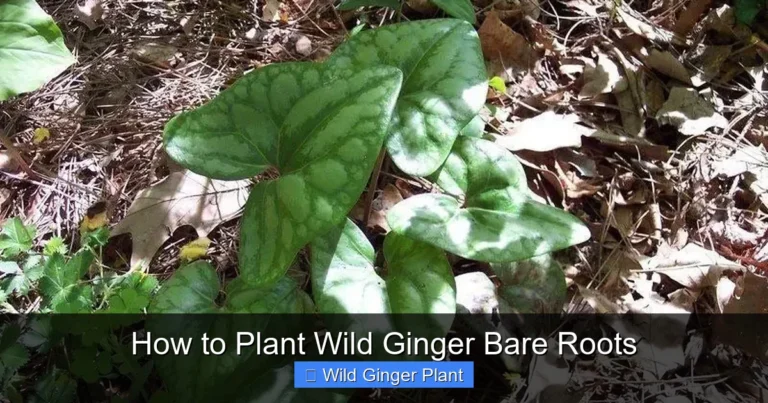
The leaves are the most conspicuous feature of wild ginger plant throughout the growing season. They emerge in early spring as tightly folded cones, then unfurl into broad, kidney-to-heart-shaped blades. Each leaf measures three to six inches wide and two to five inches long. The texture is soft and velvety, with fine hairs on both surfaces, especially along the veins.
Shape and Margins
Asarum canadense leaves are broadly heart-shaped with a deep sinus at the base where the petiole attaches. The lobes often overlap slightly. Asarum caudatum leaves are more kidney-shaped, with a shallower sinus and a distinctive long, tapering tip that gives the species its name. Both species have entire, smooth margins without teeth or lobes.
Color and Texture
Fresh leaves display a rich, deep green upper surface and a paler, sometimes gray-green underside. The velvety feel comes from dense, short trichomes that catch light beautifully. In autumn, the foliage may develop yellow or bronze tones before dying back to the ground. The leaves are deciduous, disappearing completely in winter.
Petioles and Venation
Leaf stalks, or petioles, are slender, hairy, and range from two to six inches long. They arise directly from the rhizome. Venation is palmate, with five to seven main veins radiating from the base. These veins are prominent on the underside, adding to the tactile interest of the foliage.
Flower Details
The flowers of wild ginger plant are among the most unusual in the eastern flora. They bloom at ground level, often hidden beneath leaf litter and the plant’s own leaves. This cryptic presentation protects the delicate blooms from cold spring winds and rain. Each plant produces a single flower per leaf pair, nestled in the axil where the petioles meet the rhizome.
Shape and Structure
The flower lacks true petals. Instead, it has three petal-like sepals fused into a bell- or jug-shaped tube. The tube flares into three triangular lobes that curve backward. In Asarum canadense, the tube is about half an inch long and the lobes are short and blunt. In Asarum caudatum, the tube elongates to an inch or more, and the lobes taper into long, twisting tails up to two inches long.
Color Variations
Flower color ranges from purplish-brown to deep maroon, sometimes with greenish or yellowish tones at the base. The interior of the tube is often lighter, with a waxy sheen. This somber palette mimics decaying organic matter, which may attract the flower’s primary pollinators: small flies and beetles that frequent fungi and carrion.
Bloom Time and Duration
Flowering occurs in early to mid-spring, typically April through May in most regions. The blooms last two to three weeks, opening sequentially within a colony. Because they sit so low, you often need to gently lift the leaves to admire them. After pollination, the flower withers and a fleshy capsule develops, eventually splitting to release seeds.
Root System and Rhizome
The underground parts of wild ginger plant are as distinctive as the aerial portions. The rhizome network is the plant’s lifeline, storing energy, anchoring the colony, and enabling vegetative spread. Understanding the root system helps with identification, ethical harvesting, and cultivation.
Rhizome Anatomy
The rhizome grows horizontally, one to three inches below the soil surface. It is segmented by nodes, each bearing a pair of leaf scars and a cluster of fibrous adventitious roots. The interior flesh is white to cream-colored, firm, and strongly aromatic. Older sections become woody and dark brown, while active growing tips remain pale and succulent.
Root Function
The fibrous roots absorb water and nutrients from the rich humus layer. They also form associations with mycorrhizal fungi, which enhance nutrient uptake in the low-light forest understory. This symbiosis is crucial for the plant’s survival in nutrient-poor soils.
Ethical Considerations
Because the rhizome is the source of the ginger scent, some foragers dig it for culinary or medicinal use. However, removing the rhizome kills the plant. Sustainable practice involves taking only a small portion from a large, healthy colony, leaving plenty of growing tips to regenerate. Many herbalists now recommend using the leaves for tea instead, which allows the plant to persist.
Species Comparison: Eastern vs. Western Wild Ginger
North America hosts two widespread wild ginger plant species. While they share the same general gestalt, knowing the differences ensures accurate identification, especially where ranges overlap in the Great Lakes region.
Asarum canadense – Canadian Wild Ginger
This species dominates eastern deciduous forests from Manitoba to Nova Scotia, south to Georgia and west to Kansas. Leaves are broadly heart-shaped with a deep basal sinus. Flowers are short-tubed with blunt, triangular lobes. The flower tube is typically less than three-quarters of an inch long. The rhizome aroma is strong and sweetly spicy.
Asarum caudatum – Long-tailed Wild Ginger
Found in coastal and montane forests from British Columbia to California, east to Montana and Idaho. Leaves are kidney-shaped with a long, tapering apex. Flowers have a cylindrical tube up to one and a half inches long, with three long, tail-like lobes that twist dramatically. The scent is similar but often described as more camphoraceous.
Key Distinctions at a Glance
- Leaf tip: rounded and lobed in canadense; elongated and pointed in caudatum.
- Flower tube length: short in canadense; long in caudatum.
- Flower lobes: short and blunt in canadense; long and tail-like in caudatum.
- Range: eastern North America vs. western North America.
Habitat and Growing Conditions
Wild ginger plant thrives in specific woodland conditions. Recognizing its preferred habitat narrows your search and explains why it grows where it does.
Light Requirements
Deep to dappled shade is essential. Wild ginger plant grows beneath a closed canopy of deciduous trees such as maple, beech, oak, and basswood. It receives brief direct sun only in early spring before trees leaf out. In dense coniferous shade, growth slows and flowering diminishes.
Soil Preferences
Rich, moist, well-drained soils with high organic matter content are ideal. The plant favors neutral to slightly acidic pH, typically 5.5 to 7.0. It flourishes in humus-rich loam over limestone or sandstone bedrock. Heavy clay or waterlogged soils lead to rhizome rot.
Moisture Needs
Consistent moisture is critical, especially during spring growth and flowering. The plant tolerates brief summer dry spells once established, but prolonged drought causes leaf scorch and premature dormancy. In nature, it often grows near streams, seeps, or north-facing slopes where moisture lingers.
Associated Species
Common companions include bloodroot, trillium, spring beauty, Dutchman’s breeches, and various ferns. These spring ephemerals share the same phenological window, completing their life cycle before summer shade deepens. Wild ginger plant persists longer, its leaves photosynthesizing through summer.
Seasonal Changes and Phenology
Observing wild ginger plant through the seasons reveals its adaptive strategy. Each phase offers different identification clues.
Early Spring Emergence
In March or April, depending on latitude, the leaf cones push through leaf litter. They resemble small, furled umbrellas. This is the best time to spot flowers, as the leaves have not yet expanded to hide them. The ground is often still damp from snowmelt.
Full Leaf Expansion
By mid-May, leaves reach full size. The colony forms a solid green carpet. Flowers have finished blooming. Seed capsules develop at ground level. This is the easiest time to identify the plant by foliage alone.
Summer Persistence
Unlike many spring ephemerals that vanish by June, wild ginger plant keeps its leaves all summer. They continue photosynthesis in the low light, storing energy in the rhizome. In dry summers, leaf edges may brown.
Autumn Senescence
As temperatures drop and light fades, leaves turn yellow, then bronze. By late October, they collapse and decompose, returning nutrients to the soil. The rhizome enters dormancy, protected by a layer of duff.
Look-Alikes and Common Confusions
Several plants share superficial similarities with wild ginger plant. Learning the differences prevents misidentification.
Hexastylis Species – Little Brown Jugs
These evergreen relatives in the same family have similar jug-shaped flowers but leathery, often mottled evergreen leaves. They grow in the southeastern U.S. and hold their leaves year-round. Wild ginger plant is deciduous and has softer, larger leaves.
Violets – Viola Species
Some violet species have heart-shaped leaves and grow in similar habitats. However, violet leaves have toothed margins, and their flowers are showy, five-petaled, and held above the foliage on distinct stalks. Wild ginger plant flowers are inconspicuous and ground-level.
Goldenstar – Chrysogonum virginianum
This low-growing perennial has similar foliage but produces bright yellow, daisy-like flowers in spring. It prefers slightly more sun and well-drained soils. The ginger scent is absent.
European Ginger – Asarum europaeum
An introduced ornamental with glossy, evergreen, kidney-shaped leaves. It forms tighter clumps and lacks the velvety texture. Flowers are similar but smaller. It occasionally escapes cultivation near old homesteads.
Cultivation and Garden Use
Wild ginger plant makes an excellent native ground cover for shade gardens. Its dense foliage suppresses weeds, and its flowers add subtle spring interest.
Planting Guidelines
Choose a shaded site with rich, moist soil. Amend with leaf compost if needed. Plant rhizome divisions horizontally, one inch deep, spaced twelve to eighteen inches apart. Water well and mulch with shredded leaves. Fall planting allows root establishment before spring growth.
Maintenance Tips
Once established, wild ginger plant requires little care. Keep soil consistently moist during the first year. Remove invasive competitors like garlic mustard. Divide colonies every five to ten years to maintain vigor. No fertilizer is needed in rich soil.
Wildlife Value
The flowers attract small flies, beetles, and ants. Ants disperse the seeds, which bear an elaiosome, a fatty appendage that entices them. The foliage provides cover for amphibians and invertebrates. Deer rarely browse the aromatic leaves.
Historical and Cultural Uses
Indigenous peoples across North America valued wild ginger plant for flavoring, medicine, and ceremony. The rhizome was used to season meats, stews, and teas. Medicinally, it treated colds, fevers, digestive upset, and wounds. European settlers adopted these uses, and the plant appeared in early American pharmacopeias.
Modern Herbal Applications
Today, herbalists use wild ginger plant primarily as a digestive stimulant and diaphoretic. The leaves make a milder tea than the rhizome. Caution is advised because the plant contains aristolochic acid, which can damage kidneys with prolonged use. Many practitioners now avoid internal use entirely.
Culinary Substitute
While not true ginger, the rhizome adds a warm, spicy note to syrups, baked goods, and liqueurs. Candied wild ginger plant rhizome was a colonial delicacy. Sustainable harvesting means taking only what you need from abundant populations.
Conservation Status and Threats
Wild ginger plant is generally secure across its range, but local populations face pressures.
Habitat Loss
Deforestation, urbanization, and agriculture fragment woodland habitat. The plant’s slow dispersal limits recolonization of isolated patches. Protecting large, connected forest tracts is the best conservation strategy.
Invasive Species
Garlic mustard, Japanese stiltgrass, and European buckthorn outcompete wild ginger plant for light and nutrients. They also alter soil chemistry and mycorrhizal communities. Active management of invasives benefits native understory flora.
Overharvesting
Commercial demand for herbal products has led to unsustainable wildcrafting in some areas. Ethical sourcing from cultivated stock or certified sustainable wild harvest is essential. Never dig plants from small or isolated colonies.
Climate Change
Shifting temperature and precipitation patterns may alter the mesic forest conditions wild ginger plant requires. Northern range edges may expand, while southern populations could decline. Monitoring phenology helps track these changes.
Photography Tips for Identification
Capturing clear images aids learning and sharing. Here are practical tips for photographing wild ginger plant.
Leaf Shots
Shoot from directly above to show the heart shape and venation. Include a ruler or coin for scale. Morning light reduces harsh shadows. A polarizing filter cuts glare on the velvety surface.
Flower Close-Ups
Gently lift the leaves to reveal the flower. Use a macro lens or macro mode. Get low, at flower level. A small reflector or white card bounces light into the dark tube. Focus on the lobe tips for dramatic detail.
Habitat Context
Step back to show the colony in its woodland setting. Include companion plants and the forest floor texture. This conveys the ecological niche and helps others locate the plant.
Conclusion
Wild ginger plant is a woodland gem that rewards careful observation. Its heart-shaped leaves, hidden jug flowers, and spicy rhizome make it unmistakable once you know the field marks. Whether you are a hiker, gardener, forager, or botanist, recognizing this plant deepens your connection to the forest floor. Next time you walk a shaded trail in spring, pause and look down. Lift a leaf. Inhale the scent. You have just met one of North America’s most charming native perennials.
Frequently Asked Questions
What does wild ginger plant look like in early spring?
In early spring, wild ginger plant emerges as tightly folded, furry leaf cones pushing through leaf litter. The unique jug-shaped flowers bloom at ground level, often hidden beneath the emerging foliage and last year’s decaying leaves.
How can I tell wild ginger plant apart from violets?
Wild ginger plant has smooth, untoothed leaf margins and inconspicuous ground-level flowers, while violets have toothed leaf edges and showy, five-petaled flowers held above the foliage on distinct stalks.
Does wild ginger plant stay green all year?
No, wild ginger plant is deciduous. Its leaves emerge in spring, persist through summer, turn yellow-bronze in autumn, and die back completely in winter. The rhizome remains alive underground.
Can I grow wild ginger plant in my shade garden?
Yes, wild ginger plant makes an excellent native ground cover for shaded gardens with rich, moist soil. Plant rhizome divisions in fall, mulch with leaves, and keep consistently moist during establishment.
Why are wild ginger plant flowers so hard to see?
The flowers bloom at soil level, concealed by the plant’s own leaves and forest floor debris. This position protects them from spring frost and rain while attracting ground-dwelling pollinators like flies and beetles.
Is it legal to harvest wild ginger plant?
Regulations vary by state and land ownership. Many public lands prohibit digging native plants. Always check local laws, obtain permission on private land, and practice sustainable harvest by taking only leaves or small rhizome portions from large colonies.