Types of Catmint Plant
Catmint is a hardy perennial that offers fragrant foliage, long bloom periods, and strong appeal to bees and butterflies. Popular types include common catmint, Faassen’s catmint, and several award‑winning cultivars such as ‘Walker’s Low’ and ‘Six Hills Giant’. Choose the right variety for sun, soil, and garden style to enjoy low‑maintenance color all season.
Welcome to the world of catmint. This aromatic perennial has won the hearts of gardeners everywhere. In this guide you will learn about the main types of catmint, how to grow them, and how to use them in your landscape.
Catmint belongs to the genus Nepeta and includes dozens of species and hybrids. Each type brings a slightly different flower color, height, and bloom time. Knowing the differences helps you pick the perfect catmint for your garden.
Whether you want a low‑maintenance border, a pollinator magnet, or a fragrant container plant, there is a catmint that fits. Let’s dive into the details.
Key Takeaways
- Variety Diversity: Catmint includes many species and dozens of cultivars, each with unique flower color and height.
- Easy Care: Once established, catmint tolerates drought, poor soil, and needs little fertilizer.
- Pollinator Magnet: The nectar‑rich flowers attract bees, butterflies, and hummingbirds throughout summer.
- Versatile Design: Use catmint in borders, mass plantings, containers, or as a ground cover.
- Simple Propagation: Divide clumps, take stem cuttings, or sow seed to expand your collection.
- Few Pests: Deer, rabbits, and most insects avoid catmint, making it a low‑maintenance choice.
Quick Answers to Common Questions
What is the most popular catmint cultivar?
‘Walker’s Low’ is widely considered the most popular catmint cultivar due to its long bloom time, compact habit, and award‑winning performance.
Can catmint grow in partial shade?
Catmint prefers full sun but can tolerate light afternoon shade; however, flowering will be reduced in deeper shade.
How often should I water established catmint?
Water established catmint deeply once every two weeks during dry spells; the plant is drought tolerant once rooted.
Is catmint invasive?
Common catmint can spread by rhizomes, but most modern cultivars are clump‑forming and not considered invasive.
When is the best time to divide catmint?
Early spring or early fall are the best times to divide catmint, giving divisions time to establish before extreme temperatures.
📑 Table of Contents
What Is Catmint?
History and Origin
Catmint has been cultivated for centuries in Europe and Asia. Ancient herbalists valued the plant for its soothing scent and medicinal properties. The name “catmint” comes from the strong attraction cats show toward the foliage. Early settlers brought catmint to North America where it naturalized in many regions.
Botanical Classification
All catmint plants belong to the Lamiaceae family, commonly known as the mint family. The genus Nepeta contains about 250 species. Most garden catmint are hybrids derived from Nepeta cataria, Nepeta racemosa, and Nepeta × faassenii. These hybrids combine the best traits of their parents, such as longer bloom and better disease resistance.
Why Gardeners Love It
Gardeners love catmint for its carefree nature. The plant thrives in full sun, tolerates poor soil, and rebounds quickly after a hard frost. Its aromatic leaves release a pleasant minty scent when brushed. The long flowering season, often from late spring to early fall, provides continuous color. Plus, catmint attracts beneficial insects that help control garden pests.
Popular Catmint Species
Nepeta cataria – Common Catmint
Common catmint is the classic species most people recognize. It grows 24 to 36 inches tall with gray‑green foliage and spikes of pale lavender flowers. The plant spreads by underground rhizomes, forming a loose mound. It is very hardy in USDA zones 3 through 9. Cats are famously drawn to its leaves, often rolling and chewing them.

Visual guide about Types of Catmint Plant
Image source: epicgardening.com
Nepeta × faassenii – Faassen’s Catmint
Faassen’s catmint is a hybrid between Nepeta racemosa and Nepeta nepetella. It forms a compact mound 12 to 18 inches high. The flowers are a soft blue‑lavender and appear in dense whorls. This catmint blooms earlier than many others, often starting in late spring. It is an excellent choice for the front of a border or a rock garden.
Nepeta racemosa – Raceme Catmint
Raceme catmint features upright flower spikes that rise above the foliage. The plant reaches 18 to 24 inches tall. Flowers are typically violet‑blue and bloom from early summer into fall. The foliage is finer than common catmint, giving a delicate texture. This species tolerates a bit more shade than other catmint types.
Nepeta sibirica – Siberian Catmint
Siberian catmint is a tall, robust species that can reach 36 to 48 inches. It produces large, showy spikes of deep blue flowers. The leaves are broader and more aromatic. This catmint prefers cooler climates and performs well in northern gardens. It makes a striking backdrop in perennial beds.
Nepeta grandiflora – Large‑flowered Catmint
Large‑flowered catmint lives up to its name with blossoms up to 1 inch across. The plant grows 24 to 30 inches tall and forms a bushy clump. Flowers are a vivid violet‑blue and appear in loose clusters. This species blooms later in summer, extending the catmint season. It is a favorite for cut‑flower arrangements.
Top Catmint Cultivars
‘Walker’s Low’
‘Walker’s Low’ is perhaps the most famous catmint cultivar. It grows 24 to 30 inches tall and spreads 36 inches wide. The flowers are a rich lavender‑blue and bloom from late spring to frost. This cultivar won the Perennial Plant Association’s Plant of the Year award in 2007. It is extremely drought tolerant once established.
‘Six Hills Giant’
‘Six Hills Giant’ lives up to its name with a massive presence. It can reach 36 to 48 inches in height and spreads up to 48 inches. The flower spikes are long and densely packed with deep blue blooms. This catmint makes a bold statement in the middle or back of a border. It also works well as a informal hedge.
‘Blue Wonder’
‘Blue Wonder’ is a compact cultivar, staying around 12 to 15 inches tall. It produces masses of bright blue flowers that cover the plant in early summer. The tight habit makes it perfect for edging paths or planting in containers. It reblooms lightly if deadheaded after the first flush.
‘Cat’s Pajamas’
‘Cat’s Pajamas’ offers a unique bicolor display. The buds open pale pink, then mature to a soft lavender. The plant forms a neat mound 18 inches high and wide. It blooms continuously from early summer to fall. This cultivar is especially attractive to hummingbirds.
‘Purrsian Blue’
‘Purrsian Blue’ is a newer introduction with intensely saturated blue flowers. It grows 20 to 24 inches tall and spreads 30 inches. The foliage is a clean gray‑green that contrasts nicely with the blooms. This catmint is noted for its strong resistance to powdery mildew.
Growing Conditions and Care
Sunlight Needs
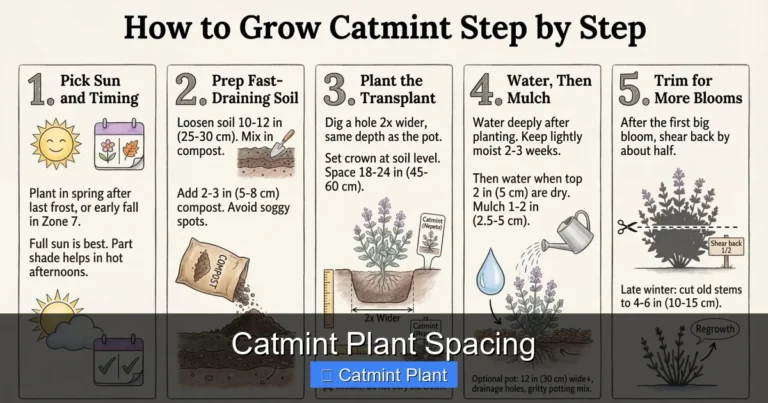
Catmint thrives in full sun, meaning at least six hours of direct light daily. In hotter climates, a little afternoon shade can prevent leaf scorch. Too much shade reduces flowering and makes the plant leggy. Aim for a sunny spot to get the best bloom show.
Soil Preferences
Well‑drained soil is essential for catmint. The plant tolerates sandy, loamy, or even rocky soils. Heavy clay that stays wet can cause root rot. Amending clay with compost or grit improves drainage. A slightly alkaline to neutral pH (6.5‑7.5) is ideal, but catmint adapts to a range.
Watering Guidelines
Water new catmint plants regularly during the first growing season to establish a deep root system. After establishment, catmint is drought tolerant. Water deeply but infrequently, allowing the soil to dry between waterings. Overwatering leads to weak growth and fewer flowers.
Pruning and Deadheading
Deadhead spent flower spikes to encourage a second flush of blooms. In midsummer, shear the plant back by one‑third to maintain a tidy shape and prevent flopping. In late fall, cut the foliage down to the ground after frost. This cleanup reduces overwintering pests and diseases.
Pest and Disease Resistance
Catmint is naturally resistant to deer, rabbits, and most insect pests. The aromatic oils deter browsing animals. Occasionally, aphids or spider mites may appear on stressed plants. A strong spray of water or insecticidal soap usually controls them. Good air circulation helps prevent powdery mildew.
Design Ideas for the Garden
Border Plantings
Use medium‑height catmint like ‘Walker’s Low’ in the middle of a sunny border. Pair it with coneflowers, black‑eyed Susans, and ornamental grasses for a prairie look. The long bloom period bridges the gap between early spring bulbs and late summer perennials.
Pollinator Gardens
Plant a drift of catmint near a vegetable garden to attract bees that pollinate tomatoes and peppers. Combine different catmint cultivars to extend the nectar season. Add lavender, salvia, and bee balm for a diverse pollinator buffet.
Container Gardening
Compact cultivars such as ‘Blue Wonder’ thrive in pots. Choose a container at least 12 inches wide with drainage holes. Use a light potting mix amended with perlite. Water when the top inch of soil feels dry. Container catmint can be moved to follow the sun.
Companion Planting
Catmint pairs well with roses, hiding the bare lower canes and deterring aphids. It also works alongside herbs like thyme and oregano, sharing similar water needs. Avoid planting catmint near moisture‑loving plants such as hostas, which prefer shade and consistent moisture.
Propagation Methods
Division
Divide mature catmint clumps in early spring or fall. Dig up the plant, shake off excess soil, and separate the root ball into sections with a sharp spade. Each division should have several shoots and a healthy root portion. Replant immediately at the same depth and water well.
Stem Cuttings
Take 4‑inch softwood cuttings in late spring. Remove the lower leaves, dip the cut end in rooting hormone, and place in a moist perlite‑peat mix. Cover with a clear plastic bag to maintain humidity. Roots typically form in two to three weeks. Transplant rooted cuttings to individual pots.
Seed Sowing
Catmint seeds can be sown indoors 6‑8 weeks before the last frost. Lightly press seeds onto the surface of a seed‑starting mix; they need light to germinate. Keep the medium moist and at 65‑70°F. Seedlings emerge in 10‑14 days. Harden off and transplant outdoors after danger of frost passes.
Catmint offers a winning combination of beauty, fragrance, and wildlife value. With so many species and cultivars, you can find a catmint for almost any garden situation. Choose a sunny spot, provide good drainage, and enjoy months of color with minimal effort. Happy planting!
Frequently Asked Questions
What soil type does catmint prefer?
Catmint thrives in well‑drained soil that is sandy or loamy; heavy clay should be amended with compost or grit to improve drainage.
Does catmint attract cats?
Yes, the aromatic compounds in catmint foliage attract many cats, causing them to roll, chew, and rub against the plant.
How do I deadhead catmint for rebloom?
Cut spent flower spikes back to a set of healthy leaves or shear the whole plant by one‑third after the first flush to encourage a second bloom.
Can catmint be grown in containers?
Absolutely; compact cultivars like ‘Blue Wonder’ perform well in pots with good drainage and a light potting mix.
What pests commonly affect catmint?
Catmint is largely pest‑free, but aphids or spider mites may appear on stressed plants; a strong water spray or insecticidal soap usually resolves them.
Is catmint deer resistant?
Yes, the strong minty scent of catmint foliage deters deer and rabbits, making it a reliable choice for gardens with browsing pressure.