Thyme Care for Apartment Living
Thyme thrives indoors when you give it bright light, well‑draining soil, and careful watering. This guide shows you how to grow healthy thyme in an apartment, from choosing the right variety to harvesting fresh leaves for cooking.
Living in an apartment does not mean you have to give up fresh herbs. Thyme is one of the most forgiving herbs for indoor growing. With a little know‑how you can enjoy aromatic leaves year‑round. This guide walks you through every step of thyme care for apartment living.
We will cover variety selection, light, containers, watering, feeding, pest control, and harvesting. Each section includes practical tips you can apply today. By the end you will feel confident growing thyme on a windowsill, balcony, or kitchen counter.
Key Takeaways
- Pick compact varieties: Creeping thyme and lemon thyme stay small and fit on windowsills.
- Provide 6‑8 hours of light: South‑facing windows or grow lights work best.
- Use a shallow pot with drainage: Terracotta or fabric pots prevent root rot.
- Water only when the top inch is dry: Overwatering is the most common mistake.
- Feed lightly with a balanced fertilizer: Once a month during the growing season is enough.
- Prune regularly to encourage bushy growth: Snip just above a leaf node.
- Harvest in the morning for the strongest flavor: Cut stems just before flowering.
Quick Answers to Common Questions
What is the best thyme variety for a small apartment?
Creeping thyme and lemon thyme stay compact and thrive in containers.
How many hours of light does indoor thyme need?
Aim for six to eight hours of direct sunlight or equivalent grow‑light exposure.
When should I water my potted thyme?
Water only when the top inch of soil feels dry to the touch.
Can I use regular garden soil for thyme?
No, garden soil retains too much moisture. Use a light, well‑draining potting mix with sand and perlite.
How do I harvest thyme without harming the plant?
Snip stems just above a leaf node, taking no more than one‑third of the foliage at a time.
📑 Table of Contents
Choosing the Right Thyme Variety for Small Spaces
Compact varieties stay manageable
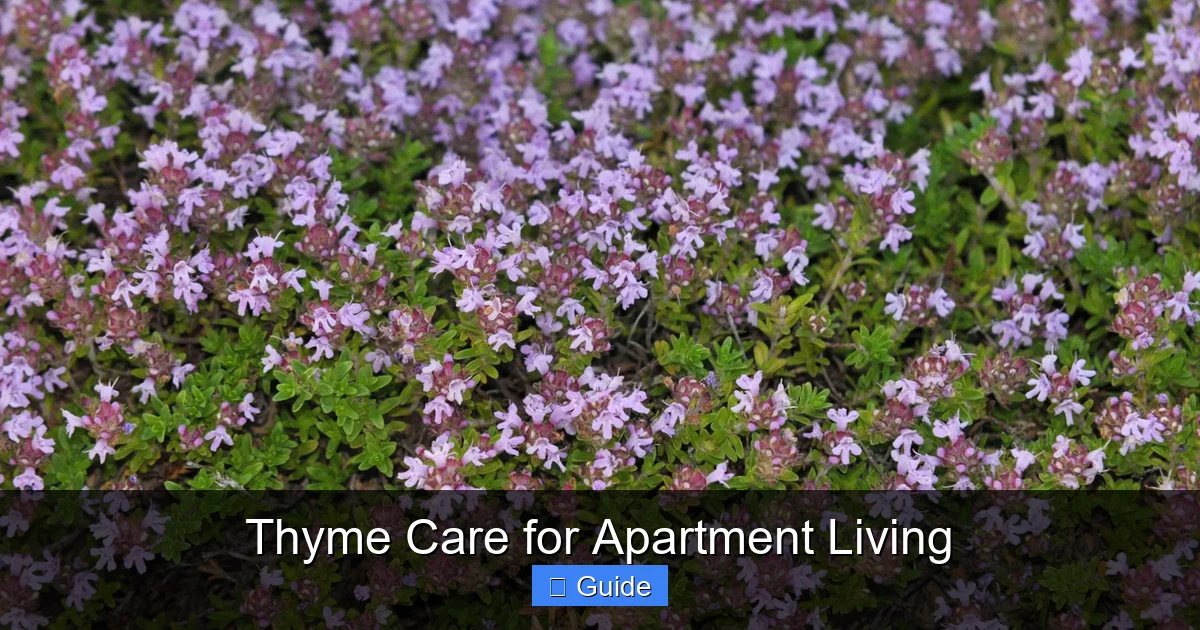
Not all thyme grows the same way. Creeping thyme (Thymus serpyllum) spreads low and forms a dense mat. Lemon thyme (Thymus citriodorus) adds a citrus note and stays under twelve inches tall. Both are ideal for containers.
Consider flavor and use
If you love Mediterranean dishes, common thyme (Thymus vulgaris) offers the classic earthy taste. For teas and desserts, lemon thyme shines. Choose a variety that matches your cooking style.
Buy healthy starter plants
Look for bright green leaves, no yellowing, and a firm root ball. Avoid plants with leggy stems or signs of pests. A healthy start reduces future problems.
Light Requirements and Placement
Six to eight hours of direct light
Thyme loves sun. A south‑facing window provides the intensity it needs. If natural light falls short, supplement with a full‑spectrum LED grow light placed six inches above the plant.
Visual guide about Thyme Care for Apartment Living
Image source: thespruce.com
Rotate the pot weekly
Turning the container ensures even growth. Without rotation, the plant leans toward the light and becomes lopsided.
Watch for light stress
Bleached or scorched leaf tips mean too much direct sun through glass. Move the pot a few inches back or add a sheer curtain.
Soil, Containers, and Drainage
Use a light, well‑draining mix
A blend of two parts potting soil, one part coarse sand, and one part perlite works well. This mix mimics the rocky Mediterranean soils thyme prefers.
Choose shallow, wide pots
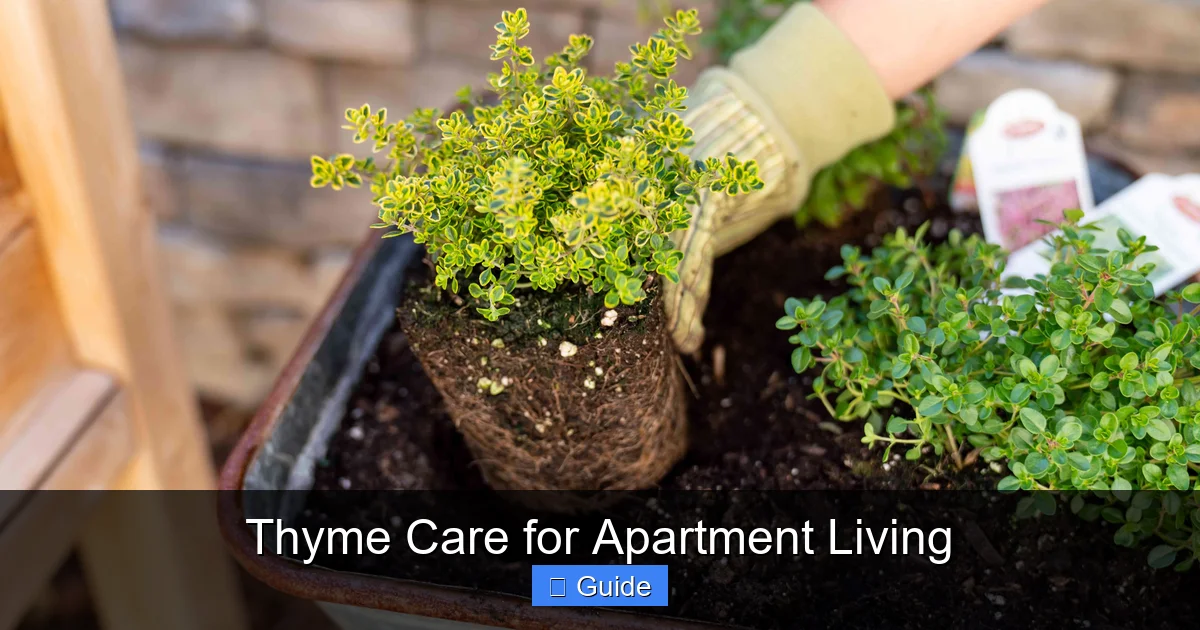
Thyme roots spread horizontally. A pot six inches deep and ten inches wide gives room to expand without holding excess water.
Ensure drainage holes
Terracotta pots breathe and wick moisture away. Fabric pots also promote air pruning of roots. Always place a saucer underneath to catch runoff.
Watering, Feeding, and Pruning
Water when the top inch feels dry
Stick your finger into the soil. If it feels dry at the first knuckle, water thoroughly until it drains out the bottom. Empty the saucer after ten minutes.
Avoid wet feet
Thyme hates soggy roots. Overwatering leads to root rot, the number one killer of indoor thyme.
Feed lightly during active growth
Apply a balanced liquid fertilizer diluted to half strength once a month from spring to early fall. Skip feeding in winter when growth slows.
Prune for bushier plants
Snip stems just above a leaf node every few weeks. Regular pruning encourages new shoots and prevents woody, leggy growth.
Dealing with Pests and Common Problems
Spider mites and aphids
Inspect leaves weekly. A strong spray of water dislodges most pests. For persistent infestations, use insecticidal soap following label directions.
Fungal issues
Powdery mildew appears as white dust on leaves. Improve air circulation, avoid overhead watering, and remove affected foliage promptly.
Yellowing leaves
Yellow leaves often signal overwatering or nutrient deficiency. Adjust watering schedule first; if the problem persists, apply a light feed.
Harvesting and Using Fresh Thyme
Best time to harvest
Cut stems in the morning after dew evaporates but before the heat of the day. Essential oils are most concentrated then.
How much to take
Never remove more than one‑third of the plant at a time. This keeps the thyme vigorous and productive.
Storage tips
Wrap fresh sprigs in a damp paper towel, place in a plastic bag, and refrigerate for up to two weeks. For longer storage, freeze leaves in ice cube trays with olive oil.
Cooking ideas
Add thyme to roasted vegetables, soups, marinades, and even cocktails. A few fresh leaves elevate simple dishes instantly.
Conclusion
Growing thyme in an apartment is rewarding and surprisingly easy. Choose a compact variety, give it bright light, use a well‑draining pot, water wisely, and prune regularly. With these habits you will enjoy fresh, aromatic thyme all year. Start today by picking up a healthy starter plant and a sunny windowsill. Your kitchen will thank you.
Frequently Asked Questions
Can thyme survive low‑light apartments?
Thyme prefers bright light. In low light it becomes leggy and weak. A grow light can compensate for insufficient natural sun.
What size pot is ideal for indoor thyme?
A shallow pot about six inches deep and ten inches wide provides enough room for horizontal root spread without holding excess water.
How often should I fertilize thyme indoors?
Feed with a half‑strength balanced liquid fertilizer once a month during the growing season (spring to early fall). Skip winter feeding.
Why are my thyme leaves turning brown at the tips?
Brown tips usually indicate too much direct sun through glass or underwatering. Adjust light exposure and check soil moisture.
Is it necessary to prune thyme regularly?
Yes, regular pruning encourages bushy growth, prevents woody stems, and improves air circulation, reducing disease risk.
Can I grow thyme from seeds in an apartment?
You can, but seeds germinate slowly and need consistent warmth and light. Starting with a healthy transplant is faster and more reliable for beginners.