Peace Lily Care Mistakes to Avoid
Avoiding common peace lily care mistakes to avoid keeps your plant green and flowering. Overwatering, low light, and wrong soil are the biggest errors. Follow these simple steps for a thriving peace lily.
Peace lilies are popular houseplants because they look elegant and clean the air. Many people bring one home and expect it to thrive with little effort. However, small errors can cause yellow leaves, brown tips, or no flowers.
This guide covers the most common peace lily care mistakes to avoid so you can keep your plant healthy. We will walk through watering, light, soil, feeding, pests, and repotting. Each section gives clear tips you can apply today.
Read on to learn simple fixes that make a big difference. Your peace lily will reward you with glossy leaves and white blooms.
Key Takeaways
- Water correctly: Let the top inch of soil dry before watering again.
- Provide bright, indirect light: Direct sun scorches leaves; too little light stops blooms.
- Use well‑draining soil: A peat‑based mix with perlite prevents root rot.
- Fertilize sparingly: Feed once a month in growing season with diluted fertilizer.
- Watch for pests: Inspect leaves weekly for spider mites and mealybugs.
- Repot on time: Move to a slightly larger pot every 1‑2 years.
Quick Answers to Common Questions
How often should I water my peace lily?
Water when the top inch of soil feels dry, usually once a week in average home conditions.
Can peace lilies tolerate low light?
They survive low light but will not bloom and may become leggy.
What type of soil is best for peace lilies?
A peat based mix with perlite or orchid bark provides good drainage and moisture retention.
When should I fertilize my peace lily?
Feed monthly with a diluted balanced fertilizer during spring and summer only.
How do I know if my peace lily has root rot?
Black mushy roots and a foul smell indicate root rot; remove affected roots and repot in fresh soil.
📑 Table of Contents
Understanding Your Peace Lily’s Basic Needs
Water Needs
Peace lilies like moist soil but they hate soggy roots. Check the top inch of soil before you water. If it feels dry, give a thorough drink until water drains out.
Use room temperature water to avoid shocking the roots. Let excess water escape from the drainage holes. Empty the saucer after a few minutes.
Consistent moisture keeps leaves firm and prevents brown tips. This simple habit stops one of the top peace lily care mistakes to avoid.
Light Needs
Bright, indirect light is ideal for peace lilies. A north or east facing window works well. Direct sun can scorch the leaves and cause brown patches.
If light is too low, the plant will grow leggy and stop flowering. Move the pot a few feet closer to the window if you see weak growth.
Rotate the plant every week so all sides receive even light. This small step helps maintain a balanced shape.
Temperature and Humidity
Peace lilies prefer temperatures between 65 and 80 degrees Fahrenheit. Avoid cold drafts from doors or air vents. Sudden temperature drops stress the plant.
High humidity mimics their native tropical habitat. Mist the leaves a few times a week or place a humidifier nearby. A pebble tray with water also raises humidity.
Stable conditions reduce leaf yellowing and encourage steady growth.
Growth Cycle
Peace lilies have a natural rest period in winter. Growth slows and flowering may pause. Reduce watering slightly during this time.
In spring and summer the plant pushes new leaves and blooms. Increase water and feed lightly to support the active phase.
Understanding the cycle prevents overcare during dormancy.
Common Myths About Peace Lilies
Many people think peace lilies need constant wet soil. In reality they prefer the top inch to dry out. Overwatering is a leading peace lily care mistakes to avoid.
Another myth is that they thrive in dark corners. They actually need bright indirect light to bloom. Low light leads to weak growth.
Some believe fertilizer should be applied weekly. Light monthly feeding is enough. Too much fertilizer burns roots.
Choosing the Right Container
Select a pot with drainage holes to prevent water buildup. Plastic pots retain moisture longer than terracotta. Choose based on your watering habit.
A container that is too large holds excess water and causes root rot. A pot one size up from the root ball is ideal.
Consider a cachepot for decorative appeal. Place the functional pot inside and empty excess water regularly.
Seasonal Care Adjustments
In winter reduce watering frequency because growth slows. Keep the plant away from cold drafts. Maintain humidity with a pebble tray.
During summer increase watering and provide shade from harsh midday sun. Mist leaves to raise humidity.
Adjust fertilizing schedule to match active growth periods. Feed only in spring and summer.
Watering Mistakes That Harm Peace Lilies
Overwatering Signs
Yellow leaves that feel soft are a classic sign of too much water. The roots may turn black and mushy if the problem continues.
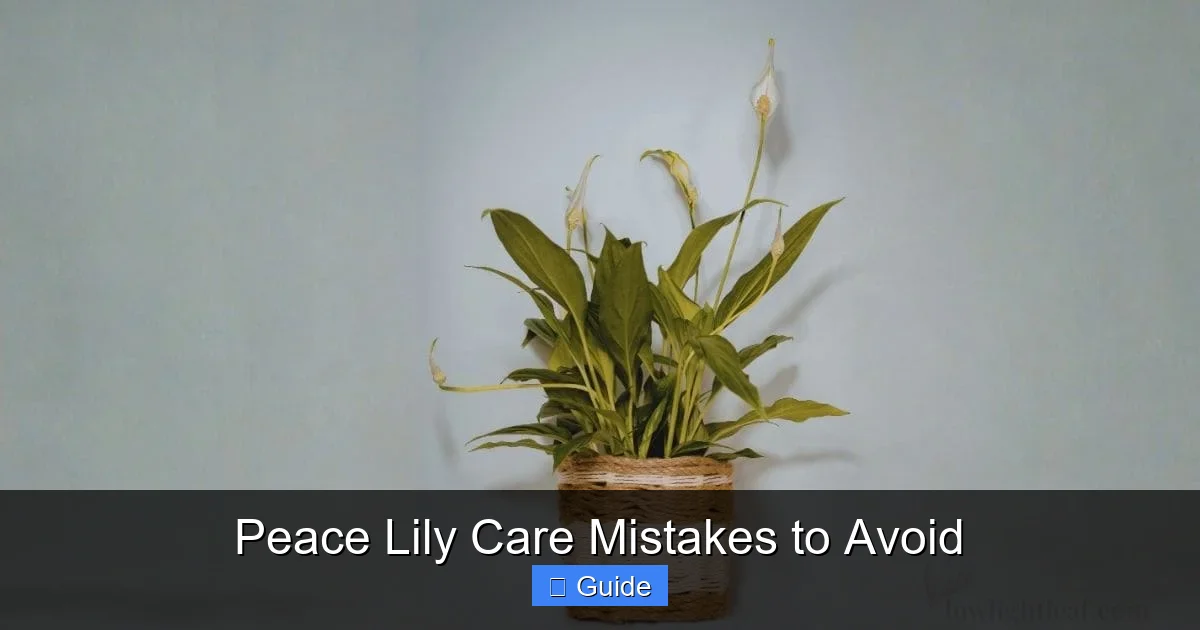
Visual guide about Peace Lily Care Mistakes to Avoid
Image source: lowlightleaf.com
Fungus gnats often appear when soil stays wet. You may see small flies around the pot.
Stop watering and let the soil dry out before the next drink.
Underwatering Signs
Leaves that droop dramatically and feel crisp indicate thirst. The plant will perk up quickly after a good soak.
Brown leaf tips that spread inward also point to dry soil. Check the soil daily during hot weather.
Water deeply until it runs out of the drainage holes.
Proper Watering Routine
Water when the top inch of soil feels dry to the touch. Use a finger or a moisture meter for accuracy.
Apply water evenly around the base until it drains. Avoid splashing water on the leaves to prevent fungal spots.
Empty the saucer within ten minutes to keep roots from sitting in water.
Water Quality Tips
Tap water with high chlorine can harm sensitive roots. Let water sit overnight to let chlorine evaporate.
Rainwater or distilled water is ideal for peace lilies. If you must use tap water, filter it first.
Consistent water quality supports healthy root function.
Using a Moisture Meter
A moisture meter gives a quick reading of soil wetness. Insert the probe near the root zone for accuracy. This tool helps avoid guesswork.
Readings in the moist range mean you can wait a day before watering. Dry readings signal it is time to water.
Using a meter reduces the risk of both overwatering and underwatering.
Watering Frequency in Different Seasons
Spring and summer require more frequent watering due to higher evaporation. Check soil every two to three days.
Fall and winter need less water; check once a week. Always test the top inch before adding water.
Consistent seasonal adjustments keep the plant healthy year round.
Signs of Water Stress
Leaves that curl inward often indicate thirst. Yellowing lower leaves can mean too much water. Observe the plant daily.
Brown tips that spread upward are a classic sign of inconsistent watering. Correct the routine promptly.
Healthy leaves stay firm and glossy when water needs are met.
Light and Placement Errors
Too Much Direct Sun
Direct afternoon sun burns the delicate leaves. You will see brown, crispy patches on the edges.
Move the plant to a spot with filtered light or use a sheer curtain. The leaves will recover in a few weeks.
Monitor the plant after relocation to ensure it adapts well.
Too Little Light
Low light causes the plant to stretch toward the source. Stems become long and weak.
Flower production drops dramatically in dim conditions. The plant may stay green but never bloom.
Place the pot near a bright window or add a grow light for 12 hours a day.
Ideal Spot in Home
A north facing window provides steady indirect light. An east window gives gentle morning sun.
Keep the plant away from heating vents and cold drafts. Consistent temperature helps the leaves stay glossy.
Rotate the pot weekly for even exposure.
Seasonal Light Changes
Winter days are shorter and light intensity drops. Move the plant closer to the window during this season.
In summer, protect the plant from harsh midday sun. A sheer curtain works well.
Adjusting placement seasonally prevents light related stress.
Using Grow Lights Effectively
If natural light is limited, a full spectrum LED grow light works well. Place the light 12 inches above the plant for 12 hours daily.
Rotate the plant weekly so all sides receive equal light. This prevents leaning.
Monitor leaf color; pale leaves may mean the light is too weak.
Rotating for Even Growth
Turn the pot a quarter turn each week. This simple habit promotes symmetrical foliage.
Even light exposure encourages balanced flowering. The plant will not stretch toward one side.
Set a reminder on your phone to make rotation a routine.
Dealing with Low Light in Winter
Winter days are short; move the plant to the brightest window. Supplement with a grow light if needed.
Keep the temperature stable to avoid stress. Avoid placing the plant near heating vents.
Reduced light means slower growth; adjust watering accordingly.
Soil and Potting Missteps
Wrong Soil Mix
Heavy garden soil holds too much water and suffocates roots. Peace lilies need a light, airy mix.
Use a peat based potting mix with added perlite or orchid bark. This blend drains quickly while retaining moisture.
Avoid soil that contains large chunks of compost or sand.
Pot Size Problems
A pot that is too large holds excess water and leads to root rot. Choose a container only one size bigger than the root ball.
A pot that is too small restricts growth and dries out fast. Repot when roots circle the bottom.
Check the root system once a year to decide if a larger pot is needed.
Drainage Importance
Every pot must have drainage holes. Without them water pools at the bottom and roots drown.
Place a layer of coarse gravel or broken pottery at the base for extra drainage.
Good drainage is the foundation of healthy peace lily roots.
Repotting Frequency
Repot every one to two years in spring. Fresh soil replenishes nutrients and improves aeration.
Gently loosen the root ball and remove any dead roots before placing in new mix.
Water thoroughly after repotting and keep the plant in shade for a few days.
Refreshing Soil Without Full Repot
Top dress the soil with fresh mix each spring. Remove the top inch of old soil and replace it. This adds nutrients without disturbing roots.
Use a small hand trowel to gently lift the old layer. Water lightly after top dressing.
This practice extends the time between full repots.
Choosing the Right Pot Material
Terracotta pots breathe and allow excess moisture to evaporate. Plastic pots retain water longer. Match the pot to your watering style.
If you tend to overwater, choose terracotta. If you forget to water, plastic may be safer.
Both materials work if drainage holes are present.
Adding Drainage Layers
Place a layer of coarse gravel or broken pottery at the bottom of the pot. This creates a space for excess water to collect.
Do not rely solely on the layer; the soil must still drain well. Use a well‑draining mix above the layer.
Proper drainage prevents root rot and keeps the plant vigorous.
Fertilizing and Feeding Blunders
Overfeeding Risks
Too much fertilizer burns the roots and causes brown leaf tips. The plant may also develop salt buildup on the soil surface.
Flush the soil with clear water if you see white crust. Reduce feeding frequency immediately.
Less is more when it comes to peace lily nutrition.
Underfeeding Signs
Pale leaves and slow growth indicate a lack of nutrients. The plant may stop producing flowers.
Apply a balanced liquid fertilizer at half strength once a month during the growing season.
Observe the plant for improvement within a few weeks.
Best Fertilizer Type
Choose a fertilizer with equal parts nitrogen, phosphorus, and potassium. A 20‑20‑20 formula works well.
Organic options like fish emulsion provide gentle nutrition. Avoid high nitrogen formulas that promote leaf growth only.
Read the label and follow the recommended dilution.
Feeding Schedule
Feed monthly from March to September. Stop feeding in fall and winter when growth slows.
Water the plant before applying fertilizer to protect roots from shock.
Consistent, light feeding supports steady blooms.
Organic vs Synthetic Fertilizers
Organic fertilizers release nutrients slowly and improve soil health. Synthetic fertilizers act fast but can build up salts.
For peace lilies, a balanced organic feed once a month is gentle and effective.
Flush the soil with water every few months to remove any salt accumulation.
Foliar Feeding Tips
Spray a diluted liquid fertilizer on the leaves early in the morning. This allows quick absorption through the stomata.
Do not foliar feed in direct sun; it can cause leaf burn. Use a fine mist sprayer.
Foliar feeding supplements root feeding but does not replace it.
Adjusting Feeding for Bloom Boost
Increase phosphorus slightly during the budding stage. A fertilizer with a higher middle number supports flower development.
Apply the bloom formula once a month for two months before the expected bloom period.
Return to a balanced feed after flowers fade.
Ignoring Pests, Diseases, and Repotting Timing
Common Pests
Spider mites leave fine webbing on the undersides of leaves. Mealybugs appear as white cottony clusters.
Inspect the plant weekly and wipe leaves with a damp cloth. Treat infestations with insecticidal soap or neem oil.
Early detection prevents a full outbreak.
Disease Symptoms
Root rot shows as black, mushy roots and a foul smell. Leaf spot appears as brown circles with yellow halos.
Remove affected leaves and improve drainage. Apply a fungicide if the problem persists.
Good cultural practices keep diseases at bay.
When to Repot
Repot in early spring before the active growth period. Signs include roots growing out of drainage holes.
If the plant dries out quickly after watering, the pot may be too small.
Timely repotting gives the roots room to expand.
Post‑Repot Care
Water the plant well after repotting and place it in indirect light. Avoid fertilizer for two weeks.
Monitor for transplant shock such as drooping leaves. The plant usually recovers within a week.
Resume normal care once new growth appears.
Preventive Pest Management
Inspect new plants before bringing them home. Quarantine for two weeks to catch hidden pests.
Wipe leaves with a damp cloth weekly to remove dust and early insects.
Use neem oil as a preventive spray once a month during the growing season.
Recognizing Early Disease Signs
Yellow halos around brown spots often indicate fungal leaf spot. Remove affected leaves immediately.
Soft, black roots with a sour smell point to root rot. Improve drainage and repot in fresh soil.
Early action stops the spread and saves the plant.
Post Repot Monitoring
After repotting, keep the plant in bright indirect light. Avoid direct sun for the first week.
Water lightly until new roots establish. Do not fertilize for at least two weeks.
Watch for new growth as a sign the plant has settled.
By avoiding these peace lily care mistakes to avoid you give your plant the best chance to thrive. Consistent watering, proper light, suitable soil, light feeding, and regular pest checks create a healthy environment. Your peace lily will reward you with lush foliage and elegant white flowers for years to come.
Frequently Asked Questions
Why are the leaves of my peace lily turning yellow?
Yellow leaves often mean overwatering or poor drainage. Let the soil dry slightly and ensure the pot has drainage holes.
How can I increase humidity for my peace lily?
Mist the leaves daily, use a pebble tray with water, or run a humidifier near the plant.
Is it normal for peace lily flowers to turn green?
Yes, the white spathe naturally ages to green as the flower matures.
Can I propagate a peace lily from a leaf cutting?
Peace lilies are best propagated by division of the root clump during repotting.
What should I do if my peace lily stops blooming?
Check light levels, ensure proper watering, and feed with a balanced fertilizer during the growing season.
How often should I repot a mature peace lily?
Repot every one to two years in spring, using a pot only slightly larger than the current one.