Should You Deadhead Catmint Plants
Yes, you should deadhead catmint plants to encourage a second flush of blooms and keep plants tidy. Cutting back spent flowers in early summer promotes fresh growth and extends the flowering season well into fall.
Catmint is one of those plants that just keeps on giving. You plant it once, and it rewards you with waves of lavender-blue flowers, aromatic foliage, and a parade of happy pollinators. But here is the question many gardeners ask: should you deadhead catmint plants? The short answer is yes. Deadheading makes a big difference in how your catmint looks and performs. It is not complicated. It does not take much time. And the payoff is a longer bloom season and a neater plant.
In this guide, we will walk through everything you need to know about deadheading catmint. We will cover why it helps, when to do it, how to do it, and what happens if you skip it. Whether you grow the classic Nepeta x faassenii ‘Walker’s Low’ or a dwarf variety like ‘Kit Cat’, the principles are the same. Let us dig in.
Key Takeaways
- Deadheading boosts rebloom: Removing spent flowers signals the plant to produce new flower buds instead of seeds.
- Timing matters most: Shear plants back by half after the first flush fades in early summer for best results.
- Two methods work: Snip individual faded spikes or shear the whole plant depending on your time and plant size.
- Prevents aggressive spreading: Deadheading stops catmint from self-seeding everywhere in your garden beds.
- Improves plant shape: Regular trimming keeps catmint compact and prevents the center from opening up and flopping.
- Leave some for winter: Stop deadheading in early fall to let the plant harden off and provide winter interest.
- Tools stay clean: Use sharp, sterilized shears to avoid spreading disease between plants.
Quick Answers to Common Questions
When is the best time to deadhead catmint?
The best time is after the first major flush fades in early summer, typically June or July depending on your climate. Cut back by half when flowers turn brown but before seeds fully form.
Can I deadhead catmint with hedge shears?
Yes, hedge shears or grass shears are perfect for the big mid-season shear. They make quick work of large plants. Just ensure blades are sharp and clean.
Will catmint rebloom if I don’t deadhead?
Usually not. Without deadheading, catmint sets seed and stops flowering for the season. You may get a few sporadic blooms, but not a true second flush.
Should I fertilize catmint after deadheading?
Wait two to three weeks until new growth appears, then apply a light feeding of compost or balanced organic fertilizer. Avoid fertilizing immediately after shearing.
Do I need to deadhead dwarf catmint varieties?
Yes, dwarf varieties benefit from deadheading too. Use selective snipping for precision, or a light shear. They have less energy reserves, so avoid cutting as deeply as large varieties.
📑 Table of Contents
- Why Deadheading Catmint Makes Sense
- When to Deadhead Catmint
- How to Deadhead Catmint: Two Methods
- What Happens If You Don’t Deadhead?
- Catmint Varieties and Deadheading Nuances
- Common Deadheading Mistakes to Avoid
- Deadheading Catmint in Containers
- Seasonal Deadheading Calendar
- Deadheading vs. Cutting Back: Know the Difference
- Troubleshooting: Catmint Not Reblooming After Deadheading
- Design Tips: Deadheading for Garden Aesthetics
- Environmental Benefits of Deadheading Catmint
- Conclusion
Why Deadheading Catmint Makes Sense
Understanding the Plant’s Natural Cycle
Catmint wants to reproduce. Its goal in life is to make seeds. When flowers fade, the plant puts energy into forming those seeds. Once seeds mature, the plant feels its job is done. It slows down. It stops making new flowers. It may even start to look a bit tired and leggy. Deadheading interrupts this cycle. By removing spent blooms before seeds form, you tell the plant: “Not done yet. Keep flowering.” The plant responds by pushing out fresh growth and a new round of buds. It is a simple trick that works with the plant’s biology, not against it.
Extended Bloom Season
The first flush of catmint flowers usually arrives in late spring or early summer. It is glorious. Bees love it. Butterflies love it. You love it. But without deadheading, that show often wraps up by early July. With deadheading, you can coax a second flush in late summer. Sometimes even a third flush in early fall. That means months of color instead of weeks. In many climates, deadheaded catmint blooms from May straight through October. That is a lot of flower power for very little effort.
Neater Appearance
Let us be honest. Spent catmint flowers are not pretty. They turn brown. They get crispy. They hang on the plant like little brown flags. The whole mound can start to look ragged. Deadheading cleans that up instantly. The plant looks fresh. The foliage stays dense. The shape stays mounded and tidy. If you garden where people can see your beds, this matters. Even if you garden for yourself, a neat plant just feels better.
Control Self-Seeding
Catmint can be enthusiastic about spreading. Not by runners like mint. But by seeds. If you let every flower go to seed, you will find catmint seedlings popping up everywhere. In the lawn. In the cracks of the patio. In your neighbor’s yard. Some gardeners like this. Most do not. Deadheading stops the seed rain. You stay in charge of where catmint grows. If you want more plants, you can divide clumps in spring. That gives you control.
When to Deadhead Catmint
After the First Big Flush
The main deadheading event happens after the first major bloom fades. This is usually early to mid-summer. June or July depending on your zone. You will know it is time when most flowers on the plant have turned brown. The color show is over. The bees have moved on. That is your cue. Do not wait until every single flower is dead. Once the display is past peak, go ahead and cut.
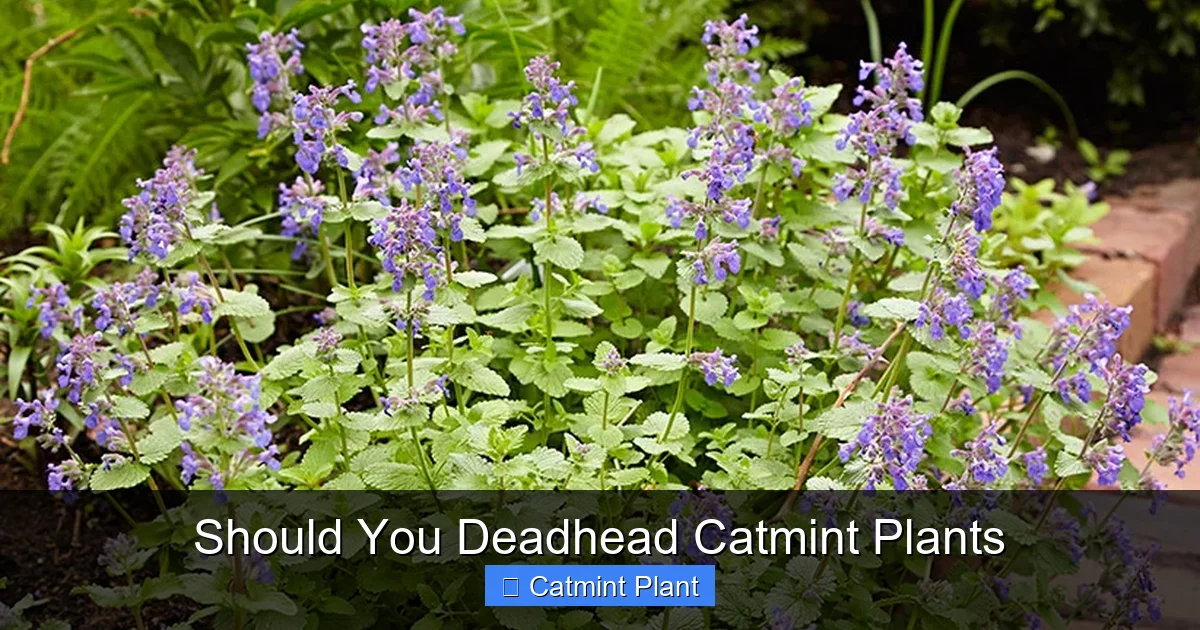
Visual guide about Should You Deadhead Catmint Plants
Image source: images.ctfassets.net
Mid-Season Touch-Ups
After the big shear, the plant will regrow. New stems. New buds. New flowers. When that second flush fades, you can deadhead again. This time, you might just snip individual spent spikes. Or give a lighter shear. The goal is the same: remove old flowers, encourage new ones. In long-season climates, you might do this two or three times a year. Each round buys you more bloom time.
Stop in Early Fall
Here is an important rule. Stop deadheading about six to eight weeks before your first frost date. In many areas, that means early September. Why stop? The plant needs to shift energy to root storage and winter prep. Late new growth is tender. It gets zapped by frost. That weakens the plant. Also, the last flowers of the year can be left to form seeds. Those seed heads catch frost beautifully. They add winter interest. They feed birds. Let the plant finish its season naturally.
How to Deadhead Catmint: Two Methods
Method 1: The Big Shear (Best for First Flush)
This is the fast, effective way to handle the main post-bloom cleanup. Grab your hedge shears or large bypass pruners. Sterilize them with rubbing alcohol or a bleach solution. Clean tools prevent disease spread. Now, look at the plant. It is a mound of stems with brown flowers on top. You want to cut the whole thing back by about one-third to one-half. Yes, really. Cut it down. It looks drastic. It works.
Make your cuts just above a set of leaves or a visible bud. New growth will sprout from those points. Try to keep a roughly mounded shape. Do not cut into the woody base. Stay in the green growth. Rake out the clippings. Water the plant well. Add a little compost around the base if you like. In two to three weeks, you will see fresh green shoots. In four to six weeks, new flowers. It is that reliable.
Method 2: Selective Snipping (Best for Later Flushes)
Once the plant has regrown and is blooming again, you can be more precise. Use hand pruners or floral snips. Walk around the plant. Find individual flower spikes that are done. Trace the stem down to where it meets a leaf pair or a side shoot. Cut just above that junction. This removes the dead head but leaves the rest of the stem to keep photosynthesizing. It is slower than shearing. But it preserves more foliage. It keeps the plant looking full. This method is great for dwarf varieties or container plants where you want to maintain shape carefully.
Tools You Need
Keep it simple. Bypass pruners for selective work. Hedge shears or grass shears for the big shear. A bucket or tarp for clippings. Gloves if you have sensitive skin (catmint foliage can irritate some people). Disinfectant for tools. That is it. No fancy gadgets required. Sharp tools make clean cuts. Clean cuts heal fast. Dull tools crush stems. Crushed stems invite disease. Sharpen your pruners once a year. It makes a difference.
What Happens If You Don’t Deadhead?
Shorter Bloom Season
This is the biggest loss. Without deadheading, catmint blooms hard for three to four weeks. Then it quits. You get green foliage for the rest of summer. Nice foliage, sure. But no flowers. No bees. No color. If you want a long season of bloom, skipping deadheading costs you months of flowers.
Floppy, Open Centers
Catmint stems get long. When they are heavy with seed heads, they bend. The center of the plant opens up. You get a donut shape. Green ring, bare middle. It looks sad. It is not the plant’s fault. It is just physics. Deadheading keeps stems shorter and sturdier. The plant stays a tight mound.
Seedlings Everywhere
We mentioned this. But it bears repeating. Catmint seeds are viable. They germinate easily. If you have gravel paths, expect volunteers. If you have open soil, expect volunteers. If your neighbor has open soil, expect volunteers there too. Deadheading is birth control for catmint. Simple as that.
Reduced Vigor Over Time
This is subtle. Plants that set heavy seed crops put a lot of energy into reproduction. Over years, this can weaken the clump. The crown gets woody. The center dies out. Division becomes necessary sooner. Deadheaded plants tend to stay vigorous longer. They put energy into roots and crown instead of seeds. You divide less often. The plant lives longer.
Catmint Varieties and Deadheading Nuances
Large Varieties: ‘Walker’s Low’, ‘Six Hills Giant’, ‘Blue Wonder’
These big boys grow 24 to 30 inches tall and wide. They benefit hugely from the big shear method. They have so much mass that selective snipping takes forever. Shear them hard after the first flush. They bounce back fast. They fill in fast. They flower hard again. These are the varieties where deadheading makes the most dramatic difference.
Dwarf Varieties: ‘Kit Cat’, ‘Little Trudy’, ‘Junior Walker’
These stay 12 to 18 inches tall. They are denser. They have more stems per square inch. You can shear them too. But selective snipping works well because the plant is smaller. You can deadhead a dwarf catmint in five minutes with snips. The big shear works fine too. Just do not cut quite as deep. Leave a bit more foliage. They have less reserves to draw on.
Yellow and Pink Varieties: ‘Pink Cat’, ‘Yellow Cat’, ‘Purple Haze’
Same rules apply. The flower color differs. The deadheading need does not. One note: some of these varieties are a bit less vigorous than the classic blue types. Watch how they respond. If a hard shear seems to stall them, go lighter next time. Every garden is different. Every plant has its personality.
Species Types: Nepeta racemosa, Nepeta sibirica, Nepeta grandiflora
These species catmints vary in habit. N. racemosa is low and spreading. Deadhead by shearing. N. sibirica is tall and upright. Deadhead by snipping individual spikes to maintain height. N. grandiflora has larger flowers on longer stems. Snip those stems to the base when done. Know your plant. Adjust your technique.
Common Deadheading Mistakes to Avoid
Cutting Too Late
Waiting until every flower is brown and every seed is formed defeats the purpose. The plant has already switched to seed mode. The rebloom signal is weak. Cut when the show is fading, not gone. Peak bloom minus one week is a good rule of thumb.
Cutting Too Hard Into Woody Stems
Catmint has a woody crown at the base. Green stems grow from it. If you cut into the wood, the plant may not resprout from that point. Always cut in green growth. Leave a few inches of green stem with leaves. That is where the new shoots come from.
Deadheading in Hot, Dry Weather Without Watering
Shearing stresses the plant. It loses foliage that was shading roots and transpiring water. If you shear during a heat wave and do not water, the plant can stall or die back. Water deeply after deadheading. Mulch helps too. If a heat wave is forecast, wait a few days. The flowers will not mind waiting.
Using Dirty Tools
Fungal diseases like powdery mildew and leaf spot can spread on pruner blades. Wipe blades with alcohol between plants. Or dip in a 10% bleach solution. It takes ten seconds. It saves headaches later.
Fertilizing Right After Shearing
Do not fertilize immediately after a hard cut. The plant is in shock. It needs to root and shoot, not process nitrogen. Wait two to three weeks until new growth is visible. Then a light feed of compost or balanced organic fertilizer is fine. Patience pays.
Deadheading Catmint in Containers
More Frequent Attention Needed
Container catmint dries out faster. It has less root room. It exhausts soil nutrients quicker. Deadheading is even more important in pots. The plant cannot afford to waste energy on seeds. Shear or snip regularly. Keep the plant blooming and compact.
Combine With Feeding
After the big shear on a potted catmint, give a dilute liquid feed. Fish emulsion or seaweed extract works well. Half strength. Every two weeks until the second flush starts. Container plants rely on you for everything. Deadheading plus feeding equals nonstop flowers.
Watch for Root Bound Plants
If your container catmint stops reblooming even with deadheading, check the roots. Slide the pot off. If roots circle the bottom, it is time to repot or divide. Deadheading cannot fix a root-bound plant. Give it fresh soil and more room.
Seasonal Deadheading Calendar
Spring (April-May)
No deadheading yet. The plant is waking up. Let it grow. Enjoy the first buds. If you see any winter-damaged stems, trim those out. But leave the flower buds alone.
Early Summer (June)
First flush peaks. Bees are happy. You are happy. As flowers fade, prepare for the big shear. Watch for the color to shift from vivid to washed out. That is your window.
Mid Summer (July)
Big shear time. Cut back by half. Water. Mulch. Wait. Watch new growth emerge. This is the most important deadheading of the year.
Late Summer (August)
Second flush arrives. Maybe selective snipping begins. Remove individual spent spikes. Keep the plant tidy. Enjoy the renewed color.
Early Fall (September)
Final selective snipping. Then stop. Let the last flowers stand. Let seed heads form. Let the plant harden off. Enjoy the frost on seed heads in winter.
Winter (October-March)
No deadheading. In late winter or early spring, cut the whole plant to the ground before new growth starts. That is cleanup, not deadheading. But it sets the stage for the next year.
Deadheading vs. Cutting Back: Know the Difference
Deadheading
Removing spent flowers during the growing season. Goal: more flowers, neat shape, no seeds. Done multiple times per year. Cuts are in green growth.
Cutting Back (Renewal Pruning)
Cutting the entire plant to the ground in late winter or early spring. Goal: remove old woody growth, stimulate fresh basal shoots, prevent center die-out. Done once per year. Cuts are at ground level.
Shearing (The Big Chop)
Cutting the whole plant back by half after a flush. A type of deadheading. Aggressive but effective. Blurs the line between deadheading and cutting back. But it happens mid-season, not dormancy.
All three have a place in catmint care. Deadheading during the season. Shearing after the first flush. Cutting back in late winter. Do all three. Your catmint will thank you.
Troubleshooting: Catmint Not Reblooming After Deadheading
Check the Timing
Did you shear too late? If you cut in late July or August in a short-season climate, there may not be enough growing degree days left for a full second flush. The plant may just make foliage. Next year, shear earlier.
Check the Water
Did the plant dry out after shearing? New growth needs consistent moisture. Mulch helps. So does a soaker hose. If the plant went dormant from drought, it will not rebloom.
Check the Light
Catmint needs full sun for best bloom. Six hours minimum. If your plant is in part shade, it may not have the energy for a second flush. Deadheading helps, but light is the fuel.
Check the Soil
Catmint likes lean, well-drained soil. Rich soil makes floppy growth and fewer flowers. If you amended heavily with compost or manure, the plant may be too busy making leaves to make flowers. Stop fertilizing. Let it lean out.
Check the Age
Old, woody clumps with dead centers struggle to regenerate. If the plant is more than four or five years old and never divided, it may be tired. Divide in spring. Replant vigorous sections. Discard the woody center. Deadheading works best on young, vigorous plants.
Design Tips: Deadheading for Garden Aesthetics
Stagger the Shear
If you have a drift of catmint, do not shear it all at once. Shear half this week. Half next week. You extend the overall bloom period. You avoid a big brown gap in the border. The bees always have some flowers. The garden always looks good.
Pair With Late Bloomers
Catmint’s second flush coincides with sedum, asters, goldenrod, and ornamental grasses. Deadheading ensures your catmint is in flower when these stars shine. The combination is classic. Blue catmint plus pink sedum ‘Autumn Joy’ is a garden staple. Deadheading makes it happen.
Edge Paths With Dwarf Types
Dwarf catmint along a path stays neat with regular snipping. It releases fragrance when brushed. It blooms for months. It softens hard edges. Deadheading keeps it from flopping onto the path. Five minutes a month. High return.
Environmental Benefits of Deadheading Catmint
Pollinator Support
Bees, butterflies, hoverflies, and hummingbirds all visit catmint. A long bloom season means a long food season. In midsummer, when many spring flowers are done and fall flowers have not started, catmint fills a critical gap. Deadheading keeps that buffet open. Your garden becomes a reliable pollinator pit stop.
Reduced Chemical Use
Healthy, vigorous plants resist pests and diseases better. Deadheading promotes vigor. Vigorous catmint rarely needs sprays. It outgrows minor damage. It shades out weeds. It is a low-input plant. Deadheading keeps it that way.
Carbon Sequestration
More growth means more photosynthesis. More photosynthesis means more carbon pulled from the air and stored in roots and soil. A reblooming catmint is photosynthesizing for months longer than a seed-setting one. Every bit counts.
Conclusion
So, should you deadhead catmint plants? Absolutely. It is one of the highest-return tasks in the perennial garden. Ten minutes with shears in July buys you two more months of flowers. It keeps the plant shapely. It stops unwanted seedlings. It supports pollinators when they need it most. It extends the life of the clump. The technique is forgiving. Shear hard or snip selective. Both work. The timing is flexible. Just do it after the first flush, and stop before frost. Your catmint will reward you with wave after wave of lavender-blue beauty. And you will look like a garden pro for almost no effort. Grab your pruners. Your catmint is waiting.
Frequently Asked Questions
How far back should I cut catmint when deadheading?
For the main mid-season shear, cut the plant back by one-third to one-half its height. Always cut into green growth with leaves, never into the woody base. For selective deadheading, cut individual spent stems to just above a leaf pair or side shoot.
Can deadheading catmint prevent it from spreading?
Deadheading prevents catmint from spreading by seed, which is the primary way it travels. It does not stop the clump from slowly expanding at the base. For total containment, combine deadheading with edging or division every few years.
Is it too late to deadhead catmint in August?
In most climates, early August is fine for a second deadheading. Late August is pushing it in zones 5 and colder. Stop all deadheading 6-8 weeks before your first frost date to let the plant harden off for winter.
What tools are best for deadheading catmint?
Bypass hand pruners for selective snipping. Hedge shears or grass shears for the big mid-season chop. Floral snips work well for dwarf varieties. Keep all tools sharp and disinfect between plants with rubbing alcohol.
Why is my catmint not reblooming after I deadheaded it?
Common reasons include: shearing too late in the season, insufficient water after cutting, too much shade, overly rich soil, or an old woody clump that needs division. Ensure the plant gets full sun, lean soil, and consistent moisture after shearing.
Should I deadhead catmint in its first year after planting?
Yes, but go lighter. First-year plants are establishing roots. After the first flush, shear back by only one-third rather than one-half. Water well. The plant may give a modest second flush. Full hard shearing starts in year two.