What Plants Go Well with Catmint
Catmint pairs beautifully with drought-tolerant perennials like salvia, coneflower, and Russian sage for stunning, low-maintenance garden beds. These companions share similar sun and water needs while creating gorgeous color contrasts and extending bloom seasons throughout summer.
Key Takeaways
- Shared growing conditions matter most: Choose plants that love full sun and well-drained soil just like catmint does
- Color contrast creates drama: Pair purple catmint with yellow, orange, or white blooms for eye-catching combinations
- Stagger bloom times: Select companions that flower before, during, and after catmint for continuous color
- Height variation adds depth: Mix tall, medium, and low-growing plants for a layered garden design
- Pollinator appeal multiplies: Combine catmint with other nectar-rich plants to create a pollinator paradise
- Foliage texture matters: Contrast catmint’s soft gray-green leaves with bold, spiky, or glossy foliage
- Maintenance stays low: Stick with drought-tolerant perennials that need minimal watering and care
Quick Answers to Common Questions
What is the best companion plant for catmint?
Salvia is widely considered the best companion for catmint because both share identical growing requirements, bloom simultaneously, and create stunning color combinations with their complementary flower forms.
Can I plant catmint with roses?
Catmint makes an excellent rose companion. Its low mounding habit hides bare rose canes, it attracts beneficial insects that eat rose pests, and both plants thrive in full sun with good drainage.
Does catmint spread aggressively?
Catmint spreads slowly by rhizomes but is not invasive. Most cultivars form well-behaved clumps that expand gradually. Divide every 3-4 years to maintain vigor and prevent center die-out.
What plants should not be planted with catmint?
Avoid shade-loving, moisture-needy plants like hostas, astilbes, ferns, and hydrangeas. These have opposite cultural requirements and will struggle in the hot, dry, lean conditions catmint prefers.
When should I cut back catmint and its companions?
Shear catmint, salvia, yarrow, and coreopsis by half after their first bloom flush in early summer. Leave coneflower and black-eyed Susan seed heads for winter. Cut ornamental grasses back in late winter before new growth emerges.
📑 Table of Contents
- Why Companion Planting With Catmint Works So Well
- Understanding Catmint Growing Requirements
- Best Flowering Perennial Companions
- Ornamental Grasses for Texture and Movement
- Shrubs and Subshrubs for Structure
- Ground Covers and Edging Plants
- Design Strategies for Catmint Combinations
- Maintenance Tips for Mixed Plantings
- Common Mistakes to Avoid
- Regional Considerations
- Conclusion
Why Companion Planting With Catmint Works So Well
If you have ever grown catmint, you know it is a garden superstar. This tough perennial pumps out lavender-blue flowers for months. It laughs at heat and drought. Bees and butterflies flock to it. Deer and rabbits leave it alone. But even a superstar needs a supporting cast. That is where companion planting comes in.
Choosing the right neighbors for your catmint does more than just look pretty. Good companions share the same growing needs. They thrive in the same lean soil and blazing sun. They do not need constant watering or fussing. When you match plants with similar preferences, your whole garden becomes easier to manage. You water once. You fertilize rarely. Everything just grows.
There is also the design side of things. Catmint has a loose, mounding habit with soft gray-green foliage. Its flowers are small and numerous, creating a hazy cloud of color. This texture begs for contrast. Bold leaves. Spiky flowers. Different heights. When you understand what plants go well with catmint, you can build garden beds that look professional without the professional price tag or maintenance schedule.
Understanding Catmint Growing Requirements
Sun, Soil, and Water Needs
Before we talk specific plant partners, let us nail down what catmint actually wants. Most catmint varieties, including the popular Nepeta x faassenii and Nepeta racemosa cultivars, share the same basic wish list. Full sun is non-negotiable. We are talking six to eight hours of direct light minimum. In hot southern climates, a tiny bit of afternoon shade is tolerated but not preferred.
Soil must drain sharply. Catmint hates wet feet. Heavy clay is a death sentence unless amended heavily with grit or compost. Lean soil is actually better than rich soil. Too much fertility makes catmint floppy and reduces flowering. Water deeply but infrequently once established. New plants need regular water their first season. After that, they are remarkably drought tolerant.
Growth Habit and Seasonal Timeline
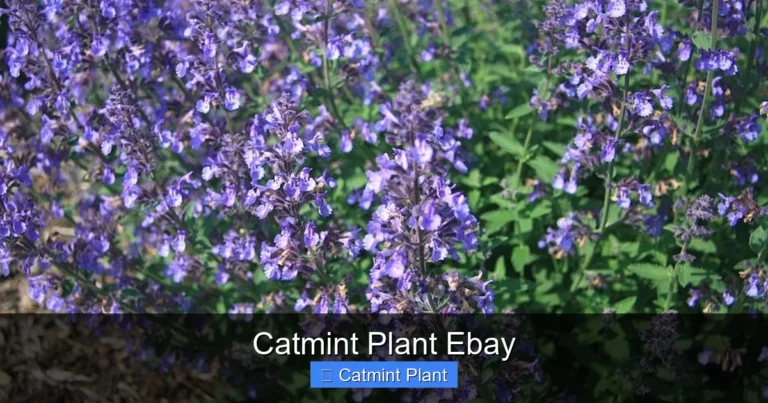
Catmint forms a rounded mound typically twelve to twenty-four inches tall and wide. Some cultivars like ‘Walker’s Low’ reach thirty inches. The foliage emerges early in spring, a fresh gray-green that looks great even before flowers appear. The main bloom starts in late spring or early summer. If you shear it back after the first flush, you often get a second bloom in late summer.
This timeline matters for companions. You want plants that either bloom alongside the first flush, take over during the mid-summer lull, or shine in fall when catmint may be resting. Understanding this rhythm helps you pick partners that keep the show going all season long.
Best Flowering Perennial Companions
Salvia: The Classic Partner
If you ask any gardener what plants go well with catmint, salvia is usually the first answer. These two are like peanut butter and jelly. Both love sun, hate wet soil, and bloom for ages. Salvia’s spiky flower wands contrast perfectly with catmint’s soft clouds. The color combos are endless. Purple catmint with deep blue Salvia nemorosa ‘Caradonna’ creates a cool, sophisticated look. Pair it with hot pink Salvia greggii for a party in the border.
Both plants respond to the same maintenance. Shear them back together after the first bloom. They will both flush out fresh growth and flower again. They have similar heights too, usually eighteen to twenty-four inches, so they weave together naturally without one swallowing the other.
Coneflower: Bold Blooms for Summer Heat
Coneflowers (Echinacea) bring big, bold daisy flowers that stand tall above catmint’s haze. Their strong stems and prominent cones add architectural interest. Purple coneflower is the classic, but modern breeding gives you orange, yellow, white, and even green varieties. Echinacea ‘Cheyenne Spirit’ mixes multiple colors on one plant.
Coneflowers bloom mid-summer right when catmint might be taking a breather. They keep the pollinator party going. Goldfinches love the seed heads in fall and winter, so leave them standing. The only catch? Coneflowers have taproots and resent transplanting. Plant them young and leave them be. Catmint’s fibrous roots play nice nearby.
Black-Eyed Susan: Sunshine on Cloudy Days
Rudbeckia, commonly called black-eyed Susan, brings pure gold to the partnership. Rudbeckia fulgida ‘Goldsturm’ is the workhorse variety. It forms tidy clumps two feet tall with golden petals and dark centers. The color contrast with purple catmint is electric. Yellow and purple are complementary colors. They make each other pop.
Black-eyed Susans bloom July through September. They bridge the gap if catmint slows down in high summer. They are tough as nails, handling clay soil better than many perennials. Just give them decent drainage. They self-sow modestly, which can be a bonus or a chore depending on your garden style.
Coreopsis: Long-Blooming Threadleaf Charm
Threadleaf coreopsis (Coreopsis verticillata) offers fine, ferny foliage and masses of small daisy flowers. ‘Moonbeam’ is the famous pale yellow cultivar. ‘Zagreb’ is a brighter gold. Both bloom from early summer into fall with almost no deadheading needed. Their airy texture echoes catmint’s softness but with a different leaf shape.
This is a low-maintenance dream team. Both plants thrive on neglect. Poor soil? Check. Drought? Check. Heat? Check. They weave together at the front of a border, softening hard edges. The yellow flowers float above catmint’s purple haze like little butterflies. It is a combination that looks deliberate but requires almost zero effort.
Yarrow: Flat-Topped Architecture
Yarrow (Achillea) brings flat flower clusters that hover on strong stems. The species Achillea millefolium runs aggressively, so stick with clumping cultivars. ‘Moonshine’ offers soft yellow flowers and silvery foliage that harmonizes with catmint’s gray-green leaves. ‘Paprika’ brings spicy red flowers that fade to pink. ‘Terracotta’ shifts from orange to peach to cream.
Yarrow’s ferny foliage contrasts with catmint’s rounded leaves. The flat flower heads provide landing pads for beneficial insects. Butterflies love them. Yarrow blooms early summer through fall if deadheaded. It spreads slowly by rhizomes, filling gaps without being a thug. Divide every few years to keep it vigorous.
Ornamental Grasses for Texture and Movement
Blue Fescue: Cool-Toned Edging
Blue fescue (Festuca glauca) forms neat, spiky mounds of intense blue-gray foliage. ‘Elijah Blue’ is the most reliable cultivar, holding its color all season. It stays compact, eight to twelve inches tall. Plant it as a repeating edge along a border filled with catmint. The blue-on-blue theme is soothing and sophisticated.
Both plants want the same sharp drainage. Blue fescue can rot in wet winter soil, just like catmint. They are perfect partners for a rock garden or sunny slope. Blue fescue is semi-evergreen in mild winters, providing structure when catmint dies back. Divide it every two to three years to prevent the center from dying out.
Feather Reed Grass: Vertical Exclamation Points
Calamagrostis x acutiflora ‘Karl Foerster’ is the gold standard for upright grasses. It shoots up straight, narrow green blades in spring. By early summer, wheat-colored plumes rise five to six feet tall. They stand rigid through winter, catching frost and snow beautifully. Plant one or three as vertical accents rising from a sea of catmint.
This grass does not run. It stays in a tight clump. It tolerates heavier soil than many grasses, though it still prefers drainage. The early bloom time means plumes are showy while catmint is in its first flush. The vertical line breaks up the horizontal mound of catmint, adding drama without fuss.
Little Bluestem: Native Prairie Style
Schizachyrium scoparium is a North American native grass with serious four-season appeal. Blue-green summer foliage turns copper, orange, and red in fall. Fluffy white seed heads catch the light. Cultivars like ‘Standing Ovation’ and ‘The Blues’ offer stronger upright habits and intense color.
Little bluestem thrives in the same lean, dry conditions as catmint. Its deep roots make it incredibly drought tolerant. It supports skipper butterflies and provides winter cover for birds. Plant it in drifts behind or beside catmint for a naturalistic, meadow-like feel. It is the definition of low-maintenance beauty.
Mexican Feather Grass: Soft Motion
Nassella tenuissima (formerly Stipa tenuissima) moves with the slightest breeze. Its thread-thin green blades turn golden in summer. Silky flower heads shimmer in backlight. It stays around eighteen to twenty-four inches, similar to catmint. The effect is a living kinetic sculpture.
Warning: Mexican feather grass self-sows prolifically in some climates. It is considered invasive in California and parts of the Southwest. Check your local extension office before planting. Where it behaves, it pairs dreamily with catmint. Both have that soft, hazy quality. Together they create a cloud-like planting that blurs edges and catches light.
Shrubs and Subshrubs for Structure
Russian Sage: The Lavender Look-Alike
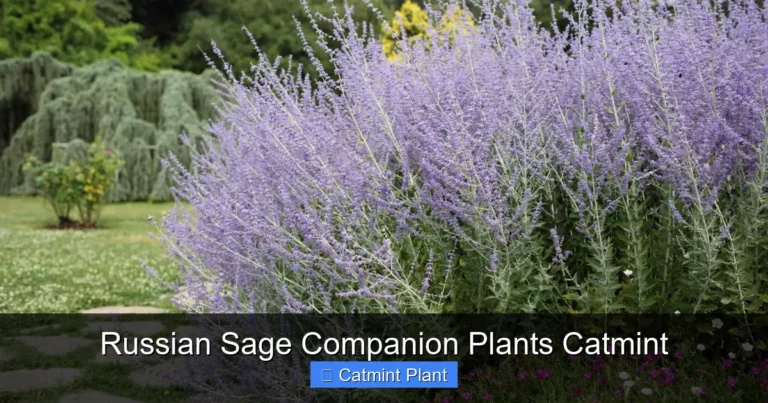
Russian sage (Perovskia atriplicifolia) is basically a woody, larger version of catmint. Silvery stems. Gray-green leaves. Lavender-blue flower spikes. It blooms mid-summer to fall, right when catmint may be resting. ‘Denim ‘n Lace’ and ‘Little Spire’ are compact cultivars staying two to three feet tall. The species can reach four feet.
Plant Russian sage behind catmint for a layered blue haze. The silvery stems glow in evening light. Both plants are aromatic, deterring deer and rabbits. Both thrive in heat, drought, and poor soil. It is a match made in xeriscape heaven. Just give Russian sage space. It woody base expands over time.
Bluebeard: Late-Season Pollinator Magnet
Caryopteris x clandonensis, called bluebeard or blue mist shrub, is a subshrub that dies back partially in cold winters. It regrows from the base each spring. Powder-blue flower clusters cover the stems late summer into fall. Bees go crazy for it. ‘Dark Knight’ has deeper blue flowers. ‘Sunshine Blue’ offers gold foliage for extra contrast.
Bluebeard stays two to three feet tall and wide. It wants full sun and sharp drainage, just like catmint. Prune it hard in early spring to keep it compact and floriferous. The late bloom time extends the nectar buffet for pollinators. The gold-foliaged version lights up a planting of purple catmint beautifully.
Smokebush: Dramatic Foliage Backdrop
Cotinus coggygria, smokebush or smoke tree, offers dramatic foliage in purple (‘Royal Purple’), gold (‘Golden Spirit’), or green (‘Grace’). The namesake “smoke” appears in summer—fluffy pinkish panicles that look like clouds. It can be grown as a large shrub or coppiced (cut to the ground annually) to keep it smaller with larger leaves.
Coppiced smokebush stays around four to six feet, perfect behind catmint. The bold, round leaves contrast sharply with catmint’s fine texture. Purple smokebush with purple catmint creates a monochromatic dream. Gold smokebush with purple catmint is high-contrast drama. Both are tough, drought-tolerant, and deer-resistant.
Butterfly Bush: Continuous Bloom Machine
Buddleia davidii and its hybrids pump out flower cones from early summer to frost. Colors range from white to pink to deep purple. ‘Lo and Behold’ series stays compact at two to three feet. ‘Miss Molly’ offers intense reddish-pink. Butterfly bush wants the same sun and drainage as catmint.
Note: Butterfly bush can be invasive in some regions, particularly the Pacific Northwest and parts of the East Coast. Sterile cultivars like the ‘Lo and Behold’ series and ‘Miss’ series do not set seed. Check local regulations. Where appropriate, it provides non-stop nectar and a vertical element above mounding catmint.
Ground Covers and Edging Plants
Creeping Thyme: Fragrant Carpet
Thymus serpyllum and its cultivars form dense mats of tiny leaves. Pink, purple, or white flowers cover the foliage in early summer. It handles light foot traffic. Plant it between stepping stones or as a living mulch around catmint. The herbs share Mediterranean roots and identical cultural needs.
‘Elfin’ is ultra-compact. ‘Pink Chintz’ has masses of pink flowers. ‘Magic Carpet’ offers gold-tipped foliage. Creeping thyme suppresses weeds, conserves moisture, and smells amazing when brushed. It blooms earlier than catmint, starting the pollinator season. The fine texture complements catmint without competing visually.
Sedum: Succulent Contrast
Low-growing sedums (stonecrops) bring fleshy, water-storing leaves in greens, blues, reds, and variegated patterns. Sedum spurium ‘Dragon’s Blood’ turns deep red in fall. Sedum rupestre ‘Angelina’ glows chartreuse to orange. They form spreading mats three to six inches tall.
Sedums bloom late summer with starry flower clusters. They attract late-season pollinators. Their succulent texture is the perfect counterpoint to catmint’s soft leaves. Both laugh at drought. Both need sharp drainage. Plant sedum at the front edge of a catmint drift where it can spill over a wall or path edge.
Ice Plant: Neon Daisy Carpets
Delosperma cooperi and hybrids (ice plants) form succulent mats covered in neon daisy flowers. Magenta, orange, yellow, pink, purple—often multiple colors on one plant. They bloom heavily late spring through fall. The flowers close at night and on cloudy days, opening wide in sun.
Ice plants need excellent drainage and lean soil. They hate wet winter feet. In the right spot, they are unstoppable. The intense flower colors make catmint’s purple look richer by comparison. Use ice plant on hot, baked slopes or at the edge of pavement where reflected heat kills other plants. Catmint behind it provides a soft backdrop.
Lamb’s Ears: Touchable Silver
Stachys byzantina grows for its foliage—thick, velvety, silver-gray leaves that beg to be stroked. It forms a spreading clump twelve to eighteen inches tall. Flower spikes appear in early summer with small purple blooms. Many gardeners remove the flowers to keep the foliage focus.
Lamb’s ears want the same sun and drainage as catmint. The silver-on-silver foliage combo with catmint’s gray-green is subtle and elegant. Both are deer-proof due to texture and aroma. Lamb’s ears can melt out in humid summers. Give it air circulation and avoid overhead watering. ‘Helene von Stein’ (aka ‘Big Ears’) has larger leaves and better heat tolerance.
Design Strategies for Catmint Combinations
Color Theory in the Garden
Catmint’s lavender-blue flowers are a cool color. Cool colors recede visually, making spaces feel larger. You can play this several ways. Monochromatic: pair with other blues, purples, and violets for a calm, sophisticated look. Think salvia, Russian sage, purple coneflower, and ‘May Night’ salvia. Analogous: combine with pink and magenta for a harmonious blend. Yarrow ‘Paprika’, pink coneflower, and rose campion work here.
Complementary: orange and yellow are opposite purple on the color wheel. They create maximum pop. Black-eyed Susan, coreopsis, butterfly weed (Asclepias tuberosa), and geum ‘Totally Tangerine’ bring the heat. Triadic: purple, orange, and green. The green comes from foliage—chartreuse sedum, golden smokebush, or ‘Sunshine Blue’ caryopteris. There is no wrong answer, only different moods.
Height Layering Techniques
Good garden design uses vertical layers. Think of three zones. Ground layer: six to twelve inches. Creeping thyme, sedum, ice plant, blue fescue. Mid layer: twelve to thirty inches. Catmint lives here. So do coreopsis, yarrow, compact salvias, and dwarf butterfly bush. Upper layer: three to six feet. Russian sage, feather reed grass, smokebush, standard butterfly bush.
Plant in drifts, not onesies. A single plant gets lost. Three, five, or seven of the same plant creates impact. Let drifts intermingle at the edges. Catmint’s loose habit makes it a natural weaver. It flows around the base of taller plants. It softens the feet of grasses and shrubs. This layered approach looks natural and suppresses weeds by shading soil.
Seasonal Succession Planning
The best catmint combinations keep the show going from April to October. Early spring: bulbs! Plant alliums, tulips, and daffodils among catmint crowns. The catmint foliage hides dying bulb leaves. Late spring: catmint’s first flush peaks. Salvia, yarrow, and early coreopsis join in. Early summer: coneflowers, black-eyed Susans, and butterfly weed take center stage.
Mid-summer: Russian sage, bluebeard, and butterfly bush hit stride. Grasses send up plumes. Late summer: sedums, second flush of catmint and salvia, goldenrod (Solidago), and asters. Fall: grass plumes turn gold, smokebush foliage colors up, asters bloom, sedum flowers age to rust. Winter: grass structure, smokebush branches, coneflower seed heads, Russian sage silvery stems. Plan for all seasons, not just June.
Pollinator Garden Design
Catmint is a pollinator magnet. Multiply that power by choosing companions that feed different creatures at different times. Bees love catmint, salvia, Russian sage, and bluebeard. Butterflies flock to coneflower, butterfly weed, butterfly bush, and yarrow. Hummingbirds visit salvia, penstemon, and agastache. Moths work the night shift on pale flowers.
Include host plants for caterpillars. Butterfly weed and other milkweeds host monarchs. Fennel and dill host swallowtails. Violets host fritillaries. Plant in sunny, sheltered spots. Provide water with a shallow dish and stones. Avoid pesticides. A diverse planting of what plants go well with catmint creates a functioning ecosystem, not just a pretty picture.
Maintenance Tips for Mixed Plantings
Watering Wisdom
The beauty of choosing companions with matching needs is simple irrigation. Water deeply and infrequently to encourage deep roots. New plantings need weekly water their first season. Established drought-tolerant plantings may need zero supplemental water except in extreme drought. Use soaker hoses or drip irrigation to keep foliage dry and prevent fungal issues.
Group plants by water need. This is called hydrozoning. Your catmint bed is a low-water zone. Do not plant thirsty neighbors like astilbe or ligularia there. They will suffer, and you will overwater the catmint trying to keep them happy. Stick to the Mediterranean and prairie natives that evolved for lean, dry conditions.
Pruning and Deadheading Schedule
Catmint benefits from a hard shear after the first bloom. Cut it back by half to two-thirds. This prevents flopping and triggers a fresh flush. Do the same for salvia, coreopsis, and yarrow at the same time. They will all rebound together. It looks brutal for a week. Then it looks amazing.
Leave coneflower, black-eyed Susan, and sedum seed heads for winter interest and bird food. Cut back ornamental grasses in late winter before new growth emerges. Prune Russian sage and bluebeard hard in early spring. Coppice smokebush in early spring if you want large foliage. Butterfly bush gets cut back hard in spring too. Know each plant’s preference.
Dividing and Refreshing
Most perennials in this crowd benefit from division every three to five years. Catmint centers can die out. Dig the clump in early spring or fall. Pull or cut into sections with roots and shoots. Replant the vigorous outer pieces. Discard the woody center. Do the same for salvia, yarrow, coreopsis, and grasses.
Sedums and creeping thyme can be pulled apart and replanted anytime they get crowded. Russian sage and bluebeard resent division. Propagate them from cuttings instead. Smokebush and butterfly bush are shrubs—do not divide. Plan division days in spring or fall when weather is cool and rain is likely. Water well after replanting.
Soil Management
Lean soil is the secret sauce. Do not fertilize these plants. Rich soil makes weak, floppy growth. It reduces flowering. It shortens lifespan. If your soil is heavy clay, amend with coarse sand, fine gravel, or expanded shale at planting time. Top dress annually with a thin layer of compost or fine gravel. Mulch with gravel, not bark. Bark holds moisture and causes crown rot.
Gravel mulch reflects heat, improves drainage, and looks great with silver and blue foliage. It suppresses weeds without smothering crowns. One to two inches is plenty. Keep mulch away from plant crowns. This low-fertility, high-drainage approach mimics the native habitats of these plants. They will reward you with decades of performance.
Common Mistakes to Avoid
Overcrowding at Planting Time
It is tempting to plant close for instant impact. Resist. Read the label for mature width. Space accordingly. A catmint that spreads twenty-four inches needs twelve inches from its neighbor’s center. Crowded plants compete for light, air, and water. They get fungal diseases. They flop. They need dividing sooner. Patience pays. Fill gaps with annuals or bulbs the first year if you must.
Ignoring Mature Sizes
That cute one-gallon Russian sage becomes a four-foot woody shrub. That tiny feather reed grass becomes a six-foot exclamation point. Plan for maturity. Draw it to scale on graph paper. Use circles for mature spreads. Overlap circles slightly for weaving. Leave room for air circulation. A crowded bed is a maintenance nightmare. A well-spaced bed manages itself.
Mixing Water Needs
We said it before, but it bears repeating. Do not plant hostas, astilbes, or hydrangeas with catmint. They want shade and moisture. Catmint wants sun and drought. One of you will be unhappy. Usually both. Stick to the Mediterranean and prairie palette. Lavender, rosemary, sage, thyme, oregano, santolina, artemisia, euphorbia, agastache, penstemon, gaillardia, rudbeckia, echinacea, coreopsis, asclepias, solidago, schizachyrium, bouteloua, festuca, calamagrostis, perovskia, caryopteris, cotinus, buddleia (sterile), nepeta. This is your plant palette.
Forgetting Winter Interest
Summer is easy. Everything blooms. Winter reveals the bones. Include plants with winter presence. Grasses. Shrubs with interesting bark or structure. Seed heads. Evergreen foliage. Blue fescue holds color. Lamb’s ears stay silver. Sedums keep structure. Russian sage stems glow. Plan for January, not just June. A four-season garden feeds the soul year-round.
Regional Considerations
Hot and Humid Climates
In the Southeast and Gulf Coast, humidity breeds fungal diseases. Space plants wider for airflow. Choose disease-resistant cultivars. Catmint ‘Walker’s Low’ and ‘Junior Walker’ handle humidity better than some. Russian sage can struggle. Try Perovskia atriplicifolia ‘CrazyBlue’ for better tolerance. Avoid lamb’s ears—they melt. Use Stachys ‘Hummelo’ instead for pink spikes on glossy green leaves.
Agastache (hummingbird mint) thrives in heat and humidity. ‘Blue Fortune’ and ‘Black Adder’ are stellar. Salvia guaranitica ‘Black and Blue’ loves it. Lantana is a shrubby annual-perennial that blooms non-stop. Ornamental grasses like Muhly grass (Muhlenbergia capillaris) bring pink clouds in fall. Adapt the palette to your climate.
Cold Northern Climates
Zone 3 and 4 gardeners need extra hardiness. Catmint is hardy to zone 3. ‘Walker’s Low’ and ‘Purrsian Blue’ are reliable. Russian sage is marginal in zone 4, better in zone 5. Try Perovskia ‘Little Spire’ in a protected spot. Bluebeard dies to the ground but regrows—treat it as a perennial. Butterfly bush is not hardy north of zone 5.
Focus on ultra-hardy natives. Little bluestem, prairie dropseed (Sporobolus heterolepis), coneflower, black-eyed Susan, yarrow, coreopsis, butterfly weed, blazing star (Liatris), goldenrod, aster. These evolved in your winters. They laugh at -30°F. Grasses provide crucial winter structure when shrubs fail. Mulch new plantings heavily their first winter.
Arid Western Climates
Low humidity, intense sun, alkaline soil, little rain. This is catmint’s native territory. The full Mediterranean palette works. Lavender, rosemary, sage, santolina, artemisia, euphorbia, cistus, phlomis, teucrium. Native penstemons, agastaches, eriogonums (buckwheats), and salvias thrive. Grasses like blue grama (Bouteloua gracilis) and sideoats grama (Bouteloua curtipendula) are perfect.
Watch drainage in winter. Wet cold kills more than dry cold. Plant on berms or slopes. Use gravel mulch. Water deeply but rarely once established. Many western natives go summer dormant. They brown up and wait for monsoon. Catmint stays green with occasional water. Plan for the summer dormancy aesthetic or irrigate lightly.
Conclusion
Figuring out what plants go well with catmint opens up a world of beautiful, low-maintenance gardening. The secret is simple. Match growing conditions first. Sun lovers with sun lovers. Drought tolerators with drought tolerators. Lean soil fans with lean soil fans. Then layer for color, texture, height, and season. Mix spiky with mounding. Bold with fine. Early with late. Cool colors with hot colors.
Start small. Pick three to five companions from this guide. Plant them in a sunny, well-drained spot. Mulch with gravel. Water deeply the first year. Then step back. Watch the pollinators arrive. Enjoy the color parade from spring to frost. Admire the winter structure. Divide every few years. Share divisions with friends. That is the rhythm of a catmint garden. It gives back far more than it asks.
Your garden does not need to be perfect. It needs to be alive. Catmint and its friends bring life. Bees. Butterflies. Birds. Beneficial insects. Color. Movement. Scent. Texture. All with minimal input from you. That is not just gardening. That is smart gardening. Go plant something beautiful today.
Frequently Asked Questions
What plants go well with catmint in containers?
In containers, pair catmint with other drought-tolerant plants like sedum, creeping thyme, dwarf salvia, and small ornamental grasses such as blue fescue. Ensure the pot has excellent drainage and use a gritty potting mix. Water when the top inch of soil feels dry.
Can catmint grow in partial shade?
Catmint tolerates light afternoon shade in hot climates but flowers best with at least six hours of direct sun. In too much shade, it becomes leggy, produces fewer flowers, and is more susceptible to powdery mildew. Full sun is ideal for compact growth and maximum blooms.
How do I propagate catmint to get more plants for companion groupings?
Divide established clumps in early spring or fall by digging up the plant and separating it into sections with roots and shoots. You can also take softwood cuttings in late spring or early summer. Both methods produce identical plants for expanding your companion plantings.
Is catmint the same as catnip?
No, they are different species in the same genus. Catmint (Nepeta x faassenii and N. racemosa) is grown for ornamental flowers and foliage. Catnip (Nepeta cataria) is grown for its effect on cats and has less showy white flowers. Both attract pollinators and share similar growing needs.
Why is my catmint flopping open in the center?
Flopping usually indicates too much shade, overly rich soil, excessive water, or the plant needs division. Catmint prefers lean conditions. Cut it back hard after the first bloom, ensure full sun, stop fertilizing, and divide in spring if the center is woody and dead.
What annuals pair well with catmint for instant color?
Zinnias, cosmos, marigolds, verbena, and gomphrena are excellent annual companions. They share catmint’s love of sun and heat, bloom all summer, and come in colors that complement catmint’s purple-blue flowers. Plant them in drifts between perennial companions for continuous color while perennials establish.