Plant Care Device for Monitoring Moisture
A plant care device for monitoring moisture gives you real‑time soil data so you never guess when to water. It sends alerts to your phone and helps prevent both overwatering and underwatering. Use it to grow healthier plants with less effort.
Watering plants can feel like a guessing game. A plant care device for monitoring moisture removes the guesswork. It measures the water content in the soil and tells you exactly when to water. This simple tool can save you time and protect your plants.
Many gardeners struggle with overwatering or underwatering. Both problems cause stress and disease. A plant care device for monitoring moisture gives you a clear picture of soil conditions. You no longer need to stick your finger in the dirt. The device does the work for you.
Using a plant care device for monitoring moisture also helps you learn the needs of each plant. Different species like different moisture levels. The device records data over days and weeks. You can see patterns and adjust care. Healthier plants mean better yields and more beauty.
Key Takeaways
- Real‑time data: The device shows moisture levels instantly.
- Alerts: You get notifications when soil is too dry or too wet.
- Easy install: Most models insert into soil in seconds.
- App integration: Data syncs to a smartphone app for trends.
- Battery life: Many run months on a single charge.
- Versatile: Works for indoor pots, garden beds, and hydroponics.
Quick Answers to Common Questions
What is a plant care device for monitoring moisture?
A plant care device for monitoring moisture measures soil water content and shows you when to water.
How does a probe sensor work?
A probe sensor uses electrical conductivity to estimate moisture percentage in the soil.
Can I use one device for many plants?
Yes, wireless hub systems let you place several sensors and view all data in one app.
Do I need Wi‑Fi for a moisture monitor?
Bluetooth models work without Wi‑Fi but you must be near the sensor to read data.
How often should I calibrate my sensor?
Calibrate once a month or after any major soil change for best accuracy.
📑 Table of Contents
Why Moisture Monitoring Matters
Understanding Soil Moisture
Soil moisture is the amount of water held in the pore spaces of soil. Plants absorb water through their roots. When moisture is too low roots cannot take up nutrients. When moisture is too high roots can suffocate. A plant care device for monitoring moisture tells you the exact percentage of water in the soil. This number helps you decide if watering is needed.
Most plants prefer a moist but not soggy root zone. The ideal range varies by species. Succulents like a dry period between waterings. Tropical plants like consistent moisture. Knowing the current level lets you match the plant’s preference. A plant care device for monitoring moisture makes this easy.
Risks of Overwatering
Overwatering is a common mistake. It fills air pockets in the soil with water. Roots need oxygen to survive. Without oxygen roots rot. Rot leads to yellow leaves and plant death. A plant care device for monitoring moisture alerts you before the soil becomes waterlogged. You can stop watering in time.
Fungal diseases also thrive in wet soil. Root rot, damping off, and powdery mildew spread fast. Early detection saves money on fungicides. A plant care device for monitoring moisture gives you a warning when moisture stays high for too long. You can improve drainage or reduce watering.
Risks of Underwatering
Underwatering stresses plants. Leaves wilt, edges turn brown, growth slows. Some plants recover quickly, others never bounce back. A plant care device for monitoring moisture shows when the soil dries out. You can water before damage occurs.
Dry soil also reduces nutrient uptake. Minerals dissolve in water. Without water plants cannot absorb them. A plant care device for monitoring moisture helps you keep the soil in the sweet spot. Consistent moisture means steady growth.
Types of Plant Care Devices for Monitoring Moisture
Probe Sensors
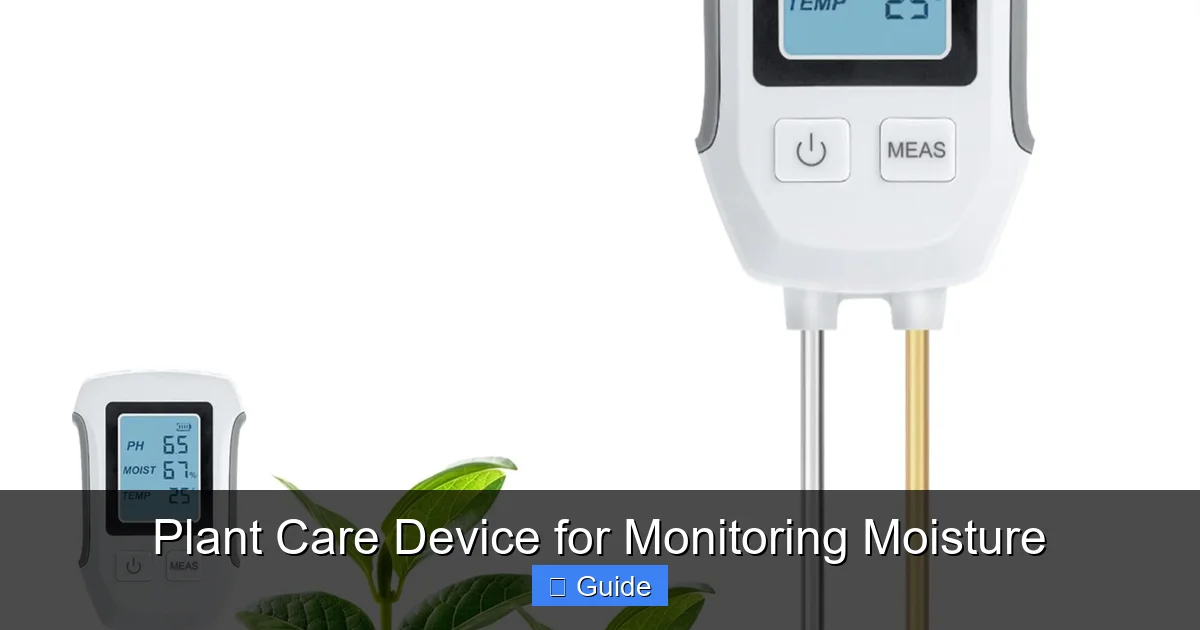
Probe sensors are the most common type. They have a metal tip that goes into the soil. The tip measures electrical conductivity. Water conducts electricity, dry soil does not. The sensor converts this to a moisture percentage. A plant care device for monitoring moisture with a probe is cheap and easy to use.
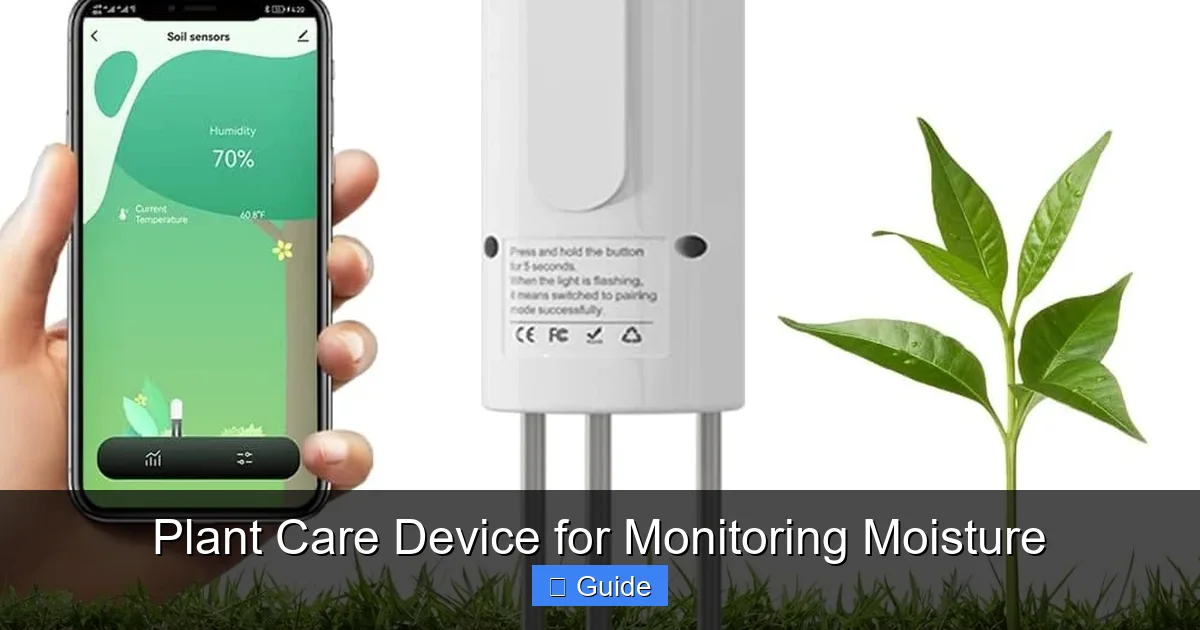
Visual guide about Plant Care Device for Monitoring Moisture
Image source: m.media-amazon.com
You simply push the probe into the root zone. The display shows a number or a color code. Some models connect to a phone via Bluetooth. Probe sensors work well for pots and small beds. They need occasional cleaning to stay accurate.
Smart Pot Sensors
Smart pot sensors sit at the bottom of a container. They measure moisture through the pot wall. No probe insertion is needed. A plant care device for monitoring moisture built into a smart pot can also track temperature and light. Data syncs to an app automatically.
These sensors are great for indoor plants. They stay hidden and do not disturb roots. Battery life can last a year. The app can give watering reminders based on plant type. Smart pot sensors cost more than simple probes.
Wireless Hub Systems
Wireless hub systems use multiple sensors linked to a central hub. The hub connects to Wi‑Fi and sends data to the cloud. You can monitor many zones from one dashboard. A plant care device for monitoring moisture in a hub system is ideal for large gardens or farms.
Each sensor can be placed in a different bed. The hub aggregates the data. You get alerts for each zone. Some hubs integrate with irrigation controllers. They can trigger watering automatically. This setup is more expensive but saves labor.
DIY Options
Makers can build their own moisture monitor. An Arduino or ESP board plus a capacitive sensor works well. Code reads the sensor and sends data to a phone via MQTT. A plant care device for monitoring moisture built at home costs little. It lets you customize alerts and logging.
DIY sensors need calibration. You must test in wet and dry soil to set thresholds. They also need a power source. Solar panels can keep them running outdoors. Building your own teaches you about soil physics and electronics.
Key Features to Look For
Accuracy
Accuracy is the most important feature. Look for a sensor with a margin of error under five percent. Capacitive probes tend to be more accurate than resistive ones. A plant care device for monitoring moisture that stays accurate over time saves you from false alarms.
Check reviews for drift. Some cheap sensors lose accuracy after a few months. Calibration options help maintain precision. A device that lets you calibrate in known wet and dry soil is a plus.
Connectivity
Connectivity determines how you see the data. Bluetooth works for short range. Wi‑Fi lets you view data from anywhere. LoRa or Zigbee suits large areas. A plant care device for monitoring moisture with multiple connectivity options gives flexibility.
Consider your garden layout. Indoor pots may only need Bluetooth. Outdoor beds benefit from Wi‑Fi or a hub. Choose a system that matches your network.
Battery Life
Battery life affects maintenance. Some probes run on a coin cell for a year. Hub sensors may need rechargeable packs. A plant care device for monitoring moisture with low‑power sleep modes lasts longer. Solar charging is a bonus for outdoor units.
Check the spec sheet for expected runtime. Replaceable batteries are easier than sealed units. Long battery life means fewer trips to the garden.
App Integration
A good app shows graphs, history, and alerts. It should let you set custom thresholds per plant. A plant care device for monitoring moisture that integrates with popular smart home platforms adds value. Voice assistants can read moisture levels aloud.
Look for export options. CSV export helps you keep records. Cloud backup protects data if you lose your phone. An intuitive UI makes daily checks fast.
Durability
Outdoor sensors face rain, sun, and temperature swings. IP67 or higher rating means dust‑tight and water‑proof. A plant care device for monitoring moisture built with stainless steel probes resists corrosion. UV‑stable plastics prevent cracking.
Indoor sensors still need sturdy housing. Kids or pets may knock them over. A solid base and weighted design keep them upright. Warranty length often reflects build quality.
How to Install and Calibrate Your Device
Placement Tips
Place the sensor in the root zone. For most plants that is 2 to 6 inches deep. Avoid the very top layer where soil dries fast. A plant care device for monitoring moisture placed too shallow gives false dry readings.
Space sensors evenly across the bed. One sensor per 4 square feet is a good rule. In pots put the probe near the center. Keep the sensor away from drainage holes. Water pooling there skews results.
Calibration Steps
Calibration matches the sensor output to real moisture. Start with a fully saturated soil sample. Record the reading. Then let the same soil dry completely. Record the dry reading. A plant care device for monitoring moisture uses these two points to set 0 % and 100 % levels.
Many devices have an auto‑calibrate mode. Follow the on‑screen prompts. Repeat calibration after a month to correct drift. Write down the dates and values for reference.
Testing Accuracy
After calibration test with a known moisture meter. Compare both readings. They should be within a few percent. A plant care device for monitoring moisture that matches a trusted meter is ready for daily use.
If the gap is large, repeat calibration. Check for sensor damage or corrosion. Clean the probe with distilled water and a soft brush. Re‑test until satisfied.
Using Data to Improve Plant Health
Reading Charts
The app shows a line chart of moisture over time. Peaks mean watering events. Valleys show drying periods. A plant care device for monitoring moisture makes these patterns visible. Look for consistent cycles that match plant needs.
Flat lines may indicate a sensor problem. Sudden drops could mean a leak or drainage issue. Use the chart to spot trends before plants show stress.
Setting Alerts
Set a low‑moisture alert at the plant’s wilting point. Set a high‑moisture alert just above field capacity. A plant care device for monitoring moisture pushes notifications to your phone. You can act before damage occurs.
Customize alerts per zone. Succulents get a higher dry threshold. Ferns get a lower dry threshold. Alerts can also trigger smart irrigation valves.
Adjusting Watering Schedules
Use the data to refine your schedule. If the chart shows soil stays wet for days, water less often. If it dries too fast, increase frequency or volume. A plant care device for monitoring moisture turns guesswork into a data‑driven routine.
Seasonal changes matter. Summer heat raises evaporation. Winter slows it. Adjust thresholds each season. The app can store multiple profiles for easy switching.
Maintenance and Troubleshooting
Cleaning Sensors
Dirt and salt buildup reduce accuracy. Rinse probes with distilled water monthly. Use a soft toothbrush for stubborn deposits. A plant care device for monitoring moisture with a removable probe makes cleaning easy.
Avoid harsh chemicals. They can coat the sensor and cause drift. Dry the probe before reinserting. Regular cleaning extends sensor life.
Firmware Updates
Manufacturers release firmware to fix bugs and add features. Check the app for update notifications. A plant care device for monitoring moisture that supports OTA updates stays current without extra hardware.
Apply updates during a calm period. Do not interrupt power. After updating, verify readings with a quick calibration check.
Common Issues
If the sensor reads zero constantly, the battery may be dead. Replace or recharge. If readings jump wildly, the probe may be loose. Re‑seat it firmly. A plant care device for monitoring moisture that loses connectivity often needs a Wi‑Fi reset.
App crashes can be fixed by reinstalling. Keep the app version matched to firmware. Contact support if problems persist. Most brands offer a one‑year warranty.
In summary a plant care device for monitoring moisture is a small investment that pays off in healthier plants and less wasted water. Choose a model that fits your garden size and tech comfort. Install it correctly, calibrate regularly, and use the data to fine‑tune your watering. Your plants will thank you with vibrant growth and fewer problems.
Frequently Asked Questions
What moisture level is ideal for most houseplants?
Most houseplants thrive when soil moisture stays between 40 % and 60 % of field capacity.
Can a moisture monitor prevent root rot?
Yes, alerts warn you before soil stays saturated long enough for rot to develop.
Are capacitive probes better than resistive probes?
Capacitive probes resist corrosion and give more stable readings over time.
Do smart pot sensors need a separate hub?
Most smart pot sensors connect directly to your phone via Bluetooth or Wi‑Fi.
How long do batteries last in wireless sensors?
Typical coin‑cell batteries last 12 to 18 months; rechargeable packs can last longer with solar charging.
Can I integrate moisture data with an automatic irrigation system?
Many hub systems support API or relay outputs to trigger valves based on moisture thresholds.