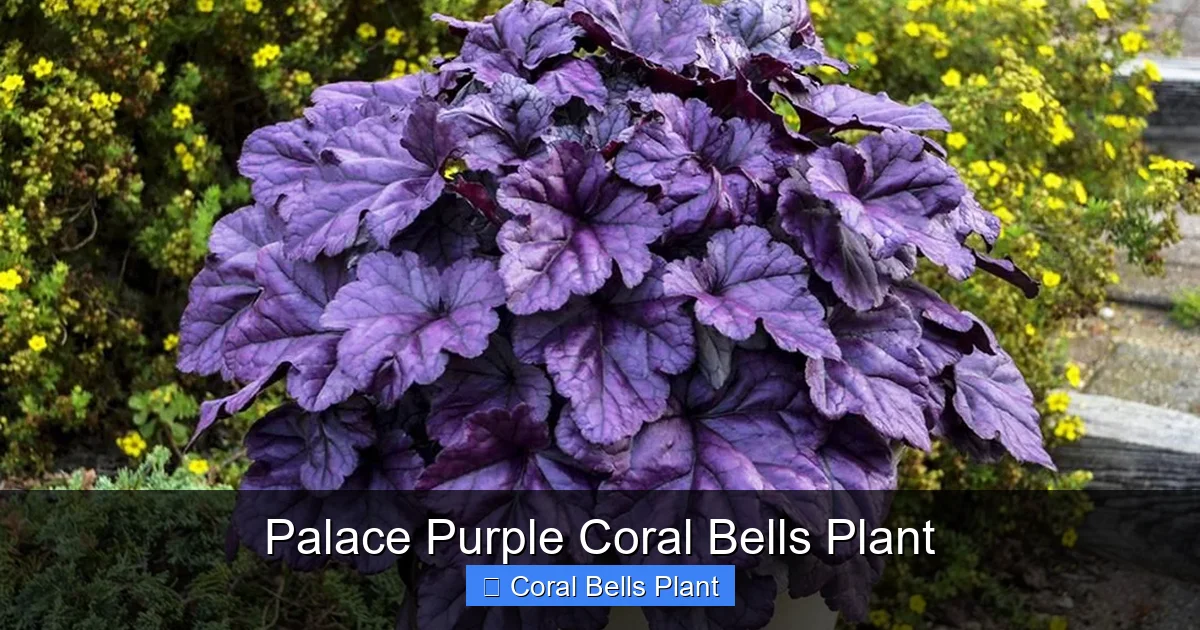
Palace Purple Coral Bells Plant
The Palace Purple Coral Bells plant is a beloved perennial prized for its dramatic purple foliage and delicate bell-shaped flowers. This low-maintenance shade lover adds year-round color to gardens and thrives in zones 4-9 with minimal care.
If you have ever wandered through a shade garden and spotted a mound of rich, velvety purple leaves that seem to glow even in dim light, chances are you were looking at a Palace Purple Coral Bells plant. This classic perennial has been a garden favorite for decades, and for good reason. It brings reliable color, texture, and elegance to those tricky shady spots where many other plants struggle to survive.
I remember the first time I planted Palace Purple Coral Bells in my own garden. I had a bare patch under a mature maple tree where grass refused to grow. Within a single season, those plants transformed the space into a lush, purple carpet that drew compliments from every visitor. That experience taught me just how powerful this plant can be in the right setting. Today, I want to share everything I have learned about growing, caring for, and designing with this exceptional perennial.
Key Takeaways
- Striking Foliage: Deep purple leaves provide dramatic color from spring through fall, often intensifying in cooler weather.
- Shade Tolerant: Thrives in partial to full shade, making it perfect for woodland gardens and north-facing beds.
- Low Maintenance: Requires minimal care once established, needing only occasional watering and division every few years.
- Versatile Design: Works beautifully in borders, containers, rock gardens, and as ground cover beneath trees.
- Pollinator Friendly: Delicate flowers attract hummingbirds and bees during late spring and early summer.
- Year-Round Interest: Evergreen in mild climates, providing winter structure when other perennials have died back.
- Easy Propagation: Simple to divide in spring or fall, allowing you to expand your collection or share with friends.
Quick Answers to Common Questions
How much sun does Palace Purple Coral Bells need?
Palace Purple Coral Bells thrives in partial shade with 4 to 6 hours of morning sun. In cooler climates it tolerates more sun, but in hot regions it needs protection from afternoon sun to prevent leaf scorch.
When is the best time to divide Palace Purple Coral Bells?
Early spring as new growth emerges is the ideal time to divide. In mild climates, early fall also works well. Divide every 3 to 4 years when the center becomes woody.
Why are my Palace Purple Coral Bells turning green?
Too much shade causes the plant to produce more chlorophyll, masking the purple pigments. Move to a brighter location with morning sun for deeper color.
Can Palace Purple Coral Bells grow in containers?
Yes, they grow beautifully in containers at least 12 inches deep with good drainage. Use quality potting mix and water more frequently than in-ground plants.
Is Palace Purple Coral Bells deer resistant?
Heucheras are generally deer resistant due to their astringent foliage, but hungry deer may browse them. They are more resistant than hostas and many other shade plants.
📑 Table of Contents
- Getting to Know the Palace Purple Coral Bells Plant
- Ideal Growing Conditions for Palace Purple Coral Bells
- Planting and Establishment
- Ongoing Care and Maintenance
- Designing with Palace Purple Coral Bells
- Seasonal Interest and Year-Round Appeal
- Propagation Methods
- Troubleshooting Common Problems
- Buying and Selecting Healthy Plants
- Palace Purple vs. Other Heuchera Varieties
- Conclusion
Getting to Know the Palace Purple Coral Bells Plant
Botanical Background and History
The Palace Purple Coral Bells plant, botanically known as Heuchera micrantha ‘Palace Purple’, belongs to the Saxifragaceae family. It was discovered as a chance seedling at the Royal Palace Gardens at Kew in England, hence the regal name. This cultivar was introduced to the horticultural trade in the 1980s and quickly became one of the most popular heucheras worldwide. In 1991, it earned the prestigious Perennial Plant of the Year award from the Perennial Plant Association, cementing its status as a garden classic.
Unlike many modern heuchera hybrids bred primarily for flower power, Palace Purple was selected for its extraordinary foliage. The species Heuchera micrantha is native to western North America, growing naturally in rocky woods and cliffs. This heritage explains its toughness and adaptability in garden settings. The Palace Purple selection amplifies the species’ natural purple pigmentation, creating leaves that emerge bronze-purple in spring and deepen to a rich, glossy mahogany-purple as they mature.
Physical Characteristics and Growth Habit
Palace Purple Coral Bells forms a neat, mounding clump typically reaching 12 to 18 inches tall and wide. The foliage is the star attraction. Each leaf is roughly maple-shaped, measuring 3 to 5 inches across, with gently lobed edges and a slightly ruffled texture. The upper surface displays that signature deep purple color, while the undersides often show a lighter, reddish-purple hue. In spring, new growth emerges with a brighter, almost metallic sheen that catches the light beautifully.
Come late spring to early summer, slender wiry stems rise above the foliage, reaching 20 to 30 inches tall. These stems carry loose panicles of tiny, creamy-white to pale pink bell-shaped flowers. While the blooms are delicate and charming, they are not the main ornamental feature. Many gardeners actually remove the flower stems to direct energy back into foliage production. The plant maintains its attractive mound shape throughout the growing season, and in mild climates, the foliage persists through winter, providing rare cold-season color.
Ideal Growing Conditions for Palace Purple Coral Bells
Light Requirements
One of the greatest strengths of the Palace Purple Coral Bells plant is its adaptability to various light conditions. It performs best in partial shade, receiving morning sun and afternoon shade, or dappled light beneath deciduous trees. In cooler northern climates, it can tolerate more sun, even full sun, provided the soil remains consistently moist. However, in hot southern regions, afternoon sun will scorch the leaves, causing unsightly brown edges and faded color.
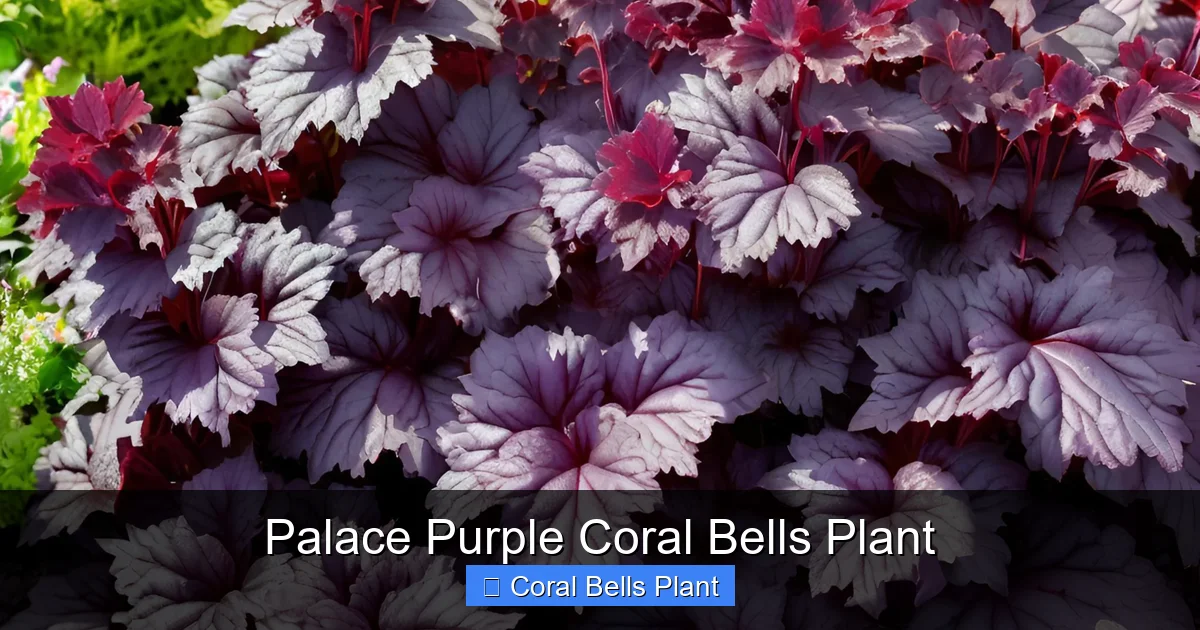
Visual guide about Palace Purple Coral Bells Plant
Image source: i.etsystatic.com
I have found that the deepest, richest purple color develops when the plant receives about 4 to 6 hours of morning light. Too much shade can cause the foliage to turn greener as the plant produces more chlorophyll to compensate for low light. Too much sun bleaches the color and stresses the plant. If you are unsure about your site, start with a location that gets gentle morning sun and bright shade for the rest of the day. You can always move it later if needed, as these plants transplant easily.
Soil Preferences
Palace Purple Coral Bells thrives in rich, well-draining soil with a slightly acidic to neutral pH between 6.0 and 7.0. The key word here is drainage. These plants have shallow, fibrous root systems that rot quickly in heavy, waterlogged clay. If your soil is dense, amend it generously with compost, leaf mold, or well-rotted manure before planting. Raised beds or berms are excellent solutions for poorly drained areas.
Organic matter is your best friend when preparing soil for heucheras. It improves drainage while retaining moisture, creates air pockets for root health, and provides slow-release nutrients. I like to work in a 2 to 3 inch layer of compost into the top 8 to 10 inches of soil. If you are planting in containers, use a high-quality potting mix amended with perlite or coarse sand for extra drainage. Avoid heavy garden soil in pots, as it compacts over time and suffocates roots.
Water Needs
Consistent moisture is important for Palace Purple Coral Bells, especially during the first growing season as roots establish. Water deeply once or twice a week during dry spells, aiming to keep the soil evenly moist but never soggy. A 2 inch layer of organic mulch such as shredded bark, pine needles, or leaf mold helps retain soil moisture, suppress weeds, and keep roots cool. Keep mulch pulled back slightly from the crown to prevent rot.
Once established, these plants show surprising drought tolerance. Their shallow roots can access surface moisture efficiently, and the thick, somewhat leathery leaves reduce water loss. However, prolonged drought will cause leaf edges to crisp and the plant to decline. In containers, check soil moisture daily during hot weather, as pots dry out much faster than ground soil. Water when the top inch feels dry to the touch.
Temperature and Hardiness
Palace Purple Coral Bells is reliably hardy in USDA zones 4 through 9. In zone 4, it benefits from a protective winter mulch of straw or evergreen boughs applied after the ground freezes. This prevents freeze-thaw cycles that can heave the shallow crowns out of the soil. In zones 8 and 9, the plant may remain evergreen through winter, though foliage can look a bit tired by late winter. A light trim in early spring removes any damaged leaves and makes way for fresh growth.
Heat and humidity are the real challenges in southern zones. In zone 9 and warmer, Palace Purple often struggles with fungal issues and heat stress. If you garden in a hot, humid climate, look for newer heuchera hybrids bred specifically for heat tolerance, such as the ‘Southern Comfort’ or ‘Caramel’ series. Alternatively, site your Palace Purple in the coolest, shadiest spot available and ensure excellent air circulation.
Planting and Establishment
When to Plant
Spring and fall are the ideal planting times for Palace Purple Coral Bells. Spring planting gives the plant a full growing season to establish before winter. Aim to plant after the last frost date when soil has warmed to at least 50 degrees Fahrenheit. Fall planting works well in zones 6 and warmer, allowing roots to establish during cool, moist autumn weather. Plant at least 6 weeks before the ground freezes to ensure adequate root development.
Summer planting is possible but requires diligent watering and temporary shade protection. If you must plant in summer, choose a cloudy day or plant in the evening. Provide shade cloth for the first week or two, and water daily until you see new growth. Winter planting should be avoided entirely in cold climates, as frozen soil prevents proper root-to-soil contact.
Planting Technique
Proper planting depth is critical for heuchera success. The crown, where stems meet roots, must sit at or slightly above soil level. Planting too deep is the number one cause of crown rot. Dig a hole twice as wide as the root ball but no deeper. Loosen the soil at the bottom and sides of the hole to encourage root penetration.
Gently remove the plant from its container and loosen any circling roots. Place it in the hole, checking that the crown sits at the right level. Backfill with amended soil, firming gently around the roots to eliminate air pockets. Water thoroughly to settle the soil. Apply a thin layer of mulch, keeping it away from the crown. Space plants 12 to 18 inches apart, depending on how quickly you want them to fill in.
First Season Care
The first growing season is all about root establishment. Water consistently, especially during hot, dry periods. Do not fertilize at planting time, as this can burn tender new roots. Wait until you see active new growth, then apply a light feeding of balanced, slow-release fertilizer or a top dressing of compost. Remove any flower stems that appear during the first year to direct energy into root and foliage development.
Watch for signs of stress. Wilting despite moist soil can indicate root rot from overwatering or poor drainage. Yellowing leaves may signal nutrient deficiency or pH issues. Brown, crispy edges usually mean too much sun or not enough water. Address problems promptly, and most plants recover quickly. By the end of the first season, your Palace Purple Coral Bells should be well-established and ready to thrive for years to come.
Ongoing Care and Maintenance
Fertilizing Schedule
Palace Purple Coral Bells is not a heavy feeder. In fact, too much fertilizer produces lush, soft growth that is more susceptible to disease and winter damage. A single application of balanced, slow-release fertilizer in early spring as new growth emerges is usually sufficient. Alternatively, top dress with an inch of compost or well-rotted manure around the base of the plant each spring. This provides gentle, sustained nutrition and improves soil structure over time.
If your soil is very poor or sandy, you might apply a second light feeding in early summer. Avoid fertilizing after midsummer, as this encourages tender growth that will not harden off before winter. Container-grown plants need more frequent feeding since nutrients leach out with watering. Use a dilute liquid fertilizer monthly during the growing season, or incorporate slow-release pellets into the potting mix at planting time.
Pruning and Grooming
Minimal pruning keeps Palace Purple Coral Bells looking its best. In early spring, before new growth starts, remove any winter-damaged, dead, or diseased leaves. Cut them off at the base of the leaf stem using clean, sharp scissors or pruners. This improves air circulation and reduces disease pressure. Throughout the growing season, snip off any leaves that become tattered, sunburned, or discolored.
Flower stems can be removed after blooming finishes, or left for their airy charm and pollinator value. If you prefer a tidier look, cut the stems back to the base once flowers fade. Some gardeners remove flower buds as they form to maximize foliage production. This is purely aesthetic preference. The plant will not be harmed either way.
Division and Renewal
Every 3 to 4 years, Palace Purple Coral Bells benefits from division. Over time, the crown becomes woody and the center may die out, leaving a ring of growth around a bare middle. Division rejuvenates the plant, controls size, and gives you free plants to expand your garden or share. The best time to divide is early spring as new growth emerges, or early fall in mild climates.
To divide, dig up the entire clump with a garden fork, taking care to get as many roots as possible. Shake or wash off excess soil to see the crown structure. Using a sharp knife or spade, cut the crown into sections, each with several healthy leaves and a good root system. Discard the woody, unproductive center. Replant divisions immediately at the same depth they were growing, water well, and mulch. They may look a bit sad for a week or two but will bounce back quickly.
Pest and Disease Management
Palace Purple Coral Bells is relatively pest-free, but a few issues can arise. Vine weevils are the most serious pest. Adult weevils notch leaf edges at night, while larvae feed on roots, often killing the plant. Check for notched leaves in spring and summer. If found, apply beneficial nematodes to the soil in late summer to control larvae. Slugs and snails may also chew holes in leaves, especially in damp, shady conditions. Use iron phosphate bait or beer traps for control.
Fungal diseases like powdery mildew, rust, and leaf spot occur in humid conditions with poor air circulation. Prevent problems by spacing plants properly, watering at the base rather than overhead, and removing affected leaves promptly. Crown rot, caused by soil-borne fungi, is the most deadly issue. It strikes when crowns are buried too deep or soil stays soggy. Once crown rot takes hold, the plant usually cannot be saved. Prevention through proper planting and drainage is essential.
Designing with Palace Purple Coral Bells
Companion Plants for Shade Gardens
The deep purple foliage of Palace Purple Coral Bells creates stunning contrasts with chartreuse, silver, and variegated plants. Pair it with Japanese forest grass (Hakonechloa macra ‘Aureola’) for a glowing gold-and-purple combination that lights up dark corners. Hostas with blue-green leaves like ‘Halcyon’ or ‘Blue Angel’ provide bold textural contrast. The fine, airy fronds of Japanese painted fern (Athyrium niponicum ‘Pictum’) with its silver and burgundy markings echo the heuchera’s colors beautifully.
For spring interest, underplant Palace Purple with early bulbs like snowdrops, crocus, or species tulips. The heuchera’s emerging foliage hides the bulb foliage as it dies back. Summer-blooming shade perennials such as astilbe, bleeding heart (Dicentra), and foamflower (Tiarella) extend the seasonal show. In fall, the purple leaves intensify alongside the golden foliage of Solomon’s seal (Polygonatum) or the red berries of jack-in-the-pulpit (Arisaema).
Container Combinations
Palace Purple Coral Bells shines in containers, where its foliage can be appreciated up close. Use it as a “filler” in the classic thriller-filler-spiller formula. A tall, architectural plant like Japanese maple, upright fern, or ornamental grass serves as the thriller. Palace Purple fills the middle with rich color. Trailing plants like creeping jenny (Lysimachia nummularia ‘Aurea’), ivy, or sweet potato vine spill over the edges as spillers.
For a sophisticated monochromatic container, combine Palace Purple with other purple-leaved plants in varying shades. Try ‘Black Scallop’ ajuga, ‘Purple Heart’ tradescantia, and ‘Dark Star’ lobelia. Add a silver accent like dusty miller or lamb’s ear for contrast. In winter containers, the evergreen foliage provides structure alongside dwarf conifers, winterberry holly, and ornamental kale. Choose a container at least 12 inches deep with drainage holes, and use a quality potting mix.
Landscape Applications
Mass planting creates the most dramatic impact. Space plants 12 inches apart in a drift beneath trees or along a woodland path. The result is a living purple carpet that suppresses weeds and defines the space. Use Palace Purple as edging along a shaded border or pathway. The uniform mounds create a tidy, finished look that holds its shape all season.
Rock gardens and slopes benefit from heuchera’s shallow roots and erosion control. Plant in pockets between stones where soil is well-drained. The foliage softens hard edges and adds color to stone-heavy designs. In mixed perennial borders, use Palace Purple as a foliage anchor. Its consistent presence ties together ephemeral bloomers like columbine, foxglove, and campanula. It also works beautifully in the “hellstrip” between sidewalk and street if that area receives shade.
Seasonal Interest and Year-Round Appeal
Spring Awakening
Spring is perhaps the most exciting season for Palace Purple Coral Bells. As temperatures warm, fresh leaves emerge from the crown in a vibrant burst of bronze-purple. This new growth has an almost metallic sheen that catches spring light spectacularly. The contrast between old, weathered leaves and brilliant new ones creates a dynamic display. This is also when you will see the most dramatic color if the plant receives adequate spring sunshine.
Flower stems begin to elongate in late spring. The buds form along wiry, reddish stems that add their own architectural interest. By early summer, the airy panicles of tiny bells open, swaying gracefully in the breeze. While individual flowers are small, the collective effect is a delicate cloud above the solid mound of foliage. Hummingbirds visit frequently, and the blooms make charming additions to small bouquets.
Summer Steadfastness
Through the heat of summer, Palace Purple Coral Bells remains a reliable anchor in the shade garden. While many spring bloomers go dormant and summer perennials have not yet peaked, heuchera holds its ground with consistent color and form. The foliage may deepen to a more subdued, sophisticated mahogany tone. In very hot climates, some leaf scorch may appear on edges if the plant receives too much afternoon sun. Simply trim affected leaves and ensure adequate moisture.
Summer is also the time to watch for vine weevil damage. Check leaves regularly for the characteristic notching. If you grow Palace Purple in containers, summer heat can stress roots more than in-ground plants. Consider moving pots to a shadier location during heat waves, and water more frequently. A mid-summer top dressing of compost helps replenish nutrients and keep roots cool.
Fall Transformation
As nights cool in autumn, Palace Purple Coral Bells often puts on its most intense color show. The purple pigmentation deepens dramatically in response to cooler temperatures and shorter days. Leaves can turn a stunning, almost black-purple that provides incredible contrast against fall golds and oranges. This is when the plant truly earns its keep in the landscape, bridging the gap between summer abundance and winter dormancy.
Fall is also the ideal time for planting new specimens and dividing established clumps in zones 6 and warmer. The soil is still warm enough for root growth, but cooler air temperatures reduce transplant shock. Plants established in fall often outperform spring-planted ones the following year. Apply a fresh layer of mulch after planting to protect new roots through winter.
Winter Presence
In zones 7 and warmer, Palace Purple Coral Bells remains largely evergreen through winter. The foliage may flatten somewhat under snow or heavy frost, but it retains its color and structure. This provides rare winter interest in the shade garden when most perennials have disappeared underground. In colder zones, the foliage dies back to the crown after hard freezes. A protective mulch of straw or shredded leaves applied after the ground freezes prevents heaving and insulates the crown.
Winter is the time to plan next year’s garden. Take photos of your Palace Purple plantings now to remember where gaps exist or where divisions might be needed. Order new plants early for the best selection. If you have container-grown specimens, move them to a protected location like an unheated garage or against a sheltered wall. Water occasionally during dry spells if the soil is not frozen.
Propagation Methods
Division
Division is the easiest and most reliable way to propagate Palace Purple Coral Bells. As described in the maintenance section, dig up mature clumps in spring or fall and separate them into smaller sections. Each division should have at least 3 to 5 healthy leaves and a portion of the root system. This method produces clones identical to the parent plant and yields flowering-size specimens quickly.
For best results, divide on a cool, cloudy day. Have new planting holes prepared before you dig up the parent plant. Work quickly to minimize root exposure to air and sun. Water divisions in well and provide temporary shade for a few days if the weather is warm. Most divisions establish within a few weeks and may even flower in their first season.
Seed Propagation
Growing Palace Purple Coral Bells from seed is possible but with an important caveat. Named cultivars like ‘Palace Purple’ do not come true from seed. Seedlings will be variable, often reverting to the green-leaved species form. However, this variability can be exciting for plant breeders or adventurous gardeners. You might discover a unique new variation!
If you want to try seed propagation, collect seeds from spent flower stems in late summer. Sow them fresh on the surface of a sterile seed-starting mix, as they need light to germinate. Keep moist and at 65 to 70 degrees Fahrenheit. Germination takes 2 to 4 weeks. Transplant seedlings to individual pots when they have two sets of true leaves. Grow them on for a season before planting out. Be prepared for mostly green-leaved offspring with perhaps a few purple-tinged surprises.
Leaf Cuttings
Leaf cuttings offer another vegetative propagation method that preserves the cultivar’s characteristics. In late spring or early summer, select healthy, mature leaves with a short piece of petiole (leaf stem) attached. Dip the cut end in rooting hormone and insert into a moist, well-draining rooting medium such as perlite and peat moss. Cover with a clear plastic bag or dome to maintain humidity.
Place in bright, indirect light at 65 to 70 degrees. Roots and a tiny new plantlet should form at the base of the petiole in 4 to 6 weeks. Once the plantlet has several leaves and a small root system, transplant it to a small pot. This method is slower than division but allows you to produce many plants from a single specimen. It is also useful for rescuing a plant with crown rot if you catch it early and can salvage healthy leaves.
Troubleshooting Common Problems
Foliage Issues
Brown, crispy leaf edges usually indicate environmental stress. The most common causes are too much sun, insufficient water, low humidity, or fertilizer burn. Assess the plant’s location and care routine. Move to a shadier spot if sun is the issue. Increase watering frequency if soil is dry. For container plants, consider a larger pot with more soil volume to buffer moisture. Flush soil with water if over-fertilization is suspected.
Yellowing leaves can signal several problems. If older leaves yellow while new growth looks healthy, it may be natural aging or slight nitrogen deficiency. A light feeding often corrects this. If the whole plant yellows, check for root rot from overwatering or poor drainage. Gently dig around the crown to inspect roots. Healthy roots are white or light tan and firm. Rotting roots are dark, mushy, and foul-smelling. Improve drainage immediately if rot is found.
Pale, washed-out color usually means too much shade. The plant is producing extra chlorophyll to capture limited light, masking the purple pigments. If possible, move to a brighter location or thin overhead branches to increase light penetration. In very deep shade, Palace Purple may never achieve its full color potential. Consider brighter heuchera varieties like ‘Lime Rickey’ or ‘Citronelle’ for those spots.
Growth and Vigor Problems
Stunted growth or failure to thrive often traces back to planting depth. If the crown is buried, the plant cannot grow properly. Carefully excavate around the base to check. The crown should be visible at soil level. If buried, gently remove soil until the crown is exposed. Be careful not to damage shallow roots. The plant should recover once the crown can breathe.
Plants that become sparse and woody in the center with growth only at the edges are overdue for division. This is a natural aging process. Dig and divide as described earlier, discarding the woody center. Replant the vigorous outer sections. Within a season, you will have full, healthy mounds again.
Sudden wilting and collapse, especially in summer, often indicates vine weevil larvae feeding on roots. Check the soil around the base for C-shaped, legless white grubs with brown heads. If found, treat with beneficial nematodes (Steinernema kraussei or Heterorhabditis bacteriophora) applied as a soil drench in late summer when larvae are young and vulnerable. The nematodes parasitize and kill the grubs without harming plants or beneficial insects.
Buying and Selecting Healthy Plants
What to Look For
When shopping for Palace Purple Coral Bells, whether at a local nursery or online, know how to spot a healthy specimen. The foliage should be richly colored, free of brown edges, spots, or holes. Check both sides of leaves for pests like aphids, spider mites, or scale insects. The crown should be firm and sit at soil level, not buried or exposed with roots showing.
Gently lift the plant from its pot to inspect roots if possible. Healthy roots are white or light tan, firm, and fill the pot without being severely root-bound. Avoid plants with dark, mushy roots or a sour smell, which indicate root rot. The potting mix should be moist but not soggy. A few weeds in the pot are not a deal-breaker, but excessive weeds suggest poor nursery care.
Size matters depending on your patience and budget. Quart or 4-inch pots are economical but take a year or two to reach full size. Gallon or 2-gallon containers provide instant impact but cost more. For mass plantings, smaller pots make financial sense. For a focal point container or small grouping, larger plants give immediate satisfaction.
Where to Buy
Local independent nurseries often carry Palace Purple Coral Bells in spring and fall. The advantage is seeing the plant before buying and getting advice from knowledgeable staff. They may also carry larger specimens not available by mail order. Big box garden centers stock it seasonally, but plant quality can vary. Check plants carefully and avoid any that look stressed or neglected.
Online perennial specialists offer a wider selection and ship at proper planting times for your zone. Reputable mail-order nurseries guarantee live arrival and true-to-name plants. Read reviews before ordering. Some excellent online sources include Bluestone Perennials, White Flower Farm, Plant Delights Nursery, and Walters Gardens. Many offer discounts for bulk orders if you are planning a large planting.
Timing Your Purchase
Spring offers the widest availability as nurseries stock up for the planting season. You will find the best selection in April and May. Fall is the second-best time, with fresh crops arriving in September. Summer availability is limited and plants may be heat-stressed. Winter purchases are rare except in warm climates or from specialty growers.
If you order online, schedule delivery for your ideal planting window. Most nurseries ship based on hardiness zone, but you can often request a specific ship date. Avoid having plants delivered during extreme heat, cold, or when you will be away. Have your planting site prepared before plants arrive so they can go in the ground promptly.
Palace Purple vs. Other Heuchera Varieties
Classic vs. Modern Hybrids
Palace Purple Coral Bells represents the first wave of heuchera popularity, selected primarily for foliage color. Since its introduction, breeders have developed hundreds of new cultivars with an astonishing range of colors, patterns, and forms. Modern hybrids like the ‘Primo’ and ‘Dolce’ series offer larger leaves, more intense colors, better heat tolerance, and showier flowers. Some feature ruffled edges, silver overlays, or dramatic veining that Palace Purple lacks.
However, Palace Purple retains advantages that keep it relevant. Its proven track record spans decades across diverse climates. It is generally more affordable than patented new introductions. The foliage color is remarkably stable, not reverting or fading as some newer varieties do. And its growth habit is consistently neat and mounding, whereas some modern hybrids can become leggy or open-centered.
Color Alternatives
If you love the Palace Purple look but want different colors, consider these reliable alternatives. For silver foliage, ‘Silver Scrolls’ offers metallic leaves with purple undersides. ‘Caramel’ provides warm amber-gold leaves that glow in shade. ‘Obsidian’ is perhaps the darkest heuchera, with nearly black, glossy leaves that hold color even in sun. ‘Lime Rickey’ and ‘Electra’ bring chartreuse energy to dark corners.
For patterned foliage, ‘Marmalade’ shows undulating amber to sienna shades. ‘Berry Smoothie’ emerges rose-pink and matures to burgundy. ‘Delta Dawn’ has gold leaves with red centers. The variety is staggering. Visit a display garden or nursery in spring to see them side by side. You may find yourself wanting a collection!
Species and Native Types
Beyond hybrids, several heuchera species offer garden value. Heuchera americana, the American alumroot, is native to eastern North America and has green leaves often marked with silver or purple. It is exceptionally tough and drought-tolerant. Heuchera villosa, the hairy alumroot, handles heat and humidity better than most, with large, fuzzy leaves. ‘Autumn Bride’ is a popular villosa cultivar with green leaves and showy white flowers in late summer.
Heuchera sanguinea, coral bells proper, is grown primarily for its bright red flowers on tall stems. It is the parent of many flowering hybrids. These species types are worth seeking for naturalistic plantings, native gardens, and challenging sites where hybrids may struggle. They also provide genetic diversity for pollinators adapted to native plants.
Conclusion
The Palace Purple Coral Bells plant has earned its place as a garden classic through decades of reliable performance and undeniable beauty. Its rich purple foliage brings sophistication to shade gardens, containers, and borders across a wide range of climates. Few perennials offer such consistent color with so little demand on the gardener’s time.
Whether you are a beginning gardener looking for a foolproof shade plant or an experienced designer seeking a versatile foliage anchor, Palace Purple delivers. Plant it in well-drained soil with morning light, water it regularly during establishment, divide it every few years, and it will reward you with years of stunning presence. The compliments from garden visitors will be just a bonus.
I encourage you to find a spot for at least one Palace Purple Coral Bells in your garden this season. Watch how it transforms a dull shady corner into a focal point. Observe how its color shifts through the seasons. Share divisions with gardening friends. This plant connects us to generations of gardeners who have valued its simple, enduring elegance. In a world of fleeting trends, Palace Purple remains a steadfast companion, quietly magnificent, season after season.
Frequently Asked Questions
How do I prevent crown rot in Palace Purple Coral Bells?
Plant with the crown at or slightly above soil level, never buried. Ensure excellent drainage by amending heavy soil with compost. Avoid mulch against the crown and water at the base, not overhead.
Will Palace Purple Coral Bells survive winter in zone 4?
Yes, it is hardy to zone 4 with protection. Apply a winter mulch of straw or evergreen boughs after the ground freezes to prevent frost heaving of the shallow crowns.
Should I cut back the flowers on Palace Purple Coral Bells?
This is personal preference. Removing flower stems directs energy to foliage growth. Leaving them provides airy beauty and feeds pollinators. Cut back after blooming if you prefer a tidier look.
Why does the center of my Palace Purple Coral Bells die out?
This is natural aging. The crown becomes woody and unproductive after 3 to 4 years. Dig and divide the plant, discarding the woody center and replanting the vigorous outer sections.
Can I grow Palace Purple Coral Bells indoors as a houseplant?
It is challenging indoors due to low light and dry air. If attempted, provide bright indirect light, high humidity, cool temperatures, and excellent drainage. It performs much better outdoors.
What causes notched edges on Palace Purple Coral Bells leaves?
Notched leaf edges are characteristic damage from adult vine weevils feeding at night. Check for C-shaped white grubs in the soil. Treat with beneficial nematodes in late summer to control larvae.