Coral Bell Plant Sun or Shade
Coral bells (Heuchera) are versatile perennials that adapt to various light conditions, though most varieties prefer partial shade with morning sun. Understanding your specific cultivar’s needs ensures vibrant foliage color and healthy growth throughout the seasons.
If you have ever wandered through a garden center and spotted those gorgeous ruffled leaves in shades of purple, caramel, lime green, or near-black, you have likely met the coral bell plant. Known botanically as Heuchera, these North American natives have become superstars in shade gardens everywhere. But here is the question every gardener asks: coral bell plant sun or shade? What do they really want?
The answer is not a simple one-word reply. It depends on where you live, which variety you chose, and even what time of day the sun hits your garden bed. I have grown coral bells in deep shade under maples, in morning sun along an east-facing fence, and even in containers on a sunny patio. Each spot taught me something new about these adaptable plants. Let me share what I have learned so you can give your coral bells exactly what they need.
Key Takeaways
- Most coral bells prefer partial shade: Morning sun with afternoon shade produces the best foliage color and prevents leaf scorch.
- Light tolerance varies by variety: Dark-leaved cultivars tolerate more sun, while light-colored varieties need more shade protection.
- Full sun is possible in cooler climates: Northern gardeners can grow coral bells in full sun with adequate moisture.
- Deep shade reduces flowering: Plants survive in full shade but produce fewer flower spikes and may become leggy.
- Soil moisture matters more than light: Consistent moisture allows coral bells to handle more sun exposure.
- Seasonal adjustments help: Container plants can be moved to optimize light exposure throughout the year.
- Watch for stress signals: Bleached leaves indicate too much sun; stretched growth signals too little light.
Quick Answers to Common Questions
Can coral bells grow in full sun?
Some dark-leaved varieties can tolerate full sun in cool climates with consistent moisture, but most coral bells prefer morning sun with afternoon shade to prevent leaf scorch.
Will coral bells survive in deep shade?
Coral bells will survive in deep shade but become leggy, lose vibrant color, and produce fewer flowers. Bright dappled shade or morning sun is ideal for best performance.
Which coral bell varieties handle the most sun?
Dark-foliaged varieties like ‘Obsidian,’ ‘Black Pearl,’ ‘Palace Purple,’ and ‘Plum Pudding’ have the highest sun tolerance due to protective pigments in their leaves.
How do I know if my coral bell gets too much sun?
Signs of excessive sun include bleached or faded leaf color, brown crispy leaf edges, papery leaf texture, stunted growth, and withered flower stems.
Can I move coral bells to a better light location?
Yes, coral bells transplant well. Best times are early spring or early fall. Water deeply after moving and provide temporary shade during establishment.
📑 Table of Contents
- Understanding Coral Bells Natural Habitat
- The General Rule: Partial Shade Is Best
- How Variety Changes the Equation
- Climate Changes Everything
- Reading Your Plants: Signs of Too Much or Too Little Light
- Soil Moisture: The Hidden Factor in Sun Tolerance
- Seasonal Light Changes and Adaptation
- Best Practices for Planting and Establishment
- Companion Planting for Light Management
- Troubleshooting Common Light-Related Issues
- Special Situations: Indoor and Greenhouse Growing
- Designing with Light in Mind
- Conclusion
Understanding Coral Bells Natural Habitat
Where Heuchera Grows Wild
To understand what coral bells want in our gardens, we should look at where they grow in nature. Heuchera species are native to North America, found from Canada down through Mexico. In the wild, they typically grow in woodland settings, on rocky slopes, and along stream banks. They often nestle in the dappled light beneath deciduous trees or in the crevices of shaded rock faces.
This tells us something important. Coral bells evolved in places where they get filtered light, not baking afternoon sun. They like their roots cool and moist, protected by leaf litter and stone. But they also do not live in dark caves. They need enough light to photosynthesize and produce those stunning leaves.
What This Means for Your Garden
Think about your garden spaces. Do you have a spot under a tree where sunlight filters through the branches? That is coral bell heaven. What about the east side of your house where the morning sun hits for a few hours but the afternoon brings shade? Also perfect. The north side of a fence or building? Usually great, especially in hot climates.
The key word here is dappled or filtered. Not deep dark shade. Not blazing full sun. Somewhere in that sweet middle ground.
The General Rule: Partial Shade Is Best
Defining Partial Shade for Coral Bells
When plant tags say “partial shade,” they usually mean three to six hours of direct sun per day, preferably in the morning. For coral bells, the ideal is often described as morning sun with afternoon shade. This gives the plant enough light energy to produce vibrant foliage colors and strong flower stems, but protects it from the most intense heat of the day.
Morning sun is gentler. The air is cooler. The leaves have time to dry if they are wet from dew or irrigation. Afternoon sun, especially in summer, can be brutal. It raises leaf temperature, increases water loss, and can literally cook the delicate tissue of those beautiful ruffled leaves.
Why Afternoon Shade Matters
I learned this lesson the hard way. I planted a beautiful ‘Palace Purple’ coral bell in a spot that got sun from noon until six PM. By July, the edges of the leaves were crispy and brown. The center of the plant looked okay, but the outer leaves were fried. I moved it to a spot with morning sun only, and within a few weeks, new growth emerged clean and colorful.
Afternoon shade prevents leaf scorch. It keeps the soil cooler and moister. It reduces stress on the plant. Less stress means better color, more flowers, and a longer lifespan.
How Variety Changes the Equation
Dark-Leaved Varieties Handle More Sun
Here is where it gets interesting. Not all coral bells are created equal when it comes to sun tolerance. As a general rule, darker foliage can handle more sun. The pigments that create those deep purples, near-blacks, and rich bronzes act like sunscreen. They protect the leaf tissue from UV damage.
Varieties like ‘Obsidian,’ ‘Black Pearl,’ ‘Palace Purple,’ and ‘Plum Pudding’ can often take more direct sun than their lighter cousins. In cooler climates, they may even thrive in full sun all day if the soil stays moist. I have seen ‘Obsidian’ looking spectacular in a full-sun rock garden in Seattle. Try that in Atlanta, and you will have crispy critters by June.
Light-Colored Varieties Need More Protection
On the flip side, the chartreuse, yellow, peach, and silver varieties are the divas of the coral bell world. They need more shade. Their lighter pigments offer less natural sun protection. Varieties like ‘Lime Rickey,’ ‘Caramel,’ ‘Peach Flambe,’ and ‘Citronelle’ will bleach out, burn, or simply melt in too much direct sun.
I planted ‘Citronelle’ in a spot that got three hours of afternoon sun. Within two weeks, those gorgeous lime-green leaves turned a sad, washed-out yellow with brown edges. I moved it to full shade under a Japanese maple, and it recovered beautifully. Lesson learned: know your variety.
The Silver and Veined Types
Many modern hybrids feature silver overlays or dramatic veining. Think ‘Silver Scrolls,’ ‘Berry Smoothie,’ or ‘Forever Purple.’ These tend to fall in the middle. They appreciate morning sun to bring out the best color contrast in their veining, but they need afternoon shade to prevent the silver from scorching. The silver overlay can actually reflect light, which helps, but the tissue underneath is still sensitive.
Climate Changes Everything
Northern Gardens: More Sun Is Okay
If you garden in zone 4, 5, or 6, your coral bells can handle significantly more sun than the same plants in zone 8 or 9. The sun angle is lower. The intensity is less. Summer temperatures are cooler. In Minnesota or Maine, you can often grow coral bells in full sun with great success, provided you water consistently.
I have a gardening friend in Vermont who grows ‘Fire Alarm’ in a south-facing bed with six hours of direct sun. It looks amazing all season. The same variety in my zone 7b garden would need afternoon shade to look its best.
Southern Gardens: Shade Is Non-Negotiable
In the South, the sun is a different beast. Zone 7, 8, 9, and 10 gardeners must provide afternoon shade. Period. The combination of intense UV, high temperatures, and often high humidity creates a perfect storm for coral bell stress. Even the tough dark-leaved varieties appreciate a break from the sun after 1 PM.
In hot climates, aim for morning sun only, or bright dappled shade all day. The north or east side of a structure is ideal. Under high-limbed trees works beautifully. Avoid west-facing exposures unless you have a very large tree casting shade in the afternoon.
Desert and High-Altitude Considerations
If you garden in the desert Southwest or at high elevation, the UV intensity is extreme. Even morning sun can be too much for some varieties. In these regions, coral bells often do best in bright shade with no direct sun at all. The light reflected off walls, rocks, and pavement provides plenty of energy for photosynthesis without the leaf burn.
Container growing is a great strategy here. You can move pots to follow the seasons. Morning sun in spring, full shade in summer, maybe a bit more light in fall.
Reading Your Plants: Signs of Too Much or Too Little Light
Symptoms of Excessive Sun
Your coral bells will tell you if they are unhappy. You just need to know the language. Too much sun shows up as:
- Bleached or faded leaf color, especially on the top leaves
- Brown, crispy edges on leaves (leaf scorch)
- Leaves that feel thin and papery instead of substantial
- Stunted growth, the plant just sits there
- Flower stems that wither before fully opening
- The center of the plant looks okay but outer leaves are damaged
If you see these signs, do not panic. Coral bells are resilient. Move the plant if it is in a container. If it is in the ground, consider adding a shade cloth for the rest of the season, or plan to transplant in early fall or early spring.
Symptoms of Insufficient Light
Too little light creates different problems:
- Leggy, stretched growth with long petioles (leaf stems)
- Leaves that are smaller than normal
- Loss of vibrant color, leaves turn a dull green
- Very few or no flower spikes
- Plant looks sparse and open instead of a full mound
- Increased susceptibility to fungal diseases due to poor air circulation and damp conditions
Deep shade under evergreens or on the north side of a solid fence often creates these conditions. If your coral bell looks like it is reaching for light, it probably is.
The Goldilocks Zone
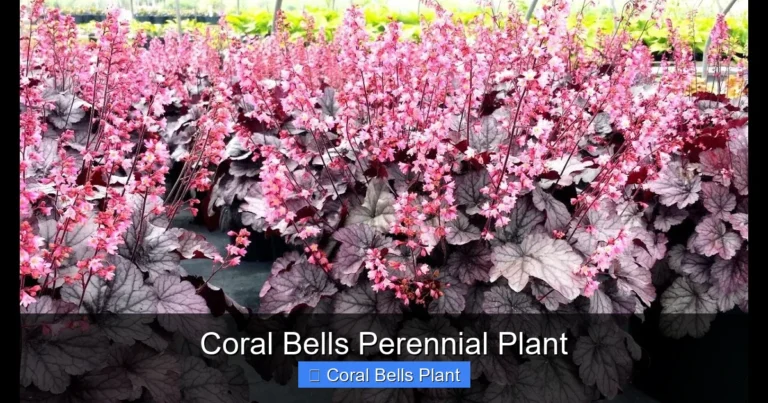
When you hit the sweet spot, you will know. The plant forms a dense, symmetrical mound. Leaves are richly colored, substantial to the touch, and hold their hue all season. Flower spikes emerge strong and straight, covered in tiny bells that attract hummingbirds. The plant looks perky, not stressed. That is the goal.
Soil Moisture: The Hidden Factor in Sun Tolerance
Why Water Matters More Than You Think
Here is a secret many gardeners miss: a well-watered coral bell in full sun often outperforms a drought-stressed coral bell in perfect shade. The roots of Heuchera are relatively shallow and fibrous. They dry out fast. When the soil is moist, the plant can transpire efficiently, cooling its leaves and preventing heat damage. When the soil is dry, the stomata close, heat builds up in the leaf tissue, and damage occurs.
This is why you sometimes see coral bells thriving in full sun at a botanical garden or a well-maintained commercial planting. Irrigation systems keep the root zone evenly moist. The plants never experience water stress, so they can handle the light stress.
Mulch Is Your Best Friend
If you want to push the sun tolerance of your coral bells, mulch heavily. Two to three inches of shredded bark, leaf mold, or pine straw keeps the soil cool and moist. It also breaks down over time, improving soil structure and adding organic matter. Coral bells love rich, humusy soil. It mimics their native woodland habitat.
I use shredded leaves from my own yard. It is free, it looks natural, and coral bells adore it. Just keep the mulch pulled back slightly from the crown of the plant to prevent rot.
Drip Irrigation Beats Overhead Watering
If you are growing coral bells in sunnier spots, invest in drip irrigation or soaker hoses. Overhead watering in hot sun can actually cause leaf burn. Water droplets act like tiny magnifying glasses on the leaves. Plus, wet foliage in humidity invites fungal issues. Drip irrigation delivers water right to the roots where it is needed, keeps leaves dry, and uses less water.
Seasonal Light Changes and Adaptation
Spring Sun vs. Summer Sun
The same garden spot can be perfect in April and deadly in July. Deciduous trees leaf out. The sun angle climbs higher. A bed that gets gentle morning sun in spring may get blasted by afternoon sun in summer once the neighbor’s tree fills in. Or vice versa: a spot shaded by a bare tree in early spring becomes dappled shade later.
Observe your garden through the seasons. Take photos at 9 AM, 1 PM, and 5 PM once a month. You will be surprised how the light patterns shift. This helps you choose the right spot for each variety.
Container Flexibility
This is why I love growing coral bells in containers. In spring, I put them on the east-facing patio where they get morning sun. In July, I move them to the north side of the house under the eaves. In fall, back to the patio. They get optimal light all year, and I get to enjoy them up close.
Containers also let you control soil mix perfectly. A blend of high-quality potting soil, compost, and a bit of perlite or coarse sand gives coral bells the drainage and moisture retention they crave.
Winter Considerations
In cold climates, winter sun on frozen soil can heave coral bells right out of the ground. Their shallow roots are vulnerable. A winter mulch of evergreen boughs or straw applied after the ground freezes prevents this. In warmer zones, winter sun is rarely an issue, but winter wet can be. Ensure good drainage year-round.
Best Practices for Planting and Establishment
Choosing the Right Spot at Planting Time
When you bring home a new coral bell, do not just plant it in the first hole you dig. Spend a day watching the light in potential spots. Check the soil moisture. Dig a test hole and see how well it drains. Coral bells hate wet feet, especially in winter.
Amend the planting hole with compost. Mix it 50/50 with native soil. Plant at the same depth it was in the pot, or very slightly high. The crown should be at or just above soil level. Burying the crown leads to rot. Water deeply after planting, then mulch.
The Establishment Period
Newly planted coral bells need extra attention for their first season. Even if the variety is labeled “full sun tolerant,” a young plant with a small root system cannot take up water fast enough to cool its leaves in hot sun. Provide temporary shade with a piece of shade cloth, a garden umbrella, or even a lawn chair positioned to cast afternoon shade. Do this for the first four to six weeks, or until you see vigorous new growth.
Dividing and Transplanting
Every three to four years, coral bells benefit from division. The centers can get woody and die out. Early spring or early fall are the best times. When you divide, you get a chance to reassess the light conditions. Has a tree grown larger? Has a neighbor removed a shade tree? Adjust the planting location accordingly.
Companion Planting for Light Management
Using Taller Plants as Living Shade
You can create the perfect light conditions for coral bells by planting them near taller perennials or shrubs that cast afternoon shade. Hostas, ferns, astilbes, and hydrangeas all make great neighbors. They enjoy similar conditions and their larger leaves provide a protective canopy.
I have a bed where ‘Jack Frost’ brunnera grows tall in spring, shading the coral bells at its feet. By the time the brunnera goes dormant in summer heat, the coral bells are established enough to handle the increased light. Nature’s perfect timing.
Deciduous Trees: The Ultimate Light Filter
Planting under deciduous trees is the classic coral bell scenario. Spring sun before the trees leaf out gives the plants energy for early growth and flowering. Summer shade protects them from heat. Fall leaf drop returns nutrients to the soil. It is a perfect partnership.
Just avoid planting directly under shallow-rooted trees like maples or birches where root competition is fierce. Or use containers sunk into the ground to give your coral bells their own root space.
Troubleshooting Common Light-Related Issues
Leaf Scorch Recovery
If your coral bells get scorched, do not remove the damaged leaves immediately. They are still photosynthesizing, even if they look ugly. Wait until new growth emerges, then trim the damaged foliage. Water deeply. Apply a light feeding of balanced organic fertilizer. Most plants bounce back quickly.
Color Reversion in Shade
Some varieties, especially the darker ones, may revert to green in too much shade. This is the plant producing more chlorophyll to capture limited light. If your ‘Obsidian’ turns muddy green, it needs more light. Move it to a brighter spot or limb up nearby trees.
Flower Power and Light
Coral bells are grown primarily for foliage, but those delicate flower spikes are a bonus. They attract hummingbirds and make great cut flowers. Plants in optimal light flower more heavily. Deep shade reduces flowering significantly. If you want the blooms, ensure at least three to four hours of morning sun or bright dappled light all day.
Special Situations: Indoor and Greenhouse Growing
Coral Bells as Houseplants
Can you grow coral bells indoors? Yes, but they need bright light. A south or west window with a sheer curtain works well. East windows are ideal. They will not thrive in low-light interior rooms. Indoor air is often dry, so use a humidity tray or humidifier. Keep the soil evenly moist but not soggy.
Indoor coral bells may not go fully dormant in winter. They might keep growing slowly. Reduce watering and fertilizing in the low-light months. Watch for spider mites, which love dry indoor conditions.
Greenhouse Production
Commercial growers produce coral bells under 30-50% shade cloth. This gives high light intensity without leaf burn. They use controlled irrigation and fertilization to push growth. Home gardeners can mimic this with shade cloth structures over raised beds.
Designing with Light in Mind
Creating a Coral Bell Tapestry
One of the most stunning garden designs uses multiple coral bell varieties together, each placed according to its light needs. Dark-leaved types in the sunnier front of the bed. Light-leaved types in the shadier back. Silver-veined varieties in the middle. The result is a living tapestry of color and texture that changes through the seasons.
I saw this at a botanical garden in Oregon. A curved bed under high-limbed oaks. The front edge got three hours of morning sun. ‘Obsidian,’ ‘Black Pearl,’ and ‘Midnight Rose’ anchored that edge. Behind them, in brighter dappled light, ‘Silver Scrolls,’ ‘Berry Smoothie,’ and ‘Forever Purple.’ In the back, where shade was deepest, ‘Citronelle,’ ‘Lime Rickey,’ and ‘Electra.’ It was breathtaking.
Edging and Borders
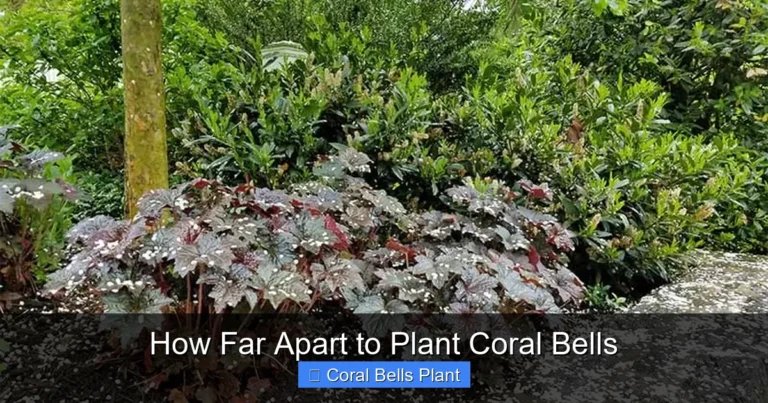
Coral bells make fantastic edging plants along shaded paths. Their low, mounding habit stays neat. Plant them 12-18 inches apart for a continuous line. Choose varieties with contrasting colors for a bold effect, or stick to one variety for a calm, cohesive look.
Rock Gardens and Slopes
In cooler climates, coral bells thrive in rock gardens with more sun. The stones keep roots cool and provide excellent drainage. On slopes, they help prevent erosion with their fibrous roots. Just ensure they get enough water during establishment.
Conclusion
So, coral bell plant sun or shade? The answer is both, and neither, and it depends. Most coral bells want that Goldilocks zone of morning sun and afternoon shade. But your climate, your variety, your soil moisture, and even the season all shift the target.
The beautiful thing about gardening is that it is a conversation with your plants. You try something. You watch. You listen to what the leaves tell you. You adjust. Coral bells are incredibly forgiving teachers. Move them. Divide them. Mulch them. Water them. They will reward you with color and texture that few other perennials can match.
Start with partial shade. Choose varieties suited to your light conditions. Water consistently. Mulch generously. And remember that a plant tag is a guideline, not a law. Your garden is unique. Your coral bells will show you what they need. All you have to do is pay attention.
Happy planting. May your coral bells be vibrant, your leaves unscorched, and your garden full of hummingbirds.
Frequently Asked Questions
What is the ideal amount of sun for coral bells?
Most coral bells thrive with 3-6 hours of morning sun followed by afternoon shade. This provides enough light for vibrant foliage color and flowering while protecting leaves from intense afternoon heat.
Do coral bells need different light in different climates?
Yes, climate significantly affects light tolerance. Northern gardeners (zones 4-6) can often grow coral bells in more sun, while southern gardeners (zones 7-10) must provide afternoon shade to prevent heat stress.
Why are my coral bell leaves turning brown on the edges?
Brown, crispy leaf edges typically indicate leaf scorch from too much afternoon sun or insufficient water. Move the plant to a shadier location or increase watering, and mulch heavily to retain soil moisture.
Can coral bells be grown in containers to manage light exposure?
Absolutely. Containers allow you to move coral bells seasonally—morning sun in spring, full shade in summer, more light in fall. Use well-draining potting mix and water consistently.
Do light-colored coral bell varieties need more shade than dark ones?
Yes, chartreuse, yellow, peach, and silver varieties have less protective pigment and burn more easily. They require more shade than dark purple, bronze, or near-black varieties.
Will coral bells flower in shade?
Coral bells will flower in shade but produce significantly fewer flower spikes. For best flowering, provide at least 3-4 hours of morning sun or bright dappled light throughout the day.