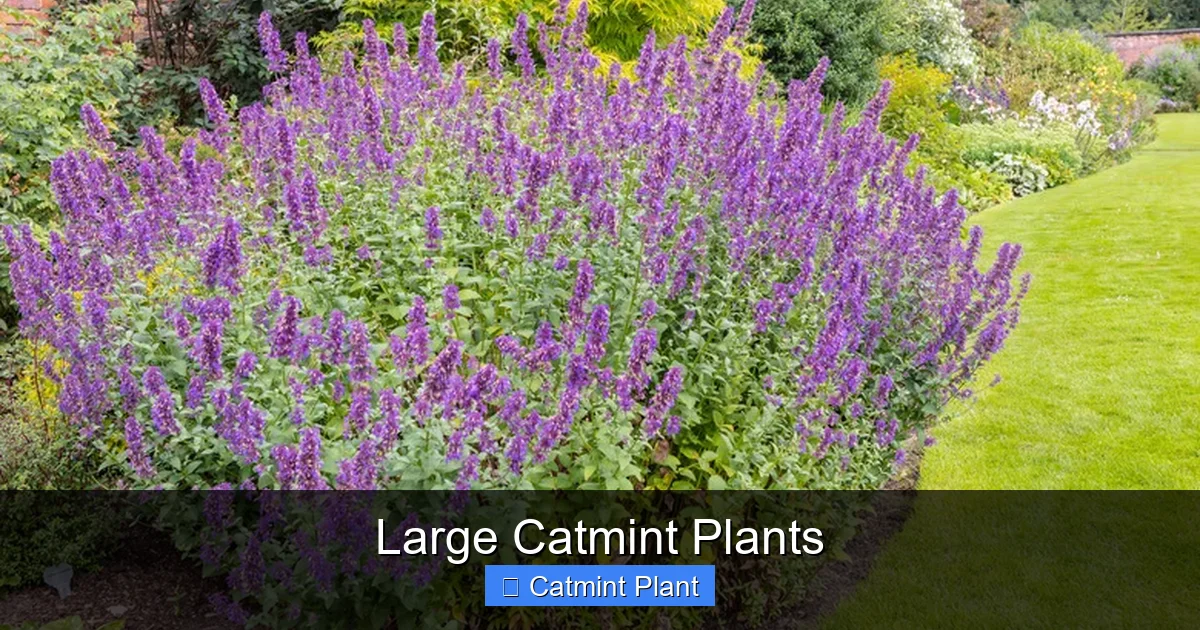
Large Catmint Plants
Large catmint plants are hardy, drought-tolerant perennials that produce clouds of lavender-blue flowers from late spring through fall. They attract pollinators, resist deer, and thrive in sunny spots with minimal care, making them perfect for low-maintenance gardens.
If you have ever walked past a garden in early summer and noticed a billowing mound of soft lavender-blue flowers buzzing with bees, chances are you were looking at large catmint plants. These workhorse perennials have earned a permanent spot in gardens across the country for good reason. They ask for very little and give back months of color, fragrance, and wildlife activity. Whether you are a seasoned gardener or just starting out, these plants deliver reliable performance with a relaxed, cottage-garden charm that fits almost any style.
In this guide, we will explore everything you need to know about selecting, planting, and caring for large catmint plants. You will learn which varieties grow the biggest, how to keep them blooming all season, creative ways to use them in your landscape, and simple solutions for the few problems they occasionally face. By the end, you will feel confident adding these beautiful, beneficial perennials to your own outdoor space.
Key Takeaways
- Hardy and adaptable: Large catmint plants thrive in USDA zones 3-8 and tolerate poor soil, heat, and drought once established.
- Long bloom season: Expect flowers from late spring to frost with proper deadheading and mid-season shearing.
- Pollinator magnets: Bees, butterflies, and hummingbirds flock to the nectar-rich blooms all season long.
- Deer and rabbit resistant: The aromatic foliage deters browsing animals naturally without chemicals.
- Versatile design element: Use large catmint plants as borders, mass plantings, cottage garden fillers, or companion plants for roses.
- Low maintenance: Minimal watering, fertilizing, or pest control needed after the first growing season.
- Easy propagation: Divide clumps every 3-4 years or take softwood cuttings to expand your planting for free.
Quick Answers to Common Questions
What is the largest variety of catmint?
Nepeta sibirica ‘Souvenir d’André Chaudron’ reaches 36 to 48 inches tall, making it one of the very largest catmint varieties available.
When should I cut back large catmint plants?
Cut back old growth in early spring before new shoots emerge. Shear by half after the first bloom flush in early summer to stimulate a second heavy bloom.
Do large catmint plants attract bees?
Yes, they are exceptional pollinator magnets. Bees, butterflies, and hummingbirds visit the nectar-rich flowers constantly throughout the long bloom season.
Can large catmint plants grow in pots?
Yes, they thrive in large containers (18+ inches wide) with gritty, well-draining potting mix. Water more frequently than in-ground plants and protect pots in winter in cold zones.
Why is my catmint flopping open in the middle?
Flopping is usually caused by too much shade, rich soil, overwatering, or lack of pruning. Shear back by one-third in late spring (Chelsea Chop) for sturdier stems.
📑 Table of Contents
- What Are Large Catmint Plants?
- Popular Varieties of Large Catmint Plants
- How to Grow Large Catmint Plants Successfully
- Designing with Large Catmint Plants in Your Garden
- Seasonal Care Guide for Large Catmint Plants
- Common Problems and Solutions for Large Catmint Plants
- Propagating Large Catmint Plants
- Companion Planting Strategies
- Harvesting and Using Catmint
- Buying Guide: Selecting Healthy Plants
- Frequently Asked Questions About Large Catmint Plants
- Conclusion
What Are Large Catmint Plants?
Catmint belongs to the genus Nepeta, a member of the mint family Lamiaceae. While the name might suggest a feline connection, and cats do enjoy rolling in the foliage, these plants are grown primarily for their ornamental value. The term large catmint plants typically refers to cultivars and species that reach heights of 24 to 36 inches or more, with a similar spread. They form rounded, mounding habits that create a strong presence in the border.
Botanical Background
Most garden catmints are hybrids or selections of Nepeta racemosa, Nepeta faassenii, or Nepeta sibirica. The popular Nepeta x faassenii is a sterile hybrid, meaning it will not reseed aggressively like some of its relatives. This makes it a well-behaved garden citizen. The aromatic gray-green leaves release a minty, slightly citrusy scent when brushed or crushed. This fragrance comes from essential oils that also help deter deer and rabbits.
Why Size Matters
Choosing large catmint plants over dwarf varieties gives you several advantages. Their taller stature makes them visible from a distance, creating impact in larger beds. They hold their own alongside roses, ornamental grasses, and shrubs. The longer stems are also excellent for cutting, bringing that soft, airy texture into indoor arrangements. If you have the space, the larger types offer more bang for your buck in terms of visual weight and pollinator appeal.
Hardiness and Climate Range
These perennials are remarkably cold hardy, thriving in USDA zones 3 through 8. In the warmest parts of their range, they appreciate some afternoon shade. In cooler climates, full sun produces the strongest stems and heaviest bloom. They tolerate a wide range of soil types, from sandy loam to clay, as long as drainage is decent. Wet winter soil is their main enemy, so avoid low spots where water collects.
Popular Varieties of Large Catmint Plants
Not all catmints are created equal. Some stay compact at 12 inches, while others reach three feet tall and wide. Knowing which varieties qualify as large catmint plants helps you pick the right one for your design goals. Here are the top performers that consistently deliver size, flower power, and garden reliability.
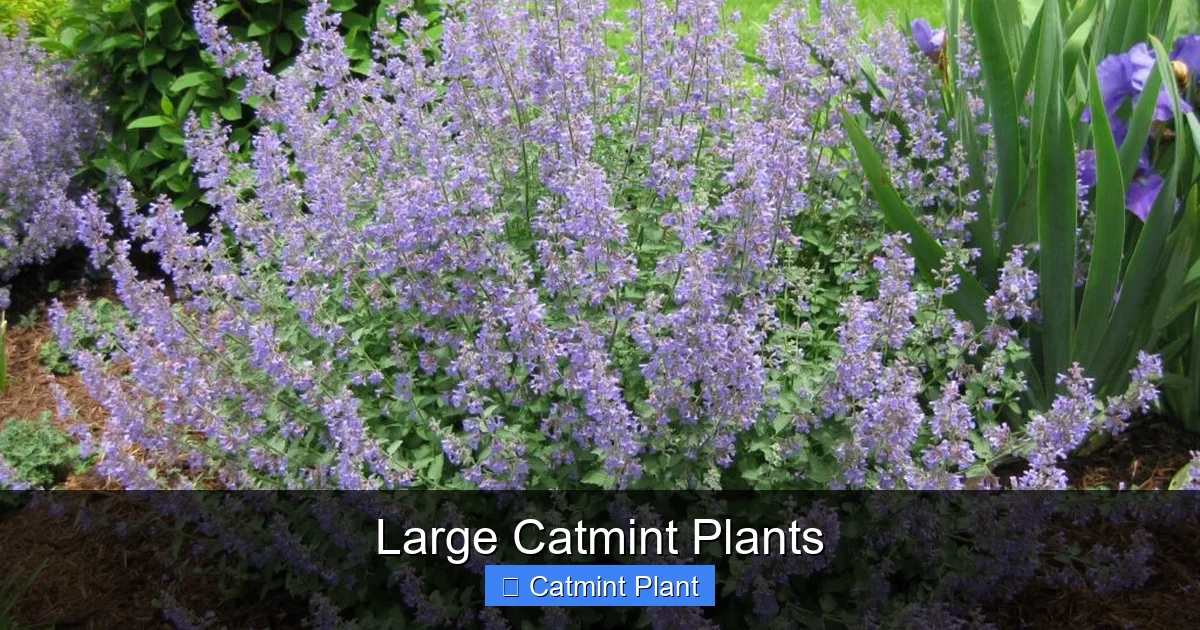
Visual guide about Large Catmint Plants
Image source: piedmontmastergardeners.org
Nepeta ‘Six Hills Giant’
This classic cultivar has been a garden favorite for decades. It forms a broad mound 30 to 36 inches tall and wide. The lavender-blue flowers appear in dense whorls along the stems from late spring into summer. A hard shearing after the first flush encourages a tidy second bloom. It holds the Royal Horticultural Society Award of Garden Merit, a testament to its proven performance.
Nepeta ‘Walker’s Low’
Despite the name, ‘Walker’s Low’ is one of the largest catmints available. It reaches 30 to 36 inches in height and spreads up to 40 inches. The name actually refers to the garden where it was discovered, not its stature. It was named Perennial Plant of the Year in 2007. The deep lavender-blue flowers are slightly larger than average, and the plant maintains a nice mounded shape without flopping if grown in full sun.
Nepeta ‘Blue Wonder’
This variety offers intense, deep blue-violet flowers on plants 24 to 30 inches tall. It has a slightly more upright habit than some others, making it a good choice for tighter spaces where you still want height. The foliage is particularly aromatic. It blooms heavily in late spring and reblooms reliably if cut back.
Nepeta sibirica ‘Souvenir d’André Chaudron’
This Siberian catmint selection grows 36 to 48 inches tall, making it one of the very largest. It has a more open, airy habit with larger individual flowers in a soft violet-blue. It blooms a bit later than the faassenii hybrids, extending the catmint season into mid-summer. Give it room to spread, as it can reach 3 feet wide.
Nepeta ‘Purple Haze’
A newer introduction, ‘Purple Haze’ forms a wide, billowing mound 24 to 30 inches tall and up to 36 inches wide. The flowers are a rich purple-blue, and the stems are notably strong, resisting flopping better than many older varieties. It has excellent heat and humidity tolerance, making it a top pick for southern gardens.
Choosing the Right Variety for You
Consider your space and style. ‘Walker’s Low’ and ‘Six Hills Giant’ are the most widely available and easiest to find at nurseries. If you need maximum height, N. sibirica selections deliver. For the strongest stems in humid climates, ‘Purple Haze’ excels. All of these large catmint plants share the same basic care needs, so you cannot go wrong with any of them.
How to Grow Large Catmint Plants Successfully
Success with large catmint plants comes down to getting a few basics right at planting time. These perennials are forgiving, but they will reward good preparation with years of vigorous growth and heavy flowering. Let us walk through the essential steps.
Site Selection
Full sun is ideal. That means at least six hours of direct sunlight daily. In zones 7 and 8, a bit of afternoon shade helps prevent leaf scorch and prolongs bloom. The site should have good air circulation to minimize fungal issues. Avoid planting right against a wall or fence where air stagnates. A gentle slope or raised bed works beautifully.
Soil Preparation
Catmint is not fussy about fertility. In fact, rich soil encourages floppy growth and fewer flowers. Average to lean soil is perfect. The critical factor is drainage. If your soil is heavy clay, amend it with coarse sand, fine gravel, or composted pine bark to improve porosity. Do not add peat moss or moisture-retentive amendments. You want water to move through the root zone quickly.
Planting Technique
Spring and early fall are the best planting times. Space plants according to their mature width, usually 30 to 40 inches apart for large catmint plants. Dig a hole twice as wide as the root ball but no deeper. Loosen the roots gently if they are circling. Set the plant so the crown sits at soil level. Backfill with native soil, firm gently, and water deeply to settle the roots.
Watering During Establishment
New plants need regular moisture for the first 6 to 8 weeks. Water deeply twice a week if there is no rain. Check the soil with your finger; it should feel moist 2 inches down. Once established, large catmint plants are remarkably drought tolerant. Their deep taproots seek out moisture far below the surface. Overwatering established plants leads to weak stems and root rot.
Mulching
Apply a 1 to 2 inch layer of gravel, shredded bark, or pine straw around the base, keeping it a few inches away from the crown. Gravel mulch is especially good because it reflects heat, improves drainage, and mimics the rocky soils these plants love. Avoid thick organic mulches that hold moisture against the stems.
Fertilizing
Skip the fertilizer. Seriously. Catmint performs best in lean conditions. Excess nitrogen produces lush foliage at the expense of flowers and stem strength. If your soil is extremely poor, a light top-dressing of compost in early spring is plenty. Most gardens need no supplemental feeding at all.
Designing with Large Catmint Plants in Your Garden
The soft, billowy texture and cool flower color of large catmint plants make them incredibly versatile design tools. They bridge the gap between structural plants like shrubs and grasses and more delicate perennials. Here are inspired ways to weave them into your landscape.
Classic Rose Companions
This is perhaps the most famous pairing in gardening. The lavender-blue clouds of catmint hide the bare knees of rose bushes while complementing every rose color from white to deep red. The catmint blooms at the same time as the first big rose flush. Plant them 18 to 24 inches from the rose base to avoid root competition. The aromatic foliage may also help deter rose pests.
Pollinator Pathways
Create a highway for bees and butterflies by planting drifts of large catmint plants along a sunny path or driveway. Space them so they will knit together into a continuous ribbon of bloom. Add early bulbs like alliums and late bloomers like sedum to extend the season. The movement of pollinators adds life and animation to the garden.
Gravel Garden and Xeriscape Star
In a dry garden with gravel mulch, catmint feels right at home. Pair it with lavender, Russian sage, yarrow, and ornamental grasses like Stipa tenuissima. The gray-green foliage echoes the stone colors. The long bloom season provides reliable color when many other drought-tolerant plants have finished flowering.
Cottage Garden Abundance
Let large catmint plants spill over the edges of a picket fence or stone wall. Mix them with foxgloves, delphiniums, hardy geraniums, and lady’s mantle. Their informal habit fits the relaxed, overflowing aesthetic perfectly. Deadhead selectively to allow some self-seeding for a naturalized look, or shear them to keep things tidy.
Border Anchors and Repetition
Use identical varieties at regular intervals along a long border to create rhythm and unity. The eye moves easily from one clump to the next. Because they are in bloom for months, they provide a consistent thread of color that ties the whole bed together. This technique works in both formal and naturalistic designs.
Container Specimens
While usually grown in the ground, large catmint plants can thrive in large containers (18 inches or wider). Use a gritty, well-draining potting mix. Water more frequently than in-ground plants. They make stunning focal points on a sunny patio, especially when underplanted with trailing calibrachoa or verbena. Cut them back hard in late fall and protect pots in zone 5 and colder.
Seasonal Care Guide for Large Catmint Plants
One of the joys of growing large catmint plants is their low maintenance nature. But a few timely tasks each season keep them looking their absolute best and blooming for the longest possible period. Here is your year-round care calendar.
Early Spring: Clean Up and Divide
As new growth emerges from the base, cut back all the old, dead stems to about 2 inches above the crown. Do this before the new shoots get tall to avoid damaging them. This is also the ideal time to divide congested clumps. Dig up the whole plant, slice it into sections with a sharp spade or knife, ensuring each piece has roots and shoots. Replant divisions immediately and water well. Divide every 3 to 4 years to maintain vigor.
Late Spring: First Flush and Support
The first big bloom arrives in late May to June depending on your zone. If your soil is rich or the plant is in partial shade, stems may flop. Install grow-through supports or peony rings early, before the plant reaches full height. Alternatively, do the “Chelsea Chop” in late May: shear the whole plant back by one-third to one-half. This delays bloom by a few weeks but produces shorter, sturdier stems and a more compact mound.
Early Summer: Deadheading for Rebloom
As the first flush fades, shear the entire plant back by about half using hedge shears or large scissors. This removes spent flowers and stimulates fresh growth and a second heavy bloom in 3 to 4 weeks. Do not be timid. The plant recovers quickly. Water deeply after shearing if the weather is dry. This single task is the secret to months of continuous color from large catmint plants.
Mid to Late Summer: Second Bloom and Monitoring
Enjoy the second wave of flowers. Watch for any signs of powdery mildew in humid weather, especially if air circulation is poor. If you see it, thin out some interior stems to improve airflow. Remove any yellowing leaves at the base. Continue to water only during extended drought.
Fall: Final Cleanup
After frost kills the top growth, you have a choice. Leave the dried stems and seed heads for winter interest and bird habitat. Goldfinches love the seeds. Or cut back to the ground for a tidy look. In cold zones (3-4), leaving the stems helps trap snow and insulate the crown. Apply a light layer of evergreen boughs or straw after the ground freezes for extra protection.
Winter: Rest
There is nothing to do. The plant is dormant. Avoid walking on the crowns in wet, thawed soil to prevent compaction. Plan where you might want to add more large catmint plants next spring.
Common Problems and Solutions for Large Catmint Plants
For all their toughness, large catmint plants can occasionally run into issues. The good news is that most are preventable or easily fixed. Knowing what to watch for keeps your plants healthy and beautiful.
Floppy, Leggy Growth
Cause: Too much shade, overly rich soil, excessive water, or lack of pruning.
Solution: Move to full sun if possible. Stop fertilizing. Reduce watering. Perform the Chelsea Chop in late spring. Install supports early next season. Choose stronger-stemmed varieties like ‘Purple Haze’ for future plantings.
Powdery Mildew
Cause: High humidity, poor air circulation, overhead watering, crowded planting.
Solution: Thin stems to improve airflow. Water at the base, not the foliage. Ensure proper spacing. Apply a homemade spray of 1 tablespoon baking soda plus 1 teaspoon horticultural oil per gallon of water at first sign. Remove badly affected leaves. Most cases are cosmetic and do not kill the plant.
Root Rot
Cause: Poorly drained soil, overwatering, heavy clay, low spots.
Solution: Improve drainage before replanting. Amend soil with grit. Plant on a slight mound. Water deeply but infrequently. If a plant is affected, dig it up, trim rotted roots, dust with sulfur, and replant in a better location. Prevention is far easier than cure.
Cat Damage
Cause: Neighborhood cats rolling in, chewing, or napping on the plants.
Solution: Place short stakes or twiggy branches through the center of the plant to make lounging uncomfortable. Use a motion-activated sprinkler. Plant a separate patch of Nepeta cataria (true catnip) away from your ornamentals to distract them. Most established large catmint plants recover quickly from feline attention.
Spider Mites
Cause: Hot, dry, dusty conditions, often on plants stressed by drought.
Solution: Blast the undersides of leaves with a strong jet of water every few days. Increase humidity. Apply insecticidal soap or neem oil if severe. Keep plants well-watered during heat waves. Healthy, unstressed plants rarely suffer serious damage.
Center Die-Out
Cause: Age, congestion, lack of division.
Solution: Divide the plant in early spring. Discard the woody, dead center. Replant the vigorous outer sections. This rejuvenates the plant and gives you free new plants. Do this every 3 to 4 years as routine maintenance.
Propagating Large Catmint Plants
Once you fall in love with large catmint plants, you will want more. Fortunately, they are among the easiest perennials to multiply. You can expand your planting or share with friends using three simple methods.
Division
This is the fastest way to get mature-sized plants. In early spring, just as new growth appears, dig up the entire clump. Shake off excess soil. Use a sharp spade, knife, or old handsaw to cut the clump into sections. Each division should have 3 to 5 healthy shoots and a good root mass. Replant immediately at the same depth. Water well. Divisions often bloom the same year.
Softwood Cuttings
In late spring to early summer, take 4 to 6 inch cuttings from non-flowering stems. Cut just below a leaf node. Remove the lower leaves. Dip the cut end in rooting hormone (optional but helpful). Insert into a pot of moist perlite, vermiculite, or a 50/50 sand-peat mix. Cover with a clear plastic bag to maintain humidity. Place in bright, indirect light. Roots form in 2 to 3 weeks. Pot up and grow on until fall planting.
Seed
Most named cultivars of large catmint plants are sterile or do not come true from seed. However, species types like Nepeta sibirica and Nepeta racemosa will self-sow modestly. Collect seed heads in fall when they turn brown. Sow directly in a prepared bed in fall or start indoors in late winter. Barely cover the seed; light aids germination. Seedlings vary in size and flower color, which can be a fun surprise.
Companion Planting Strategies
The right neighbors make large catmint plants shine even brighter. Good companions share similar cultural needs: full sun, well-drained soil, and low water once established. They also offer contrasting forms, textures, or bloom times for a dynamic display.
Best Perennial Partners
- Salvia nemorosa (Woodland Sage): Spiky deep purple blooms repeat with catmint. Similar height and needs.
- Echinacea purpurea (Coneflower): Bold daisy flowers in pink, white, or orange rise above the catmint mound.
- Perovskia atriplicifolia (Russian Sage): Airy lavender spires on silver stems echo the color palette on a larger scale.
- Achillea (Yarrow): Flat flower heads in yellow, red, or pink provide strong horizontal contrast.
- Stachys byzantina (Lamb’s Ear): Fuzzy silver rosettes at the base create a textural carpet.
- Allium (Ornamental Onion): Early summer globes float above the first catmint flush.
- Sedum ‘Autumn Joy’: Succulent foliage and late pink flowers take over as catmint winds down.
Grasses for Movement and Structure
- Calamagrostis ‘Karl Foerster’: Strong vertical accents that stand through winter.
- Panicum virgatum (Switchgrass): Upright to vase-shaped forms with airy seed heads.
- Schizachyrium scoparium (Little Bluestem): Blue-green summer foliage turns copper-orange in fall.
- Sesleria autumnalis (Autumn Moor Grass): Neat, low mounds with silvery flower spikes.
Shrub Backdrops
Plant large catmint plants in front of deciduous shrubs for a layered look. Good choices include:
- Hydrangea paniculata: Cone-shaped white-to-pink flowers in late summer.
- Spiraea japonica cultivars: Colorful foliage and flat pink flower clusters.
- Physocarpus opulifolius (Ninebark): Purple or gold leaves, white spring flowers, exfoliating bark.
- Rosa (Shrub Roses): The classic pairing, especially disease-resistant landscape roses.
Harvesting and Using Catmint
Beyond garden beauty, large catmint plants offer harvestable rewards. The flowers and leaves have herbal uses, and the stems make lovely cut flowers.
Cut Flowers
Harvest stems when about half the flowers on a spike are open. Cut in the morning after dew dries. Plunge immediately into cool water. Strip lower leaves. They last 5 to 7 days in a vase. The airy texture fills out arrangements beautifully. Mix with roses, peonies, or zinnias.
Herbal Tea
The leaves and flowers make a pleasant, mild mint tea with calming properties. Harvest stems just before full bloom for best flavor. Dry upside down in small bundles in a dark, airy place. Strip dried leaves and flowers into a jar. Steep 1 teaspoon per cup of boiling water for 5 minutes. It is caffeine-free and soothing before bed.
Cat Enrichment
If you have cats, offer them fresh or dried stems. Many cats respond to the nepetalactone compound with playful rolling, rubbing, and purring. It is harmless and non-addictive. Not all cats react; sensitivity is genetic. Provide a dedicated patch of Nepeta cataria (true catnip) if you want to spare your ornamental large catmint plants from enthusiastic feline love.
Buying Guide: Selecting Healthy Plants
When shopping for large catmint plants, a little scrutiny ensures you bring home vigorous specimens that will establish quickly.
At the Nursery
- Look for plants with multiple stems emerging from the crown, not just one central leader.
- Foliage should be gray-green and clean, not yellowed or spotted.
- Check the roots by gently tipping the pot. They should be white and firm, not brown and mushy.
- Avoid root-bound plants with roots circling the bottom densely.
- Choose plants in bud rather than full bloom for a longer show in your garden.
- Read the label carefully to confirm mature size. Some “catmint” labels do not distinguish between dwarf and large types.
Mail Order
Reputable online perennial nurseries ship bare-root or in pots in spring and fall. Bare-root plants establish well if planted promptly. Unpack immediately. Soak roots in water for an hour if they seem dry. Pot up or plant in the ground within a day. Water well. They may look unimpressive at first but will catch up quickly.
When to Buy
Spring offers the widest selection. Fall planting gives a head start on root growth before winter. Summer planting works if you are diligent about watering. Avoid buying in late fall in cold zones unless you can plant immediately and mulch heavily.
Frequently Asked Questions About Large Catmint Plants
Here are answers to the questions gardeners ask most often about growing large catmint plants.
Do large catmint plants spread aggressively?
No. The popular hybrid cultivars like ‘Walker’s Low’ and ‘Six Hills Giant’ are clump-forming and do not run by rhizomes. They slowly increase in width each year. They may self-seed lightly, but seedlings are easy to remove or transplant. They are not invasive.
Will large catmint plants grow in shade?
They tolerate light shade (4-5 hours of sun) but flower less and grow leggier. In deep shade, they decline. For shadier spots, consider Nepeta subsessilis (Japanese catmint), which handles more shade but stays smaller.
How long do large catmint plants live?
With division every 3 to 4 years, individual plants can thrive for decades. Undivided clumps often die out in the center after 5 to 7 years. Regular division is the key to longevity.
Are large catmint plants deer proof?
Highly resistant, but not 100% proof. In severe drought or overpopulation, deer may nibble young growth. The aromatic oils are a strong deterrent. Rabbits generally avoid them entirely.
Can I grow large catmint plants in clay soil?
Yes, if you amend it well for drainage. Mix in 30-50% coarse sand, fine gravel, or expanded shale. Plant on a slight mound. Do not mulch heavily with organic matter. Gravel mulch is best.
Why did my catmint stop blooming in July?
It likely finished its first flush and needs shearing. Cut the whole plant back by half, water deeply, and you will get a second bloom in a few weeks. Regular deadheading or shearing is essential for continuous flowers.
Conclusion
Few perennials offer as much reward for so little effort as large catmint plants. Their clouds of lavender-blue flowers, weeks of bloom, pollinator appeal, and easy-going nature make them a cornerstone of the sunny garden. Whether you choose the classic ‘Six Hills Giant’, the award-winning ‘Walker’s Low’, or one of the newer introductions like ‘Purple Haze’, you are getting a plant that performs reliably across a huge range of conditions.
Remember the simple formula for success: full sun, sharp drainage, lean soil, and a mid-season haircut. That is it. No spraying, no staking (usually), no fertilizing, no fuss. In return, you get months of color, buzzing life, and that wonderful scent every time you brush past.
If you have not yet made room for large catmint plants in your garden, this is the year. Start with one or two, watch them settle in, and see how they transform the early summer border. Before long, you will be dividing them to share with friends, tucking them into new beds, and wondering how you ever gardened without them. Happy planting.
Frequently Asked Questions
How far apart should I plant large catmint plants?
Space large catmint plants 30 to 40 inches apart, depending on the variety’s mature width. Proper spacing ensures good air circulation and prevents flopping from overcrowding.
Are large catmint plants the same as catnip?
No. Catnip (Nepeta cataria) is a different species grown for cats. Large catmint plants are ornamental hybrids (mostly Nepeta x faassenii) bred for flowers, form, and garden performance.
Do I need to fertilize large catmint plants?
No. Fertilizing encourages weak, floppy growth and fewer flowers. These plants thrive in lean, low-fertility soil. A light compost top-dressing in spring is only needed in extremely poor soil.
Will large catmint plants bloom the first year?
Yes, spring-planted container-grown plants usually bloom their first summer. Bare-root plants may take a full season to establish before heavy flowering.
Can I divide large catmint plants in fall?
Early fall division works well in zones 5 and warmer, giving roots time to establish before winter. In colder zones, spring division is safer to prevent winter loss.
What causes yellow leaves on large catmint plants?
Yellow leaves usually indicate overwatering or poor drainage. Let the soil dry between waterings. In heavy clay, improve drainage or move the plant to a raised bed or mound.