Complete Guide How to Choose Best Granular for Blackberry
Choosing the right granular fertilizer for blackberries starts with a soil test and understanding your plant’s growth stage. This guide walks you through NPK ratios, organic versus synthetic options, application rates, and timing so you can grow healthier canes and sweeter, larger berries every season.
Quick Answers to Common Questions
When should I apply the first granular fertilizer in spring?
Apply when soil reaches 50°F and primocanes begin emerging, typically March to April depending on your zone. This fuels the initial vegetative surge.
Can I use lawn fertilizer on blackberries?
Avoid weed-and-feed lawn products. They contain herbicides that kill broadleaf plants like blackberries. Straight high-nitrogen lawn fertilizer (like 29-0-4) works for early spring nitrogen but lacks phosphorus and potassium for later stages.
How do I fix fertilizer burn on blackberry canes?
Flood the area with 1 to 2 inches of water to leach salts below the root zone. Prune dead tissue. Reduce the next application rate by half and ensure granules stay 12+ inches from crowns.
Is wood ash a good granular potassium source?
Wood ash supplies potassium and raises pH. Use sparingly (5 lbs per 100 sq ft max) only on acidic soils below pH 5.5. It lacks nitrogen and phosphorus. Never use ash from treated lumber or trash fires.
Should I fertilize newly planted blackberry plugs?
Wait 4 to 6 weeks after planting until roots establish. Then apply a light dose of balanced organic granular (1 tbsp per plant) or 1 oz actual nitrogen per 100 feet of row. Avoid concentrated synthetics near tender new roots.
Introduction
Growing blackberries rewards you with sweet, juicy fruit for pies, jams, and fresh eating. But big harvests do not happen by accident. The secret lies in feeding your plants the right nutrients at the right time. Choosing the best granular for blackberry plants can feel overwhelming with so many bags on the shelf. This guide breaks down everything you need to know. You will learn how to read fertilizer labels, match nutrients to growth stages, pick between organic and synthetic options, and apply granules correctly. By the end, you will feel confident walking into any garden center and picking the perfect product for your patch.
Step 1: Understand Blackberry Nutrient Needs
Blackberries are perennial brambles with a unique two-year cane cycle. First-year canes, called primocanes, grow vegetatively. Second-year canes, called floricanes, flower and fruit. This cycle means nutrient demands shift dramatically through the season. Understanding these needs helps you choose the right granular for blackberry nutrition.
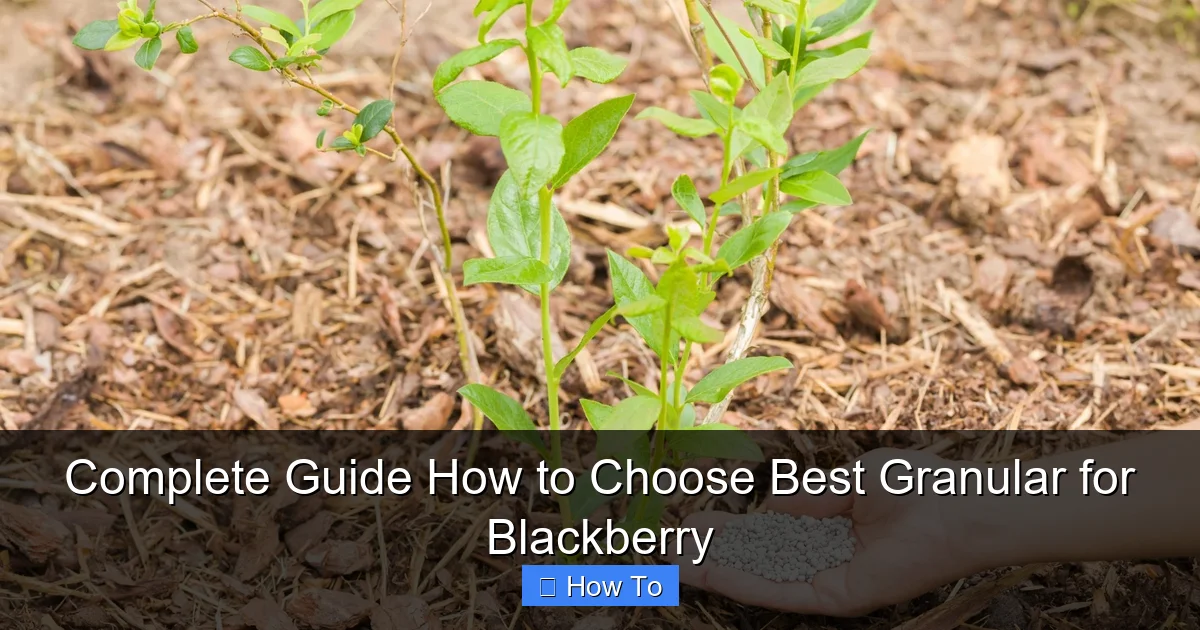
Visual guide about Complete Guide How to Choose Best Granular for Blackberry
Image source: epicgardening.com
Primary Macronutrients
Nitrogen drives green, leafy growth. Blackberries need plenty of it in early spring when primocanes shoot up. Too much nitrogen later in the season creates lush leaves but few flowers. Phosphorus supports root development, flower formation, and energy transfer. It matters most at planting and during bloom. Potassium regulates water movement, improves fruit quality, and boosts disease resistance. It becomes critical as berries swell and ripen.
Secondary Nutrients and Micronutrients
Calcium strengthens cell walls and prevents fruit disorders. Magnesium sits at the center of chlorophyll molecules. Sulfur helps form proteins and enzymes. Blackberries also need iron, manganese, zinc, copper, and boron in tiny amounts. Deficiencies show as yellowing leaves, poor fruit set, or weak canes. A complete granular for blackberry fertilizer often includes these micros.
Soil pH Matters
Blackberries thrive in slightly acidic soil, ideally between 5.5 and 6.5. Outside this range, nutrients lock up and become unavailable. High pH ties up iron and manganese. Low pH can cause aluminum toxicity. Always test pH before fertilizing. If your soil is too alkaline, choose an acidifying granular product. If too acidic, add lime months before planting.
Step 2: Test Your Soil Before Buying
Guessing wastes money and can harm plants. A proper soil test is the single most important step in choosing the best granular for blackberry fertilizer. It tells you exactly what your soil has and what it lacks.

Visual guide about Complete Guide How to Choose Best Granular for Blackberry
Image source: cdn.shopify.com
How to Collect a Good Sample
Use a clean trowel or soil probe. Take samples from six to eight spots across your blackberry row. Dig six to eight inches deep for established plants. Mix the cores in a clean bucket. Remove debris, stones, and roots. Let the soil air dry on newspaper. Fill the lab bag to the line. Label it with your name, crop, and field location.
Where to Send Samples
Your local cooperative extension office offers affordable testing with region-specific recommendations. Many state universities run soil labs. Private labs work too but may cost more. Ask for a “small fruit” or “berry crop” recommendation package. Results usually arrive in one to two weeks.
Reading the Report
The report lists pH, organic matter, and nutrient levels in parts per million or pounds per acre. It rates each as low, medium, high, or very high. The recommendation section tells you how many pounds of nitrogen, phosphate, and potash to apply per acre or per 1,000 square feet. Use these numbers to calculate your granular rate.
Step 3: Decode the Fertilizer Label
Every fertilizer bag displays three bold numbers. This is the NPK ratio. It represents the percentage by weight of nitrogen (N), phosphate (P2O5), and potash (K2O). A 10-10-10 bag contains ten percent of each. A 50-pound bag delivers five pounds of actual nitrogen, five pounds of phosphate, and five pounds of potash. Understanding this math lets you compare products and calculate rates for your granular for blackberry planting.
Common Ratios for Blackberries
Balanced ratios like 10-10-10 or 12-12-12 work well for general maintenance. High-nitrogen options like 20-5-5 or 21-0-0 suit early spring vegetative growth. Bloom boosters with higher phosphorus such as 4-8-4 or 3-5-4 support flowering and fruiting. Potassium-heavy blends like 0-0-60 (muriate of potash) or 0-0-50 (sulfate of potash) address specific deficiencies.
Guaranteed Analysis Details
Below the big three numbers, the label lists secondary nutrients and micronutrients. Look for calcium, magnesium, sulfur, iron, zinc, and boron. Some granular products coat each prill with micros for even distribution. Others blend separate granules. Coated products often cost more but deliver more consistent nutrition.
Derivation Statements
The label must state nutrient sources. This tells you if the product is synthetic, organic, or a blend. Synthetic sources include ammonium nitrate, urea, diammonium phosphate, and potassium chloride. Organic sources include feather meal, bone meal, blood meal, kelp meal, and rock phosphate. Blends combine both. Knowing the source helps you predict release speed and soil impact.
Step 4: Choose Between Organic and Synthetic Granular
Both organic and synthetic granular fertilizers feed blackberries. Each has pros and cons. Your choice depends on philosophy, budget, soil health goals, and management style. Many growers use a combination for the best granular for blackberry results.
Synthetic Granular Fertilizers
Synthetic granules are manufactured from mineral salts or atmospheric nitrogen. They dissolve quickly in soil moisture. Nutrients become available within days. This gives you precise control and fast correction of deficiencies. They cost less per pound of nutrient. Application rates are lower because concentrations are higher. However, they do not build soil organic matter. Overuse can harm beneficial microbes and earthworms. Salt buildup may occur in dry climates. They leach easily in sandy soils or heavy rain.
Organic Granular Fertilizers
Organic granules come from plant, animal, or mineral sources. Microbes must break them down before plants absorb nutrients. Release takes weeks to months depending on temperature and moisture. This slow feed matches plant uptake and reduces leaching. Organics add carbon, feeding soil life and improving structure, water holding, and aeration. They rarely burn roots. They cost more per pound of nutrient. Rates are higher. Results take patience. Nutrient content varies by batch.
Popular Organic Options for Blackberries
Feather meal (12-0-0) provides slow-release nitrogen. Blood meal (13-0-0) releases faster but can burn if overapplied. Bone meal (3-15-0) supplies phosphorus and calcium. Rock phosphate (0-3-0) releases very slowly over years. Kelp meal (1-0-2) adds potassium and trace minerals. Alfalfa meal (2-1-2) offers balanced nutrition plus growth hormones. Composted manure (1-1-1 approx) builds soil but varies widely. Blended organic fertilizers like 4-4-4 or 5-3-3 combine several meals for complete nutrition.
Blended Products
Many brands now offer organically based granular with a small synthetic boost. These bridge the gap. They feed soil biology while ensuring enough available nitrogen for spring growth. Look for labels like “organic-based” or “natural and organic.” Check the derivation statement to see the actual ratio of organic to synthetic sources.
Step 5: Match Fertilizer to Growth Stages
Blackberries need different nutrient profiles at different times. A single product rarely fits all stages. Plan a seasonal program using the right granular for blackberry at each phase.
Early Spring: Primocane Emergence
As soil warms, new canes push from the crown. This vegetative surge demands nitrogen. Apply a high-nitrogen granular like 20-5-5, 21-0-0, or organic feather meal. Rate: 50 to 60 pounds actual nitrogen per acre, or follow soil test. For a 100-foot row, this equals roughly 1 to 1.5 pounds of 20-5-5. Split into two applications two weeks apart if using quick-release synthetics.
Pre-Bloom: Floricane Bud Break
Overwintered canes swell flower buds. They need phosphorus for energy transfer and potassium for water regulation. Switch to a balanced or bloom formula like 10-10-10, 4-8-4, or organic 4-4-4. Apply at half the spring nitrogen rate. This supports flower quality without pushing excess foliage.
Fruit Set and Development
After petal fall, berries form and swell. Potassium becomes the star nutrient. It drives sugar accumulation, fruit size, and firmness. Apply potassium sulfate (0-0-50) or a high-K blend like 8-4-12. Avoid chloride-heavy muriate of potash (0-0-60) on sensitive varieties or saline soils. Organic growers use kelp meal or sulfate of potash magnesia (0-0-22-11Mg).
Post-Harvest: Primocane Growth Continues
After picking, primocanes keep growing. They will fruit next year. Give them a moderate nitrogen boost to maximize cane height and diameter. Use 30 to 40 pounds actual nitrogen per acre. A balanced 10-10-10 or organic 5-3-3 works well. Stop fertilizing six to eight weeks before first frost to harden canes for winter.
Fall: Root Development and Reserve Building
Roots grow actively in cool fall soil. Phosphorus and potassium help build carbohydrate reserves in crowns and roots. A light application of bone meal or rock phosphate plus potassium sulfate supports this. Do not apply nitrogen in fall. It encourages tender growth that winter kills.
Step 6: Calculate Application Rates
Applying the correct amount of granular for blackberry plants prevents waste, pollution, and plant damage. Rates depend on soil test, plant age, spacing, and fertilizer analysis.
Using Soil Test Recommendations
Your report gives pounds of nutrient per acre or per 1,000 square feet. Convert to your row length. Example: Recommendation says 60 lbs N per acre. Your rows are spaced 10 feet apart. One acre = 43,560 sq ft. Row feet per acre = 43,560 / 10 = 4,356 linear feet. N per linear foot = 60 / 4,356 = 0.0138 lbs. For 100 feet of row, need 1.38 lbs actual N. Using 20-5-5 (20% N): 1.38 / 0.20 = 6.9 lbs product per 100 feet.
General Guidelines by Plant Age
First-year plants: 0.5 to 1 oz actual N per plant. Second year: 1 to 1.5 oz N per plant. Mature plants (year 3+): 1.5 to 2 oz N per plant per year, split across applications. Adjust up for sandy soils, heavy crops, or low organic matter. Adjust down for clay soils, high organic matter, or vigorous growth.
Measuring Without a Scale
One cup of typical granular fertilizer weighs about 0.5 pounds. One tablespoon weighs about 0.5 ounces. A standard 12-oz coffee can holds roughly 0.75 pounds. Use these volume measures if you lack a scale. But a $10 kitchen scale pays for itself in accuracy.
Step 7: Apply Granular Fertilizer Correctly
How you apply matters as much as what you apply. Poor placement wastes fertilizer and can injure roots. Follow these steps for every application of granular for blackberry nutrition.
Timing the Application
Apply when soil is moist but not saturated. Morning is ideal. Avoid applying before heavy rain forecasts. Granules can wash away on slopes. Do not apply to frozen or bone-dry soil. If soil is dry, irrigate first, wait a day, then fertilize.
Placement: The Drip Line Method
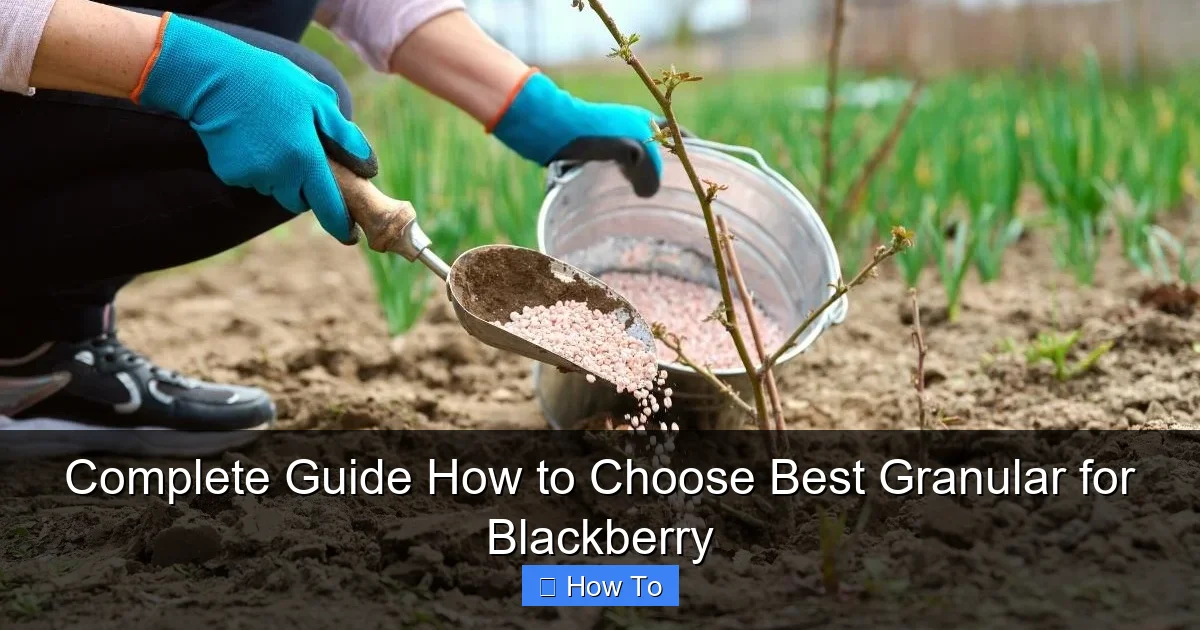
Blackberry roots extend outward from the crown roughly to the canopy drip line. Spread granules in a band 12 to 18 inches from the crown, circling the plant. For row crops, band on both sides of the row, 12 inches from the center. Never pile fertilizer against the crown. Concentrated salts burn tender crown tissue and emerging primocanes.
Incorporation and Watering
Lightly rake granules into the top half-inch of soil or mulch. This prevents nitrogen volatilization and keeps granules from washing away. Water immediately with 0.5 to 1 inch of irrigation. This dissolves granules and moves nutrients into the root zone. Drip irrigation works well. Run it long enough to wet the fertilized band thoroughly.
Mulch Considerations
If you use wood chips, straw, or plastic mulch, pull it back before applying granular. Apply to soil surface, then replace mulch. Organic mulches can tie up nitrogen as they decompose. Increase nitrogen rate by 20 to 30 percent if fertilizing over thick wood mulch. Plastic mulch requires fertigation or careful banding at plant holes.
Step 8: Monitor Plant Response and Adjust
Fertilizing is not a set-it-and-forget-it task. Watch your plants. They tell you if your granular for blackberry program works.
Visual Cues of Good Nutrition
Healthy primocanes grow 6 to 10 feet tall (trailing types) or 4 to 6 feet (erect types) with thick, sturdy diameters. Leaves are deep green, large, and fully expanded. Floricanes set abundant flower clusters. Berries size well, color evenly, and taste sweet. Canes mature and harden off by fall.
Signs of Nitrogen Deficiency
Older leaves turn pale green then yellow. New growth is stunted and thin. Primocanes are short and spindly. Fruit is small and few. Yield drops. Fix with a quick nitrogen boost like calcium nitrate or blood meal.
Signs of Excess Nitrogen
Canes grow excessively tall and thin with long internodes. Leaves are dark green but soft. Flowering is delayed or sparse. Fruit is soft, leaks juice, and rots easily. Winter injury increases. Stop nitrogen. Apply potassium to balance.
Phosphorus Deficiency
Leaves develop purplish tints, especially on undersides and margins. Growth is slow. Root systems are poor. Flower clusters are few. Cold, wet springs worsen it. Fix with bone meal or superphosphate banded near roots.
Potassium Deficiency
Leaf margins scorch brown. Berries are small, dull, and lack sweetness. Canes are weak and lodge easily. Disease pressure increases. Apply potassium sulfate or kelp meal.
Micronutrient Issues
Iron chlorosis shows as yellow leaves with green veins on new growth. Common in high pH soils. Apply chelated iron or acidify soil. Zinc deficiency causes small, distorted leaves and short internodes. Apply zinc sulfate. Boron deficiency leads to dead shoot tips and crumbly fruit. Apply borax at very low rates (1 lb per acre max). Toxicity mimics deficiency. Test before treating.
Step 9: Special Situations and Adjustments
Real gardens rarely match textbook conditions. Adapt your granular for blackberry strategy for these common scenarios.
Container-Grown Blackberries
Pots limit root volume and nutrient reserves. Nutrients leach with every watering. Use controlled-release granular fertilizer mixed into potting media at planting. Top-dress monthly with a balanced organic granular during the growing season. Supplement with liquid feed for precise control. Monitor EC (electrical conductivity) to avoid salt buildup.
High-Density or Trellised Systems
Commercial-style trellises with 3 to 4 feet between plants increase competition. Increase nitrogen rates by 25 percent. Band fertilizer along the trellis line on both sides. Use split applications every four to six weeks during active growth. Fertigate if drip lines are present.
Organic Certification Requirements
If you sell certified organic berries, every input must be OMRI-listed or approved by your certifier. Check the brand name, not just ingredients. Some “natural” products contain prohibited synthetics. Keep labels and receipts for your audit trail. Approved granular options include feather meal, bone meal, rock phosphate, sulfate of potash magnesia, and blended meals with OMRI logos.
Saline or Alkaline Soils
High salts or pH above 7.5 limit nutrient uptake. Avoid chloride fertilizers (muriate of potash, potassium chloride). Use sulfate forms: potassium sulfate, ammonium sulfate, magnesium sulfate. Ammonium sulfate also lowers pH slightly. Add elemental sulfur at 5 to 10 lbs per 1,000 sq ft annually to gradually acidify. Incorporate organic matter to buffer salts.
Rejuvenating Neglected Patches
Old, crowded patches with weak canes need more than fertilizer. First, remove dead and diseased canes. Thin to 4 to 6 strong canes per linear foot. Apply compost at 1 to 2 inches deep over the row. Then follow a standard granular program. Expect gradual improvement over two seasons.
Step 10: Troubleshooting Common Problems
Even with a good plan, issues arise. Here is how to diagnose and fix the most frequent problems with granular for blackberry fertilization.
Problem: Fertilizer Burn on Leaves or Canes
Cause: Granules contacted foliage or crown. Over-application. Dry soil followed by light rain that dissolves salts but does not leach them.
Fix: Irrigate heavily (1 to 2 inches) to leach salts below root zone. Prune severely damaged tissue. Reduce next rate by half. Ensure proper placement next time.
Problem: No Growth Response After Application
Cause: Wrong nutrient applied. Soil pH locks up nutrients. Roots damaged by disease, nematodes, or voles. Granules not watered in. Product old or degraded.
Fix: Check soil pH. Dig and inspect roots. Verify product freshness. Water thoroughly. Consider foliar feed for quick rescue while soil issues resolve.
Problem: Excessive Vegetative Growth, No Fruit
Cause: Too much nitrogen late in season. Wrong timing. Variety requires chill hours not met.
Fix: Stop nitrogen applications. Apply potassium sulfate. Prune excess primocanes to improve light penetration. Verify variety adaptation to your zone.
Problem: Berries Small, Crumbly, or Tart
Cause: Potassium deficiency. Boron deficiency. Poor pollination. Water stress during swell. Overcropping.
Fix: Apply potassium sulfate at 5 lbs per 1,000 sq ft. Test for boron. Irrigate consistently during fruit development. Thin fruit clusters if excessive.
Problem: Yellow Leaves with Green Veins (Chlorosis)
Cause: Iron or manganese deficiency from high pH. Overwatering. Root rot.
Fix: Test pH. If above 6.5, apply elemental sulfur or ammonium sulfate. Foliar spray chelated iron for quick green-up. Improve drainage. Check for Phytophthora root rot.
Problem: Weed Explosion After Fertilizing
Cause: Fertilizer feeds weeds too. Manure or compost contained weed seeds. Mulch too thin.
Fix: Apply mulch 3 to 4 inches deep. Use pre-emergent herbicide labeled for blackberries (follow label strictly). Hand-weed before weeds seed. Consider landscape fabric under mulch.
Step 11: Build a Year-Round Fertilizer Calendar
Consistency beats intensity. Create a simple calendar for your granular for blackberry program. Hang it in your garden shed. Adjust dates for your climate zone.
Sample Calendar for Temperate Zones (USDA 5-7)
March (Bud Swell): Soil test if not done in fall. Apply 50% of annual nitrogen as high-N granular (20-5-5 or feather meal).
April (Primocane Emergence): Apply remaining 50% spring nitrogen. Band at drip line. Water in.
May (Pre-Bloom): Apply balanced granular (10-10-10 or 4-4-4) at half spring rate. Supports flower development.
June (Fruit Set): Apply potassium sulfate (0-0-50) or high-K blend (8-4-12) at 5 lbs per 1,000 sq ft.
July (Harvest): No fertilizer. Focus on irrigation and harvest.
August (Post-Harvest): Apply moderate nitrogen (30 lbs N/acre) as balanced granular. Builds next year’s canes.
September (Cane Maturation): Apply phosphorus/potassium only (bone meal + potassium sulfate). No nitrogen.
October (Dormancy Prep): Soil test for next year. Apply lime or sulfur if pH adjustment needed.
November-February: Rest. Plan next year. Order fertilizers early for best selection.
Adjusting for Your Zone
Warmer zones (8-9): Shift everything 4 to 6 weeks earlier. Fall fertilization more important for everbearing types. Cooler zones (3-4): Compress spring applications. Skip fall phosphorus if ground freezes early. Everbearing/Primocane-fruiting varieties: Add a light nitrogen feed in mid-summer to support fall crop.
Step 12: Store and Handle Fertilizer Safely
Proper storage preserves potency and prevents accidents. Granular fertilizers absorb moisture, cake, and degrade. Follow these practices for your granular for blackberry supplies.
Storage Conditions
Keep bags off concrete floors on pallets or shelves. Store in a dry, cool, ventilated shed. Temperature below 80°F ideal. Humidity below 50% prevents caking. Seal opened bags tightly. Use plastic bins with lids for partial bags. Label bins with product name, analysis, and purchase date.
Shelf Life
Synthetic granular lasts indefinitely if dry. Caked product still works; break up clumps before spreading. Organic meals degrade faster. Feather meal, blood meal, and bone meal best used within 12 to 18 months. Kelp meal lasts 2 to 3 years. Blended organics: check manufacturer date. Discard if moldy, rancid smelling, or infested with insects.
Safety Precautions
Wear gloves, long sleeves, and dust mask when handling. Wash hands after. Keep away from children and pets. Do not store near fuels, pesticides, or oxidizers. Ammonium nitrate requires special fire-code storage. Clean spills promptly. Sweep granules off walkways to prevent runoff.
Step 13: Evaluate Cost and Value
Price per bag misleads. Compare cost per pound of actual nutrient. This reveals the true value of any granular for blackberry product.
Calculating Cost Per Pound of Nutrient
Formula: (Bag price) / (Bag weight x % nutrient) = Cost per lb nutrient.
Example: 50-lb bag of 20-5-5 costs $25. Nitrogen: 50 x 0.20 = 10 lbs N. $25 / 10 = $2.50 per lb N.
Organic 50-lb bag of 8-4-4 costs $40. Nitrogen: 50 x 0.08 = 4 lbs N. $40 / 4 = $10 per lb N.
Synthetic nitrogen is cheaper per pound. But organic adds soil health value not captured in this math.
Hidden Costs
Shipping heavy bags adds cost. Local pickup saves. Spreaders rental or purchase. Time and labor for more frequent organic applications. Soil testing fees. Potential yield loss from under-fertilizing. Balance all factors.
Budget-Friendly Strategies
Buy in bulk with other growers. Split pallets. Use farm co-ops for wholesale pricing. Blend your own: buy straight materials (urea, DAP, potash) and mix. Use legume cover crops to fix nitrogen free. Compost on-farm waste for free granular-like amendment.
Step 14: Integrate with Overall Soil Health
Fertilizer is a supplement, not a substitute for healthy soil. The best granular for blackberry program works alongside practices that build living soil.
Cover Crops and Green Manures
Plant winter rye, clover, or vetch between rows after harvest. They scavenge leftover nitrogen, prevent erosion, and add organic matter. Mow and incorporate in spring. Legumes fix 50 to 150 lbs N per acre free. Reduces granular need.
Compost and Mulch
Apply 1 to 2 inches compost annually. It supplies slow-release nutrients, microbes, and humus. Mulch with straw, wood chips, or landscape fabric. Conserves moisture, suppresses weeds, moderates temperature. As mulch breaks down, it feeds soil life.
Reduced Tillage
Blackberries are perennial. Avoid deep cultivation that damages shallow roots. Use hand tools or shallow hoeing. Preserve soil structure and fungal networks (mycorrhizae) that help roots access phosphorus and water.
Crop Rotation Not Possible
Since blackberries stay 10 to 15 years, rotation is not an option. Focus on soil building in place. Interplant with beneficial companions like clover, yarrow, or comfrey in row middles. They mine deep nutrients and attract beneficial insects.
Step 15: Keep Records and Learn Each Year
The most successful growers treat fertilization as an ongoing experiment. Good records turn experience into expertise for your granular for blackberry journey.
What to Record
Date, product name, analysis, rate per row foot, placement method, weather before/after, soil test results, visual observations (weekly), yield per variety, fruit quality notes, problems, and corrections. A simple notebook or spreadsheet works.
Year-End Review
Compare yields to previous years. Note which varieties responded best. Identify patterns: early yellowing? late-season decline? crumbly fruit? Adjust next year’s calendar and rates accordingly. Share data with local grower groups or extension agents for feedback.
Continuous Learning
Attend field days. Read university berry crop guides. Follow research on new fertilizer technologies like polymer-coated granules, biostimulants, or microbial inoculants. Test one new practice per year on a small section. Science advances. So should your program.
Conclusion
Choosing the best granular for blackberry plants does not require a chemistry degree. It requires observation, a soil test, and a willingness to match nutrients to your plants’ changing needs. Start with the soil. Read the label. Pick organic, synthetic, or blended based on your goals. Apply at the drip line. Water in well. Watch your plants. Adjust as needed. Keep records. Over time, you will develop a fertilization rhythm that produces vigorous canes, abundant blooms, and the sweetest, juiciest blackberries your patch has ever grown. Your future pies, jams, and fresh handfuls of sun-warmed berries will thank you.