Flood for Blackberry Under $200
Water damage on your Blackberry doesn’t mean it’s dead. This guide walks you through immediate steps to save your device, drying methods that work, and budget repair options under $200. Act fast and you might rescue your phone and data.
You’re washing dishes. Your Blackberry slips from the counter. Splash. It lands in a sink full of soapy water. Your heart drops. That phone holds photos of your kid’s first steps, work contacts you haven’t backed up, and two-factor authentication apps you can’t easily replace. The good news? A flood incident doesn’t have to mean a total loss. Especially if you own a Blackberry model that costs under $200 to replace. You have options. Real, practical options that don’t require an engineering degree.
This guide covers everything you need to know about flood damage on Blackberry devices. We’ll walk through the critical first minutes, the drying methods that actually work, cleaning steps for corrosion prevention, and when to seek professional help. We’ll also cover budget repair paths that keep you under that $200 mark. Whether you’re rocking a Key2 LE, a Motion, or an older Classic, the principles stay the same. Water is the enemy. Speed is your ally. Knowledge is your best tool.
Key Takeaways
- Power off immediately: Never try to turn on a wet Blackberry or press buttons; this causes short circuits that kill the motherboard.
- Remove battery and cards: Take out the battery, SIM card, and microSD card within seconds to stop corrosion from spreading inside.
- Skip the rice myth: Silica gel packets or dedicated drying boxes work far better than rice for pulling moisture from tight components.
- Clean with 90%+ isopropyl alcohol: Displace water and prevent corrosion on logic boards using high-purity alcohol and a soft brush.
- Budget repair is possible: Local shops often fix water damaged Blackberrys for $80-$150, well under the $200 replacement threshold.
- Backup data first: If the phone powers on briefly, pull photos and contacts immediately before attempting any drying or repair.
- Prevention beats cure: Waterproof cases cost $15-$30 and save hundreds in repair or replacement costs down the road.
Quick Answers to Common Questions
Can I use a hair dryer to dry my wet Blackberry?
No. Hair dryers blow hot air that can melt adhesives, warp the frame, and damage the screen. Heat above 113°F causes permanent damage. Use a desk fan on cool or a dedicated phone drying box instead.
How long should I leave my Blackberry in silica gel?
Minimum 48 hours for light splashes. 72 hours for full immersion. Swap packets at 24 hours if they feel damp. Longer is better. Don’t rush reassembly.
Is 70% isopropyl alcohol okay for cleaning the logic board?
No. 70% alcohol contains 30% water. You’re adding water back. Use 90% minimum, ideally 99%. It evaporates faster and leaves no residue.
My Blackberry turns on but the screen is black. What now?
Shine a flashlight at an angle. If you see a faint image, the backlight circuit is dead. If completely dark, the display or display connector is damaged. Both are replaceable modules ($15-$110 depending on model).
Should I put my wet Blackberry in the freezer?
Absolutely not. Freezing turns water into ice crystals that expand and puncture delicate components. Condensation when thawing adds more water. This destroys phones.
📑 Table of Contents
- Immediate Response: The First Five Minutes Decide Everything
- The Drying Phase: Science Beats Folklore
- Corrosion Control: Cleaning the Logic Board
- Testing and Data Recovery: The Moment of Truth
- Budget Repair Paths: Staying Under $200
- Prevention: The Cheapest Fix Is Never Needing One
- When to Walk Away: Signs It’s Truly Dead
- Conclusion: You’ve Got This
Immediate Response: The First Five Minutes Decide Everything
The moment your Blackberry hits liquid, a clock starts ticking. Every second counts. What you do in the first five minutes often determines whether your phone lives or dies. Panic makes people do the wrong things. Let’s make sure you do the right ones.
Power Off Instantly – No Exceptions
Do not check if it still works. Do not try to swipe the screen. Do not press the power button to “see what happens.” If the phone is on, hold the power button until it forces a shutdown. If it’s already off, leave it off. Electricity plus water equals short circuits. Short circuits fry the tiny traces on the logic board. Once those traces burn out, no amount of drying brings them back. A forced shutdown cuts power to the board and stops the damage from spreading.
Strip It Down to the Bare Bones
Remove everything removable. Back cover off. Battery out. SIM card tray ejected. MicroSD card pulled. Every port and slot opens a path for air to reach internal components later. The battery is the most critical piece. Lithium-ion batteries and water create dangerous chemical reactions. A swollen or punctured battery can catch fire. Set the battery aside on a non-flammable surface. If the battery looks puffy, corroded, or smells sweet, recycle it properly. Do not reuse it.
Shake It Out – Gently
Hold the phone with the screen facing down. Give it a few firm but controlled shakes. Gravity pulls water out of ports, speaker grilles, and button gaps. Don’t swing it like a lasso. Centrifugal force can drive water deeper into the chassis. A few sharp downward flicks of the wrist work best. You’ll see droplets fly out of the USB port and headphone jack. That’s good. Every drop removed now is a drop you don’t have to evaporate later.
Dab, Don’t Wipe
Use a lint-free microfiber cloth. Pat the exterior dry. Press into seams and crevices. Wiping spreads water around and can push it into gaps. Dabbing lifts moisture off the surface. Pay special attention to the keyboard on models like the Key2 or Classic. Water sits between keys and seeps down to the membrane. Tilt the phone at different angles while dabbing to let gravity help.
The Drying Phase: Science Beats Folklore
You’ve heard the rice trick. Everyone has. Put your wet phone in a bag of rice overnight and it magically works. Here’s the truth: rice is a terrible desiccant. It absorbs moisture slowly, leaves starch dust in your ports, and creates a false sense of security. Your Blackberry deserves better. Let’s look at what actually works.
Visual guide about Flood for Blackberry Under $200
Image source: slashgear.com
Silica Gel Packets – The Gold Standard
Those little “do not eat” packets in shoeboxes, vitamin bottles, and beef jerky? They’re silica gel. They absorb moisture aggressively. Gather as many as you can. Twenty to thirty packets minimum. Place your disassembled Blackberry parts in an airtight container with the packets surrounding them. Seal the lid. Wait 48 to 72 hours. Swap packets halfway through if they feel saturated. Silica gel pulls water vapor from the air inside the container, creating a low-humidity environment that evaporates internal moisture fast.
Dedicated Phone Drying Boxes
Products like the Bheestie Bag, Dry-All, or Kensington EVAP use molecular sieves or heated air circulation. They cost $20-$40. If you live in a humid climate or deal with spills often, buy one. They outperform passive methods by a wide margin. Some use gentle heat (under 100°F) to accelerate evaporation without cooking components. Follow the manufacturer’s cycle times. Most recommend 24-48 hours for severe immersion.
Low Heat and Airflow – The DIY Approach
No silica gel? No drying box? A desk fan on low, aimed at the disassembled phone from 12 inches away, works decently. Add a gentle heat source like a cable box top or the back of a refrigerator (warm, not hot). Never use a hair dryer, oven, microwave, or direct sunlight. Heat above 113°F damages screens, melts adhesives, and warps plastic frames. The keyword is gentle. Warm, moving air. Patience.
Vacuum Chamber – Pro Level
If you have access to a vacuum chamber (some makerspaces, labs, or advanced hobbyists do), it’s the fastest method. Lowering pressure lowers the boiling point of water. Moisture inside the phone evaporates at room temperature. Ten to fifteen minutes at 25-29 inHg pulls out water that would take days otherwise. This is overkill for most, but worth knowing if you’re near a facility.
Corrosion Control: Cleaning the Logic Board
Drying removes water. It doesn’t remove the minerals, salts, and contaminants left behind. Tap water, pool water, soda, coffee, and especially salt water leave conductive residue. That residue corrodes copper traces and component leads. Corrosion spreads like mold. Even if your phone works after drying, it may die in two weeks when corrosion bridges a critical connection. Cleaning stops this.

Visual guide about Flood for Blackberry Under $200
Image source: ckl.co.nz
Tools You Need
- 99% isopropyl alcohol (90% minimum, drugstore 70% has too much water)
- Anti-static brush or soft toothbrush (new, unused)
- Anti-static mat or clean cardboard
- Plastic pry tools (spudgers, guitar picks)
- T5, T6, and Phillips #00 screwdrivers
- Magnifying glass or phone macro lens
- Compressed air can (optional but helpful)
Disassembly – Model Specifics
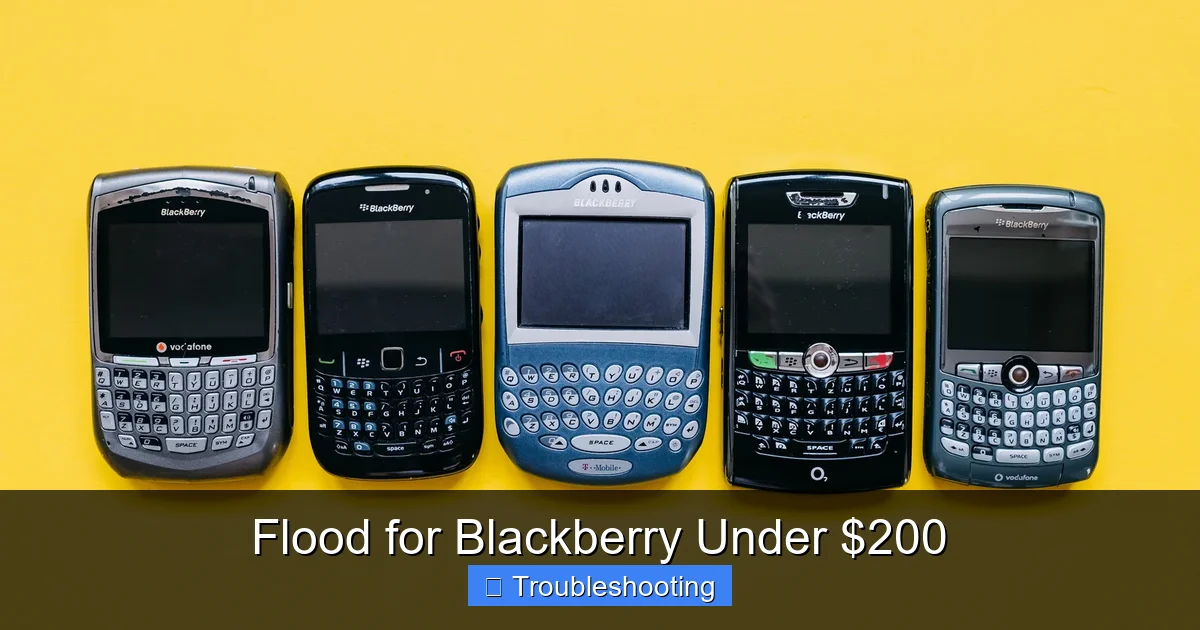
Blackberry designs vary. The KeyOne and Key2 use adhesive-sealed screens. The Motion has a unibody with a removable SIM tray only. The Classic and Passport have removable backs but glued batteries. Search “iFixit [your model] teardown” before starting. Watch the video twice. Print the steps. Organize screws in a magnetic mat or labeled tape. Take photos at each stage. Reassembly is the reverse of disassembly. Missing one screw or connector flex cable bricks the phone.
Brushing Technique
Dip the brush in alcohol. Don’t soak it. Flick off excess. Gently scrub every visible surface of the logic board. Focus on connectors, chip edges, button contacts, and any white or green crusty deposits. That crust is corrosion. The alcohol dissolves it and displaces remaining water. Work in a well-ventilated area. Alcohol fumes are flammable. No open flames. No smoking. Let the board air dry for 30 minutes after brushing. Alcohol evaporates fast but give it time.
Ultrasonic Cleaning – When to Consider It
Severe corrosion, especially under BGA chips (those black squares with no visible legs), needs ultrasonic cleaning. A specialized tank with proper solution (like Branson EC) vibrates at 40kHz, cavitating bubbles that scrub under components. This is a shop service. Costs $50-$100. Worth it for a Key2 LE or Motion if the alternative is replacement. Shops that do microsoldering usually offer this.
Testing and Data Recovery: The Moment of Truth
You’ve waited. You’ve cleaned. You’ve reassembled. Now what? Don’t just cross your fingers and hit power. Follow a test protocol that protects your data and diagnoses remaining issues.
Battery First – Safety Check
Before connecting the battery to the board, inspect it. No swelling. No corrosion on contacts. No sweet smell. If you replaced it with a new OEM or high-quality aftermarket battery (Cameron Sino, Mugen Power), charge it externally to 50% first. A dead-short battery can spike the power management IC. If you’re reusing the original battery, charge it on a fireproof bag or ceramic plate. Watch for heat. Warm is okay. Hot is stop.
Minimal Boot Test
Connect only the battery, screen, and power button flex. Leave cameras, fingerprint sensor, antennas, and daughter boards disconnected. This isolates the core system. Press power. Look for the red LED. Then the Blackberry logo. Then the boot animation. If it reaches the home screen, the motherboard and CPU are functional. Power down immediately. Don’t enter your PIN. Don’t connect WiFi. You’re in diagnostic mode.
Incremental Reassembly
Add one module at a time. Boot after each. Front camera. Rear camera. Fingerprint reader. Charging port board. Antenna flexes. SIM tray board. If a module causes boot loops, freezes, or overheating, that module or its connector is damaged. You can often order replacement flex cables for $10-$30. Much cheaper than a new phone.
Data Extraction Priority
If the phone boots to the OS, your first move is not Instagram. It’s backup. Connect to a computer via USB. Use Blackberry Desktop Manager (legacy) or simple file transfer (Android models). Pull photos, videos, documents, and contacts. Export 2FA codes from authenticator apps if possible. Some apps let you backup codes. Others require re-enrollment. Know which is which before you wipe or repair further. If the screen works but touch doesn’t, enable USB debugging via ADB if you previously authorized the computer. If not, a USB-C to HDMI adapter plus a USB OTG mouse lets you navigate.
Budget Repair Paths: Staying Under $200
Your Blackberry is worth fixing if the repair cost stays under $200. That’s the replacement threshold for many models on the used market. Let’s break down realistic costs and where to find them.
DIY Parts Costs
- Battery: $15-$35 (OEM or Cameron Sino)
- Charge port flex: $12-$25
- Screen assembly (KeyOne/Key2): $60-$110
- Screen assembly (Motion): $45-$80
- Back glass/housing: $20-$40
- Camera modules: $15-$30 each
- Button flex cables: $8-$18
Tools add $20-$40 if you don’t have them. iFixit Pro Tech Toolkit is $70 but lasts forever. Your time is free. Risk is learning curve. First repair takes 2-4 hours. Success rate for careful beginners: 70%.
Local Repair Shops
Search “microsoldering repair near me” not “phone repair.” General shops replace screens and batteries. Microsoldering shops fix water damaged boards. Call three shops. Ask: “Do you do ultrasonic cleaning and board-level repair on Blackberrys?” “What’s your diagnostic fee?” (Usually $25-$50, waived if you proceed). “Typical water damage cost?” Expect $80-$150 for cleaning + one component. $150-$220 if multiple chips need rework. Get quotes in writing.
Mail-In Specialists
Shops like iPad Rehab, STS Telecom, or Rossmann Repair Group accept mail-ins. They specialize in board repair. Diagnostic is often free. You pay shipping both ways ($15-$25 total). Turnaround 5-10 business days. They handle complex corrosion and IC replacement. Cost similar to local microsoldering but higher expertise. Good if no local shop exists.
Used Market Reality Check
Check Swappa, eBay, and Facebook Marketplace for your exact model in good condition. Key2 LE: $120-$180. Motion: $90-$140. KeyOne: $80-$130. Classic: $60-$110. Passport: $100-$160. If repair quotes exceed 70% of replacement cost, consider buying used and moving your SIM. But factor in data transfer time and 2FA re-enrollment hassle. Sometimes repair wins on convenience alone.
Prevention: The Cheapest Fix Is Never Needing One
You’ve survived this flood. Don’t tempt fate again. Water resistance ratings (IP67 on Motion, IP68 on Key2) degrade over time. Adhesives dry out. Seals compress. A two-year-old “waterproof” phone is water-resistant at best. Treat every Blackberry as water-sensitive.
Cases That Actually Protect
- OtterBox Defender Series: $40-$60, port covers, raised bezels, belt clip
- LifeProof FRE: $50-$70, true waterproof to 2m, screen protector built-in
- Catalyst Waterproof Case: $60-$80, slim, military spec, lanyard anchor
- Generic IP68 pouch: $15-$25, fits any phone, floats, clear windows
The pouch is the budget king. Throw phone in pouch. Toss in bag. Kayak, beach, pool, rainstorm. Phone stays dry. Touch works through plastic. Camera shoots through window. $20 once saves $200 later.
Habits That Save Phones
Never place phone on sink edge, toilet tank, bathtub ledge, or pool coping. Use a car mount, not a cup holder. Keep drinks on a separate surface from electronics. Charge on a nightstand, not bedside table where water glasses live. Enable cloud backup (Google Photos, OneDrive, Blackberry Backup) so data loss is never total. Set a calendar reminder every 6 months to verify backups work.
Insurance and Warranty
Carrier insurance (Asurion, Assurant) covers water damage with deductible $99-$249. Third-party (SquareTrade, AKKO, Worth Ave Group) often cheaper with lower deductibles. Credit card purchase protection (Amex, Chase, Citi) covers damage/theft for 90-120 days free. Check your card benefits. Homeowners/renters insurance riders cover electronics worldwide for $30-$50/year. Do the math. A $200 phone might not justify $15/month insurance. But a $600 Key2? Yes.
When to Walk Away: Signs It’s Truly Dead
Sometimes the kindest thing is acceptance. Know the signs of uneconomical repair.
Short Circuit on Main Power Rail
Multimeter shows 0.001 ohms or beeps on VCC_MAIN with battery disconnected. The CPU or PMIC (power management IC) has an internal short. Replacing a BGA chip costs $150-$300 at a microsoldering shop. Success rate 60%. On a $150 phone, this fails the math test.
Corrosion Under BGA Chips
White/green powder under the CPU, RAM, or modem shield. Ultrasonic cleaning can’t reach it. Reballing (removing chip, cleaning pads, resoldering) is $200+. High risk of pad damage. Board becomes a donor for parts.
Multiple Failed Modules
Screen, charge port, both cameras, fingerprint, and WiFi all dead. The board likely took a voltage spike that fried multiple I/O lines. Replacing all flexes costs $150+ in parts alone. Labor doubles it. Buy a used unit.
Liquid Damage Indicators Tripped Everywhere
Red stickers on battery, board, screen flex, charge port, SIM tray. Full immersion for extended time. Corrosion is systemic. Even if you revive it, reliability is compromised. Random reboots, ghost touches, battery drain. These ghosts haunt you.
Conclusion: You’ve Got This
Flood damage on a Blackberry under $200 is a solvable problem. Not a tragedy. The steps are clear: power off, disassemble, dry with silica gel, clean with 99% alcohol, test incrementally, recover data, then decide on repair or replace. Most phones survive if you act fast and skip the rice. Local microsoldering shops fix the rest for $80-$150. Your photos, contacts, and 2FA codes come home. The peace of mind? Priceless. Now go grab some silica gel packets and a bottle of 99% isopropyl. Keep them in a drawer. Next time water meets Blackberry, you’ll be ready. And maybe order that waterproof pouch today. Future you will thank present you.
Frequently Asked Questions
What is the first thing I should do when my Blackberry gets wet?
Immediately power it off completely. Do not check if it works. Remove the battery, SIM card, and microSD card if possible. Every second powered on with water inside causes short circuits.
Does putting my Blackberry in rice actually fix water damage?
Rice is a poor desiccant that works slowly and leaves starch dust in ports. Silica gel packets or a dedicated phone drying box remove moisture much faster and more effectively.
How much does professional water damage repair cost for a Blackberry?
Local microsoldering shops typically charge $80-$150 for ultrasonic cleaning and single-component repair. Complex board-level repairs can reach $200-$300. Always get a diagnostic quote first.
Can I repair a water damaged Blackberry myself?
Yes, if you’re comfortable with small electronics. You’ll need 99% isopropyl alcohol, an anti-static brush, precision screwdrivers, and patience. Follow an iFixit guide for your specific model. Success rate for careful beginners is around 70%.
Will my Blackberry ever be the same after water damage?
If cleaned properly and quickly, many Blackberrys return to full function. However, latent corrosion can cause issues weeks later. Backup your data immediately after recovery and consider the phone on borrowed time.
What Blackberry models are worth repairing vs replacing under $200?
Key2 LE, Motion, and KeyOne repairs often make sense under $200. Older models like Classic or Passport may exceed value if board repair is needed. Compare repair quotes to used prices on Swappa or eBay before deciding.