Essential Copper for Basil Health
Copper is a vital micronutrient that basil plants need in tiny amounts for big results. It powers photosynthesis, strengthens cell walls, and activates enzymes that fight fungal diseases. Without enough copper, basil shows stunted growth, twisted leaves, and poor flavor. This guide covers everything from deficiency signs to safe application methods for lush, aromatic harvests.
If you grow basil, you know the frustration. One day your plants stand tall with glossy green leaves. The next, new growth twists into odd shapes. The color fades to a sickly yellow-green. Brown spots appear like freckles on a nose. You water. You fertilize. You check for bugs. Nothing works. The problem might be invisible. It might be a missing mineral that most gardeners never think about. That mineral is copper.
Copper sounds industrial. It sounds like pipes and pennies. But in the plant world, copper is a quiet superhero. Basil needs it in microscopic amounts. Without it, the whole system falters. Photosynthesis slows. Cell walls weaken. Enzymes sit idle. Diseases walk right in. Understanding essential copper for basil health changes everything. It turns guesswork into strategy. It turns struggling plants into aromatic powerhouses. Let us dig into the science, the signs, and the solutions together.
Key Takeaways
- Copper is essential for basil photosynthesis: It helps form chlorophyll and electron transport proteins that capture light energy.
- Deficiency shows as twisted new growth: Young leaves curl, turn pale, and develop necrotic spots when copper is lacking.
- Soil pH controls copper availability: Alkaline soils (pH above 7.0) lock up copper, making it unavailable to basil roots.
- Organic matter boosts copper naturally: Compost and manure release chelated copper that plants absorb easily.
- Copper fungicides pull double duty: They prevent downy mildew while supplying trace nutrition when used correctly.
- Too much copper is toxic: Excess builds up in soil, harms beneficial microbes, and damages basil roots permanently.
- Test soil before supplementing: A simple lab test prevents guesswork and protects your garden ecosystem.
Quick Answers to Common Questions
How do I know if my basil needs copper?
Look for twisted, pale new growth with necrotic spots on leaf margins. The growing tip may die. Unlike nitrogen deficiency which yellows old leaves first, copper deficiency hits new leaves first because copper doesn’t move within the plant.
Can I use pennies to add copper to my basil soil?
No. Modern pennies are zinc with thin copper plating. They release copper too slowly and introduce zinc toxicity. Use proper copper sulfate or chelated copper products designed for plants instead.
Is copper fungicide enough to feed my basil copper?
Copper fungicides provide some copper nutrition but shouldn’t be your primary source. They’re designed for disease control, not nutrition. Overuse builds toxic soil copper levels. Use soil tests and targeted supplements for nutrition.
Why does my container basil get copper deficiency faster than in-ground plants?
Potting mixes lack mineral copper reserves. Peat and coir have almost no copper. Frequent watering leaches what little exists. Container plants depend entirely on fertilizer for copper, so use a complete hydroponic nutrient with trace elements.
Can too much copper hurt my basil?
Yes. Copper toxicity occurs at just 10-20 ppm in plant tissue (vs 2 ppm deficiency). Symptoms include stunted black roots, upward-cupped blue-green leaves, and induced iron/zinc deficiencies. Excess copper persists in soil for years and kills beneficial microbes.
📑 Table of Contents
- Why Copper Matters for Basil
- Spotting Copper Deficiency in Basil
- Soil Factors That Control Copper Availability
- Supplying Copper Safely and Effectively
- Container Basil: Special Copper Challenges
- Copper Toxicity: When Good Goes Bad
- Seasonal Copper Management Calendar
- Variety-Specific Copper Needs
- Troubleshooting Common Copper Scenarios
- The Science Behind the Magic
- Integrating Copper into Your Garden System
- Conclusion
Why Copper Matters for Basil
The Micronutrient with Macro Impact
Plants need seventeen essential elements. Three come from air and water. Carbon, hydrogen, oxygen. The rest come from soil. Six are macronutrients. Nitrogen, phosphorus, potassium, calcium, magnesium, sulfur. Basil drinks these by the pound. The remaining eight are micronutrients. Iron, manganese, zinc, copper, boron, molybdenum, chlorine, nickel. Basil needs these by the pinch. A pinch sounds small. But remove the pinch and the plant collapses.
Copper sits in that pinch. A mature basil plant might contain just five to twenty parts per million copper in dry tissue. That is less than a grain of sand in a sugar bowl. Yet every single one of those atoms works overtime. Copper atoms sit at the heart of enzymes. Enzymes are the workers that build, break, and transform molecules. No copper means unemployed enzymes. Unemployed enzymes mean stalled metabolism. Stalled metabolism means weak basil.
Photosynthesis Power Plant
Think of a basil leaf as a solar panel. Chlorophyll captures photons. Electrons get excited. They need a ride. Copper proteins called plastocyanin ferry electrons between photosystems. No copper means no ferries. Electrons pile up. Energy dissipates as heat. The sugar factory slows down. Less sugar means less energy for growth. Less energy for flavor compounds. Less energy for defense. You get pale leaves. You get leggy stems. You get bland pesto.
Copper also helps build chlorophyll itself. It activates enzymes in the chlorophyll assembly line. Low copper equals low chlorophyll. Low chlorophyll equals yellow leaves. The yellowing starts at the top. New growth suffers first. Copper does not move easily inside the plant. It stays where it landed. Old leaves keep their green. New leaves show the shortage. This pattern distinguishes copper deficiency from nitrogen deficiency. Nitrogen moves. Old leaves yellow first. Copper stays. New leaves yellow first. Remember that difference. It saves diagnostic time.
Lignin and the Armor Within
Basil stems feel soft. They snap easily. But they have armor. That armor is lignin. Lignin is a complex polymer. It stiffens cell walls. It makes xylem vessels strong enough to pull water upward against gravity. It makes stems stand up to wind. It makes leaves resist fungal penetration. The enzyme that links lignin building blocks is called laccase. Laccase requires copper. No copper means no laccase activity. No laccase means weak lignin. Weak lignin means floppy plants. It means easy entry for pathogens. It means water transport fails under heat stress.
Strong cell walls also mean better essential oil retention. Basil flavor lives in glandular trichomes. Those tiny hairs on the leaf surface. They burst when you brush them. They release the aroma. Copper-strengthened cells hold those oils better. They resist oxidation longer after harvest. Your pesto stays green. Your tea stays fragrant. Copper connects directly to the culinary quality you crave.
Enzyme Activation Station
Beyond photosynthesis and lignin, copper activates superoxide dismutase. That is a mouthful. Call it SOD. SOD is an antioxidant enzyme. It neutralizes superoxide radicals. Those radicals form during normal metabolism. They form faster under stress. Heat stress. Drought stress. High light stress. Basil in a pot on a July patio knows stress. Without SOD, radicals shred membranes. They damage DNA. They age the plant prematurely. Copper keeps SOD working. Copper keeps basil young and productive.
Copper also helps with ethylene signaling. Ethylene is the ripening hormone. It regulates leaf senescence. It coordinates stress responses. Balanced ethylene means orderly growth. Copper deficiency disrupts this balance. You get premature flowering. You get early leaf drop. You get a plant that gives up before the season ends.
Spotting Copper Deficiency in Basil
The Telltale Twist
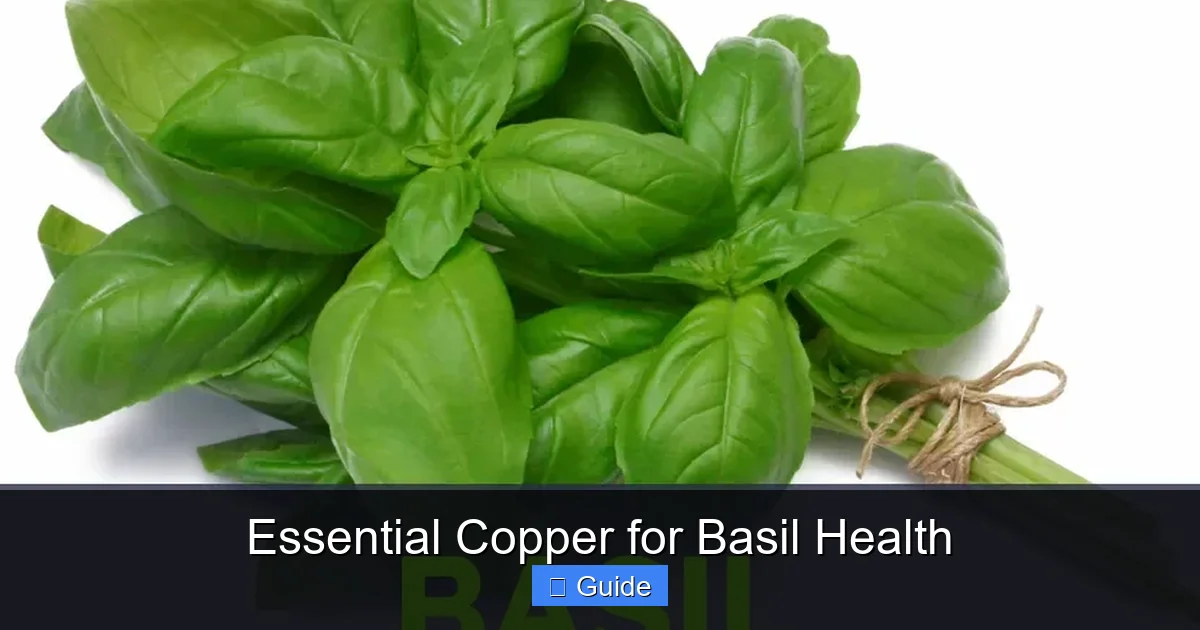
Walk your basil patch in the morning. Coffee in hand. Look at the newest leaves. The very top. The ones still unfolding. Do they curl downward? Do the edges roll under like a shy smile? That is the classic copper signature. The twist happens because cell walls form unevenly. One side grows. The other lags. The leaf buckles. It cannot flatten. It stays cupped. It stays small.
Visual guide about Essential Copper for Basil Health
Image source: i0.wp.com
Next, check the color. New leaves emerge pale. Not the vibrant lime of healthy basil. More like diluted tea. The veins might stay greener. The tissue between veins fades first. This interveinal chlorosis mimics iron deficiency. But iron deficiency hits the very youngest leaves hardest. Copper deficiency hits the recently matured leaves too. The transition zone. Look there.
Necrotic Spots and Dead Tips
As deficiency progresses, brown spots appear. They start at leaf margins. They creep inward. The leaf tips die back. The growing point may die. The plant tries to branch from lower nodes. You get a bushy but stunted plant. Lots of leaves. No size. No vigor. The flavor turns grassy. The sweet anise notes vanish. The essential oil profile shifts toward harsh compounds.
Roots suffer silently. Copper deficiency reduces root branching. Root hairs shorten. The root tips thicken and turn brown. You will not see this unless you pull a plant. But you will feel it. The plant wilts fast on hot days. It recovers slow at night. Water uptake cannot keep pace with transpiration. The weak lignin in xylem vessels collapses under tension. The plumbing fails.
Disease Magnet
Downy mildew loves copper-starved basil. The spores land. The weak cell walls offer no resistance. The hyphae penetrate within hours. The purple-gray fuzz appears on leaf undersides. Yellow angular patches form on top. The plant cannot mount a defense. Phytoalexins, the antimicrobial compounds, need copper enzymes for synthesis. No copper means no chemical warfare. The infection spreads. The crop fails.
Fusarium wilt also exploits low copper. The fungus clogs vascular tissue. The plant cannot compartmentalize the invasion. Lignin barriers fail to form. The wilt moves fast. One day green. Next day flat. Copper adequate basil fights back. It walls off the fungus. It sacrifices a branch. It survives to harvest.
Soil Factors That Control Copper Availability
pH: The Gatekeeper
Soil pH is the master variable. Copper availability peaks between pH 5.5 and 6.5. In this slightly acidic range, copper ions float free. Roots grab them. Organic acids from roots help. Microbial activity helps. Everything flows. Raise pH above 7.0 and copper locks up. It binds to carbonate. It binds to clay. It precipitates as hydroxide. It becomes invisible to roots. Your soil test shows adequate copper. Your basil shows deficiency. The pH lied to you.
Lower pH below 5.0 and copper becomes too available. Toxic levels release. Aluminum and manganese also spike. Roots burn. Growth stops. Different problem. Same misery. Most garden soils sit between 6.0 and 7.0. That is the sweet spot. Test your pH. Adjust with sulfur or lime. Do it slowly. Do it in fall. Spring adjustments shock the biology.
Organic Matter: The Copper Bank
Organic matter holds copper like a savings account. Humus molecules have negative charges. Copper ions have positive charges. They stick. But they do not stick forever. Microbes decompose organic matter. They release copper slowly. They release it as chelates. Chelates are organic claws that hold metal ions. They keep copper soluble. They deliver it to roots. High organic matter soils rarely show copper deficiency. Sandy soils with low organic matter show it often.
Compost is your best friend. Add two inches yearly. Work it in lightly. Mulch with straw or leaves. Feed the microbes. They manage the copper bank. They also manage pH. They buffer extremes. They create the rhizosphere, that living zone around roots. In the rhizosphere, pH drops. Organic acids flow. Copper mobilizes. Biology solves chemistry.
Soil Texture and Drainage
Clay soils hold copper tight. High cation exchange capacity. Lots of binding sites. Copper stays put. But clay also holds water. Waterlogged clay goes anaerobic. Reducing conditions change copper chemistry. Copper sulfides form. They are insoluble. The copper disappears. Then the soil dries. Oxidation returns. Copper reappear. The fluctuation confuses plants. Roots cannot adapt fast enough.
Sandy soils leak copper. Low cation exchange. Water flushes copper downward. Beyond root reach. Irrigation accelerates the loss. Container basil in peat-based mix faces this. The mix has no mineral copper reserve. Fertilizer must supply it. But peat binds copper too. The chemistry fights you. Regular weak feeding beats occasional heavy feeding. Consistency wins.
Antagonists: When Nutrients Fight
High phosphorus blocks copper. Phosphorus and copper form insoluble phosphates. Heavy superphosphate applications induce copper deficiency. Manure high in phosphorus does the same. High zinc blocks copper. They compete for the same transporters. High iron blocks copper. Same story. High nitrogen dilutes copper. Fast growth outpaces copper uptake. The plant gets bigger but copper concentration drops. Hidden hunger develops. No visible signs. Just lower oil content. Lower disease resistance. Lower yield quality.
Balance matters. Do not chase maximum nitrogen. Chase balanced nutrition. Use complete organic fertilizers. They release slowly. They maintain ratios. They feed soil life. Soil life manages the ratios. You steer. They row.
Supplying Copper Safely and Effectively
Soil Testing First
Never guess. Test. A standard soil test costs twenty dollars. It tells you pH, organic matter, and extractable copper. The extractant matters. DTPA extraction works for micronutrients. Mehlich-3 works too. Ask the lab. Request copper specifically. Some basic tests skip it. The result comes in parts per million. For basil, aim for 0.5 to 2.0 ppm DTPA copper. Below 0.3 ppm is deficient. Above 5 ppm risks toxicity. The range is narrow. Precision matters.
Test every two years. Test after major amendments. Test when you see problems. Keep records. Track trends. Your soil history becomes your best tool.
Organic Copper Sources
Compost is the gentlest source. Good compost contains 10 to 50 ppm copper. At two inches per year, you add a tiny amount. It releases over seasons. It never spikes. It builds the bank. Manure works similarly. Poultry manure runs higher in copper. Use aged. Fresh burns. Worm castings are gold. They contain chelated copper. They inoculate microbes. They improve structure. A handful per planting hole starts seedlings right.
Kelp meal offers broad micronutrients. Copper included. One pound per hundred square feet yearly. It also has growth hormones. Cytokinins. Auxins. They stimulate root branching. More roots find more copper. Kelp is insurance. Not a cure.
Copper sulfate is the standard mineral source. It is allowed in organic with restrictions. Use the pentahydrate form. Blue crystals. Dissolve completely. Apply as a soil drench. Rate: one teaspoon per ten gallons water per hundred square feet. That delivers about 0.5 ppm copper to the top six inches. Do this once per season. Only if test confirms need. Mark the date. Retest next year.
Foliar Feeding for Fast Correction
Foliar sprays bypass soil problems. They hit leaves directly. Copper enters through stomata and cuticle. It moves into chloroplasts fast. It greens up new growth in days. Use copper chelate. EDTA or citrate chelates. They penetrate better than sulfates. They burn less. Mix one teaspoon chelate per gallon water. Spray early morning. Cover undersides. Repeat in ten days. Two sprays usually fix it.
Do not spray in heat. Do not spray before rain. Do not spray flowering basil if bees forage. Copper hurts bees. Spray evening if needed. But morning is best. Leaves dry fast. Disease risk drops.
Copper Fungicides: Double Duty
Copper hydroxide. Copper octanoate. Copper sulfate. These are fungicides. They kill downy mildew spores. They kill bacterial leaf spot. They also deposit copper on leaves. Some absorbs. Some washes to soil. It builds slowly. Weekly sprays during humid weather supply meaningful copper. But they also build soil copper. Monitor. Rotate with biological fungicides. Bacillus subtilis. Reynoutria sachalinensis extract. Save copper for when disease pressure peaks.
Follow label rates exactly. More is not better. Copper accumulates. It does not leach easily. It stays in topsoil. Earthworms avoid high copper zones. Mycorrhizal fungi die. The living soil dies. Your basil loses its partners. The cure becomes the curse.
Container Basil: Special Copper Challenges
The Closed System
Pots are tiny worlds. No mineral weathering. No deep subsoil. No lateral flow. What you put in is what they get. Peat and coir, coco, perlite, vermiculite. These have near-zero copper. Compost in the mix helps. But compost decomposes. It shrinks. It loses structure. It loses nutrient holding capacity. By mid-season, the copper bank is empty.
Fertilizer becomes the sole source. Most liquid fertilizers skip copper. Check the label. Look for “micronutrient package” or “trace elements.” If copper is missing, add it. A pinch of copper sulfate per gallon of concentrate. Or use a complete hydroponic nutrient. Those always include copper. At 0.05 to 0.1 ppm in solution. Constant feed. Constant supply. No peaks. No valleys.
pH Drift in Containers
Container pH drifts fast. Peat starts acidic. Lime in the mix buffers. But water alkalinity pushes pH up. Fertilizer type pushes pH. Ammonium nitrogen acidifies. Nitrate nitrogen alkalizes. Within weeks, pH can shift two units. Copper availability swings wildly. Test container pH monthly. Use a probe. Adjust with vinegar or baking soda drenches. Keep it 5.8 to 6.2. Stability keeps copper available.
Salt Buildup and Copper Toxicity
Evaporation concentrates salts. Copper sulfate adds copper and sulfate. Both accumulate. High sulfate binds copper. But high total salts stress roots. Stressed roots absorb toxins easier. Copper toxicity shows as root stunting. Brown root tips. Iron deficiency symptoms on new growth. Copper blocks iron uptake. The plant starves for iron while drowning in copper. Flush containers monthly. Run three pot volumes of water through. Let drain. Reset the chemistry.
Copper Toxicity: When Good Goes Bad
The Narrow Window
Essential copper for basil health lives in a narrow window. Deficiency at 2 ppm in tissue. Toxicity at 20 ppm. Ten times difference. For nitrogen, the window is hundred times. For potassium, fifty times. Copper is unforgiving. The line between medicine and poison is thin. Cross it and recovery takes years.
Toxicity Symptoms
Root growth stops first. Root tips turn black. Lateral roots abort. The root system shrinks. Top growth follows. Leaves cup upward. Not downward like deficiency. Upward. The margins roll up. The color darkens. A weird blue-green. Like a bruise. Then chlorosis. But it starts old leaves. Not new. Copper moves to new growth when toxic. It piles up in old leaves. They yellow. They drop. The plant looks nitrogen starved. But nitrogen is fine. Copper is the bully blocking everyone else.
Iron deficiency appears. Manganese deficiency appears. Zinc deficiency appears. Copper hogs the transporters. The plant cannot absorb its friends. You see multiple deficiencies at once. That is the toxicity signature. A confusion of symptoms. Nothing makes sense. Until you test tissue. Then it screams.
Sources of Excess
Repeated copper fungicide use. Year after year. The soil loads up. Copper sulfate as fertilizer without testing. “If a little helps, more helps better.” Wrong. Industrial contamination. Old orchard sites. Copper sprays for decades. The soil remembers. Sewage sludge compost. Some biosolids run high in copper. Regulations limit it. But limits allow buildup over time. Know your amendments. Test them. Ask for the analysis.
Remediation Is Slow
You cannot remove copper easily. It binds tight. Plants cannot pump it out. You can raise pH to 7.5. That locks it up. But basil hates 7.5. You can add organic matter. It chelates. It reduces bioavailability. You can grow non-accumulator crops. Sunflowers. Corn. They tolerate copper. They pull some out. Harvest and remove biomass. Do not compost it back. It takes years. Prevention is the only practical strategy. Test. Track. Respect the window.
Seasonal Copper Management Calendar
Late Winter: Plan and Test
Pull soil samples. Send to lab. Order amendments. If copper low, order copper sulfate or chelate. If pH high, order elemental sulfur. If organic matter low, source compost. Plan your basil varieties. Some tolerate low copper better. Genovese types are sensitive. Thai basil is tougher. Holy basil is toughest. Match variety to soil reality.
Early Spring: Prepare Beds
Work in compost. Two inches. Broadfork. Do not till. Tilling burns organic matter. It releases copper fast then loses it. Broadfork preserves structure. It preserves fungi. Mycorrhizae extend root reach. They find copper in micropores. They trade it for sugar. Keep them happy. Add sulfur if pH needs dropping. Water in. Wait two weeks. Biology activates.
Planting Time: Starter Boost
Transplant seedlings. Water with kelp solution. One tablespoon per gallon. It eases shock. It supplies trace copper. It wakes microbes. If soil test showed marginal copper, add one pinch copper sulfate to the planting hole. Mix with soil. Do not touch roots. Roots find it as they explore.
Early Summer: Monitor and Foliar Feed
Watch new growth. First true leaves after transplant. Are they flat? Green? Vigorous? Good. Copper is fine. Are they twisted? Pale? Act fast. Foliar spray copper chelate. One teaspoon per gallon. Spray weekly for two weeks. Then stop. Watch. Retest soil if problem persists. Maybe pH drifted. Maybe phosphorus spiked. Diagnose before doubling down.
Mid Summer: Disease Pressure
Humidity rises. Downy mildew threatens. Copper fungicide decision time. If disease appears, spray copper octanoate. It is softer on biology. Follow label. Spray evening. Bees are home. If no disease, skip. Save copper. Use potassium bicarbonate instead. It changes leaf pH. Spores hate it. No copper added. Rotate modes of action. Preserve the tool.
Late Summer: Harvest and Flush
Heavy harvest continues. Pinch flowers. Keep vegetative. Feed lightly with fish emulsion. It has trace copper. It feeds microbes. In containers, flush monthly. Reset salts. Check pH. Adjust. The season winds down. Copper needs drop with growth rate.
Fall: Soil Care
Plant cover crop. Winter rye. Hairy vetch. They scavenge nutrients. They prevent leaching. They feed winter microbes. Copper cycles. It stays in the topsoil. It waits for next spring. Mulch beds with leaves. Two feet deep. Worms pull it down. They distribute copper. They aerate. They build next year’s fertility for free.
Variety-Specific Copper Needs
Sweet Basil (Ocimum basilicum)
The classic Genovese. Large leaves. High oil content. Fast growth. High copper demand. It pushes biomass hard. It needs steady supply. It shows deficiency first. It responds dramatically to correction. Grow it in your best soil. Give it the most attention. It rewards you with pesto perfection.
Thai Basil (Ocimum basilicum var. thyrsiflora)
Smaller leaves. Woody stems. Slower growth. Purple stems. Anise flavor. It tolerates lower copper. Its lignin game is strong. It resists downy mildew better. It grows in marginal soil. But it still needs copper for flavor. Do not neglect it. Just worry less.
Holy Basil (Ocimum tenuiflorum)
Tulsi. Sacred. Medicinal. Hairy leaves. Clove scent. Tough as nails. Grows in cracks. Survives drought. Tolerates alkaline soil. Its copper efficiency is legendary. It makes do with scraps. But in good soil, it explodes. The adaptogen compounds maximize. Copper helps. But it forgives you.
Lemon Basil (Ocimum × citriodorum)
Hybrid. Citral dominance. Light green leaves. Fast bolting. Moderate copper needs. Watch for tip burn. That can be copper toxicity. Or boron toxicity. Or salt burn. Test. Do not guess. The hybrid vigor masks problems until they crash.
Micro Basil and Greek Basil
Tiny leaves. Compact. Dense. High surface area. High transpiration. They move water fast. They move copper fast. They need constant dilute supply. Foliar feeding works great. They absorb through all those tiny leaves. Weekly weak spray beats monthly strong drench.
Troubleshooting Common Copper Scenarios
Scenario: Yellow New Leaves, Twisted Tips
Classic deficiency. Check pH first. If above 7.0, lower it. Elemental sulfur. One pound per hundred square feet drops pH 0.5 units. Wait. Retest. If pH is good, check phosphorus. High phosphorus? Stop adding bone meal. Stop high-P fertilizers. Flush with water. Foliar feed copper chelate. Two sprays ten days apart. Watch new growth. It should flatten and green within two weeks.
Scenario: Blue-Green Leaves, Stunted Roots
Toxicity. Stop all copper inputs. No fungicides. No copper fertilizers. Raise pH to 7.0 with lime. Add compost heavily. Four inches. Plant a trap crop. Sunflowers. Let them grow six weeks. Cut and remove. Do not compost. Retest soil. Wait. Patience. The soil heals slowly.
Scenario: Downy Mildew Every Year
Resistant varieties first. ‘Prospera’, ‘Rutgers Devotion’, ‘Amazel’. They have genetic resistance. They need less copper spray. Rotate planting location. Three year gap. Solarize soil in summer. Clear plastic. Six weeks. Heat kills spores. Improve airflow. Space plants eighteen inches. Stake. Prune. Morning water only. Drip irrigation. Dry leaves resist infection. Copper spray becomes backup. Not crutch.
Scenario: Container Basil Fails Mid-Season
Salt flush. Three pot volumes water. Let drain. Repot if rootbound. Fresh mix. Add worm castings. Ten percent. Use complete hydroponic nutrient. Constant feed at half strength. Check pH weekly. Adjust. The container resets. The basil recovers. Copper flows again.
The Science Behind the Magic
Copper Proteins: Molecular Machines
Let us peek inside the leaf. Plastocyanin. A small protein. Ninety-nine amino acids. One copper atom in the center. The copper flips between Cu+ and Cu2+. Each flip moves one electron. It moves millions per second. It is the wire between Photosystem II and Photosystem I. Without it, the circuit breaks. The light energy has nowhere to go. It becomes heat. It becomes damage.
Laccase. A larger protein. Five hundred amino acids. Four copper atoms. Type 1, Type 2, Type 3 copper centers. They work as a team. They grab oxygen. They strip electrons from lignin precursors. They link them into chains. The chains crosslink. The cell wall hardens. This happens in the apoplast. The space outside cell membranes. Copper travels there in vesicles. Special transporters load it. The plant invests energy to move copper. It values lignin that much.
Superoxide dismutase. Copper-zinc SOD. Two metals. One copper. One zinc. They sit side by side. Superoxide rushes in. Copper takes an electron. Superoxide becomes oxygen. Another superoxide rushes in. Copper gives the electron back. Superoxide becomes hydrogen peroxide. Catalase handles peroxide. The cycle spins. Millions of times per minute. The membrane stays intact. The DNA stays clean. The cell lives.
Copper Chaperones: The Delivery Service
Free copper ions are toxic. They react with everything. They shred proteins. They fracture DNA. The cell never lets copper float free. Chaperone proteins grab copper the moment it enters. They escort it. One chaperone for SOD. One for cytochrome c oxidase in mitochondria. One for ethylene receptors. Each chaperone recognizes its target. It docks. It transfers copper. It leaves. Precision logistics. No accidents.
When copper is scarce, chaperones fight. They compete. SOD usually wins. Survival priority. Lignin loses. Photosynthesis loses. The plant chooses life over structure. Over growth. Over flavor. This is why deficiency hits quality first. The plant survives. But it gives you nothing worth eating.
Gene Regulation: Copper Talks to DNA
Copper deficiency triggers gene expression changes. Transcription factors activate. They bind copper-responsive elements in DNA. They turn on copper transporters. They turn on chaperones. They turn off non-essential copper proteins. The plant rewires its metabolism. It becomes a copper miser. This takes days. The visual symptoms lag the molecular response. By the time you see twisted leaves, the plant has been scrambling for a week.
Excess copper triggers different genes. Metallothioneins. Small proteins rich in cysteine. They bind copper tightly. They sequester it in vacuoles. They try to detoxify. But the system overwhelms. The vacuoles burst. Copper floods the cytosol. Enzymes denature. The cell dies. The plant sacrifices leaves. It tries to save the meristem. Sometimes it works. Often it fails.
Integrating Copper into Your Garden System
The Living Soil Approach
Stop thinking of copper as an input. Start thinking of it as a cycle. Bacteria solubilize copper. Fungi transport copper. Protozoa eat bacteria. Nematodes eat fungi. They excrete copper in plant-available forms. Earthworms mix it downward. Roots exude sugars. They feed the cycle. The cycle feeds the roots. Your job is to protect the cycle. No broad-spectrum fungicides. No synthetic nematicides. No soil sterilization. Feed the cycle with diversity. Cover crops. Mulch. Compost. Living roots year-round.
Companion Planting for Copper
Dynamic accumulators. Plants that mine minerals deep. Comfrey. Yarrow. Dandelion. Their roots reach subsoil copper. They bring it up. Their leaves fall. They decompose. Copper returns to topsoil. Plant them around basil beds. Chop and drop. Mulch with their leaves. Free fertilizer. Free copper. Free labor.
Legumes fix nitrogen. But they also acidify rhizosphere. They release organic acids. They mobilize copper. Intersperse bush beans with basil. They share space. They share time. They share microbes. The basil gets copper. The beans get shade. The soil gets diversity. Everyone wins.
Water Wisdom
Water quality matters. Well water often has copper. Municipal water sometimes has copper from pipes. Test your irrigation water. If copper is high, you may need zero supplementation. If water is pure rainwater, you need more. Rainwater has no minerals. It is aggressive. It leaches copper from soil. Container growers using rainwater must fertilize completely. In-ground growers benefit from occasional tap water. The minerals accumulate. Test annually. Know your water.
Conclusion
Copper is the quiet architect of basil health. It builds the solar panels. It weaves the armor. It runs the cleanup crew. It signals the hormones. It does all this in amounts you cannot see. But the results are visible. Glossy leaves. Upright stems. Intense aroma. Disease resistance. Long harvests. Understanding essential copper for basil health transforms you from a reactor to a steward. You stop chasing symptoms. You start managing systems.
The tools are simple. Soil test. pH test. Compost. Kelp. Maybe copper sulfate once a year. Maybe foliar chelate when needed. Maybe copper fungicide when disease threatens. The wisdom is in restraint. The wisdom is in observation. The wisdom is in respecting the narrow window between too little and too much.
Your basil will tell you. Twisted tips whisper deficiency. Blue-green leaves scream toxicity. Flat green leaves sing balance. Listen with your eyes. Respond with knowledge. Harvest with joy. The pesto you make from copper-wise basil will taste like sunshine captured in a leaf. Because that is exactly what it is. Copper made the capture possible. Honor the copper. Honor the basil. Honor the soil that connects them.
Next season, when you walk the garden with morning coffee, you will see differently. You will see the invisible threads. You will see copper moving through roots, up stems, into leaves, into flavor. You will smile. You will pinch a leaf. You will inhale. You will taste the science. And it will taste delicious.
Frequently Asked Questions
What is the ideal soil copper level for basil?
Aim for 0.5 to 2.0 ppm DTPA-extractable copper in soil tests. Below 0.3 ppm indicates deficiency; above 5 ppm risks toxicity. Test every two years since copper doesn’t leach easily and builds up over time.
How often should I apply copper to basil?
Only apply copper when soil tests confirm deficiency. Typically once per season as a soil drench (1 tsp copper sulfate per 10 gallons water per 100 sq ft) or 1-2 foliar sprays of copper chelate (1 tsp/gallon) spaced 10 days apart for visible deficiency.
Does basil variety of basil needs the most copper?
Fast-growing sweet basil varieties like Genovese have the highest copper demand due to rapid biomass production. Thai and holy basil tolerate lower copper levels better but still benefit from adequate supply for optimal flavor and disease resistance.
Can I fix copper deficiency with compost alone?
Compost provides slow-release copper (10-50 ppm) and improves soil biology that mobilizes copper. For severe deficiency, compost alone is too slow. Combine compost with targeted copper chelate foliar sprays for immediate correction while compost builds long-term reserves.
What pH makes copper available to basil?
Copper availability peaks between pH 5.5-6.5. Above pH 7.0, copper binds to carbonates and becomes unavailable. Below pH 5.0, copper becomes too available and can reach toxic levels. Test and adjust pH before supplementing copper.
Are copper fungicides organic?
Copper sulfate, copper hydroxide, and copper octanoate are allowed in organic production with restrictions. They must be used in a way that minimizes soil copper accumulation. Always check your certifier’s specific guidelines and follow label rates precisely.