Catmint and White Flower Plants
Catmint and white flower plants create a stunning, low-maintenance garden combination that blooms from spring through fall. This pairing attracts bees, butterflies, and hummingbirds while providing beautiful contrast with minimal care required.
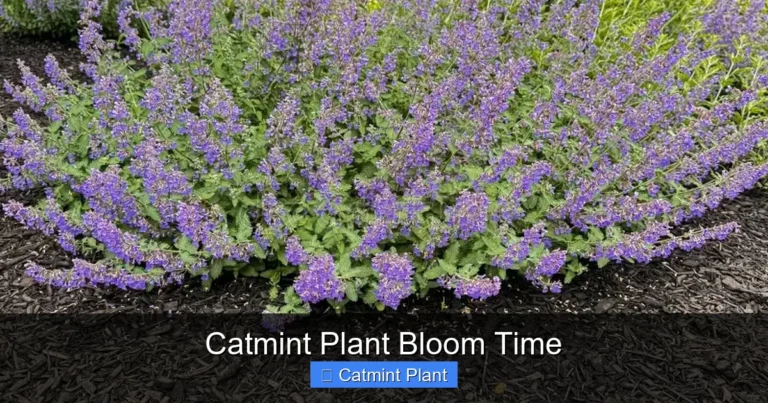
There’s something magical about a garden filled with soft purple catmint swaying alongside crisp white blooms. The combination feels both classic and fresh, like a favorite recipe that never gets old. If you’ve ever wandered through a well-designed perennial border in early summer, you’ve likely seen this pairing at work. The misty lavender-blue spikes of catmint create a hazy backdrop that makes white flowers pop with brilliant clarity.
I first discovered this combination quite by accident. A few years back, I planted ‘Walker’s Low’ catmint along a sunny path, then tucked some white Shasta daisies in front of it. The result stopped me in my tracks every time I walked by. The daisies looked like they were floating on a purple cloud. Since then, I’ve experimented with dozens of white flowering companions, and I’m excited to share what works best. Whether you’re designing a new border or refreshing an existing bed, this guide will help you create a garden that looks professionally designed with a fraction of the effort.
Key Takeaways
- Perfect companions: Catmint and white flower plants share similar growing needs, making them ideal garden partners that thrive together with minimal effort.
- Extended bloom season: Strategic pairing creates continuous color from early spring through late fall, keeping your garden vibrant for months.
- Pollinator magnet: This combination attracts bees, butterflies, and beneficial insects, supporting a healthy garden ecosystem naturally.
- Drought tolerant: Once established, both catmint and most white flowering companions need little supplemental watering, saving time and resources.
- Deer and rabbit resistant: The aromatic foliage of catmint deters browsing animals, protecting more delicate white flower plants nearby.
- Versatile design options: Works beautifully in cottage gardens, formal borders, rock gardens, and container plantings for any landscape style.
- Easy maintenance: Simple pruning after first bloom encourages a second flush of flowers, keeping the display fresh all season long.
Quick Answers to Common Questions
What is the best catmint variety for pairing with white flowers?
‘Walker’s Low’ is the top choice for its reliable 24-30 inch height, long bloom season, and mounding habit that perfectly backs medium-height white perennials like Shasta daisies and white salvia.
Do catmint and white flower plants need full sun?
Yes, both catmint and most white flowering companions require at least 6 hours of direct sun daily for best flowering and compact growth. Partial shade reduces blooms and causes floppy stems.
How often should I water established catmint and white flower plantings?
Once established (after the first growing season), most catmint and white flower companions need water only during extended drought periods of 2+ weeks without rain. Overwatering causes more problems than underwatering.
When should I cut back catmint for a second bloom?
Shear catmint back by half in early July after the first flush finishes. New growth appears within days, and a second bloom follows in 3-4 weeks, extending the show into fall.
Can I grow catmint and white flowers in containers?
Absolutely. Use dwarf catmint varieties like ‘Junior Walker’ or ‘Purrsian Blue’ in pots at least 14 inches deep with fast-draining gritty soil mix. Pair with white annuals like sweet alyssum or white petunias.
📑 Table of Contents
- Understanding Catmint: The Perfect Garden Anchor
- Best White Flower Companions for Catmint
- Design Strategies for Maximum Impact
- Planting and Establishment Success
- Seasonal Care and Maintenance
- Troubleshooting Common Issues
- Container Combinations for Small Spaces
- Ecological Benefits: Beyond Beauty
- Creative Variations and Advanced Techniques
- Regional Adaptations Across Growing Zones
- Budget-Friendly Implementation
- Conclusion: Your Catmint and White Flower Journey Begins
Understanding Catmint: The Perfect Garden Anchor
What Makes Catmint So Special
Catmint, known botanically as Nepeta, belongs to the mint family but behaves far better than its aggressive cousins. Unlike spearmint or peppermint that will take over your entire yard, catmint forms neat, mounding clumps that stay exactly where you put them. The aromatic gray-green foliage releases a pleasant, minty scent when brushed against, and the flowers appear in generous spikes that bloom for weeks on end.
Most gardeners know catmint as a tough, reliable perennial that thrives on neglect. It handles heat, humidity, and drought without complaint. Deer and rabbits typically leave it alone thanks to its pungent oils. And perhaps best of all, it attracts pollinators like a magnet. Bees absolutely adore the nectar-rich flowers, and you’ll often find butterflies dancing among the stems on sunny afternoons.
Popular Catmint Varieties for White Flower Pairings
Not all catmints are created equal when it comes to pairing with white flowers. Height, bloom time, and growth habit all matter. Here are the standout varieties that play nicely with white companions:
- ‘Walker’s Low’ (Nepeta racemosa ‘Walker’s Low’): Despite the name, this variety reaches 24-30 inches tall and wide. It won Perennial Plant of the Year in 2007 for good reason. The lavender-blue flowers bloom from late spring through fall with a quick shear after the first flush. Its mounding habit creates a perfect backdrop for medium-height white flowers.
- ‘Cat’s Meow’ (Nepeta faassenii ‘Cat’s Meow’): A more compact option at 17-20 inches tall, this variety stays tidy without flopping. The flower color leans more toward true blue, creating striking contrast with pure white blooms. Excellent for smaller gardens or the front of borders.
- ‘Six Hills Giant’ (Nepeta ‘Six Hills Giant’): The tallest common variety at 30-36 inches, this makes a dramatic statement. Use it behind taller white flowers like white phlox or white coneflowers. The large, abundant flower spikes create a substantial purple haze effect.
- ‘Junior Walker’ (Nepeta ‘Junior Walker’): A dwarf version of ‘Walker’s Low’ at just 15-18 inches. Perfect for edging paths or planting in front of white roses. It maintains the same long bloom season in a more manageable package.
- ‘Purrsian Blue’ (Nepeta faassenii ‘Purrsian Blue’): Compact at 14-18 inches with a tight, uniform habit. The periwinkle-blue flowers are especially profuse. Ideal for containers paired with white annuals like sweet alyssum or white petunias.
Growing Conditions Catmint Loves
Understanding what catmint needs helps you choose white flower companions with matching requirements. Catmint thrives in full sun, meaning at least six hours of direct sunlight daily. It tolerates partial shade but blooms less prolifically and may get leggy. Well-drained soil is non-negotiable. Catmint rots quickly in heavy clay or areas that stay wet, especially in winter.
Once established, catmint is remarkably drought tolerant. Its deep taproot seeks out moisture far below the surface. Overwatering actually causes more problems than underwatering. Fertilizer? Skip it. Rich soil produces floppy growth and fewer flowers. Lean, even slightly rocky or sandy soil produces the strongest, most floriferous plants.
Best White Flower Companions for Catmint
White Perennials That Bloom in Harmony
The most successful pairings bloom at the same time or in pleasing succession. Let’s explore white perennials that share catmint’s love of sun and well-drained soil.
Shasta Daisy (Leucanthemum x superbum)
This classic combination never fails. Shasta daisies bloom from early summer through fall, perfectly overlapping catmint’s long season. The crisp white petals with sunny yellow centers stand out beautifully against catmint’s soft purple haze. Varieties like ‘Becky’ (3-4 feet tall) work behind taller catmints, while ‘Snowcap’ (12-15 inches) pairs perfectly with dwarf varieties. Both prefer the same lean, well-drained conditions.
White Coneflower (Echinacea purpurea ‘White Swan’ or ‘PowWow White’)
White coneflowers bring architectural interest with their prominent central cones and reflexed petals. They bloom mid-summer through fall, bridging the gap when catmint might take a brief pause between flushes. The sturdy stems (2-3 feet) hold up well without staking. Goldfinches love the seed heads in winter, adding four-season interest. Like catmint, coneflowers thrive in poor soil and resent wet feet.
White Phlox (Phlox paniculata ‘David’ or ‘White Flame’)
Garden phlox adds vertical presence and sweet fragrance to the pairing. ‘David’ is famously mildew-resistant, a crucial trait since catmint’s dense growth can reduce air circulation. The large flower heads (6-8 inches across) create bold white clouds above the catmint mound. Bloom time is mid-summer to early fall. Phlox appreciates slightly more moisture than catmint, so site them where the soil stays a bit cooler.
White Yarrow (Achillea millefolium ‘Moonshine’ or ‘White Beauty’)
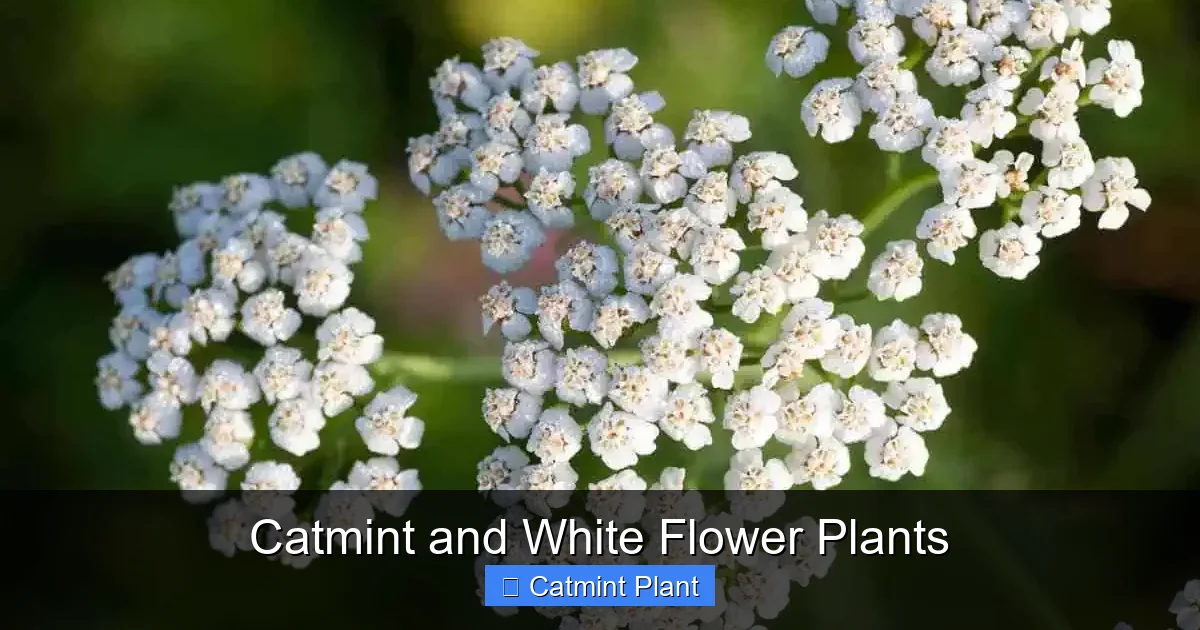
Yarrow’s flat-topped flower clusters provide a completely different texture from catmint’s spikes. The ferny, aromatic foliage echoes catmint’s gray-green leaves, creating visual harmony. ‘Moonshine’ offers soft yellow centers that age to cream, while ‘White Beauty’ stays pure white. Both bloom early summer through fall with deadheading. Extremely drought tolerant and deer resistant, just like catmint.
White Salvia (Salvia nemorosa ‘White Profusion’ or ‘Snow Hill’)
White salvia might be the closest cousin to catmint in both appearance and cultural needs. The spiky white flowers mirror catmint’s form, creating a rhythmic repetition that feels intentional and designed. ‘White Profusion’ reaches 18-24 inches, matching ‘Walker’s Low’ beautifully. Both bloom late spring through fall with a mid-season shear. This pairing is foolproof for beginners.
White Annuals for Season-Long Color
Perennials form the backbone, but white annuals fill gaps and extend the show. They’re especially useful the first year while perennials establish.
Sweet Alyssum (Lobularia maritima)
This low-growing annual creates a fragrant white carpet at the feet of catmint. The honey-scented flowers bloom continuously from spring until hard frost. It self-sows gently, returning year after year without becoming invasive. Plant it along the front edge of a catmint border for a soft, romantic look. The tiny flowers attract beneficial insects like hoverflies and parasitic wasps.
White Petunias (Petunia x hybrida)
Modern petunia varieties like ‘Supertunia White’ or ‘Wave White’ bloom nonstop without deadheading. Their mounding or trailing habit softens the edge of catmint plantings. In containers, white petunias spill over the sides while catmint fills the center. Both handle heat well, though petunias appreciate more consistent moisture.
White Zinnias (Zinnia elegans ‘White Wedding’ or ‘Polar Bear’)
Zinnias bring bold, dahlia-like flowers on sturdy stems. They thrive in the same hot, sunny conditions catmint loves. ‘White Wedding’ produces fully double, 3-4 inch blooms on 2-foot plants. ‘Polar Bear’ offers slightly smaller but more numerous flowers. Both make excellent cut flowers. Direct sow after frost for summer-long color.
White Cosmos (Cosmos bipinnatus ‘Purity’ or ‘Sonata White’)
Cosmos adds an airy, meadow-like quality with delicate foliage and daisy-like flowers on wiry stems. ‘Purity’ reaches 3-4 feet with large single flowers. ‘Sonata White’ stays compact at 2 feet. Both bloom from mid-summer to frost. The feathery foliage contrasts beautifully with catmint’s denser leaves. Cosmos self-sows readily, creating a naturalized effect over time.
White Flowering Shrubs for Structure
For larger gardens, white flowering shrubs provide year-round structure and spring blooms before catmint hits its stride.
White Spirea (Spiraea nipponica ‘Snowmound’ or S. x vanhouttei)
Spring-blooming spireas cascade with white flowers in April-May, just as catmint begins its first growth flush. ‘Snowmound’ stays compact at 3-4 feet with a graceful, arching habit. The blue-green foliage looks attractive all summer. Plant catmint at the base to hide bare legs and extend the bloom season.
White Hydrangea (Hydrangea arborescens ‘Annabelle’ or ‘Incrediball’)
Smooth hydrangeas produce massive white flower heads (up to 12 inches) from early summer through fall. They prefer partial shade but tolerate full sun with adequate moisture. Plant catmint in a sunny arc in front of them. The hydrangea’s bold leaves and huge flowers create a stunning backdrop for catmint’s fine texture.
White Rose (Rosa ‘Iceberg’ or ‘White Drift’)
Few combinations rival white roses with catmint. ‘Iceberg’ floribunda produces clusters of pure white, lightly fragrant flowers from spring to frost. ‘White Drift’ is a groundcover rose staying under 2 feet. Catmint masks the rose’s bare canes and deters pests with its aromatic foliage. The classic cottage garden look at its finest.
Design Strategies for Maximum Impact
Creating Rhythm Through Repetition
Professional garden designers rely on repetition to create cohesion. Instead of planting one catmint and one white coneflower, plant three or five of each in a repeating pattern. This creates visual rhythm that leads the eye through the garden. For a border 20 feet long, try: catmint, white coneflower, catmint, white phlox, catmint, Shasta daisy, catmint, white salvia. The catmint becomes the connecting thread that ties everything together.
Odd numbers (3, 5, 7) look more natural than even numbers. Plant in drifts or triangles rather than straight rows. Allow plants to intermingle slightly at the edges. This mimics natural plant communities and creates that sought-after “established garden” look much faster.
Playing with Height Layers
A successful border has three layers: tall (back), medium (middle), short (front). Catmint’s versatility lets it play different roles depending on variety.
- Back layer (3-4 feet): ‘Six Hills Giant’ catmint, white phlox ‘David’, white coneflower, white hydrangea
- Middle layer (18-24 inches): ‘Walker’s Low’ catmint, Shasta daisy ‘Becky’, white salvia ‘White Profusion’, white yarrow
- Front layer (12-18 inches): ‘Cat’s Meow’ catmint, Shasta daisy ‘Snowcap’, white salvia ‘Snow Hill’, sweet alyssum
For island beds viewed from all sides, place tallest plants in the center and step down toward the edges. Catmint works beautifully as a middle-layer plant that softens transitions between tall and short companions.
Color Temperature Considerations
Not all whites are created equal. Some lean cool (blue-white), others warm (creamy yellow-white). Catmint’s lavender-blue flowers have a cool temperature. Pairing with cool whites (Shasta daisy, white salvia, white phlox ‘David’) creates a serene, sophisticated palette. Warm whites (cream coneflowers, ‘Moonshine’ yarrow, antique white roses) add subtle warmth that prevents the combination from feeling cold or clinical.
Consider the surrounding hardscape too. Cool whites pop against dark mulch, blue-gray stone, or weathered wood. Warm whites harmonize with brick, sandstone, or golden gravel. Test combinations in place before committing. A white flower that looks perfect in the nursery pot might clash with your patio pavers.
Succession Planting for Continuous Bloom
The secret to a garden that never looks dull is succession planning. Catmint blooms heavily in late spring, takes a brief rest in midsummer, then reblooms in fall. Choose white companions that fill the gaps:
- Early spring (April-May): White creeping phlox, white candytuft, white tulips, white bleeding heart
- Late spring (May-June): Catmint first flush, white spirea, white iris, white allium
- Early summer (June-July): Shasta daisy, white salvia, white yarrow, sweet alyssum
- Midsummer (July-August): White coneflower, white phlox, white zinnias, white cosmos
- Late summer (August-September): Catmint second flush, white hydrangea, Japanese anemone ‘Honorine Jobert’
- Fall (September-October): White sedum ‘Autumn Joy’ (flowers age to pink), white aster, ornamental grasses with white plumes
Planting and Establishment Success
Timing Your Planting
Spring and fall are both excellent for planting catmint and white flower companions. Spring planting gives roots time to establish before summer heat. Fall planting (6-8 weeks before ground freeze) allows root growth in cool soil while top growth slows. Summer planting works too but requires diligent watering.
If planting in spring, wait until soil has warmed to at least 50°F. Cold, wet soil causes root rot in catmint. In fall, plant early enough for roots to anchor before frost heaving. Mulch well after fall planting to moderate soil temperature fluctuations.
Soil Preparation That Pays Off
Catmint and most white flower companions prefer lean soil, but “lean” doesn’t mean “compacted.” Loosen soil to 12-18 inches deep. Remove rocks and break up clods. If your soil is heavy clay, incorporate coarse sand or fine gravel (not organic matter) to improve drainage. A 50/50 mix of native soil and coarse sand works well for catmint.
Avoid compost, manure, or rich amendments in the planting hole. These encourage weak, floppy growth. If your soil is extremely poor (pure sand or construction fill), a small handful of bone meal at the bottom of the hole provides slow-release phosphorus for root development without promoting excessive foliage.
Spacing for Air Flow and Future Growth
Proper spacing prevents disease and reduces maintenance. Check mature width on plant tags and space accordingly. As a general rule:
- Dwarf catmint (15-18 inches): Space 15-18 inches apart
- Medium catmint (24-30 inches): Space 24-30 inches apart
- Tall catmint (30-36 inches): Space 30-36 inches apart
- White perennials: Space at mature width
- White annuals: Space 8-12 inches for quick fill
It’s tempting to plant closer for instant impact, but overcrowded plants compete for light and air. Powdery mildew loves crowded, humid conditions. Give plants room to breathe. Fill temporary gaps with annuals or mulch.
Watering for Deep Roots
New plantings need consistent moisture for the first 4-6 weeks. Water deeply 2-3 times per week rather than daily light sprinkling. This encourages roots to chase moisture downward. After establishment, taper watering to once weekly, then only during extended drought.
Catmint’s taproot can reach 3-4 feet deep in loose soil. Once it finds deep moisture, the plant becomes remarkably self-sufficient. White companions vary: coneflowers and yarrow develop deep roots quickly. Phlox and Shasta daisies appreciate more consistent moisture. Group plants with similar water needs together (hydrozoning) for efficient irrigation.
Seasonal Care and Maintenance
The Chelsea Chop: Timing Your Pruning
The “Chelsea Chop” (named for the Chelsea Flower Show in late May) transforms catmint from good to spectacular. Cut plants back by one-third to one-half in late May or early June, just as flower buds form. This delays bloom by 2-3 weeks but produces bushier plants with more flowers and no flopping.
For a staggered display, chop half your catmint plants and leave half uncut. The uncut plants bloom on schedule. The chopped plants bloom later, extending the overall show. This technique works on many white companions too: Shasta daisies, white phlox, white yarrow, and white salvia all respond well.
Deadheading for Repeat Blooms
Deadheading (removing spent flowers) prevents seed formation and encourages rebloom. For catmint, shear the entire plant back by half after the first flush finishes (usually early July). New growth emerges within days, and flowers follow in 3-4 weeks.
For white perennials with individual flower stems (coneflowers, phlox, Shasta daisies), cut spent stems back to a leaf node or basal foliage. For those with flower spikes (salvia, veronica), shear the whole plant like catmint. Sweet alyssum and other low annuals benefit from a light shear with hedge clippers in midsummer.
Dividing to Maintain Vigor
Catmint centers can die out after 3-4 years, leaving a donut-shaped plant. Divide in early spring as new growth emerges. Dig the entire clump, discard the woody center, and replant vigorous outer sections. Water well until established.
Most white perennials benefit from division every 3-5 years. Shasta daisies and yarrow spread quickly and need frequent division. Coneflowers and phlox are slower. Divide spring-blooming plants in fall, fall-blooming plants in spring. Summer bloomers can go either way.
Winter Care in Cold Climates
Catmint is hardy to USDA zone 3 (-40°F) with good drainage. The biggest winter killer isn’t cold but wet soil. Ensure planting sites drain well. Leave foliage standing through winter. The dead stems catch snow, providing insulation. Cut back to 3-4 inches in early spring before new growth starts.
Most white perennials share this preference. Leave seed heads on coneflowers and sedum for winter interest and bird food. Mulch lightly with straw or shredded leaves after ground freezes to prevent freeze-thaw cycles that heave plants. Remove mulch gradually in spring.
Troubleshooting Common Issues
Floppy, Leggy Growth
If catmint or white companions flop open in the center, the cause is usually too much shade, too much water, too rich soil, or overcrowding. Solutions: move to full sun, reduce watering, stop fertilizing, divide and replant with proper spacing. The Chelsea Chop in late spring prevents flopping by creating shorter, sturdier stems.
Powdery Mildew on White Phlox or Bee Balm
White phlox is prone to powdery mildew, especially in humid climates or crowded plantings. Choose resistant varieties (‘David’, ‘White Flame’, ‘Volcano White’). Ensure good air circulation through proper spacing. Water at soil level, not overhead. Remove affected leaves promptly. A homemade spray of 1 tablespoon baking soda plus 1 teaspoon horticultural oil per gallon water helps prevent spread.
Root Rot in Heavy Soil
Catmint, lavender, salvia, and yarrow all succumb to root rot in poorly drained soil. Symptoms: wilting despite moist soil, yellowing leaves, blackened stems at soil line. Prevention is easier than cure. Amend heavy clay with coarse sand or gravel before planting. Plant on slight mounds or in raised beds. Avoid low spots where water collects.
Aphids on New Growth
Spring aphids sometimes cluster on tender catmint shoots and rose buds. Blast with a strong jet of water. Encourage ladybugs and lacewings by avoiding broad-spectrum insecticides. Catmint’s aromatic oils actually repel many pests, making it a good companion for aphid-prone plants like roses.
Deer and Rabbit Browsing
Catmint’s strong scent deters most browsing. However, hungry deer may sample white roses, hydrangeas, or phlox. Interplant catmint generously around vulnerable plants. Apply repellent sprays early and rotate products. Fencing remains the only 100% solution for high-pressure areas.
Container Combinations for Small Spaces
Choosing the Right Pot
Catmint’s deep taproot needs depth. Choose containers at least 14-16 inches deep and wide. Larger pots (18-24 inches) hold more soil, reducing watering frequency. Ensure excellent drainage holes. Elevate pots on feet or bricks to prevent waterlogging.
Potting Mix for Success
Standard potting soil retains too much moisture. Create a lean, fast-draining mix: 2 parts coarse sand or perlite, 1 part potting soil, 1 part compost. Add a handful of grit or chicken grit per gallon of mix. This mimics the lean, gritty conditions catmint loves.
Container Design Recipes
Recipe 1: Classic Cottage Pot (18-inch pot)
- 1 ‘Junior Walker’ catmint (center)
- 3 white ‘Snowcap’ Shasta daisies (around catmint)
- 5 white sweet alyssum (edge)
Recipe 2: Modern Minimalist (24-inch pot)
- 1 ‘Purrsian Blue’ catmint (off-center)
- 3 ‘White Profusion’ salvia (behind catmint)
- White ‘Diamond Frost’ euphorbia (front edge)
Recipe 3: Pollinator Paradise (large trough)
- 2 ‘Cat’s Meow’ catmint (ends)
- 1 white coneflower ‘PowWow White’ (center)
- 3 white yarrow ‘Moonshine’ (between)
- White alyssum (front edge throughout)
Container Care Differences
Containers dry out faster than ground soil. Check daily in summer. Water until it drains from bottom holes. Fertilize lightly monthly with half-strength balanced fertilizer (unlike in-ground plants). Overwinter pots in an unheated garage or bury in garden soil. Perennials in pots are two zones less hardy than in ground.
Ecological Benefits: Beyond Beauty
Pollinator Support Throughout the Seasons
The catmint and white flower combination isn’t just pretty. It’s a pollinator powerhouse. Catmint’s long bloom period provides nectar when little else flowers. Early spring bees rely on it before summer perennials peak. Bumblebees, honeybees, mason bees, and countless native bees visit constantly.
White flowers attract different pollinator spectra. Night-flying moths prefer white flowers that reflect moonlight. White phlox and nicotiana release fragrance at dusk, drawing sphinx moths. Butterflies favor the flat landing pads of yarrow and coneflower. Hummingbirds visit tubular salvia flowers. Together, they support tremendous biodiversity.
Beneficial Insect Habitat
Predatory insects need nectar and pollen too. Ladybugs, lacewings, hoverflies, and parasitic wasps all visit these flowers. Their larvae devour aphids, caterpillars, and other garden pests. Sweet alyssum is especially valuable for tiny beneficial wasps. Yarrow attracts ladybugs. A diverse planting reduces pest outbreaks naturally.
Soil Health and Erosion Control
Catmint’s deep taproot breaks up compacted soil, creating channels for water infiltration. As roots die and regenerate, they add organic matter deep in the soil profile. The dense foliage shades soil, reducing evaporation and suppressing weeds. On slopes, the matting habit stabilizes soil effectively.
Climate Resilience
As weather patterns shift, drought-tolerant plantings become increasingly valuable. Catmint and its white companions thrive in hot, dry summers that stress traditional garden plants. Their deep roots access moisture unavailable to shallow-rooted annuals. This combination represents climate-adaptive gardening at its best: beautiful, functional, and resilient.
Creative Variations and Advanced Techniques
Monochromatic Moon Gardens
For evening enjoyment, create a moon garden using only white flowers and silver foliage. Catmint’s gray-green leaves qualify as silver in low light. Add white flowering tobacco (Nicotiana alata), white moonflower vine (Ipomoea alba), white four o’clocks (Mirabilis jalapa), and white evening primrose (Oenothera speciosa ‘Alba’). The catmint provides structure by day; the night-bloomers take over at dusk.
Gravel Garden and Xeriscape Integration
In gravel gardens, catmint and white companions shine without irrigation. Plant directly into gravel mulch over landscape fabric. The stone mulch reflects heat, keeps crowns dry, and suppresses weeds. Add white flowering sedums, white thyme, white dianthus, and ornamental grasses like Festuca glauca ‘Elijah Blue’ for a complete low-water landscape.
Edging and Pathway Plantings
Dwarf catmint varieties make exceptional edging plants. ‘Junior Walker’ or ‘Purrsian Blue’ planted 12 inches apart along a path create a soft, fragrant border. Interplant with white creeping thyme (Thymus serpyllum ‘Albus’) or white dianthus (‘Firewitch’ has white-edged pink flowers). The combination withstands occasional foot traffic and releases scent when brushed.
Cutting Garden Combinations
Both catmint and many white companions make excellent cut flowers. Catmint stems last 5-7 days in water. Harvest when half the flowers on a spike are open. White coneflowers, Shasta daisies, white phlox, and white yarrow all last 7-10 days. Plant a dedicated cutting row: catmint, white coneflower, white phlox, white salvia. Harvest weekly for bouquets all summer.
Regional Adaptations Across Growing Zones
Cool Climates (Zones 3-5)
Short seasons demand early bloomers. Choose ‘Walker’s Low’ catmint for reliable hardiness. Pair with white peonies (early June), white Siberian iris (June), Shasta daisies (July), and white phlox (August). Mulch heavily for winter protection. Spring planting preferred over fall in zones 3-4.
Midwest and Northeast (Zones 5-6)
Ideal catmint territory. All varieties thrive. Humid summers increase mildew risk on phlox and bee balm. Prioritize resistant varieties. Japanese beetles may skeletonize roses and hibiscus. Catmint deters them somewhat. Fall planting works well. Divide in early April.
South and Southeast (Zones 7-9)
Heat and humidity challenge catmint. Choose heat-tolerant varieties: ‘Six Hills Giant’, ‘Walker’s Low’. Provide afternoon shade in zones 8-9. White coneflowers, white salvia, white yarrow, and white zinnias handle heat beautifully. Avoid white phlox (mildew magnet). Plant in fall for best establishment. Ensure sharp drainage.
West and Southwest (Zones 5-9, arid)
Perfect catmint climate with low humidity. All varieties excel. White penstemon, white salvia, white yarrow, white gaura, and white evening primrose are native companions. Minimal irrigation needed once established. Gravel mulch preferred. Watch for root rot only in winter wet periods.
Pacific Northwest (Zones 7-9, wet winters)
Winter wet is the enemy. Plant on mounds or in raised beds. Add extra grit to soil. ‘Walker’s Low’ and ‘Six Hills Giant’ handle wet better than dwarf varieties. White Shasta daisies, white yarrow, white coneflowers, and hardy white geraniums (Geranium sanguineum ‘Album’) thrive. Excellent air circulation critical.
Budget-Friendly Implementation
Starting from Seed
Catmint grows easily from seed, though named cultivars won’t come true. Species catmint (Nepeta mussinii, N. racemosa) produces variable but lovely plants. Sow indoors 8-10 weeks before last frost. Barely cover seeds; they need light to germinate. Transplant after frost. White perennials from seed: Shasta daisy, white coneflower, white yarrow, white salvia. Most bloom first year if started early.
Division Sharing Networks
Gardeners love sharing divisions. Join local garden clubs, neighborhood groups, or online communities. Spring plant swaps yield free, locally adapted plants. A single ‘Walker’s Low’ catmint yields 6-8 divisions every 3 years. White yarrow and Shasta daisies multiply even faster. Build your garden for the cost of pots and soil.
Small Pot Strategy
Buy 4-inch or quart pots instead of gallons. Perennials catch up quickly in good conditions. A $5 quart pot equals a $15 gallon by midsummer. For catmint, smaller pots often establish better with less transplant shock. Plant 3-5 small pots in a drift rather than one large specimen.
Progressive Planting Plan
If budget limits immediate full planting, start with structural plants: catmint, white coneflower, white shrub. Fill gaps with inexpensive annuals (seeds or 6-packs). Add more perennials each season. In 3 years, you’ll have a mature garden for a fraction of the instant-landscape cost.
Conclusion: Your Catmint and White Flower Journey Begins
There’s a reason this combination appears in great gardens worldwide. Catmint and white flower plants offer that rare trifecta: stunning beauty, ecological value, and genuine ease of care. Whether you plant a single ‘Walker’s Low’ with three ‘Snowcap’ daisies or design a sweeping border with dozens of varieties, the principles remain the same. Match cultural needs. Plan for succession. Repeat for rhythm. Maintain with a light touch.
Start small if you’re new to this pairing. A container combination or a 6-foot border section lets you experience the magic without overwhelm. Observe which pollinators visit. Notice how the combination changes through seasons. Take photos. Move plants that aren’t thriving. Gardening is a conversation with your site, and catmint with white flowers is one of the most rewarding dialogues you can have.
The first time you see a swallowtail butterfly working the catmint while bees mob the white coneflowers, while the evening light catches the white phlox blooms glowing against the purple haze, you’ll understand. This isn’t just planting. It’s creating a living tapestry that feeds the soul and the ecosystem simultaneously. Your garden, your rules, but this combination? It’s a classic for a reason. Plant it once, and you’ll find yourself repeating it everywhere.
Frequently Asked Questions
Will catmint spread aggressively like other mint family plants?
No, catmint (Nepeta) forms well-behaved clumps and does not run invasively like culinary mints. It may self-seed lightly but is easily controlled by deadheading before seeds mature.
What white flowers bloom at the same time as catmint’s first flush?
White spirea, white iris, white allium, and early Shasta daisies coincide with catmint’s late spring to early summer bloom. White salvia ‘White Profusion’ also begins blooming alongside catmint’s first flush.
Is catmint toxic to cats despite the name?
Catmint is not toxic to cats. It contains nepetalactone which attracts about 50-70% of cats, causing temporary euphoria. It’s safe if nibbled, though cats may flatten plants by rolling on them.
Why is my catmint flopping open in the middle?
Flopping usually indicates too much shade, overwatering, rich soil, or overcrowding. Move to full sun, reduce watering, avoid fertilizer, and divide crowded plants. The Chelsea Chop in late May prevents flopping.
Can I plant catmint and white flowers in clay soil?
Only if you amend heavily with coarse sand or fine gravel (50/50 mix) to ensure sharp drainage. Plant on mounds or in raised beds. Catmint rots quickly in unamended clay, especially during wet winters.
Do deer eat catmint and white flower plants?
Deer rarely browse catmint due to its aromatic oils. They may eat white roses, hydrangeas, or phlox. Interplanting catmint around vulnerable white flowers provides some protection through scent masking.