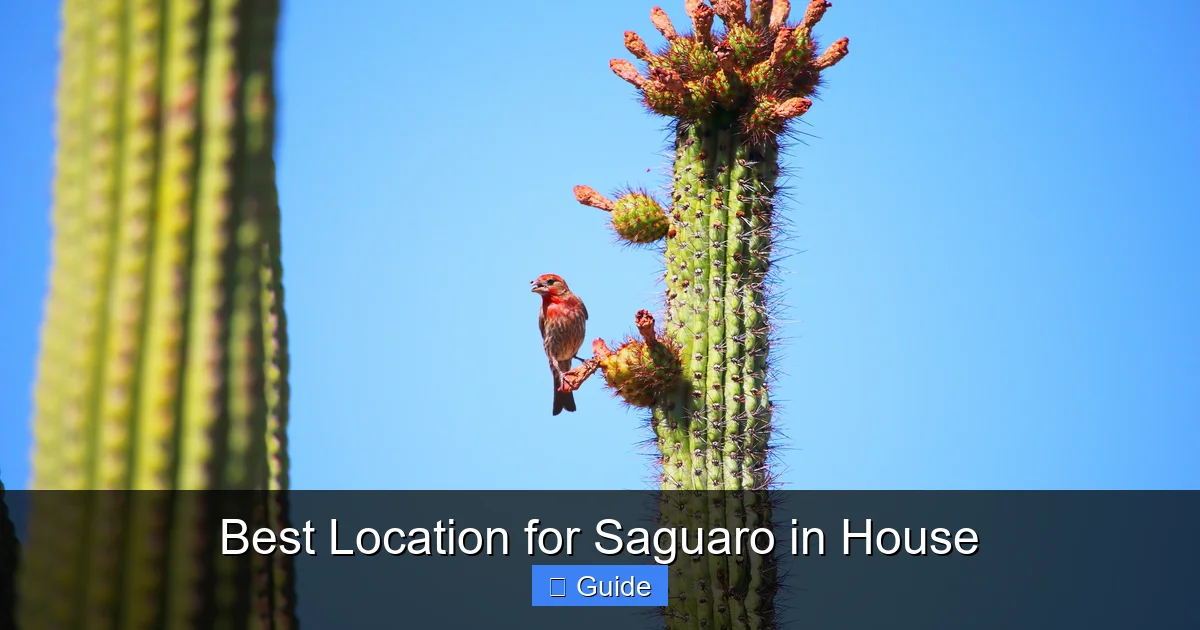
Best Location for Saguaro in House
Saguaro cacti cannot survive indoors due to their massive size, intense light needs, and legal protections. Instead, choose smaller columnar cacti like Mexican fence post or Peruvian apple cactus for a similar dramatic look that thrives inside with proper south-facing light and minimal watering.
So you’re dreaming of a towering saguaro cactus as the centerpiece of your living room. I get it. Those iconic arms reaching toward the desert sky are absolutely stunning. But here’s the thing — and I say this with love — a saguaro in your house is about as practical as keeping a blue whale in a bathtub.
Before you start measuring ceiling heights or researching grow lights powerful enough to tan leather, let me save you some heartache (and possibly some legal trouble). The best location for saguaro in house simply doesn’t exist. Not in any house. Not in any building. These magnificent giants belong in one place only: the Sonoran Desert, where they’ve been standing sentinel for thousands of years.
Key Takeaways
- Saguaros are not houseplants: They grow 40-60 feet tall, live 150+ years, and require full desert sun that no indoor space can provide.
- Legal restrictions apply: Saguaros are protected native plants in Arizona; removing or owning one without permits is illegal.
- Best indoor alternatives: Mexican fence post cactus, Peruvian apple cactus, and totem pole cactus offer similar vertical drama at manageable sizes.
- South-facing windows are essential: Any columnar cactus needs 6+ hours of direct sunlight daily from a south or southwest window.
- Water sparingly: Indoor cacti need water only when soil is completely dry, typically every 3-4 weeks in summer and monthly in winter.
- Use fast-draining soil: A gritty cactus mix with perlite, pumice, or coarse sand prevents root rot in containers.
- Rotate for even growth: Turn your cactus quarterly so all sides receive equal light and the plant grows straight.
Quick Answers to Common Questions
Can I grow a saguaro cactus indoors if I have a really tall ceiling and grow lights?
No. Saguaros require intense full-spectrum desert sunlight, seasonal temperature fluctuations, winter dormancy, and a massive root system that no container can accommodate. Even commercial greenhouses struggle with them long-term.
What is the closest legal alternative to a saguaro for indoor growing?
Mexican fence post cactus (Pachycereus marginatus) is the best legal alternative — it has the same columnar form, prominent ribs, and vertical presence but stays manageable at 6-8 feet indoors.
How many hours of direct sun does an indoor columnar cactus need?
Minimum 6 hours of direct sunlight daily. South-facing windows are ideal. Southwest or southeast can work with 5-6 hours. Less light causes stretching (etiolation) and weak growth.
How often should I water my indoor columnar cactus?
Water only when soil is completely dry throughout the pot — typically every 3-4 weeks in summer growing season and every 4-6 weeks in winter dormancy. Always water thoroughly until it drains freely.
Is it legal to buy a saguaro cactus online?
Only from licensed Arizona nurseries with proper state-issued tags and documentation. Most “saguaros” sold online are either poached (felony) or mislabeled different species. Always verify credentials before purchasing.
📑 Table of Contents
Why Saguaros and Houses Don’t Mix
Size Matters — A Lot
Let’s start with the obvious. A mature saguaro stands 40 to 60 feet tall and weighs between 3,200 and 4,800 pounds. That’s not a typo. We’re talking about a plant that weighs as much as a small car. Your floor joists are not rated for this. Your foundation is not rated for this. Even a “baby” saguaro at 20 years old is barely a foot tall. At 50 years, it might reach 10 feet. At 70 years — when it finally grows its first arm — it’s already a massive specimen.
I’ve seen people try to keep young saguaros in pots. They last a few years, maybe, before the root system demands more space than any container can provide. The taproot alone can extend several feet deep. In a pot? It circles the bottom, chokes itself, and the plant slowly declines.
Light Requirements That No Window Can Meet
Saguaros evolved under the most intense sunlight in North America. We’re talking 12+ hours of direct, unfiltered desert sun daily. The UV index in the Sonoran Desert regularly hits 11+ (extreme) in summer. Your south-facing window? On its best day, it delivers maybe 30-40% of that intensity. And that’s before you factor in window glass filtering out UVB rays, seasonal angle changes, and the simple fact that indoor light is directional — it comes from one side, creating lopsided growth.
Grow lights? You’d need commercial greenhouse arrays. The electricity bill alone would make your eyes water. And even then, you’re missing the heat, the air movement, the humidity cycles, and the soil microbiome that saguaros depend on.
Temperature and Dormancy Needs
Here’s something most people don’t realize: saguaros need winter dormancy. They require sustained temperatures below 60°F (ideally 40-50°F) for months to trigger proper growth cycles. Your cozy 70°F living room? It confuses the plant’s internal clock. Without proper dormancy, saguaros grow weak, etiolated, and vulnerable to disease.
Conversely, they also need extreme heat tolerance. Mature saguaros survive 120°F+ surface temperatures. Your HVAC system isn’t built for that range.
The Legal Reality
This isn’t just gardening advice — it’s the law. In Arizona, saguaros are protected under the Native Plant Law. You cannot remove, transport, or possess a saguaro without a permit from the Arizona Department of Agriculture. Permits are granted only for specific circumstances: construction salvage, scientific research, or licensed nursery propagation. Even then, every saguaro has a tag. Every movement is tracked.
Buying a “saguaro” online? If it’s not from a licensed Arizona nursery with proper documentation, it’s almost certainly poached. Poaching saguaros is a felony. Fines reach $10,000 per plant. Prison time is possible. That decorative cactus isn’t worth a criminal record.
What You Actually Want: The Saguaro Look Indoors
Okay, so real saguaros are out. But you still want that dramatic, architectural, arms-to-the-sky silhouette. Good news: several columnar cacti give you exactly that aesthetic at a fraction of the size, with zero legal issues, and they’ll actually thrive in your home.
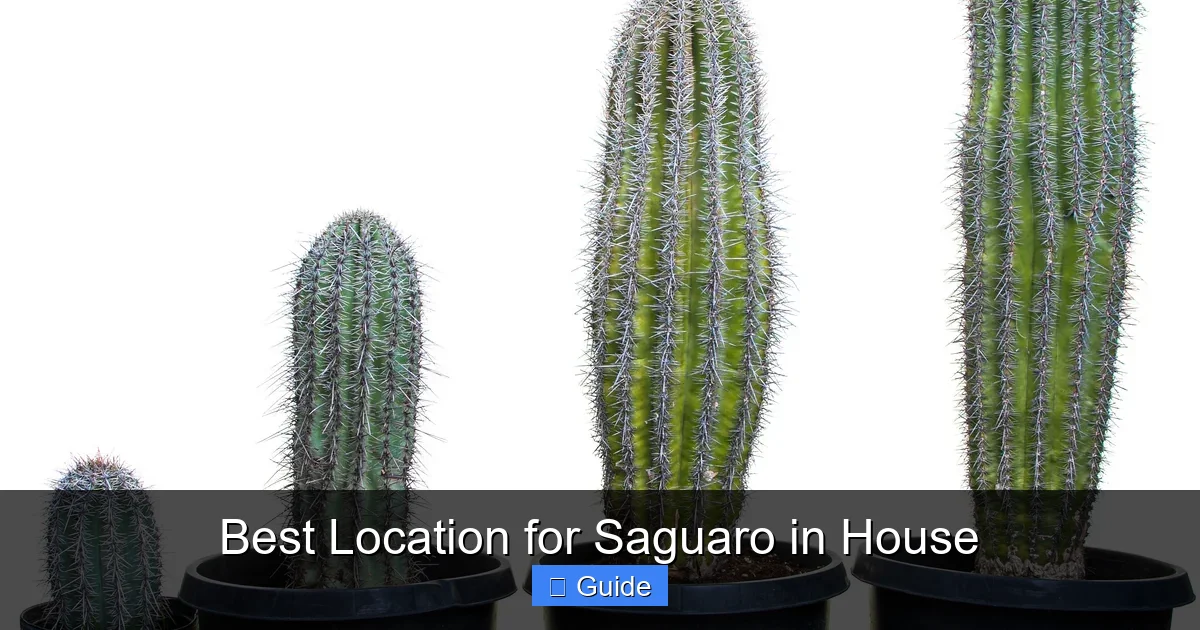
Visual guide about Best Location for Saguaro in House
Image source: cactusoutlet.com
Mexican Fence Post Cactus (Pachycereus marginatus)
This is your best bet. Native to central Mexico, it grows in tight, vertical columns with prominent ribs and short spines — very saguaro-like. In the wild, it reaches 15-20 feet. Indoors? A happy specimen hits 6-8 feet over many years. It’s widely available at nurseries, completely legal, and adapts well to container life.
Care basics: South-facing window, 6+ hours direct sun. Water every 3-4 weeks in growing season, monthly in winter. Fast-draining cactus mix. Fertilize lightly with cactus fertilizer at quarter-strength twice a year. That’s it.
Peruvian Apple Cactus (Cereus repandus)
Another excellent choice. Blue-green columns, 6-8 ribs, spectacular night-blooming flowers (huge, white, fragrant), and edible fruit if you’re lucky enough to get pollination. Grows faster than Mexican fence post — you’ll see noticeable height gains each year. Can reach 10-15 feet indoors over a decade.
Bonus: it’s more shade-tolerant than most columnar cacti. If your light is “only” 4-5 hours direct sun, this one might still work.
Totem Pole Cactus (Lophocereus schottii ‘Monstrose’)
Want the weird, knobby, arm-like growths without the 40-foot commitment? This spineless mutation of the senita cactus develops bizarre, smooth, bumpy columns that look like something from a Dr. Seuss book. Slow-growing to 6-8 feet. No spines means it’s safer around kids and pets. A conversation piece for sure.
Organ Pipe Cactus (Stenocereus thurberi)
Closest relative to the saguaro in appearance. Multiple vertical stems from a short trunk — exactly that classic “cactus forest” look. Native to the same Sonoran Desert. But it’s slower, fussier about cold, and harder to find legally. If you source one ethically from a licensed nursery, it’s a stunning choice for very bright spaces.
Euphorbia Ingens (Candelabra Tree)
Technically not a cactus (it’s a succulent euphorbia), but the candelabra branching habit screams “saguaro vibes.” Fast-growing, architectural, reaches 6-10 feet indoors. Critical warning: The white latex sap is toxic and caustic. Wear gloves, eye protection, and keep away from children and pets. If you can handle the safety precautions, it’s visually spectacular.
Finding the Actual Best Location in Your House
Now that we’ve swapped the impossible saguaro for a realistic columnar cactus, let’s talk placement. The best location for saguaro in house alternatives follows the same principles.
South-Facing Windows: The Gold Standard
No debate here. South-facing windows (in the northern hemisphere) provide the most intense, longest-duration direct sunlight. Your cactus wants 6+ hours of direct sun hitting its skin. Not bright indirect light. Not “good light.” Direct sun. The kind that casts sharp shadows.
Measure it. On a sunny day, track how many hours the sun actually hits the windowsill or floor spot. Account for overhangs, trees, neighboring buildings. Winter sun angle is lower — it may reach deeper into the room. Summer sun is higher — it may only hit the windowsill.
Southwest and Southeast: Acceptable Alternatives
Southwest gets intense afternoon sun. Southeast gets morning sun. Both work if you get 5-6 hours minimum. Morning sun is gentler — less risk of sunburn on newly acquired plants. Afternoon sun is more intense — better for mature, acclimated specimens.
East and West: Marginal
East-facing gives 3-4 hours morning sun. West-facing gives 3-4 hours afternoon sun. Some columnar cacti (especially Peruvian apple) will survive but won’t thrive. They’ll grow slower, stretch toward the light (etiolation), and be more prone to pests. If these are your only options, supplement with a quality full-spectrum LED grow light for 12-14 hours daily.
North-Facing: Don’t Bother
Zero direct sun. Your columnar cactus will slowly die. It may take a year or two, but it’s a death sentence. Put a snake plant or ZZ plant there instead.
Distance from Window Matters
Light intensity drops dramatically with distance. Inverse square law, folks. A plant 3 feet from a south window gets roughly 1/9th the light of a plant on the sill. Keep your columnar cactus within 1-2 feet of the glass. Right against it is fine — just watch for cold damage in winter if the glass gets freezing.
Floor vs. Shelf vs. Stand
Mature columnar cacti are heavy. A 6-foot Mexican fence post in a ceramic pot weighs 80+ pounds. Plan for floor placement on a plant caddy with wheels — you’ll need to rotate it quarterly for even growth, and you’ll want to move it for cleaning. Shelves work only for smaller specimens (under 3 feet). Ensure any shelf can handle the weight plus water weight.
Avoid These Locations
- Near heating/cooling vents: Hot dry air or cold drafts stress the plant
- High-traffic areas: Spines + shins = bad time
- Bathrooms: Too humid, usually insufficient light
- Kitchens: Grease particles + humidity + temperature swings
- Near exterior doors: Cold drafts in winter
- On carpet directly: Traps moisture, risks rot; use a caddy or stand
Setting Up Your Indoor Cactus for Success
The Right Container
Terracotta is king. It breathes, wicks moisture, and is heavy enough to stabilize a tall plant. Size: only 1-2 inches wider than the root ball. Overpotting = wet soil = rot. Ensure a drainage hole. No drainage hole = no go. If you love a decorative pot without holes, use it as a cachepot — keep the cactus in a proper terracotta nursery pot inside.
For very tall specimens (5+ feet), consider a wide, shallow “azalea” style pot for stability. Or double-pot: nursery pot inside a heavier decorative base with gravel for ballast.
The Right Soil Mix
Commercial cactus soil straight from the bag? Usually too moisture-retentive. Make your own:
- 2 parts coarse sand or poultry grit (not play sand — too fine)
- 1 part perlite or pumice
- 1 part quality potting soil or coconut coir
- Optional: 1 part small lava rock or expanded shale
Mix thoroughly. It should feel gritty, drain instantly, and dry completely within 2-3 days in summer.
Watering: Less Is More
The number one killer of indoor cacti is overwatering. Not underwatering. Overwatering.
Rule: Water only when the soil is completely dry — all the way to the bottom. Check with a wooden chopstick or moisture meter. In summer growing season, this might be every 3-4 weeks. In winter dormancy, every 4-6 weeks or even less.
When you water, water thoroughly. Run water through until it flows freely from the drainage hole. This flushes salts and ensures the entire root zone is hydrated. Empty the saucer after 15 minutes. Never let the pot sit in water.
Fertilizing: Light Touch
Cacti are adapted to nutrient-poor soils. They need very little. Use a dedicated cactus fertilizer (low nitrogen, higher phosphorus and potassium) at 1/4 strength. Apply twice a year: once in early spring as growth resumes, once in early summer. Skip fall and winter entirely.
Alternative: Top-dress with 1/2 inch of worm castings in spring. Water in gently. Slow, gentle, natural.
Rotation for Symmetry
Indoor light is one-directional. Your cactus will lean toward the window. Rotate the pot 90 degrees every 3 months. Mark the pot or use a plant caddy with degree markings. This keeps growth straight and balanced.
Acclimating New Plants
Just bought a columnar cactus? Don’t plop it in full south sun immediately. Nursery conditions are often shadier. Even “full sun” greenhouse plants need a transition. Week 1: bright indirect light only. Week 2: 1 hour morning sun. Week 3: 2 hours. Week 4: 3-4 hours. Then full exposure. Watch for bleaching (white/tan patches) — that’s sunburn. Back off if you see it.
Common Problems and Solutions
Etiolation (Stretching)
Symptoms: Thin, pale, elongated growth at the tip. Spines widely spaced. Plant leans dramatically.
Cause: Insufficient light.
Fix: Move to brighter location immediately. The stretched section will never thicken — it’s a permanent record of the low-light period. But new growth will be normal. You can propagate the top if it bothers you aesthetically.
Sunburn
Symptoms: Bleached white, tan, or brown patches on the side facing the window. Tissue feels papery or hard.
Cause: Too much light too fast, or sudden seasonal intensity change.
Fix: Move back slightly. Damaged tissue won’t recover but won’t spread. Sheer curtain during peak summer hours can help.
Root Rot
Symptoms: Base turns brown/black and mushy. Plant wobbles in pot. Foul smell. Top may yellow.
Cause: Overwatering, poor drainage, no drainage hole, wrong soil.
Fix: Unpot immediately. Cut away all rotted tissue with sterilized knife until only firm, healthy tissue remains. Dust cuts with sulfur or cinnamon. Let callus 1-2 weeks in shade. Repot in fresh, dry, gritty mix. Wait 1 week before first water.
Pests: Mealybugs, Scale, Spider Mites
Mealybugs: White cottony masses in rib crevices. Scale: Brown/black bumps that scrape off. Spider mites: Fine webbing, stippled yellowing.
Fix: Isolate plant. Spray with 70% isopropyl alcohol (mealies, scale) or insecticidal soap/neem oil (mites). Repeat weekly for 3-4 weeks. Check neighbors.
Corking
Symptoms: Base turns brown, woody, bark-like. Firm, not mushy.
Cause: Natural aging. Not a problem!
Fix: Celebrate. Your cactus is maturing. Corking provides structural support.
Designing Around Your Indoor Cactus
Solo Statement Piece
A single 6-foot Mexican fence post in a beautiful terracotta pot commands a room. Place it in a corner with a uplight behind it for dramatic evening shadows. Keep surrounding decor minimal — let the architecture speak.
Grouped Collection
Three columnar cacti of varying heights (2ft, 4ft, 6ft) in matching pots create a “cactus forest” vignette. Works beautifully against a plain wall. Ensure each gets adequate light — stagger depths if needed.
Mixed Succulent Display
Tall columnar cactus as the “tree,” surrounded by lower rosette succulents (echeveria, haworthia, sedum) in shallow dishes at its base. Mimics desert ecology. Just ensure the companions have similar light needs and you’re not overwatering the cactus to please the succulents.
Seasonal Outdoor Vacation
If you have a balcony, patio, or yard — move your columnar cactus outside for summer (after acclimating!). The growth explosion from real sun, air movement, and rain is incredible. Bring it in before nights drop below 50°F. This is the secret to spectacular specimens.
Long-Term Care and Growth Expectations
Year 1-2: Establishment
Focus on root development. Minimal visible height growth. Maybe 2-4 inches. This is normal. Don’t overwater to “encourage” growth.
Year 3-5: Steady Growth
Expect 4-8 inches per year for Mexican fence post, 6-12 inches for Peruvian apple. Ribs become more defined. Spines mature. Plant thickens at base.
Year 5-10: Architectural Maturity
Now you have a genuine specimen. 4-6 feet tall. Possible branching (especially Peruvian apple). Flowering may begin (night blooms on Cereus species). This is the payoff.
Year 10+: Legacy Plant
With good care, these become decades-long companions. 8-10 feet indoors is the practical ceiling for most homes. At this stage, they’re heavy, impressive, and essentially furniture. Plan your space accordingly.
Propagation: Sharing the Love
Columnar cacti propagate easily from cuttings. Spring is best. Cut a 12-18 inch section with a clean, sharp saw. Let callus 2-3 weeks in shade. Plant 3-4 inches deep in dry gritty mix. Wait 2 weeks, then water lightly. Roots in 4-8 weeks. Now you have a clone to gift or keep.
When to Admit Defeat and Rehome
Sometimes, despite best efforts, a space just doesn’t work. Signs it’s time to find your cactus a better home:
- Persistent etiolation after 6+ months in your brightest spot
- Recurring pest infestations you can’t control
- Plant has outgrown the space (hitting ceiling, blocking paths)
- You’re moving to a lower-light home
- Health issues prevent proper care
Don’t feel guilty. Rehome to a friend with better light, a local plant shop, a botanical garden, or a cactus society. These plants are resilient and valuable — someone will be thrilled to adopt it.
The Real Secret: Embrace What Works
Here’s the truth I wish someone had told me years ago: the best location for saguaro in house is a framed photograph on your wall. Or a beautiful print. Or a ceramic sculpture. Because the real thing belongs to the desert, and the desert keeps what’s hers.
But that doesn’t mean you can’t have the feeling of the desert in your home. A thriving Mexican fence post cactus catching golden afternoon light in your south window? That’s real. That’s alive. That’s a piece of the wild that chose to stay with you.
Start with one. Learn its rhythms. Watch it grow. Let it teach you patience. The desert moves on geological time. Your cactus moves on cactus time. Meet it there.
And when friends ask about your “saguaro,” you’ll smile and say, “Close. It’s a Mexican fence post. Want to see it bloom?”
Conclusion
We’ve covered a lot of ground. The bottom line: saguaros are magnificent, protected, desert giants that cannot and should not live in houses. But the best location for saguaro in house alternatives — Mexican fence post, Peruvian apple, totem pole, organ pipe, candelabra euphorbia — can thrive beautifully in your south-facing window with proper care.
Give them intense direct light. Gritty, fast-draining soil. Minimal water. Seasonal outdoor time if possible. Patience. Lots of patience.
In return, you get living architecture. A connection to the desert. A plant that outlasts trends, furniture, maybe even your mortgage. That’s not a bad deal for a windowsill.
Your turn. Measure your south window. Pick your cactus. Begin.
Frequently Asked Questions
Why is my indoor cactus leaning toward the window?
Your cactus is phototropically responding to one-directional indoor light. Rotate the pot 90 degrees every 3 months to promote straight, balanced growth. A plant caddy with wheels makes this easy.
Can I put my columnar cactus outside in summer?
Yes! Summer outdoor time dramatically improves growth and health. Acclimate gradually over 2-3 weeks starting in shade, then increasing sun exposure. Bring indoors before nights drop below 50°F.
What soil mix is best for indoor columnar cacti?
Use a gritty, fast-draining mix: 2 parts coarse sand or poultry grit, 1 part perlite or pumice, 1 part potting soil or coconut coir. Avoid standard cactus soil — it retains too much moisture.
My cactus has brown, woody tissue at the base. Is it dying?
No — this is called corking, a natural aging process where the base becomes woody and bark-like for structural support. It’s firm, not mushy, and indicates a healthy, maturing plant.
How do I propagate my columnar cactus?
In spring, cut a 12-18 inch section with a clean saw. Let the cut end callus in shade for 2-3 weeks. Plant 3-4 inches deep in dry gritty mix. Wait 2 weeks, then water lightly. Roots form in 4-8 weeks.
What’s the maximum height for an indoor columnar cactus?
Most columnar cacti reach 6-10 feet indoors over 10+ years. Ceiling height, pot size, and light intensity limit growth. Plan for 8-foot ceilings minimum and use wide, stable pots for taller specimens.