Air Plant Care in Winter
Air plant care in winter requires adjusting watering frequency, boosting humidity, and maximizing light exposure to keep your tillandsias healthy during cold months. Follow our simple seasonal routine to prevent rot, dehydration, and cold damage.
Winter arrives and suddenly your air plants look a little sad. The tips turn brown. The leaves curl tight. You wonder if they’ll make it until spring. Good news: air plant care in winter is totally manageable once you understand what these quirky epiphytes actually need. They don’t want much. Just a few smart tweaks to your routine.
I’ve grown tillandsias through five winters now. Lost a few early on. Learned the hard way that treating them like summer plants in January is a recipe for disaster. This guide shares everything I wish I’d known from day one. No fluff. Just practical steps you can start today.
Key Takeaways
- Reduce watering frequency: Soak every 2-3 weeks instead of weekly; mist lightly between soaks only if air is very dry.
- Increase light exposure: Move plants to south-facing windows or add grow lights to compensate for shorter winter days.
- Boost humidity levels: Use humidifiers, pebble trays, or group plants together to offset indoor heating dryness.
- Avoid cold drafts and heat sources: Keep air plants away from frosty windows, exterior doors, and direct heater vents.
- Skip fertilizer in deep winter: Pause feeding during dormancy; resume diluted fertilizer in early spring when growth resumes.
- Watch for warning signs: Curled leaves signal dehydration; mushy brown bases indicate rot from overwatering or poor airflow.
- Ensure thorough drying: After every soak, shake excess water and dry upside down for 3-4 hours before returning to display.
Quick Answers to Common Questions
How often should I water air plants in winter?
Soak every 2-3 weeks instead of weekly. Mist lightly between soaks only if humidity drops below 30%.
Can air plants survive near a cold window?
Keep them 6-12 inches back from freezing glass. Leaves touching cold panes suffer damage overnight.
Do air plants need fertilizer in winter?
No. Pause feeding December through February. Resume at half strength in March when active growth returns.
Why are my air plant tips turning brown and crispy?
Low humidity from indoor heating. Add a humidifier, group plants together, or use pebble trays to raise moisture.
Should I use grow lights for air plants in winter?
Yes, if natural light is under 6 hours daily. Run full-spectrum LEDs 12-14 hours daily, 6-12 inches above plants.
📑 Table of Contents
- Why Winter Changes Everything for Air Plants
- Adjust Your Watering Routine for Cold Months
- Maximize Light When Days Are Short
- Humidity Hacks for Dry Indoor Air
- Temperature Management: Avoid the Danger Zones
- Fertilizer: Pause or Proceed?
- Common Winter Problems and Fixes
- Species-Specific Winter Notes
- Display Adjustments for the Season
- Travel and Holiday Care
- Building Your Winter Care Routine
- Conclusion
Why Winter Changes Everything for Air Plants
Air plants hail from forests, deserts, and mountains across the Americas. Most varieties experience seasonal shifts in their native habitats. But your living room in January? That’s a whole different ecosystem. Three big factors flip the script.
Shorter Days Mean Less Energy
Tillandsias photosynthesize like any plant. Less daylight equals less energy production. They naturally slow down. Growth pauses. Water uptake drops. If you keep watering on a summer schedule, you drown them. Rot sets in fast when metabolism crawls.
My first winter, I soaked weekly like clockwork. By February, three plants had turned to mush at the base. Heartbreaking. Now I mark the calendar for every two to three weeks. They perk right up.
Indoor Heating Steals Moisture
Forced air furnaces, radiators, wood stoves. They all strip humidity from your home. Winter air inside often sits at 20-30% relative humidity. Air plants prefer 50% or higher. Those crispy leaf tips? That’s dehydration talking.
I run a small humidifier near my plant shelf. Costs pennies a day. Makes a massive difference. You’ll see the leaves stay open and supple instead of curling into tight tubes.
Temperature Swings Stress Plants
Drafty windows at night. Heater vents blasting by day. That rollercoaster shocks tropical species. Even hardy xeric types dislike sudden drops below 50°F. Keep them in stable spots away from exterior doors and heating registers.
Adjust Your Watering Routine for Cold Months
Water is the number one killer of air plants in winter. Not too little. Too much. The classic soak-and-dry method still works. You just stretch the interval.

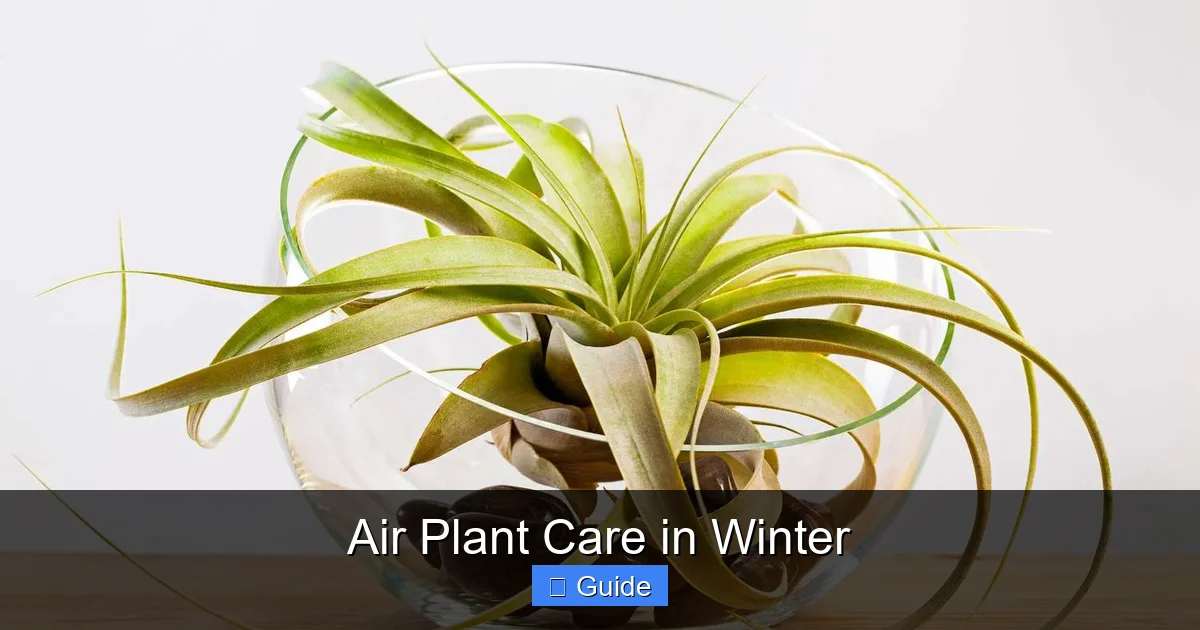
Visual guide about Air Plant Care in Winter
Image source: airplantexpert.com
Soak Less Often, Not Less Thoroughly
Submerge plants for 20-30 minutes every 14-21 days. Use room temperature water. Cold shock damages leaf cells. After soaking, give each plant a firm shake. Turn upside down on a towel. Let dry completely for 3-4 hours. No exceptions.
Mesic varieties with greener, softer leaves (like Tillandsia bulbosa or T. andreana) may need a light mist halfway through the cycle if your air is bone dry. Xeric types with silvery, stiff leaves (like T. xerographica or T. tectorum) often go the full three weeks no problem.
Morning Soaks Prevent Overnight Dampness
Always water in the morning. This gives maximum drying time before temperatures drop at night. Wet crowns in cool evening air invite fungal issues. I learned this after losing a beautiful T. capitata to crown rot one February.
Watch the Leaves for Thirst Signals
Curled, U-shaped leaves mean “I’m thirsty.” Flat, open leaves mean “I’m good.” Some curling is normal for certain species. Know your plant’s baseline. T. streptophylla naturally curls like a party ribbon. T. ionantha should stay relatively open.
Maximize Light When Days Are Short
Light fuels everything. Without enough, air plants weaken, stretch, and lose color. Winter sun sits lower. Windows that blazed in July now catch only a few hours. You have options.
South-Facing Windows Are Gold
Move your air plants to the brightest window you have. South or southwest exposure works best in the northern hemisphere. East works too. North-facing? Probably insufficient unless you’re in a mild climate with reflective snow cover.
Rotate plants weekly so all sides get equal light. Prevents lopsided growth. I use a lazy susan on my shelf. Makes rotation a five-second job.
Grow Lights: The Game Changer
Full spectrum LED grow lights let you control the photoperiod. Run them 12-14 hours daily. Position 6-12 inches above plants depending on fixture strength. Look for 5000-6500K color temperature. Avoid purple “blurple” lights. They work but make your living room look like a spaceship.
I use two 20-watt LED bars on a timer. Cost about $40 total. My T. xerographica put out a pup in January under them. Never happened before.
Clean Those Leaves
Dust blocks light. Winter homes get dusty with windows closed. Rinse plants gently during soak days. Or mist and wipe with a soft cloth. Clean leaves absorb more photons. Simple physics.
Humidity Hacks for Dry Indoor Air
Heating systems are humidity vampires. Your air plants feel it first. Here’s how to fight back without turning your home into a swamp.
Group Plants for Microclimate Magic
Cluster air plants together. As they transpire, they create a localized humidity bubble. Works best with 5+ plants in close proximity. Add a small dish of water in the center. Evaporation does the rest.
Pebble Trays: Low Tech, High Impact
Fill a shallow tray with pebbles. Add water to just below the pebble tops. Set air plants on the pebbles, not in the water. As water evaporates, humidity rises right around the plants. Refill weekly.
Humidifiers: Set and Forget
A small ultrasonic humidifier aimed near (not directly at) your plants maintains 40-60% humidity effortlessly. Use distilled water to avoid white mineral dust on leaves. Clean weekly to prevent mold.
Bathroom and Kitchen Perks
These rooms naturally run more humid. If you have good light there, air plants thrive. My T. bulbosa lives on a suction cup shelf in the shower. Gets misted daily. Happiest plant I own.
Temperature Management: Avoid the Danger Zones
Air plants tolerate a range. Most handle 50-90°F. But winter creates sneaky microclimates that push limits.
Window Sills Can Freeze
Glass radiates cold. Leaves touching freezing panes get damaged. Pull plants back 6-12 inches at night. Or slip a piece of cardboard between plant and glass as insulation. Remove during day for light.
Heater Vents Cook Plants
Hot, dry air blasting directly on tillandsias causes rapid dehydration. Leaf tips fry in hours. Redirect vents. Move plants. Use a deflector. Just don’t let that stream hit them.
Garage and Sunroom Strategies
Unheated spaces drop too low for most species. If you overwinter there, add a seedling heat mat under the display. Set thermostat to 55°F. Insulate containers. Check daily in cold snaps.
Fertilizer: Pause or Proceed?
This sparks debate. Here’s my take after years of both approaches.
Skip December Through February
Plants aren’t actively growing. Fertilizer sits unused. Salts accumulate. Risk of burn increases. I stop feeding at Thanksgiving. Resume at half strength in March when new growth appears.
If You Must Feed, Go Weak
Some growers fertilize year-round at 1/4 strength. Use bromeliad or air plant specific formula. No urea-based nitrogen. Air plants can’t process it. Apply only to well-hydrated plants. Never fertilize thirsty plants.
Spring Restart Protocol
First feed of spring: soak in plain water. Next soak: add fertilizer at 1/4 label rate. Alternate plain and fertilized soaks. Watch for tip burn. Back off if you see it.
Common Winter Problems and Fixes
Even with perfect care, stuff happens. Here’s the troubleshooting cheat sheet.
Brown, Crispy Leaf Tips
Cause: Low humidity or underwatering.
Fix: Increase misting frequency. Add humidifier. Check soak schedule. Trim dead tips with clean scissors at an angle. Looks natural.
Leaves Curling Tight Like Straws
Cause: Dehydration.
Fix: Emergency soak for 1 hour. Shake well. Dry thoroughly. Increase humidity. Monitor daily.
Brown, Mushy Base with Leaves Falling Off
Cause: Rot from overwatering, poor airflow, or cold damage.
Fix: Remove all mushy tissue. Dust cinnamon on cuts (natural antifungal). Dry 24 hours before next soak. Extend soak interval. Improve air circulation with a small fan on low.
Pale, Stretched Growth (Etiolation)
Cause: Insufficient light.
Fix: Move to brighter spot. Add grow light. Rotate more frequently. Cannot reverse stretching but new growth will be compact.
White Crusty Deposits on Leaves
Cause: Mineral buildup from tap water or fertilizer.
Fix: Soak in distilled or rain water. Wipe leaves gently. Switch water source long-term.
Species-Specific Winter Notes
Not all air plants are created equal. Know your varieties.
Mesic Types (Green, Soft Leaves)
T. bulbosa, T. andreana, T. butzii, T. brachycaulos. Need more frequent water. Higher humidity. Lower light tolerance. Winter is hardest on these. Prioritize them for humidifier placement.
Xeric Types (Silver, Stiff Leaves)
T. xerographica, T. tectorum, T. harrisii, T. duratii. Built for drought. Handle neglect better. Still need light. T. tectorum hates soaking. Mist only. Ever.
Bulbous Base Varieties
T. caput-medusae, T. seleriana, T. streptophylla. Water traps in the pseudobulb. Shake violently after soaking. Dry upside down longer. Rot starts there.
Blooming and Pupping in Winter
Some species bloom in winter naturally. T. ionantha varieties often color up and flower January through March. Don’t panic if mother plant declines after blooming. She’s making pups. Leave pups attached until 1/3 mother’s size.
Display Adjustments for the Season
Your beautiful driftwood mount? Might need a winter vacation.
Removable Mounts Win
Wire, fishing line, or glue dots let you remove plants for soaking. Fixed mounts on heavy wood make winter care a nightmare. I remount everything on cork bark with copper wire loops. Pop off. Soak. Dry. Pop on. Two minutes.
Glass Globes and Terrariums: Proceed with Caution
Enclosed displays trap moisture. In winter, that’s rot city. If you love the look, leave the lid off. Or only display xeric types. Never mesic. And never in direct sun. Glass amplifies heat.
Vertical Gardens Need Airflow
Wall-mounted frames look stunning. But backsides get zero air movement. Add a small computer fan on timer. Run 15 minutes every few hours. Prevents stagnant damp pockets.
Travel and Holiday Care
Heading to grandma’s for two weeks? Don’t come home to plant graveyard.
Pre-Trip Deep Soak
Soak for 1 hour two days before departure. Dry thoroughly. Place in bright, cool spot (60-65°F ideal). Group together on pebble tray. Most survive 14 days easily.
Plant Sitter Instructions
Write a sticky note: “Mist lightly every 5 days. No soaking. Don’t move.” Text a photo of happy plants. Venmo them coffee money. Works every time.
Shipping Plants in Winter
Selling or gifting? Heat packs essential below 40°F. Insulate box. Mark “LIVE PLANTS – DO NOT FREEZE.” Ship Monday-Wednesday only. Avoid weekend warehouse holds.
Building Your Winter Care Routine
Consistency beats heroics. Here’s my weekly rhythm.
Monday: Visual Check
Coffee in hand. Scan every plant. Note curling, color shifts, pests. Takes three minutes. Catches problems early.
Wednesday: Soak Day (Every 2-3 Weeks)
Morning soak. Shake. Dry on rack. Back to displays by lunch. Mark calendar for next soak.
Friday: Humidity Top-Off
Refill humidifier. Check pebble trays. Wipe dusty leaves. Rotate plants on shelves.
Monthly: Deep Inspection
Remove from mounts. Check bases. Trim dead tips. Clean containers. Refresh mounting materials if degrading.
Conclusion
Air plant care in winter isn’t complicated. It’s just different. Water less. Light more. Humidify actively. Watch temperatures. Pause fertilizer. That’s the whole formula.
Your tillandsias want to live. They’ve survived droughts, floods, and hurricanes in the wild. Your dry living room is nothing they can’t handle with a little help. Start with one change this week. Maybe move them to the south window. Or buy that $15 humidifier. Small steps keep them thriving until spring light returns.
Come March, you’ll have healthy, happy plants ready to explode with new growth. Maybe even a bloom spike or two. And you’ll know exactly what to do next winter. Because now you’re not guessing. You’re growing.
Frequently Asked Questions
Can air plants freeze and recover?
Brief exposure to temperatures just below freezing may damage leaves but the plant can recover if the growing point survives. Prolonged freezing kills most species. Move plants away from drafty windows and unheated spaces during cold snaps.
How do I know if my air plant is dormant or dead?
Dormant plants maintain firm, colored leaves and hold their shape. Dead plants feel mushy, smell rotten, and leaves pull off with zero resistance. A living base stays greenish-white inside even if outer leaves brown.
Is tap water okay for winter soaking?
Tap water works if chlorine levels are low. Let it sit overnight to dissipate chlorine. Avoid softened water (salt buildup). Distilled, rain, or spring water is ideal for sensitive species.
Can I keep air plants in the bathroom all winter?
Yes, if the bathroom gets bright indirect light. Shower humidity benefits mesic varieties. Ensure plants dry fully between showers. Avoid direct water spray from showerhead.
What’s the ideal winter temperature range for air plants?
Most thrive at 60-75°F. Tolerate 50°F nights. Avoid sustained temps below 45°F or above 85°F. Keep away from heater vents and cold drafts for stability.
How do I revive a severely dehydrated air plant?
Submerge completely in room-temperature water for 2-3 hours. Shake excess. Dry upside down 4 hours. Repeat in 3 days. Increase ambient humidity. Most bounce back unless the meristem is dead.