How to Choose Best Peat-based for Cilantro
Choosing the right peat-based for cilantro ensures strong roots and flavorful leaves. Look for a mix with balanced pH, good drainage, and added nutrients. This guide covers everything you need to know for a thriving herb garden.
Growing cilantro at home feels rewarding. You snip fresh leaves for tacos, salsa, or curry right from your windowsill or garden bed. But success starts before you plant a single seed. The growing medium matters more than most beginners realize. If you pick the wrong mix, your cilantro may bolt early, turn yellow, or simply fail to thrive. That is why learning how to choose best peat-based for cilantro is a game changer for any herb gardener.
Peat-based mixes dominate the market for good reason. They hold water like a sponge, stay light in the pot, and give roots room to breathe. Yet not all peat blends are created equal. Some are too acidic. Others lack nutrients. A few turn into concrete after a few weeks. This guide walks you through every factor so you can shop with confidence and grow cilantro that stays leafy, green, and delicious all season long.
Key Takeaways
- Peat-based mixes retain moisture well: This helps cilantro stay hydrated between waterings without becoming waterlogged.
- Target a pH between 6.0 and 6.8: Cilantro prefers slightly acidic to neutral soil for optimal nutrient uptake.
- Add perlite or vermiculite for drainage: These amendments prevent compaction and root rot in peat-heavy blends.
- Choose mixes with slow-release fertilizer: Cilantro benefits from steady nutrition without the risk of burning delicate roots.
- Avoid pure peat moss: It compacts over time and lacks the structure cilantro needs for healthy root development.
- Rehydrate dry peat before planting: Dry peat repels water initially, so pre-moistening ensures even moisture distribution.
- Refresh or replace mix each season: Peat breaks down and loses aeration, so start fresh for best results.
Quick Answers to Common Questions
What pH should a peat-based mix have for cilantro?
Aim for a pH between 6.0 and 6.8. Most commercial peat-based mixes fall in this range after liming, but always test and adjust if needed.
Can I use pure peat moss for cilantro?
No, pure peat moss compacts, lacks nutrients, and is too acidic. Always use a blended peat-based mix with perlite, compost, and lime added.
How often should I water cilantro in a peat-based mix?
Water when the top half-inch feels dry. Peat holds moisture well, so check by finger or pot weight rather than a fixed schedule.
Do I need to fertilize cilantro in a peat-based mix?
Yes. Starter charge lasts 2-4 weeks. Then feed every 3 weeks with half-strength liquid fertilizer like fish emulsion or seaweed extract.
What is the best peat alternative for cilantro?
Coconut coir is the top alternative. It holds water similarly, has a near-neutral pH, and is renewable. Use buffered coir or rinse well to remove salts.
📑 Table of Contents
- Understanding Peat-Based Growing Media
- Key Factors When Choosing a Peat-Based Mix
- Reading Labels Like a Pro
- Top Peat-Based Mix Types for Cilantro
- Preparing and Using Your Peat-Based Mix
- Troubleshooting Common Peat-Based Issues
- Seasonal Considerations for Cilantro in Peat Mixes
- Sustainability and Peat Alternatives
- Conclusion
Understanding Peat-Based Growing Media
What Is Peat Moss
Peat moss comes from decomposed sphagnum moss in bogs. It forms over thousands of years. Harvesters drain the bog, cut the peat, and dry it. The result is a light, fibrous material that holds up to twenty times its weight in water. Gardeners love it because it creates a soft bed for roots. It also resists compaction better than plain garden soil.
But peat has quirks. It starts out very dry and hydrophobic. That means it repels water at first. You must soak it before use. It also has a low pH, usually around 3.5 to 4.5. Most plants, including cilantro, prefer a higher pH. So manufacturers add limestone to raise it. They also blend in other ingredients to improve structure and fertility.
Peat vs. Peat-Based Mix
Pure peat moss is rarely sold as a standalone potting medium for herbs. Instead, you buy a peat-based for cilantro mix. These blends combine peat with perlite, vermiculite, compost, bark, or coconut coir. Each additive serves a purpose. Perlite adds air pockets. Vermiculite holds water and nutrients. Compost brings microbes and slow-release food. Bark creates structure. Coir is a renewable alternative that behaves similarly to peat.
Reading the label tells you the ratio. A good herb mix might list: 60 percent peat, 20 percent perlite, 10 percent compost, 10 percent bark. That balance gives moisture retention, drainage, and nutrition. Avoid bags that just say “peat moss” without amendments. They are meant for soil conditioning, not container growing.
Why Peat Works for Cilantro
Cilantro has a taproot that dislikes disturbance. It also hates soggy feet. A quality peat-based mix strikes the sweet spot. It stays evenly moist but drains excess water fast. The fine texture lets the taproot push down without hitting clods. And the slightly acidic nature matches cilantro’s preference once limestone adjusts the pH.
Another perk is weight. Peat mixes are light. You can move pots easily to follow sun or escape heat. That mobility helps you manage cilantro’s tendency to bolt in warm weather. Simply shift the container to afternoon shade and extend your harvest.
Key Factors When Choosing a Peat-Based Mix
pH Level and Adjustment
Cilantro grows best in a pH range of 6.0 to 6.8. Most commercial peat-based mixes fall in this zone after liming. But pH can drift over time. Water quality, fertilizer, and decomposition all shift it. Check the bag for a stated pH. If it says 5.5 to 6.5, you are in good shape. If not listed, assume it needs testing.
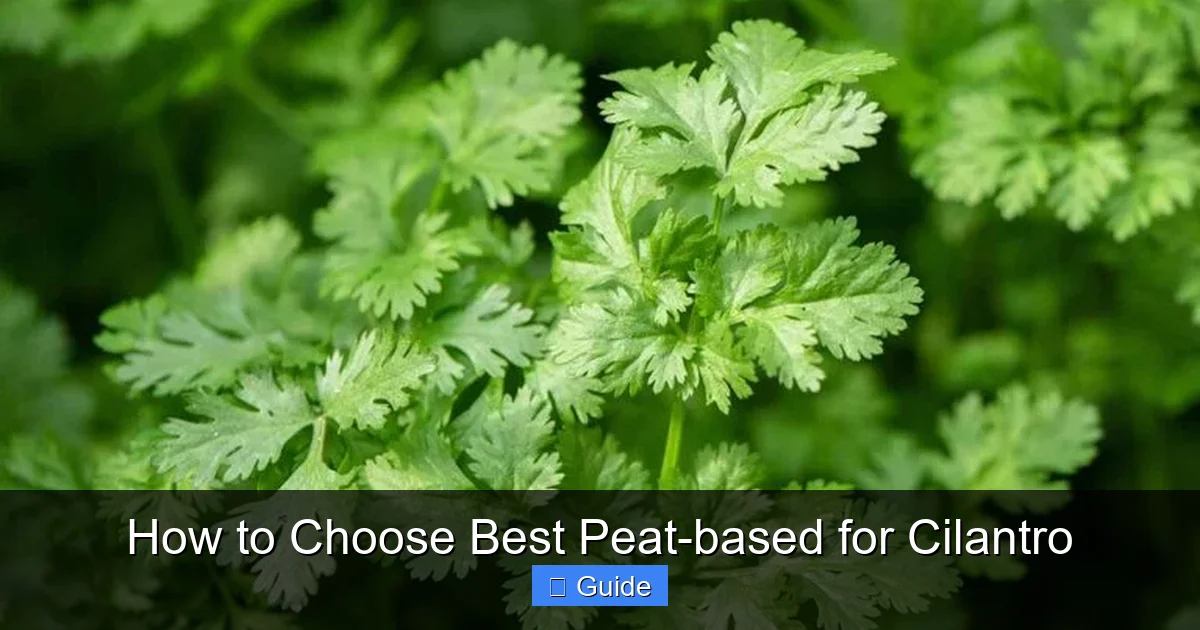
Visual guide about How to Choose Best Peat-based for Cilantro
Image source: gardeningchief.com
Buy an inexpensive soil pH meter or test kit. Test the mix wet, not dry. If pH sits below 6.0, sprinkle in garden lime. Follow package rates. Usually a tablespoon per gallon of mix raises pH by half a point. Retest after a day. If pH exceeds 7.0, add elemental sulfur or use an acidic fertilizer like ammonium sulfate. Small adjustments prevent nutrient lockout later.
Drainage and Aeration
Cilantro roots need oxygen. Waterlogged peat suffocates them and invites root rot fungi like Pythium. Look for perlite, pumice, or coarse sand in the ingredient list. These create macro pores. Air moves in. Water moves out. A simple squeeze test works. Wet a handful. Squeeze hard. It should hold shape briefly then crumble. If it stays in a tight ball, drainage is poor. If it falls apart instantly, it may dry too fast.
For extra safety, amend any mix with 20 percent extra perlite. Mix thoroughly. This cheap step saves many cilantro crops. Also ensure your pot has drainage holes. No holes means no aeration no matter how good the mix.
Nutrient Content and Fertilizer
Peat itself has almost zero nutrients. Manufacturers add starter charge fertilizers. These feed seedlings for two to four weeks. After that, you must fertilize. Check the label for N-P-K numbers. A balanced 5-5-5 or 10-10-10 starter charge is common. Organic mixes may list feather meal, bone meal, or kelp.
Cilantro is a light feeder. Too much nitrogen makes lush leaves but weak flavor. It also encourages bolting. Choose a mix with moderate starter charge. Then feed every three weeks with half-strength liquid fertilizer. Fish emulsion or seaweed extract works well. Stop fertilizing once flower stalks appear.
Moisture Retention vs. Dry-Down
Peat holds water beautifully. But cilantro likes a slight dry-down between waterings. Constant wetness leads to damping off and fungal issues. The ideal mix stays damp at root level while the top half-inch dries. This rhythm encourages roots to chase moisture downward, building a strong system.
Test by lifting the pot. Light means dry. Heavy means wet. Or stick your finger in. Damp at the second knuckle is perfect. If the mix stays soggy for days, add more perlite. If it dries in hours, top-dress with compost or coconut coir to boost water holding.
Texture and Particle Size
Fine peat feels like powder. Coarse peat has visible fibers. For cilantro, a medium grade works best. Fine particles pack down. Coarse ones leave large air gaps that dry too fast. Medium peat gives a uniform matrix. Roots contact moisture evenly. Seedlings emerge easily. Transplants settle without air pockets.
Sift the mix through a half-inch screen if it seems chunky. Remove large bark nuggets. They create dry zones. Save them for mulch on top. A smooth, consistent texture makes watering predictable and root growth steady.
Organic Certification and Additives
If you grow organically, look for OMRI-listed mixes. These avoid synthetic wetting agents, chemical fertilizers, and biosolids. Many peat-based blends now carry organic certification. They use yucca extract as a wetting agent. They rely on compost, worm castings, and mineral meals for nutrition.
Some conventional mixes include polymer crystals that absorb water. These are not organic but can reduce watering frequency. Decide based on your philosophy. Either works for cilantro if other factors align.
Reading Labels Like a Pro
Decoding Ingredient Lists
Ingredients appear in descending order by volume. The first item makes up the bulk. For a peat-based for cilantro mix, peat or sphagnum peat moss should be first. Next comes the drainage amendment. Perlite, vermiculite, or rice hulls are common. Then organic matter like compost, aged bark, or coir. Finally, minor additives: lime, wetting agent, fertilizer.
Watch for red flags. “Forest products” is vague. It could be sawdust that ties up nitrogen. “Sedge peat” is inferior to sphagnum. It breaks down fast and compacts. “Composted manure” sounds good but may be salty or weedy in cheap blends. Specific terms indicate quality control.
Understanding Guaranteed Analysis
Fertilizer content shows as percentages. N-P-K stands for nitrogen, phosphorus, potassium. A label reading 0.15-0.07-0.10 means very low starter charge. That is fine. You control feeding. A label reading 1-1-1 is stronger. Good for heavy feeders like tomatoes, risky for cilantro. Match the analysis to your feeding plan.
Also note micronutrients. Iron, manganese, zinc prevent yellowing. Calcium and magnesium (from lime) support cell walls. A complete analysis lists these. If absent, supplement with a trace mineral product.
Weight and Volume Tricks
Bags sell by cubic feet or quarts. A 2 cubic foot bag fills roughly three 12-inch pots. But compression varies. Fluff the mix before measuring. Some brands pack tight. Others are loose. Weight hints at composition. Heavy bags often contain more sand or cheap fillers. Light bags suggest high peat and perlite. For cilantro, lighter is usually better.
Top Peat-Based Mix Types for Cilantro
All-Purpose Potting Mix
This is the most common bag at garden centers. Brands like Miracle-Gro, Espoma, and FoxFarm make versions. They suit most container plants. For cilantro, choose one labeled for herbs or vegetables. These have lighter fertilizer loads. Avoid “moisture control” formulas with extra polymers. They keep soil too wet for cilantro’s taste.
All-purpose mixes work straight from the bag. Wet them first. Fill pots. Plant. They are convenient and consistent. Downside: you pay for marketing and water weight. But for small-scale growers, the ease justifies cost.
Seed Starting Mix
Seed starting mixes are finer and sterile. They contain more peat and less fertilizer. Perfect for germinating cilantro seeds. The fine texture covers tiny seeds evenly. Sterility prevents damping off. But they lack nutrients for mature plants. Transplant seedlings into richer mix at two true leaves.
You can make your own by sifting all-purpose mix through a quarter-inch screen. Add a pinch of worm castings per cup. This saves money and gives you control.
Herb and Vegetable Specific Blends
Specialty blends target edible crops. They often include mycorrhizae, beneficial bacteria, and organic meals. Brands like Black Gold, Coast of Maine, and Organic Mechanics offer these. They cost more but deliver tailored nutrition. Cilantro responds well to the biology in these mixes. The microbes help unlock nutrients and suppress pathogens.
If you grow many herbs, buy a large bale of professional herb mix. It lasts all season. Store dry in a sealed container. Rehydrate as needed.
DIY Peat-Based Recipes
Mixing your own lets you dial in every variable. A proven cilantro recipe:
- 2 parts sphagnum peat moss
- 1 part perlite
- 1 part compost or worm castings
- 1/2 part coarse vermiculite
- 1 cup garden lime per cubic foot of mix
- 1/2 cup balanced organic fertilizer per cubic foot
Combine on a tarp. Wear a mask. Peat dust irritates lungs. Wet thoroughly. Let sit overnight. The lime reacts. The wetting agent activates. Next day, fluff and fill pots. This batch makes about 4.5 cubic feet. Enough for twenty 10-inch pots.
Peat-Reduced and Peat-Free Alternatives
Environmental concerns drive peat-free innovation. Coconut coir is the leading substitute. It holds water similarly, has a near-neutral pH, and is renewable. Many “peat-based” bags now blend coir with peat. Pure coir mixes work for cilantro but need extra calcium since coir binds it. Add gypsum at 1 cup per cubic foot.
Other alternatives: composted bark, rice hulls, wood fiber. These appear in eco-blends. They perform well if formulated right. Test a small batch before committing your whole crop.
Preparing and Using Your Peat-Based Mix
Rehydrating Dry Peat
Peat ships bone dry. If you pour water on it, it floats and sheds. Instead, place the bag or bale in a large tub. Add warm water. Let it soak 30 minutes. Break clumps with your hands. Knead until uniformly damp. It should feel like a wrung-out sponge. No dry pockets. No dripping water.
For small bags, poke holes in the plastic. Run under a slow hose. Massage the bag. Turn repeatedly. This takes 10 minutes but prevents hydrophobic spots that kill seedlings.
Filling Containers Correctly
Don’t pack the mix. Roots need pore space. Fill the pot to the brim. Tap the sides gently to settle. Add more mix. Leave one inch below the rim for watering. Plant cilantro at the same depth it grew in its nursery cell. Firm lightly around the base. Water in with a gentle shower until water exits the bottom.
For direct seeding, fill to half an inch below rim. Scatter seeds. Cover with a thin layer of fine vermiculite. Mist daily until germination. Vermiculite stays moist but lets light through. Cilantro seeds need light to sprout.
Mulching the Surface
A thin mulch layer conserves moisture and moderates temperature. Use fine straw, shredded leaves, or more vermiculite. Avoid thick bark mulch. It steals nitrogen as it breaks down. Keep mulch away from stems to prevent rot. Half an inch is plenty.
Watering Practices for Peat Mixes
Peat mixes shrink when dry. They pull away from pot walls. Water runs down the gap and out the bottom. The root ball stays dry. Prevent this by bottom watering. Set pots in a tray of water. Let them soak 20 minutes. Remove. This rehydrates evenly.
Top water with a rose nozzle. Water until 10 percent runs out. This flushes salts. Empty saucers. Never let pots sit in drainage water. Cilantro hates wet feet.
Troubleshooting Common Peat-Based Issues
Hydrophobic Peat
If water beads on top and runs off, the peat has gone hydrophobic. This happens when it dries completely. Fix it by submerging the pot in water until bubbles stop. Or add a few drops of liquid soap per gallon of water. The surfactant breaks surface tension. Yucca extract works organically. Re-wet thoroughly. Then never let it dry that far again.
Fungus Gnats
These tiny flies love damp peat. Their larvae eat root hairs. Yellow sticky traps catch adults. Let the top inch dry between waterings to discourage eggs. Apply Bacillus thuringiensis israelensis (BTi) as a soil drench. It kills larvae safely. A half-inch sand layer on top also blocks egg laying.
Nutrient Deficiencies
Yellow lower leaves mean nitrogen shortage. Purple tints signal phosphorus lack. Interveinal chlorosis is iron or magnesium. Peat mixes leach nutrients fast. Feed regularly. Foliar spray with kelp gives quick green-up. Soil drench with fish emulsion sustains growth. Always dilute. Cilantro roots are sensitive.
Compaction Over Time
Peat breaks down. Particles collapse. Air pores vanish. After 8-12 weeks, the mix may feel dense. Gently aerate with a chopstick. Poke holes around the root zone. Top dress with fresh compost and perlite. For long-season cilantro, plan to repot into fresh mix at the 10-week mark.
Algae and Mold
Green crust or white fuzz on the surface means too wet, too shady, or too much organic matter. Scrape it off. Increase airflow. Reduce watering. Sprinkle cinnamon powder. It’s a natural fungicide. Move pots to brighter light. Algae won’t hurt established plants but looks unsightly.
Seasonal Considerations for Cilantro in Peat Mixes
Spring Planting
Cool spring temperatures suit cilantro perfectly. Use a standard peat-based mix. Start seeds indoors 4 weeks before last frost. Harden off. Transplant into larger pots or beds. The mix will warm slowly. Roots establish before heat arrives. Harvest leaves continuously.
Summer Heat Management
Cilantro bolts above 75°F. Peat mixes in black pots cook roots. Switch to light-colored fabric pots. They breathe and stay cooler. Add 30 percent extra perlite for faster drainage and evaporative cooling. Mulch heavily. Move to morning sun only. Consider a peat-coir blend. Coir insulates roots better.
Fall and Winter Growing
Cilantro tolerates light frost. In mild zones, grow through winter. Peat mixes hold cold moisture. Reduce watering frequency. Let the top two inches dry. Add extra perlite for winter drainage. Cold wet peat invites root rot. A cold frame or row cover extends the season. The mix stays workable even when garden soil freezes.
Indoor Year-Round Culture
Under lights, cilantro grows year-round. Use a sterile peat-based mix to avoid pests. Feed weakly weekly. Keep temperatures 65-70°F. Provide 14 hours of light. Rotate pots for even growth. Indoor air is dry. Peat mixes dry faster. Check daily. A humidity tray helps.
Sustainability and Peat Alternatives
Environmental Impact of Peat Harvest
Peat bogs store massive carbon. Harvesting releases it. Bogs regenerate slowly, millimeters per year. Many countries restrict extraction. The UK phases out horticultural peat. Gardeners seek alternatives. Understanding this helps you choose consciously.
Coconut Coir as Primary Substitute
Coir comes from coconut husks. It’s a waste product of the coconut industry. Ships compressed. Expands with water. Holds water like peat. pH is 5.8-6.8 naturally. No lime needed. But coir can be high in salts. Buy buffered coir. Or rinse thoroughly. Coir breaks down slower than peat. It stays structured longer.
Blended Approaches
Many growers use 50/50 peat and coir. This halves peat use while keeping familiar performance. Add compost for biology. Perlite for drainage. This hybrid works beautifully for cilantro. You get the best of both materials.
Local and Renewable Options
Composted green waste, rice hulls, wood fiber, and digested dairy fiber appear in regional mixes. They reduce shipping emissions. Support local soil yards. Ask for their herb blend. Test a bag. Local mixes often outperform national brands because they’re fresh and adapted to your water.
Conclusion
Choosing the best peat-based for cilantro boils down to balance. You want moisture retention without sogginess. Acidity corrected to near neutral. Enough nutrients to start but not burn. Structure that holds up all season. Read labels. Test pH. Amend with perlite. Feed lightly. Water wisely.
Whether you buy a premium herb blend or mix your own on a tarp, the principles stay the same. Cilantro rewards attention to its root zone. Give it a happy home in quality peat-based media, and it will give you handfuls of aromatic leaves for months. Start with a good mix. The rest is just water, light, and patience.
Your next batch of guacamole will taste the difference. Fresh cilantro from your own pots beats store-bought every time. And it all begins with the soil beneath your fingers. Choose well. Grow joyfully.
Frequently Asked Questions
Can I reuse peat-based mix for a second cilantro crop?
You can reuse it if you refresh it. Remove old roots, add 30 percent fresh peat or coir, plus perlite and compost. Re-lime and re-fertilize. Pasteuring with solarization reduces disease risk.
Why does my peat-based mix repel water?
Peat becomes hydrophobic when bone dry. Submerge the pot until bubbles stop, or add a few drops of liquid soap per gallon of water to break surface tension. Never let it dry out completely again.
Is peat-based mix safe for organic cilantro growing?
Yes, if the mix is OMRI-listed. These avoid synthetic wetting agents and chemical fertilizers. They use yucca extract, compost, and mineral meals instead. Check the bag for the OMRI seal.
How do I prevent fungus gnats in peat-based mixes?
Let the top inch dry between waterings. Use yellow sticky traps for adults. Apply BTi (Bacillus thuringiensis israelensis) as a soil drench for larvae. A half-inch sand layer on top also blocks egg laying.
What size pot works best with peat-based mix for cilantro?
Choose a pot at least 8 inches deep for the taproot. Width depends on how many plants. A 12-inch pot holds 3-4 plants. Ensure drainage holes. Fabric pots improve aeration and prevent root circling.
Can I mix garden soil with peat-based mix for cilantro?
Not recommended for containers. Garden soil compacts in pots, introduces weeds and pathogens, and disrupts the balanced drainage of peat mixes. Use straight peat-based mix or amend with compost only.