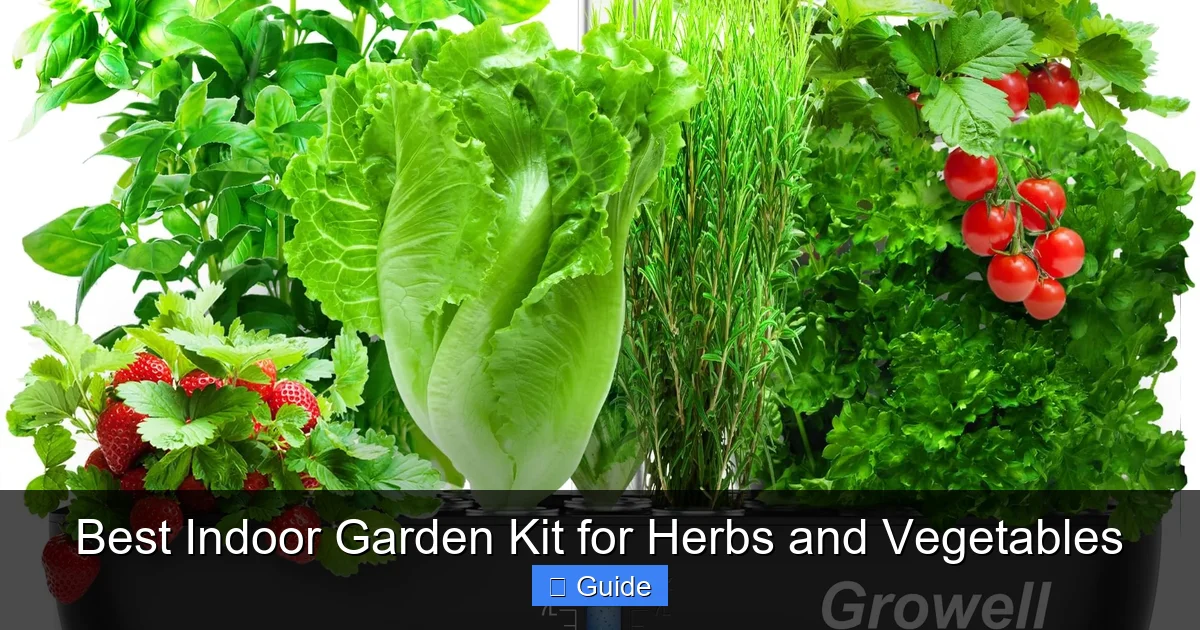
Best Indoor Garden Kit for Herbs and Vegetables
Finding the best indoor garden kit for herbs and vegetables lets you enjoy fresh, pesticide-free produce year-round regardless of outdoor space or climate. We tested and compared the top hydroponic and soil-based systems to help you choose the perfect setup for your kitchen, budget, and growing goals.
Imagine snipping fresh basil for your pasta sauce in January. Picture crisp lettuce leaves for lunch sandwiches harvested from your kitchen counter. That dream becomes reality with the best indoor garden kit for herbs and vegetables tailored to your space and lifestyle. Indoor gardening has exploded in popularity, and for good reason. These systems bring the farmer’s market into your home without the dirt, pests, or weather worries.
But here is the challenge. The market overflows with options. Sleek hydroponic towers. Compact soil pods. Smart gardens with apps. Budget-friendly DIY setups. How do you choose? We spent months researching, testing, and talking to indoor gardening experts. This guide breaks down everything you need to know. You will learn which systems deliver the biggest harvests, which fit tight budgets, and which features actually matter versus marketing fluff.
Key Takeaways
- Hydroponic systems grow faster: Water-based kits deliver nutrients directly to roots, producing harvests up to 50% faster than traditional soil methods.
- LED lighting is essential: Full-spectrum grow lights mimic sunlight, allowing you to grow herbs and vegetables in any room without natural light.
- Smart features simplify care: WiFi-enabled kits with app controls automate watering, lighting schedules, and nutrient reminders for foolproof growing.
- Size determines yield: Countertop units suit herb gardens, while larger floor models accommodate fruiting vegetables like tomatoes and peppers.
- Ongoing costs vary: Consider proprietary pod subscriptions versus universal seed compatibility when calculating long-term expenses.
- Noise level matters: Pump and fan noise differs significantly between models — important for open-concept kitchens or bedrooms.
- Start simple, scale up: Beginners should choose all-in-one kits with pre-seeded pods before advancing to customizable systems.
Quick Answers to Common Questions
What is the easiest indoor garden kit for beginners?
The Click & Grow Smart Garden 3 is the easiest for beginners. It uses pre-seeded soil pods, requires no nutrient mixing, has a simple float water indicator, and runs silently with no pumps or apps needed.
Can I grow tomatoes and peppers in a countertop indoor garden?
Only compact countertop models like the AeroGarden Bounty support small determinate tomatoes and peppers. Most countertop units lack the height, light intensity, and root space for fruiting vegetables. Choose floor models like Gardyn for serious vegetable production.
How much electricity does an indoor garden kit use?
A typical 20-50 watt LED system running 16 hours daily uses 10-25 kWh monthly, costing $1-3 at average US rates. Larger multi-light systems (60-100 watts) cost $3-6 monthly. This is less than most kitchen appliances.
Do I need to buy proprietary seed pods or can I use my own seeds?
It depends on the system. AeroGarden offers “Grow Anything” kits for your own seeds. Rise Gardens and many hydroponic systems accept any seeds in their media. Click & Grow and Gardyn require proprietary pods, though third-party compatible pods exist for some brands.
How often do I need to change the water in a hydroponic indoor garden?
Change reservoir water every 2-3 weeks to prevent salt buildup and pathogen growth. Top off with fresh water weekly as plants drink. Clean the reservoir with diluted hydrogen peroxide or vinegar during full changes. Monitor roots for health indicators.
📑 Table of Contents
Understanding Indoor Garden Types
Hydroponic Systems
Hydroponic kits grow plants in nutrient-rich water instead of soil. Roots dangle directly in the solution or rest in inert media like rockwool or clay pebbles. This method delivers oxygen and nutrients straight to the root zone. Plants grow faster because they do not waste energy searching for food. Most countertop units use deep water culture or nutrient film technique. Larger towers often employ aeroponics, misting roots with nutrient solution.
The benefits stack up quickly. Hydroponic gardens use 90% less water than soil gardening. No soil means no soil-borne diseases or weeds. You control the exact nutrient profile. Harvests arrive weeks earlier. The downside? These systems need electricity for pumps and lights. Power outages can kill crops fast. Nutrient solutions require monitoring and adjusting. The learning curve feels steeper for total beginners.
Soil-Based and Pod Systems
Soil kits feel familiar. They use peat pods, coconut coir, or traditional potting mix. You plant seeds or seedlings just like outdoor gardening. Many modern kits combine soil pods with built-in LED lights and self-watering reservoirs. This hybrid approach offers the best of both worlds. You get the simplicity of soil with the convenience of automated lighting and watering.
These systems shine for beginners. No pH testing. No nutrient mixing. Just add water and seeds. They also cost less upfront. However, growth runs slower. Soil takes up more space per plant. Fungus gnats can appear. You eventually replace spent soil. For herb gardens and leafy greens, soil pods work beautifully. Fruiting vegetables often struggle in small soil volumes.
Aquaponic Systems
Aquaponics combines hydroponics with fishkeeping. Fish waste feeds the plants. Plants filter the water for the fish. It creates a miniature ecosystem. These systems fascinate kids and teach biology lessons. But they demand more maintenance. You must feed fish, monitor water quality, and balance two living systems. Most home units stay small — herb scale only. We recommend aquaponics for enthusiasts, not beginners seeking maximum food production.
Critical Features to Evaluate
Light Quality and Coverage
Light drives photosynthesis. Without adequate light, plants stretch, weaken, and fail to produce. Look for full-spectrum LEDs covering 400-700 nanometers. This range includes blue light for vegetative growth and red light for flowering and fruiting. Wattage alone misleads. A 20-watt high-efficiency LED can outperform a 40-watt cheap panel. Check the PPFD (photosynthetic photon flux density) rating if listed. Higher PPFD means more usable light reaching leaves.
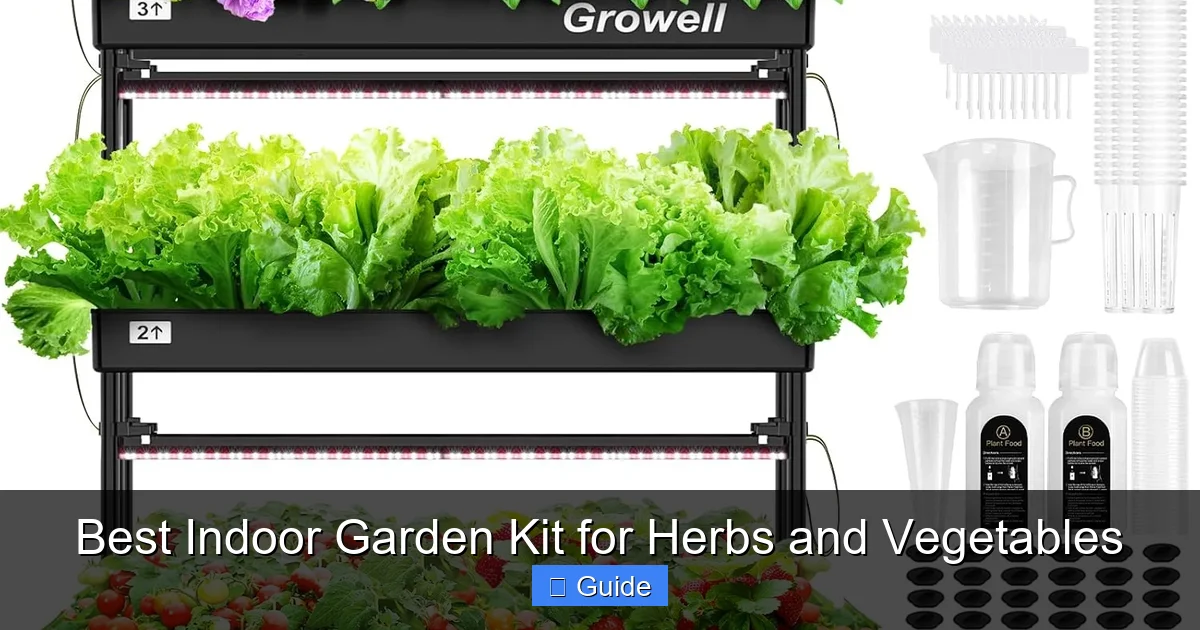
Visual guide about Best Indoor Garden Kit for Herbs and Vegetables
Image source: m.media-amazon.com
Coverage area matters too. Measure the grow deck dimensions. Ensure lights illuminate the entire planting area evenly. Some kits concentrate light in the center, leaving edge plants leggy. Adjustable light arms let you raise the panel as plants grow. Keep lights 2-6 inches above foliage for optimal intensity. Timers automate 14-16 hour light cycles. Plants need darkness too — continuous light stresses them.
Watering and Nutrient Delivery
Consistent moisture separates thriving gardens from crispy failures. Self-watering reservoirs hold days or weeks of water. Float valves or sensors maintain levels. Pump-based systems circulate nutrient solution on timers. Passive wicking systems draw water up through absorbent material. Each approach works. Pumps oxygenate water better, preventing root rot. Wicking systems run silent and survive power outages.
Nutrient management varies. All-in-one kits include pre-measured liquid nutrients or tablets. You add them weekly or biweekly. Smart systems dose automatically based on plant stage. DIY hydroponics require mixing concentrates and checking EC (electrical conductivity) and pH. For herbs and greens, simple nutrient regimens work fine. Tomatoes and peppers need stage-specific formulas — vegetative, flowering, fruiting.
Size, Capacity, and Footprint
Measure your space before buying. Countertop units typically grow 3-12 plants in 1-2 square feet. Floor towers accommodate 20-30 plants in a 2-foot diameter. Wall-mounted systems save floor space but need sturdy anchors. Consider height too. Light arms extend 12-24 inches above the base. Fruiting vegetables need 3-4 feet of vertical clearance. Herbs and lettuce stay under 18 inches.
Plant capacity sounds straightforward but check pod spacing. Crowded pods create humidity pockets and disease. Larger plants shade smaller neighbors. Some kits sell expansion packs. Others lock you into fixed configurations. Think about your eating habits. A two-person household eating salads daily needs 6-8 lettuce plants rotating weekly. Herb lovers want 4-6 varieties simultaneously. Scale accordingly.
Smart Features and Connectivity
App-connected gardens notify you when water runs low, nutrients need adding, or harvest time arrives. Some adjust light schedules based on plant type. Others integrate with Alexa or Google Home. These features cost extra but prevent the number one killer: neglect. Busy people forget to check reservoirs. Vacation mode keeps gardens alive for weeks. Data tracking helps you learn what works.
However, smart features add failure points. WiFi drops. Apps bug. Servers shut down. Basic timers and float indicators work without internet. If you love gadgets, go smart. If you prefer simplicity, manual controls prove more reliable long-term. Many gardeners start smart, then migrate to simpler setups as they gain confidence.
Top Indoor Garden Kits Compared
Best Overall: AeroGarden Bounty Elite
The AeroGarden Bounty Elite earns our top spot for balancing performance, ease of use, and versatility. Nine pod slots handle herbs, lettuce, cherry tomatoes, and peppers. The 50-watt full-spectrum LED panel delivers impressive PPFD across the entire grow deck. Motorized light arm raises 24 inches with one touch. The touchscreen control panel manages light cycles, pump schedules, and nutrient reminders without an app.
WiFi connectivity enables vacation mode and remote monitoring via the AeroGarden app. The 1.2-gallon reservoir lasts 2-3 weeks between refills. Pre-seeded pods include non-GMO varieties with guaranteed germination. Pods cost $3-5 each but you can use the “Grow Anything” kit with your own seeds. The pump runs quiet enough for open kitchens. At $300-350, it invests in years of harvests. Replacement parts remain available — crucial for longevity.
Best Budget: Click & Grow Smart Garden 3
Click & Grow proves you can start indoor gardening under $100. The Smart Garden 3 grows three plants in biodegradable soil pods. No pumps. No nutrient mixing. The 8-watt LED arm adjusts height manually. A float indicator shows water level. Pods contain patented “Smart Soil” that releases nutrients based on plant needs. Over 70 plant varieties available — herbs, flowers, greens, even mini tomatoes.
Running costs stay low. Pods cost $2-3 each in multi-packs. No electricity for pumps. The light uses minimal power. Growth runs slower than hydroponics — expect 2-3 week longer harvest times. But for basil, cilantro, parsley, and lettuce, the difference matters little. The minimalist design fits any decor. No noise. No app needed. Perfect for testing the waters before committing to larger systems.
Best for Vegetables: Gardyn Home Kit 3.0
Serious vegetable growers should look at Gardyn. This vertical tower grows 30 plants in 2 square feet of floor space. The 60-watt LED light bars run vertically, bathing each plant level in intense light. AI-powered cameras monitor plant health and adjust conditions automatically. The 6-gallon reservoir feeds all plants via a quiet pump. Kelby, the AI assistant, sends precise care instructions to your phone.
Gardyn excels at fruiting vegetables. Cherry tomatoes, peppers, cucumbers, and strawberries thrive in the generous root chambers. The vertical design maximizes light exposure for every plant. However, the $800+ price tag stings. Membership fees unlock full AI features. Pods are proprietary and pricey. The unit stands 5 feet tall — measure your ceiling. For families wanting significant vegetable production, Gardyn delivers unmatched yield per square foot.
Best Modular: Rise Gardens Personal Garden
Rise Gardens takes a different approach. Their modular system starts with a single 12-plant level. Add up to three levels for 36 plants total. Each level has independent lighting and watering. The 20-watt LED bars per level provide excellent coverage. The app guides you through planting, harvesting, and variety selection. You can grow different crops on each level — herbs on top, lettuce middle, tomatoes bottom.
The steel frame looks like furniture, not appliance. Wood accents blend with home decor. The 5-gallon reservoir hides in the base. Pump noise stays minimal. Pods use coconut coir and work with any seeds. No subscription required. At $279 for the single level, pricing competes with AeroGarden while offering expansion flexibility. The app feels polished and genuinely helpful, not gimmicky.
Best Soil-Based: Ingarden Microgreens Kit
Microgreens pack 40x the nutrients of mature vegetables. Ingarden specializes in this superfood niche. The ceramic tray holds three seed pads. A hidden reservoir wicks water up passively. No electricity at all — place it anywhere with ambient light. The included LED lid adds supplemental light for darker spots. Harvest microgreens in 7-10 days. Rotate varieties weekly for constant supply.
This kit won’t grow full-size vegetables. But for nutrient density per square inch, nothing beats microgreens. Broccoli, radish, sunflower, pea shoots — each offers unique flavors and health benefits. The ceramic base looks beautiful on counters. Seed pads cost $2-3 each. Zero maintenance beyond refilling water weekly. Ideal for nutrition-focused growers with limited time and space.
Choosing the Right System for Your Goals
Herb-Only Gardens
If you primarily cook with fresh herbs, a compact 3-6 pod system suffices. Basil, mint, parsley, cilantro, dill, and chives grow vigorously in small spaces. They tolerate lower light than vegetables. Harvest continuously by snipping leaves — plants regrow for months. Soil pods work perfectly here. Hydroponics speeds growth but herbs grow fast anyway. Prioritize countertop footprint and aesthetics. The Click & Grow 3 or AeroGarden Harvest fit this niche beautifully.
Consider herb varieties carefully. Mediterranean herbs (rosemary, thyme, oregano, sage) prefer drier conditions and stronger light. Tropical herbs (basil, mint, cilantro) want consistent moisture. Mixing them in one reservoir challenges both. Some kits offer separate water zones. Otherwise, group herbs by water needs or accept compromise. Mint spreads aggressively — give it its own pod or it will choke neighbors.
Salad Greens and Leafy Vegetables
Lettuce, spinach, arugula, kale, and Swiss chard thrive indoors. They grow fast — 30-45 days from seed to salad. They tolerate moderate light. They do not need pollination. You can harvest outer leaves continuously (cut-and-come-again) or whole heads. Plan 4-6 plants per person for daily salads. Stagger planting every 2 weeks for non-stop supply. Larger systems like Rise Gardens or Gardyn shine here.
Heat-sensitive varieties bolt (flower prematurely) in warm indoor temps. Choose bolt-resistant cultivars like ‘Buttercrunch’ lettuce or ‘Bloomsdale’ spinach. Keep light arms close — 2-3 inches above leaves — to prevent stretching. Harvest in morning when leaves are crisp. Wash and spin dry. Store in containers with paper towels. Fresh indoor greens last 2 weeks refrigerated versus days for store-bought.
Fruiting Vegetables
Tomatoes, peppers, cucumbers, eggplants, and strawberries demand more everything. More light (30+ watts per plant). More root space (3+ gallons per plant). More height (3-4 feet). More nutrients — specific formulas for flowering and fruiting. More time — 60-90 days to first harvest. Pollination help — shake plants daily or use a small brush. Only larger systems handle these well: Gardyn, AeroGarden Farm, or DIY tent setups.
Choose determinate (bush) tomato varieties like ‘Tiny Tim’ or ‘Micro Tom’. Indeterminate vines outgrow indoor spaces fast. Peppers stay compact naturally. ‘Lunchbox’ snack peppers produce abundantly. Cucumbers need parthenocarpic (self-pollinating) varieties like ‘Picolino’. Strawberries work in vertical towers — ‘Albion’ everbearing produces year-round. Expect lower yields than outdoor gardens but incomparable flavor.
Microgreens and Sprouts
Microgreens occupy a unique niche. Harvest at 7-14 days when first true leaves appear. No lights needed for first 3-4 days — germination happens in darkness. Then 12 hours daily light. Soil or hydroponic pads both work. Incredible nutrient density. Intense flavors. Beautiful garnishes. High market value if selling. Kits like Ingarden or simple tray setups cost $30-80. Perfect for beginners wanting quick wins and nutrition boosts.
Setting Up for Success
Location Matters
Place your garden where you see it daily. Out of sight means out of mind — and dead plants. Kitchen counters work great for herbs. Near the sink simplifies water changes. Avoid drafty windows, heating vents, and appliance heat. Stable temperatures (65-75°F) suit most crops. If using natural light supplement, south-facing windows help. But remember: modern LEDs outperform winter sunlight. Do not rely on windows alone.
Protect surfaces from water damage. Use waterproof mats or trays under reservoirs. Condensation forms on light hoods — wipe weekly to maintain light output. Keep electrical connections dry. Route cords away from splash zones. If you have pets or toddlers, secure tall units to prevent tipping. Cats love nibbling seedlings. Dogs knock over reservoirs. Plan accordingly.
Starting Seeds vs. Buying Seedlings
Most kits use seed pods. You drop them in, add water, done. Germination rates run 90%+ with fresh pods. Store pods cool and dry — heat kills viability. Some gardeners prefer starting seeds in rockwool cubes outside the system, then transplanting strongest seedlings. This avoids gaps from failed germination. It also lets you grow varieties not sold as pods.
Buying seedlings from nurseries works too. Gently wash soil from roots. Transplant into net pots with clay pebbles. Expect transplant shock — plants may wilt for a few days. Keep light lower and humidity higher during transition. This approach jumps you 2-3 weeks ahead but costs more and risks introducing pests. Quarantine new plants 1 week before adding to your main system.
Water Quality and Maintenance
Tap water varies wildly. Hard water raises pH. Chlorine kills beneficial microbes. Chloramine (common in cities) does not evaporate. Best practice: filter water through carbon filter or let sit 24 hours for chlorine. For serious hydroponics, use RO (reverse osmosis) water and rebuild minerals. Test pH weekly — target 5.5-6.5 for hydroponics, 6.0-7.0 for soil. Adjust with pH up/down solutions.
Change reservoir water every 2-3 weeks in hydroponic systems. Old solution accumulates salt buildup and pathogen risk. Clean the reservoir with diluted hydrogen peroxide (3%) or vinegar between changes. Check pump filters monthly. Remove root debris. Inspect roots — white and fuzzy means healthy. Brown and slimy signals root rot. Act fast: reduce water temp, increase aeration, add beneficial bacteria.
Pest Prevention
Indoor gardens avoid most outdoor pests. But fungus gnats, aphids, spider mites, and whiteflies hitchhike on plants or enter through windows. Yellow sticky traps catch flying adults. Beneficial nematodes in soil control fungus gnat larvae. Neem oil spray works on soft-bodied insects. Insecticidal soap for heavier infestations. Always test sprays on one leaf first — indoor plants lack rain to wash off residue.
Prevention beats treatment. Inspect new plants thoroughly. Quarantine 7-10 days. Keep area clean — remove dead leaves immediately. Avoid overwatering. Ensure good air circulation with a small fan on low. Healthy plants resist pests naturally. If infestation spreads, consider harvesting early and sterilizing the system. Sometimes restarting cleaner beats fighting established colonies.
Maximizing Your Harvest
Succession Planting
Don’t plant everything at once. Stagger plantings every 2-3 weeks. As you harvest one batch, the next matures. This prevents feast-or-famine cycles. Keep a planting calendar — digital or paper. Note variety, date planted, expected harvest. Adjust timing based on actual growth rates. Some varieties surprise you. Track what works for your conditions.
For continuous lettuce, start 2 new pods weekly. Harvest outer leaves from mature plants while new ones establish. Herbs last months — just replace as they woody or bolt. Fruiting vegetables produce for months once started. Plan 2-3 tomato plants staggered 4 weeks apart for summer-long cherry tomatoes. Microgreens? New tray every 3-4 days. The rhythm becomes intuitive.
Pruning and Training
Indoor plants need guidance. Pinch basil tips above leaf nodes — two new stems grow. Remove tomato suckers (side shoots) below first flower cluster. Train cucumber vines up trellises. Thin crowded seedlings to strongest one per pod. Remove yellowing lower leaves — they drain energy. Prune for airflow — prevents fungal issues.
Light management includes rotating plants if light favors one side. Raise lights as plants grow — maintain 2-6 inch gap. Top tall plants (cut main stem) to encourage bushiness. This works for peppers, tomatoes, herbs. Don’t fear pruning. Plants respond with vigor. Clean scissors between plants — rubbing alcohol prevents disease spread.
Nutrient Optimization
Follow kit instructions first. Then experiment. Leafy greens want higher nitrogen. Fruiting vegetables need phosphorus and potassium during flowering. Calcium prevents blossom end rot in tomatoes. Magnesium boosts chlorophyll. Most all-in-one nutrients cover basics. Advanced growers supplement. But more nutrients ≠ better growth. Excess burns roots. Measure EC if possible. Flush with plain water monthly.
Organic hydroponic nutrients exist but challenge beginners. They clog pumps. They smell. They need microbial activity to break down. Synthetic minerals work instantly and predictably. For food safety, both produce identical plant tissue. Plants absorb ions, not molecules. Choose based on your philosophy and system compatibility. Many kits void warranty with non-branded nutrients.
Harvest and Storage
Harvest herbs mid-morning after dew dries but before heat. Cut stems above nodes. Wash gently. Pat dry. Store in jars with water like flowers, loosely bagged in fridge. Or freeze in oil in ice cube trays. Greens: cut outer leaves 1 inch above crown. Whole heads: cut at base. Wash, spin, store with paper towel. Fruits: pick fully ripe. Tomatoes ripen off vine but flavor peaks on plant.
Share abundance. Pesto from basil glut. Salsa from tomato flood. Dehydrate herbs for winter. Ferment hot peppers. Gift microgreen trays to neighbors. The joy of indoor gardening multiplies when shared. Track yields. Note favorites. Plan next season. The cycle continues — each harvest teaches the next planting.
Common Mistakes to Avoid
Overwatering and Underwatering
Both kill plants. Hydroponic systems automate watering but reservoirs run dry. Check weekly. Soil pods stay soggy if wicking too fast. Lift pods — heavy means wet. Light means dry. Adjust water levels. Add air stones to reservoirs — oxygen prevents root rot. Roots need air as much as water. Stagnant water breeds anaerobic bacteria. Keep it moving.
Insufficient Light
The number one failure cause. Plants stretch, pale, and stall. You think the light looks bright. Plants disagree. Measure with a PAR meter or smartphone app (rough estimate). Target 200-400 PPFD for herbs and greens. 400-600+ for fruiting. Run lights 14-16 hours. Use timers. Clean light covers monthly — dust cuts output 15-20%. Replace LEDs every 3-5 years — intensity drops gradually.
Ignoring pH and EC
Hydroponics lives or dies by nutrient availability. pH locks out nutrients outside 5.5-6.5 range. Iron deficiency shows first — yellow new leaves with green veins. EC measures total salts. Too high burns. Too low starves. Test weekly. Adjust gradually. Large swings shock plants. Keep logs. Patterns emerge. You learn your system’s rhythm.
Overcrowding
Seed pods look sparse at first. Then leaves touch. Humidity spikes. Airflow stops. Powdery mildew appears. Pests hide. Thin ruthlessly. One plant per pod. Remove extras early — snip at base, don’t pull (disturbs neighbor roots). Space plants per kit guidelines. Vertical systems need pruning discipline. Better 6 healthy plants than 12 struggling.
Giving Up Too Soon
First attempts fail. Seeds don’t sprout. Seedlings damp off. Nutrient burn. pH crash. Every gardener kills plants. The difference: persistent gardeners learn. Join online communities. Share photos. Ask questions. Celebrate small wins — first sprout, first harvest, first meal. Indoor gardening rewards patience. Your tenth harvest feeds you better than your first.
Budget Planning and Long-Term Costs
Upfront Investment
Entry-level: $50-100 (Click & Grow 3, basic hydroponic buckets). Mid-range: $150-350 (AeroGarden Harvest/Bounty, Rise Gardens single). High-end: $500-1000+ (Gardyn, AeroGarden Farm, multi-level Rise). DIY: $100-300 for comparable capacity but more labor. Consider what’s included — pods, nutrients, seeds. Some “cheap” kits need $100 in accessories to function.
Recurring Expenses
Pods/seedlings: $2-5 each. Nutrients: $10-30 per quarter. Electricity: $2-10 monthly depending on wattage and rates. Replacement parts: pumps ($15-30), lights ($30-100), filters ($10-20). Proprietary ecosystems lock you in. Universal systems let you buy anywhere. Calculate 3-year cost before buying. A $200 kit with $5 pods costs more long-term than a $400 kit with $2 universal pods.
Return on Investment
Organic herbs cost $3-5 per clamshell. Lettuce $3-4 per head. Cherry tomatoes $5-6 per pint. Microgreens $5-8 per ounce. A $300 system producing $20 weekly pays back in 4 months. After that, pure savings. Plus quality — store herbs travel 1500 miles. Yours travel 15 feet. Nutrient loss starts at harvest. Your dinner gets peak nutrition.
Future Trends in Indoor Gardening
AI and Computer Vision
Cameras already monitor plant health in premium systems. Next generation identifies nutrient deficiencies, pest damage, and growth stages automatically. Adjusts light spectrum, nutrient dosing, and airflow in real-time. Predicts harvest dates. Suggests recipes based on ready crops. Learns your preferences. The garden becomes a kitchen partner, not just a tool.
Modular and Stackable Designs
Urban living shrinks spaces. Furniture-integrated gardens hide in plain sight. Coffee tables with grow lights. Bookshelf units. Wall panels. Renters need portable, non-permanent systems. Expect more magnetic, tension-rod, and freestanding modular designs. Standardized pod sizes across brands — the “USB-C of indoor gardening” — would revolutionize the market.
Sustainability Focus
Biodegradable pods replace plastic. Recycled ocean plastic frames. Solar-integrated units. Closed-loop nutrient recycling. Compostable grow media. Energy-harvesting from LED heat. Carbon footprint labeling. Consumers demand greener gardening. Brands responding gain loyalty. The most sustainable salad grows in your kitchen.
Community and Education
Apps connect local growers. Seed swaps. Harvest sharing. School programs. Therapy gardens. Corporate wellness. Indoor gardening builds community. Data sharing improves everyone’s results. Open-source nutrient recipes. 3D-printed parts. Collaborative breeding for indoor-adapted varieties. The movement grows stronger together.
Your indoor garden journey starts with a single pod. Maybe basil. Maybe microgreens. That first harvest changes how you see food. You become a producer, not just consumer. You taste seasons indoors. You share abundance. You learn patience, observation, care. The best indoor garden kit for herbs and vegetables is the one you actually use. Start small. Dream big. Grow on.
Frequently Asked Questions
What is the best indoor garden kit for herbs and vegetables overall?
The AeroGarden Bounty Elite stands out as the best overall indoor garden kit for herbs and vegetables due to its nine-pod capacity, powerful 50-watt full-spectrum LED, motorized light arm, large reservoir, and reliable performance across diverse plant types.
Can indoor garden kits grow vegetables year-round?
Yes, indoor garden kits with full-spectrum LED lights can grow vegetables year-round regardless of outdoor seasons. Fruiting vegetables like tomatoes and peppers need 14-16 hours of intense light daily and proper pollination assistance for continuous production.
Are hydroponic indoor gardens better than soil-based ones?
Hydroponic gardens grow plants 30-50% faster and use 90% less water than soil-based systems. However, soil kits are simpler for beginners, require no nutrient management, and cost less upfront. Both methods produce excellent herbs and leafy greens.
How much space do I need for an indoor vegetable garden?
Countertop herb gardens need 1-2 square feet. Leafy greens require 2-4 square feet for meaningful yields. Fruiting vegetables need 4+ square feet of floor space and 3-4 feet of vertical clearance. Vertical towers maximize yield in minimal footprint.
What ongoing costs should I expect with an indoor garden kit?
Expect $10-50 monthly for seed pods, nutrients, and electricity. Proprietary pod systems cost more long-term. Universal systems allow cheaper bulk seeds. LED lights last 3-5 years. Pumps and filters need occasional replacement. Budget $100-300 annually after initial purchase.
Do indoor garden kits attract bugs or pests?
Indoor gardens have fewer pests than outdoor gardens but can still get fungus gnats, aphids, or spider mites. Prevention includes inspecting new plants, using sticky traps, maintaining airflow, avoiding overwatering, and keeping the area clean. Infestations are manageable with early detection.