How to Adjust Lighting in Fall
Fall brings shorter days and longer nights, making it the perfect time to rethink your home lighting. This guide covers everything from choosing warm color temperatures to layering ambient, task, and accent lighting for a cozy autumn atmosphere.
There is something magical about fall light. The sun sits lower in the sky. Shadows grow longer. Golden hour seems to last forever. But inside our homes, the story is different. Shorter days mean we rely on artificial light much more. The harsh overhead fixture that worked fine in July suddenly feels cold and unwelcoming in November. Learning how to adjust lighting in fall transforms your space from a bright box into a warm sanctuary.
I remember the first year I really paid attention to this. November hit. I turned on the kitchen lights at five pm. The cool white LEDs made my dinner look like a hospital meal. My living room felt sterile. I spent that whole winter feeling subtly uncomfortable in my own house. The next autumn, I made a plan. I swapped bulbs. I added lamps. I installed dimmers. The difference was immediate. My home became the cozy retreat I craved. You can do the same. It does not require a renovation. It just takes intention and a few smart swaps.
Key Takeaways
- Switch to warm white bulbs: Choose 2700K to 3000K color temperature for a cozy autumn glow that mimics golden hour light.
- Layer your lighting: Combine ambient, task, and accent lighting to create depth and flexibility for different activities.
- Add dimmers everywhere: Install dimmer switches to adjust brightness throughout the day as natural light fades earlier.
- Use smart lighting schedules: Program lights to turn on gradually before sunset for a seamless transition from day to night.
- Incorporate warm accent lighting: Add table lamps, floor lamps, and LED strips in warm tones to create intimate pools of light.
- Consider candlelight and firelight: Supplement electric lighting with real flames for the ultimate fall ambiance.
- Adjust outdoor lighting too: Update porch lights, pathway lighting, and landscape fixtures for safety and curb appeal.
Quick Answers to Common Questions
What color temperature is best for fall lighting?
2700K to 3000K warm white is ideal for fall. This mimics golden hour and firelight, creating a cozy atmosphere that matches the season’s natural light.
Do I need smart bulbs to adjust lighting for fall?
No. Traditional dimmable LEDs with dimmer switches work perfectly. Smart bulbs add scheduling convenience but are not required for beautiful fall lighting.
How many layers of light should a room have?
Aim for three layers: ambient (general), task (focused), and accent (decorative). This creates depth and flexibility for different fall activities and times of day.
Can I mix different color temperatures in one room?
Avoid mixing color temperatures in the same room. It creates visual discord. Choose one temperature per room (2700K for living spaces, 3000K for kitchens/baths) and use it consistently.
What is the most impactful single change for fall lighting?
Installing dimmer switches on main light circuits. Dimmers let you lower light levels as day fades, which is the single biggest factor in creating cozy fall ambiance.
📑 Table of Contents
- Understanding Fall Light Challenges
- Choosing the Right Bulbs for Autumn
- Mastering the Art of Layered Lighting
- Dimmers and Controls for Fall Flexibility
- Creating Cozy Fall Ambiance with Accent Lighting
- Outdoor Lighting Adjustments for Fall
- Smart Scheduling for Automatic Fall Comfort
- Energy Efficiency While Staying Cozy
- Common Fall Lighting Mistakes to Avoid
- Fall Lighting for Special Situations
- Budget-Friendly Fall Lighting Updates
- Conclusion
Understanding Fall Light Challenges
Why Fall Light Feels Different
The quality of natural light changes dramatically in autumn. The sun angle drops. Daylight hours shrink. In many regions, we lose five to six hours of daylight between September and December. Cloud cover increases. The light that does enter windows is cooler and dimmer. Our eyes and brains notice this shift even when we do not consciously register it.
This affects our circadian rhythms. Our bodies produce melatonin earlier. We feel tired sooner. We crave warmth and comfort. Yet many homes still run on summer lighting settings. Cool white bulbs. Single overhead fixtures. No dimmers. This mismatch creates a subtle but persistent feeling of wrongness. The room looks fine but feels off. Understanding this is the first step in knowing how to adjust lighting in fall effectively.
The Color Temperature Connection
Color temperature measures how warm or cool light appears. It is measured in Kelvin (K). Lower numbers mean warmer light. Higher numbers mean cooler light. A candle flame sits around 1800K. Incandescent bulbs glow at 2700K. Midday sun reaches 5500K. Cool white LEDs hit 4000K to 5000K. Daylight bulbs push 6500K.
In summer, 4000K feels crisp and clean. It matches the bright blue sky outside. In fall, that same bulb looks harsh and clinical. The contrast with the warm outdoor light at sunset makes interiors feel cold. The solution is simple. Drop your color temperature. Aim for 2700K to 3000K throughout main living spaces. This warm white range mimics firelight and golden hour. It flatters skin tones. It makes wood furniture glow. It signals to your brain that it is evening. Time to relax.
How Light Affects Mood in Shorter Days
Seasonal Affective Disorder (SAD) affects millions. Even subclinical winter blues are common. Light plays a massive role. Bright cool light in the morning helps regulate circadian rhythms. Warm dim light in the evening supports melatonin production. Getting this balance wrong disrupts sleep and mood.
Many people make the mistake of blasting bright cool light all evening. This suppresses melatonin. It makes falling asleep harder. It keeps the brain in alert mode. The fix is not just warmer bulbs. It is a lighting schedule. Bright cool light in the morning. Gradual transition to warm dim light by late afternoon. This mirrors nature. It supports your biology. It is a core principle of how to adjust lighting in fall for wellbeing.
Choosing the Right Bulbs for Autumn
LED Color Temperature Guide
Not all warm white LEDs are created equal. Check the packaging for the Kelvin rating. Look for 2700K for the warmest option. This matches traditional incandescent bulbs. 3000K is slightly crisper but still warm. Avoid anything labeled “bright white” “cool white” or “daylight” for living spaces. Those are 3500K and up.
Visual guide about How to Adjust Lighting in Fall
Image source: diyhomewizard.com
Also check the Color Rendering Index (CRI). This measures how accurately colors appear under the light. Sunlight is 100. Aim for 90 CRI or higher. Cheap LEDs often hit 80 CRI. This makes colors look flat. Skin tones look gray. Food looks unappetizing. High CRI bulbs cost a few dollars more. They are worth every penny. Especially in kitchens, bathrooms, and living rooms where color matters.
Smart Bulbs vs Traditional LEDs
Smart bulbs let you change color temperature throughout the day. Morning: 4000K bright. Evening: 2700K dim. No swapping bulbs needed. Brands like Philips Hue, LIFX, and Wyze offer this. They cost more upfront. But they replace multiple bulbs. And they enable scheduling. This is the ultimate way to adjust lighting in fall automatically.
Traditional dimmable LEDs work fine with dimmer switches. They are cheaper. They do not require WiFi or hubs. Choose dimmable models specifically. Non-dimmable LEDs on a dimmer circuit flicker and fail early. Check compatibility with your dimmer brand. Some older dimmers need an upgrade for LED loads.
Specialty Bulbs for Fall Ambiance
Filament LEDs mimic vintage Edison bulbs. They have visible glowing filaments. They look beautiful in exposed fixtures. Most are 2200K to 2700K. Very warm. Very atmospheric. Use them in pendant lights, chandeliers, and table lamps where the bulb shows.
Tunable white LED strips add warmth under cabinets, behind TVs, along shelves. They create indirect glow. This is accent lighting at its best. Many are cuttable and adhesive-backed. Easy DIY install. Perfect for fall evenings when you want subtle light without glare.
Bulb Swap Strategy Room by Room
Start with the rooms you use most in evening. Living room. Kitchen. Primary bedroom. Bathroom. Swap every bulb in those spaces to 2700K high CRI. Do not mix color temperatures in one room. It looks disjointed. One cool bulb in a warm room stands out like a sore thumb.
Keep cooler bulbs (3500K to 4000K) in utility spaces. Garage. Laundry room. Closet. Home office if you work late and need alertness. But even there, consider a warm task lamp for evening hours. The goal is appropriate light for the activity and time of day.
Mastering the Art of Layered Lighting
The Three Layers Explained
Good lighting design uses three layers. Ambient lighting provides overall illumination. This is your ceiling fixtures, recessed cans, chandeliers. Task lighting focuses on specific activities. Reading lamps. Under-cabinet kitchen lights. Vanity lights. Accent lighting highlights features. Wall sconces. Picture lights. LED strips. Candles.
In summer, ambient light often dominates. Long days mean you barely need it. In fall, ambient light alone creates a flat, shadowless box. You need all three layers working together. Turn on the ambient layer low. Add task light where you are reading or cooking. Use accent lights to create warm pools in corners. This creates depth. It makes rooms feel larger and more inviting.
Living Room Layering Strategy
Start with a dimmable central fixture at 30 percent. Add a floor lamp next to the sofa for reading. Place table lamps on side tables. Put a small lamp on a bookshelf. Light the fireplace wall with a picture light or sconce. If you have built-ins, add LED strips inside. Now you have options. Movie night? Central off. Lamps on low. Reading? Floor lamp bright. Others off. Entertaining? All on at medium. This flexibility is why layering matters.
Choose lampshades in warm materials. Linen. Burlap. Amber glass. They filter light warmer. Avoid white drum shades. They let too much raw bulb light escape. The shade is part of the color temperature equation.
Kitchen Lighting for Fall Cooking
Kitchens need bright task light for chopping. But they also host late dinners and wine conversations. Install under-cabinet LED strips at 3000K. Put them on a separate switch from ceiling lights. Add a dimmable pendant over the island or table. Use warm bulbs. Keep recessed cans on a dimmer. Morning prep: under-cabinet bright, cans at 80 percent. Evening dinner: pendants warm and low, cans off, under-cabinet at 20 percent for glow.
Consider a portable lamp on the counter or island. Battery-operated LED lamps work great. Move them where needed. They add a restaurant feel. Very fall.
Bedroom Lighting for Better Sleep
Bedrooms need the most careful fall adjustment. Remove cool bulbs entirely. Use 2700K only. Put bedside lamps on dimmers or use smart bulbs. Add a low nightlight in amber or red. Red light does not suppress melatonin. Install blackout curtains. Morning light should be bright and cool if possible. A 4000K lamp on a timer helps wake you naturally. But evening must be warm and dim.
Reading in bed? Use a clip-on book light at 2700K. Not the overhead. Not a bright bedside lamp. Targeted light only. This protects your partner’s sleep and your own melatonin.
Bathroom Lighting Transitions
Bathrooms are tricky. Morning grooming needs bright accurate light. Evening baths need candlelight vibes. Solution: two circuits. Vanity lights at 3000K high CRI on one switch. A separate sconce or small lamp at 2200K on another. Or use tunable smart bulbs in the vanity. Program them: 4000K at 6 AM. 2700K by 6 PM. Add a waterproof LED candle for tub time. Real flame candles work too. Just never leave them unattended.
Dimmers and Controls for Fall Flexibility
Why Every Room Needs Dimmers
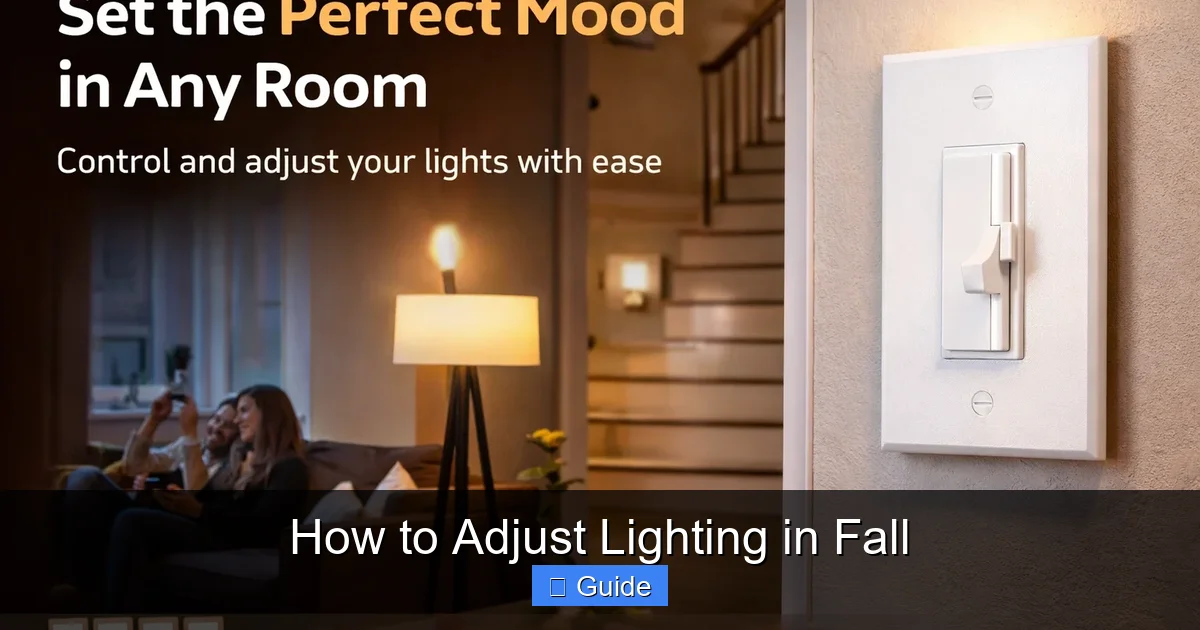
Dimmers are the single most impactful upgrade for fall lighting. They let you match light level to time of day and activity. Full brightness at 5 PM looks harsh. Twenty percent at 8 PM feels cozy. Without dimmers, you only have on or off. That binary choice forces you to over-light or under-light.
Install dimmers on every circuit you can. Ceiling fixtures. Recessed cans. Chandeliers. Pendants. Wall sconces. Even bath fans with lights. Skip them only on circuits with non-dimmable loads like some fans or smart bulbs that handle dimming internally.
Choosing the Right Dimmer
Not all dimmers work with LEDs. Old leading-edge dimmers cause flicker, buzz, and limited range. You need trailing-edge (ELV) or LED-specific dimmers. Brands like Lutron Caséta, Leviton Decora Smart, and GE Enbrighten make reliable models. Check the minimum load rating. Some need 10 watts minimum. If your LED load is lower, you need a low-load dimmer or a dummy load device.
Smart dimmers add scheduling and remote control. They replace standard switches. No hub needed for WiFi models. Zigbee and Z-Wave models need a hub but integrate with SmartThings, Hubitat, Home Assistant. This lets you program fall schedules. Lights ramp up at sunset. Dim at 9 PM. Off at 11 PM. Automatic comfort.
Scene Setting for Fall Evenings
Create lighting scenes for different fall activities. “Movie Night” – bias lighting behind TV at 10 percent, floor lamp at 20 percent, all else off. “Dinner Party” – pendants at 40 percent, sconces at 60 percent, candles lit. “Reading” – task lamp at 80 percent, ambient at 10 percent. “Relax” – everything at 15 percent, warm accent lights only.
Program these into smart dimmers or a smart home hub. One tap or voice command sets the mood. No walking around adjusting five switches. This convenience means you actually use your layered lighting. Unused layers are wasted money.
Motion Sensors for Practical Spaces
Hallways, bathrooms, mudrooms, pantries. These spaces benefit from motion sensors. No fumbling for switches with arms full of groceries. Set them to warm low light at night. Bright only during day. Many smart motion sensors detect ambient light and adjust accordingly. They also save energy. Lights never stay on accidentally.
Creating Cozy Fall Ambiance with Accent Lighting
The Power of Low Light
Human eyes are drawn to the brightest point in a room. In a evenly lit room, nothing stands out. In a room with pools of warm light, those pools become focal points. They create intimacy. They define conversation areas. They make large rooms feel human-scaled. This is the psychology of cozy. Low warm light signals safety. Relaxation. Home.
Fall is the season to embrace shadows. Do not light every corner. Let some areas stay dark. Light the reading chair. Light the sideboard with seasonal decor. Light the texture of a brick wall. Let the rest fade. This contrast creates depth. It makes the lit areas feel warmer by comparison.
Table Lamps and Floor Lamps
Invest in a few good lamps. Quality matters. Heavy bases prevent tipping. Good sockets accept smart bulbs. Shades diffuse light properly. Look for shades with gold or cream lining. They warm the light further. Black or white linings keep the bulb’s native color.
Place lamps at varying heights. Floor lamp at 58 to 64 inches. Table lamps at 24 to 30 inches. This creates vertical layers of light. It mimics how firelight hits the room feel designed, not just furnished. Use three-way bulbs or smart bulbs in lamps for flexibility.
LED Strips and Tape Light
LED tape is the secret weapon of fall ambiance. Warm white (2700K) high CRI strips. Install them: under kitchen cabinets. Inside glass-front cabinets. Along bookshelf edges. Behind headboards. Under bathroom vanities (floating effect). Along stair treads. Behind TVs (bias lighting reduces eye strain).
Use aluminum channels with diffusers. They protect the strips. They spread light evenly. They look finished. Power them from a switched outlet or smart plug. Put them on a schedule. They become automatic evening glow.
Candles and Firelight
Nothing beats real flame. The flicker. The scent. The heat. Candles are the original fall lighting. Use real wax candles in safe holders. Group them in odd numbers. Three pillars of varying heights. Five votives on a tray. Taper candles in a candelabra. Battery-operated flameless candles work for unsafe spots. High-end ones have moving flame tips and timers.
If you have a fireplace, use it. Gas or wood. The light is incomparable. No fireplace? A tabletop ethanol fireplace adds real flame anywhere. Or a projector fireplace on the TV. Surprisingly effective.
Seasonal Decor Lighting
Fall decor deserves light. Pumpkins. Gourds. Dried flowers. Pinecones. A small spotlight or picture light on a mantel display makes it glow. String lights in amber or warm white. Drape them over a mirror. Wind them through a centerpiece. Fill a glass hurricane with battery fairy lights and mini pumpkins. These micro-lighting moments add up. They make the season feel special.
Outdoor Lighting Adjustments for Fall
Safety First: Pathways and Entries
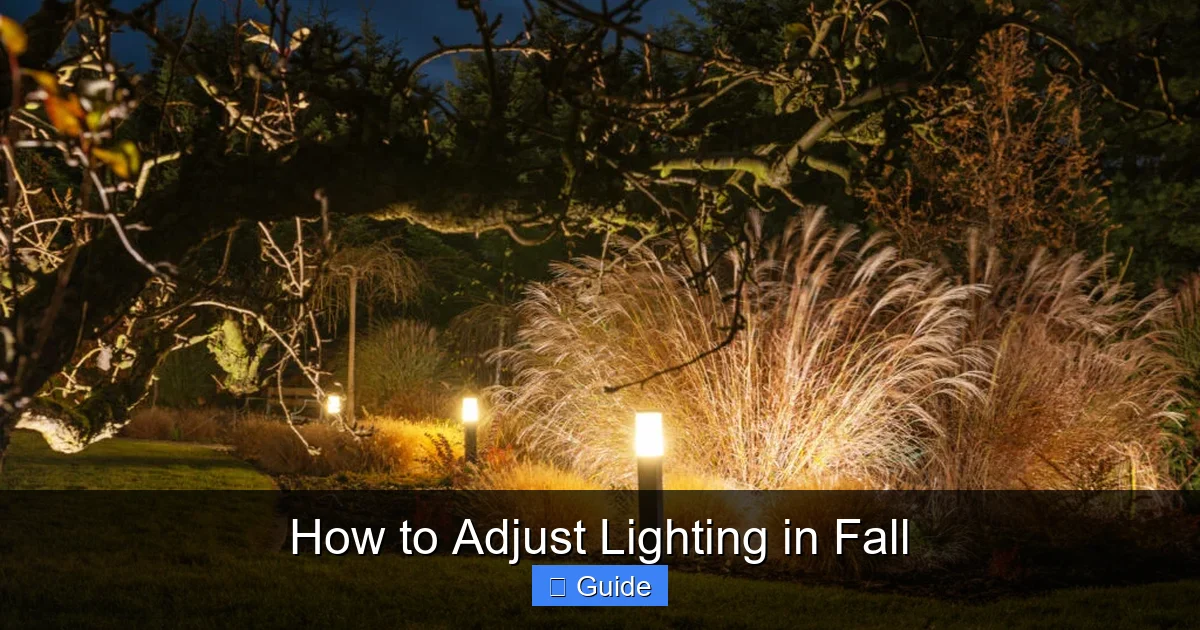
Days end early. You come home in dark. Guests arrive in dark. Path lights are essential. Space them 6 to 8 feet apart. Stagger them left-right for better coverage. Choose warm white (2700K to 3000K). Cool white path lights look institutional. Warm ones look welcoming. Low voltage LED systems are easy to install. Solar works but dims fast in fall clouds. Hardwired low voltage is reliable.
Front porch light: swap to 2700K. Add a dimmer if possible. Or a smart bulb on a motion sensor. Bright when someone approaches. Dim glow otherwise. This saves energy and reduces light pollution. It also looks much better than a glaring porch light all night.
Landscape Lighting for Fall Foliage
Fall trees are spectacular. Light them. Uplight specimen trees with warm wash lights. Place fixtures at the base, aimed up through branches. Cross-light from two sides for depth. Grazing light on textured bark (oaks, pines) reveals character. Keep it subtle. You want moonlight effect, not stadium.
Water features: submersible LEDs in warm white. They glow through falling leaves. Magical. Path lights along garden beds highlight late blooms (mums, asters, sedum). Keep color consistent. Mixing warm and cool outside looks messy.
Entertaining Outdoors in Cool Weather
Fall evenings can be perfect for outdoor gathering. With heat and light. String lights overhead define the space. Commercial grade LED strings in warm white. Hang them in a canopy pattern. Or zigzag. Use guy wires for support. Add table lamps rated for outdoor use. Battery lanterns on tables. A fire pit or patio heater provides both heat and light.
Light the grill area separately. Cooking needs task light. A dedicated LED flood at 3000K on a switch. Not the string lights. You need to see the steak. But keep it aimed down. Not in guests’ eyes.
Security Lighting Without the Glare
Security lights often blast 5000K floods. Terrible for fall ambiance. Replace with motion-activated 3000K floods. Aim them down. Shield them. They should light the ground, not the sky. Or use smart cameras with integrated warm lights. They only activate on person detection. Not raccoons. This keeps the neighborhood dark and peaceful until needed.
Smart Scheduling for Automatic Fall Comfort
Programming Your Daily Light Rhythm
The beauty of smart lighting is set-it-and-forget-it. Program a fall schedule once. Enjoy it for months. Morning: 6:30 AM – bedroom lights ramp to 4000K at 50 percent over 15 minutes. Gentle wake. 7:00 AM – kitchen and bathroom to 4000K at 80 percent. Daytime: 8:00 AM – all lights off or minimal. Natural light handles it. Late afternoon: 4:30 PM – living areas to 3000K at 30 percent. Pre-sunset transition. Evening: 6:00 PM – 2700K at 50 percent. Lamps and accents on. Night: 9:00 PM – dim to 20 percent. Bedtime: 10:30 PM – bedroom only, 2700K at 10 percent. Red nightlights on.
Adjust times for your latitude and schedule. The principle holds. Cool bright morning. Warm dim evening. Automatic.
Geolocation and Sunset Tracking
Smart home platforms (Home Assistant, Hubitat, SmartThings, Apple Home) track sunset daily. Use this trigger instead of fixed times. “30 minutes before sunset: activate evening scene.” This adjusts automatically as days shorten. No manual updates needed. It is the smartest way to adjust lighting in fall.
Vacation and Away Modes
Fall travel is common. Use presence simulation. Randomize lights on/off in evening patterns. Mimics occupancy. Deters opportunistic crime. Most smart systems have this built in. Enable it when you leave. Disable when home.
Voice Control for Lazy Evenings
“Hey Google, movie night.” “Alexa, relax mode.” “Siri, bedtime.” Voice control means you never leave the blanket. It sounds lazy. But it means you actually use your scenes. The best lighting system is the one you use. Voice makes it frictionless.
Energy Efficiency While Staying Cozy
LED Efficiency Basics
LEDs use 80 to 90 percent less energy than incandescent. A 60-watt equivalent LED draws 8 to 10 watts. At 12 cents per kWh, running one bulb 6 hours daily costs about 25 cents per month. Twenty bulbs: $5 monthly. Dimming saves more. At 50 percent, power draw drops roughly 40 percent. Smart scheduling saves more. Lights off when not needed. The efficiency argument for LEDs is overwhelming.
Calculating Your Fall Lighting Costs
Fall means lights on 5 to 6 hours more daily than summer. For a 20-bulb home at 10 watts each: 200 watts x 6 hours x 90 days = 108 kWh. At $0.12/kWh = $13 for the season. With dimming and scheduling, cut that in half. $6.50. Versus incandescent: 1200 watts x 6 x 90 = 648 kWh = $78. LEDs pay for themselves in one fall season.
Choosing Energy Star and Quality
Buy Energy Star certified bulbs. They meet efficiency, lifetime, and color quality standards. Avoid dollar store LEDs. They fail early. They flicker. Their color shifts green or pink over time. Quality brands: Philips, Cree, Feit, Sylvania, GE. Spend $3 to $6 per bulb. They last 15,000 to 25,000 hours. That is 10 to 15 years at 6 hours daily.
Reducing Standby Power
Smart bulbs and dimmers draw small standby power. 0.5 to 1 watt each. Twenty devices: 10 to 20 watts continuous. 175 kWh annually. $21 yearly. Not huge. But you can reduce it. Use Zigbee or Z-Wave devices with a single hub. Hub draws 2 to 3 watts. Devices draw near-zero standby. WiFi bulbs each maintain connection. More standby total. Hardwired smart switches eliminate bulb standby. They control dumb LEDs. Most efficient overall.
Common Fall Lighting Mistakes to Avoid
Mistake 1: One Bright Overhead Light
This is the number one error. A single central fixture on full blast. It creates harsh shadows under eyes. It flattens the room. It feels like an office. Fix: add lamps. Install dimmer. Use lower wattage. Better yet, remove the overhead entirely in living rooms and bedrooms. Use only lamps and accent lights. It transforms the space.
Mistake 2: Mixing Color Temperatures
2700K lamp next to 4000K recessed can. 3000K pendants over 5000K under-cabinet. Your brain notices the mismatch. It feels unsettled. Fix: pick one temperature per room. 2700K for living spaces. 3000K for kitchens and baths. Replace all bulbs simultaneously. Keep spares of the same type.
Mistake 3: Ignoring Entryways and Hallways
These transition spaces set the tone. A dark entry feels unwelcoming. A glaring one feels harsh. Fix: warm low light. A small table lamp on a console. A warm wall sconce. Motion sensor nightlight. Make the transition from outside to inside gradual.
Mistake 4: Forgetting Task Lighting
Reading in dim light strains eyes. Cooking in shadows risks cuts. Applying makeup in bad light leads to clown contour. Fix: dedicated task lights where tasks happen. Adjustable arms. High CRI. On separate switches.
Mistake 5: All or Nothing Control
One switch controls six recessed cans. You need one on low. You get six on high. Fix: rewire to zones. Or use smart bulbs grouped in app. Or add lamps on separate circuits. Control granularity is essential for fall ambiance.
Mistake 6: Neglecting Bulb Maintenance
Dust on bulbs and fixtures reduces output 10 to 20 percent. Dead bulbs in multi-bulb fixtures shift color balance. Fix: dust fixtures monthly. Replace dead bulbs immediately with matching type. Keep a bulb inventory.
Fall Lighting for Special Situations
Small Spaces and Apartments
Renters cannot rewire. Use plug-in solutions. Floor lamps. Table lamps. Plug-in sconces (no wiring needed). Smart bulbs in existing fixtures. LED strips on command strips (removable). Battery puck lights in closets. Floor uplights in corners. A few well-placed lamps beat overhead every time.
Open Concept Homes
Kitchen-dining-living all one space. Lighting zones are critical. Kitchen: 3000K task-focused. Dining: 2700K pendant dimmed low. Living: 2700K lamps and accents. Each zone on separate circuits or smart groups. Never light the whole space uniformly. It kills intimacy.
Home Offices
Daytime work: 4000K to 5000K bright. Alertness. Evening wind-down: 2700K dim. Transition at 5 PM. Use a tunable desk lamp. Or two lamps: cool for day, warm for night. Bias lighting behind monitor reduces eye strain always. 6500K bias light matches screen white point. But warm bias (3000K) is better for evening.
Kids’ Rooms
Children need dark for sleep. Red nightlights only. No blue or white. Morning wake-up light: gradual ramp to 4000K. Helps circadian rhythm. Avoid scary shadows from nightlights. Place them low, aimed at floor. Smart bulbs with schedules prevent “one more story” light negotiations.
Budget-Friendly Fall Lighting Updates
Under $50 Quick Wins
Swap five most-used bulbs to 2700K high CRI ($25). Add two battery puck lights for dark corners ($15). Buy a plug-in dimmer for a floor lamp ($10). Total: $50. Immediate difference.
Under $200 Weekend Project
Install three smart dimmer switches ($120). Add LED strip under kitchen cabinets ($40). Buy two quality table lamps with warm shades ($40). Total: $200. Professional-level control.
Under $500 Whole-Home Upgrade
Smart dimmers in main rooms ($300). Smart bulbs in lamps ($100). LED strips in two areas ($60). Motion sensors in hall and bath ($40). Total: $500. Comprehensive system.
Phased Approach Over Years
Year 1: Bulb swap all main rooms. Year 2: Add dimmers to key circuits. Year 3: Smart bulbs in lamps. Year 4: LED strips and accent lighting. Year 5: Outdoor lighting upgrade. Spread cost. Enjoy incremental improvements.
Conclusion
Learning how to adjust lighting in fall changes how you experience the season. It turns early darkness from a disappointment into an invitation. An invitation to glow. To gather. To slow down. The steps are simple. Warmer bulbs. Layered light. Dimmers everywhere. Smart schedules. Real flames. Each change compounds. A home that feels like a hug.
Start this weekend. Buy a four-pack of 2700K 90 CRI LEDs. Put them in your living room lamps. Add a dimmer to the overhead. Light a candle at dinner. Notice how you feel. That feeling? That is fall done right. You deserve a home that meets the season with warmth. Now you know exactly how to create it.
The days will keep shortening. The nights will keep lengthening. But inside, your light will be perfect. Golden. Gentle. Yours.
Frequently Asked Questions
How do I know if my current bulbs are the right color temperature for fall?
Check the bulb base or packaging for a Kelvin (K) rating. Bulbs labeled 2700K or 3000K are warm white and ideal for fall. Bulbs marked 3500K, 4000K, 5000K, or “daylight” are too cool for cozy autumn evenings.
Will dimmer switches work with my existing LED bulbs?
Only if your LEDs are labeled “dimmable” and your dimmer is LED-compatible (trailing-edge/ELV type). Non-dimmable LEDs on a dimmer will flicker, buzz, or fail. Check both bulb and dimmer specifications for compatibility.
How can I create fall lighting in a rental without permanent changes?
Use plug-in floor and table lamps with warm smart bulbs, battery-operated LED puck lights, command-strip LED tape lights, plug-in dimmer modules, and flameless candles. All are removable and damage-free.
What’s the difference between 2700K and 3000K for fall lighting?
2700K matches traditional incandescent warmth (very golden). 3000K is slightly crisper but still warm. Use 2700K for living rooms and bedrooms. Use 3000K for kitchens and bathrooms where you need slightly better color discrimination.
How do I light my outdoor space for fall entertaining?
Use warm white (2700K-3000K) string lights overhead, battery lanterns on tables, path lights for safety, and a fire pit or patio heater for both warmth and light. Keep security lights on motion sensors only.
Can fall lighting adjustments help with seasonal mood changes?
Yes. Bright cool light (4000K+) in the morning supports circadian rhythm. Warm dim light (2700K) in the evening promotes melatonin. This light rhythm can significantly improve sleep quality and mood during shorter fall days.