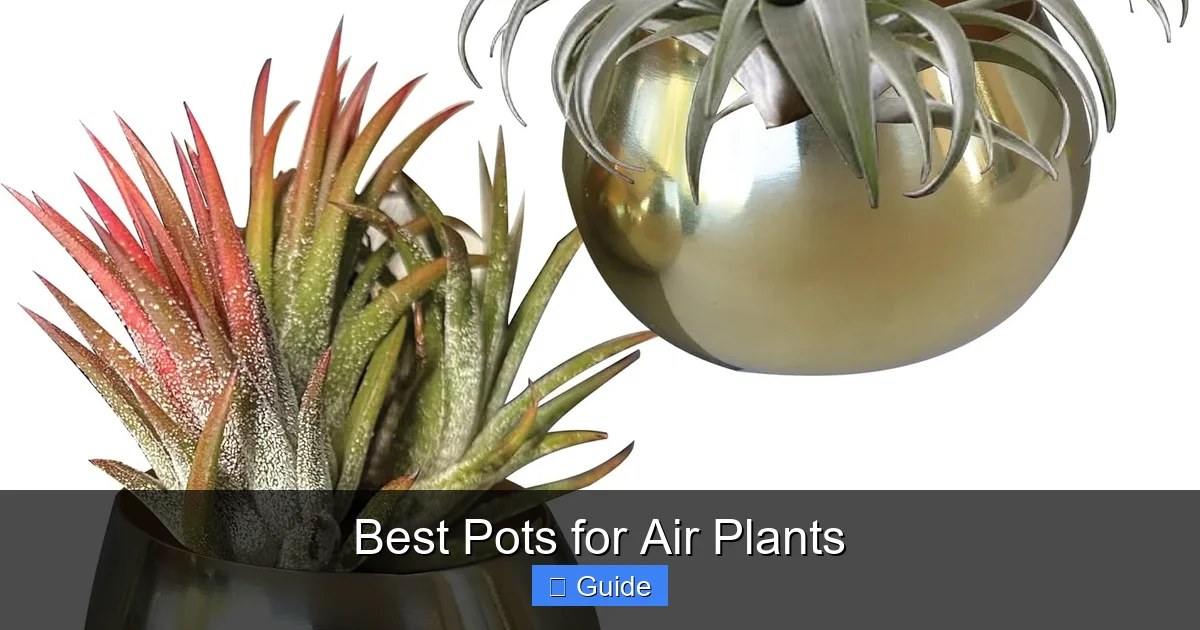
Best Pots for Air Plants
Air plants thrive without soil, but they still need the right container to flourish. This guide covers the best pots for air plants across every style and budget, from driftwood mounts to ceramic holders. Learn what materials work best, how to ensure proper airflow, and which designs make care easiest.
Key Takeaways
- Airflow is everything: The best pots for air plants prioritize ventilation over water retention since Tillandsia absorb moisture through their leaves.
- Natural materials shine: Driftwood, cork bark, and cholla wood mimic the plant’s native epiphytic habitat while looking beautiful.
- Avoid enclosed containers: Terrariums and closed vessels trap humidity and cause rot — choose open designs with plenty of air circulation.
- Drainage matters more than you think: Even without soil, water must escape quickly after soaking or misting to prevent base rot.
- Mounting options expand creativity: Wire frames, macramé hangers, and magnetic displays let you showcase plants vertically on walls.
- Size match prevents problems: Choose a holder slightly larger than your plant’s base to allow growth and easy removal for watering.
- Decorative doesn’t mean difficult: Many stunning displays use simple materials like sea urchin shells or geometric wire forms that make care simple.
Quick Answers to Common Questions
What is the single most important feature of the best pots for air plants?
Airflow. The container must allow air to circulate freely around the entire plant, especially the base, to prevent rot.
Can I use a regular plant pot with soil for my air plant?
No. Air plants are epiphytes and will rot in soil. They need mounts or holders that keep them elevated and exposed to air.
Is it okay to glue my air plant into a decorative shell permanently?
No. Permanent glue prevents soaking and proper drying. Use removable mounts or non-damaging ties like fishing line instead.
Do air plants need different pots based on their variety?
Yes. Xeric (silver, fuzzy) types need maximum airflow like open wire or cholla. Mesic (green, smooth) types tolerate slightly more humid holders like shells or macramé.
How often should I remove my air plant from its pot for watering?
Weekly for a 20-30 minute soak. The best pots for air plants make this removal quick and easy without damaging the plant or mount.
📑 Table of Contents
- Why the Right Container Changes Everything
- Understanding What Air Plants Actually Need
- Top Materials for Air Plant Holders
- Matching Pot Style to Plant Type
- Creative Display Ideas Using the Best Pots for Air Plants
- How to Attach Air Plants Without Damage
- Common Mistakes That Ruin Good Displays
- Seasonal Care Adjustments
- Buying Guide: What to Look For
- DIY: Make Your Own Best Pots for Air Plants
- Troubleshooting: When the Pot Is the Problem
- Final Thoughts on Choosing the Best Pots for Air Plants
Why the Right Container Changes Everything
You have seen them perched on driftwood, tucked into seashells, or suspended in geometric wire frames. Air plants — those fascinating, soil-free wonders — seem to grow on nothing but air. But here is the thing. The container you choose actually determines whether your Tillandsia thrives or slowly declines. The best pots for air plants are not really pots at all. They are mounts, holders, and displays that prioritize the one thing these plants demand above all else: airflow.
Most people kill their first air plant by treating it like a succulent. They nestle it in a cute ceramic pot with a layer of moss, mist it occasionally, and wonder why it turns brown and mushy at the center. The problem? Trapped moisture. Air plants are epiphytes. In nature, they cling to tree branches, rock faces, and telephone wires. Their roots exist only for anchoring. Every drop of water and nutrient enters through specialized trichomes on their leaves. When the base stays wet, rot sets in fast. The best pots for air plants solve this by keeping the plant elevated, exposed, and easy to remove for a proper soak.
Understanding What Air Plants Actually Need
Before we dive into specific recommendations, let’s get clear on the non-negotiables. Once you understand these, spotting the best pots for air plants becomes intuitive.
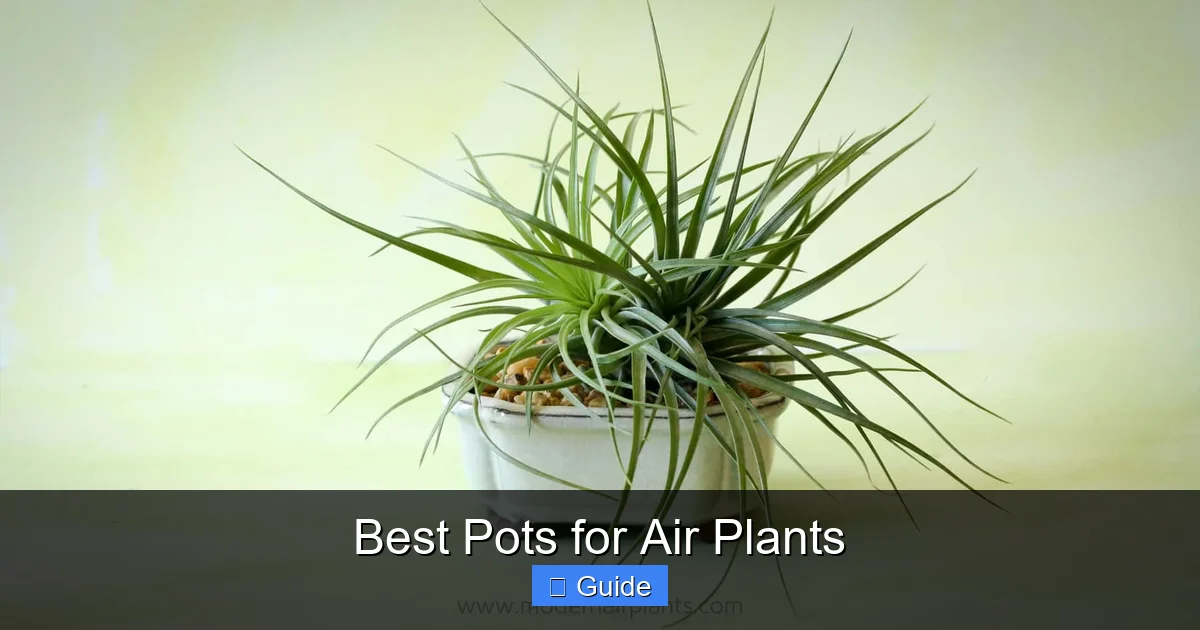
Visual guide about Best Pots for Air Plants
Image source: modernairplants.com
The Airflow Rule
Air plants need moving air. Stagnant, humid pockets invite fungal issues. Any container that wraps around the base — like a deep cup, a closed terrarium, or a tight-fitting shell — creates a danger zone. The best pots for air plants leave the bottom and sides open. Think perches, not pockets.
The Drying Window
After watering — whether you soak, dunk, or mist heavily — an air plant must dry completely within three to four hours. If the holder holds water against the leaves, you are on a countdown to rot. Materials that absorb moisture (like thick moss packed around the base) extend drying time. The best pots for air plants use materials that shed water or let it evaporate instantly.
Easy Removal for Soaking
Weekly soaking is the gold standard for most Tillandsia. You submerge the whole plant for twenty to thirty minutes, shake off excess, and let it dry upside down. If your display requires pliers, glue removal, or a wrestling match to get the plant out, you will skip soakings. The best pots for air plants let you pop the plant in and out in seconds.
Light Access
Bright, indirect light fuels growth. A holder that shades the lower leaves — like a deep, opaque cup — creates weak, leggy growth. The best pots for air plants position the plant so light reaches all sides.
Top Materials for Air Plant Holders
Material choice drives both aesthetics and plant health. Here is how the most popular options stack up.
Driftwood and Branches — The Gold Standard
Nothing beats the real thing. Driftwood, grapevine, manzanita, and cholla wood replicate the texture and microclimate of a tree branch. They are porous, lightweight, and naturally irregular — meaning plenty of air gaps. You can attach plants with non-toxic glue (like E6000 or a plant-safe silicone), wire, or fishing line. The best pots for air plants made from wood age beautifully, developing a patina that only adds character.
Pro tip: Soak new driftwood for a few days and scrub it to remove salts and tannins before mounting plants. Salt buildup burns delicate trichomes.
Cork Bark — Lightweight and Grippy
Cork flats and tubes are a favorite for vertical displays. The rough surface gives roots (and glue) something to grab. Cork resists mold, weighs almost nothing, and can be pinned directly to a wall or framed. It is one of the best pots for air plants if you want a living wall effect without heavy hardware.
Cholla Wood — Sculptural and Functional
Cholla cactus skeletons are essentially hollow, lattice-like tubes. They look like modern art but function like a dream. The open structure means 360-degree airflow. You can tuck small Tillandsia into the holes or rest larger ones on top. Cholla is one of the best pots for air plants for xeric varieties that love maximum air movement.
Ceramic and Clay — Beautiful but Tricky
Hand-thrown ceramic holders, unglazed terracotta cones, and shallow dishes look gorgeous. But they require caution. Glazed ceramics trap moisture. Unglazed terracotta wicks water away — great for drying, but it can pull moisture from the plant if the holder stays damp. The best pots for air plants in ceramic are shallow, wide-mouthed, and used only for temporary display. Always remove the plant for watering.
Glass — Open Forms Only
Glass globes, teardrops, and orbs are everywhere. Here is the rule: if it has a hole large enough for your hand and the plant, it works. If it is a closed orb with a tiny opening, it is a rot trap. The best pots for air plants in glass are open-topped bowls, wide-mouthed vases, or flat dishes where the plant sits on top, not inside.
Metal Wire and Frames — Modern Minimalism
Geometric brass, copper, or powder-coated steel frames have exploded in popularity. They are essentially invisible holders — maximum light, maximum air. Many are designed for specific plant sizes. The best pots for air plants in metal keep the plant suspended by its base without crushing leaves. Avoid raw copper that can oxidize and leach; sealed or coated is safer.
Sea Urchin Shells and Coral — Coastal Chic
These natural cups are iconic for a reason. Their shape cradles the plant base while leaving the crown exposed. They are lightweight, porous, and drain instantly. The best pots for air plants in this category are ethically sourced (look for “bycatch” or fossilized labels) and thoroughly cleaned.
Macramé and Fiber Hangers — Soft Support
Knotted cotton or jute hangers add boho warmth. They work best for mesic (greener, softer) varieties that appreciate a bit of humidity around the roots. The fibers wick moisture but dry fast. The best pots for air plants in fiber are open-net designs, not solid pouches.
Matching Pot Style to Plant Type
Not every air plant wants the same setup. Xeric (silver, fuzzy, drought-tolerant) and mesic (green, smooth, moisture-loving) varieties have different preferences. The best pots for air plants respect these differences.
Xeric Stars — Tillandsia xerographica, tectorum, harrisii
These desert dwellers want max airflow and fast drying. Mount them on cholla wood, vertical wire grids, or bare driftwood. Skip moss, skip cups, skip anything that hugs the base. The best pots for air plants in this group are barely there.
Mesic Favorites — Tillandsia ionantha, brachycaulos, capitata
These come from humid forests. They tolerate — even enjoy — a bit more ambient moisture. A sea urchin shell, a shallow ceramic dish with pebbles, or a macramé hanger works well. The best pots for air plants here can hold a tiny reservoir of humidity without staying wet.
Bulbous and Pseudobulb Types — Tillandsia caput-medusae, bulbosa, seleriana
These have swollen bases that trap water internally. They must dry upside down. The best pots for air plants with bulbous bases hold the plant at an angle or vertically, never flat. A wire loop, a slanted driftwood nook, or a tilted shell lets gravity drain the crown.
Miniatures — Tillandsia funckiana, andreana, Reichenbachii
Tiny plants get lost in large holders. The best pots for air plants at this scale are small seashells, cork nubs, miniature wire spirals, or even magnets on a metal board. Group several for impact.
Creative Display Ideas Using the Best Pots for Air Plants
Function leads, but form follows close behind. Here are display concepts that marry plant health with serious style.
Vertical Driftwood Wall
Mount a large, branching piece of driftwood on a wall. Attach plants at varying heights using fishing line or plant-safe glue. Add small tillandsias in the nooks, larger ones on the flat planes. Mist the whole piece in place; soak individuals monthly by unclipping. This is one of the best pots for air plants setups for a statement piece.
Cholla Wood “Forest” in a Shallow Tray
Stand several cholla branches upright in a wide, low ceramic tray filled with decorative sand or gravel. Nestle plants into the cholla holes. The tray catches mist overspray; the cholla provides infinite air. Rotate the tray for even light.
Geometric Wire Grid Panel
Mount a square metal grid (like a cattle panel or custom welded frame) on the wall. Clip air plants directly onto the wires using their bases or small S-hooks. Uniform spacing creates a living polka-dot pattern. The best pots for air plants here are the wires themselves — zero material contact.
Sea Urchin Shell Collection on a Shelf
Line up a dozen cleaned sea urchin shells on a floating shelf. Each holds a single ionantha or funckiana. The repetition is striking. Water by lifting each shell, dunking the plant, shaking, and replacing. Simple, clean, and one of the best pots for air plants for small spaces.
Hanging Macramé Cluster
Knot a multi-strand hanger with three to five pockets at staggered heights. Use mesic varieties. Hang near a bright window. The vertical stagger ensures each plant gets light. The best pots for air plants in fiber let you water the whole cluster with a spray bottle in situ.
Terrarium — But Open Top Only
If you love the terrarium look, use a wide, shallow glass bowl with no lid. Add a layer of sand, a few stones, a piece of cholla. Place plants on top, not buried. The glass walls protect from drafts; the open top ensures airflow. The best pots for air plants in glass are really just open stages.
How to Attach Air Plants Without Damage
The best pots for air plants only work if the attachment method is safe. Never use hot glue — it burns tissue. Never use copper wire — it is toxic. Never staple through leaves. Here are the safe standards.
Plant-Safe Adhesives
E6000 (fully cured), Goop, or clear silicone aquarium sealant. Apply a tiny dot to the base (root area only), press onto the mount, and hold for thirty seconds. Let cure twenty-four hours before watering. The bond is strong but reversible — you can gently wiggle the plant free later if needed.
Fishing Line or Cotton Thread
Wrap the base (not leaves) with clear monofilament or natural cotton thread. Tie to the mount. Cotton eventually rots — by then, the plant has usually anchored itself with roots. This is the most natural, non-invasive method.
Wire Loops and Clips
Pre-made copper-free wire holders, hairpin clips, or custom bent stainless steel. These cradle the base without pressure. Ideal for the best pots for air plants that are metal frames or driftwood with holes.
Root Anchoring (The Patient Way)
Simply place the plant in a snug nook. Mist frequently. Over weeks, roots will grip the texture. Zero hardware, zero risk. Works best on rough wood, cork, and cholla.
Common Mistakes That Ruin Good Displays
Even with the best pots for air plants, these habits will undermine you.
Gluing the Plant Permanently Into a Shell
You cannot soak a glued-in plant. You cannot dry it upside down. You cannot inspect the base. If you must glue, glue only to a removable mount (like a cork square) that pops out of the decorative shell.
Packing Moss Around the Base
Sphagnum or decorative moss holds water against the crown. It is the number one cause of center rot. If you want the moss look, keep it away from the plant — use it as a backdrop, not a collar.
Using Closed Terrariums
They look magical on Instagram. In reality, they are fungal incubators. If you want a glass enclosure, leave the lid off permanently. The best pots for air plants are never sealed.
Misting Only, Never Soaking
Misting supplements — it does not replace — a thorough soak. Trichomes need full hydration to function. Dunk or soak weekly. The best pots for air plants make this easy.
Ignoring the Offsets (Pups)
After blooming, the mother plant produces pups at the base. Left attached, they form a clump. Clumps dry slower. The best pots for air plants give you access to separate pups when they reach one-third the mother’s size.
Seasonal Care Adjustments
The best pots for air plants support year-round health, but your routine shifts with the seasons.
Spring and Summer — Active Growth
Increase soaking to twice weekly if hot and dry. Fertilize monthly with diluted bromeliad or air plant fertilizer (quarter strength). Ensure maximum airflow — move mounts don’t sit in direct afternoon sun, which can scorch through glass or heat metal frames.
Fall — Prepping for Rest
Reduce soaking to weekly. Stop fertilizing. Check that indoor heating vents don’t blast displays — dry heat desiccates leaves fast. The best pots for air plants near heat sources need extra misting.
Winter — Low Light, Low Growth
Soak every ten to fourteen days. Move displays to the brightest window. If using grow lights, keep twelve hours on. Watch for condensation on glass holders — wipe it off. The best pots for air plants in winter are those you can easily relocate.
Buying Guide: What to Look For
Shopping for the best pots for air plants? Keep this checklist handy.
Open Base Design
Can you see the bottom of the plant when it’s in place? If not, pass.
Removable or Non-Permanent Attachment
Can you take the plant out for soaking without tools? If it is glued into a non-removable holder, it is a decorative object, not a functional pot.
Material Safety
No copper, no treated lumber, no rusting metal, no oil-leaching plastics. Natural, sealed, or plant-safe only.
Size Flexibility
Does the holder accommodate growth? A tight fit today strangles tomorrow. The best pots for air plants leave a finger’s width of space around the base.
Stability
Will it tip over when you brush past? Wall mounts need secure anchors. Tabletop holders need weight or a wide base.
Aesthetic Longevity
Will it look good in a year? Driftwood and cholla age gracefully. Cheap painted metal chips. Trendy shapes date fast. Choose materials that develop character.
DIY: Make Your Own Best Pots for Air Plants
You don’t need to buy. Some of the best pots for air plants come from a walk in the woods or a hardware store run.
Driftwood Mount from Found Wood
Collect fallen branches (check local regulations). Scrub with a wire brush. Bake at 200°F for two hours to kill pests. Cool. Attach plants with fishing line. Done.
Cork Board Living Wall
Buy a cork bulletin board. Pin plants with stainless steel corsage pins through the base (not leaves). Arrange in a pattern. Mist in place. One of the best pots for air plants for renters — no wall damage.
Wire Mesh Frame
Staple galvanized hardware cloth (quarter-inch mesh) to a picture frame. Spray paint if desired. Tuck plants into the grid. Hang. Maximum air, minimum cost.
Seashell Collection
Gather clean, empty shells (ethically — no live takings). Boil ten minutes to sanitize. Cool. Nestle small tillandsias into the curves. Display on a sand bed.
Upcycled Kitchen Finds
An egg cup, a ceramic spoon rest, a wire whisk, a colander. Anything open, draining, and heat-safe works. The best pots for air plants are sometimes already in your drawer.
Troubleshooting: When the Pot Is the Problem
Your plant looks sad. Before you blame water or light, check the holder.
Brown, Mushy Base — Rot
Holder traps moisture. Switch to open mount. Remove damaged leaves. Dry upside down for a day. Soak only when fully dry.
Leaf Tips Crispy — Dehydration
Holder too exposed (wire frame in direct sun) or material wicking moisture (unglazed terracotta). Move to shadier spot or switch to moisture-retentive mount like cork.
White Crust on Mount — Mineral Buildup
Hard water or fertilizer salts on wood or clay. Scrub mount with vinegar solution. Rinse. Use rain or distilled water going forward.
Plant Loose in Mount — Failed Attachment
Glue didn’t bond or thread rotted. Reattach with fresh adhesive or line. Check that mount surface is clean and dry.
Algae on Glass or Shell — Excess Moisture
Too much misting, not enough drying. Reduce frequency. Increase airflow. Clean holder with diluted hydrogen peroxide.
Final Thoughts on Choosing the Best Pots for Air Plants
Here is the bottom line. The best pots for air plants are not about the container. They are about what the container allows: air, light, drainage, and access. A $3 piece of cholla wood outperforms a $50 closed glass globe every time. A simple wire loop beats a glue-sealed seashell. When you shop or build, ask one question: “Can I soak this plant easily and will it dry fast?” If yes, you have found one of the best pots for air plants. If no, keep looking. Your Tillandsia will thank you with blooms, pups, and years of weird, wonderful beauty.
Frequently Asked Questions
What materials are safe for mounting air plants?
Safe materials include driftwood, cork bark, cholla wood, sea urchin shells, stainless steel wire, coated copper wire, and plant-safe adhesives like E6000 or aquarium silicone. Avoid raw copper, treated lumber, hot glue, and moss packed against the base.
Can I keep air plants in a closed terrarium?
Closed terrariums trap humidity and cause rot. Only use open-top glass containers with wide openings. The best pots for air plants always prioritize ventilation over enclosure.
How do I water air plants that are mounted on a wall display?
Remove the plant from the mount for a 20-30 minute soak weekly. Shake off excess water, dry upside down for 3-4 hours, then reattach. Choose mounts that allow easy removal like fishing line, wire clips, or removable cork squares.
Why is my air plant rotting at the base?
Rot is usually caused by trapped moisture. Check if your holder allows airflow, if you are shaking off water after soaking, and if moss or glue is holding water against the crown. Switch to an open mount and ensure complete drying.
Can I use fertilizer on air plants?
Yes. Use a bromeliad or air plant specific fertilizer at quarter strength once a month during the growing season (spring-summer). Apply by adding to soak water. Skip fertilizer in fall and winter.
How do I know if my air plant holder is the right size?
The holder should be slightly larger than the plant’s base, leaving about a finger’s width of space. This allows for growth, air circulation, and easy removal for watering. Tight fits restrict airflow and damage leaves.