Wild Ginger Washington Native Plant
Wild ginger (Asarum caudatum) is a stunning evergreen groundcover native to Washington’s moist forests. This low-maintenance perennial thrives in shade, supports local wildlife, and adds year-round beauty to native plant gardens across the Pacific Northwest.
If you have ever hiked through a damp, shady forest in western Washington, you have likely walked right past wild ginger without noticing it. This humble plant hugs the ground, hiding its strange flowers beneath a canopy of heart-shaped leaves. It does not shout for attention. It simply persists, covering the forest floor in a quiet green carpet that stays lush all year long.
For gardeners, wild ginger Washington native plant offers something rare: a true evergreen groundcover that thrives in the deep shade where grass refuses to grow and hostas struggle. It asks for little. It gives much. In this guide, we will explore everything you need to know about identifying, growing, and appreciating this remarkable native perennial.
Key Takeaways
- Native Range: Wild ginger grows naturally throughout western Washington in moist, shaded forests from sea level to mid-elevations.
- Shade Specialist: This plant excels in deep to partial shade where few other groundcovers survive, making it perfect for difficult garden spots.
- Evergreen Foliage: Heart-shaped leaves provide year-round interest and suppress weeds effectively in woodland gardens.
- Unique Flowers: Hidden jug-shaped flowers bloom at ground level in spring, pollinated by beetles and flies rather than bees.
- Wildlife Value: Provides shelter for amphibians, insects, and small mammals while seeds are dispersed by ants.
- Low Maintenance: Once established, wild ginger requires minimal care and spreads slowly to form dense colonies.
- Cultural Significance: Indigenous peoples used the rhizomes medicinally and as a flavoring, though modern consumption requires caution.
Quick Answers to Common Questions
What is the scientific name of wild ginger native to Washington?
The primary species is Asarum caudatum, commonly called long-tailed wild ginger.
Does wild ginger spread aggressively like English ivy?
No, wild ginger spreads slowly via rhizomes and is not considered invasive or aggressive.
Can I eat wild ginger from my garden?
While traditionally used by Indigenous peoples, modern research shows it contains aristolochic acid which can cause kidney damage. Culinary use is not recommended.
How much shade does wild ginger need?
Wild ginger thrives in full to partial shade. It cannot tolerate afternoon sun and prefers dappled or deep shade conditions.
When is the best time to plant wild ginger in Washington?
Fall (October-November) and early spring (March-April) are ideal planting times for establishment before summer drought or winter cold.
📑 Table of Contents
- Getting to Know Wild Ginger
- Why Choose Wild Ginger for Your Garden
- How to Grow Wild Ginger Successfully
- Propagation Methods
- Designing with Wild Ginger
- Common Challenges and Solutions
- Wild Ginger Through the Seasons
- Ethnobotany and Traditional Uses
- Conservation and Ethical Sourcing
- Wild Ginger in Restoration Projects
- Frequently Asked Questions
- Conclusion
Getting to Know Wild Ginger
What Is Wild Ginger?
Wild ginger (Asarum caudatum) belongs to the birthwort family, Aristolochiaceae. It is not related to the culinary ginger (Zingiber officinale) found in grocery stores. The common name comes from the ginger-like aroma released when the rhizomes or leaves are crushed. This scent comes from similar aromatic compounds, but the plants are botanically distinct.
Two species of wild ginger occur in Washington. Asarum caudatum, the long-tailed wild ginger, dominates west of the Cascades. Asarum marmoratum, the marbled wild ginger, appears in a few southwestern counties. Both share the same growth habit and cultural needs. For most Washington gardeners, Asarum caudatum is the species you will encounter and cultivate.
Physical Description
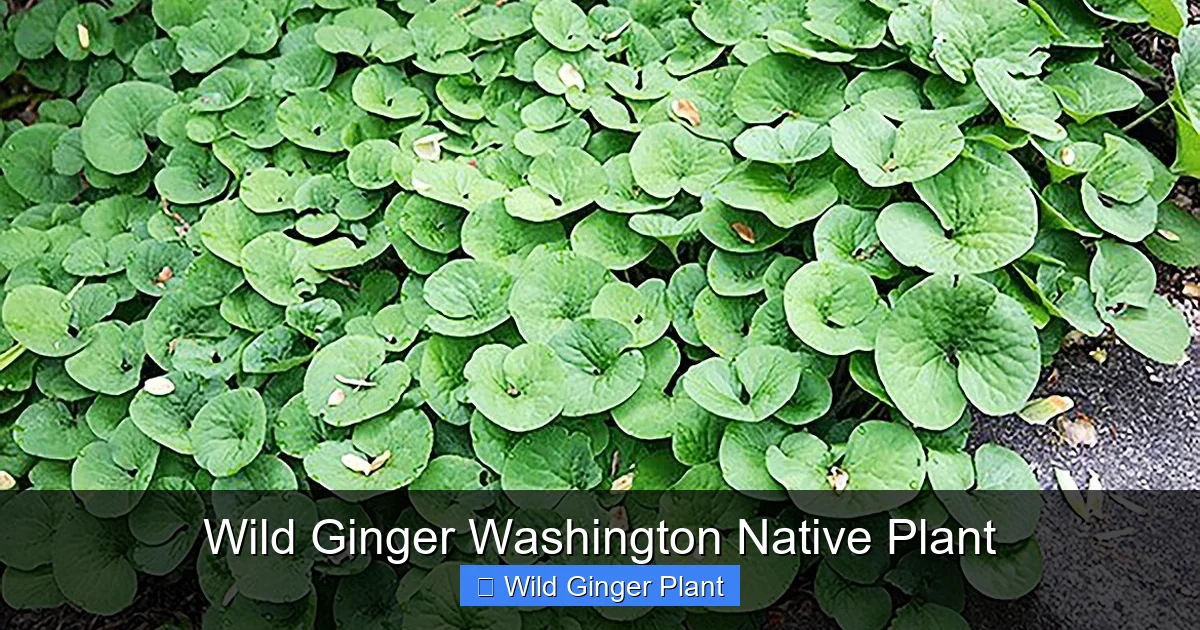
Wild ginger forms a low, spreading mat typically four to eight inches tall. The leaves are the showiest feature. Each leaf is kidney-shaped to heart-shaped, two to four inches wide, with a glossy dark green surface and prominent veins. The leaf stalks emerge directly from the creeping rhizome, creating a dense overlapping canopy that shades out weed seedlings.
The flowers are bizarre and wonderful. They appear in early to mid-spring, usually April through June depending on elevation. Each flower sits at ground level, hidden beneath the leaf litter. The flower has no petals. Instead, three fleshy sepals fuse into a jug-shaped tube with three long, tapering tails that can extend an inch or more. The color ranges from purplish-brown to greenish-yellow, often mottled. The interior is pale with purple markings.
After pollination, the flower develops into a fleshy capsule that splits open when ripe. The seeds have an oil-rich appendage called an elaiosome that attracts ants. The ants carry seeds to their nests, eat the elaiosome, and discard the viable seed in their nutrient-rich midden piles. This dispersal method, called myrmecochory, explains why wild ginger often appears in scattered clumps rather than uniform carpets.
Natural Habitat and Range
In Washington, wild ginger thrives west of the Cascade crest from the coast to mid-elevations in the mountains. It grows in moist coniferous forests, often under Douglas fir, western hemlock, and western red cedar. You will find it along stream banks, in seepy ravines, and on north-facing slopes where the soil stays damp year-round.
The plant prefers soils rich in organic matter with a slightly acidic to neutral pH. It tolerates seasonal flooding but not standing water. In its native range, wild ginger often grows alongside sword fern, oxalis, trillium, vanilla leaf, and redwood sorrel. These companion plants indicate the cool, humid, shaded conditions wild ginger loves.
Why Choose Wild Ginger for Your Garden
Solving the Deep Shade Problem
Every gardener knows the frustration of deep shade. That north-facing bed under the big maple. The narrow strip between the house and the fence where sun never reaches. The area beneath mature conifers where needles acidify the soil and roots suck up moisture. Most groundcovers fail here. English ivy takes over. Vinca gets sparse and weedy. Pachysandra sulks.
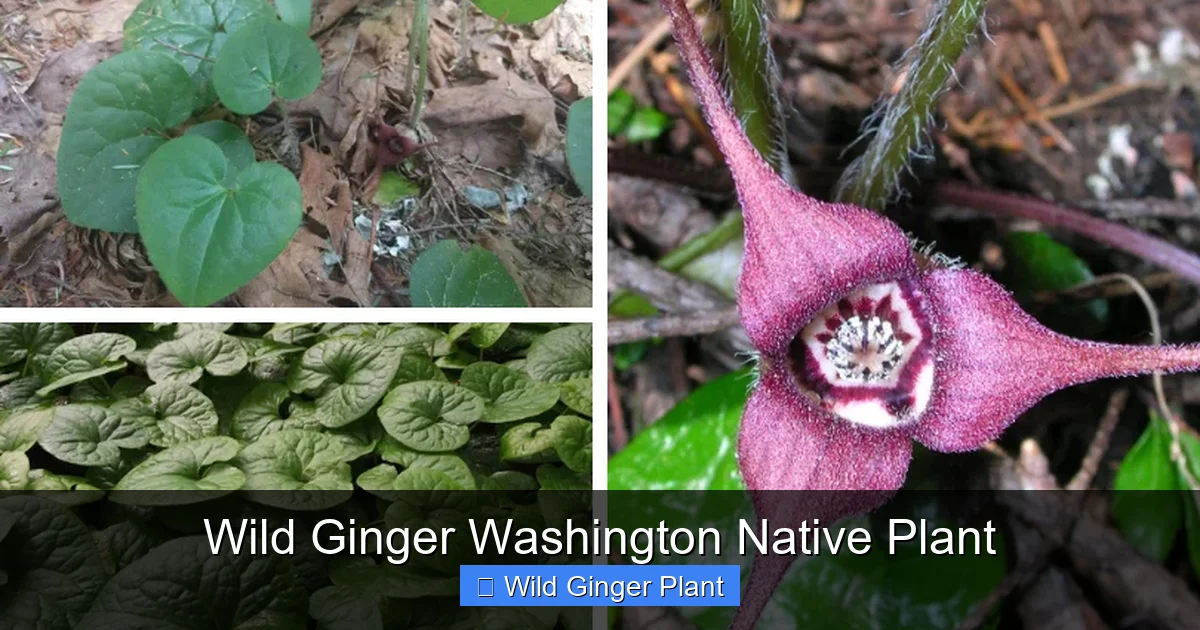
Visual guide about Wild Ginger Washington Native Plant
Image source: shadowhabitat.org
Wild ginger evolved for exactly these conditions. In nature, it grows under a closed canopy where light levels may be less than two percent of full sun. Its broad leaves capture every photon. Its rhizomes navigate through tree roots and duff. Once established, it outcompetes weeds simply by shading the soil surface. Deer rarely browse it. Slugs and snails may nibble young leaves but rarely cause serious damage.
Year-Round Structure
Unlike many herbaceous perennials that disappear in winter, wild ginger keeps its leaves through the cold months. In mild maritime winters, the foliage stays green and handsome. In colder inland sites or during harsh freezes, leaves may become tattered but the plant rebounds quickly in spring. This evergreen presence provides visual continuity when the rest of the shade garden is dormant.
The dense mat also protects soil from erosion on slopes. Raindrops hit leaves instead of bare earth. Water infiltrates slowly. The rhizome network binds the topsoil. For gardeners dealing with steep, shady banks, wild ginger is a functional and beautiful solution.
Ecological Contributions
Native plants support native wildlife. Wild ginger provides microhabitat for numerous small creatures. Salamanders and frogs shelter beneath the leaves during dry spells. Ground beetles and spiders hunt in the cool dampness. The flowers, though inconspicuous to us, attract specialized pollinators including fungus gnats, beetles, and flies. These insects in turn feed birds.
The ant-seed mutualism is a fascinating ecological process to observe. If you plant wild ginger, you participate in an ancient partnership. Ants gain nutrition. The plant gains dispersal and planting services. The soil gains aeration and nutrients from ant activity. Everyone wins.
Low Maintenance Once Established
The keyword here is “once established.” Wild ginger grows slowly at first. A new planting may take two to three years to form a solid mat. During this establishment phase, you will need to weed carefully and water during dry spells. But after the colony knits together, maintenance drops to near zero. No mowing. No fertilizing. No dividing unless you want to propagate. Just occasional removal of fallen branches or excess leaf litter that might smother the plants.
How to Grow Wild Ginger Successfully
Site Selection
Choose a site with full to partial shade. Morning sun is tolerable if the soil stays consistently moist. Afternoon sun will scorch the leaves. The ideal location mimics the forest floor: dappled light, cool temperatures, high humidity. North and east exposures work well. Under deciduous trees is perfect because the plants get spring light before leaf-out, then summer shade.
Avoid hot, dry, exposed sites. Avoid areas with aggressive tree roots like maples or willows that will outcompete the ginger for moisture. Avoid heavy foot traffic areas. The leaves are somewhat brittle and the rhizomes grow near the surface.
Soil Preparation
Wild ginger wants soil that mimics forest duff: loose, moisture-retentive, rich in organic matter, slightly acidic. If your soil is heavy clay, amend generously with compost, leaf mold, or well-rotted sawdust. If your soil is sandy, add organic matter to improve water holding capacity. A pH between 5.5 and 7.0 is ideal.
Before planting, remove all weeds and grass. This is critical. Once wild ginger spreads, removing weeds from within the mat is nearly impossible without damaging the rhizomes. Take the time to clear the site thoroughly. A layer of cardboard topped with three inches of compost makes an excellent weed-smothering, soil-building preparation if you can wait a season before planting.
Planting Techniques
Spring and fall are both good planting times. Fall planting allows root establishment before summer drought. Spring planting gives a full growing season before winter. Space plants twelve to eighteen inches apart for eventual fill-in. Closer spacing yields faster coverage but costs more.
Dig a hole just deep enough for the rhizome to sit horizontally, with the growing tip barely below the soil surface. Spread any roots gently. Backfill with amended soil. Water thoroughly to settle soil around the rhizome. Apply two to three inches of mulch—shredded leaves, fine bark, or compost—keeping mulch away from the crown to prevent rot.
If planting on a slope, create a small terrace or basin on the downhill side of each plant to catch water. Orient the growing tip uphill so the colony expands into the slope.
Watering and Establishment Care
Consistent moisture is the key to success. Water deeply once or twice a week during the first growing season, more during heat waves. The soil should never dry out completely. Check by sticking your finger two inches into the soil near the plant. If it feels dry, water.
After the first year, established plants tolerate moderate drought by going semi-dormant. Leaves may curl or yellow at the edges. They recover when moisture returns. However, for the lushest appearance, provide supplemental water during extended dry periods. A soaker hose or drip irrigation on a timer makes this effortless.
Mulching and Soil Care
Maintain a two to three inch mulch layer year-round. This conserves moisture, suppresses weeds, and slowly feeds the soil as it decomposes. Replenish mulch annually in fall after leaf drop. Avoid piling mulch against the stems. Let fallen tree leaves remain in the bed—they are the natural mulch for this species.
Do not fertilize with synthetic products. Wild ginger is adapted to low-nutrient forest soils. Excess nitrogen promotes weak, floppy growth susceptible to disease. If growth seems poor, top-dress with a half-inch of compost in early spring.
Propagation Methods
Division
Division is the easiest and most reliable propagation method. In early spring before new growth emerges, or in early fall after summer heat passes, dig a section of established colony. Use a sharp spade or knife to cut the rhizome into pieces, each with at least one growing tip and some roots. Replant immediately at the same depth. Water well. Divisions typically establish quickly because they already have a developed root system.
You can also lift the entire plant, tease apart the rhizomes by hand, and replant the vigorous outer sections. Discard the woody, leafless center portions. This rejuvenates old colonies that have become sparse in the middle.
Seed Propagation
Growing wild ginger from seed requires patience. Collect seeds in summer when the capsules split open. Sow immediately in pots filled with a peat-based seed starting mix. Cover lightly. Place pots in a cold frame or unheated garage for the winter. The seeds need cold stratification—exposure to moist cold temperatures—to break dormancy.
Germination occurs in spring but may be erratic over several months. Seedlings grow slowly. They may take three to five years to reach flowering size. For most gardeners, division is far more practical. Seed propagation is valuable for large-scale restoration projects or when you want genetic diversity.
Rhizome Cuttings
In late winter, you can take rhizome cuttings from dormant plants. Cut rhizome sections two to three inches long, each with at least one node. Lay them horizontally in a tray of moist potting mix, barely covered. Keep cool and moist. Shoots emerge in spring. Pot up individually when roots develop. This method produces many plants from a small amount of source material.
Designing with Wild Ginger
Woodland Garden Combinations
Wild ginger shines in a layered woodland planting. Use it as the ground layer beneath taller natives. Some excellent companions include:
- Sword fern (Polystichum munitum) for vertical structure
- Western trillium (Trillium ovatum) for spring flowers
- Vanilla leaf (Achlys triphylla) for contrasting foliage texture
- Redwood sorrel (Oxalis oregana) for a lighter green carpet
- Inside-out flower (Vancouveria hexandra) for delicate spring blooms
- Western bleeding heart (Dicentra formosa) for pink flowers
- Salal (Gaultheria shallon) as a taller evergreen shrub layer
These plants share similar cultural requirements and create a cohesive, ecologically functional planting that looks like a slice of native forest.
Understory Planting
Plant wild ginger beneath native trees and large shrubs. It thrives under vine maple, serviceberry, oceanspray, and red-flowering currant. The trees provide shade and leaf litter. The ginger suppresses weeds and protects tree roots from temperature extremes and mower damage. Keep a mulch ring around young trees, but let the ginger fill in right up to the trunk of mature trees.
Shady Slopes and Banks
On steep, shady slopes where mowing is dangerous and erosion is a concern, wild ginger is a star performer. Plant in a staggered grid pattern, twelve inches apart. Mulch heavily with straw or jute netting to hold soil until plants establish. The rhizomes will knit the slope together over time. Interplant with sword fern for deeper rooting.
Container Culture
Wild ginger grows well in containers, which allows you to enjoy it on a shaded patio or balcony. Use a wide, shallow pot with good drainage. Fill with a high-quality potting mix amended with compost and fine bark. Keep consistently moist. Fertilize sparingly with a slow-release organic fertilizer in spring. Repot every two to three years in early spring, dividing the rhizome as needed.
Rain Garden Edges
While wild ginger does not tolerate standing water, it excels on the upper edges of rain gardens and bioswales where the soil stays moist but drains well. Its dense roots filter runoff and stabilize the berm. Pair with stream-side natives like slough sedge, small-fruited bulrush, and red-osier dogwood.
Common Challenges and Solutions
Slow Establishment
The most common complaint about wild ginger is its slow growth. Gardeners plant it, wait a year, and see little spread. This is normal. Wild ginger invests heavily in root and rhizome development before sending up many leaves. The saying “first year sleep, second year creep, third year leap” applies perfectly.
Solution: Be patient. Mulch well. Water consistently. Resist the urge to fertilize. If you need faster coverage, plant closer together or interplant with a faster temporary groundcover like redwood sorrel that the ginger will eventually overtake.
Leaf Scorch
Brown, crispy leaf edges indicate too much sun or not enough water. Wild ginger leaves are thin and lose water rapidly in direct sun.
Solution: Relocate to a shadier spot. Increase watering. Apply a thicker mulch layer. If relocation is impossible, provide temporary shade cloth during the hottest weeks.
Slug and Snail Damage
In wet springs, slugs may chew holes in new leaves. Established plants usually outgrow the damage.
Solution: Hand-pick slugs at night. Use iron phosphate bait if damage is severe. Encourage predators like ground beetles by maintaining diverse habitat. Avoid metaldehyde baits which harm pets and wildlife.
Crown Rot
In poorly drained soil or where mulch is piled against stems, the crown may rot.
Solution: Improve drainage before planting. Keep mulch pulled back from crowns. Do not overwater. If rot occurs, dig the plant, cut away rotted sections, dust cuts with sulfur, and replant in a better location.
Weed Invasion
Aggressive weeds like bindweed, buttercup, or grass can infiltrate a young planting.
Solution: Weed early and often during establishment. Use a hand fork to remove weeds with minimal soil disturbance. Once the ginger forms a solid mat, weed pressure drops dramatically.
Wild Ginger Through the Seasons
Spring Awakening
In March and April, new leaves unfurl from the rhizome tips. They emerge folded, like tiny green umbrellas, then expand to full size. This is the best time to divide or transplant. The strange flowers appear at ground level. Get on your hands and knees to appreciate them. Early pollinators visit. Ants begin scouting for seeds.
Summer Steady State
Through summer, the colony expands slowly. The canopy thickens. Weed suppression peaks. The foliage stays lush if moisture is adequate. In drought, leaves may curl to conserve water. This is a survival strategy, not a death sentence. Water deeply if you want to maintain appearance.
Autumn Transition
Fall brings a subtle shift. Leaves may develop purple undertones in cooler temperatures. Tree leaves fall onto the ginger, providing natural mulch. Do not remove these leaves. They are fertilizer and habitat. This is also a good planting time in western Washington.
Winter Persistence
In mild winters, wild ginger stays green and photosynthetic. On freezing nights, leaves may lie flat against the ground, reducing exposure. They bounce back when temperatures rise. In severe cold, some leaves may brown but the rhizomes survive underground. Snow cover is excellent insulation. Do not cut back winter foliage. It protects the crown.
Ethnobotany and Traditional Uses
Indigenous Knowledge
Coast Salish and other Pacific Northwest peoples have long known wild ginger. The rhizomes were harvested in fall or early spring. They were used as a flavoring for meats and fish, imparting a ginger-like warmth. Medicinally, teas or poultices from the rhizome treated colds, stomach aches, headaches, and joint pain. The leaves were used as a temporary food wrapper.
Different tribes had different names and specific uses. The Quileute called it “kwa’kwa’labapt.” The Cowlitz used it for tuberculosis. The Skagit chewed the root for sore throats. This knowledge represents thousands of years of observation and experimentation.
Modern Cautions
While traditional use is well-documented, modern science has identified concerns. Wild ginger contains aristolochic acid, a compound linked to kidney damage and cancer with prolonged or high-dose use. The concentration varies by species, population, and plant part. Asarum caudatum generally has lower levels than some eastern species, but risk exists.
Current herbalists generally advise against internal use. External use as a poultice carries less risk but should still be approached with caution. Pregnant women should avoid it entirely. For culinary ginger flavor, use true ginger (Zingiber officinale) which is safe and widely available.
This does not diminish the plant’s cultural importance or its value in the garden. It simply means we should appreciate wild ginger primarily for its ecological and ornamental roles, not as a kitchen herb.
Conservation and Ethical Sourcing
Never Dig from the Wild
It is illegal and unethical to dig wild ginger from public lands or private property without permission. Wild populations are often small and slow to recover from harvesting. Digging damages the surrounding plant community and invites invasive species.
If you see wild ginger in nature, admire it. Photograph it. Note the habitat conditions so you can replicate them in your garden. But leave the plants in the ground.
Buy from Reputable Nurseries
Purchase nursery-propagated plants from native plant specialists. Look for nurseries that propagate their own stock from seed or division, not wild-collected plants. Good sources in Washington include:
- Washington Native Plant Society chapter sales
- Fourth Corner Nurseries (Bellingham)
- Woodbrook Native Plant Nursery (Gig Harbor)
- MsK Rare and Native Plant Nursery (Shorewood)
- Go Native! Nursery (Friday Harbor)
- Many local conservation district plant sales
Ask the nursery about their propagation methods. A reputable seller will be transparent.
Seed Collection Ethics
If you have permission to collect seed from a private property, take no more than ten percent of the seeds from any population. Collect from multiple plants to capture genetic diversity. Leave the rest for natural dispersal and wildlife.
Wild Ginger in Restoration Projects
Urban Forest Restoration
In Seattle, Tacoma, Olympia, and other Puget Sound cities, wild ginger is a staple of urban forest restoration. Green Seattle Partnership, Tacoma’s Green Partnership, and similar programs use it extensively to restore native understory in parks and greenbelts invaded by ivy, blackberry, and holly.
After invasive removal, wild ginger is planted in dense grids to prevent reinvasion. Its shade tolerance allows it to establish under recovering canopy. Its evergreen nature provides year-round soil coverage. Volunteers love planting it because the rhizomes are easy to handle and the success rate is high with proper site prep.
Riparian Buffer Planting
Along streams and wetlands, wild ginger stabilizes banks in the shaded understory. It tolerates seasonal high water and filters runoff. In riparian plantings, it is often combined with red-osier dogwood, willows, snowberry, and sword fern to create a multi-layered buffer.
Post-Logging Recovery
On former timber lands, wild ginger helps rebuild the forest floor community. It is included in understory seed mixes and plug plantings after canopy closure begins. Its ant-dispersed seeds help it colonize adjacent areas naturally over time.
Frequently Asked Questions
Is wild ginger deer resistant?
Yes, deer rarely browse wild ginger. The aromatic compounds that give it its scent likely deter herbivores. In high-pressure areas, deer may sample it but rarely cause significant damage.
Can wild ginger grow in full sun?
No. Full sun will burn the leaves and stress the plant. It may survive in cool coastal climates with constant moisture, but it will not thrive. Provide at least dappled shade.
How fast does wild ginger spread?
Slowly. A single plant may expand six to twelve inches per year under ideal conditions. A colony forms a solid mat in three to five years. Patience is required.
Does wild ginger flower every year?
Mature plants flower annually in spring. Young plants may not flower for several years. The flowers are hidden at ground level so you may miss them unless you look closely.
Can I grow wild ginger indoors as a houseplant?
It is possible but challenging. Wild ginger needs high humidity, cool temperatures, and a winter dormancy period. A terrarium or cool greenhouse works better than a typical heated home.
Will wild ginger choke out other plants?
It can outcompete small, delicate plants like trillium seedlings or spring ephemerals. Plant it with robust companions of similar stature. Avoid mixing with tiny alpine or rock garden plants.
Conclusion
Wild ginger Washington native plant is a quiet champion of the shade garden. It asks for so little—shade, moisture, time—and gives so much: year-round evergreen beauty, weed suppression, erosion control, wildlife habitat, and a living connection to the forests that define the Pacific Northwest. It teaches us to garden on nature’s timeline, to appreciate the subtle, to value the persistent.
Whether you are restoring a backyard forest patch, stabilizing a shady slope, or simply seeking a groundcover for that impossible dark corner, wild ginger deserves a place in your landscape. Plant it. Mulch it. Water it. Wait. In a few years, you will have a piece of the wild forest floor right outside your door, green and alive in every season.
The next time you walk a damp forest trail in western Washington, look down. That glossy heart-shaped leaf, that strange hidden flower—that is wild ginger. And now, it can be yours to nurture.
Frequently Asked Questions
Is wild ginger related to the ginger root I buy at the grocery store?
No, wild ginger (Asarum caudatum) is not botanically related to culinary ginger (Zingiber officinale). They belong to completely different plant families. The common name comes from the similar spicy aroma released when the rhizomes are crushed, but they are distinct species with different chemical compositions.
How do I tell wild ginger apart from similar looking plants?
Wild ginger has kidney-to-heart-shaped leaves with a glossy surface, prominent veins, and a distinct ginger scent when crushed. The flowers are unique—jug-shaped with three long tails, hidden at ground level. It grows in low, dense mats in shady, moist forests. Look for the rhizomes creeping just below the soil surface.
Will wild ginger grow under cedar trees where nothing else survives?
Yes, wild ginger is one of the few plants that thrives under western red cedar. It tolerates the acidic needle duff, dry shade, and root competition. It naturally grows in cedar-hemlock forests throughout western Washington. Provide extra water during establishment since cedar roots are very competitive for moisture.
My wild ginger leaves are turning yellow. What is wrong?
Yellowing usually indicates too much sun, insufficient water, or nutrient deficiency. Check if the site gets afternoon sun—relocate if so. Ensure consistent moisture, especially in summer. If the plant is in a container or very sandy soil, a light top-dressing of compost in spring may help. Some yellowing of older leaves in late summer is normal.
Can I mow or trim wild ginger to keep it tidy?
Do not mow wild ginger. The leaves grow directly from the rhizome at ground level. Mowing would sever the growing points and kill the plant. If leaves become tattered in winter, you can gently remove individual damaged leaves by hand in early spring before new growth emerges. Otherwise, let it be—its natural form is its beauty.
Where can I buy wild ginger plants in Washington state?
Purchase from native plant nurseries that propagate their own stock. Good sources include Washington Native Plant Society chapter sales (spring and fall), Fourth Corner Nurseries in Bellingham, Woodbrook Native Plant Nursery in Gig Harbor, MsK Rare and Native Plant Nursery in Shorewood, and county conservation district plant sales. Never dig plants from the wild.