Companion Plants for Wild Ginger
Wild ginger thrives in shady, moist woodland gardens and pairs beautifully with ferns, hostas, and native wildflowers. Choosing the right companion plants for wild ginger creates a lush, low-maintenance ground cover that suppresses weeds and supports pollinators.
If you have a shady corner in your garden that feels impossible to fill, wild ginger might be the answer you have been looking for. This native ground cover spreads slowly but surely, creating a dense carpet of glossy, heart-shaped leaves that stay attractive from spring through fall. But here is the thing. Wild ginger does not have to go it alone. In fact, it plays very well with others. Finding the right companion plants for wild ginger can turn a simple patch of green into a rich, layered woodland tapestry.
I have spent years watching wild ginger spread beneath the oak trees in my own yard. It started as a small clump I rescued from a construction site. Now it forms a living mulch that asks for almost nothing in return. Along the way, I have tucked in all sorts of neighbors. Some worked beautifully. Others taught me hard lessons about competition. This guide shares what I have learned so you can skip the trial and error. Let us dig into the best plant partners for this woodland gem.
Key Takeaways
- Wild ginger prefers deep shade and moist soil: Choose companions with similar cultural requirements for best results.
- Ferns make excellent partners: Their varied textures complement wild ginger’s glossy heart-shaped leaves perfectly.
- Native woodland wildflowers extend seasonal interest: Spring ephemerals bloom before wild ginger fills in completely.
- Hostas and foamflower add foliage contrast: Broad or lobed leaves create visual depth alongside wild ginger’s uniform carpet.
- Plant in drifts for naturalistic effect: Mass plantings mimic wild ginger’s natural colony-forming habit.
- Avoid aggressive spreaders: Plants like English ivy or bishop’s weed will outcompete wild ginger over time.
- Mulch with leaf litter annually: This replicates forest floor conditions and benefits all woodland companions.
Quick Answers to Common Questions
What are the best companion plants for wild ginger in deep shade?
Christmas fern, foamflower, Allegheny spurge, and wild geranium thrive in the same deep shade and moist conditions that wild ginger prefers.
Can I plant hostas with wild ginger?
Yes, small to medium hosta varieties pair beautifully with wild ginger, but avoid giant hostas that will outcompete the ginger’s shallow rhizomes.
Do spring ephemerals compete with wild ginger?
No, spring ephemerals like Virginia bluebells and bloodroot complete their life cycle before wild ginger fully emerges, making them perfect temporal companions.
How far apart should I space wild ginger plugs when planting with companions?
Space wild ginger plugs six to eight inches apart and allow companions their recommended spacing; the ginger will fill gaps over two to three years.
What mulch is best for wild ginger and its companions?
Shredded leaf litter is ideal as it replicates forest floor conditions, feeds soil fungi, holds moisture, and breaks down into the humus these plants need.
📑 Table of Contents
- Understanding Wild Ginger Before You Plant
- Best Shade-Loving Companion Plants for Wild Ginger
- Spring Ephemerals: Early Season Magic
- Summer and Fall Interest: Extending the Show
- Ground Covers and Living Mulch Options
- Design Strategies for Companion Planting Success
- Maintaining Your Wild Ginger Community
- Regional Considerations for Companion Selection
- Creating Ecological Value Beyond Beauty
- Common Mistakes and How to Avoid Them
- Conclusion: Your Woodland Journey Starts Now
Understanding Wild Ginger Before You Plant
Two Species Worth Knowing
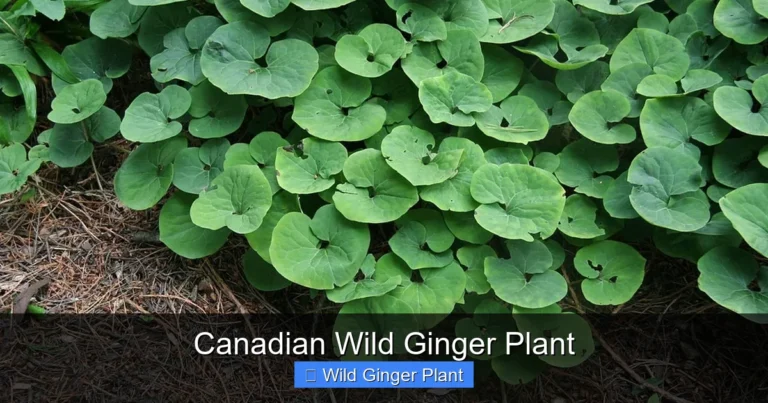
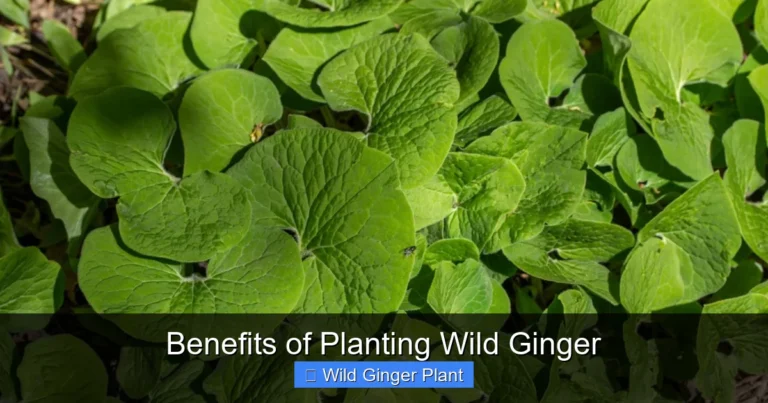
First, a quick clarification. When gardeners say wild ginger, they usually mean one of two native species. Asarum canadense grows across eastern North America. Asarum caudatum calls the Pacific Northwest home. Both share the same low, creeping habit and kidney-shaped leaves. Both produce curious jug-shaped flowers hidden at ground level. Both thrive in the same conditions. The main difference? Asarum caudatum stays evergreen in mild winters. Asarum canadense dies back completely. Choose the one native to your region for the easiest success.
What Wild Ginger Actually Needs
Wild ginger evolved on forest floors. That tells you everything about its preferences. It wants dappled to deep shade. It wants soil rich in organic matter. It wants consistent moisture but not standing water. It wants a thick layer of decomposing leaves. Give it these things and it will reward you with a weed-smothering mat that rarely needs division. Deny it these things and it will sulk, shrink, or simply disappear.
Growth Habit Matters for Companions
Here is what makes wild ginger such a good neighbor. It spreads by shallow rhizomes that creep just below the soil surface. It does not send down deep taproots. It does not climb. It does not flop over nearby plants. It simply expands outward at a polite pace of six to twelve inches per year. This means companion plants for wild ginger need to tolerate a slow-moving green tide. They also need to coexist with its dense root mat. Shallow-rooted annuals will struggle. Deep-rooted perennials will thrive.
Best Shade-Loving Companion Plants for Wild Ginger
Ferns: The Classic Woodland Partners
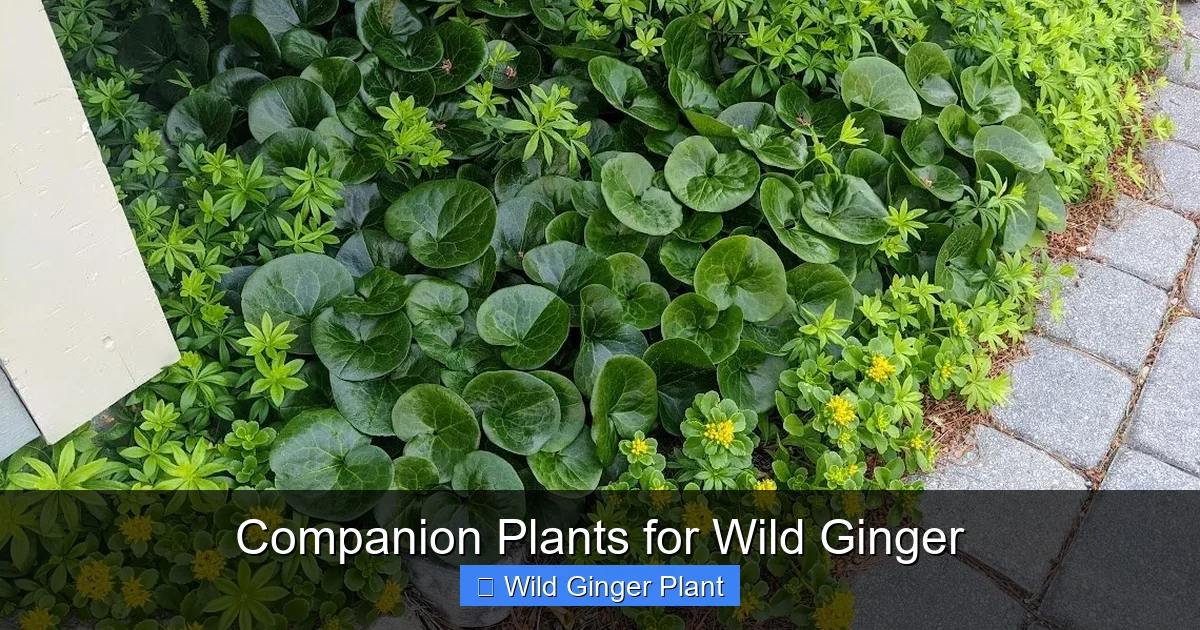
If you plant only one thing with wild ginger, make it ferns. Their feathery fronds provide the perfect textural contrast to wild ginger’s solid, glossy leaves. Christmas fern (Polystichum acrostichoides) stays evergreen and upright, creating vertical accents above the horizontal spread. Lady fern (Athyrium filix-femina) offers delicate, lacy foliage that catches light beautifully. Maidenhair fern (Adiantum pedatum) adds wiry black stems and fan-shaped leaflets that look like nothing else in the shade garden. All three share wild ginger’s love of humus-rich, moist soil.
Visual guide about Companion Plants for Wild Ginger
Image source: images.squarespace-cdn.com
Plant ferns first. Give them a year to establish their crowns. Then tuck wild ginger plugs around their bases. The ferns’ rising fronds will shade the ginger’s creeping rhizomes, keeping them cool and moist. In return, wild ginger covers the bare soil between fern crowns, suppressing weeds and holding moisture. It is a partnership that mimics nature perfectly.
Hostas for Bold Foliage Contrast
Hostas and wild ginger might seem like an odd couple. One forms a mound. The other forms a mat. But that is exactly why they work. Hostas bring bold, architectural leaves in colors from blue-green to chartreuse to gold. Wild ginger fills the gaps with its uniform dark green carpet. Choose smaller or medium hosta varieties. Hosta ‘Blue Mouse Ears’ stays tiny. Hosta ‘Guacamole’ offers fragrant flowers and glossy chartreuse leaves. Hosta ‘June’ shows off blue margins with gold centers. Avoid giant hostas like ‘Empress Wu’. Their dense root systems and heavy shade will eventually crowd out wild ginger.
Foamflower for Airy Spring Blooms
Foamflower (Tiarella cordifolia) is a native gem that deserves more attention. Its maple-shaped leaves often show beautiful burgundy veining. In spring, it sends up wands of frothy white or pink flowers that hover above wild ginger’s foliage. The two plants share nearly identical cultural needs. Both spread by rhizomes. Both love moist, shady spots. Both play nice. Foamflower’s slightly taller habit (eight to twelve inches) creates a gentle second layer above wild ginger’s four to six inches. Look for running varieties like ‘Running Tapestry’ or ‘Oakleaf’ for the most natural effect.
Wild Geranium for Long-Lasting Color
Wild geranium (Geranium maculatum) brings weeks of lavender-pink flowers in late spring. Its deeply lobed leaves turn brilliant red in fall. It grows twelve to eighteen inches tall, forming a loose mound that lets wild ginger peek through underneath. This native perennial self-sows modestly, creating drifts that look completely at home in a woodland setting. The combination of wild geranium’s flowers above and wild ginger’s glossy carpet below is one of my favorite spring scenes. Just make sure your soil stays evenly moist. Wild geranium tolerates dry shade better than wild ginger, but both perform best with consistent moisture.
Spring Ephemerals: Early Season Magic
Why Ephemerals Work So Well
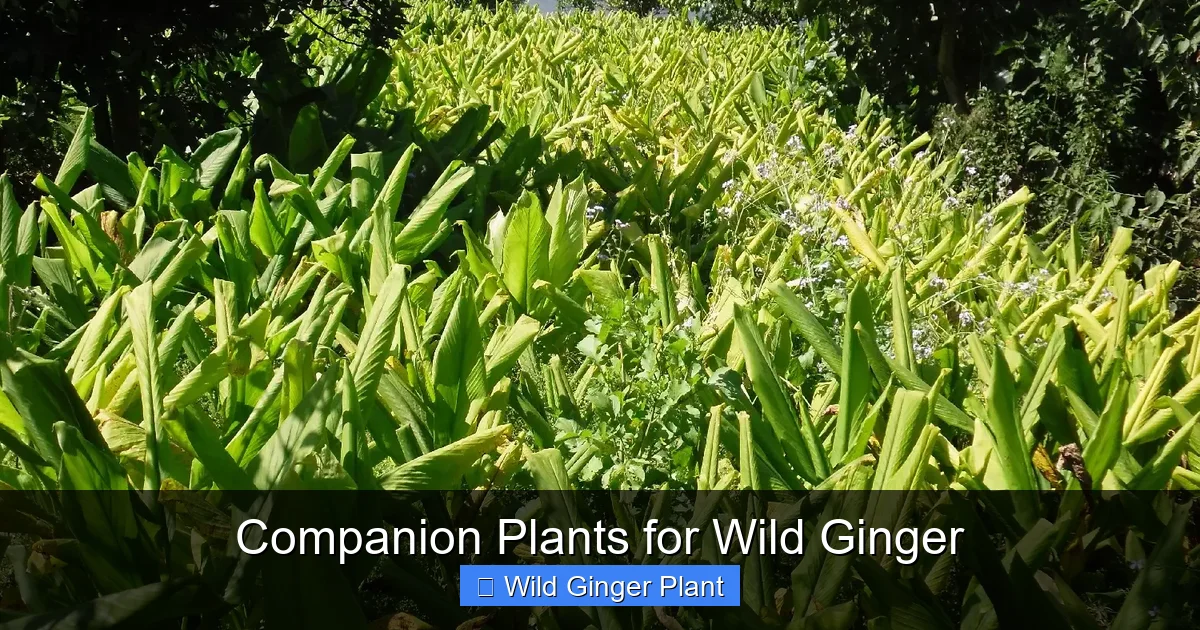
Spring ephemerals are the sprinters of the plant world. They emerge, bloom, set seed, and vanish underground all before the tree canopy fully leafs out. Wild ginger is a marathon runner. It takes its time emerging, then stays green all season. This temporal separation means they barely compete. You get weeks of early color from the ephemerals. Then wild ginger covers the fading foliage. It is a brilliant design strategy that maximizes seasonal interest in the same square footage.
Visual guide about Companion Plants for Wild Ginger
Image source: wildyards.com
Virginia Bluebells for Dreamy Blue
Virginia bluebells (Mertensia virginica) produce clusters of pink buds that open to sky-blue bells. They grow eighteen to twenty-four inches tall. Their broad, blue-green leaves die back completely by midsummer. Plant them in drifts of ten or more for the best show. Wild ginger will slowly fill the void left behind. The contrast of blue flowers against wild ginger’s emerging green leaves in April is unforgettable. Just mark their locations so you don’t accidentally dig them up during summer dormancy.
Bloodroot for Pure White Simplicity
Bloodroot (Sanguinaria canadensis) opens its pristine white flowers on sunny spring days. Each bloom lasts only a few days, but a colony creates a week-long display. The distinctive lobed leaves unfurl after flowering, forming a loose ground cover that persists into early summer. Double-flowered forms like ‘Multiplex’ bloom longer because they don’t set seed. Bloodroot spreads slowly by rhizomes, much like wild ginger. The two can intermingle harmoniously for decades. Plant bloodroot where you can see it from a window. Its early flowers lift the spirits when little else blooms.
Trout Lily for Speckled Foliage
Trout lily (Erythronium americanum) gets its name from mottled leaves that resemble brook trout markings. Its nodding yellow flowers appear in early spring. The plants go dormant by early summer. Trout lily spreads by underground corms and stolons, forming colonies over time. It prefers the same rich, moist soil as wild ginger. The combination works beautifully because trout lily’s upright leaves and wild ginger’s flat leaves occupy different vertical spaces. White trout lily (Erythronium albidum) offers cream-colored flowers and similar habits.
Trillium for Three-Petaled Elegance
Trilliums are the aristocrats of the spring woodland. Their three-petaled flowers in white, red, or yellow sit atop a whorl of three leaves. They are slow to establish but incredibly long-lived. A happy trillium can outlive the gardener who planted it. White trillium (Trillium grandiflorum) turns pink as it ages. Red trillium (Trillium erectum) smells faintly of wet dog but compensates with deep burgundy blooms. Plant them where they won’t be disturbed. Wild ginger will eventually weave around their crowns, protecting their dormant rhizomes through summer heat.
Summer and Fall Interest: Extending the Show
Solomon’s Seal for Arching Stems
Solomon’s seal (Polygonatum biflorum) sends up graceful arching stems lined with alternating leaves. Greenish-white bell flowers dangle beneath each leaf axil in late spring. Blue-black berries follow in fall. The stems turn golden yellow before collapsing for winter. This native perennial grows two to three feet tall, creating a strong vertical element above wild ginger. Its rhizomes run deep, well below wild ginger’s shallow network. The two coexist without conflict. Variegated Solomon’s seal (Polygonatum odoratum ‘Variegatum’) adds creamy leaf margins that brighten dark corners.
Jack-in-the-Pulpit for Curious Structure
Jack-in-the-pulpit (Arisaema triphyllum) is a conversation starter. Its hooded spathe (the pulpit) curves over a spadix (Jack) in shades of green, brown, or purple. Three-part leaves emerge on separate stems. Bright red berry clusters appear in late summer on female plants. This plant goes dormant early, often by midsummer in dry years. Wild ginger covers the bare spot seamlessly. Jack-in-the-pulpit prefers the same moist, humus-rich soil. It self-sows gently, appearing in new spots each year.
Woodland Phlox for Fragrant Carpets
Woodland phlox (Phlox divaricata) blooms in April and May with clouds of lavender, blue, or white flowers. Its sweet fragrance carries on spring breezes. The semi-evergreen foliage forms loose mats six to twelve inches tall. After flowering, the stems elongate and root at the nodes, creating a ground cover layer that mingles with wild ginger. Cultivars like ‘Blue Moon’ and ‘May Breeze’ offer reliable color and vigor. Woodland phlox appreciates a bit more light than wild ginger. Plant it at the woodland edge where it gets morning sun.
Black Cohosh for Late Season Drama
Black cohosh (Actaea racemosa, formerly Cimicifuga) saves the best for last. In late summer, it sends up wand-like flower spikes four to six feet tall. The fragrant white bottlebrush flowers attract pollinators when little else blooms in shade. Its compound leaves are handsome all season. This is a substantial perennial that needs space. Plant it behind or between clumps of wild ginger. Its deep roots don’t compete with wild ginger’s surface rhizomes. The height contrast creates a layered look that feels intentional and designed.
Ground Covers and Living Mulch Options
Green and Gold for Cheerful Yellow
Green and gold (Chrysogonum virginianum) is a low, spreading perennial with fuzzy leaves and bright yellow daisy flowers. It blooms heavily in spring, then sporadically through summer. It grows four to six inches tall, matching wild ginger’s height perfectly. The two can intertwine like a woven tapestry. Green and gold tolerates slightly drier conditions once established. In my garden, it fills the sunnier edges of the wild ginger patch, creating a gradual transition from deep shade to part shade.
Allegheny Spurge for Native Elegance
Allegheny spurge (Pachysandra procumbens) is the native alternative to the aggressive Japanese pachysandra. Its blue-green leaves show beautiful silver mottling. Fragrant white flower spikes appear in early spring before new leaves emerge. It spreads slowly by rhizomes, forming colonies six to ten inches tall. The foliage stays attractive all season, developing pinkish tones in fall. This plant and wild ginger are ecological equivalents. They occupy the same niche in different regions. Together, they create a sophisticated native ground cover matrix.
Barren Strawberry for Strawberry-Like Charm
Barren strawberry (Waldsteinia fragarioides) looks like a strawberry plant but doesn’t produce edible fruit. Its glossy trifoliate leaves turn bronze-red in winter. Yellow buttercup flowers bloom in spring. It spreads by stolons to form a dense mat four to six inches tall. This tough little plant handles dry shade better than wild ginger. Use it at the drier margins of your planting. The combination of barren strawberry’s textured leaves and wild ginger’s smooth leaves adds subtle variety to the ground plane.
Creeping Phlox for Spring Color Burst
Creeping phlox (Phlox stolonifera) differs from woodland phlox in habit. It forms a tighter, lower mat (three to six inches) and spreads by above-ground stolons. Fragrant flowers in pink, purple, or white cover the foliage in mid-spring. The evergreen leaves provide winter structure. Creeping phlox prefers a bit more moisture and organic matter than wild ginger. In ideal conditions, the two create a seamless mosaic. ‘Sherwood Purple’ and ‘Blue Ridge’ are standout cultivars with rich flower color.
Design Strategies for Companion Planting Success
Start with a Plan, Not a Shopping List
Before you buy a single plant, walk your site at different times of day. Note where the shade is deepest. Where does morning sun reach? Where does the soil stay wettest? Where does it dry out fastest? Sketch a rough map. Mark existing trees, roots, slopes, and structures. Then think in layers. Tall perennials at the back or center. Mid-height plants in the middle. Ground covers at the edges and between. This vertical layering mimics natural plant communities and maximizes biodiversity in a small footprint.
Plant in Drifts, Not Polka Dots
Nature doesn’t plant onesies. It plants in drifts, colonies, and sweeps. Buy at least three of each perennial, preferably five or seven. Plant them in loose triangles or curves, not straight lines. Space them at the closer end of their recommended range. They will knit together faster and suppress weeds better. For wild ginger specifically, plant plugs six to eight inches apart. They will fill in within two to three years. Mulch heavily between plugs with shredded leaves while you wait.
Consider Root Zones and Competition
This is where many companion plantings fail. Tree roots are the silent competitors. Maples, beeches, and oaks send dense feeder roots into the top twelve inches of soil. They will outcompete almost any perennial for water and nutrients. If you are planting under mature trees, you have two choices. Build raised beds with twelve inches of compost-enriched soil. Or choose the toughest competitors. Wild ginger, Allegheny spurge, and Christmas fern handle root competition better than most. Hostas and foamflower struggle more. Be realistic about your site.
Use Leaf Litter as Your Mulch
Stop raking leaves out of your woodland beds. Shred them with a mower or leaf vacuum and spread them two to three inches deep. This is the single best thing you can do for companion plants for wild ginger. Leaf litter replicates the forest floor. It feeds soil fungi. It holds moisture. It suppresses weeds. It insulates roots. It breaks down into the humus these plants crave. Commercial mulches like bark chips or dyed wood chips break down too slowly and can alter soil chemistry. Leaves are free, perfect, and exactly what these plants evolved with.
Water Thoughtfully During Establishment
Even drought-tolerant native plants need regular water their first season. Water deeply once or twice a week rather than lightly daily. This encourages deep root growth. Use a soaker hose or drip irrigation to keep foliage dry and reduce disease. After year one, most established plantings need supplemental water only during extended drought. Wild ginger will tell you when it’s thirsty. Its leaves go limp and lose their shine. That’s your cue to water. The companions will benefit too.
Manage Expectations and Timelines
A woodland garden is a slow garden. Wild ginger takes three to five years to form a solid mat. Trilliums can take seven years to flower from seed. Hostas reach mature size in four to five years. This is not instant gratification. But it is lasting gratification. A well-planned native woodland planting improves every year for decades. It becomes more resilient, more beautiful, and more ecologically valuable with time. Take photos each spring. You will be amazed at the transformation when you look back.
Maintaining Your Wild Ginger Community
Seasonal Care Calendar
Spring is the busy season. Remove any smothering mats of large leaves (oak, sycamore) that could rot tender emerging foliage. Shred and return them as mulch. Watch for slug damage on hostas and foamflower. Apply organic slug bait if needed. Enjoy the ephemeral parade. Summer requires vigilance during dry spells. Water deeply when the top two inches of soil feel dry. Pull weeds while they’re small. The dense ground cover layer should minimize this chore. Fall is for planting and mulching. Add new plants so they establish roots before winter. Spread shredded leaves. Winter is for planning. Dream. Order catalogs. Sketch next year’s additions.
Dividing and Sharing
Most woodland perennials benefit from division every four to six years. Wild ginger divides easily in early spring or fall. Dig a clump. Tease apart the rhizomes. Replant sections with roots attached. Water well. Hostas, foamflower, and Solomon’s seal divide similarly. Ferns prefer not to be disturbed but can be divided if clumps get huge. Spring ephemerals? Leave them alone. They resent disturbance. Share divisions with neighbors. Pass-along plants build community and genetic diversity.
Dealing with Deer and Rabbits
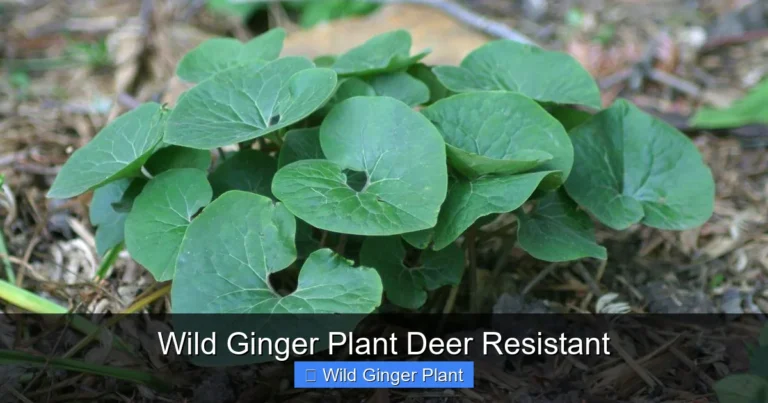
If deer visit your garden, you know the heartbreak. They love hostas. They eat Solomon’s seal. They browse trilliums. Wild ginger? They usually leave it alone. Its leaves contain aromatic compounds that deter browsing. Foamflower, bloodroot, and jack-in-the-pulpit are also deer-resistant. Use these as your backbone plants. Protect vulnerable companions with repellent sprays, fencing, or strategic placement near the house. Rotate repellent brands monthly so deer don’t habituate. Accept some browsing as the cost of gardening in deer country.
Watching for Invasive Interlopers
Keep an eye out for invasive plants that love the same conditions. Garlic mustard (Alliaria petiolata) is enemy number one in eastern woodlands. It releases chemicals that kill soil fungi native plants depend on. Pull it before it sets seed. Japanese stiltgrass (Microstegium vimineum) forms dense mats that smother everything. Hand-pull or weed-whip before seeding. Lesser celandine (Ficaria verna) emerges early and crowds out ephemerals. Dig it out carefully, getting every tuber. Vigilance protects your investment.
Regional Considerations for Companion Selection
Eastern Deciduous Forest Region
From Minnesota to Maine, south to Georgia and Louisiana, the eastern deciduous forest flora offers the richest palette for companion plants for wild ginger. Asarum canadense is the native ginger here. Pair it with all the plants mentioned so far. Add mayapple (Podophyllum peltatum) for dramatic umbrella leaves. Include blue cohosh (Caulophyllum thalictroides) for blue-green foliage and blue berries. Plant doll’s eyes (Actaea pachypoda) for its freaky white berries on red stems. The species list is long and glorious.
Pacific Northwest Region
West of the Cascades, Asarum caudatum reigns. The companion palette shifts to western natives. Sword fern (Polystichum munitum) is the dominant evergreen fern. Inside-out flower (Vancouveria hexandra) creates delicate mats with tiny white flowers. Piggyback plant (Tolmiea menziesii) produces plantlets on leaf bases. Redwood sorrel (Oxalis oregana) forms clover-like carpets. Western trillium (Trillium ovatum) fades from white to pink. The mood is evergreen, mossy, and lush year-round.
Midwest and Prairie Edge
At the prairie-forest transition, conditions get trickier. Soils may be heavier. Summers hotter. Droughts longer. Choose the toughest companions. Wild ginger still works in protected ravines and north-facing slopes. Pair it with wild geranium, which handles drought better. Add zigzag goldenrod (Solidago flexicaulis) for late yellow flowers. Include elm-leaved goldenrod (Solidago ulmifolia) for arching wands. Plant woodland sunflower (Helianthus strumosus) at the sunny edge. These prairie-adapted woodland species bridge two worlds.
Southern Appalachians and Piedmont
The southern mountains harbor incredible diversity. Heartleaf ginger (Asarum arifolium) offers evergreen, silver-marked leaves. Little brown jugs (Asarum hexalobum) has distinctive six-lobed flowers. Companion options explode. Catesby’s trillium (Trillium catesbaei) nods pink. Vasey’s trillium (Trillium vaseyi) hides huge red flowers under leaves. Yellow mandarin (Disporum lanuginosum) dangles cream bells. The list goes on. If you garden here, join your native plant society. The knowledge is deep and generous.
Creating Ecological Value Beyond Beauty
Pollinator Support Through the Seasons
A diverse woodland planting feeds pollinators from March to October. Spring ephemerals provide the first nectar and pollen for emerging bees. Wild ginger’s hidden flowers are pollinated by beetles and flies. Foamflower and wild geranium attract native bees and syrphid flies. Woodland phlox feeds butterflies and moths. Black cohosh draws late-season pollinators when options are scarce. By choosing companion plants for wild ginger that bloom in succession, you create a pollinator buffet that never closes.
Host Plants for Caterpillars
Birds need caterpillars to raise their young. Native plants host the caterpillars. Wild ginger hosts the pipevine swallowtail in some regions. Violets (add them!) host fritillary butterflies. Asters and goldenrods host dozens of moth and butterfly species. Oaks host over 500 caterpillar species. Your understory planting connects to the canopy above. Every native plant you add increases the ecological carrying capacity of your property. It’s not just pretty. It’s functional habitat.
Soil Building and Carbon Sequestration
Woodland gardens build soil. The dense root networks of wild ginger and its companions pump carbon into the ground through root exudates. Falling leaves feed fungi. Fungi feed plants. Mycorrhizal networks connect everything. This living soil sponge holds water, filters pollutants, and stores carbon. A mature native woodland planting sequesters more carbon per acre than a lawn. It requires no mowing, no fertilizer, no pesticides. It just grows, dies, decays, and grows again. The ultimate low-input, high-output system.
Erosion Control on Slopes
If your shady site slopes, companion plants for wild ginger become erosion control. The interwoven rhizomes of wild ginger, foamflower, Allegheny spurge, and ferns knit the soil surface. Their stems slow water flow. Their leaves break raindrop impact. Plant densely. Mulch heavily. Use biodegradable erosion control fabric on steep slopes during establishment. In two years, the living matrix will hold the slope better than any engineered solution. And it looks like a garden, not a construction site.
Common Mistakes and How to Avoid Them
Planting in Too Much Sun
This is the number one killer. Wild ginger burns in afternoon sun. Its leaves bleach, crisp, and die. Companion plants like hostas and foamflower also despise hot sun. If your site gets more than two hours of direct afternoon sun, look elsewhere. Morning sun is fine. Dappled all-day light is ideal. Deep shade is acceptable. But baking afternoon sun? No. Respect the plant’s evolution. It’s a forest floor species. Treat it like one.
Skipping Soil Preparation
You cannot just dig a hole in compacted clay and expect woodland plants to thrive. They need loose, organic, moisture-retentive soil. Amend the entire planting area, not just individual holes. Work in three to four inches of compost or leaf mold. If tree roots prevent digging, build up. Create a raised bed eight to twelve inches deep. Fill with a mix of native soil, compost, and aged bark fines. Your plants will thank you with vigorous growth.
Choosing Aggressive Spreaders
Some shade plants are thugs. English ivy (Hedera helix). Periwinkle (Vinca minor). Bishop’s weed (Aegopodium podagraria). Japanese pachysandra (Pachysandra terminalis). Lily of the valley (Convallaria majalis). These will swallow wild ginger and everything else. They escape into natural areas. They are ecological disasters. Just don’t. There are so many beautiful, well-behaved natives. Choose those instead.
Neglecting the Establishment Period
The first year is critical. Water. Mulch. Weed. Watch. Don’t plant and walk away. Check soil moisture weekly. Pull weeds before they seed. Replace any plants that fail. By year two, the community starts knitting together. By year three, maintenance drops dramatically. But you have to invest the care upfront. Think of it as paying into a savings account. The returns compound for decades.
Expecting Instant Results
I said it before and I’ll say it again. Woodland gardening is slow. Wild ginger plugs look lonely for a long time. Trilliums sleep, creep, then leap. Hostas take years to show mature form. If you want instant, buy annuals. If you want legacy, plant natives. The wait makes the reward sweeter. I promise.
Conclusion: Your Woodland Journey Starts Now
Finding the right companion plants for wild ginger transforms a simple ground cover into a living community. You get beauty. You get ecology. You get a garden that asks little and gives much. Start small. A few ferns. A clump of foamflower. Some wild geranium. Tuck them around your wild ginger. Mulch with leaves. Water when dry. Wait. Watch. Add more next year. And the year after.
Ten years from now, you’ll walk through your woodland in April. Virginia bluebells will nod blue above a carpet of wild ginger. Foamflower wands will froth white. Trilliums will hold their three-petaled elegance. Ferns will unfurl fresh fronds. You’ll hear bees. You’ll see a towhee scratching in the leaves. You’ll smell the rich earth. And you’ll think, “I made this.” Not alone. You partnered with plants that have been doing this for millennia. You just gave them the chance.
That’s the real magic of companion planting with wild ginger. It’s not just about what looks good together. It’s about rebuilding a piece of the world that belongs here. One shady patch at a time. So go ahead. Order those plants. Prep that soil. Plant with hope. The forest floor is waiting.
Frequently Asked Questions
Will wild ginger choke out other plants?
Wild ginger spreads slowly and forms a dense mat, but it rarely chokes out established perennials with deeper root systems. It may smother very small or shallow-rooted seedlings, so avoid planting delicate annuals directly in its path.
Can wild ginger grow under pine trees?
Wild ginger can grow under pines if the soil is rich and moist, but pine needles create acidic conditions and dense shade that may slow its spread. Amend with compost and shredded leaves to improve the site.
Is wild ginger deer resistant?
Yes, wild ginger is generally deer resistant due to aromatic compounds in its foliage. However, hungry deer may sample almost anything, so protection may be needed in high-pressure areas.
How long does wild ginger take to form a solid ground cover?
From plugs spaced six to eight inches apart, wild ginger typically takes three to five years to form a continuous mat. Closer spacing and ideal conditions speed up the process.
Can I divide wild ginger in summer?
Early spring or fall division is best when the plant is actively growing roots but not stressed by heat. Summer division is possible with diligent watering and shade cloth protection.
What is the difference between wild ginger and culinary ginger?
Wild ginger (Asarum species) is unrelated to culinary ginger (Zingiber officinale). Wild ginger roots have a ginger-like scent but contain aristolochic acid and should not be consumed in quantity.