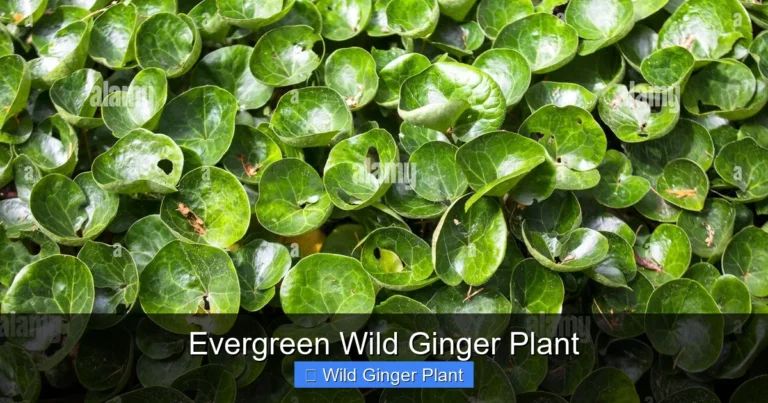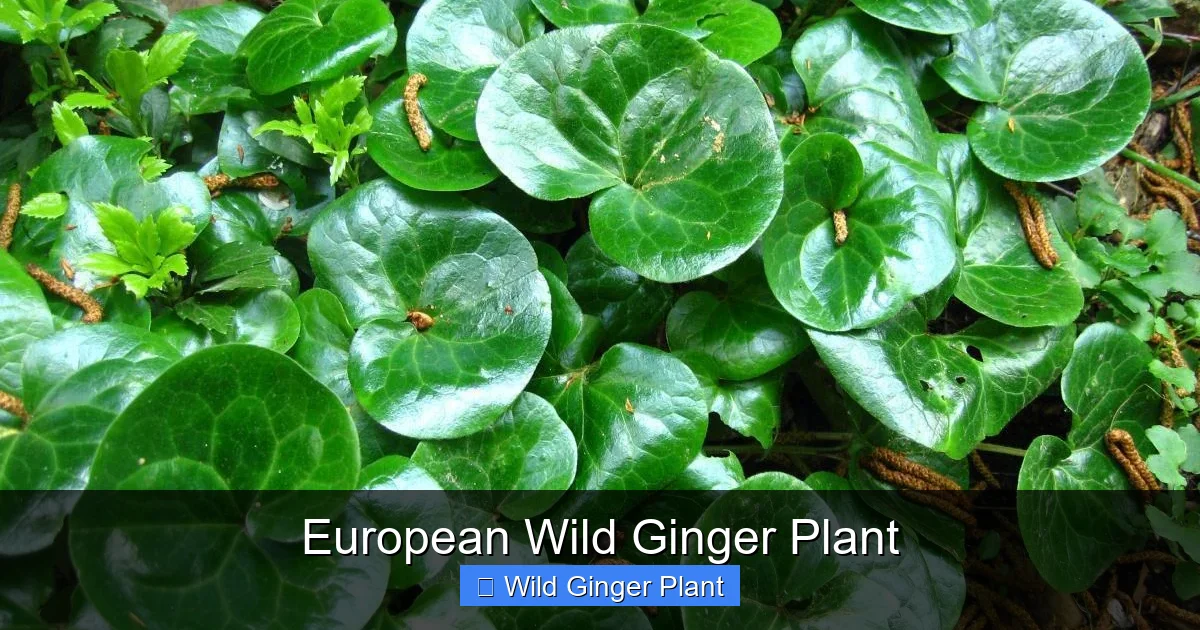
European Wild Ginger Plant
The European wild ginger plant (Asarum europaeum) is a low-growing, shade-loving perennial prized for its glossy heart-shaped leaves and unique bell-shaped flowers. Perfect for woodland gardens, it forms a dense, weed-suppressing carpet while offering historical medicinal value and year-round evergreen appeal.
If you have ever wandered through a European woodland in early spring, you might have missed one of the continent’s most charming groundcovers. The European wild ginger plant hugs the forest floor so closely that its strange little flowers often go completely unnoticed. But once you know what to look for, this plant becomes impossible to ignore. Its glossy, heart-shaped leaves catch the dappled light like polished jade, creating a living carpet that stays green through the grayest winter months.
Gardeners across temperate regions have fallen for this plant’s quiet charms. It asks for little—just shade, moisture, and patience—and gives back a weed-proof tapestry that looks good twelve months a year. Unlike its tropical namesake, this ginger relative will not spice your stir-fry. But it will solve your toughest shade-garden problems with elegance. Let us dig into everything you need to know about growing, using, and appreciating this woodland treasure.
Key Takeaways
- Botanical identity: Asarum europaeum is a European native perennial distinct from culinary ginger, belonging to the birthwort family (Aristolochiaceae).
- Shade specialist: Thrives in deep to partial shade with moist, humus-rich soil, making it ideal for woodland gardens and north-facing borders.
- Evergreen groundcover: Forms a dense, weed-suppressing mat of glossy, kidney-shaped leaves that persist through winter in most climates.
- Hidden flowers: Produces unusual purplish-brown bell-shaped flowers in spring that hide beneath the foliage at ground level.
- Slow but steady spread: Expands via rhizomes at a moderate pace, rarely becoming invasive while reliably filling in garden spaces.
- Historical medicinal use: Traditionally used as an emetic and cathartic, though modern use requires caution due to aristolochic acid content.
- Low maintenance: Once established, requires minimal care beyond consistent moisture and annual leaf mulch.
Quick Answers to Common Questions
What is the scientific name of the European wild ginger plant?
The scientific name is Asarum europaeum, and it belongs to the Aristolochiaceae (birthwort) family.
Is European wild ginger related to culinary ginger?
No, despite the similar scent when crushed, it is not related to true ginger (Zingiber officinale) which is tropical and in a different plant family.
Can European wild ginger grow in full sun?
No, it requires shade to thrive. Full sun causes leaf scorch and decline. It prefers deep to dappled shade with consistent moisture.
Is European wild ginger evergreen?
Yes, in USDA zones 5-8 it remains evergreen year-round. In colder zones (4), foliage may persist but often looks tattered by late winter.
How do I propagate European wild ginger?
Divide established clumps in early spring or fall by digging up rhizome sections with attached leaves. Replant immediately at the same depth.
📑 Table of Contents
- Getting to Know the European Wild Ginger Plant
- Why Gardeners Love This Shade Perennial
- Growing European Wild Ginger Successfully
- Designing with European Wild Ginger in the Garden
- Historical Uses and Modern Cautions
- Troubleshooting Common Problems
- Comparing European Wild Ginger to Its Relatives
- Seasonal Care Calendar
- Frequently Asked Practical Questions
- Conclusion: A Quiet Garden Hero
Getting to Know the European Wild Ginger Plant
Botanical Background and Classification
The European wild ginger plant carries the scientific name Asarum europaeum. It belongs to the Aristolochiaceae family, commonly called the birthwort family. This family includes several genera of mostly tropical plants, but Asarum has successfully colonized temperate zones across the Northern Hemisphere. The genus name Asarum likely derives from Greek, though its exact etymology remains debated among botanists.
Despite the common name, this plant shares no close relation to true ginger (Zingiber officinale). True ginger belongs to the Zingiberaceae family and thrives in tropical heat. The “ginger” in the name comes from the rhizome’s scent. When crushed, the roots release a warm, spicy aroma remarkably similar to culinary ginger. Early European settlers and herbalists noticed this similarity and the name stuck.
Native Range and Natural Habitat
As the name suggests, the European wild ginger plant originated in Europe. Its natural range extends from southern Scandinavia south to Italy and the Balkans, and eastward into western Russia and the Caucasus. In the wild, it inhabits deciduous and mixed forests, particularly those dominated by beech, oak, and hornbeam. It prefers calcareous (lime-rich) soils but adapts to slightly acidic conditions.
You will typically find it growing in deep shade on the forest floor, often in company with other shade specialists like wood anemone, sweet woodruff, and various ferns. The plant forms loose colonies that expand slowly over decades. In its native range, it serves as an indicator species for ancient woodland—its presence suggests a site has remained continuously wooded for a very long time.
Physical Description and Growth Habit
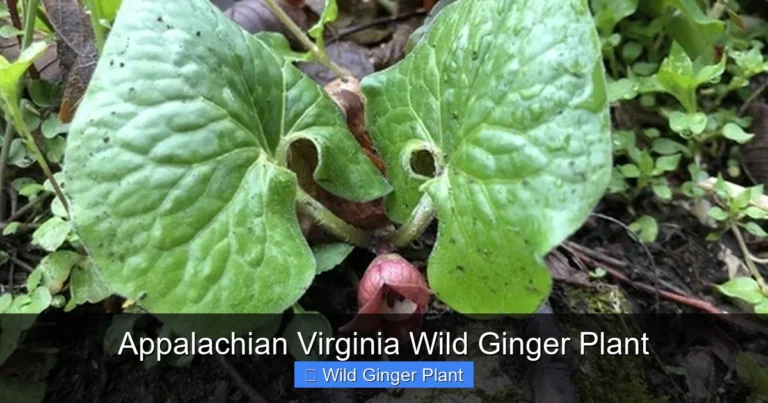
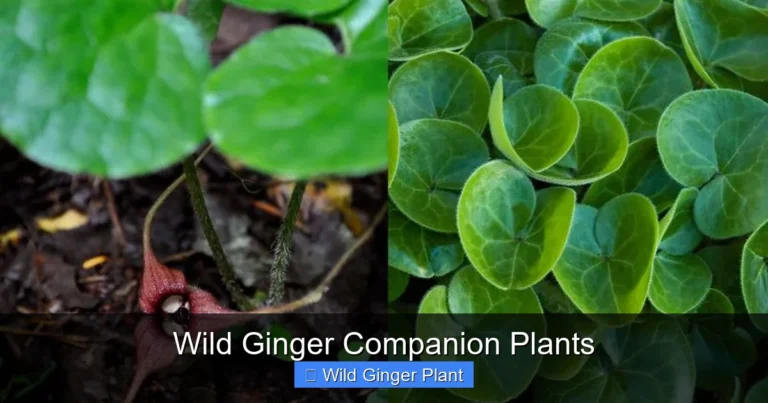
The European wild ginger plant grows as a low, creeping perennial reaching just 4 to 6 inches tall. Each plant consists of a short, thick rhizome that creeps horizontally just beneath the soil surface. From nodes along this rhizome, leaf stalks emerge directly, each bearing a single leaf. The leaves are the plant’s main ornamental feature—kidney-shaped to heart-shaped, 2 to 4 inches wide, with a leathery texture and a high-gloss finish that catches light beautifully.
Leaf color ranges from deep emerald to slightly blue-green, depending on light exposure and soil conditions. In deep shade, leaves grow larger and darker. In brighter spots, they stay smaller and may show lighter veining. The foliage remains evergreen in USDA zones 5 and warmer, though it may look a bit tattered by late winter. New leaves emerge in early spring, often with a bronzy tint before maturing to green.
The flowers are where things get weird—in a wonderful way. Blooming in April to May (earlier in mild climates), each flower sits directly on the rhizome at ground level, completely hidden by the leaf canopy. You have to get down on your knees and part the foliage to see them. Each blossom is a three-lobed, bell-shaped affair about three-quarters of an inch across, colored a curious purplish-brown or maroon. The interior often shows intricate patterning. They have no petals—what you see are fused sepals. The flowers emit a faint, musty odor that attracts their primary pollinators: small flies and beetles that normally feed on fungi and decaying matter.
Why Gardeners Love This Shade Perennial
Solving the Deep Shade Dilemma
Every gardener knows the frustration of deep shade. That north-facing foundation bed. The area under mature evergreens. The narrow alley between buildings where direct sun never reaches. Most plants either stretch weakly toward nonexistent light or simply give up. The European wild ginger plant is different. It evolved for exactly these conditions. In fact, too much sun damages it—leaves scorch, yellow, and crisp at the edges.
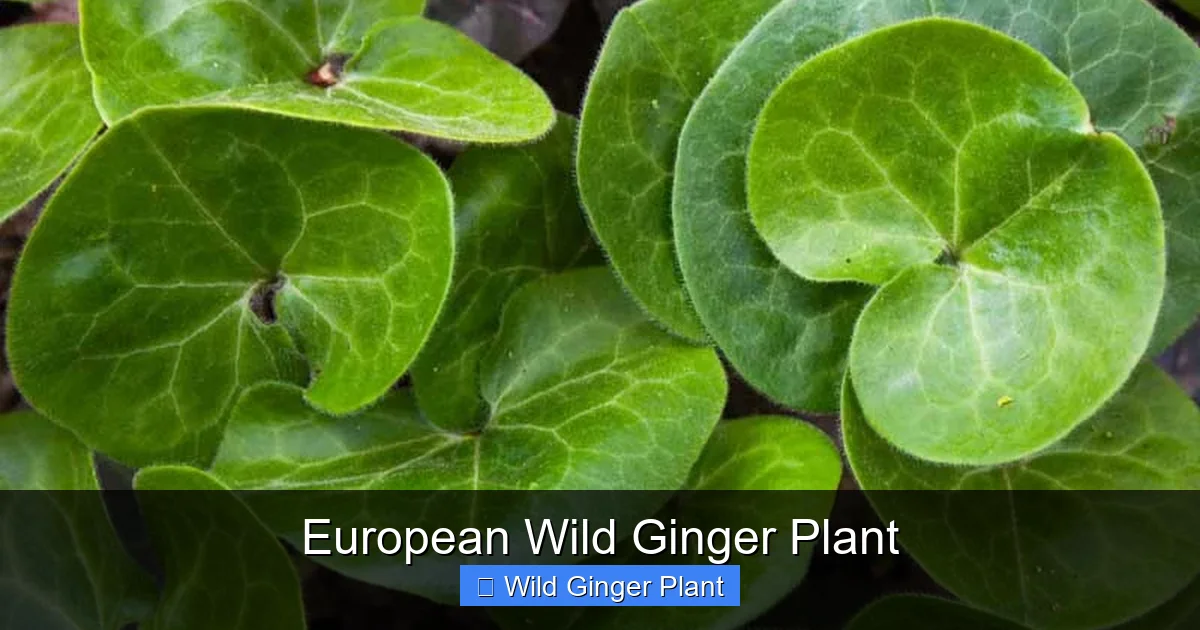
Visual guide about European Wild Ginger Plant
Image source: gardenia.net
This makes it invaluable for those impossible spots where hostas burn, ferns fry, and grass refuses to grow. Plant it once, give it a couple of years to establish, and you have a permanent solution. The dense, overlapping leaves shade out weed seeds completely. I have seen colonies thirty years old with not a single weed penetrating the mat. That alone makes it worth its weight in gold for low-maintenance gardeners.
Four-Season Visual Interest
Many shade perennials disappear underground for half the year. Not this one. The European wild ginger plant keeps its leaves through winter across most of its hardiness range (USDA zones 4-8). In milder winters, the foliage stays pristine and glossy. In harsher zones, leaves may lie flat and develop reddish-purple tones from cold stress, but they persist. Come spring, fresh growth pushes up through the old, creating a seamless transition.
Spring brings the secret flowers—rewarding the curious gardener who knows to look. Summer shows off the flawless foliage carpet. Autumn often intensifies the leaf color. Winter reveals the plant’s structure as surrounding herbaceous plants vanish. Few groundcovers offer this level of year-round presence.
Wildlife Value and Ecological Benefits
While not a major nectar source for showy pollinators, the European wild ginger plant supports a specialized community. Its flowers attract fungus gnats, small flies, and beetles—often overlooked but ecologically important insects. The dense foliage provides shelter for ground beetles, spiders, and amphibians. Slugs and snails occasionally nibble the leaves but rarely cause serious damage.
Perhaps its greatest ecological contribution is soil protection. The rhizome network binds soil on slopes, and the leaf canopy prevents erosion from heavy rain. The persistent leaf litter builds humus over time, improving soil structure and moisture retention. In woodland restoration projects, this plant often serves as a foundational species for rebuilding the herb layer.
Growing European Wild Ginger Successfully
Site Selection: Matching the Plant to the Place
Success with the European wild ginger plant starts with honest site assessment. This plant wants three things: shade, moisture, and organic soil. Full shade to dappled shade works best. Morning sun is tolerable in cooler climates if soil stays consistently moist. Afternoon sun, even filtered, often causes leaf scorch. If you are unsure, err on the side of more shade.
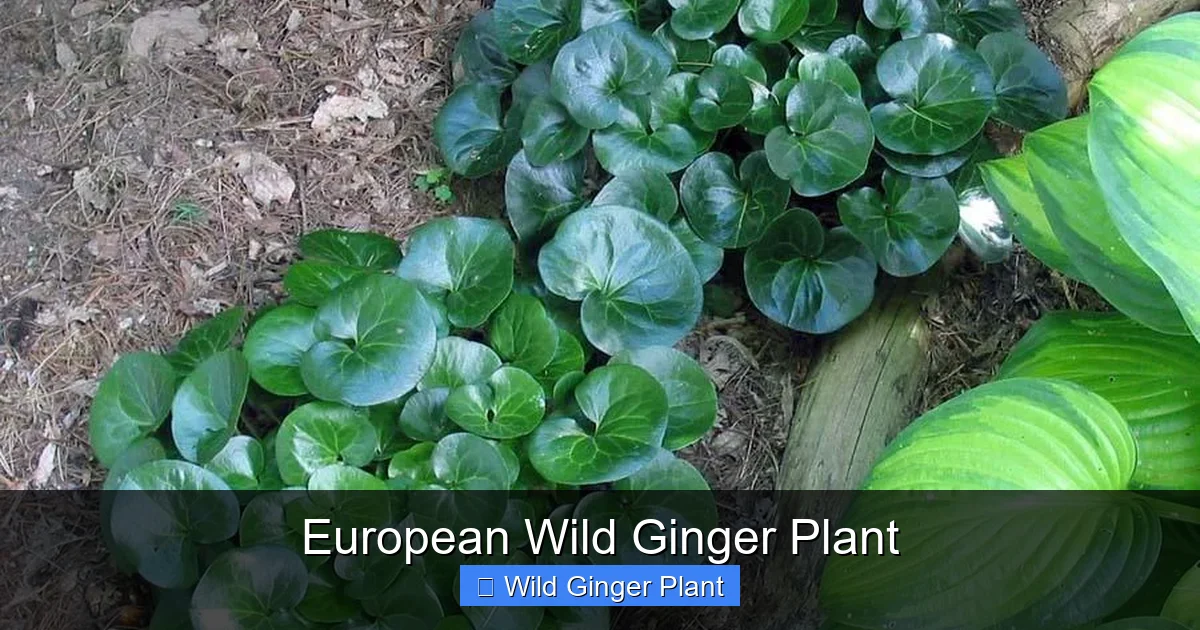
Visual guide about European Wild Ginger Plant
Image source: garden.org
Soil should be rich in organic matter—think forest floor. Heavy clay works if amended generously with compost or leaf mold. Sandy soil needs even more organic amendment to hold moisture. The ideal pH ranges from slightly acidic to neutral (6.0-7.0), but the plant tolerates mildly alkaline conditions, especially if organic matter is high. Drainage matters: the site should never be waterlogged, but it should never dry out completely either.
Planting Techniques for Best Establishment
Spring and early fall are the best planting times. Spring planting gives the longest establishment period before winter. Fall planting works well in zones 6 and warmer, where roots can grow for weeks before the ground freezes. Space plants 12 to 18 inches apart for a solid carpet within three to four years. Closer spacing (8-10 inches) speeds coverage but costs more upfront.
Prepare the planting area by removing all weeds and grass—this is critical because the European wild ginger plant cannot compete with aggressive weeds during establishment. Work 2-3 inches of compost or well-rotted leaf mold into the top 6 inches of soil. Plant at the same depth the plant grew in its pot. The rhizome should sit just below the soil surface, not buried deeply. Water thoroughly after planting and apply 2 inches of shredded leaf mulch.
Watering, Mulching, and Ongoing Care
Consistent moisture is the single most important factor for the European wild ginger plant. During the first growing season, water deeply whenever the top inch of soil feels dry. Do not rely on rainfall alone unless you live in a consistently moist climate. Established plants tolerate brief dry spells but look their best with steady moisture.
Mulch annually with shredded leaves, pine needles, or fine bark. This mimics the natural forest duff layer the plant evolved with. Avoid heavy wood chips—they can smother the creeping rhizomes. Leaf mulch breaks down quickly, feeding the soil and maintaining the slightly acidic, humus-rich conditions the plant loves.
Fertilizer is rarely needed if you mulch with organic material. If growth seems weak, a light application of balanced organic fertilizer in early spring helps. Never use high-nitrogen synthetic fertilizers—they promote soft, disease-prone growth and can burn the shallow rhizomes.
Propagation: Expanding Your Colony
The European wild ginger plant spreads slowly on its own, about 6-12 inches per year under good conditions. To speed things up, divide established clumps in early spring just as new growth emerges, or in early fall. Dig up a section of rhizome with several leaf clusters attached. Replant divisions immediately at the same depth, water well, and mulch. They establish quickly because they already have a mature root system.
Seed propagation is possible but slow. Collect seeds in early summer when the capsules split. Sow fresh immediately in a shaded cold frame or protected nursery bed. Germination is erratic, often taking two seasons. Seedlings grow very slowly for their first two years. Most gardeners find division far more practical.
Designing with European Wild Ginger in the Garden
Woodland and Shade Garden Combinations
The European wild ginger plant shines in naturalistic woodland plantings. Its glossy, rounded leaves contrast beautifully with fine-textured ferns like Japanese painted fern, maidenhair fern, or Christmas fern. Pair it with the upright, architectural foliage of hostas—especially blue or gold varieties—for a study in texture and form. Spring ephemerals like Virginia bluebells, trilliums, and bloodroot bloom above the ginger carpet, then disappear as the ginger hits its stride.
For a European woodland vignette, combine it with sweet woodruff (Galium odoratum), wood anemone (Anemone nemorosa), and European ginger’s cousin, Canadian wild ginger (Asarum canadense). Add some early bulbs—snowdrops, winter aconite, species crocus—for late winter color before the ginger’s new growth emerges.
Formal and Structured Applications
Do not relegate this plant only to wild gardens. The European wild ginger plant brings sophisticated evergreen structure to formal shade gardens. Use it as a living edging along shaded pathways—its uniform height and dense habit create a crisp, clean line that needs no trimming. Plant it in geometric blocks beneath pleached trees or within boxwood parterres for winter interest when deciduous plants are bare.
In Japanese-inspired gardens, it serves as a perfect groundcover beneath maples and around stone lanterns. Its glossy leaves reflect light in shaded corners, brightening dark spaces. The plant’s tolerance for root competition makes it ideal for planting under mature trees where few other ornamentals survive.
Container Culture for Small Spaces
No garden? No problem. The European wild ginger plant adapts well to containers, provided you meet its needs. Choose a wide, shallow pot—root depth matters less than surface area for this creeping plant. Use a high-quality potting mix amended with extra compost and fine bark for moisture retention. Place the container in full shade on a north-facing balcony or under a dense canopy.
Water monitoring becomes critical in containers. The limited soil volume dries faster than garden soil. Check daily in warm weather. Winter protection matters too: in zones 5 and colder, move pots to an unheated garage or bury them in the ground for winter. The evergreen foliage makes a beautiful winter container display when paired with evergreen ferns and early bulbs.
Historical Uses and Modern Cautions
Traditional Herbal Applications
For centuries, the European wild ginger plant held a respected place in European herbal medicine. The rhizome, harvested in autumn, was dried and used as an emetic (to induce vomiting), a cathartic (strong laxative), and a stimulant for delayed menstruation. It was also employed for respiratory ailments, nervous disorders, and as a general “blood purifier.” The fresh leaves were sometimes applied as poultices for wounds and skin eruptions.
The plant’s reputation as a substitute for true ginger led to its use as a flavoring agent in medieval and Renaissance cooking, particularly in sausages and strong sauces where the pungent, peppery notes complemented rich meats. However, culinary use was always limited due to the plant’s potency.
Understanding the Safety Concerns
Modern phytochemical analysis has revealed why caution is essential. The European wild ginger plant contains aristolochic acids, compounds found throughout the Aristolochiaceae family. These substances are nephrotoxic (kidney-damaging) and carcinogenic with prolonged or repeated exposure. Several countries have banned or restricted herbal products containing aristolochic acids.
This does not make the plant “toxic” in the garden sense—you can handle it, grow it, and even brush against it safely. The risk comes from internal consumption, especially concentrated preparations or long-term use. Casual contact poses no threat. But medicinal use should only be undertaken under qualified professional guidance, if at all. Most modern herbalists avoid this species entirely, preferring safer alternatives.
Contemporary Garden Value vs. Historical Use
Today, the European wild ginger plant earns its keep almost entirely as an ornamental. Its historical medicinal role is a fascinating chapter in ethnobotany, not a recommendation for home use. Enjoy it for its beauty, its problem-solving ability in shade, and its ecological contributions. Leave the herbal experimentation to researchers with proper safety protocols.
Troubleshooting Common Problems
Pest Issues: Rare but Possible
The European wild ginger plant is remarkably pest-resistant. Slugs and snails are the most common nuisance, especially in wet springs. They chew irregular holes in the leaves, mostly at night. Beer traps, copper barriers, diatomaceous earth, or hand-picking at dusk all help. Encourage ground beetles and toads—they are natural slug predators.
Occasionally, aphids may colonize the flower stems or new growth in spring. A strong jet of water usually dislodges them. Spider mites can appear in hot, dry conditions—another reason to maintain consistent moisture. Deer and rabbits rarely browse this plant, likely due to the aromatic compounds in the foliage.
Disease Problems and Prevention
Fungal leaf spots occasionally appear, especially in crowded plantings with poor air circulation. They show as brown or black spots with yellow halos. Remove affected leaves promptly. Improve air flow by thinning adjacent plants. Avoid overhead watering—water at soil level instead.
Root rot (caused by Phytophthora or Pythium species) is the most serious threat, but it only occurs in poorly drained, waterlogged soil. The European wild ginger plant needs moisture, not saturation. If your site stays soggy, improve drainage before planting, or choose a different plant. Once root rot takes hold, the plant usually cannot be saved.
Cultural Problems: When the Plant Looks Unhappy
Yellowing leaves usually indicate too much sun, nutrient deficiency (especially nitrogen or iron), or waterlogged soil. Scorched, crispy leaf edges mean too much sun or too little water. Small, pale leaves suggest nutrient-poor soil or excessive competition from tree roots. Slow or no spread often means the plant is too dry, too sunny, or too young—give it time.
Winter damage in cold zones shows as flattened, reddish-brown foliage. This is normal and not fatal. Wait until new growth emerges in spring, then gently remove the old leaves. Do not pull hard—you might uproot the shallow rhizomes.
Comparing European Wild Ginger to Its Relatives
Canadian Wild Ginger (Asarum canadense)
North America’s native counterpart shares the same growth habit and niche but differs in several ways. Canadian wild ginger has larger, softer, matte-finish leaves (not glossy) that are deciduous—disappearing completely in winter. Its flowers are similar but slightly larger and often more reddish. It spreads faster, making a better quick groundcover, but lacks the four-season presence. Hardiness extends to zone 3, making it the choice for coldest gardens.
Other Asarum Species Worth Knowing
The genus Asarum contains over 60 species, mostly Asian. Several make exceptional garden plants. Asarum splendens (Chinese wild ginger) offers stunning silver-marked leaves and faster growth. Asarum maximum produces huge, showy flowers—among the largest in the genus. Asarum caudatum (Western wild ginger) is a North American native with elongated flower “tails.” Many Asian species are evergreen with beautifully patterned foliage, though some are less cold-hardy.
Why Choose the European Species?
The European wild ginger plant remains the gold standard for several reasons: the most reliably evergreen foliage in temperate climates, the highest gloss (making it the most light-reflective in shade), the neatest habit (rarely looking messy), and excellent cold hardiness (zone 4). It is also the most widely available in nurseries. For a first wild ginger, this is the one to start with.
Seasonal Care Calendar
Spring: Awakening and Division Time
Early spring is the busiest season for the European wild ginger plant. As soon as the ground thaws, remove any winter-matted leaves gently. Apply a fresh inch of leaf mulch. This is the prime window for division—do it before leaves fully expand. Watch for the first flowers hiding at soil level. If spring is dry, begin regular watering now. Apply organic fertilizer if needed.
Summer: Maintenance Mode
Summer care centers on moisture. Check soil weekly during dry spells. Water deeply rather than frequently. Pull any weeds that manage to penetrate the mat—there should be few. Monitor for slug damage during wet periods. Enjoy the flawless foliage carpet. No deadheading needed—the flowers are long gone.
Autumn: Preparation for Winter
Fall is the second planting and division window. New divisions have time to root before freezing. Apply a generous mulch layer (2-3 inches) after the first hard frost—this protects shallow rhizomes from freeze-thaw cycles. In areas with heavy leaf fall from trees, do not let thick mats of large leaves (oak, maple) smother the ginger. Shred them first or remove excess.
Winter: Quiet Appreciation
In zones 5-8, the European wild ginger plant stays green all winter. Take time to appreciate it when the garden is otherwise brown. Brush away heavy snow if it packs down on the foliage. In zone 4 and colder, the plant may be snow-covered for months—this is fine, snow is the best insulation. Plan next year’s shade garden additions while you wait for spring.
Frequently Asked Practical Questions
How fast does European wild ginger spread?
Expect 6-12 inches of radial spread per year under optimal conditions. A single plant becomes a 2-foot-wide clump in 3-4 years. Closer planting speeds visual coverage.
Can I grow it under pine trees?
Yes, if the shade is deep and you amend the soil well. Pine needles make excellent mulch. However, dense pine root competition can slow establishment. Extra water and compost help.
Is it deer resistant?
Highly. The aromatic foliage deters browsing. In severe winters with deep snow, desperate deer may nibble, but damage is usually minimal and temporary.
Can I walk on it?
Occasional light foot traffic is tolerated, but regular paths will wear it down. Use stepping stones for frequent access routes.
Does it need to be cut back?
Never. The evergreen leaves persist for years. Only remove individual damaged or dead leaves. Cutting back destroys the plant’s architecture and winter interest.
Will it choke out other plants?
It suppresses weeds effectively but rarely overwhelms established perennials. It may creep into neighboring plants’ crowns—simply pull wandering rhizomes back annually.
Conclusion: A Quiet Garden Hero
The European wild ginger plant will never win “plant of the year” awards at garden shows. It does not flaunt giant flowers or dramatic foliage colors. It does not demand attention. But for the gardener who struggles with deep shade, who values four-season structure, who wants a groundcover that actually covers ground and stays put—this plant is a quiet hero.
I have watched a single division become a thirty-foot carpet over fifteen years, asking nothing but fallen leaves and rain. I have knelt in April woods to photograph its alien flowers, feeling like I discovered a secret. I have seen it hold a steep, shady bank against erosion while everything else washed away. This plant earns its space through competence, not charisma.
If you have a shady spot that defeats other plants, give the European wild ginger plant a try. Plant it, mulch it, water it, and wait. In a few years, you will have a jade carpet that makes the shade feel like an asset instead of a problem. And when spring comes, you will find yourself on your knees, parting the leaves to find those strange little flowers—sharing a secret with a plant that has kept it for millions of years.
Frequently Asked Questions
What growing conditions does European wild ginger prefer?
European wild ginger thrives in deep to partial shade with consistently moist, humus-rich, well-drained soil. It prefers slightly acidic to neutral pH and benefits from annual leaf mulch to mimic its natural forest floor habitat.
Is European wild ginger invasive in the garden?
No, it spreads slowly via rhizomes at about 6-12 inches per year and rarely becomes aggressive. It forms a dense, well-behaved groundcover that suppresses weeds without overwhelming neighboring plants.
Can European wild ginger be used for cooking or medicine?
While historically used as a ginger substitute and in herbal medicine, modern use is not recommended due to aristolochic acids which are nephrotoxic and carcinogenic. Enjoy it as an ornamental only.
When does European wild ginger bloom?
It blooms in early to mid-spring (April-May depending on climate). The unusual purplish-brown, bell-shaped flowers hide at ground level beneath the foliage and require getting down low to appreciate.
How do I care for European wild ginger in winter?
In zones 5-8, it needs minimal winter care—just a protective layer of shredded leaf mulch after the ground freezes. In zone 4, ensure good snow cover or add extra mulch. Do not cut back the evergreen foliage.
What plants pair well with European wild ginger?
Excellent companions include ferns (Japanese painted, maidenhair, Christmas), hostas, spring ephemerals (trilliums, Virginia bluebells), sweet woodruff, and other shade perennials. It also works well under trees and shrubs in woodland gardens.