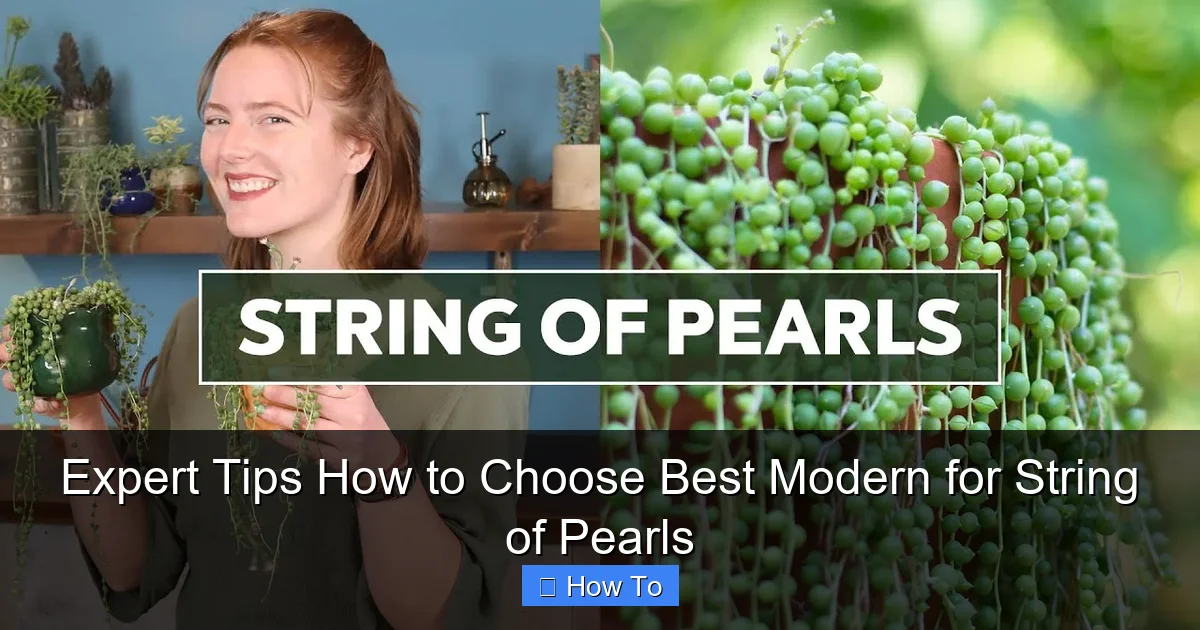
Expert Tips How to Choose Best Modern for String of Pearls
Choosing the right pot is critical for string of pearls health. This guide covers drainage needs, ideal pot sizes, best materials like terracotta, and modern planter styles that prevent root rot while showcasing your trailing succulent beautifully.
Quick Answers to Common Questions
Can I use a pot without drainage holes if I add rocks at the bottom?
No. Rocks create a perched water table that keeps soil wetter longer. Always use pots with holes or use the decorative pot as a cachepot with a functional inner pot.
How do I know when my string of pearls needs repotting?
Check for roots exiting drainage holes, soil drying in less than a day, the plant toppling over, or stalled growth despite good care. Spring is the best time to repot.
Is terracotta always better than ceramic for string of pearls?
Terracotta is generally best due to breathability, but glazed ceramic works in humid climates or for forgetful waterers. Just ensure excellent drainage and a very gritty soil mix.
Can I plant string of pearls in a hanging glass terrarium?
Only as a cachepot. Glass has no drainage or breathability. Keep the plant in a plastic nursery pot with holes, set inside the glass, and remove for watering.
What’s the ideal pot depth for string of pearls?
Choose pots no deeper than 3-5 inches. This plant has shallow roots. Deep pots hold excess moisture where roots can’t reach it, leading to rot.
Introduction: Why Your Pot Choice Makes or Breaks String of Pearls
String of pearls (Senecio rowleyanus) captivates plant lovers with its distinctive bead-like leaves trailing elegantly over container edges. But here’s the truth many beginners miss: the pot you choose matters just as much as light, water, and soil. This succulent’s shallow roots and extreme sensitivity to excess moisture mean the wrong container leads to root rot fast.
In this comprehensive guide, you’ll learn exactly how to choose the best modern pot for string of pearls. We’ll cover drainage essentials, ideal dimensions, material comparisons, modern planter styles, repotting timing, and troubleshooting common pot-related problems. Whether you’re a first-time owner or looking to upgrade your current setup, these expert tips will help your string of pearls thrive for years.
Step 1: Understand String of Pearls Root Structure and Water Needs
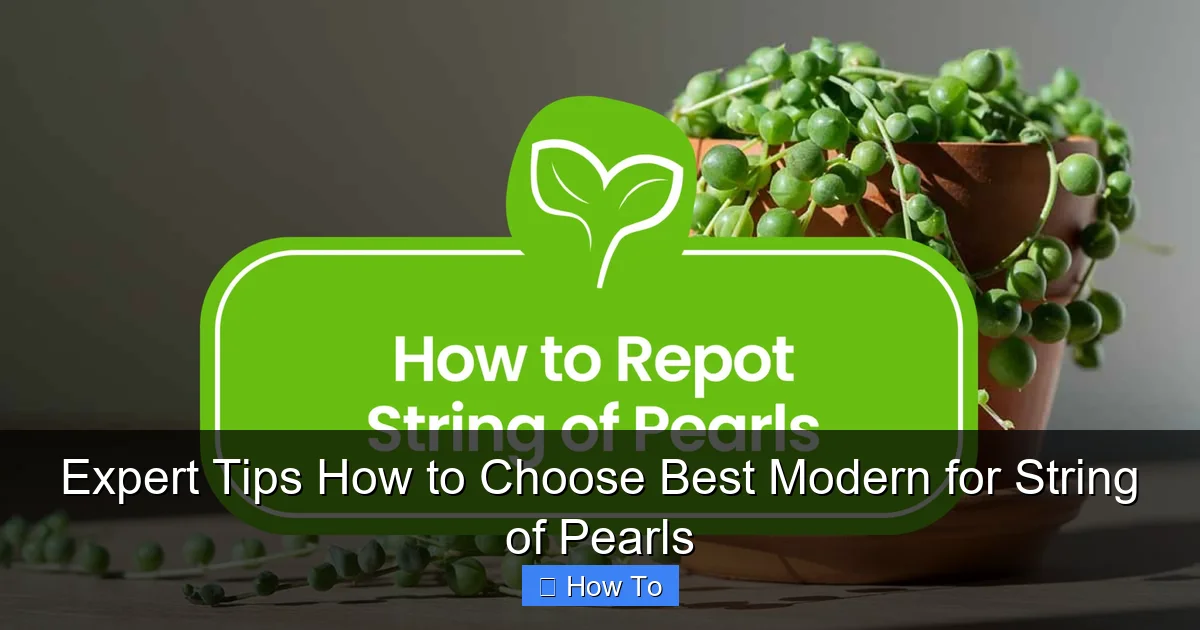
Before shopping for pots, you need to understand what makes this plant unique. String of pearls evolved in arid regions of Southwest Africa. Its specialized leaves store water, while its roots stay shallow and spread horizontally just beneath the soil surface.
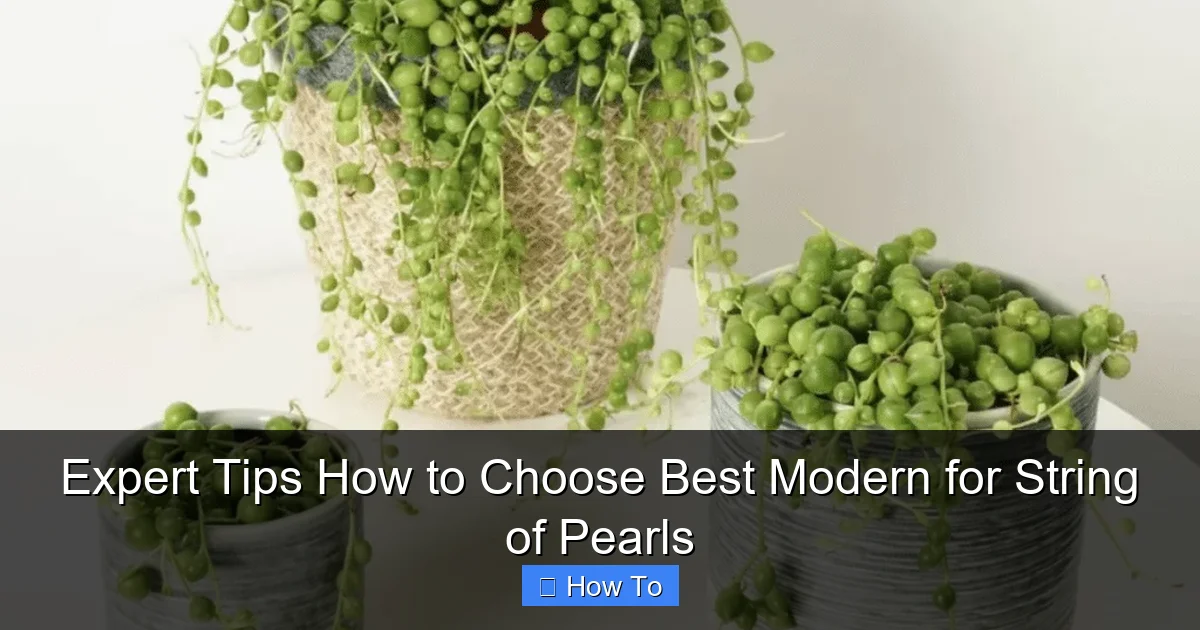
Visual guide about Expert Tips How to Choose Best Modern for String of Pearls
Image source: houseplantsnook.com
Shallow Root System Explained
Unlike deep-rooted plants that search for groundwater, string of pearls roots form a dense mat in the top 2-3 inches of soil. This adaptation lets them capture brief rainfall quickly. A deep pot wastes space and holds moisture where roots can’t reach it, creating a soggy bottom layer that breeds fungus.
Drought Tolerance vs. Rot Sensitivity
The plant’s water-storing pearls mean it survives weeks without water. But the flip side is zero tolerance for sitting in wet soil. Roots suffocate and rot within days of constant moisture. Your pot must mimic the quick-draining, airy conditions of its native habitat.
Key Takeaway for Pot Selection
Choose wide over deep. Prioritize airflow and drainage over aesthetics alone. The best pot mimics a shallow desert depression that dries rapidly after rain.
Step 2: Master the Drainage Non-Negotiables
If you remember only one thing from this guide, make it this: drainage holes are mandatory. No exceptions. No “I’ll be careful with watering.” No layer of rocks at the bottom (that actually makes drainage worse by creating a perched water table).
Visual guide about Expert Tips How to Choose Best Modern for String of Pearls
Image source: plantilio.com
Why Drainage Holes Save Lives
Water must exit the pot freely. Without holes, water pools at the bottom. Roots drown. Oxygen disappears. Anaerobic bacteria multiply. Rot spreads up the stems. The plant collapses. This happens fast with string of pearls.
How Many Holes Do You Need?
One hole works for small pots under 4 inches. For 6-inch and larger containers, look for 3-5 holes spaced across the bottom. More holes mean faster drainage and better airflow through the soil profile.
What If You Love a Pot Without Holes?
Drill them yourself. A diamond-tipped drill bit makes clean holes in ceramic, terracotta, concrete, and glass. Wear safety glasses. Go slow. Use water as lubricant. Or use the decorative pot as a cachepot: keep the plant in a plastic nursery pot with holes, then slip that into the pretty container. Remove for watering. Drain fully. Replace.
Saucers: Friend or Foe?
Saucers protect furniture but trap water. Empty them within 30 minutes of watering. Never let the pot sit in standing water. Consider pot feet or risers to create an air gap between pot bottom and saucer.
Step 3: Choose the Right Pot Material
Material affects moisture retention, temperature, weight, and aesthetics. Here’s how the main options stack up for string of pearls.
Terracotta (Unglazed Clay) – Top Pick
Terracotta’s porous walls breathe. Moisture evaporates through the sides, not just the bottom. This creates the rapid wet-dry cycle string of pearls loves. Roots get oxygen. Soil stays aerated. Salt buildup from fertilizer leaches out naturally. Downsides: heavy, breakable, dries fast in hot weather (may need more frequent watering), develops mineral patina over time.
Glazed Ceramic – Good With Caveats
Glazed pots hold moisture longer than terracotta. That’s fine if you’re attentive and your soil mix drains extremely well. Choose lighter colors to reduce heat absorption. Ensure thick walls for insulation. Avoid thin, cheap ceramics that crack in temperature swings.
Concrete and Stone – Modern Favorite
Concrete planters offer contemporary style with decent breathability (more than glazed ceramic, less than terracotta). They’re heavy, stable for hanging, and insulate roots from temperature extremes. Look for sealed interiors to prevent lime leaching into soil. Modern geometric designs in concrete look stunning with trailing pearls.
Plastic and Resin – Practical but Less Breathable
Lightweight, unbreakable, inexpensive. Retains moisture longest. Only use with extremely gritty soil mix and careful watering. Great as nursery pots inside decorative cachepots. Some modern resin planters mimic stone or concrete convincingly.
Metal – Use Caution
Metal conducts heat. Roots cook in summer sun. Freeze in winter. Only use in shaded spots or as cachepots. Ensure drainage holes. Powder-coated finishes last longer than bare metal.
Glass and Non-Porous Decorative – Cachepot Only
Zero breathability. Zero drainage (usually). Beautiful for display. Use strictly as outer cachepot with a functional inner pot. Never plant directly in glass unless you’ve drilled holes and added a thick drainage layer (still risky).
Step 4: Determine Ideal Pot Dimensions
Size matters more than most realize. Too large = wet soil = rot. Too small = root-bound = stunted growth. Here’s the sweet spot.
Width vs. Depth Ratio
Target pots wider than they are deep. Ideal ratio: width at least 1.5x depth. For example, a 6-inch wide pot should be no deeper than 4 inches. Shallow bonsai pots, azalea pots, and succulent-specific containers fit this profile perfectly.
Current Root Ball Sizing
Measure the root mass (not the foliage spread). Choose a pot 1-2 inches wider in diameter than the root ball. Depth should accommodate roots with 1 inch of soil below and 1 inch above for top-dressing.
Growth Stage Guidelines
- Starter plants (2-3 inch nursery pot): Move to 4-inch wide, 3-inch deep container.
- Established plants (4-6 inch root ball): 6-8 inch wide, 4-5 inch deep.
- Mature, full specimens: 10-12 inch wide shallow bowls or hanging baskets.
Hanging Basket Dimensions
For hanging display, 6-8 inch diameter baskets work well. Coconut coir liners dry fast but need more frequent watering. Solid-bottom baskets with holes need the same drainage attention as regular pots. Ensure the hanger supports wet soil weight (surprisingly heavy).
Step 5: Explore Modern Planter Styles That Work
“Modern” doesn’t mean sacrificing function. Today’s best contemporary planters combine clean aesthetics with succulent-friendly features. Here are trending styles that work for string of pearls.
Geometric Concrete Planters
Hexagons, cubes, cylinders, and faceted shapes in smooth or textured concrete. Neutral grays, whites, and earth tones complement the green pearls. Look for models with integrated drainage holes and matching saucers. The weight anchors trailing growth securely.
Minimalist Ceramic with Matte Finishes
Simple cylinders or bowls in matte white, black, terracotta, or muted sage. Clean lines let the plant shine. Matte glazes breathe slightly better than high-gloss. Many modern ceramic lines now include drainage holes as standard.
Wall-Mounted and Vertical Planters
Modern living walls and mounted planters turn string of pearls into living art. Shallow pocket planters, ceramic wall cones, and magnetic planters work well. Ensure each pocket has drainage. Water carefully to avoid wall damage.
Mid-Century Modern Stands with Integrated Pots
Wood or metal stands with fitted ceramic or terracotta bowls. Elevates the plant for better light and air circulation. Trails cascade beautifully over the stand’s edges. Choose stands with wide bases for stability.
Self-Watering Planters – Proceed With Caution
Some modern planters feature reservoirs and wicking systems. Generally avoid for string of pearls. Constant moisture access contradicts this plant’s needs. If you use one, let the reservoir dry completely between refills and use extremely fast-draining soil.
Recycled and Sustainable Materials
Planters made from recycled plastic, bamboo fiber, rice hulls, or reclaimed wood composites. Lightweight, eco-friendly, often with modern designs. Check breathability and drainage before buying.
Step 6: Match Pot to Your Growing Environment
Your climate and growing location dictate the best pot material and size.
Indoor vs. Outdoor Considerations
Indoors: Lower light, stable temps, lower airflow. Soil dries slower. Terracotta helps compensate. Smaller pots prevent overwatering. Cachepot systems work well for decor flexibility.
Outdoors: More light, wind, temperature swings. Soil dries faster. Glazed ceramic or concrete buffer temperature extremes. Larger soil volume prevents daily watering in summer. Ensure pots won’t crack in freeze-thaw cycles (frost-proof rated).
Humid Climates
High humidity slows evaporation. Terracotta is essential. Maximize drainage holes. Add extra perlite to soil. Elevate pots for airflow underneath. Avoid saucers entirely.
Arid Climates
Low humidity pulls moisture fast. Glazed ceramic or concrete reduce watering frequency. Mulch top dressing with pebbles helps. Terracotta may need daily watering in peak summer.
High-Light vs. Low-Light Spots
Bright light = faster growth = more water use = terracotta works great. Low light = slow growth = soil stays wet = need maximum drainage, smallest appropriate pot, terracotta mandatory.
Step 7: Prepare the Perfect Potting Mix for Your Container
The best pot fails with wrong soil. String of pearls needs a mix that drains in seconds, not minutes.
DIY Succulent Mix Recipe
- 2 parts coarse sand or poultry grit (not play sand)
- 1 part perlite or pumice
- 1 part quality cactus/succulent potting soil
- Optional: 1/2 part fine orchid bark for extra aeration
Why Commercial Cactus Mix Often Needs Amendment
Bagged mixes often contain too much peat, which holds water and repels it when dry. Always add extra perlite or pumice (50/50 ratio with bagged mix minimum).
Pot Material Affects Mix Choice
Terracotta + standard gritty mix = perfect. Glazed ceramic + extra perlite (60/40) = good. Plastic + maximum grit (70/30) = necessary. Adjust based on your conditions.
Top Dressing Matters
Add 1/2 inch of small pebbles, crushed granite, or horticultural grit on soil surface. Prevents pearls resting on wet soil. Reduces fungus gnats. Looks clean and modern. Keeps soil from splashing on foliage.
Step 8: Repotting Step-by-Step
Repot in spring or early summer during active growth. Avoid winter dormancy.
Signs It’s Time to Repot
- Roots emerging from drainage holes
- Soil dries in less than a day
- Plant topples easily (root-bound)
- Growth stalled despite good care
- Salt crust on soil surface
- Every 2-3 years as routine refresh
Repotting Process
- Water lightly 2 days before (moist soil holds roots together).
- Prepare new pot: cover holes with mesh or coffee filter, add 1 inch soil.
- Gently remove plant. Squeeze nursery pot sides. Tip sideways. Support stems.
- Loosen root ball slightly. Trim any black, mushy roots with sterile scissors.
- Center in new pot. Fill sides with mix. Tap pot to settle. Don’t pack down.
- Top dress with grit.
- Wait 5-7 days before watering (lets root cuts callous).
- Place in bright indirect light. Resume normal care.
Handling Fragile Stems
String of pearls stems break easily. Work over a table. Coil trails gently in your hand. Use a wide bowl to support the plant during transfer. Don’t rush.
Step 9: Watering Techniques for Your Chosen Pot
Pot choice dictates watering method. Master the technique for your container.
Bottom Watering (Best for Terracotta and Shallow Pots)
Set pot in basin of water 1-2 inches deep. Let soil wick moisture up 10-20 minutes. Remove. Drain fully. Ensures even hydration without wet pearls. Mimics natural rainfall absorption.
Top Watering (Fine for All Pots With Care)
Water soil directly, not foliage. Use narrow spout. Water until it flows from drainage holes. Empty saucer immediately. Avoid misting pearls (promotes rot).
Watering Frequency by Pot Type
- Terracotta, small, hot, dry conditions: Every 7-10 days
- Glazed ceramic, medium, average conditions: Every 10-14 days
- Plastic, large, humid, low light: Every 14-21 days
- Always test: Soil dry 2 inches down? Pearls slightly soft/flattened? Time to water.
Step 10: Troubleshooting Pot-Related Problems
Even with the right pot, issues arise. Here’s how to diagnose and fix them.
Problem: Mushy, Translucent, or Black Stems at Soil Line
Cause: Stem rot from wet soil contact or buried stems.
Fix: Unpot. Cut away all rot with sterile blade. Let callous 2-3 days. Repot in fresh dry mix in clean pot. Plant slightly higher. Top dress heavily with grit. Water sparingly.
Problem: Shriveled, Flattened Pearls That Don’t Plump After Watering
Cause: Root rot preventing water uptake. Or hydrophobic soil.
Fix: Check roots. If brown/black and mushy, follow rot protocol above. If roots white/firm, soil may be hydrophobic. Bottom water thoroughly. Add wetting agent or repot with fresh mix.
Problem: White Crust on Pot Rim or Soil Surface
Cause: Mineral salt buildup from fertilizer and tap water.
Fix: Flush soil thoroughly (water 3-4x pot volume). Scrub pot exterior. Switch to distilled/rain water. Reduce fertilizer strength.
Problem: Pot Dries Out in Hours
Cause: Terracotta + small pot + high light + low humidity + root-bound.
Fix: Repot into slightly larger terracotta. Add more organic matter to mix (20% coco coir). Group plants for humidity. Consider cachepot to slow evaporation.
Problem: Fungus Gnats
Cause: Consistently moist top soil.
Fix: Top dress with 1 inch grit/sand. Let soil dry completely between waterings. Yellow sticky traps. Mosquito bits in water. Repot if severe.
Problem: Plant Toppling Over
Cause: Pot too light/narrow for trailing mass. Or root-bound.
Fix: Wider, heavier pot (concrete, stone). Add stones to bottom for weight (above drainage layer). Prune excessive trails. Use pot feet for stability.
Step 11: Styling String of Pearls in Modern Planters
The right pot elevates string of pearls from houseplant to design statement.
Solo Specimen Focus
One mature plant in a striking geometric concrete planter on a minimalist stand. Let trails reach the floor. Negative space around the pot. Single variety, maximum impact.
Mixed Succulent Arrangements
Shallow wide bowl with string of pearls trailing over edge, paired with upright haworthia, echeveria rosettes, and sedum ground cover. Same care needs. Visual contrast. Modern ceramic bowl unifies.
Vertical Garden Feature
Multiple wall-mounted pocket planters at varying heights. String of pearls in each. Creates living tapestry. Water carefully with long-spout can. Modern irrigation systems available for larger installations.
Hanging Cluster
Three to five matching modern hanging planters (ceramic, concrete, or macrame with ceramic pots) at staggered heights. Trails intermingle. Dramatic in corners or before windows.
Bookshelf and Ledge Trailing
Shallow rectangular planters on floating shelves. Pearls cascade down shelf faces. Mix pot materials (terracotta, white ceramic, concrete) for texture. Keep care consistent.
Step 12: Seasonal Pot Care and Adjustments
Your pot strategy shifts with seasons.
Spring: Growth Season Prep
Repot if needed. Refresh top 1 inch soil. Increase watering as growth resumes. Move to brighter light gradually. Fertilize monthly at 1/4 strength.
Summer: Heat Management
Monitor terracotta daily in heat waves. Move pots from scorching afternoon sun. Ensure airflow. Watch for pests. Vacation watering: group pots on capillary matting or use plant sitter.
Fall: Transition Period
Reduce watering as growth slows. Stop fertilizing. Bring outdoor pots inside before 50°F nights. Check for hitchhiking pests. Clean pot exteriors.
Winter: Dormancy Care
Water minimally (every 3-4 weeks). Cool bright spot (55-65°F ideal). No fertilizer. Terracotta may need even less water. Watch for etiolation (stretching) – increase light if needed.
Step 13: Budget-Friendly vs. Investment Pot Options
Great pots exist at every price point.
Under $15: Functional Basics
- Standard terracotta azalea pots (shallow)
- Plastic nursery pots (use as liners)
- DIY: drill holes in thrifted ceramic bowls
- Unfinished concrete molds
$15-$50: Quality Mid-Range
- Glazed ceramic with drainage (local pottery)
- Designed concrete planters (online retailers)
- Modern resin with good drainage design
- Powder-coated metal with liners
$50+: Investment Pieces
- Hand-thrown artisan ceramics
- Designer concrete geometric series
- Custom metal stands with fitted pots
- High-end self-watering systems (use cautiously)
- Living wall modules
Smart Spending Strategy
Spend on the pot that holds your largest, oldest specimen. Use budget pots for propagation and younger plants. Cachepot system lets you change decor without repotting.
Step 14: Propagation and Pot Selection for New Plants
New cuttings need different pots than mature plants.
Water Propagation Transition
Root cuttings in water. When roots reach 1 inch, pot into 2-3 inch terracotta pots with extra-gritty mix. High humidity helps (clear dome or bag). Bright indirect light.
Soil Propagation Direct
Lay strands on moist gritty mix in shallow tray. Pin gently with floral pins. Mist surface. Roots form at nodes. Pot up individually when established.
Community Pots for Fullness
Plant 3-5 rooted cuttings in one 4-5 inch shallow pot for instant full look. They’ll grow together. Repot as a unit later.
Step 15: Common Mistakes to Avoid
Learn from others’ errors.
- Choosing deep pots: Wasted space, wet bottom, rot city.
- No drainage holes: Number one killer. Drill or cachepot.
- Using regular potting soil: Holds water like a sponge. Amend heavily or buy gritty mix.
- Overpotting: 2+ inches larger = soil stays wet. Size up gradually.
- Watering on schedule: Check soil, not calendar. Every plant differs.
- Misting pearls: Traps water in leaf crevices. Rot magnet.
- Ignoring pot material: Plastic in low light = disaster. Match pot to conditions.
- Leaving water in saucer: Roots wick it up. Empty always.
- Repotting in winter: Roots don’t recover. Wait for spring.
- Burying stems: Plant at same soil level. Stems on soil = rot.
Conclusion: Your Perfect Pot Awaits
Choosing the best modern pot for string of pearls comes down to respecting this plant’s desert heritage. Prioritize drainage holes above all. Choose shallow over deep. Embrace breathable materials like terracotta or unsealed concrete. Size conservatively. Match the pot to your specific growing conditions, not just your decor wishes.
Remember that the pot is a tool, not just a vessel. It regulates moisture, provides oxygen, anchors growth, and yes, looks beautiful doing it. A $5 terracotta azalea pot with proper drainage will outperform a $100 glazed designer pot without holes every single time.
Start with the fundamentals in this guide. Observe your plant’s response. Adjust as needed. Your string of pearls will reward you with lush, trailing strands of perfect green pearls that transform any space into a living sculpture garden.
Ready to pot up? Your thriving string of pearls journey begins with that first perfect container choice. Happy planting!