Essential Battery-powered for Thyme Health
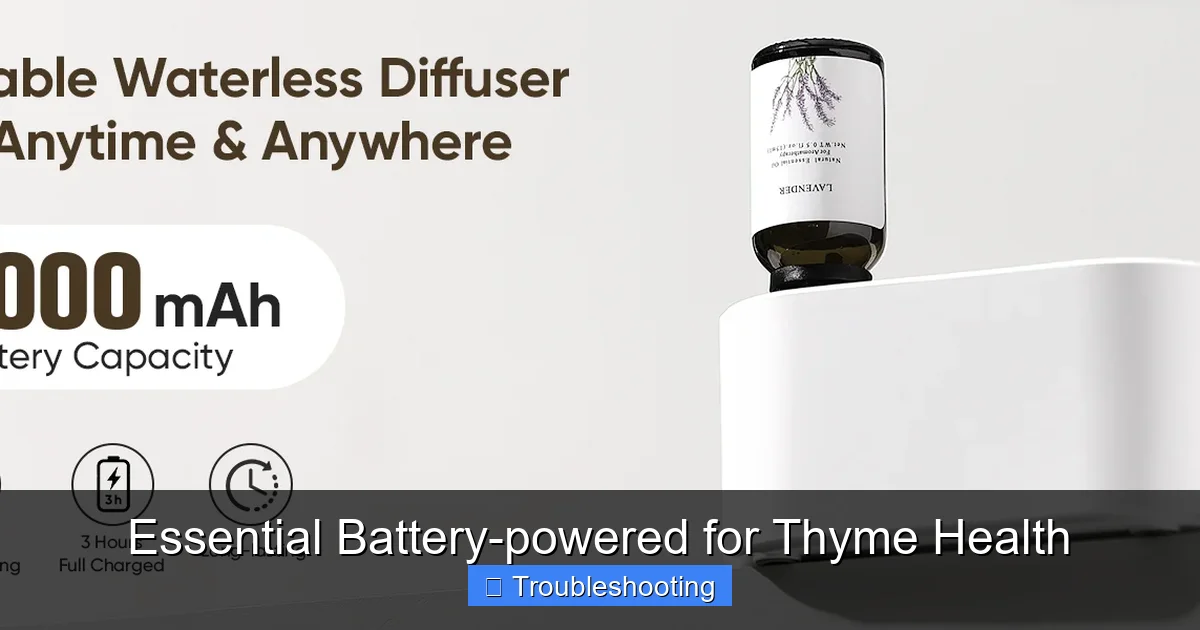
Essential battery-powered for thyme health tools transform how you grow this Mediterranean herb indoors and out. From automated watering to supplemental lighting, these portable devices solve common thyme problems like inconsistent moisture and insufficient light without needing electrical outlets nearby.
Growing thyme successfully often comes down to consistency. This Mediterranean herb thrives on routine: steady light, careful watering, good airflow, and well-draining soil. But what happens when your sunniest windowsill has no outlet nearby? Or when you travel for work and can’t water on schedule? That’s where essential battery-powered for thyme health solutions change everything.
I learned this lesson the hard way three winters ago. My kitchen thyme plant sat on a beautiful south-facing shelf—perfect light, zero outlets. I tried running extension cords across the countertop. It looked messy and created a tripping hazard. Then I discovered battery-powered grow lights. Within two weeks, my struggling thyme perked up, putting out fresh growth even in January. That experience opened my eyes to how battery-operated tools solve real gardening problems.
Today, we’ll explore the complete world of essential battery-powered for thyme health equipment. You’ll learn which devices actually matter, how to choose reliable ones, setup strategies that work, and troubleshooting techniques when things go wrong. Whether you’re growing culinary thyme on a windowsill, creeping thyme in a balcony container, or lemon thyme under cabinets, these battery-powered solutions give you freedom and your plants consistency.
Key Takeaways
- Battery-powered grow lights provide consistent light for thyme during dark winters or in low-light spaces without outlet access
- Automated watering systems prevent overwatering and underwatering, the two biggest threats to thyme health
- Soil moisture meters with battery operation give accurate readings to maintain thyme’s preferred dry conditions
- Portable fans improve air circulation around thyme plants, reducing fungal disease risk in humid environments
- Timer-controlled systems create consistent care routines that thyme responds to better than sporadic attention
- Battery maintenance schedules prevent unexpected failures that could damage established thyme plants
- Troubleshooting skills for battery-powered devices save money and prevent plant loss during critical growth periods
Quick Answers to Common Questions
What’s the minimum light intensity thyme needs from battery grow lights?
Thyme requires at least 200 µmol/m²/s PPFD (photosynthetic photon flux density) at canopy level for healthy growth. This typically means a 20-30 watt equivalent LED panel positioned 6-12 inches above the plant running 14-16 hours daily.
How often should I replace batteries in my thyme watering system?
Replace AA/AAA batteries every 6-12 months depending on usage. Rechargeable 18650/21700 cells last 300-500 cycles (roughly 1-2 years). Always keep spares charged and test monthly—watering failures kill thyme faster than any other issue.
Can I use battery-powered grow lights for thyme propagation?
Yes, battery grow lights work excellently for thyme cuttings. Use lower intensity (100-150 µmol/m²/s) initially, increase gradually over 3 weeks. Combine with a humidity dome and battery mister on timer for 90%+ rooting success rates.
What’s the best battery type for thyme grow lights in cold weather?
Lithium-ion (18650/21700) or lithium AA cells perform best in cool temperatures. Alkaline batteries lose significant capacity below 50°F. If your growing area gets chilly, use lithium chemistries and keep spare cells warm until needed.
How do I prevent algae in battery-powered drip irrigation tubing?
Use opaque (black) tubing, not clear. Add a few drops of hydrogen peroxide (3%) per gallon of reservoir water monthly. Flush system with vinegar solution quarterly. Keep reservoir covered and in shade. Algae clogs emitters and harms thyme roots.
📑 Table of Contents
- Understanding Thyme’s Core Requirements
- Choosing the Right Battery-Powered Grow Lights
- Automated Watering Systems That Actually Work
- Environmental Monitoring and Control Devices
- Air Circulation and Climate Control Solutions
- Setting Up Your Complete Battery-Powered Thyme System
- Maintaining and Troubleshooting Your Battery-Powered Equipment
- Advanced Strategies for Thriving Thyme
- Cost Analysis: Battery vs. Plug-In Systems
- Conclusion
Understanding Thyme’s Core Requirements
Before investing in any essential battery-powered for thyme health tools, you need to understand what thyme actually needs. This herb evolved on rocky Mediterranean hillsides. Its preferences reflect that harsh origin.
Light Requirements That Drive Battery Solutions
Thyme demands six to eight hours of direct sunlight daily. Indoors, that’s rarely achievable without supplementation. Winter days provide maybe four hours of weak light. Basement apartments get even less. This light gap is the number one reason indoor thyme fails—leggy growth, pale leaves, and eventual decline.
Battery-powered grow lights fill this gap perfectly. Unlike plug-in models, you can position them exactly where thyme needs light without outlet constraints. A small 20-watt LED panel on a timer delivers consistent photons regardless of season or window orientation.
Watering Precision Prevents Root Rot
Thyme hates wet feet. Its roots rot quickly in soggy soil. Yet underwatering causes stress, woody growth, and reduced oil production. The sweet spot is barely moist soil that dries between waterings. Achieving this consistency manually is surprisingly difficult—life gets busy, you forget, then overcompensate.
Battery-operated drip irrigation or self-watering spikes solve this. They deliver measured amounts on precise schedules. Your thyme gets the same careful watering whether you’re home, at work, or on vacation.
Air Circulation Reduces Disease Pressure
Still air encourages fungal problems like powdery mildew and botrytis. Thyme’s dense growth habit traps humidity around stems and leaves. Outdoor plants get natural breezes. Indoor plants often stagnate, especially in winter when windows stay closed.
Small battery-powered clip fans create gentle air movement. They’re quiet, portable, and positionable anywhere. This simple addition dramatically reduces disease incidence on indoor thyme.
Monitoring Tools Enable Proactive Care
You can’t manage what you don’t measure. Battery-powered soil moisture meters, light meters, and hygrometers give you data instead of guesswork. Thyme prefers soil moisture around 30-40%, humidity below 60%, and light intensity above 2000 foot-candles during active growth.
These numbers guide your essential battery-powered for thyme health decisions. When the meter reads 25% moisture, you water. When light drops below 1500 foot-candles, you adjust your grow light. Data-driven care beats calendar-based care every time.
Choosing the Right Battery-Powered Grow Lights
Not all battery grow lights suit thyme. This herb needs high light intensity—more than lettuce or herbs like mint. Understanding specifications prevents wasting money on inadequate units.
Visual guide about Essential Battery-powered for Thyme Health
Image source: health.com
Light Intensity and Spectrum Requirements
Thyme requires full-spectrum light with emphasis on blue (400-500nm) for vegetative growth and red (600-700nm) for flowering and oil production. Look for lights rated at least 2000 lumens for a single plant, 4000+ for multiple plants. PPFD (photosynthetic photon flux density) should exceed 200 µmol/m²/s at canopy level.
Many cheap battery lights only produce 500-800 lumens—fine for seedlings, useless for mature thyme. Invest in quality. A 30-watt equivalent LED panel with Samsung or Cree diodes costs more but delivers thyme-appropriate intensity for years.
Battery Types and Runtime Considerations
Three main battery categories exist for grow lights:
- Built-in rechargeable lithium-ion: Convenient, 8-12 hour runtime, 300-500 charge cycles
- Replaceable 18650/21700 cells: Swappable, extendable runtime, replace degraded cells
- Standard AA/AAA configurations: Ubiquitous replacements, lower voltage limits power
For thyme’s 14-16 hour daily light requirement, built-in batteries rarely last a full cycle. You’ll need either swappable high-capacity cells or a hybrid approach—battery for portability, USB-C charging during operation. Many quality units now support pass-through charging.
Mounting Flexibility for Optimal Positioning
Thyme grows low and spreading. Lights must position close (6-12 inches) without burning leaves. Look for:
- Flexible gooseneck arms for precise aiming
- Clip bases that attach to shelves, pots, or window frames
- Magnetic bases for metal shelving units
- Tripod stands for floor-level containers
The best essential battery-powered for thyme health lights combine multiple mounting options. My favorite unit has a clip, magnet, and tripod thread—it adapts to any setup.
Timer Integration for Consistency
Manual on/off defeats the purpose. Quality battery grow lights include:
- Built-in programmable timers (4/8/12/16 hour cycles)
- App control via Bluetooth for custom schedules
- Light sensors that auto-adjust for ambient conditions
- Memory retention during battery changes
App-controlled models let you adjust schedules remotely—perfect when travel changes your thyme’s routine.
Automated Watering Systems That Actually Work
Watering thyme correctly is harder than it looks. Too much causes root rot. Too little stresses the plant. Battery-powered automation removes human error from the equation.
Visual guide about Essential Battery-powered for Thyme Health
Image source: m.media-amazon.com
Drip Irrigation Kits for Container Thyme
Battery-operated drip systems use a small pump, timer, and tubing to deliver precise water amounts. Key features for thyme:
- Adjustable flow rates (0.5-2 gallons per hour emitters)
- Multiple outlet capability for several pots
- Rain delay sensors to prevent overwatering
- Low battery indicators
- Programmable frequency (daily, every 2 days, custom intervals)
Setup takes 15 minutes. Run tubing along pot rims, stake emitters near plant bases, program the timer. Thyme receives consistent moisture at root level without wet foliage.
Self-Watering Spikes for Simplicity
For single plants, battery-free ceramic spikes work well. But battery-powered versions add timing control. They connect to a reservoir and use a small pump to refill the spike on schedule. Advantages:
- No tubing across surfaces
- Reservoir holds 1-2 weeks of water
- Digital timer sets exact refill intervals
- Transparent reservoir shows water level
These excel for thyme in decorative pots where tubing looks unsightly.
Capillary Mat Systems for Multiple Plants
Growing several thyme varieties? Battery-powered capillary mats provide uniform bottom watering. A pump wets the mat on timer; pots sit on top and absorb moisture through drainage holes. Thyme loves this—roots seek moisture naturally, tops stay dry.
Look for mats with:
- Waterproof backing to protect surfaces
- Even water distribution channels
- Pump timers with 1-24 hour delay settings
- Low water alarms
Troubleshooting Watering System Failures
Even the best essential battery-powered for thyme health watering systems fail. Common issues and fixes:
- Clogged emitters: Soak in vinegar solution monthly
- Pump won’t prime: Check tubing for air locks, ensure reservoir above pump
- Timer resets unexpectedly: Replace backup battery (usually CR2032)
- Uneven watering: Clean filter, check for kinked tubing, verify emitter ratings match
- Battery dies prematurely: Use lithium AA cells, not alkaline; they handle pump current spikes better
Test your system weekly. Run a manual cycle and verify each emitter flows. Catch problems before thyme suffers.
Environmental Monitoring and Control Devices
Data transforms thyme care from reactive to proactive. Battery-powered sensors give you greenhouse-level insight at kitchen-counter prices.
Soil Moisture Meters: Beyond the Basic Probe
Simple analog probes work, but battery-powered digital meters offer:
- Numerical readings (percentage or 1-10 scale)
- Memory for tracking trends over weeks
- Alert thresholds with audible/visual alarms
- Multiple probe support for different pots
- Bluetooth logging to phone apps
Thyme’s ideal range: 30-40% moisture. Set low alarm at 25%, high at 50%. The meter beeps when action needed—no guessing, no forgotten checks.
Light Meters Ensure Adequate Intensity
Human eyes poorly judge light intensity. A spot that looks bright may deliver only 500 foot-candles—thyme needs 2000+. Battery-powered quantum meters measure PAR (photosynthetically active radiation) in µmol/m²/s.
Take readings at canopy level, midday, with grow lights on. Adjust height until you hit 200-300 µmol/m²/s. Recheck monthly as plants grow and seasons change.
Hygrometers and Thermometers for Microclimate Management
Thyme prefers 40-60% humidity and 65-75°F. Indoor environments often exceed 70% humidity in winter (cooking, showers, poor ventilation) or drop below 30% with heating. Battery-powered hygrometer/thermometer combos track both.
Place one at plant level, not room level. Microclimates vary dramatically—top of refrigerator runs warmer and drier than windowsill. Data helps you position thyme optimally or add humidity control.
Smart Integration for Comprehensive Monitoring
Advanced essential battery-powered for thyme health setups connect multiple sensors to a central hub. One display shows moisture, light, humidity, temperature for all your thyme pots. Some systems:
- Log data to cloud for year-over-year comparison
- Send phone alerts when parameters drift
- Integrate with smart home systems (HomeKit, Alexa, Google Home)
- Trigger automated responses (turn on fan at 70% humidity)
Start simple. One good moisture meter teaches more than a complex system you don’t understand.
Air Circulation and Climate Control Solutions
Stagnant air kills thyme faster than most gardeners realize. Fungal spores settle, humidity builds, stems stay damp. Battery-powered airflow solves this silently.
Clip Fans for Targeted Air Movement
Small USB-rechargeable clip fans (3-6 inch blades) provide gentle breeze exactly where needed. Position to create leaf flutter—visible movement without bending stems. Run 15 minutes per hour during high humidity periods.
Key features:
- Multiple speed settings (low for thyme)
- Oscillation for broader coverage
- Timer function (1/2/4/8 hour cycles)
- Quiet operation (<30dB)
- Flexible neck for precise aiming
One fan serves 2-3 square feet. For larger setups, use multiple fans on staggered timers.
Battery-Powered Humidity Control
In very humid climates, small desiccant dehumidifiers with battery backup protect thyme during power outages. In dry climates, ultrasonic misters with humidity sensors maintain 5 maintain target levels. Both run on rechargeable batteries for 8-24 hours.
Thyme rarely needs active humidification—usually the opposite. But seedlings and cuttings benefit from 60-70% humidity during rooting. A small mister on timer creates this temporarily.
Temperature Regulation for Extreme Conditions
Windowsills can hit 90°F in summer sun or 40°F on winter nights. Battery-powered solutions:
- Heating mats with thermostatic control for winter propagation
- Small ceramic heaters with tip-over protection for cold snaps
- Reflective insulation panels (passive, no battery needed)
- Cooling fans with thermostats for heat waves
Monitor temperature at soil level. Thyme roots suffer before tops show stress.
Setting Up Your Complete Battery-Powered Thyme System
Individual devices work better as an integrated system. Here’s how to combine essential battery-powered for thyme health tools into a cohesive setup.
Designing Your Layout
Start with your space constraints. Measure available area, note outlet locations (for charging), identify light sources. Sketch a simple diagram showing:
- Thyme pot positions
- Grow light mounting points
- Water reservoir placement
- Sensor locations
- Fan positions
- Charging station for batteries
Group devices by maintenance frequency. Daily-check items (water reservoir) stay accessible. Weekly items (moisture meter calibration) can be less accessible.
Power Management Strategy
Battery devices need charging. Create a rotation system:
- Label each device with runtime and charge time
- Keep spare charged batteries for critical devices (water pump, grow light)
- Use a multi-port USB charger for simultaneous charging
- Set calendar reminders for battery health checks
- Track battery age—replace lithium-ion at 300 cycles or 2 years
Critical rule: never let thyme’s water system run on its last battery cycle. Swap proactively.
Programming Schedules for Synergy
Coordinate device timing for optimal thyme health:
- 6:00 AM: Grow lights on, fan runs 15 min
- 7:00 AM: Watering cycle (if scheduled)
- 9:00 AM: Fan runs 15 min
- 12:00 PM: Fan runs 15 min, light sensor logs data
- 3:00 PM: Fan runs 15 min
- 6:00 PM: Moisture meter logs reading
- 10:00 PM: Grow lights off, final fan run
Adjust seasonally. Winter: longer light hours. Summer: more fan cycles. The schedule serves thyme, not the calendar.
Creating Redundancy for Critical Functions
Single points of failure kill plants. Build backups:
- Two moisture meters (primary + verification)
- Manual watering can always accessible
- Spare grow light (even a small clip light)
- Battery-powered timer as backup for smart timer
- Analog hygrometer as digital backup
Redundancy costs little but saves thyme during inevitable device failures.
Maintaining and Troubleshooting Your Battery-Powered Equipment
Devices fail. Batteries degrade. Sensors drift. Regular maintenance keeps your essential battery-powered for thyme health system reliable.
Weekly Maintenance Routine
Every Sunday, 10 minutes prevents hours of trouble:
- Check all battery levels via indicators or app
- Verify water reservoir full, pump priming
- Run manual light cycle, confirm all LEDs work
- Test fan operation on all speeds
- Compare moisture meter reading with finger test
- Clean grow light lenses (dust reduces output 15-30%)
- Inspect tubing for kinks, leaks, algae growth
Log findings in a notebook or app. Patterns emerge—battery draining faster, pump running longer, light output dropping.
Monthly Deep Maintenance
First weekend each month, 30 minutes:
- Calibrate moisture meters in known dry/wet soil
- Deep clean water system: vinegar flush, filter replacement
- Check fan blades for dust, clean bearings if accessible
- Verify light timer accuracy against atomic clock
- Test all sensors against reference instruments
- Rotate battery stock—use oldest first, recharge spares
- Update firmware on smart devices
Seasonal Overhaul
Quarterly, invest an hour:
- Full battery capacity test (charge, run to cutoff, measure time)
- Replace batteries showing >20% capacity loss
- Inspect all electrical connections for corrosion
- Re-evaluate thyme’s needs—repot? prune? change light schedule?
- Clean entire growing area, check for pests
- Review logs for trends, adjust schedules
- Backup smart device configurations
Common Failure Modes and Rapid Response
When things go wrong, speed matters. Top failures and immediate actions:
Grow Light Won’t Turn On
- Check battery charge—press indicator button
- Try USB charging while operating (pass-through)
- Swap to spare light immediately
- Move thyme to brightest natural light temporarily
Water Pump Stops
- Check reservoir level—obvious but often missed
- Listen for humming (motor running but not pumping)
- Disconnect tubing, test pump in cup of water
- Switch to manual watering until resolved
Moisture Meter Reads Wrong
- Clean probe with distilled water, soft cloth
- Test in known dry soil (oven-dried) and saturated soil
- Recalibrate per manufacturer instructions
- Cross-reference with second meter or finger test
Fan Makes Noise or Stops
- Check for debris in blades
- Try different USB port/cable
- Lubricate bearing if accessible (sewing machine oil)
- Replace—fans are inexpensive, thyme isn’t
Building a Spare Parts Kit
Keep these on hand for your essential battery-powered for thyme health system:
- 4x 18650 protected cells (for lights, fans)
- 8x AA lithium batteries (for timers, sensors)
- 2x CR2032 coin cells (timer backups)
- Spare pump (same model as primary)
- Extra drip emitters and tubing connectors
- Microfiber cloths for lens cleaning
- Distilled water for sensor calibration
- White vinegar for system flushing
- Small Phillips and flathead screwdrivers
- Electrical contact cleaner spray
Store in a labeled box near your thyme setup. Inventory quarterly.
Advanced Strategies for Thriving Thyme
Beyond basics, these advanced essential battery-powered for thyme health techniques elevate your results.
Propagation Under Battery Lights
Thyme roots easily from cuttings. Battery-powered setups excel here—no outlet constraints near propagation trays. Use:
- Low-intensity light (100-150 µmol/m²/s) for first week
- Increase gradually to 200+ over 3 weeks
- High humidity dome with battery mister on 30-min timer
- Heating mat at 70°F for faster rooting
- Fan on 5-min/hour cycle to prevent damping off
Success rates exceed 90% with consistent conditions.
Winter Dormancy Management
Thyme slows in winter but doesn’t fully dormant indoors. Adjust battery systems:
- Reduce light to 10 hours at lower intensity
- Water every 10-14 days instead of weekly
- Run fan only when humidity >65%
- Suspend fertilizer (not battery-related but critical)
- Monitor for spider mites—dry winter air favors them
Battery timers make seasonal transitions effortless. Reprogram once, done for months.
Multi-Variety Management
Growing English, lemon, caraway, and creeping thyme together? They have slightly different needs. Battery zoning helps:
- Separate watering zones for different pot sizes
- Adjustable lights per variety (creeping thyme tolerates less)
- Individual moisture monitoring
- Targeted airflow for dense vs. open varieties
Smart controllers with multiple outlets handle this automatically.
Travel-Proofing Your Thyme
Two-week vacation? Your battery system handles it:
- Fill water reservoir to maximum
- Verify all batteries at 80%+ charge
- Set lights to conservative 12-hour schedule
- Program fan for 10 min every 3 hours
- Enable phone alerts for low battery/water
- Give neighbor spare key and simple instructions
- Video call to verify system running
Return to happy thyme, not crispy casualties.
Cost Analysis: Battery vs. Plug-In Systems
Battery-powered costs more upfront but offers unique value. Let’s break it down.
Initial Investment Comparison
Typical 3-plant thyme setup:
- Plug-in system: $120-180 (lights, timer, pump, fans, sensors)
- Battery system: $200-350 (equivalent devices with batteries)
- Difference: $80-170 premium for battery operation
But battery systems include mounting flexibility, portability, outage protection, and outlet independence.
Operating Costs Over 3 Years
- Electricity (plug-in): ~$15-25/year = $45-75
- Battery replacement (battery): ~$30-50/year = $90-150
- Battery charger electricity: negligible
Battery systems cost $45-75 more over 3 years. For many, the flexibility justifies this.
Hidden Value Factors
Consider what battery essential battery-powered for thyme health systems enable:
- Growing thyme in rental apartments with few outlets
- Moving plants seasonally (patio to kitchen)
- Power outage survival (critical in storm-prone areas)
- No electrician needed for shelf/wall installations
- Experimentation without permanent wiring
- Taking thyme systems when moving
These intangibles often outweigh the modest cost difference.
Budget-Friendly Entry Strategy
Start small, expand strategically:
- Battery grow light ($40-60) — highest impact
- Moisture meter ($15-25) — prevents biggest killer
- Clip fan ($20-30) — disease prevention
- Timer-controlled water spike ($35-50) — consistency
- Light/humidity sensor ($25-40) — optimization
Total: $135-205 for core system. Add components as budget allows.
Conclusion
Thyme asks for little but demands consistency. Six hours of strong light. Soil that dries between drinks. Air that moves. Temperatures that don’t swing wildly. For generations, gardeners provided this through vigilance and luck. Today, essential battery-powered for thyme health tools deliver consistency without tethering you to outlets or schedules.
My kitchen thyme—that struggling plant from three winters ago—now anchors a thriving herb collection. Four varieties grow under battery lights on shelves, in corners, atop cabinets. Automated watering keeps them hydrated through my busiest weeks. Sensors alert me before problems develop. Fans whisper quietly, keeping fungal shadows at bay.
The investment paid for itself in saved plants, fresh harvests, and the quiet satisfaction of systems that work. But more than that, battery-powered tools gave me freedom. I travel when I want. I rearrange my garden on whims. I experiment with new varieties without rewiring my home.
Your thyme deserves the same reliability. Start with one quality grow light and a moisture meter. Feel the difference in your plants’ response. Then add watering automation. Then monitoring. Build your system thoughtfully, maintain it diligently, and watch thyme flourish in places you never thought possible.
The Mediterranean hillsides where thyme evolved had no outlets. But they had perfect light, sharp drainage, and constant breeze. Your battery-powered setup recreates those conditions anywhere you choose to grow. That’s not just convenient—that’s gardening liberation.
Ready to begin? Pick your sunniest outlet-free spot. Order a decent battery grow light. Set a timer. Watch what happens. Your thyme has been waiting for this consistency its whole life.
Frequently Asked Questions
What are the most essential battery-powered tools for thyme health?
The three most critical battery-powered tools for thyme are a full-spectrum grow light (20+ watts equivalent), an automated watering system with timer, and a digital soil moisture meter. These address thyme’s top three needs: consistent high light, precise watering, and prevention of root rot from overwatering.
How long do battery-powered grow lights run on a single charge?
Most built-in rechargeable grow lights run 8-12 hours per charge, which falls short of thyme’s 14-16 hour daily requirement. Look for models with pass-through USB-C charging (operate while charging) or swappable 18650/21700 cells for continuous operation.
Can battery-powered watering systems handle thyme’s drought preferences?
Yes, quality battery drip systems offer adjustable emitters (0.5-2 GPH) and programmable intervals (daily to weekly). Set to deliver small amounts every 3-7 days depending on pot size and environment. Always verify with a moisture meter—thyme prefers 30-40% soil moisture.
Do I need a fan for indoor thyme if I have good air circulation?
Even with decent room airflow, thyme’s dense growth creates stagnant microclimates around stems. A small battery clip fan running 15 minutes per hour dramatically reduces powdery mildew and botrytis risk, especially in winter when windows stay closed.
What’s the best way to monitor multiple thyme plants with battery sensors?
Use a multi-probe moisture meter system with 3-4 sensors connected to one display, or individual Bluetooth sensors that report to a phone app. Place one probe per pot at root depth. Set variety-specific alerts since creeping thyme tolerates more moisture than upright varieties.
How do I troubleshoot a battery-powered thyme system that suddenly stops working?
Start with power: check all battery indicators, try charging while operating, swap in known-good spares. Then check the pump—listen for motor noise, test in water cup. Verify tubing isn’t kinked or clogged. Check timer programming hasn’t reset. Always maintain manual watering backup.