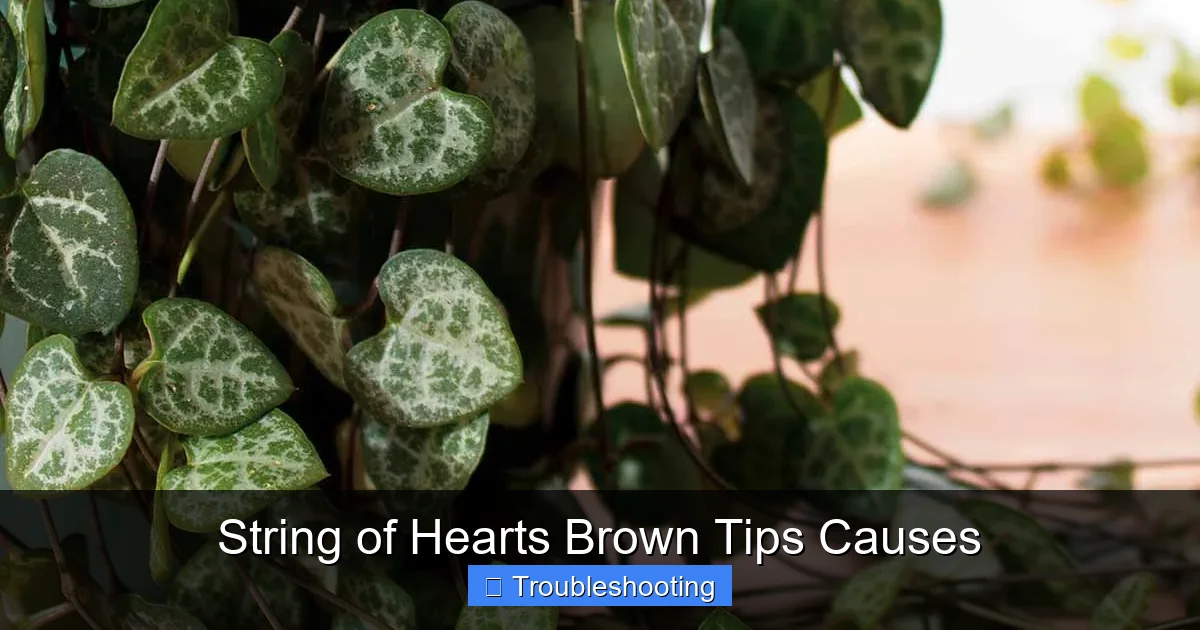
String of Hearts Brown Tips Causes
String of hearts brown tips are usually caused by underwatering, low humidity, sunburn, or fertilizer burn. This guide covers every cause, how to fix it, and ways to prevent future damage so your plant stays lush and trailing beautifully.
You walk over to your string of hearts, expecting to see those gorgeous cascading vines with perfect little heart-shaped leaves. Instead, you notice the tips are turning brown and crispy. It is frustrating. It is confusing. And you just want to know what went wrong and how to fix it.
You are not alone. Brown tips on string of hearts is one of the most common issues plant parents face with this popular trailing succulent. The good news? It is almost always fixable. The plant is telling you something. Once you learn to read the signs, you can make the right changes and watch fresh, healthy growth take over. This guide walks you through every possible cause, how to identify which one is affecting your plant, and exactly what to do about it.
Key Takeaways
- Underwatering is the top cause: Dry soil for too long leads to crispy brown leaf tips.
- Low humidity matters: This plant loves moisture in the air; dry air causes tip burn.
- Too much direct sun scorches leaves: Bright indirect light is best; harsh rays cause brown patches.
- Fertilizer buildup burns roots: Salt accumulation from overfeeding shows up as brown tips.
- Water quality plays a role: Tap water with chlorine or fluoride can damage sensitive tips.
- Pests and disease contribute: Mealybugs, spider mites, and fungal issues cause tip discoloration.
- Pruning and care adjustments fix it: Trim damaged tips, correct the cause, and new growth will be healthy.
Quick Answers to Common Questions
Why does my string of hearts have brown tips?
The most common causes are underwatering, low humidity, too much direct sun, fertilizer burn, or poor water quality. Check your care routine to identify which factor applies.
Should I cut off brown tips on string of hearts?
Yes, you can trim brown tips with clean scissors at an angle following the leaf shape. It improves appearance and does not harm the plant.
Can brown tips turn green again?
No, brown tips are dead tissue and cannot revert to green. Focus on fixing the cause so new growth stays healthy.
How often should I water string of hearts to prevent brown tips?
Water when the top two inches of soil feel dry. Use the soak and dry method. Frequency varies by season, light, and humidity.
Does misting help prevent brown tips on string of hearts?
Misting provides only temporary humidity and can encourage fungal issues. A humidifier or pebble tray is more effective for sustained humidity.
📑 Table of Contents
- Understanding String of Hearts Brown Tips Causes
- Top Cause: Underwatering and Inconsistent Watering
- Second Major Cause: Low Humidity and Dry Air
- Third Cause: Too Much Direct Sunlight
- Fourth Cause: Fertilizer Burn and Salt Buildup
- Fifth Cause: Water Quality Issues
- Sixth Cause: Pests and Disease
- Seventh Cause: Root Bound and Pot Issues
- Eighth Cause: Temperature Stress
- How to Trim Brown Tips Properly
- Preventing Brown Tips Long Term
- Common Mistakes That Cause Brown Tips
- When to Worry vs. When to Wait
- Reviving a Severely Damaged String of Hearts
- String of Hearts Care Quick Reference
- Frequently Observed Scenarios
- Final Thoughts on String of Hearts Brown Tips Causes
Understanding String of Hearts Brown Tips Causes
Before we dive into each cause, let us talk about what brown tips actually mean. When the very end of a leaf turns brown, dry, and papery, the plant has lost moisture at that point faster than it could replace it. The tissue dies. It cannot turn green again. But the rest of the leaf and the plant can be perfectly healthy. The key is stopping the spread.
String of hearts, also known as Ceropegia woodii, is a semi-succulent. It stores water in its leaves and tubers. It tolerates drought better than most houseplants. But it has limits. When those limits are pushed, the tips are the first to show stress. Think of them as the plant’s early warning system.
Why Tips Turn Brown First
Leaf tips are the farthest point from the roots. Water travels up from the roots through the stems and into the leaves. The tips are the last stop. If water supply is inconsistent, if the air is too dry, or if roots are damaged, the tips suffer first. It is simple physics and plant biology. Understanding this helps you see why so many different problems show up in the same place.
Brown Tips vs. Other Problems
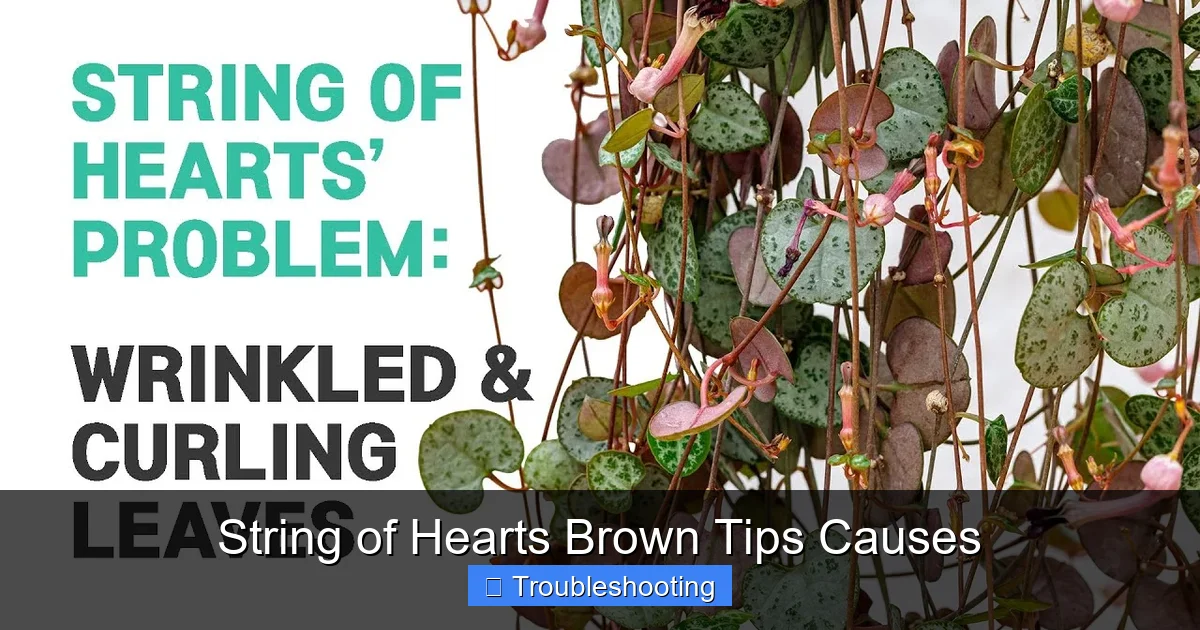
Not all brown on your string of hearts is the same. Brown tips are dry and crispy. Brown spots in the middle of leaves often mean fungal infection or edema. Yellowing leaves that turn brown and mushy usually mean overwatering and root rot. Black, shriveled tips can indicate severe cold damage. This guide focuses on the classic dry, papery brown tips that start at the very end of the leaf and move inward.
Top Cause: Underwatering and Inconsistent Watering
If there is one cause that tops the list, it is underwatering. String of hearts stores water, so people often wait too long between drinks. The soil goes bone dry. The plant survives on stored moisture. But the leaf tips sacrifice themselves first. They dry out, turn brown, and crisp up.
Visual guide about String of Hearts Brown Tips Causes
Image source: i.ytimg.com
Signs It Is Underwatering
Look for these clues. The soil pulls away from the pot edges. The pot feels very light. Leaves may look slightly deflated or less plump than usual. The brown tips are dry and papery, not mushy. You might see the vines looking a bit limp. The tubers at the soil surface may look shriveled.
How to Fix Underwatering
Water thoroughly. Place the pot in a sink or bowl. Run water through until it drains freely from the bottom. Let it drain completely. Do not let it sit in water. Then, set a better schedule. Check the soil every few days. Stick your finger in about two inches. If it feels dry, water. If it feels moist, wait. In growing season, this might be every seven to ten days. In winter, every two to three weeks. Consistency beats volume.
The Soak and Dry Method
This plant loves the soak and dry method. Water deeply until water runs out the bottom. Then wait until the soil is almost completely dry before watering again. This mimics its natural habitat. It encourages strong root growth. It prevents the cycle of bone dry then flooded that stresses the plant and causes brown tips.
Second Major Cause: Low Humidity and Dry Air
String of hearts comes from South Africa. It grows in rocky areas with decent humidity. Our homes, especially in winter with heating on, can be incredibly dry. Humidity often drops below twenty percent. The plant loses water through its leaves faster than roots can take it up. The tips dry out and turn brown.
How to Tell If Humidity Is the Problem
You water correctly. The soil moisture is good. But tips still brown. You might see the browning on the longest vines farthest from the pot. Those leaves are the last to get water. You may notice other plants with crispy tips too. A hygrometer reads below forty percent. Your skin feels dry. Static electricity is high.
Simple Ways to Boost Humidity
Group plants together. They create a microclimate. Use a pebble tray. Fill a tray with pebbles. Add water to just below the top of the pebbles. Set the pot on top. The water evaporates upward. Run a humidifier. This is the most effective method. Aim for fifty to sixty percent humidity. Mist in the morning only. Evening misting invites fungus. Do not mist if you have poor air flow.
Location Matters for Humidity
Bathrooms and kitchens naturally have higher humidity. If you have a bright bathroom window, your string of hearts may thrive there. Avoid placing it near heating vents, radiators, or drafty doors. These create hot, dry pockets that fry leaf tips fast.
Third Cause: Too Much Direct Sunlight
String of hearts loves bright light. But it hates harsh direct sun, especially afternoon sun. The leaves are thin. They scorch easily. Sunburn shows as brown, crispy tips and patches. It can also look like bleached, whitish areas that turn brown. This is not the same as underwatering. The soil may be moist. The plant is hydrated. But the light intensity is cooking the leaves.
Identifying Sunburn vs. Underwatering
Sunburn often affects the top leaves most. The ones facing the window. Underwatering affects the whole plant more evenly. Sunburn patches are irregular. They can be in the middle of leaves, not just tips. The brown tissue is dry and papery. The leaf may look faded or bleached before it browns. If you recently moved the plant to a sunnier spot, that is a huge clue.
Ideal Light Conditions
Bright indirect light is the sweet spot. An east-facing window is perfect. Morning sun is gentle. A few feet back from a south or west window works. Sheer curtains filter harsh rays. If you only have a south window, pull the plant back three to four feet. Or use a sheer curtain. Rotate the pot weekly for even growth.
Acclimating to Brighter Light
If you want to move it to a brighter spot, do it slowly. Move it a little closer each week over a month. This lets the plant build up protective pigments. It reduces shock and sunburn risk. Watch for any color changes. Reddish edges on leaves can be normal stress coloration. But brown crispy tips mean pull back.
Fourth Cause: Fertilizer Burn and Salt Buildup
We love our plants. We want them to grow fast. So we fertilize. But string of hearts is a light feeder. Too much fertilizer, or fertilizing too often, builds up salts in the soil. These salts pull water away from roots. The roots burn. The leaf tips brown. It looks exactly like underwatering, but the soil is wet.
Signs of Fertilizer Burn
White crust on the soil surface. White crust on the outside of terracotta pots. Brown tips appearing shortly after fertilizing. Stunted growth. Leaf drop. The plant may look “burned” at the edges. If you fertilize every watering, or use full strength, this is likely your issue.
How to Flush the Soil
Take the plant to a sink or outdoors. Run lukewarm water through the soil for several minutes. Let it drain fully. Repeat once more. This leaches out excess salts. Do not fertilize for at least two months. When you resume, use half strength or quarter strength. Fertilize only during active growth. Once a month max. Use a balanced, water-soluble fertilizer.
Choosing the Right Fertilizer
Look for a low-nitrogen formula. Something like 2-2-2 or 3-1-2. Or use a succulent-specific fertilizer. Organic options like worm castings or fish emulsion are gentler. They release slowly. They rarely cause burn. Always err on the side of less. You can always add more. You cannot take it out without flushing.
Fifth Cause: Water Quality Issues
Tap water varies wildly. Some cities add chlorine. Some add chloramine. Some have high fluoride. Some have high mineral content (hard water). Some use water softeners that add sodium. String of hearts can be sensitive to all of these. The tips brown as the plant tries to isolate and expel the toxins.
Testing Your Water
You can buy simple test strips. They check chlorine, hardness, and pH. Or call your water utility. Ask for the annual water quality report. It is public record. If you have a water softener, do not use that water on plants. The sodium is toxic to them over time.
Better Water Options
Rainwater is gold for plants. Collect it in a barrel. Distilled water works but gets expensive. Filtered water from a pitcher filter removes chlorine and some minerals. Let tap water sit out overnight. This lets chlorine evaporate. It does not remove chloramine or fluoride. A reverse osmosis system is the ultimate fix but pricey.
Signs Water Quality Is the Culprit
You do everything right. Light, water, humidity, fertilizer. But tips still brown. You see white mineral deposits on leaves or soil. Other sensitive plants (calathea, spider plant, dracaena) also have brown tips. Switching to filtered or rainwater stops the progression.
Sixth Cause: Pests and Disease
Sometimes brown tips are a symptom of bugs or fungus. Mealybugs hide in the nodes where leaves meet stems. They suck sap. The plant loses moisture. Tips brown. Spider mites thrive in dry air. They stipple leaves. Tips dry and brown. Fungal leaf spot starts as small brown spots that merge. Bacterial issues cause mushy brown tips with yellow halos.
Checking for Pests
Inspect closely. Use a flashlight. Look under leaves. Check the nodes. Look for white cottony stuff (mealybugs). Look for tiny webs (spider mites). Look for small brown bumps (scale). Shake a vine over white paper. Tiny moving dots are mites. Sticky residue is honeydew from sucking insects.
Treating Pest Infestations
Isolate the plant immediately. Spray with insecticidal soap or neem oil. Cover all surfaces. Repeat weekly for three weeks. For mealybugs, dab with alcohol on a cotton swab. For spider mites, increase humidity and spray water forcefully to dislodge them. Systemic granules work for persistent issues but use as last resort.
Fungal and Bacterial Issues
These usually need moisture on leaves to start. Avoid overhead watering. Ensure good air flow. Remove affected leaves. Sterilize scissors between cuts. A copper fungicide can help fungal spread. But usually, fixing the environment (air flow, dry leaves, proper watering) stops it. The brown tips from disease often look different. They have yellow halos. They spread. They are not just dry tips.
Seventh Cause: Root Bound and Pot Issues
String of hearts grows fast. The tubers multiply. The roots fill the pot. Eventually, there is more root than soil. Water runs straight through. The plant cannot hold moisture. Tips brown. The plant may also push itself up out of the pot. You see tubers on the surface.
When to Repot
Roots circling the bottom. Roots coming out drainage holes. Soil dries in one day. Plant looks top-heavy. Growth slows despite good care. Spring is the best time to repot. But if it is severe, do it anytime.
How to Repot Correctly
Choose a pot only one to two inches larger. This plant likes being slightly snug. Use well-draining soil. Mix cactus soil with perlite or pumice. One part amendment to two parts soil. Gently loosen the root ball. Place at same depth. Water lightly after. Wait a week before normal watering.
Pot Material Matters
Terracotta wicks moisture. Great for overwaterers. Bad for underwaterers. Plastic holds moisture longer. Glazed ceramic is in between. Match the pot to your watering habits. If you forget to water, avoid terracotta. If you overwater, choose terracotta.
Eighth Cause: Temperature Stress
String of hearts likes temperatures between sixty-five and eighty degrees Fahrenheit. Below fifty, it suffers. Cold drafts from windows or AC vents cause tip damage. Hot drafts from heaters do too. Sudden temperature swings shock the plant. The tips brown as a stress response.
Protecting from Temperature Extremes
Move plants away from drafty windows in winter. Do not place directly in front of heating vents. Do not place in the path of AC airflow. In summer, do not let outdoors is fine if nights stay above fifty-five. Bring it in before temps drop. A sudden cold snap can kill the whole plant, not just tips.
Seasonal Adjustments
In winter, growth slows. Water less. Fertilize zero. Keep it warm. In spring, resume normal care. The plant will push new growth. Old brown tips stay brown. New growth comes clean if conditions are right.
How to Trim Brown Tips Properly
Brown tips never turn green again. You can leave them. They are just cosmetic. Or you can trim them. Trimming makes the plant look better. It does not hurt the plant if done right.
Tools and Technique
Use clean, sharp scissors. Sterilize with alcohol. Cut at an angle following the natural leaf shape. Cut just into the green tissue. Do not cut into the brown. That leaves a brown edge. Do not cut the whole leaf unless it is mostly brown. The green part still photosynthesizes.
When to Prune Whole Vines
If a vine is mostly brown, shriveled, or leafless, cut it back to the soil. This redirects energy to healthy vines. New vines will grow from the tubers. String of hearts responds well to pruning. It gets fuller.
After Pruning Care
No special care needed. Just continue proper watering and light. The cuts callous over fast. Do not mist the cuts. Do not put cinnamon or rooting hormone on them. They heal on their own.
Preventing Brown Tips Long Term
Prevention is easier than fixing. Build a routine. Your plant will tell you what it needs if you pay attention.
Create a Care Schedule
Check soil moisture every three to four days. Water when dry two inches down. Fertilize monthly at quarter strength in spring and summer. Stop in fall and winter. Check humidity monthly. Adjust with seasons. Rotate the pot weekly. Inspect for pests every watering.
Keep a Plant Journal
Note when you water. Note when you fertilize. Note when you see changes. Note seasonal changes. Patterns emerge. You learn your plant’s rhythm. You catch issues before they become brown tips.
Know Your Variety
Regular string of hearts is green with silver markings. Variegated string of hearts has pink and cream. Variegated versions are more sensitive. They burn easier in sun. They need more light to keep color. They show stress faster. Adjust care accordingly.
Common Mistakes That Cause Brown Tips
Even experienced plant parents make these mistakes. Awareness prevents them.
Watering on a Schedule, Not by Soil
“I water every Sunday” is a recipe for disaster. Seasons change. Light changes. Growth changes. The plant’s needs change. Always check the soil first. The finger test beats any calendar.
Misting Instead of Humidifying
Misting raises humidity for minutes. It wets leaves. Wet leaves invite fungus. It does not solve dry air. Use a humidifier or pebble tray for real humidity.
Using Pots Without Drainage
No drainage holes means water sits at the bottom. Roots rot. The plant cannot take up water. Tips brown from effective drought. Always use drainage. Cache pots are fine if you remove the inner pot to water.
Ignoring the Tubers
Those bead-like tubers on the soil surface store water and energy. They can root and make new plants. Do not bury them deep. Do not remove them. They are the plant’s backup battery.
Repotting Into Huge Pots
“Give it room to grow” sounds nice. But huge pots hold too much soil. Soil stays wet too long. Roots rot. Tips brown. Size up gradually. One to two inches at a time.
When to Worry vs. When to Wait
Not every brown tip is a crisis. Context matters.
Normal Aging
Older leaves at the base of vines naturally yellow and brown. The plant sheds them. This is normal. If only the oldest leaves are affected, and new growth is perfect, do nothing. It is just life.
Minor Tip Burn
A few brown tips here and there? Cosmetic. Trim them. Move on. The plant is healthy.
Spreading Damage
Brown tips moving inward fast. Multiple leaves affected. New growth showing brown tips. This is a crisis. Something is wrong with the root zone or environment. Act fast. Check roots. Check water. Check pests.
Mushy Brown Tips
Brown and mushy means rot. Overwatering. Fungal. Bacterial. This is urgent. Unpot. Check roots. Cut rot. Repot in fresh dry soil. Hold water.
Reviving a Severely Damaged String of Hearts
Sometimes the plant looks terrible. Most leaves brown. Vines bare. Do not give up. These plants are resilient.
Assess the Tubers
Gently dig around. Are the tubers firm? Plump? White or beige inside? Good. They are alive. If mushy, black, hollow? Those are dead. Remove them.
The Chop and Prop Method
Cut healthy vine sections. Three to four nodes each. Lay on moist soil. Pin down with hairpins or paperclips. Keep humid. Bright indirect light. Roots form at nodes in weeks. New plants emerge. This is faster than nursing a dying mother plant.
Water Propagation Option
Cut vines. Place in water. Nodes submerged. Leaves above. Change water weekly. Roots appear in two to three weeks. Pot up when roots are an inch long. This works great for string of hearts.
Starting Fresh from Tubers
If vines are gone but tubers are good, repot tubers in fresh soil. Barely cover. Water lightly. Place in bright light. Wait. New vines will sprout. It takes patience. But it works.
String of Hearts Care Quick Reference
Keep this handy. It summarizes everything.
- Light: Bright indirect. Morning sun okay. No harsh afternoon sun.
- Water: Soak and dry. Finger test two inches down.
- Humidity: Forty to sixty percent. Humidifier or pebble tray.
- Temperature: Sixty-five to eighty F. No drafts.
- Soil: Well-draining. Cactus mix plus perlite.
- Pot: Drainage holes. One to two inches larger than root ball.
- Fertilizer: Quarterly strength. Monthly in growing season only.
- Pruning: Trim brown tips at angle. Cut back leggy vines.
- Pests: Check weekly. Treat fast with neem or soap.
- Propagation: Water or soil. Nodes root easily.
Frequently Observed Scenarios
Let us walk through some real-life situations. You might recognize yours.
Scenario: Brown Tips After Vacation
You went away for two weeks. You watered well before leaving. You come back. Tips are brown. The soil was dry. The plant used all its stored water. The tips sacrificed. Fix: Water thoroughly. Trim tips. Resume normal care. It will bounce back.
Scenario: Brown Tips in Winter
Heat is on. Air is dry. Light is lower. You water same as summer. Tips brown. Fix: Water less. Add humidifier. Move closer to light. Stop fertilizing. Winter is rest time.
Scenario: Brown Tips After Repotting
You repotted. Used fresh soil. Watered well. A week later, tips brown. Fix: Roots are adjusting. Maybe you damaged some. Maybe new soil holds water different. Water less. Ensure drainage. Do not fertilize. Wait it out.
Scenario: Brown Tips on New Growth Only
Old leaves perfect. New tiny leaves have brown tips. Fix: This is usually low humidity or inconsistent watering during tender new growth phase. New leaves are delicate. Stabilize environment. Increase humidity slightly.
Scenario: Brown Tips After Fertilizing
You fertilized yesterday. Today tips brown. Fix: Fertilizer burn. Flush soil now. Do not fertilize for months. Dilute more next time.
Final Thoughts on String of Hearts Brown Tips Causes
Brown tips happen. They are not a death sentence. They are communication. Your plant is speaking. Listen. The most common string of hearts brown tips causes are underwatering, low humidity, too much sun, fertilizer burn, and water quality. Sometimes it is pests, pot size, or temperature. Rarely is it just one thing. Usually it is a combination.
Start with the basics. Check soil moisture. Check humidity. Check light. Check your water. Check your fertilizer routine. Fix what you find. Trim the brown. Wait. Watch. New growth is your report card. If it comes in clean and green, you solved it. If it browns again, dig deeper.
String of hearts is one of the most rewarding plants. It grows fast. It propagates easily. It tolerates neglect better than most. And it looks stunning trailing from a shelf or hanging basket. A few brown tips do not ruin it. They just mean it is time to tune in and adjust.
You have got this. Your plant is tougher than you think. And now you know exactly what to look for and what to do. Happy growing.
Frequently Asked Questions
What causes brown tips on string of hearts?
Brown tips are typically caused by underwatering, low humidity, excessive direct sunlight, fertilizer salt buildup, or chemicals in tap water. Identifying the specific cause requires evaluating your watering schedule, humidity levels, light exposure, and fertilizing habits.
Can overwatering cause brown tips on string of hearts?
Overwatering usually causes yellow, mushy leaves and root rot rather than dry brown tips. However, if roots rot from overwatering, the plant cannot uptake water, leading to brown tips that mimic underwatering symptoms.
How do I fix brown tips on my string of hearts?
Trim the brown tips with sterilized scissors, then correct the underlying cause: adjust watering frequency, increase humidity to 40-60%, move away from harsh direct sun, flush soil if over-fertilized, or switch to filtered water.
Why are the tips of my string of hearts turning brown and crispy?
Crispy brown tips indicate moisture loss at the leaf margins. This happens when the plant loses water faster than roots can supply it, commonly due to dry soil, dry air, root damage, or salt buildup in the soil.
Is it normal for string of hearts to have some brown tips?
A few brown tips on older leaves can be normal aging. However, widespread or rapidly spreading brown tips on new growth indicate a care issue that needs addressing.
What humidity level does string of hearts need to prevent brown tips?
String of hearts prefers 40-60% humidity. Below 30%, leaf tips often brown. Use a humidifier, pebble tray, or group plants together to maintain adequate moisture in the air.