Orchid Yellow Leaves Causes
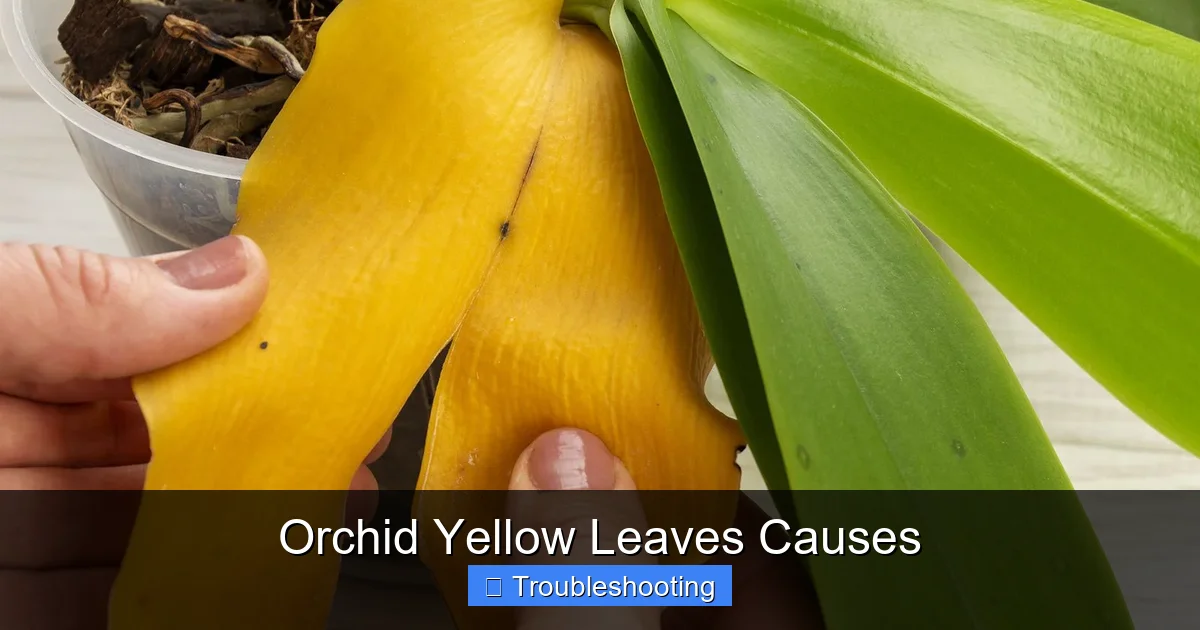
Orchid yellow leaves causes range from natural aging to serious care mistakes like overwatering or sunburn. Most issues are fixable once you identify the root problem and adjust your care routine accordingly.
You walk over to your beloved orchid, expecting to see those gorgeous green leaves and maybe a new flower spike. Instead, you spot it. A yellow leaf. Then another. Your heart sinks. Is your plant dying? Did you do something wrong?
Take a deep breath. Yellow leaves on orchids are incredibly common, and they are rarely a death sentence. Think of yellow leaves as your orchid’s way of sending you a text message. It is trying to tell you something. The trick is learning how to read that message. In this guide, we will walk through every common reason for orchid yellow leaves causes so you can play plant detective and nurse your green friend back to health.
Key Takeaways
- Natural aging: Bottom leaves turning yellow and dropping is normal for mature orchids
- Overwatering is the #1 killer: Soggy roots suffocate and rot, causing yellow leaves
- Underwatering matters too: Dehydrated orchids shed leaves to survive
- Light issues: Too much direct sun burns leaves; too little weakens the plant
- Nutrient deficiencies: Lack of nitrogen, magnesium, or iron shows as yellowing patterns
- Temperature stress: Cold drafts or heat spikes shock orchids into yellowing
- Pests and disease: Scale, spider mites, and fungal infections cause yellow spots and patches
Quick Answers to Common Questions
Why are my orchid’s bottom leaves turning yellow?
This is usually natural aging. Orchids shed their oldest leaves once a year or after blooming. If the top leaves look healthy and firm, there is no problem.
Can a yellow orchid leaf turn green again?
No. Once a leaf loses chlorophyll and turns yellow, it cannot regain its green color. The plant will eventually shed it. Focus on keeping new growth green.
How do I know if yellow leaves are from overwatering or underwatering?
Check the roots. Mushy, brown, or hollow roots mean overwatering. Shriveled, gray, papery roots mean underwatering. The leaf texture helps too: limp/leathery usually means overwatering; wrinkled/accordion means underwatering.
Should I cut off yellow orchid leaves?
Only remove leaves that are fully yellow, mushy, or diseased. If a leaf is mostly green with a yellow tip, leave it. It still feeds the plant. Always use sterile scissors.
What is the best fertilizer to fix yellow leaves?
There is no single “best” fertilizer. A balanced 20-20-20 at quarter strength weekly works for most. For specific deficiencies, use Cal-Mag for magnesium, or a bloom booster for potassium. Fix the root cause first before fertilizing.
📑 Table of Contents
- Understanding Normal vs. Problematic Yellowing
- The Big Two: Watering Woes
- Light Issues: Too Much or Too Little
- Nutrient Deficiencies: The Hidden Hunger
- Environmental Stress: Temperature and Humidity
- Pests and Diseases: The Uninvited Guests
- Potting Medium Problems
- Specific Orchid Types and Their Quirks
- Step-by-Step Diagnosis Checklist
- Recovery Care: Nursing Your Orchid Back
- Prevention: The Best Cure
- Common Myths About Yellow Leaves
- When to Say Goodbye
- Conclusion
Understanding Normal vs. Problematic Yellowing
Before you panic, look at which leaves are yellow. Location tells you almost everything you need to know.
The Natural Aging Process
Orchids are evergreen, but they do not keep every leaf forever. It is completely normal for the oldest leaves, the ones at the very bottom of the plant, to turn yellow and fall off. This usually happens once a year or after a blooming cycle. The plant is simply shedding old foliage to make energy for new growth.
If you see one or two bottom leaves turning yellow while the top leaves look firm, green, and shiny? Relax. Your orchid is just doing its thing. You can leave the leaf alone until it drops naturally, or snip it off with sterile scissors if it bothers you.
When Yellowing Signals Trouble
Trouble starts when yellowing hits the newer leaves at the top or middle of the plant. It is also a red flag if multiple leaves turn yellow at once, or if the yellowing comes with other symptoms. Look for mushy textures, black spots, wrinkling, or a foul smell. Those signs mean you have an active problem on your hands.
The Big Two: Watering Woes
If you ask any orchid expert about orchid yellow leaves causes, they will tell you water is the culprit 90% of the time. Getting the moisture balance right is the single most important skill in orchid care.
Visual guide about Orchid Yellow Leaves Causes
Image source: images.squarespace-cdn.com
Overwatering: The Silent Killer
Overwatering is the number one reason orchids die. It is not about how much water you pour; it is about how long the roots stay wet. Orchid roots need air. They are designed to cling to tree bark in the breeze, not sit in a swamp.
When the potting medium stays soggy, the roots suffocate and rot. Dead roots cannot take up water or nutrients. The plant gets dehydrated even though it is sitting in water. The leaves turn yellow, often starting at the bottom and moving up. They may feel soft, leathery, or limp.
How to fix it: Unpot the plant immediately. Cut away all black, brown, or mushy roots with sterile scissors. Healthy roots are firm and white or green. Repot into fresh, chunky orchid bark. Do not use regular soil. Let the plant sit bare-root for a few hours to dry before repotting. Water only when the bark is nearly dry.
Underwatering: The Slow Fade
On the flip side, chronic underwatering causes yellow leaves too. The leaves will look wrinkled, accordion-pleated, or leathery. They turn yellow because the plant is sacrificing older foliage to keep the crown alive. The roots will look shriveled, gray, and papery.
How to fix it: Give the plant a good soak. Submerge the pot in water for 15 to 20 minutes. Let it drain thoroughly. Going forward, check the medium every few days. Stick a finger or a wooden skewer deep into the pot. If it comes out dry, water. If it is damp, wait.
Finding the Sweet Spot
Most orchids (especially Phalaenopsis) like to approach dryness between waterings. Not bone dry, not soaking wet. “Almost dry” is the magic zone. In a typical home, this usually means watering once a week in summer and every 10 to 14 days in winter. But always check the pot, not the calendar.
Light Issues: Too Much or Too Little
Light is energy. Get it wrong, and the plant cannot make the food it needs to keep leaves green.
Sunburn: The Crispy Yellow
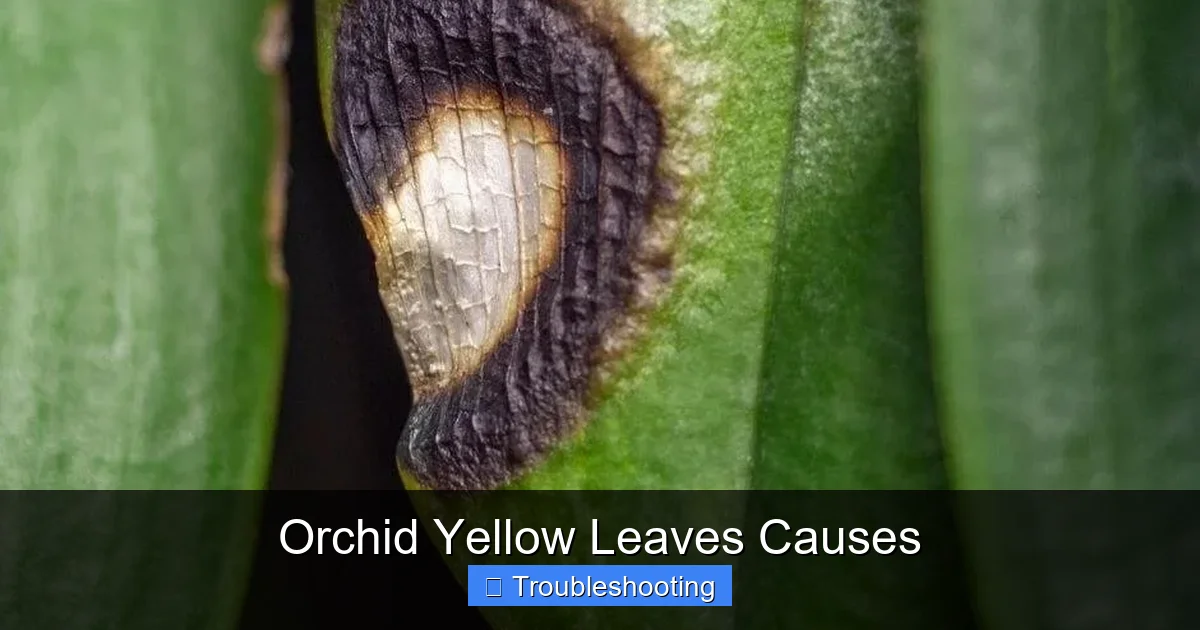
Orchids love bright light, but direct afternoon sun is a killer. A few hours of harsh direct rays will bleach the leaves. You will see yellow or white patches, often with a dry, crispy, papery texture. The damage is usually on the side facing the window. Sunburned leaves will not turn green again, but they won’t spread if you move the plant.
Quick fix: Move the orchid back from the window. Use a sheer curtain to filter the light. East-facing windows are usually perfect. South or west windows need that curtain buffer.
Insufficient Light: The Pale Yellow
Too little light causes a different look. The whole plant turns a pale, sickly yellow-green. The leaves may become long, floppy, and dark green (the plant makes extra chlorophyll to catch scarce light). You will likely see no flowers. The plant is starving slowly.
Quick fix: Move it to a brighter spot. If you lack natural light, a simple LED grow light on a 12-hour timer works wonders. Keep the light 12 to 18 inches above the leaves.
The “Hand Test” for Perfect Light
Here is a pro trick. On a sunny day, hold your hand about 12 inches above the orchid leaves. Look at the shadow.
- Sharp, dark shadow: Too bright (direct sun).
- Soft, fuzzy shadow with defined edges: Perfect bright, indirect light.
- Barely any shadow: Too dark.
Nutrient Deficiencies: The Hidden Hunger
Orchids are light feeders, but they are not no feeders. If you have never fertilized, or if you use plain bark with no nutrients, deficiencies will show up as specific yellowing patterns.
Nitrogen Deficiency
Nitrogen drives green leaf growth. Without it, the oldest leaves turn a uniform, pale yellow first. The plant pulls nitrogen from the bottom leaves to feed the new growth at the top. Growth slows down. Leaves may be smaller than usual.
Fix: Apply a balanced fertilizer (like 20-20-20) at quarter strength weekly. “Weakly, weekly” is the golden rule.
Magnesium Deficiency
This shows up as yellowing between the leaf veins while the veins stay green. It often affects older leaves first. The edges of the leaves may curl or turn brown. This is common if you use purified water (RO or distilled) without adding Cal-Mag supplement.
Fix: Use a fertilizer that contains magnesium, or add a pinch of Epsom salts (magnesium sulfate) to your water once a month. 1/4 teaspoon per gallon is plenty.
Iron Deficiency
Iron deficiency hits the newest leaves first. They emerge yellow or almost white with green veins. This usually means your pH is too high (alkaline). Orchids like slightly acidic conditions (pH 5.5 to 6.5). High pH locks out iron.
Fix: Check your water pH. If you use tap water, it might be too alkaline. Switch to rainwater, RO water with fertilizer added, or use a pH-adjusted fertilizer.
Potassium Deficiency
Look for yellowing or browning at the leaf tips and edges, moving inward. The leaves may look scorched. Potassium regulates water movement. A lack of it makes the plant vulnerable to dehydration stress.
Fix: Bloom booster fertilizers (high potassium, like 10-30-20) help correct this. Use them when the plant is spiking or blooming.
Environmental Stress: Temperature and Humidity
Orchids are tropical creatures. They hate sudden changes.
Cold Damage
Temperatures below 50°F (10°C) can cause cold shock. Leaves turn yellow, then brown and mushy. It often looks like water-soaked spots that turn into dead patches. This happens if you leave a plant near a drafty window in winter, or if you buy an orchid on a freezing day and carry it to the car unprotected.
Prevention: Keep orchids away from cold drafts, AC vents, and exterior doors in winter. When transporting in cold weather, wrap the plant in a paper bag or sleeve.
Heat Stress
Sustained temps above 85°F (29°C) without high humidity and air movement cook the plant. Leaves yellow, wrinkle, and drop. Buds blast (fall off before opening). The plant goes into survival mode.
Prevention: Increase air circulation with a fan. Mist more frequently. Move to a cooler room during heatwaves.
Low Humidity
Most homes run 30% to 40% humidity. Orchids prefer 50% to 70%. Chronically dry air causes leaf tips to brown and yellow. The leaves may accordion-pleat on new growth. It stresses the plant, making it susceptible to spider mites.
Easy humidity hacks:
- Group plants together (they create a microclimate).
- Use a humidity tray (pebbles + water, pot sits on pebbles, not in water).
- Run a small humidifier nearby.
Pests and Diseases: The Uninvited Guests
Sometimes yellow leaves are a symptom of a bug or fungus party.
Spider Mites
These microscopic pests suck chlorophyll from leaves. You see a stippled, silvery-yellow look on the top of the leaf. Flip it over, and you might see fine webbing or tiny moving dots. They love hot, dry conditions.
Treatment: Increase humidity immediately. Wash leaves with insecticidal soap or neem oil. Repeat weekly for three weeks to catch hatchlings.
Scale Insects
Scale looks like small, brown, oval bumps on stems and leaf undersides. They are armored and stuck fast. They suck sap, causing yellow halos around their feeding spots. Leaves yellow and drop.
Treatment: Scrape them off with a fingernail or cotton swab dipped in rubbing alcohol. Spray with horticultural oil or neem oil. Isolate the plant.
Mealybugs
White, cottony clumps in leaf axils and roots. They excrete sticky honeydew. Leaves yellow and distort.
Treatment: Touch each bug with a cotton swab dipped in 70% isopropyl alcohol. Spray whole plant with insecticidal soap. Check roots too.
Root Rot and Crown Rot (Fungal/Bacterial)
We touched on root rot from overwatering. But sometimes pathogens invade even with decent care. Crown rot is the scariest. The center of the plant (where leaves meet) turns black, mushy, and smells foul. Leaves pull out with a gentle tug. It moves fast.
Emergency action: Cut away all rotted tissue with a sterile blade. Dust cinnamon (natural fungicide) on cuts. Repot in fresh medium. Keep dry for a week. Pray. Crown rot is often fatal, but catching it early saves some plants.
Bacterial Brown Spot
Water-soaked lesions with yellow halos. They smell bad. Spreads fast in wet, stagnant air.
Action: Cut off infected leaves well into healthy tissue. Sterilize tools between cuts. Improve air flow. Keep leaves dry when watering.
Potting Medium Problems
Sometimes the pot itself is the problem.
Decomposed Medium
Orchid bark breaks down over 1 to 2 years. It turns into fine mud. This holds too much water and blocks air. Roots rot. Leaves yellow. If your bark looks like dirt, it is time to repot.
Salt Buildup
Fertilizer salts accumulate in the medium. You might see a white crust on the pot or bark. This burns root tips. The plant cannot take up water. Leaves yellow from the tips down.
Fix: Flush the pot monthly. Run plain water through the pot for a full minute. Let it drain. Repot annually in fresh bark to reset.
Wrong Pot Size
Orchids like tight pots. A huge pot stays wet too long in the center. The roots in the middle rot. Leaves yellow. Only go up one pot size when repotting. Clear plastic pots with lots of holes are best. You can see root health and light reaches the roots.
Specific Orchid Types and Their Quirks
Not all orchids are Phalaenopsis (moth orchids). Different types have different yellow leaf triggers.
Phalaenopsis (Moth Orchids)
The most common houseplant orchid. They hate wet feet. Yellow leaves usually mean root rot from overwatering or old medium. They also drop bottom leaves naturally after blooming.
Cattleya
These have pseudobulbs (thick stems). They need a dry rest between waterings. Yellow leaves often mean they stayed wet too long, or they are getting too much direct sun. Shriveled pseudobulbs mean underwatering.
Dendrobium
Many Dendrobiums are deciduous. They drop all their leaves in winter before blooming. If your Dendrobium loses leaves in December, check the variety. It might be normal! Do not overwater a leafless cane.
Oncidium
“Dancing Ladies” have thin roots. They dry out fast. Accordion-pleated leaves mean underwatering. They also get “crinkle leaf” virus which causes yellow streaks. No cure for virus; isolate and discard.
Paphiopedilum (Lady Slippers)
No pseudobulbs. They need constant moisture but perfect drainage. Yellow leaves often mean the medium broke down or they dried out once too often. They are sensitive to fertilizer salt buildup.
Step-by-Step Diagnosis Checklist
When you see yellow leaves, run through this list in order. Stop when you find the match.
- Check the roots. Unpot. Are they firm and white/green? Or brown/mushy/empty? Root health tells the truth.
- Check the leaf position. Bottom only? Normal aging. Top/new growth? Active problem.
- Check the texture. Limp/leathery? Water issue (usually overwatering if roots bad, underwatering if roots good but dry). Crispy/papery? Sunburn. Mushy/smelly? Rot.
- Check the pattern. Uniform yellow? Nitrogen or aging. Yellow between veins? Magnesium. Yellow new growth with green veins? Iron/pH. Tips only? Potassium or salt burn. Spots/halos? Pests or disease.
- Check the environment. Drafty? Hot? Dark? Dry air? Recent move?
- Check care routine. Watering schedule? Fertilizer? Last repot date? Water quality?
Recovery Care: Nursing Your Orchid Back
You found the cause. You fixed it. Now what? The yellow leaves will not turn green again. That is okay. Focus on the new growth.
Do Not Overcorrect
If you underwatered, do not suddenly drown the plant. If you overwatered, do not let it go bone dry for weeks. Make gradual changes. Consistency beats intensity.
Support the Roots
Roots are the engine. Use a root stimulant (like seaweed extract or a product with vitamin B1) monthly for a few months. Keep humidity high (60%+) to reduce transpiration stress on damaged roots.
Hold Off on Fertilizer
Do not fertilize a stressed, rootless, or sick plant. It burns fragile roots. Wait until you see a new root tip (bright green or reddish, shiny) or a new leaf emerging. Then start with quarter strength.
Be Patient
Orchids work on “orchid time.” A new leaf takes months. A new root system takes a season. As long as the crown is firm and green, and you see any new root activity, the plant is winning.
Prevention: The Best Cure
Stop yellow leaves before they start with these habits.
Weekly Root Check
Clear pots make this easy. Once a week, glance at the roots through the plastic. White/silver = dry, time to water. Green = wet, wait. Brown/black = trouble.
The “Soak and Dry” Method
Water thoroughly. Let drain completely. Wait until nearly dry. Repeat. No ice cubes. No misting instead of watering. No schedule. Watch the plant, not the calendar.
Monthly Flush
Once a month, run plain water through the pot for 60 seconds. Prevents salt buildup. Resets pH.
Annual Repot
Fresh bark every 12 to 18 months. Best done right after blooming, when new roots start. Prevents medium breakdown and root rot.
Quarantine New Plants
Every new orchid stays isolated for 3 weeks. Check for pests. Treat preventatively with neem oil. One buggy plant can infest your whole collection.
Clean Leaves Monthly
Wipe leaves with a damp cloth (support leaf from underneath). Removes dust (blocks light) and lets you spot pests early. A drop of neem oil in the water adds pest prevention.
Common Myths About Yellow Leaves
Let’s bust some bad advice floating around the internet.
Myth: “Cut off all yellow leaves immediately.”
Truth: If the leaf is mostly green with a yellow tip, leave it. It is still photosynthesizing. Only remove leaves that are fully yellow, mushy, or diseased. Cutting stresses the plant.
Myth: “Yellow leaves mean it needs fertilizer.”
Truth: Usually the opposite. A stressed plant with bad roots cannot use fertilizer. Fertilizer burns dead roots. Fix the roots first. Feed later.
Myth: “Misting fixes yellow leaves.”
Truth: Misting raises humidity for 5 minutes. It does not fix root rot, underwatering, or nutrient deficiency. Wet leaves at night invite fungus. Use a humidifier or tray instead.
Myth: “Ice cubes are the best way to water.”
Truth: Ice cubes melt slowly, but they are cold. Tropical roots hate cold shock. They also deliver very little water. You would need 10+ cubes to saturate a pot. Just use room temp water.
Myth: “Orchids are hard to grow.”
Truth: They are different, not hard. Once you understand the “epiphyte” mindset (air roots, quick wet/dry cycles), they are incredibly rewarding.
When to Say Goodbye
Sometimes, despite your best efforts, the plant is too far gone. It is okay to let go.
Signs it is time to compost:
- No living roots at all (all brown, hollow, or mushy).
- Crown rot: center is black, mushy, smells bad, leaves pull out with zero resistance.
- Virus confirmed: color break in flowers, distinct yellow streaks/rings on leaves that match virus symptoms. Viruses are incurable and spread to other plants.
- All leaves gone, crown shriveled, no new growth for 6+ months.
Do not feel guilty. Every grower loses plants. It is how you learn. Buy a new one. Apply what you learned. The next one will thrive.
Conclusion
Yellow leaves are not a verdict. They are a conversation starter. Your orchid is telling you exactly what it needs. Overwatering? Let it breathe. Sunburn? Draw the curtain. Hungry? Feed it weakly. Cold? Close the window.
The more you observe, the better you get at reading the signs. Check roots weekly. Feel the medium. Watch the light. Touch the leaves. You will start to know your plant. And one day, you will realize you haven’t seen a yellow leaf in months. Just glossy green growth and a spike full of buds.
You have got this. Orchid care is a journey, not a test. Enjoy the ride.
Frequently Asked Questions
What are the most common orchid yellow leaves causes?
The most common causes are overwatering leading to root rot, underwatering causing dehydration, natural aging of bottom leaves, too much direct sunlight (sunburn), and nutrient deficiencies like lack of nitrogen or magnesium. Checking the roots is the fastest way to diagnose the issue.
Can too much light cause orchid leaves to turn yellow?
Yes, direct afternoon sun causes sunburn. This appears as yellow or white bleached patches, often with a dry, crispy texture on the side facing the light. Move the plant to bright indirect light or use a sheer curtain to filter the sun.
Why are my orchid leaves turning yellow and wrinkly?
Wrinkled, accordion-pleated yellow leaves usually indicate severe dehydration. This happens from chronic underwatering or from root rot where dead roots cannot absorb water. Check the roots immediately to determine which issue you have.
Is it normal for orchids to lose leaves after flowering?
Yes, it is normal for Phalaenopsis and many other orchids to shed one or two bottom leaves after a blooming cycle. The plant used energy to flower and now conserves resources by dropping old foliage. New growth should appear soon.
How do I fix yellow leaves caused by fertilizer burn?
Flush the pot thoroughly with plain room-temperature water for several minutes to wash out excess salts. Stop fertilizing for 4 to 6 weeks. Repot in fresh bark if the medium has a white crust. Resume feeding at quarter strength only when new roots appear.
Can cold temperatures cause orchid leaves to turn yellow?
Absolutely. Exposure to temperatures below 50°F (10°C) or cold drafts causes cold shock. Leaves develop water-soaked yellow spots that turn brown and mushy. Keep orchids away from drafty windows, AC vents, and exterior doors in winter.