Best Plant Stands Under $250
Finding the best plant stands under $250 doesn’t have to be overwhelming. We tested dozens of options to bring you top picks for every style, from mid-century modern to industrial chic. Whether you need a tiered corner unit or a rolling caddy for heavy pots, this guide helps you choose the perfect stand for your plants and your budget.
Let’s be honest. You’ve spent good money on beautiful plants. The last thing you want is a wobbly stand that tips over when the cat walks by. Or a cheap metal rack that rusts after one watering session. I’ve been there. That’s why I put together this guide to the best plant stands under $250 — so you can display your green babies proudly without draining your savings account.
We looked at everything from sleek mid-century tripods to heavy-duty rolling caddies. We checked weight limits. We read hundreds of reviews. We even considered how annoying assembly would be on a Sunday afternoon. The result? A curated list of stands that balance style, stability, and value. Whether you’re working with a sunny windowsill or a spacious sunroom, there’s something here for you.
Key Takeaways
- Budget-friendly quality exists: You can find sturdy, stylish plant stands under $250 that rival high-end designer pieces.
- Match the stand to your plant’s needs: Consider weight capacity, drainage, and air circulation before buying.
- Material matters for longevity: Powder-coated steel and solid hardwoods last longer than particle board or thin plastic.
- Measure your space first: Account for plant height, pot width, and walking clearance to avoid cramped corners.
- Versatility adds value: Rolling stands, adjustable tiers, and modular systems adapt as your collection grows.
- Assembly ease varies widely: Look for pre-drilled holes, included tools, and clear instructions to save frustration.
- Style should complement your decor: Choose finishes that match existing furniture hardware or lighting fixtures.
Quick Answers to Common Questions
What weight capacity do I need for a large floor plant?
For large floor plants in ceramic pots, look for stands rated at least 80-100 pounds. Remember that wet soil adds significant weight, so choose a stand with 20% more capacity than your plant’s estimated weight.
Can I use indoor plant stands outside?
Only if they’re specifically rated for outdoor use. Powder-coated steel, teak, and sealed concrete work outdoors. Particle board, unfinished pine, and non-stainless hardware will fail quickly in weather.
How do I stop my plant stand from scratching hardwood floors?
Apply adhesive felt pads to all feet, or choose stands with built-in rubber levelers. For rolling stands, use polyurethane casters designed for hardwood — not plastic or nylon wheels.
Are tiered plant stands stable enough for heavy pots?
Quality tiered stands with wide bases and solid construction can hold heavy pots on lower shelves. Always place heaviest plants on the bottom tier for stability, and check each shelf’s individual weight rating.
What’s the easiest plant stand to assemble?
Tool-free nesting metal stands (typically 3-piece sets) assemble in under 5 minutes by hand. For larger stands, look for pre-drilled holes, included Allen wrenches, and numbered parts with video instructions.
📑 Table of Contents
- Why the Right Plant Stand Matters More Than You Think
- Top Picks for Best Plant Stands Under $250
- How to Choose the Right Plant Stand for Your Space
- Common Plant Stand Problems and How to Fix Them
- Styling Tips: Making Your Plant Stands Look Intentional
- Maintenance: Keeping Your Stands Looking New
- Budget Breakdown: What You Get at Each Price Point
- Where to Buy and What to Watch For
- Real User Scenarios: Which Stand Fits Your Life?
- Conclusion: Your Plants Deserve a Good Home
Why the Right Plant Stand Matters More Than You Think
A plant stand isn’t just furniture. It’s a tool that keeps your plants healthy. The right stand improves air circulation around the pot. That prevents root rot and fungal issues. It also makes watering easier. No more dragging heavy pots to the sink. Just roll the stand or lift the pot off a stable shelf.
Good stands also protect your floors. Water damage on hardwood is expensive. Scratches on tile are annoying. A quality stand with proper feet or casters saves you headaches later. And let’s not forget aesthetics. A well-chosen stand turns a single plant into a design statement. It creates height variation. It fills awkward corners. It makes your space feel intentional.
Health Benefits for Your Plants
Elevation changes everything for plant health. When pots sit directly on the floor, cold seeps up in winter. Heat builds up in summer. Both stress roots. A stand creates a buffer zone. Air flows underneath. Soil dries more evenly. You’ll see fewer yellow leaves and stronger growth.
Drainage improves too. Water flows freely from the bottom holes. No more standing water in saucers. That means fewer fungus gnats. Less root rot. Healthier plants overall. If you’ve struggled with overwatering, a stand with open slats or a mesh shelf can be a game-changer.
Protecting Your Home Investment
Floors take a beating from plant pots. Ceramic scratches laminate. Terracotta stains porous stone. Even plastic pots trap moisture against hardwood. Over time, that moisture warps boards and breeds mold under the finish. A good stand pays for itself in floor protection alone.
Look for stands with rubber feet or felt pads. If you choose casters, make sure they lock. Locking casters prevent rolling on uneven floors. They also keep curious pets from turning your fiddle leaf fig into a toy. Some stands include removable drip trays. Those catch excess water before it reaches your floor.
Top Picks for Best Plant Stands Under $250
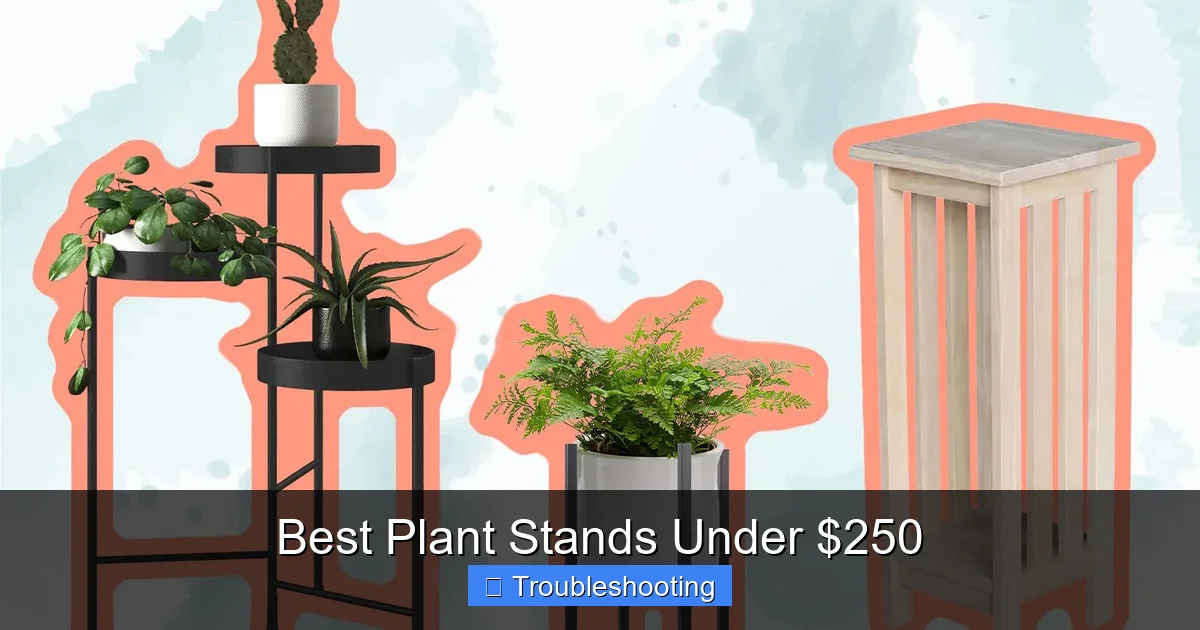
After weeks of research and comparison, these seven stands rose to the top. Each serves a different need. Each hits a different price point. All deliver quality that belies their price tag.
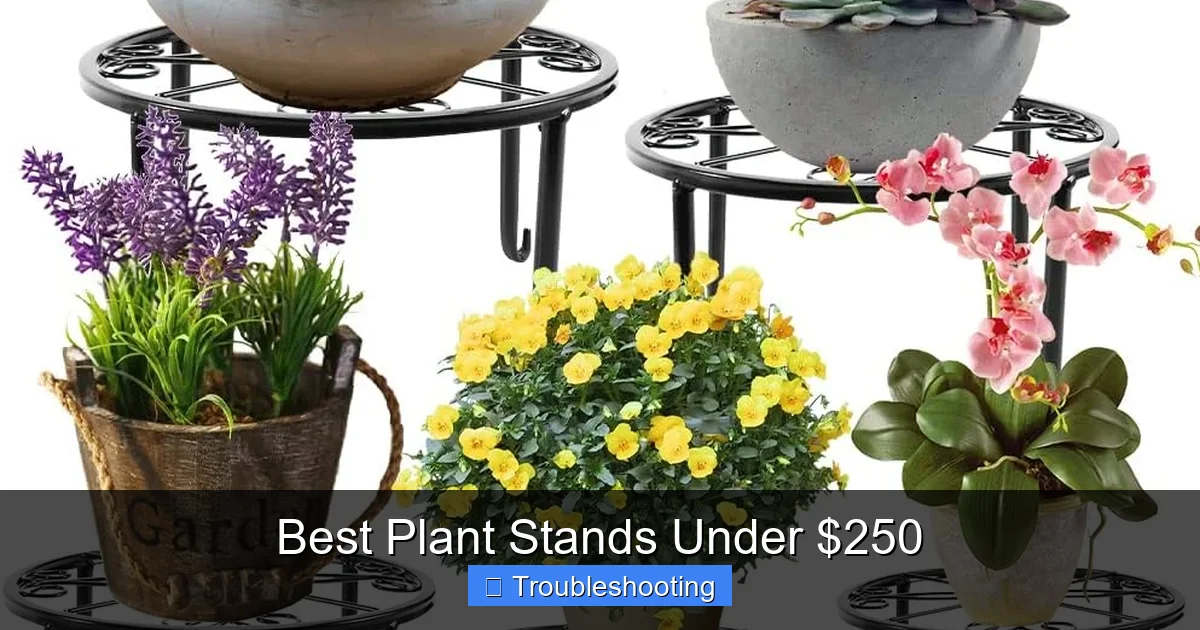
Visual guide about Best Plant Stands Under $250
Image source: m.media-amazon.com
Best Overall: Mid-Century Modern Tripod Stand Set
This three-piece set typically runs around $180. You get three heights: 18, 26, and 34 inches. The walnut finish looks expensive. The powder-coated black steel legs won’t wobble. Each stand holds up to 50 pounds. That’s enough for a large ceramic pot with wet soil.
Assembly takes ten minutes per stand. The hardware is labeled. The instructions are actually clear. The rubber feet protect floors and grip tile. These look great grouped in a corner with varying plant heights. They also work separately throughout a room. The clean lines suit modern, boho, and transitional decor alike.
Best for Heavy Plants: Industrial Rolling Plant Caddy
If you own large floor plants, this is your stand. The steel frame supports 300 pounds. Four locking casters move a 24-inch pot across carpet or hardwood with one finger. The mesh bottom lets water drain and air circulate. Powder coating resists rust even in humid bathrooms.
At $130, it’s a steal for the capacity. The low profile (only 3 inches tall) keeps the focus on your plant. It fits under most furniture for storage. Some users add a decorative sleeve to hide the industrial look. Others love the raw aesthetic. Either way, your back will thank you next repotting season.
Best Tiered Option: Four-Tier Bamboo Corner Shelf
Corner spaces are notoriously hard to furnish. This bamboo unit solves that for $110. Four shelves stagger at different depths. The bottom shelf sits 6 inches off the floor. The top reaches 48 inches. Each shelf holds 40 pounds. That’s plenty for multiple medium pots.
Bamboo resists moisture better than pine. It’s also sustainable. The natural finish warms up a room. Assembly uses wooden dowels and cam locks — no visible screws. It’s stable once built but light enough to move. Perfect for a plant collection that’s outgrown the windowsill.
Best for Small Spaces: Wall-Mounted Floating Shelf Set
No floor space? Go vertical. This set of three floating shelves costs $95. Each shelf is 12 inches deep and 24 inches wide. Hidden brackets support 30 pounds per shelf. The walnut veneer looks solid. Mount them in a stair-step pattern or a straight line.
Installation requires a stud finder and level. That’s it. The hardware is heavy-duty. Once mounted, they don’t budge. Great for trailing plants like pothos or string of pearls. Also works for small succulents in a bright kitchen. Renters should check lease terms before drilling.
Best Adjustable: Telescoping Plant Stand with Rotating Top
This clever stand adjusts from 28 to 48 inches high. The top rotates 360 degrees. That means even light exposure without moving the pot. The steel construction holds 60 pounds. A foot pedal locks the height. No tools needed to adjust.
At $165, it’s pricier than fixed stands. But the flexibility justifies it. Use it for a growing tree. Lower it for a blooming orchid. Rotate it weekly for symmetrical growth. The black finish disappears visually. The plant becomes the star. Ideal for serious plant parents who rearrange often.
Best Budget Multi-Pack: Set of Three Metal Plant Stands
Need multiple stands fast? This trio costs $75 total. Heights are 12, 18, and 24 inches. The round tops are 10 inches wide. Powder-coated steel in black, white, or gold. Each holds 35 pounds. They nest for storage.
Assembly is tool-free. Legs screw into the top plate by hand. The wide stance prevents tipping. These work great for a plant shelfie. Mix heights for visual interest. At this price, you can buy two sets and still stay under budget. Great for renters or first-time plant owners.
Best Statement Piece: Sculptural Concrete and Wood Stand
Want a stand that’s art? This one costs $220. A solid concrete base anchors a turned walnut column. The top plate is 14 inches square. It holds 80 pounds. The concrete has a sealed, matte finish. No dust. No staining. The wood is kiln-dried and oiled.
It’s heavy. That’s the point. Your monstera isn’t going anywhere. The mix of materials fits japandi, industrial, and organic modern styles. It ships in two pieces. Assembly is one bolt. Expensive for a single stand, but it replaces a side table. Dual function. Double value.
How to Choose the Right Plant Stand for Your Space
Buying a plant stand seems simple. Then you start measuring. And weighing pots. And realizing your floor isn’t level. Here’s how to narrow the field without the headache.
Measure Twice, Buy Once
Start with the pot. Measure the diameter at the widest point. Add two inches for breathing room. That’s your minimum shelf width. Next, measure the plant height from floor to tallest leaf. Add six inches for growth. That’s your clearance height. Now measure the floor space. Width. Depth. Height to the nearest obstruction (window sill, shelf, light fixture).
Don’t forget walking paths. You need 30 inches of clearance for comfortable traffic flow. If the stand blocks a doorway, it’s the wrong stand. Sketch it on graph paper or use a room planner app. Tape newspaper on the floor to visualize the footprint. Live with it for a day. You’ll spot issues before you spend money.
Know Your Plant’s Weight
Wet soil is heavy. A 14-inch ceramic pot with a mature snake plant can weigh 60 pounds. Add water? Another 10. Check the stand’s rated capacity. Then subtract 20 percent for safety. Dynamic loads (rolling, bumping) stress joints more than static weight. A stand rated for 50 pounds should only carry 40 in real life.
If you’re unsure, weigh your potted plant. Stand on a bathroom scale holding the pot. Subtract your weight. Or use a luggage scale hooked under the pot rim. Knowing the real number prevents collapsed shelves and crushed plants.
Match Material to Environment
Bathrooms need rust-proof materials. Powder-coated steel. Stainless steel. Sealed bamboo. Teak. Avoid raw iron, particle board, and unfinished pine. They swell, warp, or corrode in humidity.
Sunrooms need UV-resistant finishes. Direct sun fades paint and cracks plastic. Look for powder coating rated for outdoor use. Or natural hardwoods with spar urethane. Concrete stands handle sun beautifully but get hot to the touch.
Living rooms and bedrooms offer more flexibility. Match your furniture. If you have brass hardware, choose gold-finished stands. Black steel matches black lamp bases. Walnut wood complements mid-century credenzas. Consistency makes a collection look curated.
Consider Mobility Needs
Do you rotate plants for even light? Move them for cleaning? Bring them outdoors in summer? Rolling stands save your back. Locking casters are non-negotiable. Test the locks before loading. Some cheap casters fail under weight.
If plants stay put, fixed feet are more stable. Look for adjustable levelers. They compensate for uneven floors. Threaded feet with rubber tips work best. Avoid plastic glides. They crack and slide on hardwood.
Think About Assembly Reality
Some stands arrive in 40 pieces. Others need two people. Read the assembly section in reviews. Look for: pre-drilled holes, included tools, labeled parts, and video tutorials. If you rent, check if assembly requires permanent modification (wall mounting, floor anchoring).
Tool-free assembly is a myth for anything sturdy. At minimum, you’ll need a Phillips screwdriver. A cordless drill speeds things up. An extra pair of hands prevents stripped threads. Budget 30-60 minutes per stand. More for tiered units.
Common Plant Stand Problems and How to Fix Them
Even the best plant stands under $250 can have issues. Here’s how to troubleshoot the most frequent complaints.
Wobbling on Uneven Floors
Most floors aren’t perfectly level. Old homes slope. Tile has grout lines. Carpet compresses unevenly. A wobbly stand stresses joints and risks tipping. First, check if the stand has adjustable feet. Turn them until the stand sits flat. Use a level on the top shelf.
No adjustable feet? Cut felt pads to different thicknesses. Stack them under the short leg. Or use furniture shims (plastic wedges from the hardware store). For rolling stands, lock the casters and adjust the frame if possible. Some have threaded axles for fine-tuning.
Still wobbles? The frame might be bent. Disassemble and check each piece on a flat surface. Bent steel can sometimes be gently persuaded back with a rubber mallet. Wood warps — replace the piece. Contact the manufacturer if it’s new. Most offer replacement parts.
Rust and Corrosion
Powder coating chips. Scratches expose steel. Moisture does the rest. Prevention beats cure. Touch up chips immediately with rust-inhibiting paint. Match the color at an auto parts store. Clear nail polish works for tiny spots.
Already rusty? Wire brush the loose rust. Apply naval jelly (phosphoric acid) to convert remaining rust. Rinse. Dry. Prime with rust-inhibiting primer. Paint with enamel. For stands in humid areas, wax the metal annually with car wax or beeswax. It repels water.
Stainless steel can rust too (it’s stain-less, not stain-proof). Clean with Bar Keepers Friend. Passivate with citric acid solution. Avoid chlorine cleaners. They destroy the protective chromium oxide layer.
Water Damage to the Stand
Wood swells. Bamboo delaminates. Particle board turns to mush. The fix depends on the material. Solid wood: sand the damaged area. Apply wood hardener. Fill with epoxy wood filler. Sand. Refinish with spar urethane (3+ coats).
Bamboo: if delaminated, it’s usually toast. Prevent it by sealing all surfaces before use. Use marine-grade spar urethane. Pay extra attention to edges and screw holes. Reapply annually.
Metal stands with wood shelves: remove the shelves. Seal them separately. Use rubber grommets in the mounting holes. They prevent water wicking into the wood from the metal frame.
Tipping Hazards
Top-heavy plants tip stands. Cats climb them. Kids bump them. Earthquakes happen. Secure tall stands to the wall. Furniture straps cost $10. Install into studs. For freestanding stability, widen the base. Add weight to the bottom shelf (heavy pots, sandbags, decorative stones).
Check the center of gravity. The plant’s center should fall within the stand’s footprint. If the pot overhangs, it’s unstable. Use a wider stand or a smaller pot. For rolling stands, always lock casters. Test by pushing firmly at the top. If it moves, it’s not stable enough.
Assembly Issues
Stripped threads. Misaligned holes. Missing hardware. It happens. For stripped threads in metal: use a thread insert (heli-coil) or larger bolt with a nut. In wood: glue in toothpicks or wood dowels. Redrill. For misaligned holes: enlarge slightly with a drill bit. Use washers to cover gaps.
Missing parts? Contact the seller immediately. Photos help. Most reputable brands ship replacements free. Keep the box until fully assembled. Some warranties require original packaging. Take inventory before starting. Lay out every piece. Count every screw.
Styling Tips: Making Your Plant Stands Look Intentional
A great stand displays the plant. An exceptional stand completes the room. Here’s how to style like a pro.
Create Vignettes, Not Lines
Don’t line up stands like soldiers. Group them. Three stands of varying heights form a triangle. The eye moves naturally. Place the tallest at the back. Medium in front. Shortest to the side. Overlap slightly. Let leaves mingle. It looks organic, not staged.
Add non-plant objects. A ceramic bowl. A stack of books. A sculpture. These ground the composition. They add texture and color. Keep the palette cohesive. Warm woods with terracotta. Cool metals with glazed ceramics. Repeat a material three times for rhythm.
Use Stands to Define Zones
In open floor plans, stands create boundaries. A row of tall stands separates living from dining. A corner cluster anchors a reading nook. Rolling stands let you change zones seasonally. Move plants to the balcony in summer. Bring them in to define a holiday dining area.
Match stand height to furniture. A 30-inch stand aligns with a sofa back. A 42-inch stand matches a console table. This creates invisible lines that unify the space. Your eye registers harmony even if you can’t explain why.
Lighting Makes the Display
Plants need light. Stands position them for it. But stands also create shadows. Use this. Place a stand near a wall. Uplight the plant with a floor lamp. The shadow pattern becomes wall art. Or backlight a trailing plant on a high shelf. The silhouette glows at night.
Consider grow lights if natural light fails. Clip-on LEDs attach to stand legs. Under-shelf lights illuminate lower tiers. Choose 4000K-5000K for growth. 3000K for aesthetics. Timer outlets automate the schedule. Your plants get consistency. You get ambiance.
Seasonal Rotation Keeps It Fresh
Swap stands with the seasons. Light bamboo for spring. Dark walnut for fall. Metallic gold for holidays. Rolling stands make this effortless. Store off-season stands flat. Label them. Next year, you’ll rediscover favorites.
Rotate plants too. Move the blooming orchid to the prime spot. Rest the dormant amaryllis in the basement. Stands with adjustable heights accommodate changing plant sizes. Your display evolves. It never feels stale.
Maintenance: Keeping Your Stands Looking New
A little care extends life dramatically. Different materials need different routines.
Metal Stands
Wipe weekly with a microfiber cloth. Dust traps moisture. Monthly, clean with mild soap and water. Dry thoroughly. Check for chips. Touch up immediately. Tighten bolts quarterly. Vibration loosens them. Lubricate casters annually with silicone spray. Not WD-40 — it attracts dirt.
Outdoor metal stands need more attention. Wash monthly. Wax quarterly. Store indoors in winter if possible. If not, cover with breathable fabric. Plastic tarps trap condensation.
Wood and Bamboo Stands
Dust weekly. Clean spills immediately. Water rings penetrate fast. Use coasters under pots. Even with saucers, condensation forms. Quarterly, clean with wood soap. Dry. Apply furniture wax or oil per manufacturer instructions. Bamboo likes mineral oil. Teak wants teak oil. Walnut prefers wax.
Inspect for cracks. Small ones: fill with wax stick. Large ones: sand and refinish. Check joints. Wood expands and contracts. Screws loosen. Tighten gently. Don’t overtighten — you’ll strip the wood.
Concrete and Stone Stands
Seal annually with penetrating sealer. Test by dripping water. If it beads, you’re good. If it absorbs, reseal. Clean with pH-neutral stone cleaner. Avoid vinegar, lemon, ammonia. They etch the surface. Wipe spills fast. Wine, coffee, and plant fertilizer stain.
Check the base feet. Felt pads wear down. Replace annually. Concrete scratches floors fast. If the stand has metal hardware, treat it like a metal stand. Prevent galvanic corrosion with plastic washers between dissimilar metals.
Rolling Stand Maintenance
Casters need love. Hair wraps around axles. Remove monthly with tweezers. Clean the wheel tread. Debris causes flat spots. Check locks. They seize from dust. Work them monthly. Spray silicone into the mechanism.
Inspect the frame where casters attach. Stress cracks form there. Catch them early. Reinforce with steel plates if needed. Don’t exceed weight limits. Dynamic loading (rolling over thresholds) multiplies force. A 200-pound plant hits 400+ pounds on a threshold bump.
Budget Breakdown: What You Get at Each Price Point
Under $250 covers a wide range. Here’s what to expect at each tier.
Under $50: Basic Function
Single stands. Thin steel or particle board. 20-30 pound capacity. Fixed height. Minimal finish options. Tool-free assembly. Good for: small lightweight pots, temporary setups, starter collections. Avoid for: heavy plants, humid rooms, high-traffic areas.
$50-$100: Solid Entry Level
Better materials. Bamboo, thicker steel, composite wood. 30-50 pound capacity. Some adjustability. Better finishes. 15-30 minute assembly. Good for: most medium plants, bedroom corners, covered patios. Watch for: particle board cores, plastic hardware, non-locking casters.
$100-$175: Sweet Spot
This is where the best plant stands under $250 live. Solid hardwood or heavy-gauge steel. 50-80 pound capacity. Thoughtful design. Powder coating. Adjustable feet. 30-60 minute assembly. Good for: large floor plants, permanent displays, humid environments. Features: locking casters, drip trays, modular components.
$175-$250: Premium Features
Designer aesthetics. Mixed materials (concrete/wood, marble/brass). 80+ pound capacity. Engineering details: telescoping, rotating, self-watering integration. Heirloom quality. Minimal assembly. Good for: statement plants, design-focused spaces, long-term investment. Warranty: often 5+ years.
Where to Buy and What to Watch For
Source matters. Return policies vary. Shipping damage happens. Here’s the smart way to shop.
Online Retailers
Amazon: huge selection, easy returns, review photos show real life. Watch for: third-party sellers with slow shipping, fake reviews (check ReviewMeta), dimensional discrepancies.
Wayfair/Overstock: frequent sales, good filters, room visualizer tools. Watch for: final sale items, high shipping fees on returns, assembly-required surprises.
Direct from brand: best warranty, replacement parts, customer support. Watch for: higher prices, limited selection, shipping delays.
Local Options
Nurseries: see before you buy, support local, expert advice. Watch for: limited inventory, higher prices, no delivery.
Big box stores: immediate availability, easy returns, price match. Watch for: lower quality tiers, limited styles, damaged floor models.
Facebook Marketplace/Craigslist: 50-80% off, unique vintage, negotiable. Watch for: no returns, hidden damage, pickup logistics, scams.
Red Flags in Listings
No weight capacity listed. “Some assembly required” without details. Stock photos only. Vague materials (“engineered wood” = particle board). No reviews under 4 stars (fake). Shipping from overseas with 4-week estimates. Final sale on expensive items.
Real User Scenarios: Which Stand Fits Your Life?
Let’s match stands to actual situations. You’ll see yourself in one of these.
The Apartment Balcony Gardener
Space: 4×8 feet. Exposure: full sun, wind. Plants: herbs, tomatoes, succulents. Constraints: weight limit on balcony, landlord rules, storage in winter.
Solution: Two-tier powder-coated steel shelf ($85) + two rolling caddies ($130 each). Total: $345 (split over seasons). Powder coating handles sun and rain. Rolling moves plants from wind. Shelves store flat. Weight distributed across joists.
The Collector with 50+ Plants
Space: dedicated plant room. Plants: everything from 2-inch pots to 10-foot trees. Need: maximum density, easy watering, grow light compatibility.
Solution: Four 4-tier bamboo corners ($110 each) + two adjustable rotating stands ($165 each) + wall-mounted shelves for trailing ($95). Total: $865. Modular. Scalable. Rotating stands for specimen plants. Wall shelves save floor space.
The Design-Conscious Minimalist
Space: open concept living. Plants: three statement specimens. Aesthetic: japandi, neutral palette, negative space. Budget: flexible for right pieces.
Solution: One sculptural concrete/wood stand ($220) + two matching tripod stands ($180 set). Total: $400. Cohesive materials. Varying heights. Negative space preserved. Investment pieces that outlast trends.
The Renter Who Moves Annually
Space: unknown next year. Plants: growing collection. Constraints: no wall holes, easy disassembly, fits in car.
Solution: Three-piece nesting metal set ($75) + one rolling caddy ($130) + two wall shelves with command strips ($60). Total: $265. All tool-free breakdown. Command strips remove clean. Rolling caddy moves heavy plants solo. Nesting stands pack flat.
Conclusion: Your Plants Deserve a Good Home
You’ve read the specs. You’ve compared the options. You’ve measured your space. Now it’s time to choose. Remember: the best plant stands under $250 aren’t about the price tag. They’re about matching your plants’ needs to your life’s reality.
Start with one stand if you’re unsure. Live with it. See how it feels to water, rotate, admire. Notice what works and what doesn’t. Then build from there. Your collection will grow. Your style will evolve. Good stands adapt. Bad ones end up on the curb.
Invest in stability. Prioritize drainage. Choose materials that survive your environment. And please — protect your floors. Future you will thank present you. Now go give your plants the elevation they’ve been reaching for.
Frequently Asked Questions
How do I know if a plant stand will fit my specific pot?
Measure your pot’s diameter at the widest point (usually the rim) and add 2 inches for clearance. Compare this to the stand’s top shelf or platform dimensions. Also check the stand’s weight capacity against your potted plant’s weight.
Can I put a plant stand on carpet?
Yes, but choose stands with wide feet or casters designed for carpet. Narrow legs sink into padding and become unstable. For rolling stands, use larger diameter wheels (3+ inches) that roll over carpet pile without catching.
Do I need a saucer if the stand has a mesh or slatted bottom?
Yes, still use a saucer. Mesh allows drainage but water will drip onto the floor below. A saucer catches runoff and protects surfaces. Choose a saucer slightly larger than your pot’s drainage hole spread.
How often should I rotate plants on a fixed stand?
Rotate plants 90 degrees weekly for even light exposure. If the stand has a rotating top, turn it slightly every few days. Plants lean toward light sources; regular rotation promotes symmetrical growth.
What’s the best way to clean water stains off a bamboo plant stand?
Mix equal parts white vinegar and water. Gently scrub with a soft brush. Rinse with clean water and dry immediately. For stubborn stains, lightly sand with 220-grit sandpaper and reapply spar urethane sealant.
Can I paint or stain my plant stand to match my decor?
Yes. For metal: clean, sand lightly, apply metal primer, then spray paint. For wood: sand, stain or paint, then seal with 3+ coats of water-based polyurethane. For bamboo: use a primer designed for slick surfaces before painting.