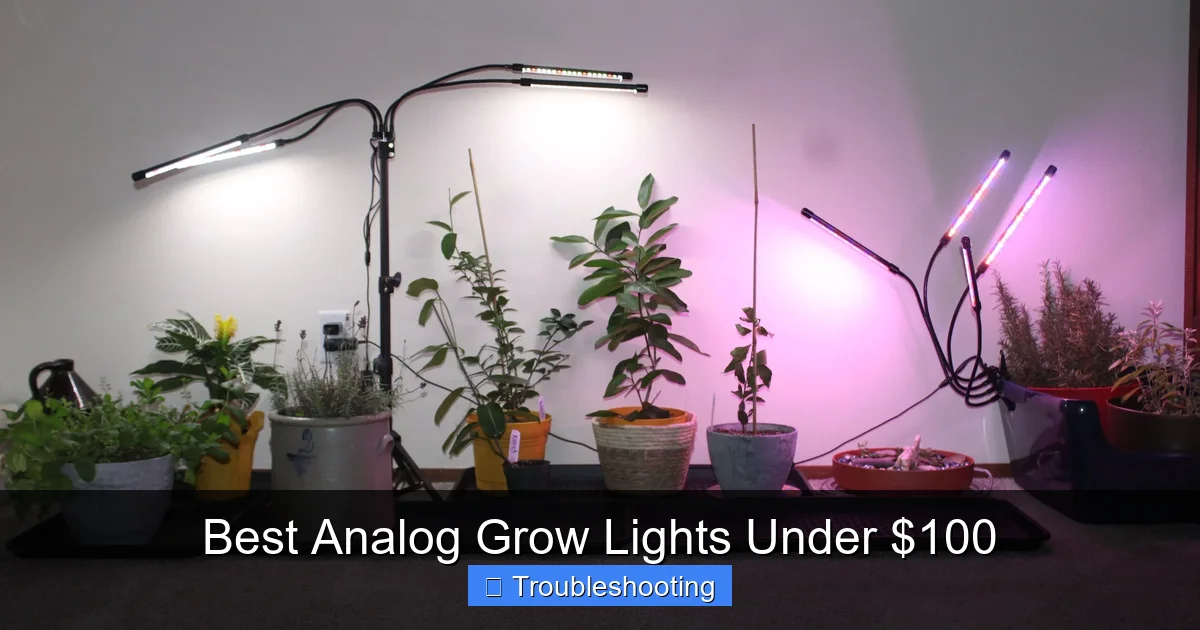
Best Analog Grow Lights Under $100
Finding the best analog grow lights under $100 doesn’t have to be hard. This guide breaks down top models, key features, and simple troubleshooting steps so you can grow healthy plants on a budget.
When you start an indoor garden the first big decision is lighting. You want something that works, lasts, and does not drain your wallet. Analog grow lights have been a favorite for hobbyists for decades because they are simple, rugged, and cheap. In this guide we walk through everything you need to know to pick the best analog grow lights under $100 and keep them running smoothly.
We cover the reasons to choose analog over digital, the specs that matter most, our top five picks, how to set up the system, common problems you might face, and maintenance habits that extend the life of your fixtures. By the end you will feel confident buying, installing, and troubleshooting your own budget friendly lighting setup.
Key Takeaways
- Analog lights are affordable: They cost far less than digital fixtures while still delivering solid spectrum output.
- Wattage matters: Match the wattage to your canopy size to avoid light stress.
- Heat management is key: Even low‑cost units can run hot; proper ventilation protects plants.
- Simple controls: Analog dimmers and timers give you reliable scheduling without complex apps.
- Durability varies: Look for metal housings and quality ballasts for longer life.
- Easy troubleshooting: Most issues are wiring or bulb related and can be fixed in minutes.
- Budget friendly upgrades: Adding reflectors or supplemental LEDs boosts performance without breaking the bank.
Quick Answers to Common Questions
What is the ideal wattage for a 2 × 2 foot tent?
A 250‑watt analog fixture provides sufficient intensity for a 2 × 2 foot canopy without excessive heat.
Can I use a digital timer with an analog ballast?
Yes, a digital timer works fine, but a mechanical timer is more reliable and immune to power surges.
How often should I replace a metal halide lamp?
Replace metal halide lamps after roughly 10,000 hours of use to maintain optimal spectrum and output.
Why does my ballast buzz loudly?
Loud buzzing usually indicates loose internal laminations; tighten mounting bolts or replace the ballast if the noise persists.
Do I need a reflector with every analog light?
A reflector greatly improves light uniformity and intensity; even a cheap aluminum reflector is worth adding.
📑 Table of Contents
Why Choose Analog Grow Lights?
Analog lights use magnetic ballasts and simple circuitry. They do not rely on microprocessors or firmware. That means fewer points of failure. If a component fails you can often replace it with a generic part from a hardware store. The light spectrum is stable because the ballast drives the lamp at a fixed frequency. Many growers like the warm up time of analog units; it mimics sunrise and reduces shock to seedlings.
Cost is another big factor. A quality analog fixture with a 400‑watt metal halide or high pressure sodium lamp often sells for well under one hundred dollars. Digital equivalents with similar output can cost two or three times as much. For a small tent or a few shelves the analog route gives you the most lumens per dollar.
Reliability is proven. Commercial greenhouses have run analog ballasts for 20 years with minimal downtime. When you buy a used unit you can usually test it quickly by listening for the characteristic hum of the ballast. If it hums steadily the ballast is healthy.
What to Look for in a Budget Analog Light
Wattage and Coverage
Match the wattage to the footprint of your canopy. A 250‑watt lamp covers roughly a 2 × 2 foot area. A 400‑watt lamp stretches to about 3 × 3 feet. Over‑lighting a small space wastes electricity and creates heat. Under‑lighting a large space leads to stretchy plants.
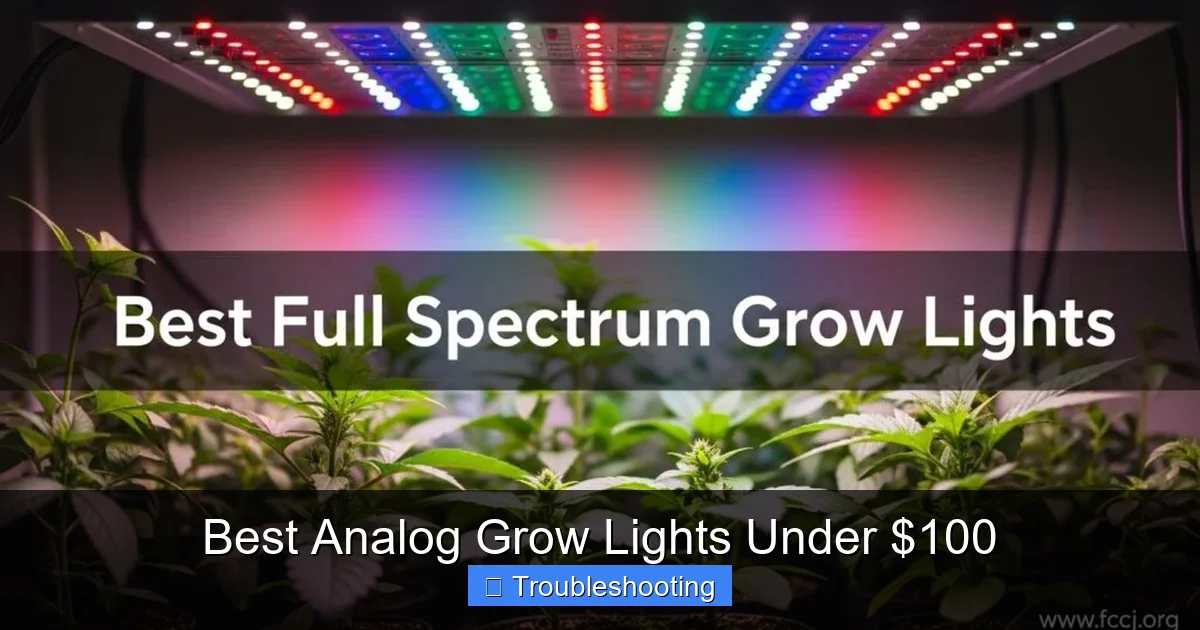
Visual guide about Best Analog Grow Lights Under $100
Image source: fccj.org
Ballast Type
Magnetic ballasts are the classic analog choice. They are heavier but very durable. Electronic ballasts are lighter and run cooler but they add a digital layer. If you want pure analog stick with magnetic. Check the label for “magnetic” or “core‑and‑coil”.
Lamp Compatibility
Most budget fixtures accept standard E39 mogul base lamps. Verify the fixture supports both metal halide (MH) for veg and high pressure sodium (HPS) for flower. Some cheaper units lock you into one lamp type. Flexibility saves money later.
Build Quality
Look for a steel or aluminum housing. Plastic housings can warp under heat. A vented top helps dissipate heat. Powder‑coated finishes resist rust in humid grow rooms.
Included Accessories
Some kits come with a reflector, hanging hardware, and a basic timer. Those extras add value. If they are missing you can buy a simple reflector for under ten dollars and a mechanical timer for five.
Top 5 Picks for the Best Analog Grow Lights Under $100
1. SunSystem 250W Magnetic Ballast Kit
This kit includes a 250‑watt magnetic ballast, a 250‑watt MH lamp, a vented steel reflector, and hanging chains. The ballast hums quietly and the reflector spreads light evenly. It fits a 2 × 2 foot tent perfectly. Price typically lands around $85.
2. Hydrofarm 400W HPS/MH Combo
Hydrofarm’s combo unit lets you swap between a 400‑watt MH and a 400‑watt HPS lamp without tools. The magnetic ballast is rated for 120 V and 240 V. The heavy duty reflector has a white interior for maximum reflectivity. Expect to pay near $95.
3. iPower 250W Digital‑Ready Magnetic Ballast
Although labeled digital‑ready the ballast is purely magnetic. It comes with a 250‑watt MH lamp and a basic timer. The housing is powder coated steel with side vents. It runs a bit warmer than the SunSystem but still within safe limits. Cost is about $78.
4. Vivosun 400W Magnetic Ballast Kit
Vivosun packages a 400‑watt magnetic ballast, a 400‑watt HPS lamp, and a deep‑dish reflector. The deep dish focuses light toward the canopy center, boosting intensity. The kit includes heavy gauge hanging wire. Price hovers around $92.
5. Apollo Horticulture 250W Magnetic Ballast
Apollo’s unit is a bare‑bones ballast with a 250‑watt MH lamp. No reflector is included, which keeps the price low at roughly $70. You can add a cheap aluminum reflector later. The ballast is known for a long lifespan and low hum.
Setting Up Your Analog Light System
Choose the Right Height
Hang the fixture so the lamp sits 18 to 24 inches above the canopy for 250‑watt units. For 400‑watt units raise it to 24 to 30 inches. Use a tape measure each time you adjust. Consistent height prevents hot spots.
Ventilation and Airflow
Even analog lights generate heat. Install an inline fan that pulls air through the reflector and out of the tent. Aim for at least one complete air exchange per minute. A simple carbon filter on the exhaust keeps odors down.
Wiring Safety
Plug the ballast into a grounded outlet. Use a heavy‑duty extension cord rated for the ballast’s amperage. Avoid daisy‑chaining multiple ballasts on one circuit. A dedicated 15‑amp circuit is ideal for a 400‑watt setup.
Timer Settings
Set a mechanical timer to 18 hours on, 6 hours off for vegetative growth. Switch to 12 on, 12 off for flowering. Mechanical timers are reliable and immune to power surges that can reset digital timers.
Reflector Positioning
Angle the reflector so the light pool covers the entire canopy. A flat reflector spreads light wide. A deep dish concentrates it. Test with a piece of white paper at canopy level; the paper should show even illumination.
Common Issues and Quick Fixes
Lamp Flicker or No Start
First check the lamp seating. Remove and reseat the mogul base firmly. If the lamp still flickers the ballast may be failing. Swap in a known good lamp to isolate the problem. Replace the ballast if the test lamp works.
Excessive Heat
If leaf tips curl or the tent temperature spikes above 85 °F, increase fan speed or raise the light. Add a second exhaust fan if needed. Clean dust from the reflector and ballast vents monthly.
Buzzing Ballast
A low hum is normal. A loud buzz often means loose laminations inside the ballast. Tighten the mounting bolts on the ballast housing. If buzzing persists, the ballast may need replacement.
Uneven Light Distribution
Rotate the reflector 180 degrees halfway through the grow cycle. This evens out any hot spots caused by reflector shape. Also check that the lamp is centered in the reflector.
Timer Failure
Mechanical timers can wear out. Test by plugging a lamp directly into the timer and watching the on/off cycle. Replace the timer if it misses cycles. They are inexpensive and easy to swap.
Maintenance Tips for Longevity
Clean the Reflector Monthly
Dust reduces reflectivity by up to 15 percent. Wipe the interior with a soft cloth and a mild glass cleaner. Avoid abrasive pads that scratch the coating.
Inspect Wiring Quarterly
Look for frayed insulation, loose connectors, or corrosion on the plug. Tighten any loose screws. Replace damaged cords immediately to prevent fire risk.
Replace Lamps on Schedule
Metal halide lamps lose about 30 percent of output after 10,000 hours. High pressure sodium lamps last roughly 24,000 hours. Mark the install date on the lamp base with a marker.
Lubricate Fan Bearings
If your exhaust fan uses sleeve bearings, add a drop of light machine oil every six months. This keeps airflow steady and reduces noise.
Store Spare Parts
Keep a spare ballast and lamp in a dry box. When a component fails you can swap it in minutes and avoid downtime.
Conclusion
Choosing the best analog grow lights under $100 is a smart move for any indoor gardener who wants reliable performance without a huge investment. By focusing on wattage, ballast type, build quality, and included accessories you can narrow the field to a few solid kits. The five models we highlighted each bring a slightly different balance of price, flexibility, and durability. Set them up with proper height, ventilation, and a mechanical timer, and you will have a stable light environment for both veg and flower stages. Regular cleaning, timely lamp changes, and a spare parts stash keep the system running for years. With these tips you can grow strong, healthy plants and still have money left for nutrients, pots, and a good harvest celebration.
Frequently Asked Questions
What are analog grow lights?
Analog grow lights use magnetic ballasts and simple circuitry to power high‑intensity discharge lamps. They lack digital controls, making them durable and easy to repair.
Are analog grow lights energy efficient?
They are less efficient than modern LED fixtures but provide high lumen output per dollar, which can be cost‑effective for small setups.
Can I mix metal halide and high pressure sodium lamps in the same fixture?
Only if the ballast and socket are rated for both lamp types. Many combo kits allow swapping without rewiring.
How do I prevent heat stress on my plants?
Maintain proper hanging height, use adequate exhaust ventilation, and monitor canopy temperature with a thermometer.
Is it safe to buy used analog ballasts?
Yes, if the ballast hums steadily and shows no physical damage. Test with a known good lamp before committing to a purchase.
What maintenance extends the life of an analog grow light?
Clean reflectors monthly, inspect wiring quarterly, replace lamps on schedule, lubricate fan bearings, and keep spare parts on hand.