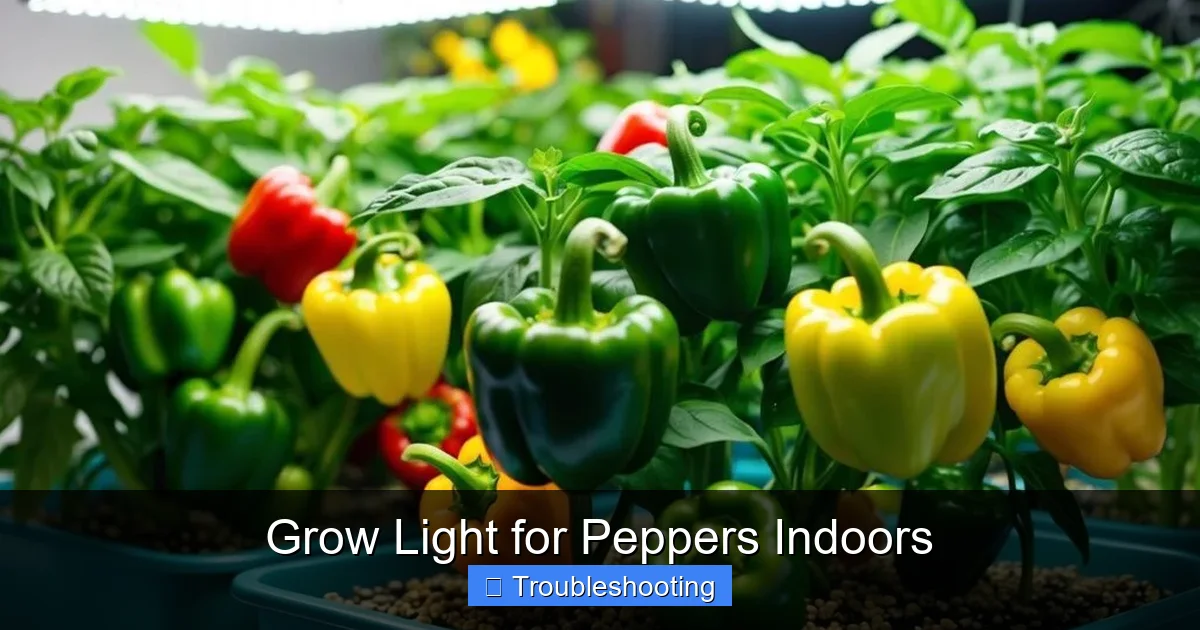
Grow Light for Peppers Indoors
Growing peppers indoors requires the right grow light for peppers indoors to mimic natural sunlight. This guide covers everything from choosing LED vs fluorescent fixtures to dialing in the perfect light schedule, distance, and spectrum for every growth stage. Avoid common mistakes and enjoy fresh, homegrown peppers even in winter.
Growing peppers inside your home feels like a small miracle. You plant a tiny seed, watch it push through soil, and months later you’re snapping crisp, sweet peppers into a salad while snow falls outside. But here’s the honest truth: without a solid grow light for peppers indoors, that miracle usually stalls at the seedling stage. Peppers are sun worshippers. They evolved under intense, direct light for eight to twelve hours a day. A sunny windowsill rarely delivers enough photons, especially in winter. The result? Leggy, pale seedlings that topple over and never produce fruit.
I learned this the hard way my first winter growing habaneros in a basement apartment. I bought a cheap clip-on light, set it on a twelve-hour timer, and waited. The plants stretched toward the weak glow, stems thin as thread. They flowered once, dropped every blossom, and sulked until spring. That failure sent me down a rabbit hole of research on light spectrum, intensity, and photoperiod. What I found changed everything. The right grow light for peppers indoors isn’t about brightness to human eyes. It’s about delivering the specific wavelengths and intensity that pepper physiology demands. This guide shares everything I wish I’d known back then so you can skip the trial and error.
Key Takeaways
- Full-spectrum LED lights are best: They provide the blue and red wavelengths peppers need for vegetative growth and fruiting.
- Light intensity matters more than wattage: Look for PPFD values of 200-400 µmol/m²/s for seedlings and 600-900 µmol/m²/s for flowering plants.
- Keep lights at the right distance: Start at 18-24 inches for seedlings and lower to 12-18 inches as plants mature to prevent stretching or burning.
- Run lights 14-16 hours daily: Peppers are long-day plants that need consistent photoperiods; use a timer for reliability.
- Monitor heat and airflow: Even efficient LEDs produce some heat; good air circulation prevents stress and strengthens stems.
- Adjust spectrum for growth stage: More blue light early on promotes bushy growth; more red light later encourages flowering and fruit set.
- Troubleshoot early: Leggy stems, pale leaves, or flower drop often signal light issues you can fix fast.
Quick Answers to Common Questions
How many hours of light do indoor peppers need daily?
Peppers need 14-16 hours of light per day for optimal growth and fruiting. Use a timer for consistency.
What color spectrum is best for pepper plants?
Full-spectrum white light with enhanced blue (for vegetation) and red (for flowering) works best. Many LEDs offer veg/bloom switches.
How close should grow lights be to pepper plants?
Start seedlings at 24-30 inches. Lower to 18-24 inches for vegetative growth and 12-18 inches for flowering. Adjust based on plant response.
Can I use regular LED shop lights for peppers?
Shop lights (4000-5000K) work for seedlings and early vegetation but lack intensity and red spectrum for heavy fruiting. Supplement with 660nm red strips for flowering.
Why are my pepper flowers falling off?
Flower drop usually means insufficient light intensity, wrong spectrum, temperature stress (above 90°F or below 60°F), low humidity, or poor pollination. Hand pollinate and check your PPFD levels.
📑 Table of Contents
Understanding Pepper Light Requirements
Why Peppers Need Intense Light
Peppers belong to the Solanaceae family, same as tomatoes and eggplants. In their native tropical Americas, they grow under fierce equatorial sun. Their leaves are built to process high light levels, converting CO2 and water into sugars at a rapid clip. When light drops below a threshold, photosynthesis slows, energy reserves dwindle, and the plant enters survival mode. It stops making new leaves, aborts flowers, and focuses on staying alive. That’s why a grow light for peppers indoors must deliver serious intensity, not just a gentle glow.
Daily Light Integral and Photoperiod
Plant scientists measure light needs using Daily Light Integral, or DLI. This is the total photons a plant receives in a day, measured in moles per square meter per day. Peppers want a DLI of 20 to 30 mol/m²/day for good yields. To hit that with artificial light, you need both intensity and duration. A typical LED putting out 500 µmol/m²/s at canopy level needs to run about fourteen hours to reach 25 DLI. That’s why most indoor growers run their grow light for peppers indoors on a fourteen to sixteen hour schedule. Eight hours simply won’t cut it, no matter how bright the fixture.
Spectrum Needs Through Growth Stages
Light spectrum shifts what a plant does. Blue wavelengths (400-500 nm) signal compact, bushy growth with strong stems and thick leaves. Red wavelengths (600-700 nm) trigger flowering, fruit set, and stem elongation. Far-red (700-800 nm) influences shade avoidance and can stretch plants if overdone. A quality full-spectrum grow light for peppers indoors balances these. Early on, you want a higher blue ratio. During flowering, a boost in red helps. Many modern LEDs let you tune this with dimmable channels or preset veg and bloom modes.
Choosing the Right Type of Grow Light
LED vs Fluorescent vs HID
Three main technologies compete for indoor pepper growers. High Intensity Discharge (HID) lights like Metal Halide and High Pressure Sodium were the gold standard for decades. They pump out massive light but run hot, guzzle electricity, and need bulky ballasts. Fluorescent T5 tubes are cooler and cheaper upfront but lack the intensity for flowering peppers unless you pack many tubes close together. Light Emitting Diodes (LED) now dominate for good reason. They’re efficient, run cool, last fifty thousand hours, and can be engineered with precise spectra. For a home grow light for peppers indoors, LED is almost always the smart pick.
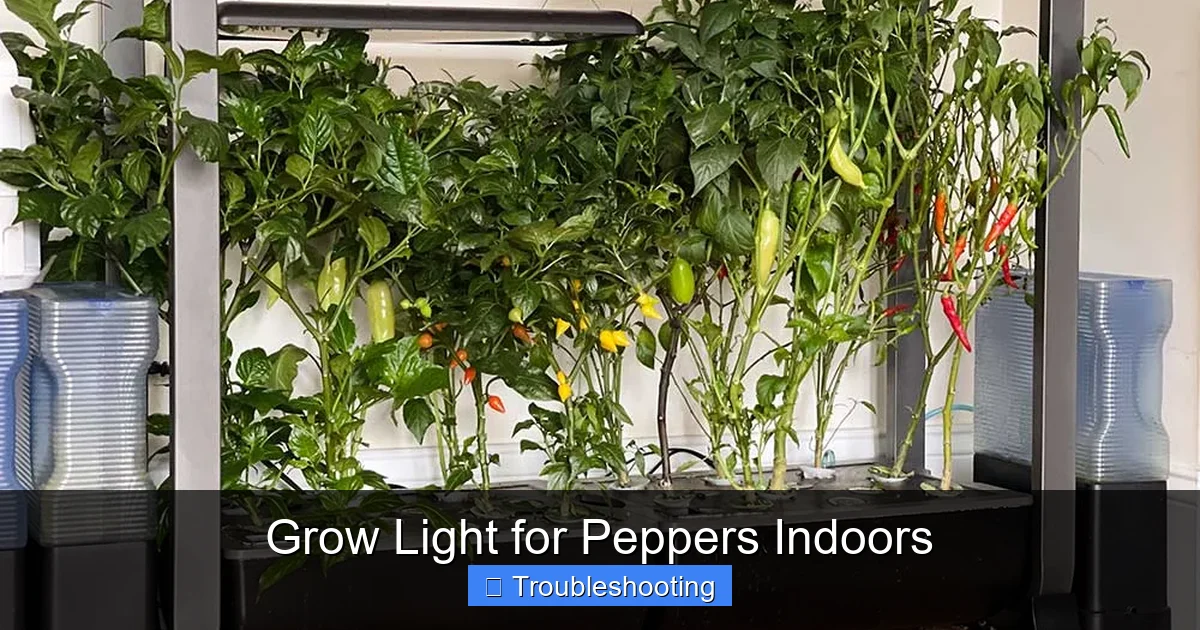
Visual guide about Grow Light for Peppers Indoors
Image source: shershegrows.com
Full Spectrum vs Targeted Spectrum
Full spectrum LEDs mimic natural sunlight with a broad, continuous output across visible wavelengths. They look white to our eyes. Targeted spectrum fixtures emphasize blue and red peaks, often appearing purple. Both work. Full spectrum is nicer to live with, lets you see true leaf color for spotting problems, and includes green light that penetrates deeper into the canopy. Targeted spectrum can be slightly more electrically efficient. If your grow space doubles as living space, full spectrum wins. If it’s a dedicated tent, either works.
Understanding PPFD, PPF, and Wattage
Marketing loves wattage. “1000W LED!” sounds impressive. But watts measure electricity consumed, not light delivered to plants. What matters is PPF (Photosynthetic Photon Flux) — total photons emitted per second — and PPFD (Photosynthetic Photon Flux Density) — photons hitting a square meter of canopy per second. For peppers, aim for these PPFD targets at canopy level: seedlings 150-250 µmol/m²/s, vegetative 300-500 µmol/m²/s, flowering 600-900 µmol/m²/s. A quality grow light for peppers indoors will publish PPFD maps at various hanging heights. Ignore wattage claims; read the PPFD chart.
Coverage Area and Fixture Sizing
One fixture rarely covers a whole pepper patch evenly. Light intensity drops sharply at the edges. A typical 100-150 watt quantum board covers a 2×2 foot area well for flowering. A 200-300 watt unit handles 3×3 feet. Two 4-foot pepper plants need at least a 2×4 footprint. Plan your grow light for peppers indoors layout so every plant sits in the sweet spot. Overlapping coverage from multiple fixtures evens out edge drop-off. Measure your grow space, check manufacturer coverage specs, and buy accordingly.
Setting Up Your Indoor Pepper Lighting System
Hanging Height and Adjustment
Distance between light and canopy controls intensity. Too close causes light stress — leaves curl, bleach, or develop brown tips. Too far triggers stretching. Most LED manufacturers provide hanging height guidelines. As a rule of thumb: start seedlings at 24-30 inches. Lower to 18-24 inches for vegetative growth. Drop to 12-18 inches for flowering. Use adjustable hangers — ratchet ropes or chain — so you can raise the grow light for peppers indoors as plants grow. Check plants daily. If upper leaves point straight up like praying hands, the light may be too intense. If stems elongate between nodes, lower the light.
Light Movers and Rotation
Stationary lights create hot spots and shadows. Plants on the perimeter lean inward. A light mover — a motorized rail that slowly slides the fixture back and forth — spreads light more evenly across the canopy. It mimics the sun’s arc. If a mover isn’t in budget, rotate plants every few days. Turn each pot a quarter turn. Swap positions between center and edge. This simple habit prevents lopsided growth and ensures every leaf gets its share of photons from your grow light for peppers indoors.
Timers and Automation
Consistency beats perfection. Peppers hate erratic schedules. A missed night or extra-long day stresses them, triggering flower drop. Plug your grow light for peppers indoors into a reliable digital timer. Set it and forget it. Fourteen hours on, ten off works well for most varieties. Sixteen on, eight off can push faster growth but increases electricity cost. Some smart timers connect to phone apps, letting you adjust remotely. If power flickers often where you live, consider a timer with battery backup so the schedule holds.
Reflective Walls and Light Efficiency
Light hitting walls is wasted unless it bounces back. Line your grow space with reflective material. Mylar film reflects 95%+ of light. White paint reflects 85-90%. Panda film (black one side, white the other) is cheap and durable. Even emergency blankets work in a pinch. Cover all vertical surfaces. This effectively doubles the usable output of your grow light for peppers indoors without buying more fixtures. Keep reflective material clean and taut; wrinkles create hot spots.
Optimizing Light for Each Growth Stage
Seedling Stage: Gentle but Sufficient
Pepper seeds don’t need light to germinate — warmth and moisture do the job. But the moment the cotyledons break soil, they’re hungry for photons. Weak light now means leggy seedlings that never recover. Run your grow light for peppers indoors at 30 inches, 14 hours on, at 30-40% dimming if your fixture allows. Target 150-200 PPFD. Keep the spectrum balanced or slightly blue-heavy. Watch for the first true leaves. They should be broad, dark green, and horizontal. If they’re narrow, pale, or reaching, lower the light or increase intensity.
Vegetative Stage: Building the Factory
This is leaf and stem construction season. The plant builds its solar panel array and plumbing. More blue light keeps internodes short and stems thick. Increase intensity to 300-500 PPFD. Lower the grow light for peppers indoors to 18-24 inches. Run 14-16 hours. If your light has veg/bloom switches, set to veg mode. Feed nitrogen-rich fertilizer. Pinch the growing tip at 8-10 inches to encourage branching — more branches mean more flower sites later. Strong structure now supports heavy fruit loads without staking failures.
Flowering and Fruiting: Triggering Reproduction
Flowers need red light. Switch to bloom mode or add supplemental 660nm deep red bars if your fixture allows. Boost PPFD to 600-900. Lower the grow light for peppers indoors to 12-18 inches. Maintain 14 hours — longer days don’t increase yield and waste power. Watch for flower buds at leaf nodes. Each pollinated flower becomes a pepper. Gently shake plants daily or use a small brush to transfer pollen indoors where bees don’t visit. Calcium and potassium become critical now; adjust feeding accordingly.
Ripening: Finishing Strong
As peppers size up and color change begins, the plant’s energy demand peaks. Keep intensity high. Some growers add a far-red boost (730nm) for the last two weeks to accelerate ripening, though evidence is mixed. Don’t reduce hours yet. The grow light for peppers indoors should stay at full flowering settings until harvest slows. Then you can drop to 12 hours to ease the plant toward dormancy if you’re overwintering, or simply harvest and restart.
Common Problems and Troubleshooting
Leggy, Pale Seedlings
Classic low-light symptom. Stems stretch thin, leaves stay small and yellow-green. Fix: lower the grow light for peppers indoors immediately. Increase intensity. Add a second fixture if one can’t deliver enough PPFD. Run 16 hours. Bury stretched stems deeper when transplanting — peppers root along buried stems. Don’t fertilize yet; they can’t use it without light.
Leaf Bleaching and Tip Burn
Upper leaves turn white or develop crispy brown edges. This is light stress — too much PPFD or too close. Fix: raise the grow light for peppers indoors 6-12 inches. Dim if possible. Check that fans aren’t blowing directly on hot leaves, which worsens burn. Damaged leaves won’t recover but new growth will be normal. Don’t remove bleached leaves until they yellow; they still photosynthesize at reduced capacity.
Flower Drop and Poor Fruit Set
Flowers form but fall off before fruiting. Causes: insufficient light intensity, wrong spectrum (too little red), temperatures above 90°F or below 60°F, dry air, or poor pollination. Check PPFD at flower level — it should hit 600+. Ensure your grow light for peppers indoors has strong red output. Hand pollinate. Keep humidity 50-70%. Night temps 65-75°F. Day temps 75-85°F. Fix the weakest link.
Uneven Growth and Leaning
Plants lean dramatically toward the light. Center plants upright, edges at 45 degrees. Fix: add reflective walls. Rotate plants every three days. Consider a light mover. If using multiple fixtures, overlap their coverage zones. A well-distributed grow light for peppers indoors setup grows straight, balanced plants.
Algae and Mold on Soil Surface
Constant moisture plus light grows green fuzz. Not directly a light problem, but light feeds it. Fix: bottom water only. Add a layer of perlite or sand on soil surface. Improve airflow with a small fan. The grow light for peppers indoors isn’t the culprit, but reducing surface wetness starves the algae.
Advanced Tips for Maximum Yields
Supplemental Side Lighting
Top light shades lower leaves. As peppers grow bushy, the bottom third becomes a dark zone. Leaves there senesce and drop. Vertical LED bars or strips mounted on tent poles or shelves blast light into the understory. This keeps lower foliage productive, increasing total photosynthetic capacity. A 20-watt side bar per plant makes a measurable difference. Your grow light for peppers indoors system becomes three-dimensional.
CO2 Enrichment and Light Saturation
At ambient CO2 (400 ppm), photosynthesis saturates around 1000 PPFD. Beyond that, extra light gives diminishing returns unless CO2 rises. Some sealed-room growers add CO2 to 1000-1200 ppm, pushing saturation higher and boosting growth 20-30%. This requires a sealed space, CO2 generator or tank, controller, and safety gear. For most home growers, optimizing your grow light for peppers indoors to hit 800-900 PPFD evenly is more practical and safer.
Light Spectrum Manipulation for Flavor
Emerging research suggests spectrum affects secondary metabolites — capsaicin (heat), sugars, aromatics. Higher UV-B (280-315 nm) near harvest may increase capsaicin in hot peppers. More blue light can boost antioxidant content. Some commercial grow light for peppers indoors fixtures now include UV-B bars. Use cautiously; UV damages eyes and skin. Wear protection. Run UV only last two weeks, 15 minutes daily. Taste test and decide if it’s worth the complexity.
Overwintering Perennial Peppers
Peppers are perennials in frost-free climates. Indoors, you can keep a plant alive for years. After final harvest, cut back to 6-8 inches. Reduce grow light for peppers indoors to 12 hours at vegetative intensity. Water sparingly. No fertilizer. The plant rests. In late winter, increase light and feeding. New growth explodes. You skip the seedling phase next season. Bonus: older plants often produce earlier and heavier.
Budget-Friendly Options and DIY Solutions
Building Your Own Quantum Board
Pre-built fixtures carry markup. Buying Samsung LM301H diodes, a Mean Well driver, and aluminum heatsink lets you assemble a high-end grow light for peppers indoors for 40-60% of retail. You need basic soldering skills and thermal paste. Many online calculators help design the right diode count and driver current for your target PPFD. The result: commercial-grade efficiency, full customization, and bragging rights.
Repurposing Shop Lights
4-foot LED shop lights (4000K-5000K, 4000+ lumens) from hardware stores cost $20-30 each. Hang four in a 2×4 grid, 12 inches above canopy. They lack deep red and PPFD for heavy flowering but work surprisingly well for vegetative growth and small fruiting varieties like Thai or ornamental peppers. Add two 660nm LED strips for bloom. Total cost under $150 for a functional grow light for peppers indoors setup.
Used Commercial Fixtures
Cannabis legalization flooded the market with used HLG, Gavita, and Fluence fixtures. Check local classifieds, grow forums, and auction sites. A three-year-old HLG 300 still outperforms most new budget lights. Verify hours run, check for dead diodes, test with a PAR meter if possible. A used premium grow light for peppers indoors often beats a new entry-level unit.
Conclusion
Growing peppers indoors is one of the most rewarding gardening projects you can tackle. The flavor of a sun-ripened pepper in January — grown by your hand, under your light — beats any grocery store import. But success hinges on respecting the plant’s biology. Peppers demand intense, consistent, spectrally appropriate light. A proper grow light for peppers indoors delivers that. You don’t need the most expensive fixture. You need the right intensity at the right distance for the right duration, adjusted as the plant grows. Start with a decent full-spectrum LED, a timer, and reflective walls. Measure, observe, adjust. Your plants will tell you what they need through their posture, color, and vigor. Listen to them. Before long, you’ll be the one sharing extra peppers with neighbors, smiling at the memory of those first leggy seedlings. The light makes it possible. The attention makes it thrive.
Frequently Asked Questions
What is the minimum wattage for a grow light for peppers indoors?
Wattage is a poor metric. Look for PPFD output instead. For a 2×2 foot flowering area, you need roughly 150-200 actual watts of quality full-spectrum LED to hit 600-900 µmol/m²/s.
Can peppers grow under 24 hours of light?
No. Peppers need a dark period for respiration and hormonal regulation. 24-hour light causes stress, leaf chlorosis, and reduced yields. Stick to 14-16 hours on, 8-10 hours off.
Do I need UV light for hot peppers?
UV-B may increase capsaicin slightly but isn’t required. Standard full-spectrum LEDs grow excellent hot peppers. UV adds complexity and safety risks. Focus on intensity and red spectrum first.
How do I know if my grow light is too strong?
Signs include upper leaves curling upward (tacoing), bleaching to pale yellow or white, and brown crispy tips. Raise the light 6-12 inches or dim it. New growth will normalize.
Can I grow peppers year-round indoors?
Yes. With a proper grow light for peppers indoors, consistent temperatures, and hand pollination, you can harvest continuously. Overwinter plants by cutting back and reducing light to 12 hours vegetative.
What’s the best cheap grow light for peppers?
Four 4-foot 5000K LED shop lights ($20 each) in a 2×4 grid plus two 660nm red LED strips ($15 each) creates a functional ~$110 system for 2-3 plants. Not optimal for heavy yields but great for learning.