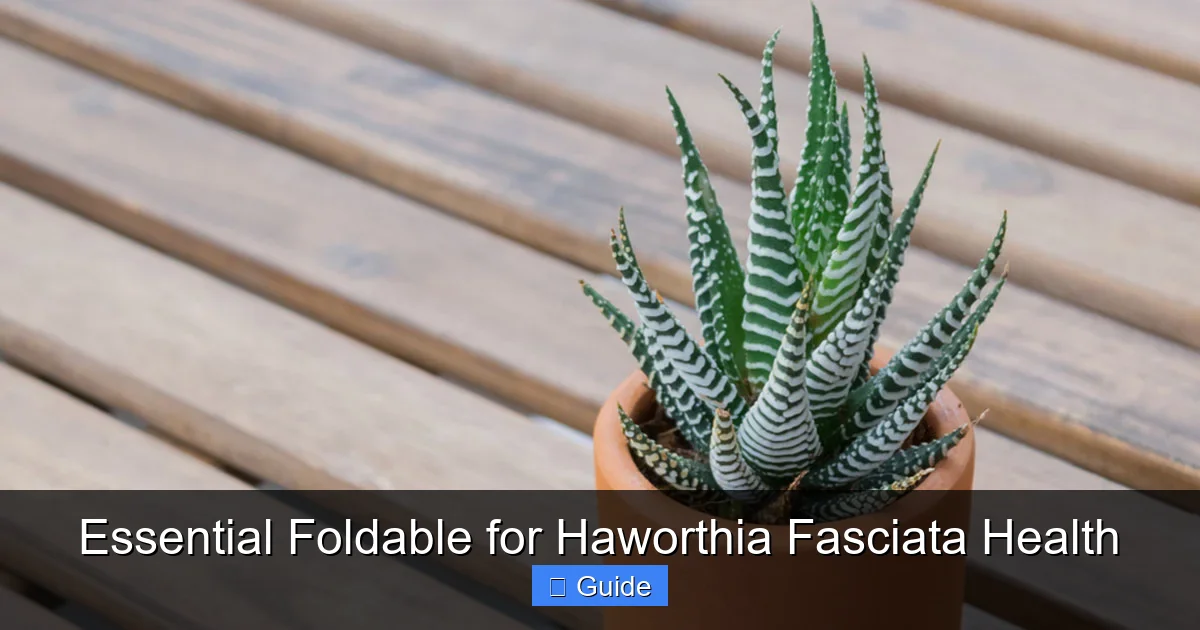
Essential Foldable for Haworthia Fasciata Health
The essential foldable for Haworthia fasciata health transforms how you care for this striking succulent. Portable grow tents, collapsible shelves, and foldable greenhouses give you total control over light, humidity, and temperature. This guide reveals the best foldable solutions and exactly how to use them for thriving zebra plants year-round.
If you’ve ever watched a Haworthia fasciata slowly decline despite your best efforts, you know the frustration. Those gorgeous white-striped leaves turn mushy. The rosette stretches toward weak light. Root rot sets in from humidity you can’t control. I’ve been there. Most of us have. The problem isn’t your skill — it’s your setup.
Here’s what changed everything for me: the essential foldable for Haworthia fasciata health. Not a single gadget, but a whole approach using portable, collapsible equipment. Foldable grow tents. Collapsible shelving. Pop-up greenhouses. These tools give you greenhouse-level control in any space — a balcony, a spare corner, even a closet. And they pack away when you don’t need them.
This guide walks you through every foldable solution that matters for zebra plant success. You’ll learn which equipment to buy, how to set it up, and how to adapt it through the seasons. Whether you’re growing one plant or fifty, these systems scale. Let’s dive in.
Key Takeaways
- Light control is critical: Foldable grow tents let you create perfect bright, indirect light conditions that Haworthia fasciata needs without scorching its leaves.
- Portability prevents stress: Collapsible systems let you move plants instantly during weather changes, protecting them from frost, heat waves, or excessive rain.
- Humidity management made easy: Foldable greenhouses maintain ideal 40-50% humidity levels while preventing the rot that kills so many zebra plants.
- Space efficiency matters: Foldable shelving units maximize vertical growing space in small apartments, balconies, or windowsills.
- Seasonal adaptation is simple: Adjust your foldable setup each season — add shade cloth in summer, insulation in winter, ventilation in spring.
- Quality materials last longer: Invest in UV-resistant fabric, rust-proof frames, and sturdy zippers to avoid replacing equipment every year.
- Monitoring prevents problems: Pair your foldable system with a hygrometer and thermometer to catch issues before they damage your plants.
Quick Answers to Common Questions
What is the most important foldable equipment for Haworthia fasciata?
A grow tent with ventilation control is the single most impactful piece. It manages light, humidity, temperature, and pests in one system.
Can I use a regular closet instead of a grow tent?
Yes, but you’ll need to add reflective walls, ventilation fans, light hanging hardware, and waterproof flooring. A tent includes all this integrated.
How do I prevent mold in a foldable greenhouse?
Ventilate daily, use circulating fans, space plants for airflow, water at soil level only, and remove dead leaves immediately. Keep humidity under 60%.
Do Haworthia need grow lights in a sunny window?
In winter, usually yes. Most windows provide insufficient intensity and duration November-February. Supplemental LED prevents etiolation.
What size foldable system do I need for 10 plants?
A 2×2 foot grow tent or 3-tier collapsible shelf handles 10 mature Haworthia comfortably with proper spacing for airflow.
📑 Table of Contents
- Understanding Haworthia Fasciata Needs
- Why Foldable Solutions Matter for Succulent Care
- Top Foldable Equipment for Haworthia Health
- Setting Up Your Foldable Growing Space
- Seasonal Care with Foldable Systems
- Common Mistakes and How to Avoid Them
- Advanced Tips for Exceptional Results
- Budget Breakdown: Three Tiers
- Troubleshooting Quick Reference
- Conclusion
Understanding Haworthia Fasciata Needs
Before we talk equipment, we need to understand the plant. Haworthia fasciata — commonly called zebra plant or zebra haworthia — comes from South Africa’s Eastern Cape. It grows tucked between rocks, shaded by grasses and shrubs. This tells us everything about what it wants.
Light Requirements: Bright But Indirect
Zebra plants need bright light. But direct sun burns their leaves. In nature, they get filtered light through vegetation. Too little light causes etiolation — that stretched, weak growth where leaves space out and lose their compact rosette form. Too much direct sun creates brown, crispy patches that never heal.
The sweet spot? Bright indirect light. Think 3,000 to 5,000 foot-candles. East-facing windows work well. South or west windows need sheer curtains. This is where a essential foldable for Haworthia fasciata health like a grow tent with adjustable shade cloth becomes invaluable. You control the exact light intensity.
Temperature Preferences: Moderate and Stable
These succulents thrive between 65°F and 80°F (18°C to 27°C). They handle brief dips to 40°F (4°C) but freeze damage happens fast below that. Summer heat above 90°F (32°C) stresses them, especially with high humidity. The key word is stability. Sudden swings cause more damage than slightly suboptimal but steady conditions.
A foldable greenhouse or grow tent buffers temperature swings. The enclosed air mass changes slowly. Add a small heater in winter or a clip-on fan in summer, and you’ve got climate control that rivals commercial greenhouses.
Humidity: The Silent Killer
Here’s where most growers fail. Haworthia fasciata wants 40% to 50% humidity. Average homes run 30% in winter, 60%+ in summer. Both extremes cause problems. Low humidity stresses roots. High humidity invites fungal rot — the number one killer of zebra plants.
An essential foldable for Haworthia fasciata health creates a microclimate. Ventilation panels let you dial in exact humidity. A small USB fan keeps air moving. A humidity tray adds moisture when needed. You become the weather controller.
Soil and Drainage: Non-Negotiable
Fast drainage saves lives. Use a gritty mix: 50% pumice or perlite, 25% coarse sand, 25% organic matter. Or buy a quality succulent mix and amend with extra pumice. The pot must have drainage holes. No exceptions. No rocks at the bottom — that creates a perched water table.
Foldable shelving units let you elevate plants for better airflow underneath pots. This prevents the “soggy bottom” syndrome that starts root rot before you see any signs above ground.
Watering Rhythm: Soak and Dry
Water thoroughly until it runs out the bottom. Then wait until the soil is completely dry — not just the top inch, but all the way through. In summer this might be every 7-10 days. In winter, every 3-4 weeks. A foldable setup lets you move plants to a sink or bathtub for proper watering without mess.
Why Foldable Solutions Matter for Succulent Care
You might wonder: why not just use a regular shelf by the window? Or a permanent greenhouse? The answer is flexibility. Haworthia needs change with seasons, with your living situation, with your growing collection. Fixed setups can’t adapt. Foldable systems can.
Space Constraints Are Real
Most of us don’t have a dedicated plant room. We have windowsills, balcony corners, maybe a spare closet. A essential foldable for Haworthia fasciata health fits your actual space. Pop-up grow tents come in sizes from 2×2 feet to 4×8 feet. Collapsible shelves fold flat against a wall when not in use. When friends visit, your plant setup disappears in minutes.
Seasonal Light Changes Demand Adaptation
Summer sun angle differs from winter. A south window that’s perfect in January scorches plants in July. Fixed shelves can’t move. But a foldable grow tent on wheels? Roll it to the east window in summer, south in winter. A collapsible greenhouse on a balcony? Rotate it weekly for even light. This adaptability prevents the etiolation and sunburn that ruin so many collections.
Pest Isolation Protects Your Investment
Mealybugs, spider mites, fungus gnats — they spread fast on open shelves. One infested plant from a nursery infects everything nearby. A zippered grow tent creates a physical barrier. New plants quarantine inside for two weeks. If pests appear, they’re contained. Your main collection stays safe. This alone justifies the cost of a quality essential foldable for Haworthia fasciata health system.
Moving House? No Problem.
Renters know the pain: you finally perfect your plant setup, then the lease ends. Permanent installations stay behind. Foldable equipment moves with you. Pack it in boxes. Set it up identically in the new place. Your plants never experience the transition shock of changing environments.
Budget-Friendly Scaling
Start with a $60 pop-up greenhouse. Add a $40 collapsible shelf next month. Get a $120 grow tent when your collection outgrows them. Each piece works alone or combined. You invest gradually. Compare that to a $2,000 permanent greenhouse you might outgrow — or outgrow your space for.
Top Foldable Equipment for Haworthia Health
Not all foldable gear works for succulents. Some traps too much humidity. Others lack ventilation. Some collapse under the weight of ceramic pots. Here’s what actually works, tested by growers who specialize in Haworthia.
Pop-Up Grow Tents: The Gold Standard
A quality grow tent is the single best essential foldable for Haworthia fasciata health. Look for these features:
- Reflective interior: Mylar or diamond-pattern reflective lining maximizes light efficiency. Your grow lights work twice as hard.
- Multiple ventilation ports: At least four — two low for intake, two high for exhaust. 6-inch ports fit standard inline fans.
- Viewing windows: Zippered windows let you check plants without opening the tent and disrupting climate.
- Sturdy frame: Steel poles rated for 50+ lbs. Cheap tents buckle under ceramic pots and light fixtures.
- Floor tray: Removable waterproof tray catches spills. Protects your floor and makes cleaning easy.
Top picks: VIVOSUN 2x2x4 ft for small collections ($80-100). AC Infinity CLOUDLAB 3x3x6 ft for serious growers ($180-220). Gorilla Grow Tent 2×2.5 ft for premium quality ($250+).
Collapsible Shelving Units: Vertical Growing Power
Metal wire shelves on wheels — the restaurant supply store staple — are surprisingly perfect for Haworthia. But dedicated plant shelving adds key features:
- Adjustable shelf height: Accommodates tall pots and short rosettes on the same unit.
- Mesh or slatted shelves: Airflow reaches pot bottoms. Prevents root rot.
- Locking casters: Roll the whole unit for watering, cleaning, or light adjustment.
- Fold-flat design: Stores 3 inches thick behind a door or under a bed.
- Weight capacity: 100+ lbs per shelf for heavy ceramic pots.
Best options: Seville Classics 4-tier mesh shelf ($70-90). Honey-Can-Do rolling shelf with bamboo shelves ($100-130). Custom-built PVC pipe shelving for DIYers ($40-60 materials).
Foldable Mini Greenhouses: Balcony and Patio Heroes
These look like clear plastic wardrobes with zippered fronts. They’re affordable ($40-80) and surprisingly effective for Haworthia in mild climates. Key features:
- UV-resistant cover: Cheap plastic yellows and cracks in one season. Look for 3+ year UV rating.
- Roll-up door with ties: Easy access and ventilation control.
- Ground stakes and tie-downs: Wind destroys unsecured greenhouses.
- Shelves included: Usually 3-4 wire shelves. Check weight limits.
- Replacement covers available: Extends life indefinitely.
Top brands: Quictent, Ohuhu, Home-Complete. Avoid the $20 “disposable” models — they’re false economy.
Portable Cold Frames: Season Extension Specialists
Low-profile, foldable cold frames sit directly on the ground or a table. They’re perfect for hardening off Haworthia in spring or protecting them through mild winters. Features that matter:
- Polycarbonate panels: Twin-wall polycarbonate insulates better than single-layer plastic.
- Automatic vent openers: Wax cylinders open vents at preset temperatures. Prevents cooking plants on sunny days.
- Fold-flat storage: Stores flat against a wall in summer.
- Anchoring system: Essential for wind resistance.
These work beautifully as a transitional essential foldable for Haworthia fasciata health between indoor and outdoor growing.
Foldable Potting Benches: Workspace That Disappears
Not a growing environment, but essential for maintenance. A wall-mounted fold-down potting bench gives you a sturdy workspace for repotting, dividing offsets, and soil mixing. Folds flat when done. Look for:
- Stainless steel or marine-grade hardware: Resists moisture and soil acids.
- Integrated soil bin: Keeps mix contained.
- Tool hooks: Keeps trowels, scissors, brushes organized.
- Weight rating: 150+ lbs for heavy pots and soil bags.
Setting Up Your Foldable Growing Space
Equipment alone doesn’t grow plants. Setup determines success. Here’s how to configure each system for Haworthia perfection.
Grow Tent Configuration: The Complete Indoor System
Start with location. Choose a spot with stable ambient temperature — avoid unheated garages, drafty windows, or next to heating vents. A spare closet, basement corner, or bedroom nook works.
Assemble the frame first. Most tents use color-coded poles. Connect corners, then roof poles. Drape the fabric shell over the frame — this is easier with two people. Zip it upright. Attach the floor tray.
Now lighting. Haworthia needs 12-14 hours of quality light. LED grow lights are the only sensible choice — low heat, high efficiency, tunable spectrum. For a 2×2 tent, a 100-150W quantum board covers perfectly. Hang it 12-18 inches above plants on adjustable ratchet hangers. Use a timer. Consistency matters.
Ventilation comes next. A 4-inch inline fan with carbon filter (for odor control if needed) exhausts through the top port. Passive intake through bottom ports works for small tents. Add a clip-on oscillating fan inside for air movement across leaves. This prevents fungal issues and strengthens plants.
Monitoring completes the system. A digital hygrometer/thermometer with remote sensor sits at canopy level. Target: 70-75°F, 45% humidity. Adjust fan speed and vent openings to hit these numbers.
Place plants on wire shelves or plastic trays. Space them for airflow — leaves shouldn’t touch. Group by size so light distribution stays even. This essential foldable for Haworthia fasciata health setup gives you commercial-grade results in 4 square feet.
Collapsible Shelf Setup: Window Maximization
Position the shelf perpendicular to the window, not parallel. This gives every plant equal light access. Use shelf liners — rubber mesh or silicone mats — to prevent pots sliding and protect shelves from moisture.
Add supplemental lighting if the window gives less than 4 hours direct sun. Clip-on LED grow bars attach to shelf frames. Run them 12 hours daily on a timer. In winter, this prevents etiolation. In summer, you might not need them.
Rotate the shelf weekly. Quarter-turn each plant. This ensures even growth and prevents leaning. A lazy susan turntable on each shelf makes this effortless.
Humidity tray: Fill a shallow tray with pebbles and water. Sit pots on top, not in water. Evaporation raises local humidity 5-10%. Refill weekly. This simple addition to your essential foldable for Haworthia fasciata health shelf system makes a measurable difference in winter.
Mini Greenhouse Configuration: Outdoor Season Extension
Place on a level surface — pavers, deck boards, or a folding table. Uneven ground stresses the frame. Anchor it. Use the included stakes plus additional weights (sandbags, water jugs) on the base shelves.
Orientation matters. Face the door away from prevailing winds. In northern hemisphere, south-facing gets most light but risks overheating. East-facing gives morning sun, afternoon shade — often ideal for Haworthia.
Shelving strategy: Bottom shelf for largest pots. Middle for medium. Top for small offsets and seed trays. This puts the most heat-tolerant plants (mature specimens) where temperatures peak.
Ventilation routine: Unzip door fully on sunny days above 65°F. Close before sunset. In spring/fall, crack door 6 inches during day. Winter: keep closed except for watering. A min/max thermometer inside tells you if you’re getting it right.
Shade cloth: Essential for summer. 30-40% shade cloth draped over the top prevents cooking. Attach with clothespins or binder clips. Remove in fall. This adaptability is why a mini greenhouse excels as an essential foldable for Haworthia fasciata health tool.
Cold Frame Setup: The Hardening-Off Station
Position on a south-facing wall if possible. The wall radiates heat at night. Fill bottom with 2 inches of gravel for drainage. Place plants directly on gravel or on wire mesh raised 1 inch.
Automatic vent opener: Set to open at 70°F. This single device prevents more plant deaths than anything else. Test it before trusting it — place in sun, verify it opens.
Insulation for winter: Bubble wrap on inside panels adds 5-10°F protection. Remove in spring. Straw bales around exterior add another buffer. This extends your outdoor growing by 6-8 weeks each end of season.
Seasonal Care with Foldable Systems
The beauty of foldable equipment is seasonal adaptation. Here’s your year-round playbook.
Spring: Wake Up and Expand
March-April: Plants emerge from winter rest. Increase watering gradually. Move foldable greenhouse outdoors for hardening off — 1 hour day one, add an hour daily. After two weeks, they live outside full-time.
Repotting season: Use your fold-down potting bench. Fresh gritty mix. Check roots. Divide offsets. The contained workspace keeps mess minimal.
Pest check: Quarantine new acquisitions in the grow tent for 14 days. Treat preventatively with neem oil or insecticidal soap. Your essential foldable for Haworthia fasciata health tent doubles as a quarantine station.
Summer: Heat Management
June-August: Heat is the enemy. Grow tent: run lights at night when ambient temps drop. Increase exhaust fan speed. Add a second clip-on fan. Consider a small portable AC unit for the room if temps exceed 85°F.
Mini greenhouse: 40% shade cloth mandatory. Door open all day. Add a battery-operated fan on the top shelf. Water early morning only — wet leaves in heat invite rot.
Collapsible shelves: Move to east or north window. Add sheer curtain if south/west only. Rotate twice weekly — summer light is intense.
Vacation care: Foldable systems shine here. Group plants in grow tent. Set lights and fans on timers. Use capillary matting or self-watering spikes for 2-week autonomy. Neighbor just checks once.
Fall: Transition Preparation
September-October: Reverse the spring process. Bring outdoor plants in gradually. Clean greenhouse thoroughly — soap, water, 10% bleach solution. Dry completely before storage.
Inspect every plant. Treat pests. Remove dead leaves. Repot any root-bound specimens. Your foldable potting bench earns its keep.
Grow tent setup: Clean interior with hydrogen peroxide solution. Check light output — LEDs dim over years. Replace if output dropped 20%+. Calibrate hygrometer.
Winter: The Indoor Season
November-February: This is where your essential foldable for Haworthia fasciata health system proves its value. Grow tent becomes primary habitat.
Light: 14 hours on, 10 off. Spectrum: 4000K-5000K for compact growth. Distance: 12-18 inches. Monitor for stretching — lower lights if needed.
Temperature: 65-70°F ideal. Small ceramic heater on thermostat if room drops lower. Keep away from plants — radiant heat burns leaves.
Humidity: Winter air is dry. Humidifier in tent or room targets 45%. Pebble trays help. Group plants — they create a humidity bubble.
Watering: Drastically reduced. Every 3-4 weeks. Check by pot weight — light means dry. Water in morning so excess evaporates before cool night.
Fertilizer: None. Haworthia rests. Resume 1/4 strength in March.
Common Mistakes and How to Avoid Them
Even with the best essential foldable for Haworthia fasciata health equipment, mistakes happen. Here are the ones that kill plants — and how to prevent them.
Mistake 1: Sealing It Too Tight
Enthusiasts zip the tent, close all vents, and create a sauna. Haworthia rots in 48 hours at 80% humidity. Fix: Always run at least one intake and one exhaust vent. Use a fan. Check hygrometer daily. If humidity exceeds 60%, increase ventilation immediately.
Mistake 2: Light Burn From Overenthusiasm
New grow light? Crank it to 100%. Leaves bleach white in days. Fix: Start at 50% power. Raise light to maximum height. Increase 10% weekly. Watch for stress signs — reddish tips mean perfect stress, white patches mean burn.
Mistake 3: Ignoring Night Temperatures
Daytime 75°F feels great. Night drops to 50°F in an unheated room. Plants suffer silent cold stress. Fix: Heater on thermostat. Or move tent to heated room. Minimum 55°F night temp.
Mistake 4: Watering on a Schedule
“Water every Sunday” kills more Haworthia than neglect. Soil stays wet. Roots rot. Fix: Water by weight and soil probe. Lift pot — heavy means wet. Wooden skewer in soil — damp means wait. Only water when bone dry.
Mistake 5: Cheap Equipment Failure
$20 greenhouse collapses in first windstorm. Plants crush. $30 grow tent light leaks ruin dark period. Zipper fails, pests enter. Fix: Buy once, cry once. Quality foldable gear lasts 5-10 years. Amortized cost is pennies per plant.
Mistake 6: No Quarantine Protocol
Beautiful new plant goes straight to main shelf. Two weeks later: mealybugs everywhere. Fix: Every new plant — even from trusted sources — spends 14 days in quarantine tent. Inspect daily with 10x loupe. Treat preventatively.
Mistake 7: Overcrowding
Plants touch. Airflow stops. Humidity pockets form. Fungal spores spread. Fix: Space plants so leaves don’t touch. Minimum 2 inches between pots. Thin collection annually — sell, gift, or compost extras.
Mistake 8: Neglecting Cleaning
Dead leaves accumulate. Soil spills. Algae grows on tent walls. Pests breed. Fix: Monthly deep clean. Remove all plants. Vacuum tent. Wipe shelves with hydrogen peroxide. Wash trays. Inspect every plant. Reset.
Advanced Tips for Exceptional Results
Beyond basics, these techniques elevate your essential foldable for Haworthia fasciata health game.
CO2 Supplementation in Grow Tents
Sealed tents deplete CO2 during lights-on. Plants slow growth. A simple CO2 bag (exhale bags, mushroom substrate bags) maintains 800-1000 ppm. Growth increases 20-30%. Cost: $30-40 per 4-month bag. Only works with sealed tent and ventilation off during light hours.
Automated Environmental Control
Inkbird or Pulse controllers manage fans, heaters, humidifiers, and lights based on sensor data. Set targets: 72°F, 45% RH. System maintains it 24/7. You check phone app weekly. Cost: $150-300. Worth it for 20+ plants.
Spectral Tuning for Morphology
High blue light (5000K+) keeps Haworthia compact. High red (3000K) encourages stretching. Use tunable LEDs: 60% blue/40% red for vegetative growth. Switch to 50/50 for flowering (rare indoors). This control is impossible with fixed window growing.
Propagation Station Integration
Dedicate one shelf in your foldable system to propagation. Leaf pullings, offset divisions, seed trays. Humidity dome on heat mat (75°F). 12-hour light. Success rates jump from 30% to 80%+. Your essential foldable for Haworthia fasciata health becomes a multiplication machine.
Data Logging for Optimization
Simple spreadsheet: date, watering, fertilizing, temp min/max, humidity min/max, observations. After a year, patterns emerge. You’ll know exactly when your plants need what. This transforms guesswork into knowledge.
Budget Breakdown: Three Tiers
Every budget can build an essential foldable for Haworthia fasciata health system.
Starter Tier: $150-250
- Ohuhu mini greenhouse: $55
- Clip-on LED grow lights (2x): $40
- Digital hygrometer/thermometer: $15
- USB clip fans (2x): $20
- Shade cloth 40%: $10
- Pebble trays, saucers: $15
- Timer: $10
- Quality succulent soil + pumice: $30
Enthusiast Tier: $400-600
- VIVOSUN 2x2x4 grow tent: $90
- Spider Farmer SF1000 LED: $150
- AC Infinity 4″ inline fan + carbon filter: $80
- Seville Classics 4-tier mesh shelf: $80
- Inkbird IHC-200 controller: $50
- Humidifier + heater: $60
- Monitoring: Pulse One sensor: $80
- Accessories: $60
Pro Tier: $1,000-1,500
- Gorilla Grow Tent 3×3: $350
- HLG 260W QB LED: $300
- AC Infinity Cloudline T6 + filter: $180
- Custom aluminum shelving: $200
- Full automation: TrolMaster Hydro-X: $400
- CO2 system: $100
- Propagation heat mats, domes: $100
- Monitoring redundancy: $150
Start where you are. Upgrade piece by piece. Every tier grows exceptional Haworthia.
Troubleshooting Quick Reference
When something looks wrong, check this first.
Leaves Turning Translucent/Mushy
Cause: Overwatering or humidity too high. Fix: Stop watering. Increase ventilation. Remove mushy leaves. Check roots — if black/mushy, behead and reroot healthy top.
Leaves Shriveling/Wrinkling
Cause: Underwatering or root loss. Fix: Check roots. If healthy, water thoroughly. If roots gone, behead, callus 3 days, reroot in barely moist pumice.
Stretched Growth (Etiolation)
Cause: Insufficient light. Fix: Lower lights. Increase hours. Add supplemental lighting. Cannot fix existing stretch — only prevent future.
Brown/White Patches on Leaves
Cause: Sunburn or light burn. Fix: Raise lights. Add shade cloth. Reduce intensity. Damaged leaves won’t recover — new growth will be fine.
White Cottony Masses
Cause: Mealybugs. Fix: Isolate immediately. Alcohol swab visible bugs. Systemic insecticide (imidacloprid) or repeated neem oil treatments. Quarantine 30 days after last sighting.
Fine Webbing, Speckled Leaves
Cause: Spider mites. Fix: High humidity (mites hate it). Insecticidal soap weekly x 3. Predatory mites for biological control. Increase airflow.
Small Black Flies
Cause: Fungus gnats. Fix: Yellow sticky traps. Mosquito bits (BTi) in water. Dry soil surface. Top dress with sand or diatomaceous earth.
Conclusion
The essential foldable for Haworthia fasciata health isn’t a single product. It’s a philosophy: give these remarkable plants the precise conditions they evolved for, using equipment that adapts to your life instead of demanding you adapt to it.
Start small. A mini greenhouse on a balcony. A collapsible shelf by a window. Watch your plants respond. They’ll tell you what they need — compact growth, vibrant stripes, steady offset production. Then expand. Add a grow tent for winter. Automation for consistency. Propagation for sharing.
Five years ago, I lost three Haworthia to rot in one winter. Last year, my foldable systems produced 47 healthy offsets from six mother plants. The difference wasn’t skill. It was control. And control comes from the right foldable tools, set up thoughtfully, adjusted seasonally.
Your zebra plants are waiting. They want to thrive. Give them the environment they deserve — one that folds away when company comes, expands when your collection grows, and travels when life moves you. That’s the power of foldable growing. Your Haworthia fasciata will thank you with every perfect, striped rosette.
Frequently Asked Questions
Can Haworthia fasciata live in a foldable greenhouse year-round?
In USDA zones 9-11, yes with seasonal modifications. In colder zones, use the greenhouse spring through fall, then move plants to an indoor grow tent for winter. The foldable design makes this transition simple.
How often should I replace the cover on a foldable mini greenhouse?
Quality UV-resistant covers last 3-5 years. Replace when yellowing reduces light transmission by 20% or tears appear. Most brands sell replacement covers separately, extending the frame’s life indefinitely.
Is a carbon filter necessary for a Haworthia grow tent?
Not for odor — Haworthia don’t smell. But carbon filters scrub airborne fungal spores and pests entering through intake air. They’re inexpensive insurance for a clean growing environment.
Can I stack multiple foldable shelves for more growing space?
Only if the manufacturer specifies stackability. Most consumer shelves aren’t rated for stacking loaded weight. Instead, buy a taller single unit or use separate shelves side by side.
What’s the best way to move a planted foldable system?
For wheeled shelves: lock casters, secure pots with bungee cords, move slowly. For grow tents: remove lights and fans, keep plants on floor tray, zip closed, carry by frame corners. Never drag.
How do I clean a foldable grow tent between growing cycles?
Remove all equipment. Vacuum interior thoroughly. Wipe all surfaces with 3% hydrogen peroxide solution. Wash floor tray with soap and water. Air dry completely before reassembling. This prevents disease carryover.