Professional Battery-powered for Begonia
Professional battery-powered tools for begonia gardening offer freedom from cords and gas engines. These lightweight, quiet tools help you prune, water, and maintain healthy begonias with less effort and more precision.
Key Takeaways
- Cordless freedom: Battery-powered tools let you move around begonia beds without tripping over cords or dragging hoses.
- Lightweight design: Most professional battery tools weigh less than gas models, reducing fatigue during long gardening sessions.
- Quiet operation: Electric motors run silently, so you can work early morning or late evening without disturbing neighbors.
- Zero emissions: Battery tools produce no fumes, making them safe for indoor begonia collections and enclosed greenhouses.
- Instant start: Push-button start means no pull cords or priming — just press and go when tending to your begonias.
- Interchangeable batteries: Many professional systems share batteries across tools, saving money and reducing clutter.
- Precision control: Variable speed triggers give you exact control for delicate begonia pruning and care tasks.
Quick Answers to Common Questions
What voltage battery system is best for begonia gardening?
An 18V/20V max system handles 90% of begonia tasks including pruning, cultivating, spraying, and blowing. Higher voltage (40V+) is only needed for large properties with heavy cultivating or big hedge trimming.
Can I use the same battery for all my begonia tools?
Yes, if you stay within one brand ecosystem. Most professional brands share batteries across their entire 18V/20V tool lineup — shears, cultivator, sprayer, blower, hedge trimmer, and more.
How long do batteries last when pruning begonias?
A 2.0 Ah battery powers pruning shears for 3 to 5 hours of continuous cutting (hundreds of cuts). A 5.0 Ah battery lasts all day. Pruning draws very little power compared to cultivating or blowing.
Are battery-powered sprayers good for organic begonia treatments?
Yes. Battery sprayers deliver consistent pressure for even coverage of neem oil, insecticidal soap, copper fungicide, and other organic products. Rinse thoroughly between different products to prevent cross-contamination.
What safety gear do I need when using battery tools on begonias?
Safety glasses (mandatory), gloves (nitrile under leather for sap and thorns), and a respirator when spraying any product — even organic ones. Closed-toe shoes and long pants protect from debris thrown by cultivators and blowers.
📑 Table of Contents
- Why Battery-Powered Tools Change Begonia Gardening
- Essential Battery-Powered Tools for Begonia Care
- Matching Tools to Your Begonia Types
- Choosing the Right Battery Platform
- Practical Tips for Battery Tool Success with Begonias
- Budget Planning and Value Strategies
- Advanced Techniques for Professional Results
- Conclusion
Why Battery-Powered Tools Change Begonia Gardening
Growing begonias takes patience and the right tools. These beautiful plants need regular care — pruning dead leaves, shaping growth, watering, and sometimes pest control. For years, gardeners had two choices: manual hand tools that tire your hands, or gas-powered equipment that is heavy, loud, and smelly. Neither option feels great when you are working close to delicate begonia flowers.
Enter professional battery-powered tools for begonia care. This new generation of cordless equipment brings professional power without the drawbacks. You get the strength to handle tough jobs like thick stem cutting or deep soil cultivation, but in a package that weighs just a few pounds. The motor starts instantly with a trigger squeeze. No fumes mean you can use them inside a greenhouse or sunroom where many begonia lovers keep their prized collections. And the quiet operation lets you tend to your plants at dawn or dusk — the best times for watering and inspection — without waking the household.
This guide walks you through everything you need to know about choosing and using professional battery-powered tools for begonia gardening. We will cover the main tool types, what features matter most, how to match tools to your specific begonia varieties, and tips for getting the most from your investment. Whether you grow a few pots on a balcony or manage a large shade garden filled with tuberous, fibrous, and rhizomatous begonias, the right cordless tools make the work easier and more enjoyable.
Essential Battery-Powered Tools for Begonia Care
Cordless Pruning Shears
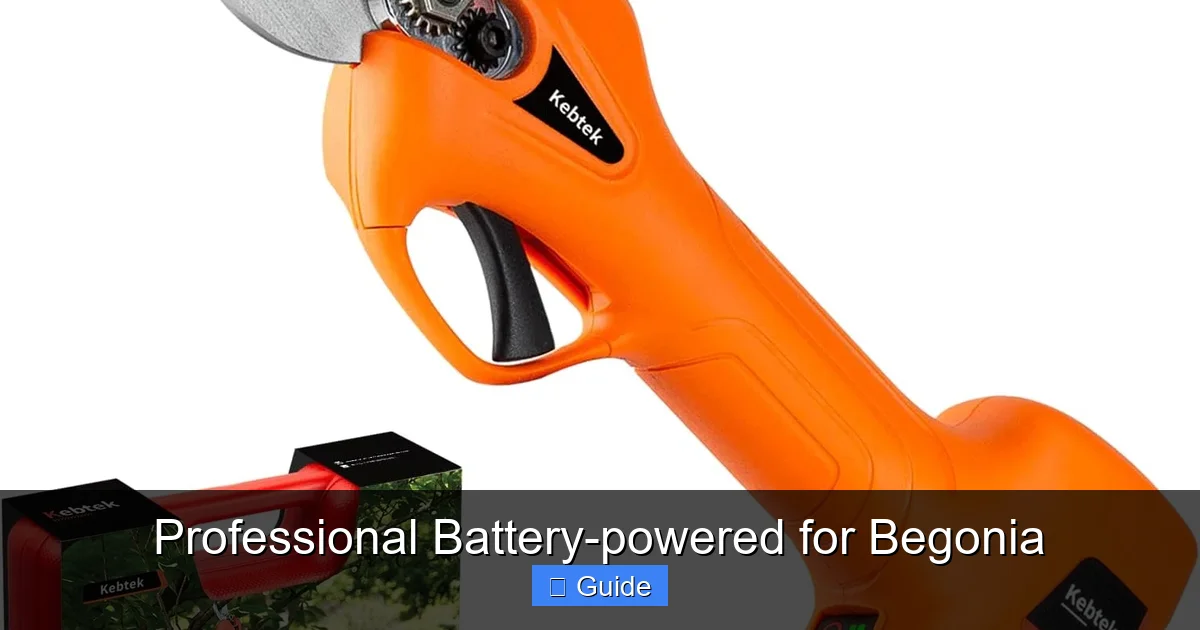
Pruning shears are the number one tool for begonia maintenance. These plants benefit from regular deadheading — removing spent flowers — and selective pruning to shape the plant and improve air flow. Manual bypass pruners work fine for a few plants, but they strain your hand after dozens of cuts. Professional battery-powered pruning shears solve this problem completely.
Visual guide about Professional Battery-powered for Begonia
Image source: thumbs.dreamstime.com
These tools look like oversized scissors with a small motor and battery pack. You place the blades on a stem, squeeze the trigger, and the blades close with clean, precise force. Most models cut branches up to one inch thick — more than enough for any begonia stem. The best part? You can make hundreds of cuts on a single charge. Look for models with replaceable blades, since begonia sap can gum up cutting edges over time. A quick blade swap keeps you working without stopping to sharpen.
When shopping, check the cutting cycle time. Faster cycles — under one second — let you move quickly from stem to stem. Also consider weight distribution. Shears with the battery in the handle balance better than those with a separate battery pack on a belt clip. For begonia work, you want the tool to feel like an extension of your hand, not a heavy gadget you lug around.
Battery-Powered Hedge Trimmers for Large Begonia Beds
If you grow wax begonias or other bedding varieties in mass plantings, a hedge trimmer saves hours of hand work. These tools use reciprocating blades to shear foliage quickly and evenly. Battery-powered models now match gas trimmers in cutting power but weigh half as much. A typical 22-inch blade runs for 45 to 60 minutes on a 5.0 Ah battery — enough to shape a large begonia border.
For begonia beds, choose a trimmer with a shorter blade (18 to 22 inches) rather than the 30-inch models meant for privacy hedges. Shorter blades give you more control around curved beds and between plants. Dual-action blades reduce vibration, which matters when you are making precise cuts near delicate begonia crowns. Some models offer a variable speed trigger — run it slow for detail work, fast for open areas.
One tip: clean the blades after each use. Begonia sap is sticky and attracts dust. A quick wipe with a solvent-soaked rag prevents buildup that dulls the edge and spreads disease between plants.
Cordless Cultivators and Soil Tools
Healthy begonias start with healthy soil. These plants prefer loose, well-draining mix rich in organic matter. Over time, soil compacts, especially in containers and raised beds. A battery-powered cultivator loosens the top few inches without disturbing shallow begonia roots. Mini cultivators with counter-rotating tines work best — they do not kick back like single-direction models.
Look for a cultivator with adjustable tilling width. Narrow settings (6 to 8 inches) let you work between established begonia plants. Wider settings (up to 12 inches) prepare new beds quickly. Depth control is also valuable. Begonia roots sit close to the surface, so you want to till only the top 2 to 3 inches. Some cultivators come with interchangeable tine sets — one for cultivating, another for weeding, a third for aerating. This versatility replaces several hand tools.
Battery life matters here. Cultivating draws more power than pruning. A 4.0 Ah battery gives about 30 minutes of continuous tilling — enough for a medium garden. If you have a large area, buy a second battery or choose a tool compatible with higher-capacity packs (6.0 Ah or more).
Battery-Powered Sprayers for Pest and Disease Control
Begonias face several common pests — aphids, mealybugs, spider mites, thrips — and fungal issues like powdery mildew and botrytis. Timely spraying prevents outbreaks. Manual pump sprayers work but tire your arm and deliver inconsistent pressure. Battery-powered sprayers maintain steady pressure automatically, giving even coverage on leaf undersides where pests hide.
Professional battery sprayers come in backpack and handheld styles. Backpack models hold 4 gallons and run for hours on a charge — ideal for large collections. Handheld versions hold 1 to 2 gallons and weigh less, better for indoor or balcony gardens. Both types offer adjustable nozzles for different spray patterns: fine mist for fungicides, stream for targeted insecticide application, shower for foliar feeding.
Key features to seek: chemical-resistant seals (viton or EPDM), a pressure gauge, and a wand long enough to reach hanging baskets without a ladder. Rinse the system thoroughly after each use. Begonia treatments often switch between products, and residue mixing causes phytotoxicity — leaf burn that looks like disease but comes from chemical interaction.
Cordless Leaf Blowers for Cleanup
Begonias drop flowers and leaves constantly. A battery-powered blower clears debris fast, reducing disease pressure and keeping beds tidy. Unlike gas blowers, electric models start instantly and run quietly — you can use them near open windows or in shared garden spaces. Variable speed lets you blow heavy wet leaves on low, then switch to high for dry debris on paths.
For begonia areas, choose a blower with a concentrator nozzle. This narrows the air stream so you can target debris between plants without blasting soil out of pots or damaging tender stems. Some models include a vacuum/mulcher attachment — great for turning fallen begonia leaves into mulch for the same beds. Just be sure the mulcher shreds finely; large pieces mat down and block water.
Air volume (CFM) matters more than speed (MPH) for garden cleanup. Look for 400+ CFM at the nozzle. Battery runtime varies — expect 20 to 40 minutes at high power. A second battery keeps you going for big cleanup days.
Matching Tools to Your Begonia Types
Tuberous Begonias — Delicate Giants
Tuberous begonias produce huge, rose-like flowers on brittle stems. They need careful handling. For these, lightweight pruning shears with a fine blade tip are essential. You will deadhead daily during peak bloom. A heavy tool crushes stems. Choose shears under 2 pounds with a blade opening under 1 inch — precision over power. Skip the hedge trimmer entirely; hand-prune each spent flower to the first healthy leaf node.
Soil care for tuberous begonias means gentle cultivation. Their tubers sit just below the surface. Use a cultivator on the lowest speed with the narrowest tine setting. Work slowly around each plant. A handheld battery cultivator gives better feel than a wheeled model. For pest control, a small handheld sprayer with a fine mist nozzle applies treatments without knocking off flowers.
Fibrous (Wax) Begonias — Bedding Workhorses
Wax begonias grow in dense mats, perfect for mass plantings. Here, a hedge trimmer shines. Shear the entire bed after the first flush fades — it stimulates a second bloom wave. Use the trimmer on medium speed with a light touch. You want to remove spent flowers and leggy growth, not scalp the plants. Follow with a blower to clear clippings.
For soil prep before planting, a wider cultivator (10 to 12 inches) works fast. These begonias have fibrous root systems that tolerate more disturbance than tuberous types. A backpack sprayer covers large beds efficiently. Apply preventive fungicide early in the season — wax begonias in humid climates often get botrytis.
Rhizomatous Begonias — Foliage Stars
Grown for stunning leaves rather than flowers, rhizomatous begonias (like rex begonias) spread horizontally. Pruning focuses on removing damaged leaves and controlling spread. Precision shears work best — snip individual leaves at the rhizome. A cultivator helps divide clumps every few years. Lift the plant, use the cultivator tines to tease apart rhizomes, then replant sections.
These begonias often grow in pots or shallow trays. A mini handheld blower clears debris from tight spaces without disturbing the shallow rhizomes. For pest control, a small sprayer with a 12-inch wand reaches under the dense leaf canopy where mealybugs hide.
Cane Begonias — Tall and Structural
Cane begonias (angel wing, dragon wing) grow tall with bamboo-like stems. They need pole pruners for height — but battery-powered pole pruners exist now. These extend to 8 or 10 feet with a cutting head controlled by a trigger at the base. Much safer than a ladder. Use them to remove old canes at the base and tip-prune for bushiness.
A cultivator with a long handle (or an attachment for a power head system) works soil around the base without bending. These begonias have deeper roots than other types, so you can cultivate slightly deeper — 4 inches is safe. A backpack sprayer reaches the full height of mature plants for thorough pest coverage.
Choosing the Right Battery Platform
Voltage and Amp-Hours Explained Simply
Battery specs confuse many gardeners. Here is the simple version. Voltage (V) roughly equals power — 18V/20V max tools handle most begonia tasks. 36V/40V tools add power for heavy cultivating or large hedges. 56V to 80V systems rival gas but cost more and weigh more. For begonia work, 18V/20V covers 90% of needs.
Amp-hours (Ah) equals runtime. A 2.0 Ah battery runs a pruner for hours but a cultivator for 15 minutes. A 5.0 Ah battery gives 2.5x the runtime but weighs more. Most pros buy one 5.0 Ah and one 2.0 Ah — use the big one for cultivator and blower, the small one for shears and sprayer. This balances weight and runtime.
Watt-hours (Wh) = Volts × Amp-hours. This is the true energy measure. A 20V 5.0 Ah battery = 100 Wh. A 40V 2.5 Ah battery = 100 Wh. Same energy, different voltage. Higher voltage tools draw fewer amps for the same work, so they run cooler and more efficiently. But the batteries cost more.
Brand Ecosystems — Stick With One
Every major brand — DeWalt, Makita, Milwaukee, Ryobi, EGO, Greenworks, Stihl, Husqvarna — uses proprietary battery connectors. You cannot mix brands. Pick one ecosystem and build within it. This lets you share batteries and chargers across tools, saving hundreds of dollars. A 5-tool kit with two batteries and a charger often costs less than buying each tool bare (without battery) plus separate batteries.
For begonia gardeners, consider which tools you actually need. If you only need shears and a sprayer, a compact 12V system (like Bosch or Milwaukee M12) saves weight and money. If you want cultivator, blower, hedge trimmer, and sprayer, an 18V/20V system gives more power options. If you manage a large property with big beds, 40V or 56V makes sense.
Check tool availability within the ecosystem before committing. Some brands offer 50+ tools on one battery; others offer 10. More options mean you can add a pole pruner, chainsaw, or string trimmer later without buying a new battery system.
Charging Speed and Battery Care
Fast chargers refill a 5.0 Ah battery in 45 to 60 minutes. Standard chargers take 2 to 3 hours. If you work long days, a fast charger (or two) keeps you running on two batteries indefinitely. Some brands offer dual-port chargers — charge two at once.
Store batteries at 40% to 60% charge in a cool, dry place. Do not leave them on the charger long-term. Do not store fully charged or fully dead. Extreme heat (over 100°F) and freezing degrade lithium-ion cells. A garage in summer kills batteries fast. Bring them inside.
Most professional batteries last 3 to 5 years or 500 to 1000 charge cycles. Capacity fades gradually. When runtime drops below 50% of new, replace the pack. Many brands offer recycling programs — do not throw lithium batteries in trash.
Practical Tips for Battery Tool Success with Begonias
Daily Workflow for Peak Efficiency
Start each gardening session by checking battery levels. Press the charge indicator button on each pack. If any show less than two bars, swap for a fresh one. Nothing stops work faster than a dead battery halfway through a bed. Keep a charging station near your tool storage — plug in used batteries immediately after each session.
Organize tools by task order. Morning: sprayer first (calm air, dew helps coverage), then pruning shears (clean cuts on turgid stems), then cultivator (soil moist but not wet), then blower (clears debris). Evening: blower first (dry debris), then shears (final deadheading), then sprayer if needed (avoid wet leaves overnight).
Carry a small tool belt or apron with a spare battery, pruning snips (for detail work the power shears miss), a rag for blade cleaning, and a spray bottle with diluted alcohol for disinfecting blades between plants. This prevents moving botrytis or viruses from sick to healthy begonias.
Seasonal Maintenance Calendar
Early Spring: Inspect all tools. Charge all batteries to full, then discharge to 50% for storage if not using yet. Sharpen or replace shear blades. Clean sprayer tanks and check seals. Lubricate hedge trimmer blades with light oil. Test each tool briefly.
Peak Season (Summer): Clean shear blades weekly — begonia sap builds up fast. Rinse sprayer after every use. Blow out cultivator vents monthly — dust kills motors. Check battery contacts for corrosion; clean with a pencil eraser if needed. Rotate batteries so none sit unused for months.
Fall Cleanup: Heavy cultivator use for bed prep. Blower runs long — have extra batteries ready. Final pruning of cane and tuberous begonias before frost. Run sprayer with clean water to flush lines, then pump RV antifreeze through if you freeze.
Winter Storage: Charge all batteries to 50%. Store tools clean and dry. Remove batteries from tools. Store in a climate-controlled space (40°F to 70°F ideal). Check battery charge every 60 days; recharge to 50% if below 30%.
Safety Practices Specific to Begonia Work
Wear safety glasses always. Begonia stems snap and fly unpredictably when cut. Gloves protect from thorns on some varieties and from blisters during long pruning sessions. Nitrile gloves under leather work well — nitrile blocks sap, leather blocks thorns.
When spraying, wear a respirator rated for pesticides (N95 minimum, organic vapor cartridge better). Even organic sprays like neem oil or copper fungicide irritate lungs. Spray early morning when bees are less active. Cover nearby water features — runoff harms aquatic life.
Keep tools away from water. Battery tools are water-resistant, not waterproof. Do not use in rain or wash with a hose. Wipe clean with a damp cloth. Store batteries separate from tools to prevent accidental activation.
For pole pruners on cane begonias, maintain a stable stance. Do not overreach. The cutting head is heavy at full extension. Cut at a comfortable height; move the ladder instead of stretching. Never cut above shoulder level with a pole tool.
Budget Planning and Value Strategies
Starter Kits vs. Bare Tools
A typical 18V/20V starter kit includes two batteries (usually 2.0 Ah or 4.0 Ah), a charger, and a bag. Cost: $150 to $250. Bare tools (tool only, no battery) cost $80 to $200 each. If you need three or more tools, a kit plus bare tools saves money. If you need one or two tools, buy bare tools and a separate battery/charger combo.
Watch for holiday sales — Black Friday, Father’s Day, spring promotions. Kits often drop 20% to 30%. Sign up for brand emails for alerts. Some retailers offer “buy a kit, get a bare tool free” deals.
Consider refurbished tools. Factory-reconditioned units carry full warranties and cost 30% to 50% less. Check the brand’s official outlet store or authorized refurbishers. Avoid third-party “refurbished” on marketplace sites — quality varies wildly.
Long-Term Cost Comparison: Battery vs. Gas
Gas tools cost less upfront but more over time. A gas hedge trimmer: $200. Fuel, oil, spark plugs, air filters, carburetor cleanings: $50 to $100 per year. Battery trimmer: $180 bare + $100 battery (shared). Electricity to charge: pennies per year. Battery replacement at year 4: $100. Five-year total: gas ~$650, battery ~$380. Battery wins.
Plus, battery tools need virtually zero maintenance. No winterizing. No stale fuel issues. No pull-cord failures. For begonia gardeners who use tools seasonally, this reliability matters. Your tools start every time, even after six months in storage.
Resale Value and Upgrade Paths
Quality battery tools hold value. A 3-year-old professional shear in good condition sells for 50% to 60% of new price. Gas tools drop to 20% to 30%. If you upgrade later (say, from 18V to 40V), selling the old kit funds much of the new one. Keep original boxes and manuals — they boost resale.
Some brands offer trade-in events. Stihl, Husqvarna, and EGO occasionally run “trade your gas tool for battery credit” promotions. Check dealer calendars in spring.
Advanced Techniques for Professional Results
Precision Pruning with Variable Speed
Most professional battery shears offer two or three speed modes. Low speed (slow close) gives maximum control for delicate cuts — removing a single spent flower from a cluster without nicking neighbors. High speed (fast close) powers through thick cane begonia stems. Learn to feather the trigger — squeeze slowly for precision, fast for power. This technique alone separates amateur results from professional ones.
For tuberous begonias, use low speed exclusively. Their stems are hollow and crush easily. Position the blade, squeeze slowly, let the motor do the work. Do not force. If the stem does not cut cleanly, the blade needs sharpening or replacing.
For cane begonias, switch to high speed for base cuts on old woody canes. These can be 1 inch thick and tough. The extra speed prevents the blade from stalling mid-cut, which tears bark.
Soil Health Monitoring with Cultivator Feedback
Experienced gardeners “read” soil through the cultivator. Resistance changes tell you about moisture, compaction, and root density. Light, fluffy resistance means good structure. Hard, jerky resistance means compaction or dry clay. Sudden release means you hit a root zone — stop and move over.
Use this feedback to adjust watering and amendment schedules. Areas that cultivate easily need less organic matter. Areas that resist need compost worked in. For begonias, consistent moisture and loose soil prevent root rot and stem rot — the two biggest killers.
After cultivating, use the blower on low to clear loose soil off begonia leaves. Soil on foliage encourages fungal spores. A quick blow keeps plants clean and disease-free.
Integrated Pest Management Timing
Battery sprayers enable precise timing — the heart of integrated pest management (IPM). Scout daily. At first sign of aphids (curled new growth, sticky honeydew), spot-spray just affected plants with insecticidal soap. The sprayer’s adjustable nozzle lets you target the underside of leaves without drenching the whole bed.
For powdery mildew (white powder on leaves), apply preventive sulfur or potassium bicarbonate at first humid spell. The sprayer’s consistent coverage reaches leaf undersides where spores germinate. Repeat weekly per label. The battery sprayer makes this easy — no pumping fatigue means you actually do the repeat applications.
Rotate modes of action. Do not use the same fungicide class twice in a row. Label the sprayer tank with tape: “Soap only” or “Copper only.” Cross-contamination causes resistance and plant damage. Rinse triple between products.
Conclusion
Professional battery-powered tools for begonia gardening have moved from novelty to necessity. They deliver the power to handle any task — pruning, cultivating, spraying, blowing — without the noise, fumes, weight, and maintenance of gas engines. For begonia enthusiasts, the benefits are specific and real: lightweight precision for delicate stems, quiet operation for early morning disease scouting, zero emissions for greenhouse and indoor use, and instant start for those “I’ll just deadhead a few” moments that turn into hour-long sessions.
Choosing the right tools starts with knowing your begonias. Tuberous types demand feather-light shears. Wax begonia beds call for a hedge trimmer. Rhizomatous collections need precision snips and a mini blower. Cane begonias require a pole pruner. Match the tool to the plant, and the work becomes a pleasure instead of a chore.
Invest in one battery ecosystem. Share packs across tools. Buy a fast charger. Care for your batteries — store at half charge, keep cool, cycle regularly. A well-chosen, well-maintained cordless kit lasts years and pays for itself in saved time, healthier plants, and the simple joy of gardening without a cord holding you back.
Your begonias will thank you with more blooms, cleaner foliage, and stronger growth. And you will finish each session with energy left to sit back and admire the results. That is what professional battery-powered tools for begonia care really deliver: more beauty, less effort.
Frequently Asked Questions
How do I clean begonia sap off battery pruner blades?
Wipe blades with a rag soaked in isopropyl alcohol or mineral spirits after each use. For heavy buildup, remove blades (usually one screw) and soak for 10 minutes. Dry thoroughly and apply a drop of light oil before reassembling. Clean blades cut cleaner and spread less disease.
Can I leave batteries on the charger over winter?
No. Store batteries at 40% to 60% charge in a cool, dry place (40°F to 70°F). Check every 60 days and recharge to 50% if below 30%. Leaving batteries on the charger or at full charge degrades lithium-ion cells permanently.
What size cultivator tines work best between begonia plants?
Narrow tine sets (6 to 8 inches wide) with 4 to 6 tines give the best control between established begonias. They loosen soil without hitting shallow roots. Many cultivators offer interchangeable tine widths — keep narrow for maintenance, wide for bed prep.
Do battery hedge trimmers cut thick begonia stems cleanly?
Yes, professional 18V/20V hedge trimmers cut stems up to 3/4 inch thick. For thicker cane begonia stems (1 inch+), use a pole pruner or loppers. Dual-action blades on quality trimmers reduce vibration and tear-out on fibrous begonia stems.
How do I prevent fungicide residue in my battery sprayer?
Triple-rinse the tank, wand, and nozzle with clean water after each use. Pump water through the wand until it runs clear. For seasonal storage, run RV antifreeze through the system. Label tanks by product type (fungicide, insecticide, fertilizer) to avoid cross-contamination.
Are battery tools powerful enough for dividing large rhizomatous begonias?
A battery cultivator with counter-rotating tines loosens soil around large clumps effectively. For actual division, lift the plant and use the cultivator tines to tease rhizomes apart, or use a sharp hand knife. The cultivator prepares the area; hand tools finish the precise work.