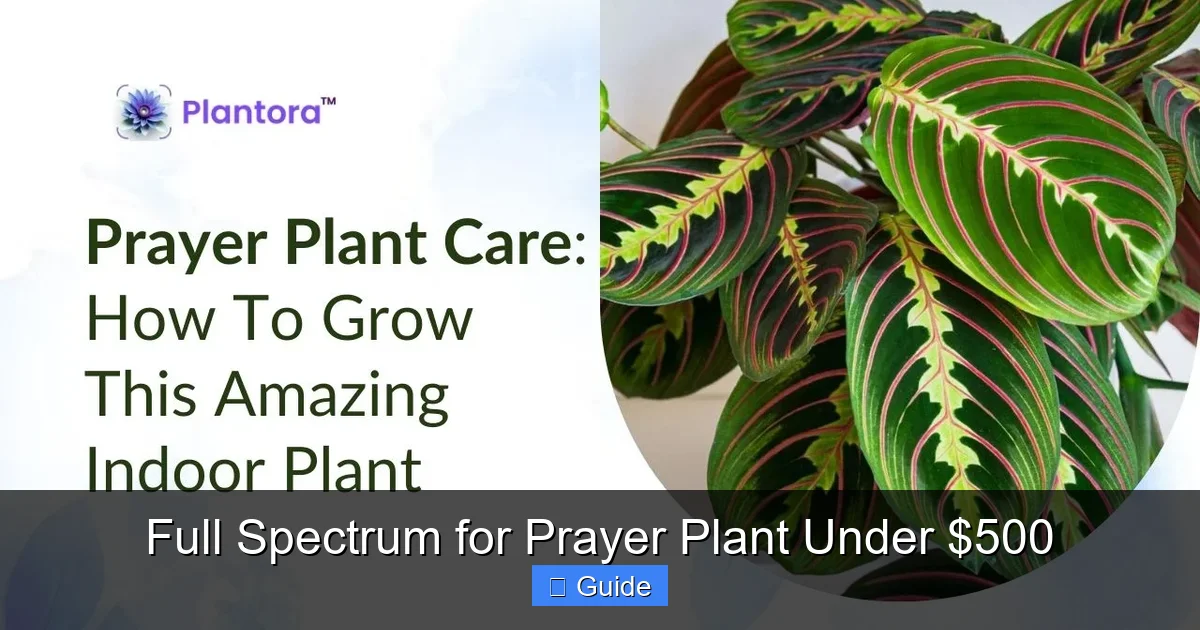
Full Spectrum for Prayer Plant Under $500
Full spectrum for prayer plant under $500 lighting gives your Maranta the balanced wavelengths it craves without breaking the bank. This guide walks you through why spectrum matters, how to pick a budget fixture, and simple setup tips for vibrant, healthy leaves.
Key Takeaways
- Balanced spectrum drives growth: Red, blue, and green wavelengths together mimic sunlight and keep prayer plants thriving.
- Price does not equal performance: Many fixtures under $500 deliver professional‑grade output for home growers.
- Adjustable intensity prevents stress: Dimmable lights let you match the plant’s changing needs through seasons.
- Proper distance matters: Keeping the fixture 12‑18 inches above foliage avoids leaf burn while maximizing photosynthesis.
- Regular cleaning extends life: Dust‑free lenses keep light output steady and reduce heat buildup.
- Timer automation simplifies care: Consistent 12‑14 hour cycles promote steady growth without manual effort.
- Monitor leaf response: Curling or fading signals a need to tweak spectrum or distance.
Quick Answers to Common Questions
What is the ideal PAR level for a prayer plant?
Aim for 120‑150 µmol·m⁻²·s⁻¹ at canopy height for healthy growth without leaf burn.
Can I use a regular household LED bulb instead of a grow light?
Standard bulbs lack the balanced red, blue, and green output needed for photosynthesis; a dedicated full spectrum fixture is far more effective.
How often should I clean the light lens?
Wipe the lens monthly with a microfiber cloth and a touch of isopropyl alcohol to maintain maximum output.
Do prayer plants need a dark period each night?
Yes, a consistent 12‑hour dark period supports their natural leaf‑folding rhythm and overall health.
Is a dimmable driver necessary?
Dimming lets you adjust intensity seasonally and mimic sunrise‑sunset, reducing stress and saving energy.
📑 Table of Contents
Why Full Spectrum Light Matters for Prayer Plants
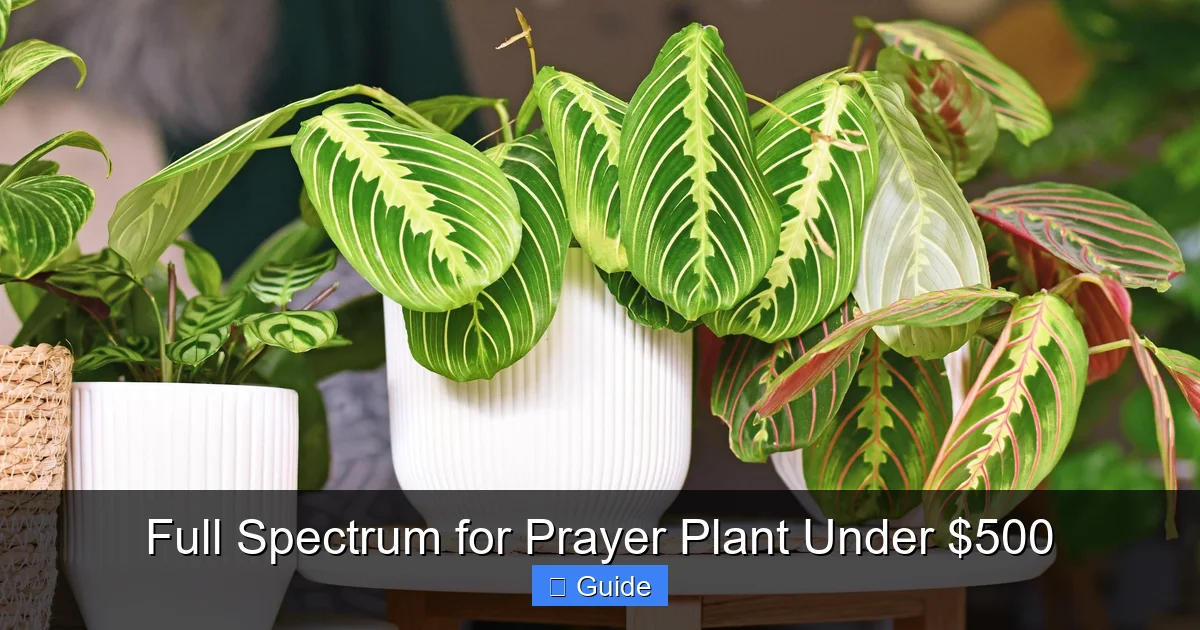
Prayer plants, also known as Maranta, originate from tropical forest floors where filtered sunlight reaches them through a canopy. In those conditions the light contains a mix of red, blue, and green wavelengths. When we bring them indoors we must recreate that mix. A full spectrum for prayer plant under $500 fixture provides exactly that blend. Without the right spectrum the plant stretches, loses its striking leaf patterns, and may stop folding its leaves at night.
Red wavelengths encourage flowering and strong stem development. Blue wavelengths promote compact, bushy growth and vibrant coloration. Green wavelengths penetrate deeper into the canopy, supporting lower leaves. A balanced fixture delivers all three in proportions close to natural sunlight. That is why investing in a quality full spectrum for prayer plant under $500 light is one of the smartest moves you can make for indoor Maranta care.
Understanding Light Spectrum Basics
What Is a Full Spectrum Light?
A full spectrum light emits energy across the visible range, roughly 400 to 700 nanometers. It also includes a small amount of ultraviolet and far‑red that plants use for signaling. Many LED grow lights label themselves “full spectrum” but the actual distribution can vary. Look for a spectral chart that shows peaks in the blue (around 450 nm) and red (around 660 nm) regions with a gentle green shoulder.
Visual guide about Full Spectrum for Prayer Plant Under $500
Image source: cdn.mos.cms.futurecdn.net
Photosynthetically Active Radiation (PAR)
PAR measures the light plants can actually use for photosynthesis. It is expressed in micromoles per square meter per second (µmol·m⁻²·s⁻¹). A good full spectrum for prayer plant under $500 unit typically delivers 100‑200 µmol·m⁻²·s⁻¹ at 12‑inch distance. That range supports healthy growth without causing photoinhibition.
Color Rendering Index (CRI) and Plant Health
CRI tells how accurately a light shows colors compared to sunlight. High CRI (above 90) means the light renders the deep greens and reds of prayer plant leaves faithfully. While CRI is more a human‑vision metric, a high CRI usually correlates with a smoother spectral output that plants also appreciate.
Budget‑Friendly Full Spectrum Options Under $500
Top Pick: 300‑Watt LED Panel
A 300‑watt LED panel with a 3‑by‑3 foot coverage area often retails around $350. It offers a true full spectrum, dimmable driver, and a built‑in timer. The panel’s aluminum housing dissipates heat, keeping leaf temperature safe. Many growers report that their Maranta shows richer vein coloration within two weeks of switching to this full spectrum for prayer plant under $500 panel.
Runner‑Up: 200‑Watt COB Fixture
Chip‑on‑board (COB) fixtures concentrate many tiny LEDs into a single module. A 200‑watt COB unit costs roughly $280 and delivers intense, uniform light. Its narrow beam angle means you can hang it closer (10‑12 inches) for higher PAR without hot spots. This makes it a strong contender for a full spectrum for prayer plant under $500 setup in smaller spaces.
Value Choice: 150‑Watt Quantum Board
Quantum boards use a flat array of mid‑power LEDs on a large PCB. A 150‑watt board typically sells for $180‑$220. It runs cool, has a wide 120° spread, and includes a mean well driver with 0‑10 V dimming. For a modest collection of prayer plants, this full spectrum for prayer plant under $500 board provides ample light and leaves room in the budget for a timer or a light meter.
What to Avoid
Cheap “blurple” panels that only emit deep blue and red often lack green and far‑red. They can cause leggy growth and poor leaf patterning. Also steer clear of fixtures without a dimming option; prayer plants appreciate a gradual sunrise‑sunset simulation.
How to Set Up Your Light for Optimal Growth
Choosing the Right Height
Start with the fixture 18 inches above the canopy. Measure PAR with a handheld meter if you have one; aim for 120‑150 µmol·m⁻²·s⁻¹. If the meter reads lower, lower the light in 2‑inch increments. If leaves show bleaching, raise it. The sweet spot for most full spectrum for prayer plant under $500 units sits between 12 and 16 inches.
Setting the Photoperiod
Prayer plants thrive on a 12‑hour light / 12‑hour dark cycle. Use the built‑in timer or an external digital timer. Program a 30‑minute ramp‑up at dawn and a 30‑minute ramp‑down at dusk. This mimics natural transitions and reduces shock.
Adjusting Intensity Through Seasons
During winter, indoor light levels drop. Increase the fixture’s output by 10‑15 % using the dimmer. In summer, when ambient light adds to the total, dial it back to avoid excess heat. A full spectrum for prayer plant under $500 light with 0‑100 % dimming makes this easy.
Positioning Multiple Fixtures
If you have a larger shelf, space panels 24 inches apart so their light cones overlap slightly. Overlap ensures even coverage and prevents dark corners where leaves may yellow. Keep all fixtures on the same timer for a uniform day/night rhythm.
Maintenance Tips for Long‑Lasting Performance
Cleaning the Lens
Dust and water spots cut light output by up to 15 %. Wipe the lens monthly with a microfiber cloth lightly dampened with isopropyl alcohol. Avoid abrasive cleaners that can scratch the protective coating.
Checking Driver Temperature
Feel the driver housing after the light has run for an hour. It should be warm, not hot. Excessive heat shortens LED lifespan. Ensure the fixture has at least 2 inches of clearance on all sides for airflow.
Firmware Updates
Some smart fixtures receive over‑the‑air updates that improve spectral tuning or fix bugs. Check the manufacturer’s app quarterly. Keeping firmware current can enhance the full spectrum for prayer plant under $500 output consistency.
Replacing Degraded Diodes
LEDs lose about 5‑10 % output per 10,000 hours. After 3‑4 years of daily 12‑hour runs, consider a diode replacement kit if the manufacturer offers one. This restores original PAR levels without buying a new unit.
Common Mistakes and How to Avoid Them
Over‑Lighting
More light is not always better. Excess PAR causes leaf tip burn, curling, and faded patterns. Stick to the recommended 120‑150 µmol·m⁻²·s⁻¹ range. If you notice crispy edges, raise the fixture or lower the dimmer.
Ignoring Humidity
High light increases transpiration. Prayer plants love 50‑60 % relative humidity. Pair your full spectrum for prayer plant under $500 light with a humidifier or pebble tray. Dry air combined with strong light leads to brown leaf margins.
Using the Wrong Spectrum for Propagation
Cuttings root faster under higher blue ratios. If you propagate, temporarily shift the fixture to a “veg” mode (more blue) for 2‑3 weeks, then return to the balanced full spectrum. Many dimmable units have preset veg/bloom profiles.
Skipping a Light Meter
Guesswork leads to inconsistent results. A basic PAR meter costs $30‑$50 and pays for itself by preventing plant stress. Measure at canopy level every month, especially after moving the fixture.
Neglecting Nighttime Darkness
Even a small night‑light can disrupt the plant’s circadian rhythm. Ensure the growing area is truly dark during the off period. Blackout curtains or a dedicated grow tent help maintain a strict 12‑hour night.
Conclusion
Choosing a full spectrum for prayer plant under $500 light does not have to be overwhelming. By understanding the spectral needs of Maranta, comparing a few well‑reviewed fixtures, and following simple setup and maintenance steps, you can give your prayer plant the sunshine it craves year‑round. The result is lush, vivid foliage that folds gracefully each evening — a living reminder that a little science and a modest budget go a long way in indoor gardening.
Frequently Asked Questions
What does “full spectrum” mean for a prayer plant?
Full spectrum means the light emits a balanced mix of red, blue, and green wavelengths similar to natural sunlight, which supports all stages of prayer plant growth.
How much should I spend on a quality grow light for my Maranta?
You can find excellent full spectrum fixtures between $180 and $350, well under the $500 budget, offering dimming, timers, and high PAR output.
Can I hang the light closer than 12 inches?
Hanging closer than 12 inches often raises PAR above safe levels, risking leaf bleaching; keep a minimum of 12 inches unless the manufacturer specifies otherwise.
Do I need a separate timer if the light has one built in?
Built‑in timers are convenient, but an external digital timer adds redundancy and lets you control multiple fixtures from one device.
Will a full spectrum light increase my electricity bill significantly?
A 200‑300 watt LED running 12 hours daily adds roughly $5‑$10 per month, depending on local rates, which is modest for the growth benefits.
How do I know if my prayer plant is getting too much light?
Signs include crispy leaf tips, faded or bleached patterns, and leaves that stay flat instead of folding at night; raise the light or lower the dimmer to correct it.